General

Random entry RSS

  • Posted in:

    Largesse, after austerity without reform

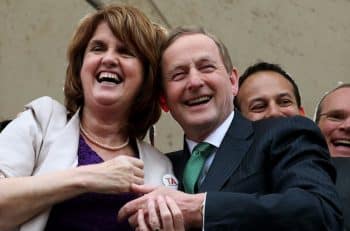
    There is no greater telltale sign of an election in the offing than when a government starts pledging to give your own money back to you. The Fine Gael-Labour Coalition has promised no less than €3bn between this year’s budget and 2016 in extra spending and tax cuts. Commentators often decry ‘auction’ politics. However, without an auction or choice, voters would have nothing to go on when it comes to casting their vote. Governments typically inveigle their electoral promises into the budget or two before the general election. In the boom years, under Bertie Ahern, new schemes, lower taxes and generous handouts for the elderly played their part in the winning of at least two general elections. Charlie McCreevy and Bertie contrived an unbeatable mix of lower taxes and higher spending, as it turned out in defiance of the iron laws of economic gravity. The Taoiseach Enda Kenny still insists that it was he and his party who saved you, the electorate, from reckless Fianna-Fail-led government. The story about the army patrolling the ATMs exemplified the threadbare nature of this particular narrative. The Fine Gael-Labour government has largely continued the austerity fare offered up by my late brother Brian Lenihan, when he was Minister for Finance. Michael Noonan is now getting almost exactly the same plaudits from the commentariat, who share a deep love for sound money and fiscal rectitude. In the boom years economic growth was so pronounced it was easy for Bertie, and the government I served in, to dismiss those who predicted it would all end in tears. Those who wisely suggested what goes up can also come down could easily be dismissed as being negative or at some level unpatriotic. It was precisely because of this herd-like instinct that the current government established the Fiscal Advisory Council as a source of impartial and independent criticism when the state itself begins to stray from the right path. It was depressing therefore to witness the subdued public reaction to the warning by Professor John McHale of the Fiscal Advisory Council about the proposed level of spending about to be delivered by this government. McHale and his colleagues believe the spending is wrong and unsustainable. The government appeared to have got away with this huge inducement to vote the right way. Of course, the public is weary of seven years of austerity, cutbacks and higher taxes. This time though the government cannot pretend they were not warned. A full 70% of all state or public spending is devoured by three distinct departments: namely health, education and social welfare. Well over 50% of spending increases are devoted to salaries and wages for people who work in the public sector, with this pay bill disproportionately high in the social services. So, it is very clear, extra public spending spread across the areas it usually goes to offers little in terms of improved medium-term productivity but is intended to keep people happy, or at the very least inoculated from their normal negative feelings about any government. Over the past five years there has been a golden opportunity, because of the global nature of the downturn, to take an axe to public spending but also to create long-term and sustainable reforms to the structure of the state itself. In my last few years as a Minister up to 2011 I made the point constantly that Ireland has 21 third-level colleges and institutions, 34 (now 31) local authorities and 29 hospital emergency departments. This is public provision on a grand scale, utterly at odds with what you would expect from our population size. Since as far back as the 1980s political parties have fought like dogs about the level of provision in health- care. This government, like others, promised a lot but appears to have wilted in the face of the vested interests and the costs involved. Health has become a metaphor for the inefficiency of public provision in Ireland. There is a serious neglect of the cause of reform, in our public system in Ireland, and until the voters see zeal on this front they will continue to regard the main or traditional parties as more of the same. Conor Lenihan Conor Lenihan is a former Minister for Science, Technology and Innovation. For the past four years he has worked in Moscow with the Skolkovo Foundation. He is a board member of San Leon Energy, a company quoted on the London Stock Exchange (AIM).

    Loading

    Read more

  • Posted in:

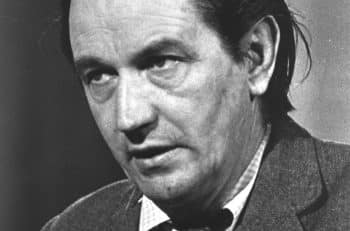
    Conviction not ideology: Noël Browne, on his centenary.

    Post-independence Irish politics provided few characters as compelling as Dr Noël Browne who was born just months before the Easter Rising, a century ago, in December 1915. Raised in a wicked combination of tragedy, poverty and illness, Browne saw his father, an inspector for the National Society for the Prevention of Cruelty to Children, pass away from tuberculosis when he was nine. The destitution which followed led the family to lose their home and most of their possessions before emigrating to Britain, where his mother would die from the same illness just weeks later. In England Browne found some redemptive fortune, first winning a scholarship to the renowned Jesuit school Beaumount College and then befriending the son of a wealthy Dublin surgeon. The Chance family paid the future politician’s way through medical school in Trinity College during the Second World War. But England also offered a sickly Browne, himself now a victim of tuberculosis, an important insight into the early development of socialised medicine, part of the evolution of what became the National Health Service in 1948. Back in Ireland after graduation Browne committed himself to tackling tuberculosis, a disease that killed nearly 10,000 people per year here in the early twentieth century. Frustrated by the impotence of individuals to meet the enormous challenges posed by the disease, and unwilling to profit through private practice from the misfortune of the poor masses consumed by it, Browne settled on politics as the only means to tackle what he saw as “Ireland’s most important social problem”. This was a theme of Browne’s life: it led to politics by moral conviction and a confidence in his ability to solve problems. His ideological progression was shaped by the challenges he aimed to overcome and the frustrations he endured in doing so. In the 1948 general election Browne stood for Seán MacBride’s Clann na Poblachta, a newly-formed republican party that aimed to channel discontent at civil war politics into a social agenda. Browne represented the social-democratic wing of a party that was riven with contradictions but ascendant in the polls. Nominated as the Minister for Health of the first coalition government after claiming a seat in Dublin South-East, Browne began one of Ireland’s most notable political careers at the tender age of thirty-three. In office Browne instigated an enormously successful campaign against tuberculosis, forcing the government to pursue extensive investment in free screening, and providing access to new antibiotics and vaccines as well as a massive construction campaign of hospitals, clinics and sanatoria. This effort is credited with reducing the rate of deaths from tuberculosis from 146 per 100,000 in 1947 to 16 per 100,000 in 1960. Despite this achievement, one of the most impressive in post-independence Irish politics, it was another aspect of his time as Minister for Health which defined his legacy: the attempt to introduce the Mother and Child Scheme. The Mother and Child Scheme was a proposal by Browne, grounded in a provision in the 1947 Health Act introduced by the previous Fianna Fáil government, to legislate for free healthcare, without means-testing, for mothers and children up to the age of 16. The story of the Mother and Child Scheme told today filters it through a modern lens: a contest between Church and state. But this is only part of the story, secured in its particular prominence by Browne’s release of correspondence between the Church hierarchy and political leaders, to the Irish Times. Browne’s political philosophy at the time was weaker in its analysis of Irish capitalism and more focused on the cultural importance of secularism. This blinded him to a degree to the potency of the other opponents of the scheme: the Irish medical profession. The Irish Medical Association was determined to defend private healthcare from socialisation and opposed both the 1947 Act and the 1950 scheme. This followed the path of their colleagues in Britain, who had initially opposed Aneurin Bevan’s NHS, and of their predecessors in 1911 who scuppered the Irish Health Care insurance Act. Although Archbishop John McQuaid later described the face-off over the Mother and Child Scheme, which ended with Browne’s resignation in 1951, as “the greatest challenge to clericalism in Ireland”, its significance was actually even deeper than this. Both the Church and business in Ireland understood the potential of such a scheme, which drew widespread support from the popular classes, as a social-democratic moment for Ireland. Catholic social teaching was not simply an impediment to liberalism gaining a foothold in social and cultural issues, it was the ideological basis of Irish capitalism. Welfare was to be based on the private sphere – the family backed by Church and charity – with services provided on means-tested or modest transfer basis. Catholic corporatism eschewed the concept of universal entitlement, historically a far more potent line of defence for social democratic gains. It also siphoned off large sections of social reproduction to forced labour in carceral institutions. Poverty, rather than be eliminated, was always to be with us. In the end a cheap imitation of the Mother and Child Scheme was introduced in 1953 to satiate public appetite generated by the controversy. Mothers received free health care for infants, but only up to six weeks and on a means-tested basis. The mould Noël Browne had tried to break remained intact. After he was forced to resign from government, Browne went on to join Fianna Fáil, erroneously hoping that the “seed” of social democracy in the party that saw it introduce the widows’ and orphans’ pensions and the sickness allowance and to build social housing could be developed into something more fundamental. Instead he found even more entrenched support for the prevailing economic and social mould than had existed in Clann na Poblachta. Following inevitable expulsion from Fianna Fáil he established the National Progressive Democrats, a social-democratic party in complete contrast to the prophets of the free-market who were later to usurp the name. During his time in the NPD he focused on his favoured role, parliamentary watchdog, teaming up

    Loading

    Read more

  • Posted in:

    Get moving on that social housing

    Homelessness was always a winter story and affected individuals only. Now it’s an all-year narrative and the homeless are no longer just isolated individuals -although they are still there – but families, in all their forms and colour. Our recent research for the Housing Agency report, ‘Family experiences of path- ways into homelessness – the families’perspective’, sheds some light on the causes,consequences and features of these unwelcome developments. The research was basedon interviews with a sample of 30 families,including a mixture of family types (couples and one-parent households with children of differing ages, as well as families from minority – Traveller and migrant – backgrounds). The human story was com- pelling. Both of us, ‘seasoned’ researchers long involved in the homeless field, were shocked by the conditions and circumstances in which the families found themselves. Some were homeless for months, but for others it was years. We met families living for months in one room of a hotel. Others lived in damp basements and rooms, with heat turned on for only a few hours a day. Most of the families we met no longer had possessions, apart from those they could put in a suitcase. They were broke, having used up whatever savings they had. Parents were distressed, despairing, humiliated – often eg under curfew – but absolutely determined to ensure their children survived the experience. At a policy level there were clear findings. Almost all the families had lived in private rented accommodation: none were dispossessed mortgage-holders. Many had been in private rented accommodation that they liked, some in the same home, for long periods, whilst others moved around frequently.The problem was that this time, when they left or were evicted (the euphemistic term is ‘issued with a Notice of Termination’), they could not find an affordable alternative. They could not get back in. They typically called prospective landlords, or called door-to-door, 50, 60 times only to find the accommodation already gone, or, more likely, to be assailed with “no rent allowance here”. For some, leaving or being evicted was a sudden and brutal process: eg a violent ex-partner turning up and causing trouble, a ratinvasion or the roof falling in. For the majority, though their departure was the landlord deciding to get more rent from tenants. For tenants told to leave, the one thing theyneeded more than anything else was a reference for the next landlord, so they did not argue. Campaigns for tenants to be ‘better informed’ of their ‘rights’, when they have almost none, overlook the inequality of power. With little new housing built in recent years and a dearth of social housing, which can be traced to 1987, a previous austerity period and its cuts in spending on local authority housing, our rising population has put more pressure on accommodation. The bottom of the private rental market gets ‘squeezed’, and those on low incomes are squeezed out. As demand rises, landlords know that they can charge more. Rents move higher and higher above the rent supplement levels that the Department of Social Protection pays, putting them out of reach of those on low incomes. The introduction of the Homeless Housing Assistance Payment (HAP) which permits a 20% increase in rent supplement marks a welcome recognition that rent supplement levels are no longer adequate. The homeless families to whom we spoke had many ideas on how to solve the homelessness crisis, including the opening up of boarded-up local authority homes. For them(and we should listen), local authority accommodation was the ultimate solution, offering security, acceptable standards and affordable rent. The Social Housing Strategy 2020 – a six-year plan to address social-housing needs – commits to the provision of 35,000 new social-housing units, over half (18,000 units) of which are due to come on stream by the end of 2017, with the remainder (17,000 units) scheduled for completion by the end of 2020 at a cost of €3.8bn.While the requirement is clearly immediate, a useful additional measure has been the introduction of a Ministerial direction which requires named local authorities to allocate up to half of available social housing units to homeless (and other special needs) households for the first six months of 2015. Notably, no-one we spoke to expected to get back to private rented accommodation, ever. Kathy Walsh and Brian Harvey Kathy Walsh is Director of KW Research and Associates Ltd, and an experienced social researcher and strategic thinker with expertise in equality and integration.

    Loading

    Read more

  • Posted in:

    Red Hand

    NIance For a long time the two issues that appeared to enjoy cross-party support in Northern Ireland (apart from horror of bauble-free direct rule) were one-off housing and visceral anti-abortionism. Now Sinn Fein appears to take a more nuanced approach to abortion. As do the courts. The Belfast High Court has ruled that abortion legislation in Northern Ireland is in breach of human rights law. Until now termination of pregnancy has only been allowed if a woman’s life was at risk or (unlike in the South) there is a permanent or serious risk to her mental or physical health. In a tragic case of foetal anencephaly, the Northern Ireland Human Rights Commission (NIHRC) had brought the case to extend abortion to cases of serious foetal malformation, rape or incest. The British 1967 Abortion Act does not apply to Northern Ireland. Northern Ireland’s Attorney General John Larkin said in a brief statement that he was “profoundly disappointed” by the decision and was “considering the grounds for appeal”. In his ruling, Judge Horner said women who were the victims of sexual crime and cases of fatal foetal abnormality were entitled to exemptions in the law. He said that the issue was unlikely to be addressed by the Northern Ireland Executive in the foreseeable future, and that Northern Ireland citizens were entitled to “have their [European Convention on Human] rights protected by the courts”. In early 2015, Sinn Féin effectively vetoed efforts in the Northern Ireland Assembly to prevent the Marie Stopes clinic in Belfast from performing abortions. The party whip, Caitríona Ruane (MLA for South Down), claimed the move by the DUP’s Paul Givan and the SDLP’s Alban Maginness was “an attempt to restrict the right of a woman to obtain a termination in life-threatening circumstances”. Storey-telling The deal between the DUP and Sinn Féin to save the North’s Executive has allowed the Westminster Parliament to vote through cuts for the North, including to Social Welfare. It is, however, promised that £345 million will be put aside for the next four years to top up payments for claimants who lose out in the changes. However, Green Party Assembly member Steven Agnew has derided Social Development Minister Mervyn Storey who, in a written answer, told Agnew that the Social Security Agency paid out approximately £80m per year in its Discretionary Fund over the last four years and that this fund would be redeployed for Social Welfare. In effect, protection seems to be robbing one set of claimants to pay another. Agnew said top-up money appeared to be “the renaming of an already existing budget”. robins on his way One of the biggest beasts of Northern politics, Peter Robinson, has slipped quietly into the good night of political death. Robinson was one of the toughest political scrappers going: however, the constant rumour of scandal and declining health combined to sap his vigour. Although it is rumoured Gerry Adams contributed to expediting his goodbye at end of his final question time as First Minister, the Sinn Féin Front Bench joined the DUP in giving him a standing ovation. That’s a sign of how the two parties are interdependent. Were the Northern Executive a family, their relationship is so dysfunctional social services would be sent in. However, both know they face disaster if the Executive falls. If people reflect too hard on the political extremities they might finish up voting in some moderates. They are not made whole Colm Eastwood’s defeat of uncharismatic Alasdair McDonnell in the SDLP leadership election was a sign of that party’s desperation. The Assembly election is due in May: parties very seldom dump a leader – no matter how poorly performing – so soon before an election. McDonnell’s defeat was particularly humiliating because many of the party’s ‘ABA’ (Anybody But Alasdair) tendency had walked away. The SDLP is haemorrhageing members as well as votes and Eastwood will lead the party away from its middle-class, middle-aged roots to a greener and more leftist future. When Margaret Ritchie was elected leader five years ago, 409 delegates voted. When 32-year-old Eastwood overthrew MacDonnell, only 305 did. Eastwood succeeds McDonnell, Margaret Ritchie, Mark Durkan, John Hume and Gerry Fitt, in that order. Quinn again There was little coverage in the South of the conviction of Quinn Building Products for the death of 24-year-old Fermanagh GAA star Brian Óg Maguire from head injuries in its Derrylin factory. The company, bought last year from IBRC and US bondholders by a holding company which is reinstating the exciting old Quinn regime, pleaded guilty to failing to ensure the safety of an employee and maintain work equipment. Omagh Crown Court found the company’s procedures were inadequate, and “the equipment used was defective”. The judge pointed out that the company had been convicted for the death of another worker in 1997, when it was called Sean Quinn Quarries. road to nowhere you’d know The Executive has announced it is to contribute £75m (€106.5m) to build a nine-mile stretch of dual carriageway from Ballymagorry, north of Strabane, Co Tyrone, to Newbuildings, south of Derry City. The proposed road is part of the proposed A5, from the Monaghan-Tyrone Border to Newbuildings, the North’s largest ever road project. Two years ago a judicial review overturned the decision to grant this planning permission for failure to carry out an appropriate assessment of the Rivers Foyle and Finn Special Areas of Conservation under the EU Habitats directive.. The Executive’s determination to go ahead with the dual carriageway is mysterious. No part of the existing A5 is among the North’s 50 busiest stretches of road. Options of developing the existing road were dismissed, while expanding public transport was not even considered. Case meant to be The GAA’s proposed 38,000-seater Casement Park stadium in West Belfast is enmired in a bitter planning battle. Residents feel they are being railroaded by the Corporate GAA. Anger at the proposal – and Sinn Féin’s support for it – was key to sweeping People Before Profit’s Gerry Carroll onto Belfast City

    Loading

    Read more

  • Posted in:

    Wicklow again

    Apolitical blast from the past has returned to haunt the much troubled Wicklow County Council and its former county manager, Eddie Sheehy. Former councillor and once prominent Green Party member, Deirdre de Búrca, recently learned that the Council has abandoned a Supreme Court appeal taken by Sheehy after she secured a High Court judgment in her favour in a long running zoning row. The story dates back to 2004 when de Búrca complained that Fianna Fáil councillor and solicitor, Fachtna Whittle, had breached ethics legislation when he proposed and voted for the rezoning of land near Brittas without disclosing that it was owned by a man represented by his legal practice. The ethics committee of the Council, including Sheehy and then cathaoirleach, John Byrne, considered that while Whittle had been “unwise to propose the motion he did” he had no “beneficial or pecuniary interest” in the zoning and therefore the complaint by de Búrca was “unjustified”. The then Green Party councillor challenged the decision to the High Court which decided in her favour with Judge John Hedigan ruling in 2009 that Sheehy and the Council had not dealt with the zoning and potential conflict-of-interest issues at the core of de Búrca’s complaint. He quashed their report and directed the Council to review the matter. This was not good enough for Sheehy who lodged an appeal, which has been trundling through the justice system ever since, with the Supreme Court. Following his retirement earlier this year, his successors, including acting county manager, Bryan Doyle, have decided to drop the appeal. To add insult to injury solicitors for the Council sought to impose a ‘gagging order’ on de Búrca as part of what has been described by the Wicklow Times as a “settlement” of the action which the former councillor refused to accept. This involves the Council absorbing the estimated hundreds of thousands of euro in costs accrued in the action, one of a number of legal actions Sheehy left behind when he departed earlier this year. Meanwhile, the Minister for the Environment, Alan Kelly, continues to deflect Dáil questions on the outcome of a number of inquiries into various matters involving planners, councillors and developers in the garden county during Sheehy’s tenure. These include the circumstances surrounding contracts agreed between the Council and the developers of the 1400 Charlesland residential scheme near Greystones, Sean Mulryan and Sean Dunne and their partnership company Zapi Ltd. As previously reported in Village a secret contract, providing the then high-flyers with road and other access to the previously landlocked Charlesland site for little or nothing, is under examination by department officials. The Council has insisted that the contract merely involved an ‘exchange of easements’ of six acres of its land. However, according to the agent who helped to acquire the lands, the road access deal was worth tens of millions to the developers with little or no payment in return to the Council. Before the Charlesland 200 acres site had road access it was worth €22m. Once it had planning permission with road access its value jumped tenfold – to €220m. Auctioneer Gabriel Dooley has claimed that he was present when Fianna Fáil councillor, Pat Vance, discussed maps of the planned development with Mulryan and Dunne in Dobbins restaurant in Dublin in early 2003 and offered advice on how to circumvent various planning obstacles including the objections of local members to any material contravention of the local area plan to facilitate the ambitious Charlesland scheme. Vance signed the ‘exchange of easement’ contracts along with Sheehy, the director of services, Tom Murphy and representatives for Mulryan and Dunne. Bray-based Councillor Vance has also been the subject of an ethics complaint by Dooley over failing to disclose property he acquired in the early 2000s om the town in his annual declaration of interests to the Council. A property in question at Saran Wood was sold earlier this year following publication in Villageabout the ongoing and bitter exchanges between Dooley and Vance, among others. Dooley has not been informed of the outcome of any investigation or if one has taken place. Mulryan, meanwhile, is involved with international investors and NAMA in a major residential development in Dublin’s docklands and will surely be hoping that the long-awaited departmental inquiry into the Charlesland controversy will not cause any difficulties. He may be interested to know that one of the senior official asked to deal with the various complaints from Wicklow has also recently retired which, no doubt, has delayed the investigation even further. Frank Connolly

    Loading

    Read more

  • Posted in:

    Perspective

    Enda Kenny was not in fact damned by the Fennelly report. It found he did not sack or seek to sack hapless Garda commissioner Martin Callinan. Admittedly there are caveats and a “however”, but from the fury of commentators and opposition politicians you would think Kenny was Bertie Ahern. When people need to be fired, and no-one could vouch confidence in the commissioner, it’s impossible for the axe-wielder to look good. The most important thing was to remove the commissioner, in a society where too often incompetents are left in place. Village is not particularly well disposed to Enda Kenny as a force in politics but that is because of his antipathy to equality and sustainability (and all that winking). Not how he fires people, though clearly he can learn lessons in transparency, and minute-taking. Certainly there are questions for the Attorney General and the Garda Commissioner (and indeed his successor) and the report published is only a component of an ongoing investigation of Garda station recordings but a sense of proportion is required and anger should be dispensed effectively. For example, for Village other issues of propriety have more legs. The recommendations of the Moriarty and Mahon Tribunals languish. What happened to the team of 15 officers from CAB who were looking at the £867,000 channelled to Lowry by Denis O’ Brien after Lowry had granted the second mobile-phone licence to O’Brien’s Esat in 1995? What is happening to Ben Dunne who received benefits from Lowry that were “profoundly corrupt to a degree that was nothing short of breathtaking”? Is Bertie Ahern to be prosecuted for his perjury and conspiring to mislead the Mahon tribunal? The authorised officer’s dossier on Ansbacher purports to establish a wide-ranging establishment conspiracy to ensure well-known holders of illegal bank accounts were never exposed. Why has this never been investigated and why will the media not even report it? If propriety is the issue, Kenny is not the outstanding problem. But it is not the principal problem. There are epochal emergencies such as the rise of Isis, failed nations, colossal migration and climate change. Kenny, no visionary, makes little difference to these issues. Meanwhile, basic iniquities seldom make the news. Poverty, Travellers’ rights, Direct Provision and refugees (until there’s a photogenic death), homelessness, the iniquities of the bank guarantee and Nama, species loss. For Village the overarching issue is equality. Village believes equality of outcome is an ethical imperative. We are all equal from birth and ethically. Society’s goal is to recognise that by distributing resources to reinforce that equality. Only equality gives the perspective necessary to deal pre-emptively with each of the problems above, without the need for a crisis, a death or a photo-op. The debate about equality is very crude, partly because those who benefit from inequality want to keep it that way. For example, inconveniently, during the Great Recession in Ireland the two income groups worst affected were the very highest earners whose income fell by over 15% and the very lowest earners whose incomes fell by 12%. It is important nevertheless to keep a focus on the fact that absolute poverty and deprivation levels – among those very lowest earners – have been rising consistently since 2009. The level of deprivation has almost doubled since 2008. As Mike Allen notes, for example, in this edition of Village: in July this year, 77 families became homeless, 70 of them for the first time. Anybody seeking to address the big ethical issue of equality would have only to undertake to reduce absolute poverty and increase equality, measured by the Gini coefficient, across the range of income levels, and to leave office if they did not make progress. That politicians are insincere is evident from their unwillingess to establish simple indicators to gauge their impact on fairness. And sustainability is a subsidiary of equality for it is transcendently unequal to transmit fewer of the earth’s resources and joys to the next generation than the legacy left to this generation. In 5, 50 and 500 years they will not remember September 2015 for the Fennelly Report (or for water charges or property taxes). They will note that we allowed inequality to pervade, that we were squandering the earth’s resources and that we failed to avail of the opportunity to tame climate change. And they may note that the desperate quest for asylum, and its principal driver, an anarchic civilisation-subverting industrial-scale terrorism of daunting ambition, both first became manifest on a vast scale in 2015. If we think migration on the scales we’ve reluctantly been debating over the last few weeks is dramatic, wait until climate change drives millions from drought, desertification and sea-level rises. If we want to deal with the problems of our era and for future generations to pay us any respect we must ensure all policy pushes for equality and sustainability. And direct our ire at those who stand in its way. Not get waylaid by an incompetent firing of an inept Garda Commissioner. •

    Loading

    Read more