• Posted in:

    An Ghaeilge sa Dlí. Léirmheas leabhair le Cormac Ó Dúlacháin ar leabhar nua leis an abhcóide Dáithí Mac Cárthaigh ar ionad na Gaeilge i ndlí na tíre seo agus an Aontais Eorpaigh go stairiúil agus faoi láthair.

      Léirmheastóir – Cormac Ó Dúlacháin Is Abhcóide Sinsir é Cormac Ó Dúlacháin. Tá MA i Scríobh & Cumarsáid na Gaeilge bainte amach aige le deireanas ó UCD. Tá sé ina Cathaoirleach ar an sain-chumann nua dlí, Cumann Barra na Gaeilge, a saolaíodh i mbliana. Tá éacht déanta ag an abhcóide Dáithí Mac Cárthaigh agus leabhar léannta scríofa aige, An Ghaeilge sa Dlí (Leabhar Breac). Tá stíl shoiléir sa leabhar atá oiriúnach don léitheoir nach dlíodóir é nó í. Bíonn sé deacair cothromaíocht a fháil idir an doimhneacht agus cruinneas a éilíonn cúrsaí dlí agus an tsoiléireacht agus gontacht atá riachtanach do lámhleabhar, ach sin é go díreach atá déanta ag Mac Cárthaigh agus scéal na teanga, stair na tíre agus tionchar an Aontais Eorpaigh uirthi go léir anseo. Tá ardmholadh ag dul do Leabhar Breac as an téacs a stiúradh chun a chló. Teanga í an Ghaeilge nach raibh aon stádas aici sa saol poiblí is dócha ó 1200 ar aghaidh. Fásann impireachtaí trí fhorlámhas a rogha teanga féin a chur chun cinn. Caithfear dílseacht don ré úr a chinntiú tríd an sean-slabhra cultúrtha a bhriseadh. Is suntasach, mar shampla, an scrios a rinne Ríocht na Spáinne ar theangacha dúchasacha Mheiriceá Theas, Láir agus Thuaidh agus iad ag cur lena n-impireacht. Fiú sa lá atá inniu ann tá cos ar bolg á dhéanamh sa tSín ar gach teanga a thagann idir an saoránach agus dílseacht don pháirtí mór atá i réim. Pléann an leabhar seo le fealsúnacht na hAthbheochana, staid an dlí roimh bhunú an tSaorstáit, an Ghaeilge sa chéad Bhunreacht agus sa Bhunreacht atá go fóill againn. Díríonn sé isteach ar thagairtí don Ghaeilge in achtanna agus ionstraim reachtúla éagsúla, mar shampla i réimsí an oideachais agus an chraolacháin agus i gcúrsaí pleanála agus teanga. Déantar cíoradh chomh maith ar an sainmhíniú dlí ar cad is Gaeltacht ann. Déantar sár-anailís ar Acht na dTeangacha Oifigiúla agus mínítear don léitheoir cad go baileach atá leagtha amach ann. Tógtar sinn ar thuras trí chásanna cúirte a bhain nó ar bhain gné díobh leis an nGaeilge, cásanna ina raibh Daithí agus a leathbhádóir – an t-abhcóide sinsearach Séamas Ó Tuathail – lánpháirteach iontu go minic. (Is é Séamas atá ina eagarthóir comhairleach ar an leabhar seo.) Tá sé fíordheacair aon chorpas dlí a thógáil ar bhonn cásanna cúirte. Is minic go mbíonn ort fanacht blianta don chás ceart, cás leis an gcomhthéacs agus na fíricí cearta agus go fiú ansin ní bhíonn gach rud mar ab fhearr leat é. Ach bhí Séamas Ó Tuathail agus Dáithí Mac Cárthaigh ann chun cásanna a thabhairt go muiníneach agus gan eagla orthu an Stát a náiriú nuair ba ghá é sin a dhéanamh agus Dáithí ag tarraingt go minic ar fheasacha dlí ó Cheanada agus áiteanna eile. Tá glúin óg abhcóidí agus aturnaetha oilte agus spreagtha acu beirt chun cearta teanga a éileamh agus a chosaint. Bhí Dáithí Mac Cárthaigh go mór chun cinn san fheachtas chun lánaitheantas a bhaint amach don Ghaeilge san Aontas Eorpach agus ina dhiaidh sin i mbunú na gcúrsaí nua oiliúna don ghairm nua Dlítheangeolaíocht. Beart de réir a bhriathair, gan aon agó. Luíonn scáth Airteagal 8 den Bhunreacht go trom ar an leabhar. Cheapfá go raibh feidhm shuntasach ag baint le foclaíocht shimplí. ‘Os í an Ghaeilge an teanga náisiúnta is í an phríomhtheanga oifigiúil í.’ Ach de réir mar a d’fhás an státchóras, chaitheadh le hAirteagal 8 mar a chaithfeá le leac cuimhneacháin – tugadh cuairt anois agus arís air chun an caonach a ghlanadh de le féachaint cad a bhí scríofa ann. Ní fada go mbeidh gá le heagrán a dó don leabhar seo. Tá an bille chun Acht na dTeangacha Oifigiúla a leasú nach mór achtaithe. Tá muid ar thairseach aitheantas reachtaíochta a bhaint amach don Ghaeilge ó thuaidh. Tá cásanna cinniúnacha Gaeilge os comhair na gcúirteanna faoi láthair agus tá an tAontas Eorpach ar tí muid a náiriú trína thaispeáint go féidir dlíthe agus breithiúnais chúirte a fhoilsiú go comhuaineach sa Ghaeilge. Ní amháin gur leabhar dlí é seo ach leabhar spreagúil is ea é ina bhfuil an tírghrá fite fuaite sna tagairtí agus san anailís. Is leabhar misniúil é a thagraíonn do cad é is féidir a bhaint amach don Ghaeilge. Céad-fhoilsíodh an léirmheas seo in Comhar, Eagrán na Nollag 2021 https://leabharbreac.com/Teideal/an-ghaeilge-sa-dli/  

    Loading

    Read more

  • Posted in:

    The subtlety of Ireland’s leftward shift explained.

    Where they vote left, young  voters tend to focus on redistribution and inequality. Only 31% of 18-24 year olds and 32% of 25-34 year olds support Fianna Fáil or Fine Gael. By William Foley. Ireland is on the cusp of a general election which will see an unprecedented transformation of its political divisions. Surprisingly, it will be the first time in generations that questions of economic distribution will have affected the outcome. Evidence from opinion polls and surveys shows that where younger voters (under 29 years of age) reject the dominant right-wing parties they do so because they want greater economic equality. This gives the left a unique chance by focusing on their core issue – redistribution – to galvanise today’s youth to an egalitarian agenda  if, despite the failure of commentators to read the situation, they keep clear heads and take the opportunity. In postwar Europe, political parties in most countries traditionally competed over who got what, and how much. Parties were aligned along an axis – on the right were those who believed that the market should be the primary mechanism for determining the distribution of wealth, and on the left were those who believed that this distribution should be fixed in large part by the government.  Ireland has usually been regarded as an exception. Here, the main political division does not run between the left and the right.  Here it has not been between those who favour greater redistribution by the state and those who are against it, but between descendants of the opposing sides in the civil war. Those lineages may have some importance today – Fianna Fáil would probably not have attempted to rehabilitate the RIC – but what they amount to in practice is a system in which the vast majority of people have always voted for parties which have been economically right-wing, at least since Lemass.  This state of affairs has not prevailed because Irish people are inherently more right-wing than other Europeans. Political views are not the result of a simple transformation of broad values and social attitudes into party support; they are the indirect outcome of a process which filters those values and attitudes through a given ideological frame. These frames function like lenses, capable of magnification and diminution, distortion and concentration. Certain values may be filtered out – considered irrelevant for the determination of political preference. In Ireland, due to a conjuncture of historical reasons, left-wing ideological frames were largely absent.  Other factors were at play which determined political identities: the legacy of a brutal and traumatic civil war, the personalisation and parochialisation of politics, the hobbling of economic development under British imperialism, the passive role played by the Labour party from 1916 onwards, and so on. Questions which concerned the just distribution of resources were simply filtered out by the dominant post-civil war frame. Historically, the left has failed to pry even one finger loose from the FF/FG stranglehold. Parties such as Clann na Poblachta and The Workers’ Party occasionally sparked into life, achieving fleeting electoral success before flickering out like tealights in a children’s nursery. Because one of either Fianna Fáil or Fine Gael was usually in opposition, the see-saw effect of electoral politics meant that when one became somewhat unpopular, the other could take its place in government.  But the confidence and supply arrangement that prevailed in the last Dáil has meant that, while Fianna Fáil were not in the cabinet, they were not entirely in the opposition either. The economic crisis dealt them a blow from which they have not really recovered, nor have Fine Gael truly taken their place.  The result is that the two right-wing parties are more closely associated than ever – and more unpopular. Opinion polling since the general election seems to show them combined  on about fifty percent or less. Most striking is the age gradient: only 31% of 18-24 year olds and 32% of 25-34 year olds support either Fianna Fáil or Fine Gael, according to an Irish Times / Ipsos MRBI poll. If these trends hold true, then what appears to be emerging in Ireland is a more traditional “left-right” divide, characterised by competition between parties who favour more economic redistribution and those who oppose it. Survey evidence seems to support the increasing relevance of attitudes towards redistribution for determining party support. Figure 1 Support for redistribution and combined support (%) for FF / FG over time. Figure 1 makes use of Irish data from nine rounds of the European Social Survey (ESS) to illustrate this dynamic. Each round of the ESS asks respondents to indicate their support for the following statement: “Government should reduce differences in income levels”.  The respondent could say that they strongly agreed, agreed, neither agreed nor disagreed, disagreed, or strongly disagreed. I recoded the question so that everyone who strongly agreed or agreed was categorised as “supportive of redistribution” and everyone else was categorised as “unsupportive”, excluding those who didn’t answer the question (about 2.7% of the sample).  The ESS also asked respondents if they felt close to any party (about 36% did), and which party they felt closest to. I used this question to calculate the combined support for FF / FG over time, among those who are supportive and unsupportive of redistribution, excluding those who didn’t support any party. This relationship is shown in Figure 1. The data are weighted to reflect unequal probabilities of inclusion in the sample (though the unweighted results are the same), and the years given on the horizontal access correspond to the calendar years in which most of the Irish respondents were interviewed for each of the nine rounds of the ESS. These data probably overestimate support for Fianna Fáil and Fine Gael – at least compared to present opinion polls –  but the emerging relationship that they depict is valid.  As can be seen, preferences for redistribution matter a lot more after 2011. In the preceding years, those who are supportive and unsupportive of redistribution

    Loading

    Read more

  • Posted in:

    French Toast

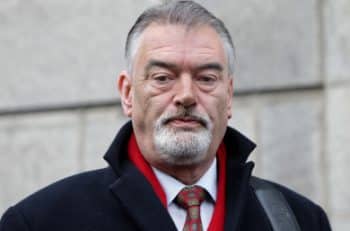
    By Bryan Wall. In a development that shocked very few people Ian Bailey was found guilty of the murder of Sophie Toscan du Plantier in a French court in May. After a four-day trial and deliberating for five hours a panel of three judges sentenced Bailey to 25 years in prison. He was also ordered to pay a total of 1225,000 in compensation, 1110,000 of which is to go to Toscan du Plantier’s family. Bailey, who has always denied his involvement in the murder of the French woman, was tried in absentia. A peculiar aspect of French law allows the authorities there to prosecute people suspected of crimes against French citizens that were carried out abroad. The French had therefore tried twice before to have him extradited to stand trial. In both cases the Irish courts ruled against his extradition, with the High Court ruling in 2017 that the demand for extradition was an “abuse of process”. Nonetheless, the French went ahead and held a trial with Bailey’s absence noted. But Bailey was not the only person absent from the trial. Irish witnesses received a letter asking them to appear at the trial only two weeks before it began. In some cases they were given as little as one week’s notice. As a result only three witnesses gave evidence, one of whom, Helan Callanan, had a statement read out on her behalf. Callanan, one-time editor of the Sunday Tribune, wrote in her statement that Bailey had confessed to her that he murdered Toscan du Plantier in order to “to resurrect my career”. At the time he was freelancing for the paper and wrote about the case for the paper. Of the two other witnesses, Amanda Reed gave evidence on behalf of her son Malachi. As a 14-year-old he had received a lift home from Bailey on 4 February 1997, less thantwo months after Toscan du Plantier’s death. He claimed that Bailey said to him “I bashed her f**king brains in”. His mother. related this to the French court. Back on the evening of 4 February 1997 Malachi arrived home, with no apparent concerns, having being dropped off by Bailey. The next day gardaí visited Malachi in school. There they questioned him about his journey with the journalist. And it was after he arrived home from school in an “agitated” state that he informed his mother what Bailey allegedly told him. Bill Fuller, the third witness, told the court that Bailey had confessed to him. Fuller stated that Bailey, speaking in the second person, said “It’s you who killed her”. Bailey denied this conversation ever took place. But these evidential issues with the trial pale in comparison to the French prosecution’s dismissal of the Irish Director of Public Prosecutions (DPP) and its opinion of the murder. The DPP file about the case was leaked a number of years ago and makes for astounding reading. It contains a litany of concerns with how the murder was investigated. These embrace wide-ranging issues such as witnesses who lacked both credibility and consistency being taken at face value and members of the gardaí stonewalling the DPP itself. It’s pointed out at the start of the report that there is “No forensic evidence linking Ian Bailey to the scene”. He had volunteered blood, hair, and fingerprint samples to the gardaí. This was in spite of the fact that, as the DPP highlights, in his former profession as a crime reporter in the UK Bailey “was aware of the nature of forensic evidence” and that it could comprehensively incriminate the guilty. The trial in France introduced no new forensic evidence to link him to the scene and the murder. The evidence of Marie Farrell, the witness who initially claimed she saw Bailey walking late from the direction of Toscan du Plantier’s home on the night of her murder, was described by the DPP as being unreliable. Yet these initial statements by Farrell, which she retracted years later, were accepted by the French. As for Bailey’s apparent admissions of guilt, the DPP found that they “appear to be sarcastic responses to questions”. This includes his comments to Callanan about trying to “resurrect” his career. And it includes the apparent conversation between Bailey and Fuller. The DPP noted that Fuller’s statement came at a time when the Garda’s actions were “bound to create a climate in which witnesses became suggestible”. The DPP report also discusses the statement made by Malachi Reed. It noted that it was “abundantly clear that Malachi Reed was not upset by Ian Bailey” after the latter had dropped him home. In fact, the DPP pointed out that it was after a conversation with a garda the following day that “he became upset and turned a conversation which had not apparently up until then alarmed him into something sinister”. And then there’s the Garda’s arrest of Bailey’s partner, Jules Thomas. She was arrested for the Toscan du Plantier murder on 10 February 1997. But the arrest appeared to the DPP to be illegal. This was because it discovered she was asked no questions about her involvement in the murder. The DPP wrote that her “questioning indicates that she was arrested to obtain information which could be used against Bailey”. And given this, “her arrest and detention was unlawful”. The French ignoring of the report means that none of this was taken into consideration. It means that a trial was held using evidence that was roundly dismissed by the DPP; evidence which resulted in the DPP clearly stating in unequivocal terms that “A prosecution against Bailey is not warranted by the evidence”. Frank Buttimer, Bailey’s solicitor, is explicit in his condemnation of the French trial, or “so-called trial” as he refers to it. Although not present in France, based on the information he’s seen he says what took place there “was not in any way a trial that we in a common law jurisdiction would understand a trial to be”. He said that what actually happened

    Loading

    Read more

  • Posted in:

    (S)height

    Eoghan Murphy’s crude and desperate guidelines on Building Heights risk the aesthetic of our towns and cities By Michael Smith   Density is desirable We should all be able to agree the desirability of densification of the Dublin City area – in accordance with the principles of sustainable development. The advantages of density include being able to justify significant infrastructural, including public transportation but also for example parks, expenditure, which promotes the maximisation of quality of life.   Density and high-rise However, in low-rise cities overshadowing, the need for ground-level plazas and the expense and difficulty of building high (lifts, fire safety, design to avoid windtunnelling and overshadowing), particularly in low-rise environments, militate against high-rise producing high densities or affordable housing, legitimate current policy imperatives. Indeed, with the exception of the world’s megalopolises high–rise, in general, serves the developer, not the public interest.   Irish cities are not like New York! It is perfectly sensible to like New York and to be mostly happy when it goes higher still while recognising that Dublin City Centre (and other Irish towns and cities) a different unique selling point. When we think of Dublin, when tourists spend two days in Dublin, it is the low-rise historic character that IS the city. A Dublin that people overall like. It is fragile because a few twenty-storey buildings in the wrong place could change it forever. A policy of six-storey buildings on three-storey streets could change it forever.This is precisely what the lumbering time-serving of the Department of Housing and their uncertain Minister have delivered as their salvo at posterity.   What high-rise might involve There is no reason to think the sorts of applications that were closed down as ridiculous over the last 25 years would not resurface under these draft guidelines. Irish planning does not have the discipline to provide for discreet areas of high-rise that to not subvert its heritage. I recall for example applications for permission for a 16-storey development on the north side of Thomas Street, a 13-storey apartment block at the Tivoli Theatre on Francis St, a 12-storey residential scheme at School Street and a 13-storey building at Bridgefoot Street. There was a permission for a 16-storey tower for an Arnotts redevelopment plan, an 11-storey development on Chancery St, a 13-storey development on Merrion Road, and the approved demolition of most of the Clarence Hotel in favour of an oversailing cybership. I remember a Liberty-Hallheight sky-borne ski-slope structure over the Carlton site on O’Connell St. I remember when Treasury holdings wanted a 35 storey hotel to the rear of the Convention Centre and an application by Manor Park Homes for a 51-storey building on Thomas St in Dublin’s Liberties as well as Sean Dunne’s proposal in Ballsbridge for a 37-storey, 132-metre high residential tower that would of course have been “cut like a diamond”. Recently we had Johnny Ronan’s application for 22 storeys on Tara St, likened to a skybound fridge.   Rhetoric differs from reality Inevitably these applications are dressed up in property-supplement-speak as “crystalline”, ‘sculptural”, “breathtaking” and as heralding Ireland’s arrival in the exciting big-time. The reality – as we know from O’Connell Bridge House, Liberty Hall, Georges Quay etc as well as from much of England is that there can be few urban aesthetics as depressing and lumpen as an incoherent skyline.   Do it properly: scientifically assess carrying capacity In parts of low-rise historic cities there may indeed be a carrying capacity for high-rise. This needs to be methodically ascertained, using balloons and other geo-architectural techniques. It is extraordinary that the draft guidelines and accompanying Strategic Environmental Assessment provide for no such scientific exercise. I reserve my right to challenge the largely generic SEA which pays inadequate attention to material assets and the cultural especially architectural heritage; and for this reason is unlawful. Where, following assessment of local carrying capacity, high-rise development can be squeezed in in low-rise historic cities it is a good thing.   The model There are possible paradigms: all buildings, meaning buildings significantly higher than neighbourhood or surrounding buildings, may be considered only following adoption of Local Area Plans which should specifically provide for preservation in full of existing positive local and civic character; and should be prepared only after the fullest consultation and engagement with the public including local residents, public sector agencies, non governmental agencies, local community groups and commercial and business interests within the area. If possible, local community groups should be afforded reasonable costs for the making of submissions on Local Area Plans. This mechanism would provide for the proper assessment and consultation that must precede any significant change in the ethos of those parts of the city that may actually benefit (I believe there are some) from high-rise. We cannot tell in Dublin but it is to be expected that it would include most of Docklands, maybe Heuston, maybe around Connolly, probably in much of suburbia, particularly where architectural banality could benefit from counterpointing. Why not consider judicious place-affirming high-rise on the Long Mile Road, or in Dean’s Grange or Adamstown? The guidelines disdain character and locality. The draft guidelines criticise local authorities for “setting generic maximum height limits across their functional areas”, mainly in response to “local-level concerns like maintaining the character of an existing built-up area”, even though this could “undermine wider national policy objectives”. But surely these local concerns are legitimate? Anyone concerned with democracy or urban planning would. Because as described above this particular concern for character is entirely consistent with national policy objectives, including the demi-god, densification.   The guidelines are wrong about city-centre density Though it seems to have escaped the unimaginative but now policy-desperate Department of the Environment, recent studies confirm that densities within Inner City Dublin are high. Eurostat’s 2016 publication ‘Urban Europe – statistics on cities, towns and suburbs’ highlights the number of inhabitants per square kilometre. in the three highest density electoral areas in each EU country. The highest densities in Ireland are in Inner City Dublin, being:

    Loading

    Read more