Opinion

Random entry RSS

  • Posted in:

    Democracy Works

    It’s been a bad couple of years for democracy. The Brexit fiasco was the most humiliating British retreat from Europe since Dunkirk, but this time, entirely self-inflicted. Yet, rather than an alarm, Brexit instead turned out to be a blueprint for the bloodless US coup that followed, where right-wing extremism seized the world’s most powerful political office. Some 95 million Americans didn’t vote in November 2016. “One of the penalties for refusing to participate in politics is that you end up being governed by your inferiors”, is how Greek philosopher, Plato presciently put it. And while not riven by such gaping wounds of xenophobia and extremism, Irish democracy is also profoundly dysfunctional, and nowhere is this clearer than in its record of abject failure on climate policy. A decade ago, it looked like Ireland was beginning to get its act together, yet by the time Enda Kenny led Fine Gael into power in 2011, the environmental agenda hadn’t so much been scrapped as bleached. Fast forward to 2017. Ireland is now the third worst per-capita greenhouse-gas emitter in the EU and one of only four countries certain to miss its 2020 targets. Massive EU compliance fines are looming, and our only plan is to try to weasel out of paying, rather than tackling our underlying carbon-pollution crisis. It didn’t have to be like this. Professor Andy Keen of Edinburgh University told the Citizens’ Assembly earlier this month how Scotland, with cross-party political support, in 2009 set the highly ambitious target of cutting its national emissions by 42% by 2020. This is more than twice Ireland’s 20% target for the same period. While we will struggle to achieve a maximum 4-5% cut, Scotland actually hit its 42% target in 2015, five years ahead of schedule. It is now pushing hard to achieve 100% renewable electrical production by 2025, and will probably succeed. Scotland has no natural advantages over Ireland. That’s the difference between politics that works and politics that is broken. Any notions that Irish people are innately unconcerned and indifferent to climate change were well and truly scotched by the outcome of the Citizens’ Assembly, which sat again over two weekends in October and November, under the gimlet legal eye of Justice Mary Laffoy. Instead of the usual circus of lobbyists and their client politicians, the Assembly instead only heard from disinterested experts, and its round-table format allowed the 99 citizens to discuss what they had heard among themselves, and then ask searching questions of the experts. I sat through almost eight hours of presentations and discussions on a Saturday in November, and watched these volunteer citizens, young and old, from all walks of life, as they engaged with the process for hour after hour. No fiddling with phones, dozing or absent-mindedly gazing into the distance. This is what direct democracy looks like up close. In a word: inspiring. Even more impressive was that the citizens agreed and then voted in a secret ballot on 13 recommendations and, incredibly, all were carried – in most cases, by thumping majorities. Everyone knows Irish people won’t accept paying new carbon taxes. Wrong. This idea was carried by an 80% majority. Everyone knows that agri-emissions are a special case. Wrong again. Some 89% of Assembly voted in favour of taxing carbon-intensive agriculture, and rewarding farming methods that cut carbon. On industrial peat burning, a whopping 97% of citizens voted to end all State subsidies supporting this madness. And despite our supposedly unbreakable love affair with the private car, 92% of citizens voted for the State to favour developing public transport ahead of new road infrastructure at the rate of no less than 2:1. A recommendation allowing micro-producers of clean (solar) electricity to be allowed sell their surplus back to the grid was backed by 99% of citizens. Meanwhile, ‘Climate Action’ Minister Denis Naughten, has once again excluded small-scale rooftop solar from even being considered in the national consultation on renewable energy. The Citizens’ Assembly may have been set up by the government in the hope it would become another dull talking shop. If so, its radical recommendations, first on abortion rights and now on climate change, have shown that, given half a chance, we Irish are entirely capable of sober civic engagement with complex issues. Who would have guessed?   John Gibbons is an environmental commentator and tweets @think_or_swim

    Loading

    Read more

  • Posted in:

    Immingratitude

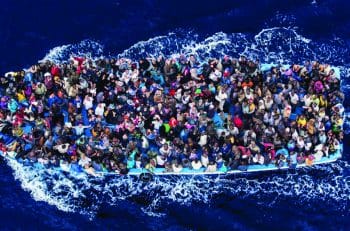
    In December a group called ‘Identity Ireland’ made much of a do online about the relative nothing of unfurling their banner from a bridge over a motorway. The banner urged motorists to “DEFEND IRELAND”, prompting one Twitter user to quip they were “11 days too late” (referring to the Irish soccer team’s humiliating 5-1 defeat to Denmark). The further irony is that the Identity Ireland group itelf is but an Irish franchise of a European anti-immgration organisation. An organisation of foreign conception bemoaning foreign influence. While it may seem ridiculous, anti-immigration groups coming into the open like this is a new development, another symptom of sentiments more likely to find expression in the broadsheets than in the streets. This Summer, the Irish Navy ship LE Eithne rescued 700 people from the Mediterranean sea in a single day. Those souls were but droplets in a wave of refugees, cast adrift in the wake of state failure in various parts of the Middle-East. There is much anxiety across Europe about the demographic consequences of an influx of migrants. Kevin Myers uncharacterisitically said sorry for a supposed slur on an ethnic minority that ended his tenure as a columnist for the Sunday Times. Yet he is less contrite about his numerous other statements stoking anxieties about other minorities. Myers described the swell in immigration to this country, for example, as a “tidal wave”, asserting it was “the greatest threat to the existence of the Irish nation”. And this was in 2007, long before the fallout of the Arab Spring, the demise of Gadaffi, the rise of ISIS, and the consequent disastrous upsurge in refugees. Given this island’s history of invasion and colonisation, we are particularly well versed in the dangers posed by foreigners seeking to make home on these shores. We have much to protect. The value and venerability of our collective cultural inheritance is perhaps epitomised in Newgrange, or Brú na Bóinne. The construction predates Stonehenge and the Great Pyramid of Giza by 500 odd years. Despite the remarkable survival of this structure (not only intact after 5000 years, but still watertight), we are perhaps more aware of the fragility of ‘culture’ than any other European state. The wreckage of invasion remains strewn all over our society. Vikings have become synonymous with rape, pillage, and plunder – there is still something earnest in my shudder when Americans in plastic-horned helmets roar at me from the Viking Splash Tour buses! But the most poignant example of the very real humans terrorised by their raids is a short poem in the margins of a Ninth Century manuscript. A monastic scribe paused in his task to express gratitude that there was a fierce storm raging, for it meant “the fierce warriors of Norway” would not be arriving that particular night. The English invasion left deeper scars. Our legal and parliamentary systems are not derived from the ancient Brehon laws, or the old Gaelic political order. They are carbon copies of the English regime we supposedly deposed. The same is true for our system of landholding (indeed, Travellers, although the most maligned demographic in this, their own country, have a culture much more ‘Irish’ than the vast majority of the populace). The overwhelming majority of the people on this island speak English as their daily language. Think for a second how a native Irish speaker from Rosmuc might view the Anglophone population: we speak the language of the invader, we mimic their laws and power structures. Our national culture is much more English than it is Irish. So unless you’re a committed Gaeilgóir still surviving on one of the Celtic fringes of this country, in Connemara, West Kerry, or Donegal, maybe you should rethink your right to object to immigration at all. But even then, you might pause and consider this: the precise origin of the name of our greatest national monument, Brú na Bóinne, is lost to history. But it was certainly not the name given to it by those who built it. They didn’t speak Irish. Newgrange was built thousands of years before the Celts would arrive, bringing with them horses, Iron, and an Indo-European language. The Irish language arrived here the same way English did – via conquest. ‘Ah, but’, the argument goes, ‘Islam is uniquely intolerant’. Shocking scenes of unfettered depravity in Syria – beheadings, homosexuals being thrown from high buildings, women being stoned to death for transgressing Sharia law – have instilled intense anxiety about accepting immigrants from that part of the world. One of Myers very latest pronouncements is that Europe is in the midst of “an existential crisis for Judeo-Christian values”. But many of the refugees aren’t Muslim at all, many are not only Christian but Catholic – just as most Irish people still claim to be on our census. These are the Chaldeans – an ancient and distinguished branch of the Catholic Church with its own liturgy and lineage dating back to the apostles. The very existence of these particular refugees points to a glaring inconsistency in the idea that Islam is inherently a religion of intolerance. Those supposedly concerned about demography should be well aware of the Middle-East’s remarkable religious and cultural diversity. Zoroastrianism, Yazidism, Mandeanism, Samaritanism – all these ancient belief systems are still extant, despite the dominance of Islam. Where are Europe’s pre-Christian religions? Christendom didn’t suffer them to survive. Yes, the plurality of peoples and faiths in the Middle East are now under threat of extinction from a vicious, virulent strand of Wahhabism – but this is the very horror the refugees are fleeing. And what does the Chaldean Patriarch of Baghdhad cite as the root cause for this exodus of his flock? Western intervention. As surely as the slumber of reason conjures monsters, the ‘war on terror’ brings forth fresh evils. This is the terror we helped create, by continuing to allow American war planes to use Shannon Airport making an absurdity of our claim to ‘neutrality’. You can’t bomb a society

    Loading

    Read more

  • Posted in:

    Gambling sells itself as normal and fun

    My brother told me about a stag weekend he went to recently. The bus that was taking them to Galway hosted an online game where they bet on virtual horses. On arrival, the fellas announced that they had organised a poker night for the husband-to-be. The next day they went to the races. ‘Wow’, you might think, ‘gambling is a popular entertainment for young men today’. But how did gambling go from a furtive preoccupation of the older man to an apparently cheeky, funny, harmless entertainment for the young man? Gambling has a long and varied history, but it was not until the early 1900s that it became a mass activity, with the development of licensed high-street betting shops. These then expanded from individual family bookmakers into some of the commercial high-street chains of the modern betting industry. Telephone betting began in the early 1990s and in 2001 the Irish bookmaker Paddy Power was the first to move into Internet betting, before becoming first mover on the Apple App Store in 2010. In the past decade, neurological marketing research, consumer profiling, single-click betting, geo-tracking mobile technology, virtual reality, and real-time ‘in-play betting’ have led to a seamless, intensively immersive and pervasive market. Through this technology-driven marketing approach, gambling companies have achieved three objectives. First, they have fundamentally changed the public image of gambling by a marketing process known as normalisation. Second, they have diversified the range of ways in which people can gamble, expanding access to gambling touchpoints, increasing the range of what can be gambled on, and reducing the obstacles to gambling – a process we call the gamblification of life. And finally, they have waged an undeclared public relations war to ensure that successive governments don’t interfere with the soft-touch regulatory environment in which they thrive. What has it led to? An estimated 40,000 people have a gambling addiction in the Republic of Ireland. Recently, the Economist magazine calculated the per capita gambling losses by country: Ireland ranks third in the world, and first when it comes to online losses (graph below). 80% of Irish people who bet on sports events have at least one online account. Ireland has grown leading international and internationalizing gambling brands such as Paddy Power, Boylesports and most recently Quinnbet, Sean Quinn’s online gambling company launched in August 2017. In an experiment broadcast by BBC ‘Panorama’ last year, MRI imaging revealed that an addict’s brain exhibits the same neurological state whether it is anticipating a spinning roulette wheel, placing a bet, or in fact winning. This suggests that gamblers are addicted not as much to the end goal of winning as to the thrill of being involved in a betting experience. This neurological evidence for gambling allows two things to happen that are advantageous to the industry: it gives better insight into how reward centres in the brain are stimulated, and it offers clues as to how to naturalise addiction and thus limit discussion of the role that marketing plays in creating gamblers. In our research on the gambling market in Ireland, it was striking that marketing managers in the industry would repeatedly talk about gambling addiction as a neurological dysfunction, specifically in the brain’s mesolimbic reward system, that about 10% of the population are predisposed to. Portraying the other 90% of gamblers as ‘problem-free’ is therefore a useful tactic in denying that gambling may be a condition that is caused, and even fostered, by the industry.   The new vulnerability So who is the ‘problem gambler’? From a psychological perspective, there are two recognisable characteristics. First, the gambler has diminished control over the time or the money they spend, and second, their gambling results in negative consequences for them and/or for someone close to them. Contrary to our traditional view of gambling as older, working-class men in bookmakers, the majority of problem gamblers are young men, aged 18-24. Surprisingly perhaps, a higher level of academic education correlates with an increased risk of problem gambling. And perhaps unsurprisingly, 1 in 5 problem gamblers attempt suicide. And, contrary to policy rhetoric that seeks to solve problems by pointing out that people merely ‘need to know the dangers’, evidence points to a very high level of addiction within the industry – proof that those with the most knowledge of the market are not immune to it. To compound matters, problem gamblers within the male demographic are least likely to admit they have a problem, and their behaviour is often not recognised by themselves or by others as problematic, but rather as normal young male behaviour. This cocktail of factors makes it especially difficult to reveal the scale of the problem that this market creates.   Funning Risk Gambling brands position gambling as a harmless activity. This normalises its pervasiveness, frequency and intensity. Often, animations are used to appeal to young consumers, the tone is jocular, and there is never a reference to losing. The injunction to have fun is an especially important positioning tool that resonates with young men who are seen as more acceptable when they are jokey, laddish, and in good humour – an injunction which increasingly spills into other domains – we must be fun at work, we must be a fun dad, and so on. Alongside the fun archetype, the second most used archetype is that of the hipster, with major gambling brands encouraging the perception that gambling is a James Bondesque talent or skill which can be learned and developed, rather than a game of chance where the odds are stacked against you. Of course advertising is a way of enticing existing gamblers to gamble more, but it’s also a mechanism to educate the next generation of gamblers in brand awareness and preference: gamblers develop problem behaviour most often during adolescence, when they are most exposed to televised sport. Advertising frequently demonstrates not only the fun of betting, but how to bet, as in the Bet365 advertisement shown here. Sponsorship is another mechanism of normalisation, particularly in sport. For

    Loading

    Read more

  • Posted in:

    Trump and the Road to Hell

    States, including our own, have always afforded privileges to certain groups above others through their laws. Various codes have upheld discrimination in gender, pedigree, ethnicity, and even ordained that one person is the property of another. But positive law co-exists with another ideal of a universal Rule of Law, or justice, conceived in classical antiquity by philosophers such as Plato, Aristotle and Cicero who said; “True law is right reason in agreement with nature; it is of universal application, unchanging and everlasting; it summons to duty by its commands, and averts from wrong-doing by its prohibitions”. There is a similar transcendence in the literary canon, a tradition of the best which puts William Shakespeare rather than John Grisham on an English syllabus. The philosopher Alasdair MacIntyre wrote: “Tradition if it is to flourish at all…has to be embodied in a set of texts which function as the authoritative point of departure for tradition-constituted enquiry and which remain as essential points of reference for enquiry and activity, for argument, debate, and conflict within that tradition”. The sacred texts in our legal tradition come from classical antiquity and have informed an idea of justice, from which the Founding Fathers of the United States drew inspiration. Another layer of values, often formed unconsciously, comes from the poetry contained in all our art forms. This is the sustaining life blood of culture, which led Percy Shelley to argue that the poets are “the unacknowledged legislators of the world”. Over the long term, no lawmaker’s code ever had a cultural impact equivalent to William Shakespeare’s plays. Contrariwise, apart from their direct effect, laws still have a vital pedagogic role in informing values. The US Constitution has served as a model for democratic constitutions worldwide since its promulgation, but made no mention of the slavery which operated in the Southern states of the country until 1865. Moreover, the so-called ‘Three-Fifths Clause’ contained in the Constitution said that in a Southern state black slaves should be counted as three-fifths of a free citizen, for the purposes of Congressional elections; although they were of course denied the right to vote. This gross hypocrisy augmented the representation of Southern states in the House of Representatives, ensuring a Northern majority could not interfere with the South’s ‘peculiar institution’. The Rights of Man were colour-coded from the start. Slavery was only abolished in 1865 by the Thirteenth Amendment after a bitter five-year Civil War that caused more US combatant deaths than the First and Second World Wars combined. It should also be noted that the war was not fought by the North to bring about the end of slavery but to prevent Southern secession, and only when the war was effectively won was a right to own slaves brought to an end. It was violent competition between Southern and Northern migrants to ‘Burning’ Kansas that really set the two sides against each other before the Civil War. Nor did the US Constitution protect First Nation Americans from what is increasingly viewed as an orchestrated genocide throughout the nineteenth century. Cormac McCarthy’s novel ‘Blood Meridian’ paints a gruesome picture of the aftermath of the Mexican-American war of 1846-48 for the Native American peoples effectively annexed into the expanding United States. The twentieth century altered a prevailing view of a buccaneering United States. In 1917 Woodrow Wilson famously entered World War I “to end all wars”, setting the stage for the League of Nations; although Isolationism reasserted itself, especially after Wilson suffered a debilitating stroke in September 1919, meaning the United States did not participate in that first experiment in international governance. Despite the horrific, and unnecessary, atomic bombing of Japan, the US is still considered the saviour of civilisation in World War II. But especially since the Vietnam War normal exploitative service has been resumed with the development of a state-sponsored, fearsome military-industrial complex, which also relies on the sale of arms to ‘friendly’ powers, whose ruling elites are often subservient to US interests. The guarantee of free speech under the US Constitution has allowed US political activists a degree of latitude, often operating from academic institutions rather than a media dominated by special interests, which turned socialism into a dirty word. Nevertheless, during and after both world wars in particular, the state actively repressed left-wing movements. This has forestalled the emergence of socialism, despite promising beginnings under Eugene Debs, a candidate in multiple Presidential elections. He was found guilty of sedition for advocating resistance against the military draft, and sentenced to ten years in imprisonment in 1918. Nonetheless, US citizens have been able to rely on constitutional rights, especially since the Civil Rights movement of the 1960s. It has mostly been outside its national territory that US intelligence services have committed their crimes. It poses the question who were the ‘good guys’ during the Cold War. The Trump administration’s persecution of aliens is also nothing new. Nativism goes back to the arrival of Catholic Irish from the late 1840s when the Know Nothings became a major political force, even putting up Millard Fillmore as a candidate in the 1856 Presidential election under the auspices of the American Party. The hysteria against Muslims today recalls charges that Catholicism was incompatible with ‘American’ values. But the erosion of the Rule of Law in the wake of the September 11 bombings revisits an even grimmer spectre. The twentieth century bore witness to the horror of the Nazi concentration camps, where the meticulous efficiency of an apparently advanced country was harnessed to manufacture death and spread fear. In response, the Nuremberg Trials established ideas on universal justice, including extra-territorial prosecution of Genocide and Crimes Against Humanity. Of course there was a great deal of hypocrisy such as the inclusion on the bench of a Soviet judge, Iona Nikitchenko, who had presided over Stalin’s infamous Show Trials. Nonetheless, the court established a line of internal repression which could not be crossed by any sovereign state. The jurisdiction of a universal norm of justice was declared,

    Loading

    Read more

  • Posted in:

    O’Brien Comium

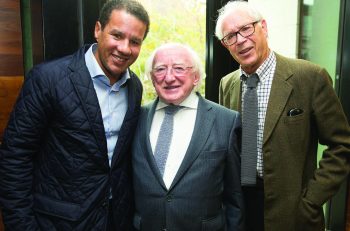
    Trinity College’s recent Conor Cruise O’Brien centenary symposium was a largely uncritical exercise. It was especially notable that it was so as it focused on Irish politics. Invited US academics, who discussed O’Brien’s assessment of the American Revolution, appeared unaware of O’Brien’s distinctly illiberal local contribution. Reverential tones underpinned contemplation of O’Brien’s analysis of Irish nationalism. Remarks at Gerry Adams’ expense massaged the prejudices of the mainly elderly audience. Critical observations came mainly from the floor. Audio from an evening session, put up online by TCD, omitted audience interventions. In a way, that was appropriate. O’Brien’s main contribution to the ‘Troubles’ was perfection of radio and television censorship. He achieved that with amending legislation and intimidation of broadcasters, while Minister for Posts & Telegraphs, 1973-77. Many of the academics and journalists chosen to speak referred to “Conor”, whether or not they knew him. A Labour Party activist questioned this from the floor during the last session. He remarked that O’Brien’s 1977 defeat was generally welcomed, including by some on Labour’s left, and asked why no speakers reflected that majority view. One participant, who knew O’Brien quite well, momentarily punctured the semi-sacral nature of the proceedings. In opening the evening session, TCD Chancellor and former Irish President Mary Robinson, recalled how her participation in a public meeting in 1974, in opposition to internment in Northern Ireland. It “enraged” O’Brien. She was, he said, “dancing to the tune of the IRA”. The audience might have been forgiven for expecting the speaker following, barrister and historian Frank Callanan, to tell us more. It was not to be. After her remarks Robinson left the Edmund Burke Hall. The theme of hommage to O’Brien re-congealed around the platform, which included Margaret O’Callaghan from Queen’s University Belfast and former Labour leader Ruairí Quinn. President Michael D Higgins also attended. I pointed out (in remarks that were omitted) that O’Brien insinuated also that Robinson silently acquiesced in the killing of judges. The then-minister, a secret supporter of police brutality, told journalists they were IRA stooges and hacks. The brutality of O’Brien’s language eased his transition from verbal opposition towards explicit support for censorship. Before chastising Robinson, he entered RTÉ and sensed an IRA “spiritual occupation”. Eoghan Harris, RTÉ’s then best-known republican ideologue, was disciplined for broadcasting a programme on internment. Harris told the symposium he was actually a secret supporter of the author of his misfortune. He was not, as is assumed, converted later while producing agricultural and children’s programmes. O’Brien shifted his focus in 1976, the year he amended broadcasting censorship. He threatened to imprison Irish Press editor Tim Pat Coogan for publishing letters O’Brien disliked. Coogan was told this by O’Brien’s interviewer, an alarmed Bernard Nossiter of the Washington Post. Coogan published the threat and republished the letters. In 1979, as Observer editor in chief, O’Brien terminated the contract of Ireland correspondent and leading feminist Mary Holland. She was, he said, “a very poor judge of Irish Catholics”, who “include…the most expert conmen and conwomen in the world”. O’Brien observed of Holland’s ten-years-of-the-Troubles profile of Derry woman Mary Nellis: “Irish republicanism – especially the killing strain of it – has a very high propensity to run in families… the mother is most often the carrier”. Such sectarian and misogynistic perspectives did not interest Friday morning lecturers, Sunday Independent columnist Eoghan Harris and Irish Times journalist Stephen Collins, on their hero as “journalist and editor”. It was left to Susan McKay in the last session to criticise O’Brien’s sacking of Holland. Margaret O’Callaghan delivered an appreciative paper on the 1973-77 Fine Gael Labour government’s subdued remembrance of 1916. She did not discuss its 1976 prohibition of Sinn Féin’s annual 1916 commemoration, which thousands defied. The 1976 platform included Labour TD David Thornley; and the daughter of executed 1916 leader, and Labour Party founder, James Connolly. The ban was accompanied, typically, by threats to sack participants in public-sector jobs. RTÉ’s director general Oliver Maloney directed the Irish-language programme Féach not to cover the banned commemoration. That was testament to an emerging culture of selfcensorship fostered by O’Brien. This did not interest O’Callaghan. Speakers suggested that O’Brien’s 1976 amending legislation liberalised censorship, a foolish thought originated by O’Brien. Before O’Brien’s new measure came into force in January 1977, he declared RTÉ’s pre-existing censorship order too liberal. It permitted interviews with Sinn Féin representatives. O’Brien banned them with terminology from his soon-to-be-enacted measure. The TCD symposium censored the real Conor Cruise O’Brien, once described as “a champion of the overdog”. The real O’Brien can be heard on ‘Bowman Sunday’ talking over Kadar Asmal, former head of the Irish Anti-Apartheid Movement (RTÉ Radio 1, 5 November), while opposing an academic boycott of Apartheid South Africa.   Niall Meehan is the author of The Embers of Revisionism, which considers Conor Cruise O’Brien. On sale at Books Upstairs, Dublin

    Loading

    Read more

  • Posted in:

    One Cheer For The Sugar Tax

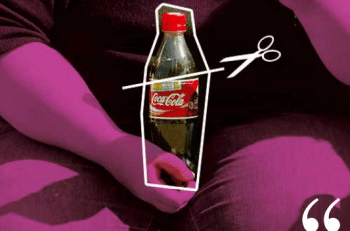
    In the early 1980s the government decided to try to get children to drink more milk. I’m not sure that there had been a problem with children not drinking milk. As I recall, that’s all we drank. Yet it introduced a free milk scheme. The milk was to be distributed through schools and it was packaged in a sort of rough plastic bag. If it had arrived cool, by the time we were given the milk it was warm and smelled rancid. We used to have fights using the gone-off milk on the way home from school. If the policy was intended to get children to drink more milk, and not designed to alleviate the then-growing butter mountain, the policy failed. The government is still concerned about children’s diets. Since the 1980s there has been an increase in the number of children who are overweight and diagnosed with type II diabetes – the one related to poor diet. When confronted with such figures the first response should be to question the data. As we can see with Garda data on crime, even measurement of clearcut things is rarely simple. Data are based on man-made decisions, collected by humans, and so can be subject to human biases. The measure of weight using Body Mass Index (BMI) is somewhat controversial, though some of the criticism is overdone. We know for instance that muscle weighs more than fat, and so very fit people can be classed as overweight. We also know that all fat isn’t equal. Fat around the bum and thighs may not be wanted, but it’s not deadly in the way visceral fat around the organs at the belly is. Weight itself isn’t a problem, it’s what weight is associated with. But as a measure BMI broadly correlates with other measures of health, and has the advantage of being relatively easy to measure. We also do it right. Though expensive, we now measure a genuine random sample of people in Ireland, with interviewers willing to call to targeted respondents multiple times. This is rare. It’s also rare to survey over 7,000 people, which allows us to see where they live and who they are in greater detail than most other surveys would. So let’s assume that the data are broadly right, and about 60 per cent of adults are overweight or obese. The government’s concern has led to a number of policies being introduced. One is to give out free samples of healthy food in primary schools – in a Food Dudes programme. It’s the modern equivalent of the milk-in-schools scheme, and it makes the same mistakes. The fresh vegetables and fruit are not that fresh, and so children who don’t normally eat fresh fruit and vegetables will be left (even) less likely to try them again. In the recent budget Paschal Donohoe announced another policy, which has been dubbed a sugar tax. It isn’t actually a sugar tax: processed sugar is zero-rated for VAT and will continue to be. It’s a tax on sugar-sweetened beverages. Sugar is seen by some as today’s tobacco. Whether it is or not is less clear. There’s no evidence that sugar has properties that are addictive in the way nicotine is, but it’s also clear that there is a link between sugar-sweetened processed foods and diseases such as diabetes. However, if we look to UK data (which we are culturally and economically closest to) we are consuming fewer calories now than in the 1980s. However, the nutritional value of the calories we are consuming may have changed. Milk consumption among US children and adolescents has halved since the 1960s, largely replaced by sugar-sweetened beverages. So even though we don’t have good time-series data for Ireland, and the Healthy Ireland survey doesn’t give us very fine grained data on what we are eating, we’re probably consuming more sugar now than in the past. So how do we deal with this? And will Paschal Donohoe’s intervention work? Taxes affect behaviour. We often don’t want them to affect behaviour – taxes on work tend to deter people from offering or taking up employment; taxes on goods may stop people from trading goods, suppressing economic activity. But what if those goods are ones we don’t really want people to consume, or certainly not in large volumes? As long ago as 1776 Adam Smith, who didn’t want taxes that distort the economy, nevertheless noted that “Sugar, rum, and tobacco are commodities which are nowhere necessaries of life, which are become objects of almost universal consumption, and which are therefore extremely proper subjects of taxation”. Whether these taxes would work depends on their price elasticities. That is, the extent to which price changes cause changes in demand. Demand for tobacco is shown to be highly inelastic to changes in prices. Increased prices have little impact on consumption. The tax on cigarettes is now about 400% and, while smoking has reduced that is mainly because of lower take-up and people quitting for health reasons, though no doubt the price helps. It can raise a lot of revenue for the state. But even this huge tax might not affect consumption among existing smokers. In Ireland the tax introduced by Donohoe on sugar-sweetened beverages (SSBs) is modest. He is “introducing a tax at a rate of 30 cent per litre on drinks with over 8 g of sugar per 100 ml and a reduced rate of 20 cent per litre on drinks with between 5g and 8g of sugar per 100 ml”. A can of Coke will go up by 10 cent. This is roughly a 10% tax. Will it deter people? Research by Mathew Harding and Michael Lovenheim, published in the Journal of Health Economics, on elasticity of demand suggests that sweet snacks are quite inelastic, which might mean taxes won’t affect behaviour much. However, using modelling techniques, which are themselves problematic, they found it might work: a 20% tax on high-sugar products might reduce sugar consumption by 16%. There have been

    Loading

    Read more

  • Posted in:

    Lowry and Sinclair

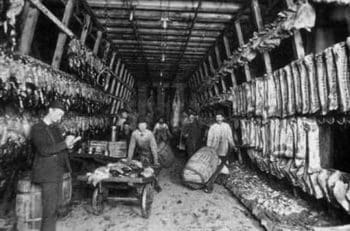
    I recently concluded a criminal case in the Crown Court in Manchester; a city I had not visited in over 20 years. Much has changed while I’ve been gone. It is a little less frenetic, with no Tony Wilson or Hacienda club, and a good deal more gentrified. Salford, the traditional working-class area, immortalised in the works of such working-class poets of music as John Cooper Clark and Mark E Smith, is no longer as bleak and industrial as it was 20 years ago, but has acquired a glossy riverside sheen, or rather façade. Appearances are always deceptive, and much is still very rundown indeed. Perhaps the most famous chronicler of Mancunian and Northern working-class existence is the painter LS Lowry, to whom there is dedicated a fabulous museum in the designer-revamped Salford: a huge treasure, free to the public and staffed by authentic people of the utmost friendliness. The museum is there, along with a northern version of a Daniel Libeskind structure – actually designed by James Sterling, containing the imperial war museum, northern branch; two theatres; and sundry other cultural delights. The paintings, once seen en masse in the beautiful gallery in the Lowry Centre, are indeed like the ‘matchstalk men and matchstalk cats and dogs’ that I remember children singing about in my youth. Humanity is represented by little emaciated speckled archetypes, often scurrying around in droves near the citadels of northern capitalism, the industrial factory. The people appear as miniature figurines to highlight the backdrop as in an industrial Canaletto view of Venice. The people are all like dots of insignificance: working-class cyphers, their lives dedicated to the service of their paymasters. If you wander away from the totemic works there are, not as famous but more precise, evocations of workingclass existence. A drunken brawl, a funeral congregation in black, the Sunday best for the big occasion: dour. The celebration of shortened lives in rank conditions. These paintings are stark but full of empathy, observed calmly and with rational detachment, as indeed are some of his portraits, and he is a remarkable portrait painter, though I had not realised it. Separately, some weeks ago on a visit to Dublin I spoke to a friend, the librarian in the IFI bookstore, an oasis of modern civilisation in an ever-bleaker city. We conversed and he intimated to me that he had read a recent article by me in the Dublin Review of Books, where I noted the need for a new Orwell to chronicle how the poor die in our nefarious third-world state. No, he firmly intimated, we need not Orwell but that great chronicler of American depression-era working-class life, Upton Sinclair. In Sinclair’s most famous book ‘The Jungle’ he demonstrated sub-standard conditions of workers in the Chicago meat-packing industry and many of his works including ‘Oil’, which became the film ‘There Will be Blood’, are attacks on unbridled, greedy capitalism and what it does to the human spirit. Lowry and Sinclair are ever more relevant as we return to the present. The Marxist analysis of dead capital sucking the blood of labour is more pertinent than ever. I know the tropes and nuances are different, and that the culture has shifted. I know with Marx that identifying the problem does not solve it but recognise the communist manifesto will not work. The existence of the ordinary person in under-paid and over-worked corporatism is not unlike the heyday of Victorian capitalism, or indeed the Great Depression, with the modern version of the factory being the bleak buildings of financial services and corporate law firms. Death by overwork while serving the interest of the plutocracy has become banal in much of western society. Ordinary people console themselves often, as in a seminal painting of Lowry, in the consolations of booze, the Friday night out, the office party. Oblivion. Blowing the limited amounts of disposable income they have, which has not been hoovered up by inflated rents, and mortgages which may never be repaid. Certainly in Ireland there is little or no ‘real’ economic growth as such. Those who have wealth and property run the country like a feudal oligarchy, abusing state structures to go after anyone that poses a threat to their interests. They often mask it well. But deep-seated criminality and thuggery are intrinsic to the modus operandi of our ruling classes and the tactics of surveillance, fabricated cases and false or political prosecutions endemic to a system descending into anarchy, where vested interests are using ever more desperate and ruthless tactics of human exploitation. There is a pattern to all of this. As Arundhati Roy intimates in her monograph ‘Capitalism: A Ghost Story’, and her recent novel ‘The Ministry of Small Things’, the pattern is that globalised capitalism is ‘cartelising’ the world into a small number of people who control the wealth and assets, and enforce penury and degradation on the mass of the population who are deemed surplus to requirements. That word “surplus” implies disposability by any means necessary. Thrown in a river, locked up in prison, shot. Exposers of the systemic corruption such as Roy in India have been jailed for their temerity in pointing out the growth of the rotten neoliberal agenda. Lives are being destroyed or truncated and the lunatics of the corporatocracy and the insanely rich are pillaging the planet with a speed and rapacity never witnessed before. In their wake, they are destroying equality of opportunity and the ability of ordinary people to work themselves out of the poverty trap. It is not just the working class but all of us, including the educated middle class, who are suffering. So, the working middle classes are confronted with longer working hours, increased competition and migration through neoliberalism – a wholesale race to the bottom. As Roy demonstrates in her ‘Capitalism’ book droves of Indian farmers are committing suicide because of the punitive conditions imposed on them. Suicide rates are exorbitant for failed businessmen, lonely farmers and the homeless of Ireland. A

    Loading

    Read more