Posted in:
If not zeal then logic
Human Rights and Equality Commission should force public bodies, led by Education Department, to implement action plan for equality and human rights
Posted in:
by admin
Human Rights and Equality Commission should force public bodies, led by Education Department, to implement action plan for equality and human rights
Posted in:
by admin
Ireland can learn Wellbeing from German and Danish practice on Education, Employment, Health and Participation
Posted in:
I have been leafing through the Global Youth Development Index 2016 published recently by the Commonwealth Secretariat, London. It deals with the all-round wellbeing of people aged 15 to 29 in 183 countries inside and outside the Commonwealth. It measures the general condition of that national cohort using five criteria: Civic participation, Education, Employment and opportunity, Health and wellbeing, Political participation. It awards marks in each category, totals the marks and provides global rankings. Ireland is found to be in the Very High group, at number 15. For those of us who wish Ireland well or rather the best, that is encouraging. People between 15 and 29 are the critically important part of a population. To have them in a Very High category of all round wellbeing suggests that a good methodology, mutatis mutandis, is being used for the younger cohort and bodes well for the older one. But this Youth Development Index does more than compliment and encourage us. By placing Germany and Denmark in first and second place respectively in its world ranking, it supplies us with concrete indications of how we can do better still. Irish people who want to better the quality of Irish society go about this in two ways. They call for more equality, justice or fairness – values that it is useful to remind us of, but abstractions. Others call for the remedy of particular ills that have arisen such as homelessness, too many people on hospital trolleys or the threat of being taxed for the supply of domestic water; just demands all of them but made because the problems in question are topical. They are not parts of a coherent scheme for overall social betterment. That is what the Youth Development Index enables us to begin working on -by presenting Germany and Denmark as the two best instances in the world of countries that afford life-enhancing conditions for 15-29-year-olds. Those two countries are near at hand so investigation of the social philosophy and institutional arrangements that have won them top marks would be easy. Equipped with that knowledge, it would be possible for us to apply it intelligently to that central 15-29-year-old tranche of our population. And the lessons learned might also be relevant to the younger and older components of the nation. Pursuing this course of action would mean using a method of national social improvement that has a certain history. It is the method that pursues that goal by adopting for the social improvement of one’s own nation something that has functioned to the benefit of another people. That is what many nations did when, one after another, they adopted parliamentary democracy, first from Great Britain then from the United States, or adopted the welfare state invented in Germany in the 1850s. While it is true that various methods are used for measuring the wellbeing of nations, it seems to me that the method used by the Youth Development Index is particularly useful. Some methods measure the amount of money available to the nation, say its GNP, or the proportion of citizens who vote in national elections. The method used by the Youth Development is more telling. It measures the use made of social philosophy, institutional savvy, and available money to produce beneficial effects in key aspects of the lives of those persons who constitute the central, tell-tale cohort of the nation – those key aspects being Civic participation, Education, Employment and opportunity, Health and wellbeing, Political participation. More to the point for useful assessment of national wellbeing it would be difficult to be. The Irish researchers in Germany and Denmark would be concerned, firstly, with absorbing the social philosophies inspiring the two sets of practical arrangements that enabled those countries to come first in the world in the Index; secondly, with proposing—insofar as the national budget would allow—the corresponding institutional adjustments needed in Ireland. Of course, it is not the case that Ireland has not previously sought to improve its way of doing things by importing methods and institutional arrangements from abroad. However, its method of doing this has normally been simply to copy English practice, not because that practice is of outstanding excellence internationally, but simply because England is near at hand and there is a post-colonial habit of following its lead. What I am proposing is a rationally grounded importation of well-attested excellence.
Posted in:
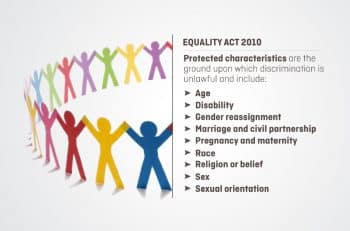
Our Equality legislation covers nine grounds of discrimination. This reflects the worthy ambition to be comprehensive in attacking discrimination. However, Central Statistics Office (CSO) data suggest we are far from realising any such ambition. They show that 41% of people who feel they have been discriminated against perceive this discrimination to be on grounds other than the nine grounds covered. There appears to be a big hole in the protection afforded to those experiencing discrimination. These CSO data come from an equality module they introduce periodically as part of their Quarterly National Household Survey. It’s from 2014, but it was not news as the figure stood at 42% in the previous 2010 equality module. The CSO data does not identify what grounds now need to be included in the legislation, they merely allowed respondents to tick a box titled ‘other ground’. However, the indications are that a substantial element of this ‘other ground’ is the ground of socio-economic status. First to recommend the introduction of a socio-economic status ground was the Equality Authority back in 2002. In 2008 it commissioned the Economic and Social Research Institute (ESRI) to examine the CSO data on discrimination from the 2004 module. The ESRI did not reach definitive conclusions on the composition of this ‘other ground’ but noted an association between choosing this ‘other ground’ and trade-union membership, low education status, and unemployment. This supports the argument for a new socio-economic status ground to be introduced in our equality legislation. The Equality and Rights Alliance has just launched a report, by Tamas Kadar, that finds Ireland lagging behind many European countries by not introducing such a ground. The European Network of Legal Experts in Gender Equality and Non-Discrimination found that legislation in 20 of the 35 European countries surveyed provides protection against discrimination on a ground related to socio-economic status in 2016. There is, according to the Network, a significant move across the EU towards extending the mandate of equality bodies to cover socio-economic-status related grounds. The case flows first from the high levels of inequality and discrimination evident on the ground of socio-economic status. This has been exacerbated over the years of economic crisis and austerity in Ireland and across the EU. Why would we protect some groups from discrimination and not others? The Equality and Rights Alliance report found that discrimination on a socioeconomic-status ground has grown in importance in both human-rights and equality law, with a growing case-law from courts and tribunals on this ground. Experience from abroad is showing that there are important gains to be made by Ireland from introducing this ground. Casework on the socio-economic status ground, identified in the report, shows that this discrimination is predominantly reported in employment, social services, public and private housing, healthcare, and social protection systems. The significant focus on the public sector might be one reason we have been so slow to introduce this ground. Casework on this ground can be as high as 25% of the case load of equality bodies, but in most instances it is around 5%. Perhaps another reason is that most of the other grounds are identity based whereas socio-economic is status based. But research shows that to the greatest extent socio-economic status is driven by birth also. Ideologues may deny the relevance of this but research dictates its own imperatives. This elevates the socio-economic ground beyond pure status. It is time to expand the grounds covered in Irish legislation. We have waited more than the apparently required decade from the case for this change first being made. We have made the required token gesture with the introduction in 2015 of “housing assistance” as a new ground into the Equal Status Act to protect against discrimination in accommodation. People in receipt of housing-assistance social-welfare payments, such as HAP and Rent Supplement, cannot be discriminated against in the provision of accommodation or related services. Why not go the whole way and introduce a socio-economic status groundThis would best be done, according to the Equality and Rights Alliance report, in an asymmetric way designed to protect those experiencing disadvantage from discrimination. The ground could then be defined in terms of discrimination against someone on the basis of where they live, their employment status, their education status or their housing status. The introduction of this ground is a logical extension of the merger of equality and human rights issues under the Irish Human Rights and Equality Commission and of the focus on economic and social rights in the Programme for Government which includes commitments to equality-and-human-rights budgeting and policy-proofing. Adding the ground of socio-economic status is the lynchpin for integrating a concern for equality and human rights. It is the logical next step. Niall Crowley
Posted in:
by admin
The ten new public banks will not be owned by shareholders, their sale will be impossible, they will have a ‘public mandate’ and they will be limited to their own region

Posted in:
by admin
Hillary has offered no radical new ideas since her college days