Opinion

Random entry RSS

  • Posted in:

    The pro-life lobby

    I am in favour of liberal laws on abortion. I once initiated an abortive master’s thesis about it, coming down in favour of the liberal approach. This magazine has always taken a liberal stance, outlining all the obvious anomalies in the Irish regime. We have devoted cover and editorial space to the issue and given serial platforms to the lead campaigners. We would never of course give a cover to the pro-life agenda. However, I do not consider the issue is simple. For instance Una Mullally, a columnist in the Irish Times, says people are asking: “How could Ireland allow same-sex marriage yet deny women the right to choose?”. That is banal. More blatantly she has declared: “Personally, I believe there is no ambiguity to what needs to be done”. There is. Though the debate never addresses it, the problem is that: it is impossible to say what rights apply to a foetus. We only have a language for human rights. The lexicon doesn’t come close to addressing the rights of animals, nature, or life that is on course to become human. I am loath to criticise anyone who believes a foetus has enough of the stuff of humanity to benefit from human rights. I can understand why someone would take that view. I can understand that they may even see abortion as equivalent to murder and be driven to campaign on the matter with the zeal that would demand. I do not share the view but I respect it. As a feminist, I am reluctant to pronounce on a matter where a man can never be burdened with the downside of the zealous approach. I also consider society could not really function if women, upon whom humanity depends for the early nurturing of the species, drew obvious conclusions from any regime that coerced them to bear children they did not want to bear. Because of the complexity of the issue and indeed of modern lives, because unwanted pregnancies inevitably bespeak trauma of a sort, and contraception is not properly provided, or even explained, to vulnerable young people, I would abhor any attempt at moralising over women who are contemplating, or have had, abortions. A blog by comic Tara Flynn puts it well: “I had an abortion. I am not a murderer. I am not a criminal. I am not a vessel”. Nevertheless abortion is not an issue I am comfortable with nor one I think anyone should be comfortable with. I do not shy from saying that abortion is best avoided. I cannot agree with the view, recently ventilated, that it is the “opposite of wrong”, though certainly it can often be that, for a particular person. None of this is to say that certain aspects of the debate cannot be treated as black and white. It seems to me that Sabina Higgins was in fact not deviant, for example, when she said that it is uncivilised to prohibit pregnancy terminations where there is a fatal foetal abnormality. It seems to me she was, through it all, really only asserting a fact. I would also tend to believe that prohibiting terminations even after rape or incest is akin to enslaving women. But the central pro-life, anti-abortion proposition is more difficult to definitively denigrate. Against this background I am worried by the hegemonic unassailability in the media of the pro-liberalisation voice. This voice is the ascendant one though the dominant media deny even this. To the extent that mainstream media review the quality of the coverage of abortion, they seem to be biased to the point of denial. For example an article, again by Una Mullally, in the Irish Times under the heading: ‘Greetings from Ireland – the land of balance and crazy abortion laws’, claims: “Just as broadcasters made fools of themselves clambering for anti-gayrights opinions in the lead up to the marriage referendum, they continue to see voices that are pro-choice as things that need to be not listened to but opposed. What ‘balance’ is really about is censorship. Women get balanced. Gays get balanced. If only they’d stop talking about their rights. If only we could keep our fingers in our ears without hearing these horror stories. Balance. Help”. Village has dealt elsewhere with the phenomenon that right-on agendas suppress the facts, choosing to apply the evidence to the opinion rather than the other way around. For example it does seem that media treatment of the tragic Savita Halappanavar case tended to overemphasise the role of the failure to provide an abortion in her death, where medical deficiencies seem to have been the actual immediate cause. Liberal media cover stories where denial of abortion causes death but often do not cover cases where abortion causes death. Village promotes equality. It is a byproduct of that agenda that views that do not endear themselves to the editorial slant of the magazine, provided only that they are tenable, should get an occasional airing, even if fashion has deserted them, indeed especially if fashion has deserted them. Typically such views are designated to contrast them with the views of the magazine – “counterpoint’, “contrariwise” etc. The progenitors of the 1983 Eighth amendment were incompetent and their wording foolish, making the recent ‘Celebrate the Eighth’ rally offensive, but as we can see from that event and more generally, for example in the US, the pro-life viewpoint is not moribund. Mullally believes that: “Fine Gael’s shirking needs to be called out…What we need on abortion is political leadership”. The problem is that the leadership Fine Gael would provide if it stopped shirking is simply not in the direction Mullally advocates. By Michael Smith

    Loading

    Read more

  • Posted in:

    When home is Homs

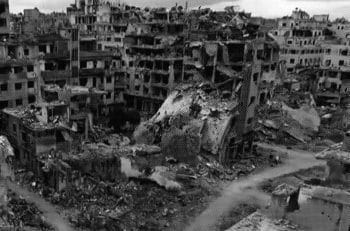
    “Everybody has lived this war”, writes Marwa Al-Sabouni at the beginning of her remarkable book, ‘The Battle for Home – the memoir of a Syrian architect’, which details in a singular voice how this once tolerant and beautiful country in the Middle East rapidly descended into murderous chaos after the Arab Uprisings in 2011. Al-Sabouni offers a unique perspective on the “nightmare of animal carnage” that Syria has endured by documenting her life as both a citizen and working architect in her home town of Homs. She examines how unthinking architecture and unscrupulous urban planning contributed to the catastrophic collapse of many communities, and asks what role these professions can play in healing deep sectarian wounds in the future. Homs is Syria’s third largest city, with a pre-war population similar to Greater Dublin’s, and it is here Al-Sabouni runs her private architectural studio. Even as the ‘Arab Spring’ descended into civil war in Syria, and grew savage, Al-Sabouni refused to leave, choosing to remain in the city with her husband and two young children. She details living under such conditions: subsistence with a symphony of bombs in the background (“every roaring sound, every stench of burning”) while she questions how corruption, cronyism, and thickheaded bureaucracy – all deeply embedded in Syrian society long before the war – helped fan the flames of her smouldering city. “Buildings do not lie to us: they tell the truth without taking sides”, she asserts, lamenting how a diminished sense of place and social cohesion were significant drivers in the disintegration of Homs. Once famous for its temperate environment and jasmine-scented breezes, Homs’s idyllic terrain was polluted long before the war by wrongheaded, grubby industrial planning. Although it is estimated that sixty per cent of cities like Homs have been destroyed in the conflict, a housing problem predated the urban dilapidation of city warfare. According to the 2010 Census, unmet demand for homes stood at 1.5million units, while nine million people (approximately fifty per cent of the total population) was living in slums and informal housing, despite 23 per cent of housing units being registered as vacant. According to al-Sabouni, most citizens are desperate for a place to call their own, but it is an almost impossible dream in their society due to crooked officialdom. In the past, Syrians would willingly work themselves to death just to afford a property; now death comes to their door as a consequence of a proxy war, which leaves little left to strive for anyway. Al-Sabouni deplores how it was the governor and mayoral offices that decided the shape of the city, not architects nor planners. Nonetheless, the city still possesses some remarkable architectural gems – the Ottoman mosque of Khalid Ibn Al-Walid, with its typical feature of Islamic architecture in the Levant Alablaq (black and white stripes). The mosque contained the priceless minbar – pulpit – ordered by the great Muslim leader Saladin, though it has been looted in the conflict. The city is also home to the Church of St Mary of the Holy Belt, supposedly the oldest church ever built in AD 59 (though rebuilt in 1852). The church reputedly houses the relic from which it takes its name: the belt of the Virgin Mary, now at a secret location for safety. Homs is also the site of the historic castle Krak des Chevaliers, a UNESCO world heritage spot which was held by the Knights Hospiteller during the 12/13th century Crusades. With these buildings, it is easy to understand how Syria was known as the palimpsest of civilisation; that Christian bells and the Muslim calls to prayers often rang through the streets at the same time, though Al-Sabouni notes “neither mosque nor church made a display of its importance”. The smoke has dissipated somewhat in Syria since the ceasefire late last year and there are some slivers of optimism for a diplomatic solution to the conflict. After two years of being unable to complete any work, Al-Sabouni now teaches at a University in Hama, a nearby city to Homs. She still holds on to a fierce anger, saying in a recent interview: “too many people died, like birds. You’d be walking in the street and someone would fall next too you”. The book contains some disputable points (she rejects socialism yet wants similar houses for both the rich and poor; she blames urban zoning more than religion for sectarian division and hatred; Al-Sabouni’s outlook is certainly conservative, with a small ‘c’). However, with a PhD in Islamic Architecture, she adumbrates incisive insights on the built environment. She rightly rejects the default modern mindset for Middle Eastern countries, where it seems design choice must be either starchitect-led hubris that has no meaning and ostensibly dropped from the sky (especially found in the Gulf states), or cliched, pseudo-Islamic buildings. Confusion on what constitutes traditional Islamic architecture and how modernism has fed into the Arab inferiority complex is a particularly strong theme of the book. Marwa Al-Sabouni’s 34-year-old eyes have seen sights most of us will never encounter, and she writes deeply on how the destruction of a home can relate to the destruction of one’s soul (how would we react to losing everything?). But her message is still one of hope, and at the end of this small jewel of a book it is easy to agree with the philosopher Roger Scruton (who has written the foreword) that Al-Sabouni is a profound thinker and “one of the most remarkable people I have never met”. Now, who will listen to her? The UN and local NGOs trying to fix things in Syria while the ceasefire holds might be wise to listen. If her outlook is not quite doveish considering everything she has witnessed, then Al-Sabouni’s book is best seen as an olive branch. Review by Niall McGarrigle

    Loading

    Read more

  • Posted in:

    I’m unselfish; you’re selfish

    Equality of outcome, sustainability, accountability. Village does wear its values on its sleeve. Media are in the business of communicating values. What makes Village different, however, is both being explicit about its values and the particular values it espouses. Values matter and the manner in which we address values is central to any ambition for social change. The issue merits a lot more attention among those who seek such change. The Common Cause Foundation in England has led a rethink on the centrality of values to effective work on environmental, global-justice, anti-poverty and many of the big issues facing civilisation. Its recent publication, ‘Perceptions Matter’ highlights some startling conclusions that should be further informing this work. The research was based on a survey of a thousand people in Britain. People were asked what they valued in life. The researchers looked at groups of ‘compassion’ values like ‘helpfulness’, ‘equality’ and ‘protection of nature’; and “selfish” values such as ‘wealth’, ‘public image’ and ‘success’. It found that 74% of respondents afford greater importance to compassionate values than to selfish values, irrespective of age, gender, region, or political persuasion. That has to be a more than promising start for social change in Britain. It is the second finding that is the most striking and much less promising. It found that 77% of respondents believe that their fellow citizens hold selfish values to be more important, and compassionate values to be less important, than is actually the case. People who hold this inaccurate belief about other people’s values, the research found, feel significantly less positive about getting involved in action for change, feel a high level of social alienation, and feel less responsible for their communities. How does the apparent majority holding values of equality and sustainability end up alienated to the extent that they don’t give expression to these values? This must be a concern for those in civil society espousing progress. How does a majority get to feel that its values don’t fit in? Yes…it does go back to the fact that we are repeatedly told by the media, by politicians, and even by our educational institutions that these ‘selfish’ values are dominant in and most important to our society. The Common Cause survey supports this explanation. It asked people what values they felt were encouraged by key types of institution: arts and culture, schools and universities, the media, Government and business. It found that people believe that each of these institutions discourage “compassionate” values, and encourage “selfish” values. That is why it is important to wear our values on our sleeves. Take a bow, Village. Values matter. Values motivate what we do and think, as individuals. Values shape what organisations prioritise, and the way they go about their business. The values that dominate in a society or in an organisation block or enable the change we seek for a more equal, sustainable and accountable world. Civil society seeking such a world needs to be more attuned to activating the values it espouses and to better understanding how values work. Earlier publications by the Common Cause Foundation have shown how important it is to explicitly engage people’s values such as equality, sustainability and accountability. Social change is not about trying to change people’s values it is about triggering values they already hold. They tell us that values are universal. If we look across different cultures and countries, we will find the same set of values. They identify a list of some sixty repeatedly occurring values. The Common Cause Foundation suggest that values are like muscles, the more we engage them the stronger they become. When our media, politics, and education system extensively engage values of self-interest, the stronger they become. The challenge to civil society becomes to expose and challenge this and to set about engaging people’s values of equality, sustainability and accountability to the same effective and extensive extent. This is a challenge, a cultural battle really, that we have not yet adequately taken up. The Values Lab has recently been established in Ireland to bring this focus on values into an Irish setting. It has set out to support and mentor organisations and networks to identify, engage and give expression to the values that enable them to more effectively address equality and human rights issues in their work. This is a useful start. However, we need to see more civil society organisations developing a focus on values in their work for social change, more media outlets being explicit about their values, and a greater challenge to the values that block and distract from achieving equality, sustainability and accountability in Irish society.

    Loading

    Read more

  • Posted in:

    Sinn Féin goes Republican Lite, on Brexit

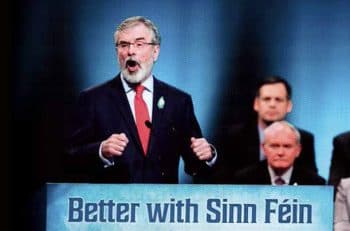
    Sinn Féin’s commitment at its Ard Fheis last month to campaigning vigorously against ‘Brexit’ in the UK’s June referendum is a denial of its Republican credentials. Its rhetoric of seeking to turn the EU into a “Social Europe” – with all of the weight of Ireland’s less than 1% EU Council vote? – is derisory. Since Provisional Sinn Féin was set up in 1970 it has opposed handing over Irish sovereignty to the EU in every referendum from that on the original EEC Accession Treaty in 1972, through the referendums on the Single European Act 1987, the Maastricht Treaty 1992, the Amsterdam Treaty 1998, the Nice Treaty 2001 and 2002, the Lisbon Treaty 2008 and 2009, up to the Fiscal Stability Treaty of 2012. Opposition to EU integration and supranationalism was central to Sinn Féin’s political stance for forty years, alongside its support for the IRA’s ‘armed struggle’ in the North. That Sinn Féin should embrace the EU at a time when that entity is in disarray and getting more such, what with the euro-currency crisis, the migration crisis and the Brexit crisis, and losing popular support across the continent by the day, adds to the irony of this change. It would seem that this policy turnabout stems at bottom from the party leadership’s search for political respectability, whether in the eyes of Ireland’s political Establishment and media, or to please the American and British Governments that have backed the Good Friday Agreement and to whom Brexit is anathema. It is over a decade now since the Sinn Féin leadership announced that its policy on the EU was one of “critical engagement”. This spindoctor’s phrase could mean whatever one wanted it to mean. It implied that Sinn Féin was at once critical of the EU while supporting it at the same time. And it kept the party members happy, especially in the South. However the Brexit referendum has forced the leadership off the fence. It is mainly the Northerners that have pushed this significant change. “We must not have a Little Englander mentality”, Martin McGuinness told his Ard Fheis. “The future of Ireland, North and South, is in the EU”, he says. One factor influencing the Northerners has been the millions of EU funding that have gone into the ‘peace process’ there, for local community groups, the employment of ex-prisoners and the like. As Britain is a major net contributor to the EU budget, all money for EU projects in the UK is effectively British taxpayers’ money being recycled through Brussels. But as Northern Sinn Féin MEP Martina Anderson told the European Parliament recently: “The EU has supported the Irish peace process and projects aimed at reducing the impact of the border through INTERREG and Peace funding, with examples like the footbridge uniting Pettigo in Co Donegal and Tullyhammon in Fermanagh…There are thousands of my constituents with no faith in a British Government replacing these funds post-Brexit”. At the Sinn Féin Ard Fheis there was much talk of the desirability of an “agreed” united Ireland and the need for cross-community reconciliation in the North, while at the same time a practical opportunity to influence Unionist attitudes towards Irish reunification was being thrown away. It is obvious now that the only way to bring about a United Ireland over time is to win a section of current Unionist opinion to that position, however long that may take, so as to bring about eventually a majority in the North for ending Partition. For if the Unionists are Irish, as they are, that should in principle be possible. By opposing Brexit, which mainstream Unionism in the form of Ian Paisley’s Democratic Unionist Party supports, Northern Sinn Féin can now lapse comfortably back into the usual Catholic- Protestant, Nationalist-Unionist confrontation in the referendum, despite the rhetoric of cross-community reconciliation. It would truly have been an historical development if Sinn Féin had sided with such Unionists as the DUP against the mainstream policy of the British Government and Prime Minister Cameron by supporting Brexit. This would have opened further opportunities for a more progressive direction by Unionism over time. Instead Unionists are likely now to look even more cynically at Sinn Féin in view of the convolutions of their EU policy. Another consequence of Sinn Féin embracing the EU at its Ard Fheis is that it removes the most significant policy difference between it and the other Dáil parties, and in particular Fianna Fáil. It thereby clears the way for a Fianna Fáil-Sinn Féin coalition down the road, in which Sinn Féin would be the smaller not the bigger party. For if the choice for voters is between Fianna Fáil ‘Lite’ – a pro-EU Sinn Féin – and Fianna Fáil ‘Heavy’, most of them will surely go for the genuine article. For Sinn Féin to advocate Brexit would have been tricky in presentational terms, but it could have been done. It would not be so tricky however if the Sinn Féin leadership had carried out a sustained campaign of education in the party’s own ranks and amongst the wider Irish public on the anti-democratic and anti-national character of the EU over the years, building on its record of referendum opposition to successive EU Treaties. The leadership shrank from tackling that. It contented itself with rhetoric about “a Republic of equals”, “an agreed Ireland” and talk of “leading the Left”, while rarely mentioning Irish independence, which has always been the central value of Irish Republicanism and national democracy. National unity is both logically and politically a subordinate value to national independence. Ireland was a united country under British rule in the 19th century. It could be united again under supranational EU rule today. Unity in independence is however a different matter and is unattainable in the EU. Sinn Féin wants free water, but imposing charges for water is an EU policy. It wants more spending on health and other public services, but supplementary budgets to pay for such must have EU approval under the Stability

    Loading

    Read more

  • Posted in:

    What about ye down there?

    Welcome to my world in the North, for a minute or two. For half a decade, the worthy burghers of South Dublin and suchlike places have had to suffer the horror of Gerry Adams in the Dáil, doing unspeakable things in two official languages. Bad enough but now you have a variant of the whole Northern political system, probably smuggled down in Adams’ beard. So now it is not possible to write Irish political fantasy any more. Reality is far more fantastical. The North has taken you over. Your two big parties have come together, just like ours did a decade ago. They will, of course, go through the motions of the occasional spat. They’ll keep a visceral and useless hold on their history but primarily they will always stick together. Particularly when it’ll about the prime business of their politics – freezing others out. Fantasy as reality started with the Sinn Féin- DUP deal in 2007. Nobody would have imagined that before… well, 2007. Suddenly, they didn’t just hate each other or even just work together – Paisley and McGuinness enjoyed each other. We of the hard left regularly used to say that Fine Gael and Fianna Fáil would be driven together. We never believed, truth be told, that we would ever see it but it sounded appropriately deprecatory. The fierceness and depth of their enmity could match anything between Sinn Féin and the DUP. So take it from a Nordie who’s seen it before – your election was supposed to be about changing the government – but now it’s been revealed as the Opposition re-electing the Government. At least, we in the North know that our Assembly election is about slightly rearranging the furniture. That’s why so many of us have stopped voting. Parties go up or down a couple of seats, there are personnel changes in a few constituencies, but the Executive remains the same – because the legislation says it has to stay the same. Since 1998, we have been told that the political arrangement in the North is an even greater thing than sliced Ormo. It has solved all our problems. Apparently, we Northerners aren’t mature enough to have an opposition. Now, Southerners are finding the same. You have no opposition except the once-dreaded Shinners, though having been house-trained at Stormont they are generally behaving themselves in the political litter tray that is Leinster House than they once did up here: the Anti-Austerity Alliance-People Before Profit: and a small number of left-wing independents. The forces to the left have real talent, but lack numbers. There’s something about what’s happening that makes some of us glad you’ve been bitten. We’ve had a sectarian political system imposed on us. All Assembly members have to designate as ‘Unionist’, ‘Nationalist’, or ‘Other’. ‘Others’ are second-class members. The thinking was that anything other than the historical bog standard might be dangerous. Presumably there was a patronising sense from our international betters that, left to their own devices, Nordie lawmakers would declare as scientologists or moonies, or Bombers. “Key decisions requiring cross-community support will be designated in advance…including election of the Chair of the Assembly, the First Minister and Deputy First Minister, standing orders and budget allocations”, according to the Good Friday Agreement. “In other cases such decisions could be triggered by a petition of concern brought by a significant minority of Assembly members”. On the surface, that looks good. The North has a history of discrimination against the Catholic minority. In fact we moved from bigotry to political fantasy without stopping off at popular democracy. Thirty members are needed to launch a ‘petition of concern’. So, for example, the DUP lodged a petition of concern to stop us getting third-party objections to planning applications. Sinn Féin launched one to defend the A5 Dual Carriageway, the North’s biggestever road building project, over which there are big environmental questions. Imagine ‘Others’ some day gain a majority in the Assembly, for a (Village pipe-dream) Eamonn McCann/Greens Coalition Government. But they would be second-class political citizens. On the current legislation, they could be vetoed by Unionists and/or Nationalists. At least you still have a viable opposition. We don’t: the big two are dragging their feet on installing any provisions. Ok, we have a small opposition. Usually he’s called Jim Allister. He is one man, but he opposes so much that he can’t always land the killer blows. Now, there’s another piece of political fantasy. Allister used to be a leading light in the DUP. He was so loyal to Ian Paisley that his questioning Paisley was as improbable as Paisley going into government with Sinn Féin. Once or twice the opposition has been Stephen Agnew of the Greens. Agnew is more focused than Allister, but lacks Allister’s Northern ability to get under the skin of opponents and really vex them. So here’s another fantasy: the conservative Allister and leftish environmentalist Agnew are co-operating as The Opposition. Think Ronan Mullen and Eamon Ryan, if you can.

    Loading

    Read more