


Politics

Random entry RSS

  • Posted in:

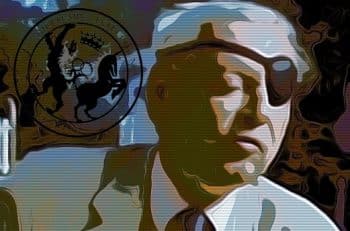
    Alleged disappearance of UVF Bomb Massacre Files: MoD excuse for destruction of Brigadier Kitson's logs is far from convincing. By David Burke.

    On 4 December 8:45 p.m., a UVF gang set out on a bombing mission. One of those involved was Robert James Campbell. The UVF bomb exploded outside a small pub in Belfast called McGurk’s, a cosy place where Catholics and Protestants from the same neighbourhood – all of whom knew each other well – met for a few drinks. The UVF unit left the bomb outside the pub, not inside it. It consisted of forty to fifty pounds of gelignite. It was ignited by lighting a fuse, not a timer. A paper boy saw the UVF car pull up and a man deposit the bomb outside the pub before fleeing. He spotted the fuse sparking and warned the man not to go up the road. According to Robert James Campbell, his unit had originally wanted to attack another establishment which they believed was frequented by the Official IRA and its supporters, but it had two guards posted outside. After waiting for an hour for them to go inside, the UVF unit decided to go elsewhere. They drove to McGurk’s. The British Army had two Ammunition Technical Officers, i.e., bomb disposal experts, circulating around Belfast on standby in case a bomb was detected. They attended at the scene in the immediate aftermath of the explosion.  Because of the darkness and the debris, they were unable to determine the exact location of the detonation. They decided to carry out a further inspection at daylight the next day. Following the daylight inspection, the Army’s 39 Brigade HQ in Lisburn recorded in its Ops Log at 11.10am: “ATO is convinced bomb was placed in the entrance way on the ground floor. The area is cratered and clearly was the seat of the explosion.  The size of the bomb is likely to be 40/50 lbs”. This information corroborated what the paperboy had witnessed. The bomb killed fifteen people, two of whom were children. Another seventeen were badly wounded. The building was demolished. A knowingly and thoroughly dishonest statement was issued stating that the bomb had been brought inside the pub by the IRA and detonated prematurely. The insinuation was that the bar was a safe haven for the IRA to stage operations, and that at least some of the victims were IRA sympathisers. The disinformation charge was led by Frank Kitson. Kitson is still alive. At the time, he was in charge of British military activities in Belfast and its environs. He was also an expert in  counter-insurgency (i.e. dirty tricks, collusive murder, torture and black propaganda). Paper Trail, a charity which helps victims of atrocities such as McGurk’s, has been digging into Britain’s National Archives to try to understand what happened. The work it has undertaken has proven beyond a shadow of a doubt that the bomb was not an ‘IRA own goal’. Aside from a few die-hard Unionist bigots, no sane and respectable commentator bothers to recirculate Kitson’s lies any more. But there is more, a lot more to this scandal, than meets the eye.  Paper Trail uncovered military logs relating to the attack which the Ministry of Defence (MoD) had failed to release when it made other logs available. Happily, the same logs were available elsewhere. Paper Trail submitted a complaint about this development to Britain’s Information Commissioner’s Office (ICO).  The ICO has just announced that it accepts the MoD’s explanation, namely that the relevant logs were in the process of being scanned before allegedly being destroyed and that the crucial logs were accidentally omitted during the scanning process. This explanation is trite. The time has long since passed for a full judicial inquiry. A full breakdown of the Information Commissioner’s conclusion and the evidence unearthed by Paper Trail can be found here: https://mcgurksbar.com/ico-accepts-mod-excuses-for-missing-massacre-files/ The Paper Trail website can be accessed here: https://www.papertrail.pro/ David Burke is the author of  Kitson’s Irish War, Mastermind of the Dirty War in Ireland  which examines the role of counter-insurgency dirty tricks in Northern Ireland in the early 1970s and the template it set for the Troubles. His next book, An Enemy of the Crown, the British Secret Service Campaign against Charles Haughey, will be released at the end of September 2022. Both books can be ordered/purchased here:  https://www.mercierpress.ie/irish-books/kitson-s-irish-war/ https://www.mercierpress.ie/irish-books/an-enemy-of-the-crown/ Other stories about British Intelligence black propaganda operations, dirty tricks, Bloody Sunday, the Ballymurphy massacre, McGurks bar bombing, Brigadier Frank Kitson and Col Derek Wilford on this website include the following:  Bloody Sunday murderers operated a mobile torture chamber. By David Burke. Soldier G – real name Ron Cook – the Bloody Sunday killer with ‘the sadistic edge’ over his ‘partner’, Soldier F. By David Burke. Bloody Sunday: Brigadier Frank Kitson and MI5 denounced in Dail Eireann   The covert plan to smash the IRA in Derry on Bloody Sunday by David Burke Soldier F’s Bloody Sunday secrets. David Cleary knows enough to blackmail the British government. Learning to kill Colin Wallace: Bloody Sunday, a very personal perspective Lying like a trooper. Internment, murder and vilification. Did Brigadier Kitson instigate the Ballymurphy massacre smear campaign? Where was Soldier F and his ‘gallant’ death squad during it? Another bloody mess. Frank Kitson’s contribution to the wars in Afghanistan and Iraq. 300,000 have died in Afghanistan since 1979. Lying like a trooper. Internment, murder and vilification. Did Brigadier Kitson instigate the Ballymurphy massacre smear campaign? Where was Soldier F and his ‘gallant’ death squad during it? A Foul Unfinished Business. The shortcomings of, and plots against, Saville’s Bloody Sunday Inquiry. Kitson’s Private Army: the thugs, killers and racists who terrorised Belfast and Derry. Soldier F was one of their number. Soldier F and Brigadier Kitson’s elite ‘EFGH’ death squad: a murderous dirty-tricks pattern is emerging which links Ballymurphy with Bloody Sunday. A second soldier involved in both events was ‘mentioned in despatches’ at the behest of Kitson for his alleged bravery in the face of the enemy. Mentioned in Despatches. Brigadier Kitson and Soldier F were honoured in the London Gazette for their gallantry in the face of the enemy during the internment swoops

    Loading

    Read more

  • Posted in:

    SECOND UPDATE: The Irish government has become complicit in the cover-up of British Royal sexual abuse committed in the Republic of Ireland. By David Burke.

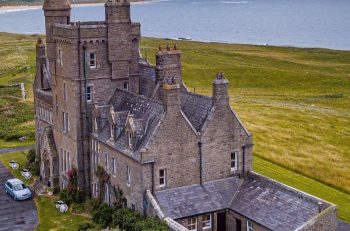
    1. The Classified Garda Files. The information provided by the brothers, John and Pat Barry, confirms that the Garda (Irish police) had a checkpoint at the gate of Classiebawn castle in August 1977. Garda security appears – by some accounts – to have been downgraded in 1979, shortly before Mountbatten was murdered by the Provisional IRA. Hence, while there might be a question mark about the existence of comprehensive Garda logs from 1979, there are no concerns about August 1977. The Classiebawn logs are the key to unlocking the sordid Kincora scandal. Boys from Kincora Boys’ Home in Belfast were trafficked to Mountbatten by Joe Mains, an MI5/6 agent who worked at Kincora. The same boys were trafficked to Loyalist paramilitaries and politicians by Mains as part of MI5 and MI6 ‘honeytrap’ blackmail operations. The Garda have shown no interest in the information at their fingertips. As far as can be told, the Government has displayed no curiosity either. The survivors of child sexual abuse deserve better. 2. Confirmation of a Garda checkpoint at Classiebawn. While the Barry brothers set out to defend the reputation of Mountbatten in their Sligo Champion interview – and did so in good faith – they have nonetheless highlighted a crucial issue about the Mountbatten-Kincora connection. It is one which could yet prove precisely the opposite of what they hoped to achieve with their interview. There is no doubt now that the Garda have a record of the registration plates of the vehicles they stopped at the gates. The existence of the Garda checkpoint was already an established fact, nonetheless, the confirmation by the Barrys is important as they  are living witnesses who can attest to its presence. It would now take a very daring – not to mention corrupt – Garda or Department of Justice official, to interfere with the files. The purpose of the interview with the brothers was to afford them an opportunity to put forward a defence for Lord Mountbatten whom they do not believe was a child abuser. John Barry, who was a boy at the time, made specific reference to a Garda ‘checkpoint’ and also that: “The guards wouldn’t have allowed some guy to come, a warden from Kincora [Boys Home in Belfast] who was supposed to have driven [child abuse victims to Classiebawn], and he was supposed to sit in the car for an hour outside the castle and let the boys in – or a boy in. And you think the guards wouldn’t have asked: ‘What are you doing here?’ No way”. His brother has confirmed the presence of Gardaí at the ‘checkpoint at the gate’. 3. Times and dates. In 2019 Andrew Lownie, author of a book about Mountbatten, sought the Garda logs taken at the checkpoint. Crucially, while the Gardaí refused to declassify the files, they nonetheless confirmed they were still in existenc.  See:  THE MOUNTBATTEN FACTOR: Boris Johnson should not bully Dublin over Brexit because the Irish Government has information which could damage the Royal Family What will the records reveal? In August 1977 Stephen Waring and another boy were abused by Mountbatten in an exterior building. They gained access to the grounds in a car which was driven through a Garda checkpoint. Waring took his own life the following November. See: SECOND UPDATE: Kincora boy abused by Mountbatten committed suicide months later. The Garda logs should contain the date and the arrival time of the car that brought Waring and the second boy through the gates of Classiebawn. They should also reveal when they left, along with the make, model and registration of the vehicle in which they were trafficked. 4. Liaison with the RUC The Kincora boys were driven to Classiebawn by Joseph Mains, the Warden of Kincora in August 1977. As a matter of routine, the registration plate of the car driven by Mains to Classiebawn would have been noted and logged. Next, the Gardaí would have sent them to Garda HQ. Then inquiries would have been made with the RUC. The RUC knew that Mains had connections to the Red Hand Commando (RHC), a Loyalist terrorist group. The Garda inquiry about the visit by Mains to Classiebawn would have raised a red flag. A senior RUC special branch officer would have taken control of the request. It is inconceivable that the Gardaí would have been told about Mains’ links to MI5/6 or the RHCs. The RUC special branch was complicit in the ‘honey trap’ operation that revolved around Kincora. Hence, the RUC undoubtedly told the Gardaí there was nothing to worry about insofar as the car driven by Mains was concerned. The RUC may even have expected a call from the Gardai and were ready for it. Rumours about Mountbatten’s involvement in the abuse of Kincora boys have circulated in security circles in Northern Ireland for decades. The Garda request about the visitor to Classiebawn in August 1977 may be at the root of the gossip. 5. A report on Mains may reside in Garda files at its Phoenix Park HQ in Dublin. The Garda inquiries that took place after Mountbatten was murdered on 27 August 1979, reached back to 1974. All of those who came into contact with him formed part of a massive inquiry. All of those who visited Classiebawn were investigated. A short report on Joe Mains may very well have come into existence as early as September 1979. Indeed, a record of his identity may have existed since his visit in August 1977 (and perhaps other visits in the 1970s). The Kincora scandal did not erupt until January 1980. Thus, when the Gardaí were making inquiries with the RUC in 1977 and/or 1979, about the car Mains drove to Classiebawn in 1977, there was no particular need to conceal his name, at least insofar as Kincora was concerned. The RUC hardly anticipated that Mains would become known as a child abuser in 1980. Mains was convicted of child abuse in December 1981. 6. 60 years

    Loading

    Read more

  • Posted in:

    The constitutional status of the Irish language in a United Ireland. By Dáithí Mac Cárthaigh.

    Irish is experiencing a period of growth in its official use. It is a full official and working language of the European Union since 1 January 2022. Every regulation, directive and decision of the EU is now enacted and published in Irish at the same time and with the same status as the versions in the other 23 official languages of the Union, from world languages such as English, French and German to the languages of small nations such as Maltese, Estonian and Latvian. At national level, the Official Languages Act has been amended and the amending legislation signed into law by the President. The most noteworthy amendments provide that at least 20% of new recruits to the public service will be competent in Irish by the 31 December 2030 and that public services will be provided in Irish in Gaeltacht areas. At least 20% of public bodies’ advertising will be in Irish and at least 5% of their advertising budgets spend on Irish language media. Public bodies will facilitate the use of the síneadh fada. Bilingual logos, bilingual forms and bilingual advertising materials will be rolled out for public bodies. Protocols or ‘standards’ will be set in relation to services to be provided in Irish by public bodies, including services provided on their behalf by private agencies. Long-promised language legislation is being enacted at Westminster for Northern Ireland which will establish the office of Irish Language Commissioner and language standards for the provision of public services through Irish. In this context of growth, one must be watchful to ensure that the official status of Irish is safeguarded under any new constitutional arrangement. The status of Irish is secure at EU level and must be reproduced domestically. In the context of a united Ireland, the protection of minority rights will be very much to the fore, including the rights of Irish speakers. In relation to protecting linguistic minorities, Canadian constitutional law and language legislation, in particular the Canadian Charter of Rights and Freedoms provides a useful exemplar. This is set out and discussed below. Irish as the Premier Official Language From the foundation of the State, Irish is established as the national language of the country and from 1937, with the enactment of Bunreacht na hÉireann, as the first official language because it is the national language. There is a divergence between the Irish and English texts of Article 8.1. In cases such as this, the Irish version, under Article 25.5.4°, prevails. In the English version Irish is the “first official language”. In the Irish version it is the “príomhtheanga oifigiúil”  i.e. the premier or main official language. It matters not that this is more honoured in the breach than the observance. Very few laws are constantly observed but this does not nullify the constitutional imperative which flows from Article 8.1. Consider that equality as between citizens was guaranteed from 1937 by Article 40 of the Irish Constitution, but that the marriage-bar which obliged women to resign from state employment in the event that they married persisted until 1973 and that discriminatory practise was only ended under the shadow of European law. Similarly, it is because of this constitutional status and the constitutional imperative which flows from it that any victory for Irish language rights has been secured in the Courts. Anyone who proposes a reduction in the status of the language does not have the good of Irish at heart or is unfamiliar with the caselaw. The Constitution of the Irish Free State 1922 Article 4 of the 1922 Constitution provided as follows: The National language of the Irish Free State (Saorstát Éireann) is the Irish language, but the English language shall be equally recognised as an official language. Nothing in this Article shall prevent special provisions being made by the Parliament of the Irish Free State (otherwise called and herein generally referred to as the “Oireachtas”) for districts or areas in which only one language is in general use. A derogation from official bilingualism was permitted at the end of Article 4 “to provide for the contingency of the entry of Northern Ireland into the Free State” according to Kohn The Constitution of the Irish Free State (London 1932), p. 124. This, of course, is being superseded by the aforementioned UK language legislation for the North. Language matters are also discussed in Article 42: As soon as may be after any law has received the King’s assent, the clerk, or such officer as Dáil Éireann may appoint for the purpose, shall cause two fair copies of such law to be made, one being in the Irish language and the other in the English language (one of which copies shall be signed by the Representative of the Crown to be enrolled for record in the office of such officer of the Supreme Court as Dáil Éireann may determine), and such copies shall be conclusive evidence as to the provisions of every such law, and in case of conflict between the two copies so deposited, that signed by the Representative of the Crown shall prevail. There are a number of ways to read this provision. According to Hugh Kennedy, the first Chief Justice, in the case of Ó Foghludha v. McClean [1934] I.R. 469 bilingual enactment is implied by this Article: It is not for me here and now to express any opinion as to whether each Act should not have been enacted at the same time in the Irish language (as seems to be suggested by Article 42 of the Constitution). No doubt an Irish translation of each Act has been prepared subsequently and published officially but such translation has no effect as legislation, there being no power under the Constitution to delegate the legislative power of the Oireachtas to a staff of translators. I may add that legislation in two official languages concurrently is the settled practice elsewhere. The learned Chief Justice referred in particular in support of this contention to the practice of bilingual enactment in other

    Loading

    Read more

  • Posted in:

    FFilthy Lucre

    How it started:  A Fianna Fáil TD appearing on the national platform as low-key, unimpressive to the point of being insipid, and just a bit greasy.  Yet this TD has the good fortune to own a residential property in Dublin City – that he himself doesn’t use, despite working in Dublin as a TD and Minister of State at the Department of Enterprise, Trade and Employment.  He opts for other arrangements, perhaps commuting from his constituency of Longford-Westmeath, or availing of hotel accommodation within Oireachtas expenses provisions for elected members.   This apartment is occupied by a tenant, therefore providing Robert Troy rental income, Case V, for tax purposes.  Perhaps to assist with a mortgage payment, as Leo Varadkar himself might assume. The circumstances still make this TD and Minister of State the owner of an investment property for MARP / Mortgage lending regulations and enforcement, and a landlord requiring registration  – and therefore regulation by the State through its Residential Tenancies Board. In addition to this rental asset, Troy has a separate business of property development, which is currently developing the site where this rental asset is located into new build residential units that have already been sold ‘off plans’ as it were. This makes residential property for investment a commercial activity for Troy alongside his day job as a TD, which is boosted by being appointed a Minister of State in the 32nd Government of Ireland. I’m sure you can see that Troy has not your everyday Form 11 return, and has interests to declare as a condition of him being a member of the Oireachtas. Here I add that Troy acquired a residential property from the Criminal Assets Bureau.  The CAB themselves are required to ensure they sell off assets seized by High Court order to purchasers whose affairs are in order.  Comprehensive due diligence would be required as to the source of the funds being used, to avoid money laundering: was it earned legitimately, for example, and is it tax compliant?   The CAB may also require Garda Vetting before engaging in a material transaction with an individual.  If it doesn’t, let’s now suggest that they should.  Here’s why : what if the purchaser of an asset being disposed of by CAB has unpaid fines, or is the subject of a bench warrant? Both the CAB solicitors and those representing Troy would also be obliged to confirm the buyer was 100% compliant with all forms of AML and Tax and Rates regulations before proceeding to complete the conveyancing and close the sale. Even more so in this case, as this property was subsequently sold for a profit by Troy back to another wing of the State for the use of social housing – a wing of the state where he was in a governance position, immediately presenting a risk of influence.  As the property was to be used as social housing, it needed to be inspected by housing officers to ensure the property was suitable, as well as surveyed and independently valued.  The regulatory framework for Social Housing also requires that housing officers confirm that there is a need for that particular type of property in the area.  All this is prepared as a type of purchase order request that gets submitted to the Housing Agency for approval to then acquire the property for the local housing department in Westmeath County Council – who, as it happens, must also complete an independent valuation. For the sale to proceed, council finance staff would be required to complete standard diligence checking before being set up as an approved supplier to the Local Council, typically the provision of a valid TC1 and that his source of funds were legitimately earned, perhaps ID confirming residential address, and a simple credit check to ensure he has no outstanding bills with the Council; refuse charges, for example. As Troy was a councillor serving in this local Council chamber, additional checks and balances would be required before entering into a commercial arrangement with an elected member of its Governance Level.  Was it good value for taxpayer money?  What oversight did the Finance Committee of the Council have, likewise the Housing and Budgetary Committees, and what approval process did the County Manager complete to ensure  proper procedures were observed at all times? Standard checks and balances. With this level of activity in property trading, and very successful trading, it most certainly meets the definition of trading.  Therefore subject to Income Tax and not a matter of Capital Gains Tax on the occasional one off / windfall events. When an official accepts a nomination to run for election and submits their candidacy to the appointed Returning Officer, they immediately commit to fitness and probity regime with their signature.  That is a promise that gets underpinned with their Declarations to SIPO.  There can be no errors. Otherwise applying that signature is worth nothing, and has the same reliability as a forgery. Applying his own signature brings with it a promise of integrity, and to uphold the best interests of his constituents and the State, over his own at all times.  That’s governance. Errors and lapses in memory must come with significant sanctions, the type that make banks weep. Troy should have conducted due diligence on himself before accepting the role of Minister of State from his party leader, Taoiseach Micheal Martin, as he promised he was a person of exceptional ethical standards and watertight compliance.  He can never be trusted to sign any Government document or legislation because he has put his own seal in doubt. He has no excuse.  Neither do all the regulated lines of defence for the taxpayer all along the way from his first day as a local councillor. Which makes the questions we now pose, in response to the latest Ditch report on that failed transaction between Troy and his business and Westmeath County Council for four additional residential units for the purposes of social housing, all the more cynical.

    Loading

    Read more