


Politics

Random entry RSS

  • Posted in:

    Whatever happened to the war in Iraq?

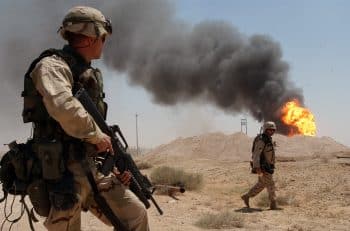
    Whatever happened to the Iraq war? Remember six years ago Junior, Dick and Donald brought us ‘shock and awe.’ Critics were dismissed: “ Our boys will be welcomed with flowers and kisses”. Then the oil would flow, a beacon of democracy would be established and the troops would be home by Christmas, leaving a coke-swilling, burger-eating, mall-shopping, Israel-loving Middle East in their wake. What’s more it wasn’t going to cost a cent. The black gold would underwrite the whole show. Heck it was a ‘no brainer’! Bob Woodward’s series of books on the whole tragic affair perfectly captures the ‘no brainer’ ambiance in the Oval Office, the ‘jocks in the locker room’ mentality that prevailed amongst the principals. Significantly, with the exception of the first compromised and later isolated, Colin Powell, none of the main men had actually seen the reality of their ‘bring it on’ machismo on the battlefield. Nor did they seem too concerned about how their ass-kicking leadership might be interpreted down the ranks or indeed how it would affect the image of the US. Paul Wolfowitz and the neo-cons’ vision of a Prague like spring in Baghdad was seriously wounded by the atrocity exhibition that was Abu Ghraib. The vision, however, staggered on until it officially died in 2005 in Haditha. The myth of the liberator finally hit the dirt there too in the My Lai type horror that followed an ambush on a platoon of US Marines. A couple of grunts were wounded but what made the remainder lose the plot was the sight of a well-liked comrade’s upper torso flying out of his Humvee leaving his legs behind in the car seat. When the Marines’ homicidal rage subsided, 24 Iraqis, including women, children and the elderly, lay dead. The actual insurgents, by all accounts, got away safely. Armies in general, and the US army in particular, are easy targets for armchair critique. But as Thomas Ricks’ bestselling book “Fiasco” reveals, the most enlightened critique of how the US was actually conducting the war came from those officers faced with the problem of implementing ‘no brainer’ policies on the ground. By 2005 those top brass who cared to look were already registering US troop morale plummet as ordinary soldiers paid with their lives for the lack of any long-term strategy. The savagery at Haditha was indicative of this. It seemed that we were returning to Vietnam “destroy to save” absurdity and the Iraqi people were realising to their horror that there’s only two letters between liberate and obliterate. While Washington was dismissing insurgents as “dead-enders”, the brass on the ground was clamouring for a new strategy and starting to discuss defeat. In fact, they needed a strategy that would let the army do what armies need to do – seize the initiative. Because ever since their ‘shock and awe’ premiere, the three horsemen of the White House were doing their blockbuster best to hide the fact that they were not directing the show – when they weren’t merely reacting, they were winging it. Lacking leadership and direction, the army was constantly in defensive mode. The gap between Washington and Baghdad became critical, prompting the unprecedented ‘Generals’ Revolt’. It was a very American coup in that a handful of retired generals broke protocol and spoke out, criticising Rumsfeld’s management of the war. The plan to train, equip and hand the situation over to Iraqi troops, some argued, was not only unreal but surreal. The Generals argued their intervention was necessary as one of Rumsfeld’s achievements was his monopolisation of the traditional avenues of information to the President, thereby both undermining a healthy system of checks and balances and encouraging Bush in such unstatesmanlike conduct as his ‘bring it on’ caper. Come 2006, as Baghdad descended into sectarian savagery; the Republicans were badly mauled in the US congressional elections. Bush’s own ratings plummeted to new lows. In fact, things were getting so bad that not even Rumsfeld could paper over the cracks. Finally he got his marching orders. His replacement as Defence Secretary, Robert Gates, instantly realised that something had to be done, fast. First the US had to work out what it was doing in Iraq. So the democracy and human- rights talk gave way to the still ambitious words – “stable” and “unified”. There was one immediate priority, a ‘no brainer’- security. The now dominant Democrats were happy to criticise from the sidelines but did not want the responsibility of picking up such a problematic ball as Iraq. So with nothing to lose and a free hand, Bush finally opened the Oval Office to some alternative thinking. It was the moment General David Petraeus was waiting for. The current military strategy did not provide security for the people but it did provide targets for the insurgents. So you got the worst casualties, pointless ones. The General also argued against the policy of pulling US troops out of built-up areas and into fortress camps. Not alone did this alienate them from the people but it made their predictable patrols easy targets for the increasingly sophisticated roadside bombs that were claiming most US lives and limbs. The US was now fighting a counterinsurgency war and needed to adapt. The goal was to win people not terrain. Petraeus called for more troops on the ground, lots more. He wanted to throw some 30,000 extra troops into what some thought was a lost cause, others said was a cause for the Iraqis, and still others again said was simply a wrong cause. But Petraeus said it was the only option. His plan essentially involved standard counter-insurgency tenets – get your troops out into the towns, on foot, among the people, help create security and slowly win some degree of trust. Small outposts were to be established in towns. And, having seen the effect on morale of winning terrain by day to lose it again at night, these posts were to be held at all costs. As in many

    Loading

    Read more

  • Posted in:

    Thomas Paine: revolutionary globetrotter

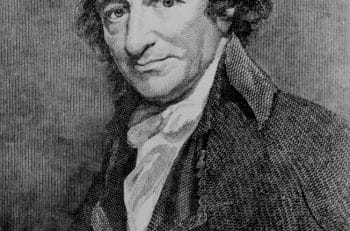
    Thomas Paine (1737 – 1809) was a British revolutionary, radical, inventor, and one of the Founding Fathers of the United States. He lived and worked in Britain until he was 37, when he emigrated to America, in time to participate in the Revolution. His principal contributions were the powerful, widely-read pamphlet Common Sense (1776), advocating colonial America’s independence from the Kingdom of Great Britain; and The American Crisis (1776–1783), a pro-revolutionary series of pamphlets. After that, Paine influenced the French Revolution. He wrote the Rights of Man (1791), a guide to Enlightenment ideas advocating the revolutionary idea of representative government with enumerated social programs and progressive taxation to remedy the prevailing poverty of commoners. He was elected to the French National Convention in 1792, fixing – extraordinarily – his place in British, American and French history. He became notorious because of his anti-Christian The Age of Reason (1793–94). In France, he also wrote the pamphlet Agrarian Justice (1795), discussing the origins of property, and extolled the merit of a guaranteed minimum income. It is not that his ideas were original so much as that his pamphleteering attracted for him a wide readership and influence. Why he’s relevant He was ahead of his time, proposing in detail a form of social welfare and an old age pension as early as 1791. Paine wrote brilliantly on the need for a free press. He argued against monopolies and contributed a great deal to what became both the basic principles of the French Revolution and the Constitution of the United States of America. Nevertheless he has been practically washed out of popular history. Uncompromising Paine stepped on a great many toes. Some of the owners of these toes were very powerful indeed, and ruthless. He was not surprisingly derided by King George the Third because of his support for the French Revolution and the American war of independence, and he went head to head with Edmund Burke. The Rights of Man was Paine’s response to criticisms by Burke (who was born on Arran Quay in Dublin) of the revolution in his Reflections on the Revolution in France. Slavery There is strong evidence that the American Revolution would not have succeeded at all were it not for Paine’s work. The fact that he is not in the pantheon, with Jefferson and Washington is down primarily to his opposition to slavery. Most of the other founding fathers were slave owners. Paine was sidelined after the foundation of the Republic by his former colleagues for this reason. Religion The greatest obstacle to a place in posterity for Paine was his criticism of organised religion. He was not an atheist. He subscribed to the principles of Deism as did such notables as Thomas Jefferson and Benjamin Franklin. Greatest Contribution: US Constitution Even if Paine’s writings were left aside, and they should not be, his contribution to the birth of what was to become the United States of America, and his influence on its constitution, were immense. As there are very notable instances where our own constitution was influenced by that of the USA, it is also fair to say that Paine was an indirect contributor to our public and legal affairs also. Paine was perhaps the first great socialist. His concern for ordinary men and women, while it may give an additional clue to the attitude towards him of capitalist America, deserves to be recognised by those on the left wing today. That it is not might be down to the fact that, unlike Marx and Engels, who were theorists, Paine was a practical man. He suffered from no delusions whatever, and was somewhat less than patient with those that did. For that other major faction, the people who live according to principles that are only for public presentation and which they discard in private, and for frauds and exploiters everywhere, Paine was merciless. In the Press Barack Obama, has recognised the contribution that Paine made. In his inaugural address, the new president quoted from Paine’s pamphlet “The Crisis”, which was very influential at the time of the war of independence, and which George Washington had read to his troops in order to rally them at the critical period when the American army was on the verge of defeat by the British. The passage quoted by Obama is as follows: “Let it be told to the future world…that in the depth of winter, when nothing but hope and virtue could survive…that the city and the country, alarmed at one common danger, came forth to meet and to repulse it”. Paine’s spirit and insight deserve a renaissance. Written by Seamus McKenna

    Loading

    Read more