


Posted in:
A New Politics For a New Decade
Upgrade the C and AG, improve transparency and anti-corruption laws and develop a vision of the public interest
Posted in:
by admin
Upgrade the C and AG, improve transparency and anti-corruption laws and develop a vision of the public interest
Posted in:
by admin
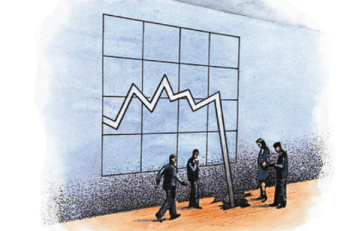
“lending to the private sector by banks has gone from a 30% annual increase to a 3% decrease”
by admin
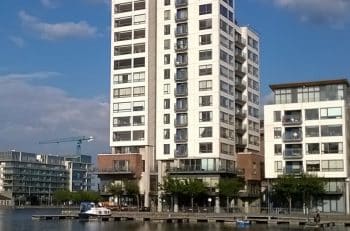
Height in Dublin City By Michael Smith Dublin City Council is pushing a high-rise strategy through the Development Plan variation process. After fractious public meetings it has toned down an initial draft of what it called in somewhat Orwellian terms: “Maximising the City: A strategy for densification and height”. If successful it will come into force just before the Council initiates the process of creating a whole new Development Plan. Clearly the process is pre-emptive and so wrong. But the substance also threatens Dublin’s unusual, human scale. It is perfectly sensible to like New York and to be happy when it goes higher still while recognising that Dublin City Centre has a different unique selling point. When we think of Dublin, when tourists spend two days in Dublin, it is the low rise character that IS the city. A Dublin that people overall like. It is fragile because two twenty-storey buildings could change it forever. This document threatens it very really. The document is discursive and self-contradictory in places – no doubt reflecting the complex discussions that led to the final draft. But for those of us who have been involved in the planning process it is clear that loose language and confusion (which admittedly pervade the current development plan) is leapt on by developers to promote a laissez-faire approach. And in any event the cynics know well that the city council is often happy to breach its own development plan e.g. in the case of the development on the site of the former Carlton Cinema on O’Connell St or the Clarence Hotel. Height versus density We should all be able to agree to densification of the Dublin City area – in accordance with the principles of sustainable development. The advantages of density include being able to justify significant infrastructural, including public transportation but also for example parks, expenditure, which promotes the maximisation of quality of life The benefits of high-rise including legibility and the making of corporate or other statements are small in comparison.Intensification (or densification) is good as it benefits many and harms few. Height benefits very few and may be detrimental to the majority.In general it is not in the public interest to search Dublin City for “opportunities”, “potential” or “scope” for high buildings; or flexibility as a useful tool to this end. It is important to note also that high-rise buildings – such as in Heuston – are usually not ultra-high density as problems of overshadowing usually lead to requirements for plazas at ground level. Certainly the city should look for opportunities to densify, but it should control, not maximise, the opportunities to build high. A high-rise strategy may actually be premature until there is a coherent and agreed strategy for intensification. The false premise It appears that City Council officials have in effect misinterpreted the planning strategies of cities comparable to Dublin. Current policy as represented in a report by DEGW states that in the three cities it deemed comparable to Dublin (Copenhagen, Amsterdam and Lyon) “the planning strategy has been to intensify and consolidate city centre functions within the historic height restrictions and develop new peripheral cores at public transport nodes to meet emerging demands [p14, emphasis added]”. DCC has ignored the key notion of peripherality! Dublin should choose its analogues carefully. It survived the second world war and has a large number of protected structures. It should not be adopting strategies perhaps appropriate for Frankfurt or Rotterdam, even if there is a lobby for it from opportunistic developers and trite commentators. DCC needs to get a dictionary out and look up peripheral. Substance The manager’s recently updated document which accepts the difference between high-rise and high-density, is clearer than before and uses a rhetoric about high-rise which is more mature than that used in earlier versions. However, the substance of the document does not mirror this acceptance and rhetoric. Despite efforts by commentators (e.g. Frank McDonald disappointingly in the Irish Times) and some councillors, led surprisingly by Sinn Fein’s Daithi Doolan, which gloss over them, there remain substantial concerns about the substance of the revised document. Transport Nodes and Height versus Density The document continues in part to confuse the benefits of high-density with those of high-rise. Transport nodes, meaning train stations but also perhaps future Metro stations such as one proposed for the edge of Temple Bar) should attract high-density development to capitalise on the expensive transport infrastructure. But the document proposes “high-rise” for transport nodes such as Connolly and Tara. This is not justified where the transport nodes are in the city centre where amenities and the city’s heritage may be compromised by height. Particular areas Concerns remain about some of the particular areas envisaged for high-rise, though most commentators support the proposed and existing schemes in the Docklands and Heuston areas. The justification has not yet been made for many of the other areas or catchments envisaged for high-rise development. Management needs to explain and justify the impact of high-rise buildings in the particular parts of the city cited. Ostensibly they risk undermining amenities and the historic heritage of the city. City Centre: General There is particular concern about the impact of high-rise on the city centre and inadequate protection is provided for the historic core. It is unclear whether it is envisaged that much of the City Centre could be developed at eight storeys. Certainly only buildings over eight storeys are defined as high-rise when under the current regime as represented by the DEGW report [at 5.1] height is expressly a relative concept. The new document removes the existing provision for systematic assessment of the implications of high-rise in the city centre – unless the proposal is above eight storeys. A seven-storey building on Bachelors Walk, for example, would not be specially assessed, City Centre: Particular High-rise in each of Tara St, Connolly and the Digital Hub around historic Thomas St is risky as they are all are close to the
by admin
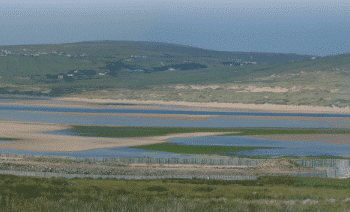
View from the wheelhouse Miriam Cotton (2009) Mayo fisherman, Pat ‘The Chief’ O’ Donnell, has been a vocal objector to the present configuration of the Corrib Gas project. Last year he was instrumental in preventing Shell from laying its disputed pipeline in Broadhaven Bay. Below are excerpts from an interview in which he claims he was held at gun-point and his boat scuttled, near Rossport, Co Mayo, the night of 12th June. MC: Miriam Cotton POD: Pat O’ Donnell POD: I was in the wheel-house and Martin [O’ Donnell, crew] was relaxing and the next thing I heard a noise behind me on the deck. MC: That’s how you first realised the intruders were present – when they were already in the boat? They must have crept up very silently? POD: Yes they did, they’d come up alongside the boat in a RIB. The first two rushed into the wheelhouse and they had guns – they backed us up against the cabin. They were pointing the guns at us. It’s hard to believe. The other two were looking around a while and they seen the hatch and went down below. I knew there was trouble in store. There were all sorts of things going through my head like were they going to kill us, were they going to throw us overboard – what was next, like. Then when I seen the two going down…and they were down there maybe twenty minutes or more – I don’t know exactly. The navigator was behind the two who stayed with us so I couldn’t get a glimpse of the time- but they came back up eventually and they stayed there then for well over an hour. And the next thing the engine cut out. I knew at that stage anyway that there was water coming into the boat because the boat started rolling slowly – ‘twas heavy in other words. After the engine conking they stayed maybe another five or ten minutes and the next thing they started going into the RIB and they fucked off then out to sea – straight north. MC: So how long did the whole episode last? POD: The whole thing lasted about two and a half hours roughly. They left about four o clock. You see, when they left I checked – I went down the ladder to see – I knew there was water but I wanted to see how bad it was. Water was coming up, like, so I decided then to abandon ship. I told Martin to get his lifejacket and I went up to get the small little life raft on top of the wheelhouse on the outside, so I went up and I cut it off and took it down to the deck and we launched it and it took us a long while to inflate it. I wasn’t panicking because in a situation you don’t panic if you can manage not to. So after about …I suppose by the time we had the lifejackets and life raft down and inflated and the whole lot – maybe fifteen or twenty minutes had passed. Before they had left I caught a quick glimpse of the navigator coordinates so I had a rough idea of where we were. I put Martin into the life raft first and then I climbed in with him and tried to push the raft away from the boat as quickly as possible. I knew she was going to sink and I was afraid she would pull us down with her. I was footering around in the raft until I found the packet with the paddles in it – small little paddles – so I started rowing like hell then to get away from the boat and that took me about maybe about ten minutes to get maybe 15-20 yds away – they were small little blades. So when we got away from the boat I got out the hand held VH and I put out a Mayday [received by Malin Head] and that’d be about half past four. I think the coast guard said it was about half four…. I just wanted them to rescue us as soon as possible…I thought the most important thing was for them to get a lifeboat launched and get out to us. So [having also rung the Garda station] the Ban Garda in Belmullet asked my name and I gave it to her – and Martin’s name – and I told her that the boat was sinking and that it was attacked in the night. She said she would make a note of it. And then Malin Head got back to me on the VHF and they wanted to talk to me on that so I finished my conversation with the Garda station. The Rachel Mary was steaming to the fishing grounds west of where we were. MC: The Rachel Mary being? POD: A fishing boat owned by myself and skippered by John Healey. So they were steaming west and they’re putting a spin on this too that the thing was planned between myself and the skipper of the Rachel Mary. But we were just doing our work they way we always do – and this is what we’re up against and this is saddening me. In fact he never heard the Mayday – his radio was on another channel at the time. He’d seen the boat in the water and knew it was in trouble – that it was low down below the water line. He nearly ran us down in the life raft. Martin was inside and I was out – and I stuck my head out and blew a whistle. One of the lads heard me and they came out onto the port side and they picked us up. And while that was all happening… MC: So it was them who actually got you out of the water? POD: Yes. Immediately after them was the Garda in their RIB.
Posted in:
by admin
“dozens of people spoke out, combining passion, anger and the trademark forensic knowledge of all aspects of the gas project. The Ministers fiddled with their pens”
Posted in:
by admin
“Cardiff was involved… in the late-night meetings where the Government’s controversial Bank Guarantee Scheme was agreed”
Posted in:
by admin
“Why is there no-one out there internationally whose confidence might be bolstered by a more equal Ireland?”