Politics

Random entry RSS

  • Posted in:

    Sir Jeffrey Donaldson’s mentor was a violent paedophile and a racist with deranged views about the lack of intelligence of women.

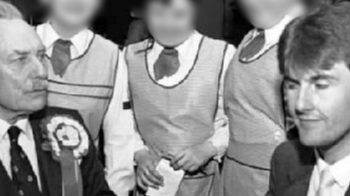
    The late Enoch Powell was a racist and a violent paedophile with deranged views about the intelligence of women. He was also a mentor to Sir Jeffrey Donaldson who is about to become the leader of the DUP. Donaldson acted as his election agent, 1982-84. Another of Donaldson’s mentors was the paedophile James Molyneaux. (See JAMES MOLYNEAUX AND THE  KINCORA  SCANDAL.) Powell ran against Ted Heath for the leadership of the Conservative Party in 1966. He left the Tories in 1974 and became the Ulster Unionist Party (UUP) MP for South Down. He remained in Westminster as a Unionist MP until 1987. In the intervening years, the truth about Powell’s involvement in the Anglo-Irish Vice Ring and his abuse of Williamson House and Kincora resident Richard Kerr has become public knowledge. Presumably, Donaldson will now come out and condemn Powell and what he stood for. In the intervening years, the truth about Powell’s involvement in the Anglo-Irish Vice Ring and his abuse of Williamson House and Kincora resident Richard Kerr has become public knowledge. Presumably, Donaldson will now come out and condemn Powell and what he stood for. On his website Donaldson has said that: “My involvement with the Ulster Unionist Party grew as I worked alongside two of the greatest names in Unionism in the 20th century [i.e. Powell and Molyneaux]. Between 1982 and 1984 I worked as Enoch Powell’s constituency agent, successfully spearheading Mr Powell’s election campaigns of 1983 and 1986 when the South Down seat was retained by the fact the constituency contained a natural ‘nationalist’ majority.” Donaldson, who became a political activist at 18, got to know Powell very well. Powell came over to the North most weekends. He usually returned on Monday mornings. One of Donaldson’s tasks was to drive Powell to the airport. The discussions in the car were  “politically orientated,” he has said. “He would talk about Parliament, about the 1974 period leading up to his resignation [from the Conservative Party], about British politics, about American politics. Sometimes, it would be completely different. He was a Greek classical scholar – you would get a lecture on the Elgin marbles. He wanted to help me get a foothold. It was real political apprenticeship”. Powell once tried to make up for Donaldson’s education deficit by gaining him access to a course in Queen’s University. Donaldson left the UUP and joined the DUP in January 2004 at the invitation of Peter Robinson. In 2018 Village published a story about the Anglo-Irish Vice Ring which featured a section on Enoch Powell. That section is reproduced below. 1. ENOCH POWELL AND THE CHURCH OF ENGLAND REVIEW INTO HISTORICAL CHILD SEX ABUSE In 2015, Powell was named in a Church of England review into historical child sex abuse concerning the 1980s. One of its spokespersons told the press that: “The name Enoch Powell was passed to Operation Fernbridge on the instruction of Bishop Paul Butler”. The information originally came from a cleric who has counselled child abuse victims in the 1980s. Last April [2018] Village gave Powell the benefit of the doubt insofar as these claims were concerned. In light of Richard Kerr’s account of his encounters with Powell – revealed here for the first time [i.e. July 2018] – that benefit must now be replaced with outright condemnation. Powell’s sexual interest in younger men was a long-standing trait. In 1937, having graduated with a double first from Cambridge, Powell had become a classics professor at the University of Sydney. He was only 25 and held the post for two years during which he wrote to his parents describing his infatuation with his male students. He told them how he was repelled by his female students, while feeling “an instant and instinctive affection” for Australian males between the ages of 17 and 23. This, he added, might be “deplored, but it cannot be altered”, and therefore had to be “endured – and (alas!) camouflaged”. Somewhere along the line Powell developed an interest in much younger boys. After serving as an intelligence officer during WW2, Powell went into politics and in 1950 became a Tory MP and later served in Cabinet. In 1966 he ran unsuccessfully for the leadership of the Conservative Party against Ted Heath, another paedophile with a taste for young boys. (See Not just Ted Heath: British Establishment paedophilia and its links to Ireland) Powell’s career went into decline after his infamous 1968 ‘rivers of blood’ anti-immigration speech. Eventually, Powell relocated to NI where he became a UUP MP in 1974. After he died in 1998, his friend Canon Eric James, a former chaplain at Trinity College, Cambridge, and Extra Preacher to the Queen, revealed that Powell had confided in him ten years earlier that he had engaged in a homosexual relationship as a young man. Powell gave him a copy of a collection of his poems called ‘First Poems’ (1937). He highlighted some verses where he had “tried to put into words what a homosexual relationship had meant to him”. It had been assumed by many that they had described Powell’s feelings for Barbara Kennedy whom he had taken on his first date with a woman to a music hall in 1948 when he was 35 or 36 years old. Canon James explained that Powell did not identify his male lover but said the relationship was “the most painful thing in my early life’. The individual in question was probably Edward Curtis, a fellow male undergraduate at Cambridge. The Canon revealed he had promised Powell he “would not disclose what he had said to me about the homosexual basis of certain of his poems until after his death. Then it would be a matter of literary history”. One of the lines read as follows: “I love the fire/ In youthful limbs that wakes desire…”. Another of his poems leaves little to the imagination: It described how he, as an “unknowing boy” was “led to sin”. ‘I did not speak, but when I saw you turn And cross your right leg on your left, and fold Your hands around your knee,

    Loading

    Read more

  • Posted in:

    Sir Jeffrey Donaldson’s dubious former associates.

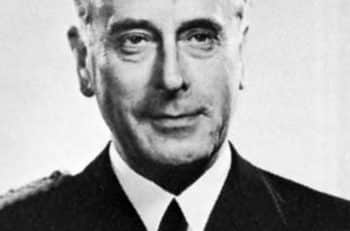
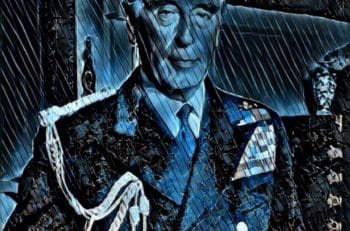
    By Dónal Lavery Sir Jeffrey Donaldson MP is now the new, or rather “old”, ‘shining light’ of Ulster Unionism, as part of what seems a “coronation” after an “abdication” by Edwin Poots MLA. Both are socially conservative and oppose some LGBTQ issues, both are staunch Orangemen, but both do differ in ways that can be elaborated on.  Prior to being involved in politics, Mr Donaldson was a member of the security services, having joined the Ulster Defence Regiment. But his military background is not really the point of the article. Sir Jeffrey was thoroughly acquainted with the former Tory cabinet minister and child abuser, Enoch Powell MP, as his constituency agent from 1982-84. The same Mr Powell sexually abused young Richard Kerr (a resident of the notorious Kincora Boys Home) at a hotel in Portrush, in a particularly violent manner, as well as other boys in the U.K. and Ireland. Likewise, Lord James Molyneaux was another alleged paedophile with whom Sir Jeffrey closely worked for as a Personal Assistant whilst Molyneaux was an MP. Lord Molyneaux went on to become the leader of the Ulster Unionist Party for many years and has been extensively exposed by the work of Village Magazine. Following these associations, Sir Jeffrey became a real ‘rising star’ in the Ulster Unionist Party (without the academic loftiness which his mentor, Enoch Powell, seemed to be so entrenched in and encouraged of his protégées) first becoming an Assemblyman and then eventually succeeding the paedophile Lord Molyneaux as the MP for Laganvalley when he eventually retired. When the Good Friday Peace Agreement was being finalised in 1998, Sir Jeffrey infamously walked out of the talks and opposed David Trimble consistently in his efforts for some time – with a suspicion he might oust Trimble as leader over the issue of decommissioning. In doing so, he eventually allied himself with Lord Molyneaux again and right-wing fanatics in the DUP and other groupings, who deeply opposed the Agreement, which included “demon pastors” like the notorious paedophile, Loyalist paramilitary and acknowledged child abuser, Alan Campbell (who was a school teacher in Belfast probed for distributing racist, pro-Apartheid material to his pupils, by the Ministry of Education and was a suspect in the murder of young Brian McDermott).  It goes without saying that Sir Jeffrey was not involved in any criminality. However, it is his judgement that is called into question: he was closely associated politically with disturbing figures who perpetrated wicked acts against vulnerable children. Arguably, this leaves such a political figure open to potential ‘ridicule’ as a very poor judge of character, a man who failed to see what these people were really like. Astutely, Mr Donaldson went on to serve in a power-sharing administration as a Junior Minister he seemed to vehemently oppose once, after some partial concessions therein with the Saint Andrew’s Agreement in 2006-7 (which fell short of the reasons he vociferously stood against Trimble over). By this analysis, Sir Jeffrey is a ‘seasoned’ politician in ways and an able communicator, but who will probably not be capable despite even his ‘best’ efforts (or that of his party) to prevent the Brexit Protocol from being applied or to effectively ‘frustrate’ legally binding agreements reached by the two sovereign governments in London and Dublin (with the European Union) – who can simply legislate over his head if needs be, should that actually occur. He sits at Westminster, where his party are now an isolated minority faction, ignored and betrayed by the Conservatives they once kept in power under Theresa May (who as Home Secretary refused to include Kincora in the more legally ‘powerful’ Westminster based child-abuse inquiry). Ultimately, the Democratic Unionist Party are collapsing at the seams and in time it is probable more of their peculiar “secrets” and baggage will emerge due to the consternation of those people now deposed or sidelined in this Shakespearean power-struggle which ruthlessly brought down Arlene Foster (Mr Donaldson’s ally from the Ulster Unionist Party) for reasons nobody has made forthcoming. Aside from personalities, it begs one to ask why she was even knifed in the back politically in the first place when a change of direction really seems improbable.  Much of this dark material can hardly be “news” to the DUP given the outing of their former “golden boy” of local government, Thomas Hogg, who has been exposed as a paedophile who tried to prey on a young boy and is set to be stripped of his ‘honours’ that were granted by the Queen herself on their recommendation for his services and character. Other figures remain within the party who were close political and social “buddies” of the “beast of Kincora Boys Home”, William McGrath (another self-professed evangelical preacher), and other child abusers deeply connected to that den of iniquity. Former U.K. Army Intelligence Officer, Captain Colin Wallace, has made clear his official brief was to inform the media as to the ‘dubious’ associations Unionist figures (including in the DUP) had, which left them open to ‘compromise’ and ridicule. So, this is hardly idle speculation by a Commentator but then again no secrets survive too long when others, in the state apparatus or public, acutely know of them. A widespread ethical clear-out and overhaul would be a constructive start for any DUP leader, with their fortunes severely dwindling as Jim Allister snaps at their heels! OTHER STORIES PUBLISHED BY VILLAGE MAGAZINE WHICH EXPOSE UK VIP SEX-ABUSE SCANDALS:  Judge a (future) king by his courtiers: Prince William and the Duchess of Cambridge, pawns in the cover-up of a transatlantic paedophile network. With regard to Mountbatten: SECOND UPDATE: Kincora boy abused by Mountbatten committed suicide months later Also: Mountbatten, the Royal who abused boys aged 8-12. The British Government purchased Mountbatten’s archive for the benefit of historians (allegedly) but has locked it away. It may include details about his links to paedophile networks including the Anglo-Irish Vice Ring. With regard to Prince Andrew:  The Prince, the pauper and the paedophile peer: the dangerous questions

    Loading

    Read more

  • Posted in:

    The Artful Dodger: O’Malley nit-picks with RTE over timing trivia while still ignoring all the important questions about the Arms Crisis.

    By Sean Brennan. I have just read the article in the Sunday Independent [20 June] concerning whether RTE contacted Des O’Malley first while the station was producing the GunPlot series. It is the second article which the Sunday Independent has produced about the issue. The earlier one – written by Des O’Malley – appeared on 13 June. The article in today’s Sunday Independent [20 June 2021] concerns RTE’s apology to O’Malley and his family over a statement it issued last week about who made the first move to establish contact. This is truly a case of a very minor issue being blown up out of all proportion. It hardly undermines the quality and brilliance of the GunPlot series. One thing is absolutely clear now: it is not correct to say – as Des O’Malley claimed on 13 June – that RTE “never attempted to contact” him. Even as he says himself, his son talked at length to the producers on his behalf. O’Malley seems upset that he was not approached before the GunPlot podcasts were broadcast. However, they were aired over nine weeks. Hence, there was plenty of time to make contact with O’Malley as they rolled out. Surely O’Malley does not think he can dictate when he should have been approached? Surely the producers should be able to dictate their own pace? I have spoken to David Burke, author of a recent book on the Arms Crisis. He featured heavily in episode 8 of the podcast series (about the two Arms Trials). He was not interviewed until after episode 6 had been broadcast. (Some quotes from him in the earlier podcasts were taken from a lengthy interview he gave for the TV version of GunPlot. The TV interview was recorded earlier in the year.) Overall, O’Malley’s complaints are bewildering. He has spent well over 40 years dodging questions about the Arms Crisis. So why does it matter how contact between him and RTE was established: he was never going to answer the hard questions which he has been ducking for decades. In December 1980 Vincent Browne, the editor of Magill magazine, raised a number of issues about the Arms Crisis which involved O’Malley. Browne wrote: “Magill attempted to have Mr. O’Malley explain his side of this story for the July [1980] issue but he declined to speak to us. The offer of space to state his case is still available.” O’Malley’s silence in the interim has been deafening. In his Sunday Independent article of 13 June, O’Malley gave the impression that he has always been open about his knowledge of the scandalous series of events that surround the Arms Crisis; moreover, that he was ever willing to share it if only asked. Further, that there was a malign conspiracy at RTE to censor him. Will he now agree to do a fullscale interview for an additional episode of the GunPlot podcast? Is he now finally prepared to answer any and all questions? Will he answer the questions Magill raised over 40 years ago? Will he now agree to do a fullscale interview for an additional episode of the GunPlot podcast? Is he now finally prepared to answer any and all questions? Will he answer the questions Magill raised over 40 years ago? Des O’Malley declined to be interviewed by RTE in 2021 on the grounds of ill health. (It has presumably passed because he is now capable of writing at length for the Sunday Independent.) Yet, while in good health, he spent decades avoiding the hard questions about the Arms Crisis. The process began in earnest in 1980 after Magill magazine described two meetings he had had: one with Charles Haughey and a second one, after it, with Peter Berry of the Department of Justice. They will be examined in detail later in this article. O’Malley has failed to answer questions raised by Vincent Browne in that edition for over 40 years. In the meantime, other questions have arisen for O’Malley to answer. None of them have been addressed by him. O’Malley failed to raise and answer the difficult Arms Crisis questions in 2001 during a four-part TV series broadcast on RTE which was dedicated to his life. He also had an opportunity to put what he knew about these events in his 2014 memoirs. Instead of a thorough analysis, his book was a huge disappointment to historians who attacked it for its lack of real content. Now, he is jumping on utter trivia about who rang whom first instead of answering the really important issues about this monumental scandal. Now, he is jumping on utter trivia about who rang who first instead of answering the really important issues about this monumental scandal. Village has published a number of articles concerning Des O’ Malley’s role in the events in 1970. These articles included a number of matters which Village believes have not been addressed and satisfactorily answered by O’Malley concerning his role and actions in 1970. See: Ducking all the hard questions. Des O’Malley has vilified an array of decent men and refuses to answer obvious questions about the Arms Crisis and the manner in which the Provisional IRA was let flourish while he was minister for justice. See also: The ‘Last Man Alive’ is still saying nothing. Des O’Malley’s silence about his role in the Arms Trials and Arms Crises of 1970 has become thunderous. And: Vilification Once More For the sake of clarity,  I will summarise some of the more important questions which Des O’Malley needs to answer, starting in the next section. Please also note that extracts from the December 1980 edition of Magill which addressed the O’Malley-Haughey and O’Malley-Berry meetings are reproduced at the end of this article. A letter by author Michael Heney to the Sunday Independent is also reproduced towards the end of this piece. Mr Heney was replying to O’Malley’s article of 13 June last. Army Directive dated 6 February 1970. This directive documented an order which was given by the Minister for Defence,

    Loading

    Read more

  • Posted in:

    Vilification Once More

    Des O’Malley, the Minister for Justice in 1970, continues to ignore the hard questions about the Arms Crisis. Instead, he persists in smearing anyone who dares to disagree with him. Some of his latest slurs question the integrity of those in RTÉ responsible for the ‘GunPlot’ series. It is now time to stop throwing the mud and answer the hard questions. By Sean Brennan. Introduction I have just read in the Sunday independent Des O’Malley’s article about GunPlot, the RTE television documentary on the Arms Crisis 1970 and the RTE Radio Podcast Series. Des has a problem in accepting the truth, particularly when the truth contradicts Des’s preferred narrative. The big lie as propagated by Jack Lynch and Jim Gibbons about what happened during the Arms Crisis in 1970 has finally been definitively nailed and, unusually, history has been rewritten. The purpose of the lie was to protect Jack Lynch’s position at all costs. Des O’Malley has given oxygen to this false narrative for the last 50 years. His article in today’s Sunday Independent is no surprise. O’Malley has made a career out of maligning decent men. He often does this in a cowardly way, waiting until the person to be maligned has died. O’Malley’s article today is practically the same as the article which he wrote on 27 September 2020. Both articles contain no evidence to support O’Malley’s assertions and are based purely on bluster and spoof. In contrast to O’Malley’s article, my article below contains incontrovertible documentary evidence from State papers that were hidden and suppressed by the State from the Arms Trials in 1970. RTE did invite Des O’Malley to participate in GunPlot. One of O’Malley’s claims in the Sunday Independent is that he was not asked to participate in GunPlot by RTE. RTE have just issued a statement which reveals he was invited but declined, instead nominating his son Eoin to talk on his behalf. Perhaps if he been man enough to face the cameras, he would have featured heavily in the TV broadcast and podcasts. However, that would also have meant he would have had to answer all the hard questions. According to the RTE statement: “The truth matters. And the truth is that RTÉ did make contact with Des O’Malley to ask him for an interview for the series. Des O’Malley declined to be interviewed by us and nominated his son Eoin to take part in the series in his place. The truth does matter.” Complete silence about O’Malley’s secret meeting with Charles Haughey. What might RTE have asked O’Malley? I wrote an article for Village Magazine on 17 April 2021, titled “The ‘Last Man Alive’ is still saying nothing. Des O’Malley’s silence about his role in the Arms Trials and Arms Crisis 1970 has become thunderous”. The ‘Last Man Alive’ is still saying nothing. Des O’Malley’s silence about his role in the Arms Trials and Arms Crises of 1970 has become thunderous. In my article I raised many very important questions for Des O’Malley to address but he has failed to reply. The most serious one concerns his secret meeting with Charlie Haughey just two weeks before Haughey stood trial for criminal conspiracy and sedition in the biggest criminal trial that this country has ever seen. Here we had the Minister for Justice meeting a man who stood accused of the most serious crimes surreptitiously, to discuss the evidence that a prosecution witness was to give at the forthcoming trial. Until O’Malley addresses our concerns as to why he met Charlie and what they discussed and why he forwarded Charlie’s requests to the witness, Peter Berry, the Secretary of the Department of Justice, there will be questions over O’Malley’s character. Haughey’s request was to ascertain whether Berry could be induced or intimidated or persuaded to change his evidence to suit Haughey’s case. There was also a subtle threat that Berry would be roasted while in the witness box by a particularly aggressive and brilliant lawyer, Seamus Sorohan.  The fact that Berry said that O’Malley was biting his knuckles when he was relaying Charlie’s request to Berry would suggest that O’Malley was nervous. The question is: why was he nervous? Berry also said that he felt nauseated by the fact that O’Malley was pretending to Haughey that he was Haughey’s friend. Berry also said that he felt nauseated by the fact that O’Malley was pretending to Haughey that he was Haughey’s friend. What I cannot get over is the fact that O’Malley was prepared to meet Haughey behind Jack Lynch’s back. This was a disloyal and deceitful thing to do to someone who just four months earlier had promoted O’Malley to ministerial ranks. With friends like that who would need enemies?        The arms importation operation was not ‘illegal’. Des O’Malley says that RTE put a gloss on the crisis that the then-Taoiseach Jack Lynch was somehow involved, that he knew all about the plot to import arms “illegally”. The jury at the Arms Trial held that the plot was not illegal. What is undeniable is that Lynch knew of the plan to import arms legally as follows: Berry told Lynch in Mount Carmel in October 1969 about the meeting in Bailieboro which was attended by Captain Jim Kelly and citizens from the North, and during which the plan to import guns was first discussed. Lynch confirmed the fact that Berry told him of this meeting to Jim Gibbons who was the Minister for Defence. Gibbons informed Colonel Hefferon of what Lynch told him. Casting doubts over Ben Briscoe While David Burke was carrying out research for his book on the arms crisis, ‘Deception and Lies, The Hidden History of the Arms Crisis 1970’,  he spoke to Ben Briscoe, who was a friend of Jim Gibbons and George Colley. Briscoe told Burke, and later confirmed to the RTE Gunplot Podcast team, that he knew about the arms-importation operation months before the Arms Crisis erupted and that when the attempt to import the arms was

    Loading

    Read more

  • Posted in:

    The Mystery of the Missing Mountbatten Diaries

    By Andrew Lownie. In 2015 I started researching my biography ‘The Mountbattens: Their Lives and Loves’. Little did I know then that six years later it would have locked me into a marathon legal battle with the Government and Southampton University. My quest was to find out what had happened to the personal diaries  of the 1st Earl and Countess Mountbatten of Burma – Dickie and Edwina (who died in 1979 and 1960 respectively) – and the letters they wrote to each other. They had been extensively quoted in their official biographies by Philip Ziegler and Janet Morgan and published respectively in 1985 and 1991, but were nowhere to be found in the inventories of their papers at Southampton University. Dickie Mountbatten, an uncle of Prince Philip, had been Chief of Combined Operations and Supreme Allied Commander in South East Asia during the Second World War, and later Viceroy of India, First Sea Lord and Chief of the Defence Staff. But what interested me was his marriage. Both he and his wife were bisexual and had numerous affairs. His close relationships included the actress Shirley MacLaine; hers the conductor Sir Malcolm Sargent and India’s long-serving Prime Minister, Jawaharlal Nehru. The relationship with Nehru had huge ramifications for the perception of the couple’s impartiality over Indian Independence. Some of the early diaries up to 1934 have been released and from them I could see Mountbatten was scrupulous in describing who he met and where he went. There have long been rumours of his involvement in the Kincora scandal and, as the diaries run up to his death, I was  interested to see when he had visited Belfast, when he was at Classiebawn alone except for staff, which house parties he had attended, how often he saw Peter Montgomery  etc. There have long been rumours of his involvement in the Kincora scandal and, as the diaries run up to his death, I was  interested to see when he had visited Belfast, when he was at Classiebawn alone except for staff, which house parties he had attended, how often he saw Peter Montgomery  etc. The Broadlands Trust, a Mountbatten family trust, had sold the couple’s papers to Southampton, along with collections relating to the family’s ancestors, in 2011 , for almost £4.5 million, to save them being sold privately at auction and the collection broken up. The papers were bought after a huge fund-raising campaign with public monies, including almost £2 million from the Heritage Lottery Fund as well as the ‘Acceptance in Lieu’ tax scheme, which stressed their historical importance and the importance of them being “freely available to all”. Southampton’s fundraising claimed “this to be the most important archive to emerge in the last 30 years, only the Churchill Papers could be seen as comparable in terms of a loss to the nation if these were not secured”. Imagine my surprise to be told by the archivists at the University they could not help me  on the diaries or letters and had no contact details for the Mountbatten family. I wrote to the present Countess Mountbatten and  to the trustees  of the Broadlands Trust. Silence. Eventually I was told that the diaries and letters had been closed in 2011 under a “Ministerial Direction”, under authority delegated by the Secretary of State for Culture, Media and Sport to the Museums, Libraries and Archives Council. I put in Freedom of Information (FOI) requests to the Cabinet Office, the University, the Heritage Lottery Fund, the Treasury, and the Department of Culture. No one seemed to know anything about such a Direction; even now, none of them has identified the name or status of the person who signed it. At the Cabinet Office’s suggestion, for swifter access, I also sought to focus on the diaries for one year – 1947. In June 2018, Southampton University disclosed that, shortly after its acquisition of the Mountbatten archive, a senior archivist had taken the initiative in procuring the Cabinet Office’s confirmation that the diaries and letters were “closed”. After my request, the archivist then approached the Cabinet Office with a view to its authorising his editing of the 1947 diaries for publication. 1947 was the year in which India and Pakistan gained their independence. Within weeks, the Cabinet Office held a series of meetings to facilitate the request. This is the very material that I have been struggling to access for years. From November 2018 I wrote several times to the then-Vice-Chancellor, Sir Christopher Snowden, the Chairman of the Council, Rear-Admiral Philip Greenish, and his deputy, Dame Judith Macgregor, a former High Commissioner to South Africa, about the University’s failure to comply either with FOI Act or with the ICO. No response. Eventually, after many letters, emails and calls, Sir Christopher replied, saying he was investigating and had asked for “a report be  made to me and that a response be provided to you as a matter of urgency”. Two and a half years later I have heard nothing further. Indeed responses from both the University and the Cabinet Office to requests for information have been evasive and cursory; they have repeatedly missed statutory, regulatory and self-imposed deadlines for responding, and ignored correspondence from me, my lawyers and the ICO – to the extent the ICO was forced to take the unusual step of issuing an Information Notice and then the unprecedented step of commencing High Court proceedings for contempt to compel the University to respond. This decision was significantly delayed because the University failed to respond to the ICO’s investigation for over a year. It only did so after the ICO was forced to take the contempt of court proceedings. The ICO branded the University’s delay as “completely unacceptable” and in court filings complained about its “persistent, wholesale and unexplained failure to comply with the information notice…In effect, the (University) continues to flout its statutory duty under the Freedom of Information Act 2000″. In December 2019 the ICO finally ordered the University to release all the

    Loading

    Read more

  • Posted in:

    Counterinsurgency war criminals, liars and cowards: Kitson and Wilford, the brigadier and colonel who led the soldiers who perpetrated the Ballymurphy Massacre.

    By David Burke. The denial of justice for political gain. Next week will see the release of the long-awaited inquest report into the Ballymurphy massacre during which British soldiers killed and wounded a large number of unarmed civilians in Belfast. The atrocity took place after the introduction of internment in August of 1971. Adding insult to inqury, the victims were vilified as gunmen and terrorists. A documentary entitled ‘The Ballymurphy Precedent’ will be broadcast on Channel 4 on Wednesday 12 May. It contains detailed re-enactments of the actions of Kitson’s and Wilford’s troops. RTE will also be showing it at a date yet to be determined. Meanwhile, the British Government led by Boris Johnson proposes to grant all British soldiers implicated in murder in Northern Ireland immunity from prosecution, contrary to the Stormont House Agreement. Incredible as this may seem in Ireland and across the globe, it has enhanced Boris Johnson’s standing in the eyes of large numbers of the British electorate. Johnson has also set himself on a collision course with the Irish Government. Taoiseach Micheál Martin has stated that: “There is an agreement in place with the British government, with the parties in Northern Ireland and indeed with victims’ groups and that is the Stormont House Agreement of 2014 and that any move from it would amount to ‘a unilateral breach of trust”’. He added: “For us the victims are the priority and the victims remain the priority. There has to be adherence to that agreement. If people have new ideas to present they have to involve all of the parties, and above all the concerns of victims irrespective of who committed the atrocities. People must be held accountable”. Johnson’s Minister for Veterans, John Mercer MP, resigned last month in protest at what then looked like the British Government’s reluctance to change the law to prevent the prosecution of British soldiers accused of murder in Northern Ireland. In his resignation statement, he said he was stepping down to “try and shift UK Government position towards looking after these people and preventing the repeated and vexatious nature of litigation against those who served is a huge task”. There have been further developments and insights into the free rein afforded to British soldiers in Northern Ireland to shoot at human targets. Last week the trial of two paratroopers accused of shooting Official IRA volunteer Joe McCann while he ran away from them collapsed. Judge James O’Hara pointed out that: “At that time, in fact until late 1973, an understanding was in place between the RUC and the Army whereby the RUC did not arrest and question, or even take witness statements from, soldiers involved in shootings such as this one. This appalling practice was designed, at least in part, to protect soldiers from being prosecuted and in very large measure it succeeded.“ Her Majesty’s Killers. The Ballymurphy Inquest report may not address the roles played in the massacre by two of the most notorious British soldiers to set foot in Northern Ireland during the Troubles, Brigadier Frank Kitson and Colonel Derek Wilford. Kitson is a counterinsurgency expert who had served in Malaya, Kenya, Cyprus and the Oman before he was sent to Northern Ireland as the brigadier in charge of the 39 Brigade area which included Belfast, 1970-72. He set up the Mobile Reaction Force (MRF) which carried out the murder of a series of unarmed civilians in Belfast in the early 1970s. Kitson’s own pen has long since exposed him as a racist and anti-Catholic bigot. He committed perjury at the Saville Inquiry into Bloody Sunday (January 1972) on an industrial scale. Wilford assumed command of 1 Para on 21 July 1971. 1 Para formed part of 39 Brigade. Wilford believes that virtually all Catholics in Northern Ireland are IRA supporters, and has said as much in public. He had served with the SAS for two years and trained with American paratroopers at Fort Bragg, the US Army Special Forces School before coming to Ireland. He was also a veteran of Malaya and Aden. He joined the Parachute Regiment as a company commander in 1969. Perceived as a bit of a loner, he was given to reading the classics, in their original Latin. The number of unarmed Catholic civilians murdered by 1 Para reached unprecedented levels after Wilford’s arrival. Many were shot in the back or while lying on the ground. He reported directly to Kitson. The number of unarmed Catholic civilians murdered by 1 Para reached unprecedented levels after Wilford’s arrival. Many were shot in the back or while lying on the ground. He reported directly to Kitson. Both men are still alive and unrepentant at the multiple deaths caused by their troops including those who died during the Ballymurphy massacre. Wilford took 1 Para to Derry early the following year, an event that resulted in Bloody Sunday. Wilford committed perjury at the Widgery and Saville inquiries into Bloody Sunday. He has also admitted lying to the press. He is the keeper of many secrets about that massacre. While Wilford presents himself as an officer who has always been loyal to the paratroopers who served under him on Bloody Sunday, the truth is that he has thrown them to the wolves to save his own skin. One of them is facing murder charges for his actions on Bloody Sunday. Meanwhile, Wilford cowers in Belgium. While Wilford presents himself as an officer who has always been loyal to the paratroopers who served under him on Bloody Sunday, the truth is that he has thrown them to the wolves to save his own skin. One of them is facing murder charges for his actions on Bloody Sunday. Meanwhile, Wilford cowers in Belgium. Operation Demetrius was the code name ascribed to internment which commenced on 9 August 191. 342 people were swept up on that day and taken to to makeshift camps in a series of dawn swoops by the British Army. 105 were released after two days. Instead of

    Loading

    Read more