brexit

Random entry RSS

  • Posted in:

    When shall we three meet again?

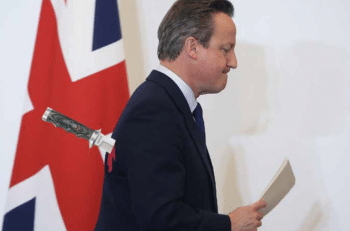
    This is a saga of sadness, a tragic tale of three ‘whiches’, a fairy ‘which’, a whichsoever ‘which’ and a wicked ‘which’. In initiating each of three referendums, David Cameron said, “You have a choice, ‘this’ or ‘that’, which do you want?”. So all three ballots were binary, and while the first two delivered what he wanted, the last one was, in effect, political suicide. All three outcomes were inaccurate reflections of ‘the will of the people’. Let’s have a look, and then let’s consider a better methodology. 2011 Referendum on the Electoral System After the 2010 general election, the UK had a coalition government: Cameron’s Conservative Party (Tories) and the Liberal-Democrats. And he probably thought to himself, “How can I rid myself of the Lib-Dems’ persistent pursuit of proportional representation, PR?” Hence the first ‘which’, so to silence any further debate on electoral reform. Some people liked single-seat constituencies, either the UK’s first-past-the-post, FPTP, a plurality vote; or France’s two-round system, trs, a plurality vote followed by a majority vote; both are single preference systems; or again, there is the Australian alternative vote, av, a preference vote which is like a knock-out competition – in a series of plurality votes, the least popular is eliminated after each round and his/her votes are transferred to the voters’ second or subsequent preference… until a candidate gets 50%. Meanwhile, many wanted PR in multi-member constituencies. There is the German half FPTP and half PR-list system called multi-member proportional, mmp. There is PR-list – in Israel, you vote for a party; in the Netherlands, for a candidate of one party; in Belgium, for one or more candidates of one party; and in Switzerland, for those of more than one party. Or there’s the Irish PR-single transferable vote, PR-STV, where voters can vote cross-party in order of preference; STV is like AV except that success depends on (not a majority but) just a quota of votes. Overall, then, the choice was huge. But Cameron’s 1st preference was FPTP and his 2nd av. So that was the 2011 referendum, the first ‘which’: “FPTP or AV, which do you want?” For countless (and uncounted) supporters of pr, this was like asking vegetarians, ‘Beef or lamb?’. Now maybe FPTP was the most popular but, based on data from just a two-option poll, impossible to say. For Cameron, however, it was a dream: he chose the question, and the question determined the answer, just as any fairy godmother would have wished: a massive 67.9 to 32.1%. Magic. Furthermore, the Electoral Commission said the question was fair. Amazing. The Ombudsman agreed. Incredible. And many thought this was all democratic. So that was the end of that argument. So why not a second fantasia, another referendum? Scotland 2014 “Double, double, toil and trouble”, said the witches in Macbeth. The Scottish Nationalist Party, (SNP), always on about independence. How can I rid myself of these skittish Scots? This was Cameron’s second problem, and so, as if on a broomstick from the darkest recesses of Westminster, the second ‘which’ enters the political stage. There were three options: (a) the status quo, (b) maximum devolution or ‘devo-max’ as it was called, and (c) independence. Thinking that (a) would easily beat (c) in a two-option contest, just as FPTP had wiped out av, Cameron waved his wizard’s wand and demanded a binary ballot. So the second ‘which’ was again dichotomous: “(a) or (c), which do you want?” In the campaign itself, however, the gremlins were grumbling, option (c) was gaining ground. Cameron twitched; no – panicked: and so, as if at the witches’ coven, a vow was made – zap! – and option (a) morphed into option (b). On the ballot paper, however, there was no switch, the ‘which’ was still “(a) or (c)?” So the result was a stich-up: 55.3% and 44.7% respectively were highly in ated levels of support for (a) and/or (c). Furthermore, the winner was (b)… but no-one had voted for it! For Cameron, though the potion was fading, the plebiscite was still successful, and that was the (very temporary) end of that argument too. We return to the diviners’ den. The EU Referendum Believing as it does in majority voting, the Tory Party (and many another) is a beast of two wings and no body. Little wonder that this weird creature is often in a ap, especially over Europe. “Those cursed Europhobes”, he might have muttered. And then, stage extreme right, another scary monster, the UK Independence Party, Ukip. “Oh how can I rid myself of these damned devils?” Ah-ha, the third… but this was the wicked ‘which’. The wrong side won. The Electoral Commission’s semantic change from ‘yes-or-no?’ or ‘in-or-out?’ to ‘remain-or-leave?’ did not change the poisonous potent of the poll, its binary bind, its divisive ‘positive-or-negative’ nature. The question – “Which do you want?” – was again adversarial. The campaign was horrible. And the result? 48.1% chose ‘remain’ to 51.9% ‘leave’. But nobody knows what the latter actually want! To suggest, then, that this outcome is ‘the will of the people’ is, again, bunkum. Meanwhile, politically, Cameron is dead, impaled on his own petard; in a word, ‘bewhiched’. Democratic Theory and Practice So what should have happened? Well, consider first a hypothetical example. The average age of the electorate cannot be identified by a majority vote. If such a piece of research were to be attempted, the question would probably be, “Are you young or old?” In which case, no matter what the answer and by what percentage, it would be wrong! If, however, the question were multi-optional, ‘Are you in your twenties, thirties, forties, etc.?’ the answer could be pretty accurate. With average age or collective opinion, as in a German constructive vote of con dence, voters should be positive. No-one should vote ‘no’ or ‘out’ or ‘leave’; instead, everyone should be in favour of something: for the UK to be in the EU, or like Norway in the EEA, or like Switzerland in a looser

    Loading

    Read more

  • Posted in:

    Irexit

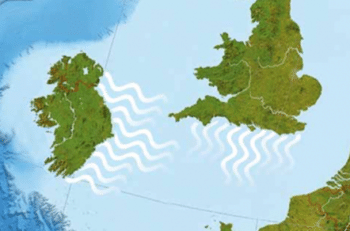
    Since the Brexit referendum in June I have been rapporteur of a Private Study Group of Irish economists and constitutional lawyers who have been examining what we should do when and if the UK leaves the EU. In August their report was sent to the Taoiseach, his Ministers and the Secretary-Generals of all Government Departments. It has been sent also to the EU embassies in Dublin, to UK Prime Minister Theresa May, her key Ministers and senior civil servants concerned with Brexit, and to a wide range of British Brexiteers whom my colleagues and I have got to know over the years. The report’s basic conclusion is that it is in the interest of the Irish people that Brexit should be accompanied by “Irexit” – Ireland exit. We applied to join the then EEC in 1961 because Britain and Northern Ireland did so. We joined simultaneously with the UK and Denmark in January 1973. Now that Britain and the North are leaving, we should do the same, for three principal reasons. The first is that Ireland is nowadays a loser, not a gainer, from EU membership. In 2014 we became a net contributor to the EU Budget for the first time, paying in €1.69bn and receiving €1.52bn. This means that in future any EU moneys that come to the Republic under the CAP, EU cohesion funds, research grants, support for community groups and the like, will be Irish taxpayers’ money coming back, employing some Brussels bureaucrats on the way. Henceforth the EU will no longer be the ‘cash cow’ most Irish people have regarded it as for decades, and which is the basis of much of our official and unofficial europhilia. A bonus would be that outside the EU Ireland can take back control of its sea-fishing waters. Eurostat’s estimates of the value of fish catches by non-Irish boats in Irish waters since 1973 are a many-times multiple of the EU cash we got over that time. The second reason why Irexit should go along with Brexit is that that is the only way of preventing the North-South border within Ireland becoming an EU external frontier, with new dimensions added to Partition, affecting trade, travel and different EU laws and legal standards as between Dublin and Belfast. For example without the UK as an EU Member alongside it, the Republic would be in a much weaker position to withstand pressure to adopt continental norms in EU crime and justice policy, which differ signi cantly from Anglo-Saxon ones in such areas as trial by jury, the presumption of innocence and habeas corpus. Such divergence would adversely affect good relations within Ireland as a whole and while it would not undermine the Peace Process, it would not help it either. If we stay in the EU while the UK leaves it would mean that for Irish reunification to come about at some future date the people of the North would have to rejoin an EU that Britain had long left, adopt the euro-currency, take on board a share of the €64bn of private bank debt which the ECB insisted that Irish taxpayers nance during the 2008-2010 currency crisis, and implement the further integration measures that are likely to be needed over the coming years if the Eurozone is to be held together. It would give 26 EU Governments in addition to the UK and the Republic a veto on eventual Irish reunification. Such a development should be unacceptable to all Irish nationalists. Another consideration is that if the South remains in the EU while the North leaves along with Britain, future Irish reunification would make the whole of Ireland part of an EU military bloc that is likely to come under greater Franco- German hegemony following Brexit. That potentially could be a security threat to Britain. This will surely change significantly the calculus of British State interest and give Britain a strategic reason for keeping the North inside the UK, an interest it has not got today. The third reason why most Irish people should now reassess their attitude to the EU is that the business case for Ireland remaining an EU member diminishes significantly if the UK leaves. Most foreign investment that comes here is geared to exporting to English-speaking markets, primarily the UK and USA, rather than to continental EU ones. Once the UK leaves the EU two-thirds of Irish exports will be going to countries that are outside it, as they are going today to countries outside the Eurozone, and three-quarters of our imports will be coming from outside. Outside also, Ireland’s 12.5% corporation tax rate would no longer be under EU threat. Of course our relations with the UK and the EU in the Brexit context are complicated by our membership of the Eurozone. Irish policy-makers abolished the national currency and joined the Eurozone in 1999 on the assumption that the UK would do so also and that by going first they would show how communautaire they were. It was an utterly irresponsible action in view of the fact that the Republic does most of its trade with countries that do not use the euro. With the pound sterling falling against the euro as the UK disengages from the EU, Ireland desperately needs an Irish pound that can fall with it, so maintaining its competitiveness in its principal export markets – the UK and America. That is why the Irish State urgently needs to get its own currency back. Economist Chris Johns noted in the Irish Times on 20 August that if the Irish pound existed today it would be worth some 10 percent more than the pound sterling. This was the level it reached in January 1994, when Irish industry was in crisis because of its overvalued exchange rate – explicitly then, implicitly today. That in turn precipitated the major devaluation which inaugurated our ‘Celtic Tiger’ years. Ireland needs to regain the freedom of being able to determine its own exchange rate. There is no legal way to

    Loading

    Read more

  • Posted in:

    Oxford, Britain

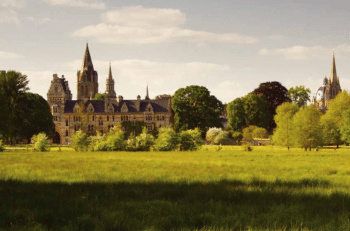
    North Oxford is a heartland of academia where leafy halls of residence mingle with stately homes and rarefied hostelries. Situated in almost the very centre of Britain a windless calm favours scholarly reflection removed from modernity’s fugue. Even the traffic is orderly with bicycles sensibly preferred. It is one of the most attractive places in the world. Spend an afternoon on the lawns at Christchurch if you doubt it. Oxford is world-class in so many ways: the city and the university. PWC and Demos rated it the best place to live in Britain, in 2012, across a wide range of criteria. Shanghai ratings names Oxford University the seventh best in the world. South Oxfordshire was recently named Britain’s best rural place to live. It is transcendent England. What has this to say about Brexit, the political issue of this generation? The City of Oxford is located on the confluence of the Isis (the idiosyncratic name for the Thames here) and Cherwell rivers. Broadly, it may be divided into three zones with a clear north-south divide: that affluent and mature north Oxford of Jericho and Wolvercote; predominantly twentieth-century suburbs including Cowley to the south; and the historical and commercial centre linked to Botley and Osney Island, built around an Anglo-Saxon settlement of which little remains. This contains renowned colleges such as Christchurch, Balliol and Magdalen. The first sign of incongruity is how close it nestles to the ‘any-town-UK’ commercial centre and its array of gaudy chains. Moving south, there is yet another Oxford as housing gets cheaper and industry is evident. The first industrial revolution passed Oxford by as colleges objected to the contagion of commerce. Only after World War II did significant manufacturing arrive as the city attracted a car industry. By the early 1970s, 20,000 people were employed in the sector and the original Mini Minor was developed here in 1959. Unfortunately, as in much of the country, a significant proportion of heavy industrial jobs have departed. The working class areas now face social problems familiar in many English cities. Living as a jobbing tutor and supply teacher in Oxford for two years I encountered classroom behaviour that made experiences in schools in socially-deprived areas of Dublin seem almost meditative. Oxford is a place of profound educational inequality. Oxford accomodates a great literary tradition: JRR Tolkien, CS Lewis, Lewis Carroll, Kenneth Graham and Irish Murdoch wrote from Oxford. The number of Prime Ministers that have passed through Oxford University is startling. 28 overall. Only Jim Callaghan and John Major, who revelled in his immersion in the university of life, among English Prime Ministers since Winston Churchill (who finally left office in 1955) did not pass along its quads. Alumna Theresa May (St Hugh’s, 1974) joins a list that includes Labour Prime Ministers Tony Blair (St John’s, 1974), Harold Wilson (Jesus College, 1937) and Clement Atlee (University College, 1904) as well as Tories Anthony Eden (Christchurch College, 1922), Harold MacMillan (Balliol College, 1914) Edward Heath (Balliol College, 1939), Margaret Thatcher (Somerville College, 1947), and David Cameron (Brasenose College, 1988). Oxford indubitably has seeded the post-War UK political establishment. Moreover, numerous Tory politicians maintain an association with the wider shire. Churchill himself was born in the nearby ancestral estate of Blenheim Palace (though he passed some of his early childhood in Dublin’s Phoenix Park). David Cameron, MP for Witney, Oxfordshire, lives in Chipping Norton close to Rebekah Brooks, Jeremy Clarkson and the rest of the well-placed Chippy set. Michael Heseltine (Pembroke College, 1954) dwells in style nearby though one imagines he looks slightly askance at the gobby neighbours. Theresa May grew up in the village of Wheatley a few miles east of Oxford where her father served as vicar. Further east towards London, Boris Johnson (Balliol College, 1987), the new foreign secretary, lives in Henley-on-Thames. Jeremy Paxman, Richard Branson, Kate Moss, Kate Winslet, Rowan Atkinson, Jeremy Irons and Ben Kingsley: celebrities, high-and-low-brow, live in Oxfordshire. Perhaps the county has a quality – an England of the imagination – that grandees of all sorts gravitate towards. It could be the low rural population density, a legacy of the Enclosure Acts (1760-1830) that placed formerly common land in the hands of expanding gentlemen farmers. Today, though located only an hour from some of the most in ated land prices in the world in London, it is possible to drive for long stretches without seeing a single dwelling. The hoi polloi were kept at bay, in Oxford and swathes of its hinterland. As an Irish person living in the city of Oxford I never had a sense that I was unwelcome, or at least any alienation was no different to that felt by the bulk of the population before a converging aristocratic and mercantile elite: unlike the ancient regime in France since the Tudor era, nobility has been open to the highest bidder and an Oxford education provides the polish. One must however acclimatise to the southern English reserve and a sardonic sense of humour. The historian Tony Judt (St Anne’s College 1980- 87), who concededly knew little of Ireland, wrote that the English are perhaps “the only people who can experience schadenfreude at their own misfortunes”. Succumbing to generalisation I regard English friendships as firmer than Irish for all the latter’s sociability. But these societies of companions generate mosaic communities often hostile to one another. Better the devil you know and bugger the rest. In the era of the Internet there is a growing suspicion of the ruling class of politicians. Many do feel “shat on by Tories, shovelled up by Labour” in the words of Uncle Monty in ‘Withnail and I’. They are often seen as a separate cast reflecting the cultural dominance of Oxford and Cambridge Universities (‘Oxbridge’) which extends to the media and business. This trend perhaps explains why maverick and grumpy (though otherwise profoundly different) outsiders such as Jeremy Corbyn, Nigel Farage (and Boris Johnson who went rogue over Brexit) are appealing to a jaded electorate; a state of

    Loading

    Read more

  • Posted in:

    Braced for Brexit

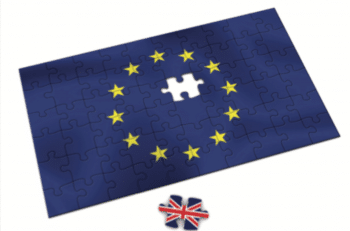
    Back in the 1960s I once stood on the plinth of Nelson’s column in Trafalgar Square, London, between Landseer’s lions, at a Connolly Association rally against anti-Catholic discrimination by the Northern Ireland Stormont regime. Lots of people were waving tricolours. Forty years later I spoke again in the same spot, at an anti-EU rally organised by the Democracy Movement, one of Britain’s EU-critical bodies, before a sea of little Union Jacks. I smiled to myself. Here were the English discovering the drawbacks of being ruled by foreigners, by people they did not elect, and how EU laws had come to have primacy over those of their own Parliament. They were reacting against losing their democracy and national independence. British Euroscepticism is largely English nationalism. The political psychology of the governing élites in England and Ireland is very different, not least in their attitudes to the EU. The lack of self-confidence of the Irish élite is shown by their continual anxiety to be seen as ‘good Europeans”’. Hence for example Enda Kenny’s boast that our recent modest economic improvement has “restored our reputation in Europe”. I was at the EU summit in Gothenburg, Sweden, a few days after Irish voters rejected the EU’s Treaty of Nice in 2001. The then Taoiseach, Bertie Ahern, was virtually beating his breast there as he explained apologetically to the international media how Irish voters were mistaken, but they would have a chance to change their minds in a second referendum – which of course duly happened. By contrast England’s governing élite has the psychology of a ruling power. For centuries they backed the second strongest powers of Europe against the strongest, thereby preventing any one power dominating the continent. When the EU came along after World War II they joined it in the hope of either prising France and Germany apart or else of being co-opted by the Franco-Germans as an equal partner to run ‘Europe’ as a triumvirate. Both hopes have proved illusory. Hence English disillusion with the EU. They never shared the Euro-federalist visions of the continentals – something that former Commission President Jacques Delors expressed when he said in 1993: “We’re not here to make a single market – that doesn’t interest me – but to make a political union”. Prime Minister Cameron wants to stick with the EU. But most of his party and large swathes of British public opinion see the EU as a low-growth economic area mired in recession, with a dysfunctional currency and high unemployment. They want to regain their freedom of action, especially over trade, by leaving. They want to develop trade and investment links with the five continents and the far-flung English-speaking world. The obvious power imbalance between the two sides would make it extraordinary if the “Leave” people were to prevail over the “Remain-Ins” in the Brexit referendum. On the one side are the British Government, the American Government, the German and 25 other EU Governments, Wall Street, the CBI, the TUC, the British Labour Party, the Brussels Commission, the European Movement, most EU-based High Finance and Transnational Corporations, plus in Ireland all the parties in the Oireachtas. On the other side is a diverse and sometimes quarrelsome range of groups and individuals on the Left, Right and Centre of British affairs, united only by their desire to get back their right to make their own laws, control their own borders and that their Government should decide independently its relations with other countries. It would be unrealistic though to think that a “Remain-in” vote in June will decisively settle the matter. It is likely merely to delay the inevitable divorce, for the interests of the continentals and the island Britons are just too fundamentally opposed. And what of the Celtic fringe? Contrary to the received wisdom there could well be a substantial “Leave” vote in those areas too. If the UK as a whole votes to leave, will Scotland want to break away from the rest of the UK in order to remain in the EU, abolish sterling and adopt the euro – that being a requirement for all newly acceding States to the EU? It is very doubtful. The Irish media have not yet picked up on one big downside for Irish people of the deal David Cameron concluded in Brussels before he launched his referendum. This is the implication of the EU agreement that if the UK votes to remain, new immigrants to the UK are liable to have lower social benefits for some years than those already there. It will be impossible under EU law to differentiate between Irish immigrants on the one hand and non-Irish ones on the other. This means that new Irish immigrants to Britain or the North must face cuts in social bene ts too if the “Remain” side wins. This proposal will not affect Irish people already settled in the UK, but solidarity with their fellow countrymen and women should still cause lots of them to vote Leave. If a booming British economy, freed of EU regulation, becomes the Singapore of Europe outside the EU, which is perfectly possible, it can only benefit Ireland economically. Lurid scenarios are being painted of the consequences of Britain leaving the EU while Ireland remains in it. If Brexit happens some uncertainty is inevitable for a year or two, but it will not be the end of the world. Free trade will continue between Ireland and the UK under all realistic “Leave” scenarios, so there will be no customs posts on the North-South border within Ireland, no passport controls or anything like that. Such claims are simply scaremongering, part of “Project Fear”. What of Northern Ireland in the event of Brexit? Over the past decade the UK has paid over £150 billion to the EU budget – far more than it has got back. It sends £350 million to Brussels every week. This is some ten times the Northern Ireland schools budget. EU subsidies to the North in the form of

    Loading

    Read more