capacity

Random entry RSS

  • Posted in:

    State land could provide 114,000 dwellings

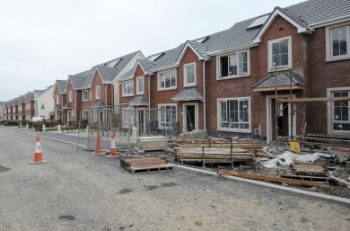
    Both NAMA (The National Asset Management Agency) and Local Authorities have been criticised for ‘land-hoarding’, ‘sitting’ on sites particularly in Dublin and the Greater Dublin Area (GDA) and not developing land that could be used to address the current housing crisis. Despite the amount of land under their control, Minister Eoghan Murphy has recently asked the Attorney General if powers to effect Compulsory Purchase Orders (CPOs) could be upgraded to encourage those with vacant homes and land to sell quickly. The enhanced powers are part of a new strategy on vacant homes and land due to be announced by Government in June (1). The Minister’s strategy is puzzling given that the State itself has been using less than one percent of its current zoned development land-banks for housing every year. Public land potential: Local Authorities, NAMA and Government A year ago the Department of Housing pub- lished ‘the Rebuilding Ireland Land Availability Survey’ which included details of State-owned land. This report confirmed that Local Authorities own zoned residential land with capacity for 37,950 dwellings (on 1,211 hectares) and that this represented just a portion of State-owned land (2). However, based on individual returns from seven Local Authorities, the figures are much higher. Local Authorities own zoned land with capacity for 48,724 dwellings nationwide (1,317 hectares). Dublin City Council owns zoned residential land with capacity for more than 18,000 dwellings and in County Dublin there is the potential to build 29,278 dwellings. When it comes to the NAMA, the picture is similar. It currently controls the loans on enough development land to build 65,399 dwellings (1,691 hectares); in County Dublin NAMA controls land with the potential for 43,075 dwellings. (3) Nationwide the State controls development land with the capacity for 114,123 dwellings (3,008 hectares) – more than 17% of all zoned residential land by area and more than one quarter of the potential housing capacity in the country. In addition, according to the Irish Times, at least 334 sites or buildings controlled by the Government are lying idle across the State, some of them for more than 30 years. The worst offender is the Health Service Executive with 137 unused buildings or sites. The other 197 sites are shared between nine Government departments, and include Garda stations, courthouses, military barracks and customs posts. Almost half of all County Dublin residential development land is State-controlled and between NAMA and Local Authorities there is the capacity for 71,425 dwellings (1,212 hectares). These figures exclude holdings owned by the Housing Agency and other State and Semi-state bodies. In Dublin City three out of every four vacant residential zoned sites are either owned by Dublin City Council or NAMA debtors. REFERENCES  1. “Government ponders increasing compulsory purchase powers” Irish Times, 14 May 2018; https://www.irishtimes.com/news/ireland/irish-news/government-ponders-increasing-compulsory-purchase-powers-1.3185489 2.“Almost 40,000 social homes could be built by local authorities” Irish Times Nov 2017; https://www.irishtimes.com/news/social-affairs/ almost-40-000-social-homes-could-be-built-by-local-authorities-1.3301442 3. NAMA Residential Delivery Updates (December 2017): https://www.nama.ie/development-funding/nama-residential-delivery-updates/. There is a reduction of 238 hectares from end-2017. There are number of factors for the reduction, including: the land has been built on, The land has been sold, the land has been re-zoned, the debtor has repaid or refinanced their debts and their loans are no longer in NAMA. In 2017, 2,503 were completed by debtors/ receivers funded by NAMA. 7,200 since counting began in 2014. Public Housing: Demand and Supply In the four years since 2014, 7,200 new dwellings have been completed by NAMA debtors and Local Authorities built 818 social homes. In the past twelve months 17,914 new households experienced rental distress and signed-on for Housing Assistance Payment (HAP). Official figures report that Local Authorities built 780 social homes (4) and a further part-State funded 1,078 were built by not-for-profit Approved Housing Bodies (5). However, when ‘turnkey’ units purchased from the private sector from developers are removed, Local Authorities built just 394 homes last year. 11 Local Authorities including South Dublin County Council built no (zero) homes. Approved Housing Bodies (AHBs) built only 270. In contrast in 2017 10.5% of all new homes sold were purchased by AHBs or Local Authorities nationwide as social housing. One year’s supply of purpose-built social housing is meeting less than two weeks of subsidised housing demand. Last year eleven Local Authorities built no social housing, including South Dublin County Council, which has more than 7,500 on housing waiting lists. Dublin County Council built just 232 homes and have more than 40,200 on housing waiting lists. Official targets for 2018 social-housing builds and acquisitions have been increased by just 11% on last year’s levels(6) (expect less than 450 Local Authority builds this year nationwide. By the end of 2018 one in three tenancies will be in receipt of some form of State rent assistance, making up almost 1950m. At current rates of increase by 2019 this annual spend on rent assistance will increase to over 11.1bn per year. In addition to zoned residential development land, the State owns massive landbanks, significant parts of which may be suitable to be re-zoned to residential use in the longer term. Even if a large percentage of the land controlled and owned by the State is not suitable for development, there is still more than enough to build 10,000 social homes per year, a recommendation of the All Party Oireachtas Committee on Housing and Homelessness in 2016 (7). The price of local authority housing (in Dublin City) should be 1175,000 for one-bed units, 1183,000 for two-bed units and 1200,000 for three-bed units. According to Simon Coveney: “The St Michael’s estate regeneration team proposal, ‘Our Community a better way: campaign for fair rental homes’, [launched on 26 April in Buswell’s Hotel] comprised 300 homes, of which 150 of which were social and 150 were cost-rental. The State would fund the capital cost of all units at a cost of 156 million. There would be a mix of one, two and three-bedroom apartments costing on average 1175,000, 1183,000 and 1200,00, respectively. Average monthly rent on a cost-rental basis would be 1900”. REFERENCES 4. Overall social housing provision | Department of

    Loading

    Read more

  • Posted in:

    Independent Living

    2016 marks another anniversary, the 20th anniversary of a ‘Strategy for Equality’. This was the report of the Commission on the Status of People with Disabilities. Their task was to establish what life was like for people with disabilities in Ireland and to prepare a roadmap to equality for people with disabilities. Before deciding on the appropriateness of any celebrations, it is timely to ask a question: has Ireland become more equal for people with disabilities? The Commission took what it described at the time as “the unusual step” of consulting with people about their ‘lived’ experiences. It reported that people with disabilities experienced outdated social and economic policies and public attitudes, and pointed to “justifiable anger” felt by people with disabilities and their families. In the intervening years a multitude of laws and policies have been introduced but the question remains. Let me state it again: has Ireland become more equal for people with disabilities? A cursory look at the Strategy and subsequent developments would suggest that quite a lot has been achieved on many of its recommendations. A National Disability Authority (NDA) has been established, a Disability Act was passed into law, a National Advocacy Service was established, and a swathe of legislation was brought into force on equality, assisted decision-making and education. However, if you dig a little deeper, there is a different story to be told. Most of these measures were poorly thought out or half-implemented. The Disability Act 2005 created little by way of the rights-based legislation envisaged. Instead it provided a basic right to a person with disabilities to an assessment of need. However, no rights to services follow on from that assessment. Even this limited ‘right’ to an assessment has been only partly commenced and currently just caters for children. The Strategy envisaged an independent advocate for people with disabilities. In 2007 the Citizens Information Act was passed. This provided for “Personal Advocates” with statutory and wide-ranging powers. Four years later a limited non-statutory service called the National Advocacy Service was commenced. A total of 35 advocates operate across a country where there are an estimated 600,000 people with disabilities. The Education for People with Special Educational Needs Act 2004 has been stalled indefinitely. This means that children in mainstream schools struggle to get educational supports. Successive Governments have failed to address the issue of the cost of disability. Many of the manifestos for the recent election used the term “cost of disability” to describe plans to give people an extra ten euro on their welfare payment. This is a regrettable approach. Cost of Disability demands than an increase in welfare payments. It requires a genuine recognition that having a disability can be expensive and moving to alleviate that additional expense. The Strategy recommended that the Department of Environment develop a policy with “the right of people with disabilities to live as independently as possible” as its aim. In 2011 the ‘Congregated Settings’ report was published by the HSE, the agency responsible for care services. This was premised on moving people with disabilities back into the community. Progress on this ambition has been unacceptably poor. The Fine Gael manifesto for the recent election includes a target for 1/3 of residents to move back into the community by 2021, three years after the initial deadline for moving all residents. This is an acknowledgement that the policy has failed and that a generation of people will probably die in institutions. The Strategy stated that ful lment through relationships and sexuality is a basic right. Since 1993, the criminal law has cast a legal shadow over sex and people with disabilities, particularly those with intellectual disabilities or mental illness. The law has provided an easy excuse to opt-out of providing sex education that would strengthen their ability to protect themselves and possibly open the door to a ful-filling, intimate relationship. This is a bleak landscape, but it’s not all negative. We are beginning to win the ideological battle. Concepts of person-centredness, independent living and autonomy are creeping into the parlance of the body politic. The battle now must be to get our partially commenced legislation fully implemented. This will involve resources in many cases and a change in culture in others. Any marking of this 20th anniversary of the ‘Strategy for Equality’ must reflect that not much has changed and must pose the challenge to find the political will for equality. We have all the tools at our disposal. Sarah Lennon Sarah Lennon is Training and Development Of cer with Inclusion Ireland

    Loading

    Read more