• Posted in:

    Protect!

    The new Minister for Social Protection will face a number of significant challenges. She has to deal comprehensively with the damage of the immediate past, while expediting long overdue reforms, and at the same time stay on top of new welfare challenges associated with changing forms of family, employment patterns, demographic trends: all betrayed by pervasive inequalities. The UN has provided some valuable guidance for the new Minister – in the Concluding Observations of the United Nations Committee on Economic, Social and Cultural Rights on the third periodic report of Ireland about implementation of the International Covenant on Economic, Social and Cultural Rights of June 2015. The Committee strongly advised that austerity policies should only be temporary and only cover the period of the crisis. They recommended that Ireland restore pre-crisis levels of social protection. They stated that Ireland must strengthen policy capacity with a disaggregated data strategy and adequate rights and equality-proofing mechanisms. Five key priorities for the new Minister for Social Protection are suggested: Redressing the impact of austerity cuts on children at risk of poverty, young people under 26, and lone parents. These groups suffered serious collateral damage from austerity budgets that failed to protect the vulnerable; Reversing reductions in welfare payments that left recipients below the poverty line; Tackling long-term unemployment in a manner that promotes inclusion in the labour market for all those who want employment, including people with disabilities, and all women; Ensuring the contribution of social welfare payments to the growing crisis in family homelessness. Changing the male breadwinner model and responding to new forms of family diversity.  The universal Child Benefit was reduced over a number of austerity budgets from €166 per month in 2010 to €130 pm in 2013, with additional cuts to the higher payments for the 3rd + child. This payment was increased by €5 over budgets 2015 and 2016 and is now €140. The combined impact of these cuts and parental unemployment means child poverty doubled over the crisis period. Social-welfare-dependent single families with children suffered cumulative cuts over the crisis. The number of jobless households with children also burgeoned. Tackling child poverty is far more complex than simply restoring child benefit to its pre-crisis level. The new Minister must take seriously the advice offered by the National Economic and Social Council (NESC0 and by various commissions and expert groups. A tiered and better targeted child-income-support system is a prerequisite for efficiently tackling child poverty but avoiding unnecessary unemployment and poverty traps. Austerity disproportionately damaged the young. Its mechanisms included emigration, deterioration in the quality of employment and severe social welfare cuts – with job-seekers’ allowance reduced by more than half for those under 25 (from €204 to €100). Many young people have emigrated to avoid not only poverty and unemployment but also low-quality employment and underemployment; others remain trapped in the parental home unable to afford the transition to independent adult life or to move to larger urban centres to seek employment. An immediate priority is resolving the situation of the 600 young people who, unable to sustain residential tenancies on such an inadequate income, are left dependant on emergency homeless services. The new Minister should revisit the previous Minister’s overzealous cuts to lone parents’ income disregards, and the decision to compel lone parents, once their youngest child is 14 years old, to work full-time. It is clear that this policy is not conducive to the wellbeing of parents or children. Various creative alternative reform proposals have been offered to promote a more positive reform agenda capable of addressing poverty and respecting parents’ choices for reconciling care work and paid employment. While the EU Survey of Income and Living Conditions (SILC) shows poverty, deprivation, consistent poverty and inequality rose over the crisis (Table 1), Watson and Maitre (2013) still nd high levels of efficacy in Irish social transfers. Despite social welfare cuts, Irish welfare payments were relatively effective in cushioning people from the worst effects of rising unemployment and falling incomes. Social transfers reduced the post-transfer poverty rate by 53% in 2004, but this rose to 71% by 2013. Despite such an impact, deprivation rates still rose from 13.7% to 24.5% between 2008 and 2011, and up to 30.5% in 2013 before decreasing. Deprivation rates for lone parents, however, peaked at 63% in 2014 (CSO). The NESC has outlined the significant social impact of the crisis (2013). It estimated that 10% of the population experience food poverty. There is growing use of ‘soup kitchens’ and runaway homelessness. The welfare system is the core mechanism for economic equality. There are, as Micheál Collins argued in last month’s Village, lessons to be learned from mistakes in previous recoveries where the failure to prioritise welfare increases saw social-welfare-dependent households’ fall dramatically behind general incomes. The new Minister must commit to, and budget for, adequacy and indexation of all social welfare payments, not just those considered ‘deserving’. These increases need to be a policy priority, not crumbs – or an afterthought. Since 2011 social welfare rates have not been decreased except for two social welfare cuts which decreased the adult working age payment by €16. As Focus Ireland recently observed these cuts coupled with an increasing cost of living, have resulted in a considerable erosion of living standards for those reliant on social welfare payments as can be seen in this comparison of recent increases in the Consumer Price Index (CPI) with stagnant Irish social welfare rates (Table 2). The last five years have seen an unprecedented level of reform in the State’s employment services, in particular merging institutions into INTREO. The Pathways to Work 2016-2020 policy document does acknowledge services are struggling to reach quality standards, with uneven service delivery and poor guidance capacity. Other capacity gaps are now being addressed by ‘Job Path’, private-sector services for the long-term unemployed. These are based on a ‘pay-by-results’ model which will probably increase pressure on people to take poor-quality employment. The new Minister must carefully consider whether this work- first activation model

    Loading

    Read more

  • Posted in:

    UN scrutinises Children’s rights

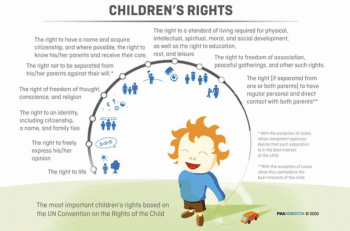
    For the first time in a decade, the Irish government defended its record on children’s rights before the United Nations in Geneva, on 14th January 2016. Poverty and homelessness, the rights of children in direct provision, the rights of Traveller and Roma Children and education issues were dominant themes, raised from different perspectives. The UN Committee on the Rights of the Child also asked about the incorporation of children’s rights into Irish law, the duty to hear children in legal proceedings, complaints and monitoring mechanisms, and the child’s right to identity in the context of surrogacy. Child protection was an important focal point throughout the discussions and the UN Committee members asked a range of questions about the extent of services and supports available to protect children from harm and to support families. Children’s rights in healthcare – obesity, smoking, alcohol and mental health – were queried. The rights of children with disabilities and in alternative care, in detention and in the immigration system were all scrutinised. The hearing was part of the process of monitoring implementation of the Convention on the Rights of the Child, a treaty binding on Ireland since 1992. The government delegation was led by Minister for Children and Youth Affairs, Dr James Reilly, TD. It was a measure of the political importance of the process that the Minister was accompanied by a large delegation of civil servants and officials from all major government departments. The hearing is an important opportunity to put pressure on Government in a public, international forum. For many of the non-governmental organisations present like the Children’s Rights Alliance, – and for the Ombudsman for Children – this is the culmination of a decade of advocacy. The Irish Human Rights and Equality Commission participates in all UN treaty-monitoring hearings. The Convention on the Rights of the Child is a particularly wide-ranging treaty, making both its implementation and its monitoring challenging. Mainstream issues of education and health sit alongside the concerns of children who are especially vulnerable or whose rights are breached by their particular circumstances. Guidelines ensure that all matters of importance are covered in the six-hour dialogue with the Government delegation. The hearing is a probing, constructive dialogue, rather than an adversarial process. The Government delegation is obliged to provide information in almost immediate response to detailed questioning from the Committee members. Answers demonstrated that the Government delegation was well prepared and few questions threw them off guard. Responses were generally succinct and direct although the Committee regularly interrupted if answers were too long-winded or off-point, creating genuine accountability. Civil society representatives were able to clarify any issues with the responses given by Government. They were able to point out that the status of the School Admissions Bill 2015, presented by Government, was at best uncertain, for example. When the Committee asked about the legislative amendments required to address the issue of school discrimination to protect school ethos, the Government’s commitment to change the Equal Status Act was welcomed, if with some surprise. The Committee’s rapporteurs were clearly well informed and able to convey with authority their understanding of the Irish context. Their probing questions sought clarity about the true state of child poverty, questioned why children in direct provision could complain to the Committee on the Rights of the Child but not to the Ombudsman for Children and wondered why many of the Government’s policies in this area remained on the shelf, and why law reform takes so long. A contrasting style emerged between some civil servants and the Minister, who on occasion brought humility and humanity to issues like child poverty and homelessness. Overall, with the many advances made on constitutional reform, the cabinet-level Ministry, family-law reform and the removal of children from adult prison, the Government can be satisfied that it avoided the worst criticism. At the same time, there is little doubt that the impact of austerity on children and the particular suffering of very vulnerable children will loom large when the Committee completes its analysis of Ireland’s children’s rights record. For those who work with and for children, the Committee’s Concluding Observations will provide a blueprint for children’s rights advocacy and activism in the years to come. Given the impact that such Concluding Observations have had on Ireland’s children’s rights record to date, this is clearly where children’s rights advocacy can make a difference. Ursula Kilkelly Ursula Kilkelly is Professor of Law in the School of Law, University College Cork.

    Loading

    Read more