education

Random entry RSS

  • Posted in:

    Equality over freedom

    Politics is a continuum from equality to freedom. If freedom is the vertical axis of a graph and equality the horizontal axis, every society – and every citizen – decides where the balance should be. A libertarian society tending towards survival of the fittest will not foster equality; an egalitarian society may need to be enforced by a strong state to the detriment of individual licence, and so on. Philosophers from Tocqueville to Hayek to mainstream liberals accept there is a trade-off. Village tends to the egalitarian end of the scale: truly free equality, after education and reflection – precise processes for which have been touted by many modern philosophers – is a mature and more stable goal than equal freedom. Workaday politics can be charted and defined on the graph. However, the same political action can be justified by different points on the graph. Issues like divorce, gay marriage, and abortion can be deemed imperatives of either freedom or equality. In this respect the language used is not a definitive indicator of the politics. A campaign can claim to be about equality but in fact on analysis be defined by positions only of freedom. Any campaign fronted by Simon Harris or Leo Varadkar – agents above all of the propertied, of the status quo for the wealthy – is unlikely to be rooted in any real substantive equality. It is perfectly legitimate to campaign for gay marriage or abortion because you want yourself or others to exercise rights to freedom to get married or have an abortion. Telltale signs if you do so you may include that you are less likely to make common cause with campaigns for others suffering discrimination of all sorts. You may ignore issues like racial equality, Travellers rights; you may express no concern about economic, social and educational inequalities. It is legitimate but it is not Village’s political motivation of preference. For Village recent referendums reached the right solutions but were disappointingly rooted in the politics of freedom rather than that of equality. The egregious wrongs in Irish society are best resolved by solutions driven by equality. This society above all facilitates those who are economically adroit. It provides opportunity for people who are strong; worse still it provides opportunity for them to make mistakes (trashing the environment is the one posterity will most register). It provides very little vision as to how they should exercise their freedoms. – this is in part the problem of 100 channels but nothing on the television. But on a societal scale. It is now time to move on to new agendas that are really radical. These include: agendas of radical redistribution of wealth in society, of radical changes to the opportunities available to those who have suffered traditional discrimination, including (still) to women and to those of minority sexual orientations, to racial minorities including Travellers; of educational opportunities facilitated by positive discrimination so even (or especially) the poorest in society can be whoever they want to be; of redistribution of power so it is exercised at the lowest, most local, most democratic levels; of attenuation of property rights so they are exercised in the common good. The goods in society should be distributed by that society so those least well off are most compensated. Everyone in society is morally equal, they should be treated by society in a way so they can participate in the fruits of the earth equally. It is a myth that the fruits of the earth are distributed in accordance with merit – they have been accumulated largely by force and luck. The idea that in 2018 a child’s future is determined by the time it reaches two years old is an abomination. Ireland is growing up politically. Ireland has waved good-bye to the invidious influence of an unrealistic Church and voted the right way on divorce, gay rights and abortion. However, these are really liberal causes focused on issues of identity. It is time we addressed the issues of endemic inequality enshrined down the generations. As regards the Constitution we do need to abolish Article 41 which recognises the woman’s life within the home, so devaluing women who choose not to work within the home; and to eliminate the part of the preamble which invokes the Constitution “in the name of the Holy Spirit”. Indeed the Constitution’s premises relate to another era and the whole document should be reconceived. More generally, materialism, capitalism and competition have had their day, it is time to welcome in a new agenda – of equality of outcome/condition: equality of wealth and power, of quality of life, of environment, of education, of fulfilment and happiness, of respect and opportunity. This should be achieved through politics and laws. The constitution should be amended to reflect it too. The most radical change would be to enshrine equality of outcome/condition as a constitutional imperative across the range.

    Loading

    Read more

  • Posted in:

    If not zeal then logic

    It could not be clearer. The Irish Human Rights and Equality Commission Act 2014 says that public bodies must, when they are preparing strategic plans, assess and identify the human rights and equality issues that are relevant to their functions as policy maker, employer and service provider. Public bodies must also identify the policies and practices that they have in place or that they plan to put in place to address these issues. We can only assume they meant it when they enacted the legislation, two years ago now. The excitement could, therefore, hardly be contained as the Department of Education and skills was first out of the traps with its new statement of strategy. All other Government Departments are still in the process of finalising their own new statements of strategies. They lag behind education, hot off the press with its ‘Action Plan for Education 2016-2019’. The statement of strategy opens with a picture of a smiling minister Richard Bruton and his commitment that “we can work together with all the people who work in and depend on the education and training service to, collectively, make it into the best in Europe”. This ‘best in world’ stuff is cringe-inducing but, whatever, how did it manage the new public sector duty? It is worth setting it out in full. It comes under the less than promising subheading “ensuring equity”. Equity, it must be remembered, is about fairness, not the more particular, more ambitious equality, not even human rights. It goes like this… “As part of their public sector duty, public bodies are required to consider human rights and equality issues relevant to them. In preparing this document, such issues were considered and individual actions address matters specific to the education and training sector. Ensuring access to an equitable system is a driving force throughout the Department’s work”. That’s it. It feels like a crude two fingers to the legislation, to the Oireachtas that enacted it, and to anybody who had naively entertained expectations deriving from the legislation. Human Rights don’t even get another mention in the 64- page document. Equality gets a mention as it is part of the name of the Deis (Delivering Equality of Opportunity in Schools) initiative and, under Goal 2, where the statement of strategy complacently recites that “we have made considerable progress in advancing equity and equality of opportunity”, but does deign to acknowledge that “significant challenges remain if we are to ensure that children and young people from different backgrounds are adequately supported so that they can experience success in the education system”. Anything vaguely equality-related is squashed into Goal 2 of the strategy statement which is to improve the progress of learners at risk of educational disadvantage or learners with special education needs. Goal 2 has 18 actions. This compares with 35 actions under Goal 1 to improve the learning experience and success of learners, 29 actions under Goal 3 to help those delivering educational services to continuously improve, 37 actions under Goal 4 to build stronger bridges between education and the wider community, and 20 actions under Goal 5 to improve national planning and support services. The Irish Human Rights and Equality Commission has produced limited but clear guidance on implementing this public-sector duty. The steps required include: Undertake an assessment of human rights and equality issues that are relevant to its functions, to the services it provides and to its employees. The Department of Education and Skills Statement of Strategy demonstrates no evidence of such an analysis. Consult broadly with employees, managers, trade unions, individuals and communities accessing and using the services, and other key stakeholders, which may be affected by inequalities and human rights issues. The Department of Education and Skills received submissions from 600 individuals and groups but there is no evidence that any of these related to equality and human rights or the public-sector duty. Screen and analyse policies and programmes from a human rights and equality perspective, identifying which existing policies and programmes are particularly relevant. The Department of Education and Skills Statement of Strategy demonstrates no evidence of such screening or analysis. Develop action plans on human rights and equality with defined actions and responsibilities. The Department of Education and Skills Statement of Strategy demonstrates no evidence of such an action plan. So, what next? The Irish Human Rights and Equality Commission, in its guidance, states that where it “considers there are failures to fulfil the Public Sector Duty, it can invite a public body to carry out an equality and human rights review of the work of the organisation and prepare and implement an action plan”. Logically then, the only outstanding matter now is when will the Irish Human Rights and Equality Commission act? Niall Crowley

    Loading

    Read more

  • Posted in:

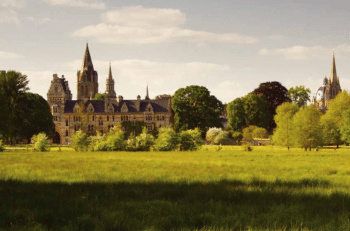
    Oxford, Britain

    North Oxford is a heartland of academia where leafy halls of residence mingle with stately homes and rarefied hostelries. Situated in almost the very centre of Britain a windless calm favours scholarly reflection removed from modernity’s fugue. Even the traffic is orderly with bicycles sensibly preferred. It is one of the most attractive places in the world. Spend an afternoon on the lawns at Christchurch if you doubt it. Oxford is world-class in so many ways: the city and the university. PWC and Demos rated it the best place to live in Britain, in 2012, across a wide range of criteria. Shanghai ratings names Oxford University the seventh best in the world. South Oxfordshire was recently named Britain’s best rural place to live. It is transcendent England. What has this to say about Brexit, the political issue of this generation? The City of Oxford is located on the confluence of the Isis (the idiosyncratic name for the Thames here) and Cherwell rivers. Broadly, it may be divided into three zones with a clear north-south divide: that affluent and mature north Oxford of Jericho and Wolvercote; predominantly twentieth-century suburbs including Cowley to the south; and the historical and commercial centre linked to Botley and Osney Island, built around an Anglo-Saxon settlement of which little remains. This contains renowned colleges such as Christchurch, Balliol and Magdalen. The first sign of incongruity is how close it nestles to the ‘any-town-UK’ commercial centre and its array of gaudy chains. Moving south, there is yet another Oxford as housing gets cheaper and industry is evident. The first industrial revolution passed Oxford by as colleges objected to the contagion of commerce. Only after World War II did significant manufacturing arrive as the city attracted a car industry. By the early 1970s, 20,000 people were employed in the sector and the original Mini Minor was developed here in 1959. Unfortunately, as in much of the country, a significant proportion of heavy industrial jobs have departed. The working class areas now face social problems familiar in many English cities. Living as a jobbing tutor and supply teacher in Oxford for two years I encountered classroom behaviour that made experiences in schools in socially-deprived areas of Dublin seem almost meditative. Oxford is a place of profound educational inequality. Oxford accomodates a great literary tradition: JRR Tolkien, CS Lewis, Lewis Carroll, Kenneth Graham and Irish Murdoch wrote from Oxford. The number of Prime Ministers that have passed through Oxford University is startling. 28 overall. Only Jim Callaghan and John Major, who revelled in his immersion in the university of life, among English Prime Ministers since Winston Churchill (who finally left office in 1955) did not pass along its quads. Alumna Theresa May (St Hugh’s, 1974) joins a list that includes Labour Prime Ministers Tony Blair (St John’s, 1974), Harold Wilson (Jesus College, 1937) and Clement Atlee (University College, 1904) as well as Tories Anthony Eden (Christchurch College, 1922), Harold MacMillan (Balliol College, 1914) Edward Heath (Balliol College, 1939), Margaret Thatcher (Somerville College, 1947), and David Cameron (Brasenose College, 1988). Oxford indubitably has seeded the post-War UK political establishment. Moreover, numerous Tory politicians maintain an association with the wider shire. Churchill himself was born in the nearby ancestral estate of Blenheim Palace (though he passed some of his early childhood in Dublin’s Phoenix Park). David Cameron, MP for Witney, Oxfordshire, lives in Chipping Norton close to Rebekah Brooks, Jeremy Clarkson and the rest of the well-placed Chippy set. Michael Heseltine (Pembroke College, 1954) dwells in style nearby though one imagines he looks slightly askance at the gobby neighbours. Theresa May grew up in the village of Wheatley a few miles east of Oxford where her father served as vicar. Further east towards London, Boris Johnson (Balliol College, 1987), the new foreign secretary, lives in Henley-on-Thames. Jeremy Paxman, Richard Branson, Kate Moss, Kate Winslet, Rowan Atkinson, Jeremy Irons and Ben Kingsley: celebrities, high-and-low-brow, live in Oxfordshire. Perhaps the county has a quality – an England of the imagination – that grandees of all sorts gravitate towards. It could be the low rural population density, a legacy of the Enclosure Acts (1760-1830) that placed formerly common land in the hands of expanding gentlemen farmers. Today, though located only an hour from some of the most in ated land prices in the world in London, it is possible to drive for long stretches without seeing a single dwelling. The hoi polloi were kept at bay, in Oxford and swathes of its hinterland. As an Irish person living in the city of Oxford I never had a sense that I was unwelcome, or at least any alienation was no different to that felt by the bulk of the population before a converging aristocratic and mercantile elite: unlike the ancient regime in France since the Tudor era, nobility has been open to the highest bidder and an Oxford education provides the polish. One must however acclimatise to the southern English reserve and a sardonic sense of humour. The historian Tony Judt (St Anne’s College 1980- 87), who concededly knew little of Ireland, wrote that the English are perhaps “the only people who can experience schadenfreude at their own misfortunes”. Succumbing to generalisation I regard English friendships as firmer than Irish for all the latter’s sociability. But these societies of companions generate mosaic communities often hostile to one another. Better the devil you know and bugger the rest. In the era of the Internet there is a growing suspicion of the ruling class of politicians. Many do feel “shat on by Tories, shovelled up by Labour” in the words of Uncle Monty in ‘Withnail and I’. They are often seen as a separate cast reflecting the cultural dominance of Oxford and Cambridge Universities (‘Oxbridge’) which extends to the media and business. This trend perhaps explains why maverick and grumpy (though otherwise profoundly different) outsiders such as Jeremy Corbyn, Nigel Farage (and Boris Johnson who went rogue over Brexit) are appealing to a jaded electorate; a state of

    Loading

    Read more

  • Posted in:

    Bouquets to Boulders

    It is critical that the next Government have a credible and robust National Traveller and Roma Inclusion Strategy. This will depend on political will. The last number of months have been particularly difficult for Travellers and Traveller organisations. In October 2015 we witnessed the horrific deaths of 10 Travellers in a fire at a below-standard halting site in Carrickmines. There was a general outpouring of sympathy for the bereaved Traveller families which seemed to break through the barriers of negative stereotype. Soon, however, we were forced to watch the bouquets turn back into boulders as the local authority failed to implement its plans to accommodate the bereaved families due to objections from local residents. This unleashed shocking levels of anti-Traveller hate speech on the airwaves and on social media. Meanwhile the families were left to live on a car-park while they buried their loved ones. In November 2015 Traveller ethnicity was discussed in Dáil Eireann for the first time. The Government told the Dáil that Traveller ethnicity would be dealt with in their new National Traveller and Roma Inclusion Strategy. But we had to watch the Minister for Equality, who had promised to deliver on this issue, back down. He blamed ‘focus group led’ politics. This disappointment was followed in January this year with the spectacle of riot police evicting Travellers from a Traveller halting site in Dundalk. This was apparently for their own safety. Ministers refused to get involved in local authority operations. The Government was exposed as having no plan for Travellers and Roma. The last Government told the United Nations that poor education outcomes for Traveller children and third-world living conditions for Traveller children would be dealt with in the new National Traveller and Roma Inclusion Strategy. However, It succeeded in putting Traveller issues on hold, just long enough to get to the General Election. The week before the election Travellers and Traveller organisations were involved in a round of consultations with the Department of Justice and Equality on the National Traveller and Roma Inclusion Strategy. It was ironic that outside these consultations, in the real world of General Election campaigning, Traveller issues were barely mentioned. Considerable space in print, on the broadcast media and on Social Media is readily available to decry Travellers and to blame many of the ills of society on them. However, when it comes to political discourse the space available seems to shrink. Travellers and Traveller organisations have been engaging with the State for 30 years now. In this time there have been significant milestones. The 1995-Government-appointed Task Force on Travellers was the first to provide a comprehensive agenda of policy proposals for equality for Travellers based on a recognition of the distinct culture and identity of the Traveller community. The 1998 Employment Equality Act and the 2000 Equal Status Act introduced, for the first time, a system of redress for people experiencing discrimination in employment and in the provision of goods and services, including Travellers. In 2010 the First All-Ireland Traveller Health Study was published which acknowledged the critical role that living conditions play in determining unacceptably-poor Traveller health levels. What we have failed to see in the last 30 years is the implementation of policy in accommodation, health, education and employment. Many of the recommendations of the 1995 Task Force report remain to be implemented. There has been little tangible improvement in the standard of Traveller living conditions. Travellers and Roma represent a small percentage of the total population. It is not beyond our means to ensure equality and human rights for Traveller and Roma. We need leadership that Travellers can believe in. We need Government to commit to implementing a National Traveller and Roma Strategy that: 1. Provides safe, culturally-appropriate accommodation for all Travellers and Roma. 2. Supports positive action to enable labour-market participation and employment for Travellers and Roma. 3. Reinstates and grow resources to ensure participation by and outcomes for Travellers and Roma in culturally appropriate education at all levels. 4. Implements the recommendations of the All- Ireland Traveller Health Study. 5. Recognises the distinct ethnic identity of the Traveller community and addresses the practical implications of this in policy, programmes and services. 6. Addresses deprivation among Travellers and Roma in an integrated strategy for economic equality for these communities. 7. Funds Traveller and Roma organisations to give voice to the issues faced by their communities and to participate in decision-making that affects them. 8. Promotes a campaign of public education to combat racism and to stimulate a valuing of ethnic diversity. 9. Builds capacity in the public sector to respond effectively to cultural diversity and to implement the public-sector duty to promote and implement equality and human rights. Ronnie Fay Ronnie Fay is Director of Pavee Point

    Loading

    Read more