england

Random entry RSS

  • Posted in:

    Villager February 2018

    Listen up around what they’re at Villager likes nothing more than a shafted preposition. Most of the articles that come in to this magazine are from academics writing ‘around’ their subjects. They go into Village’s file of death along with cover letters for CVs that sign off cheers. So he was thrilled to see the Irish Times say of Nama that is lending €384m to allow developers to “build out projects”. Zagantagonism It’s been a bad month for Rugby schools. Paddy Jackson, the Kiely’s set-to, the illicit publication of the letter from Eunan O’Carroll. And now Frank Armstrong. The editor and half the Champagne socialists/ environmentalists whose whimsies fill the pages of Village have been taken aback by young Armstrong and his piece in the current edition ripping apart Gonzaga College, alma mater to non-conformist and unbulliable egos of all sorts, from Ranelagh right as far as Bray. Hypocrisy on Equality Talking of which it was amusing to see Michael McDowell bemoaning inequality – “the rich getting far richer” in the Sunday Business Post where he ties down an, unpaid, column. When he had power he was largely an agent for liberalism – and inequality, even claiming the economy “demands inequality in some respects”. In 2004 he told the Eonomist Survey of Ireland that he “sees inequality as an inevitable part of the society of incentives that Ireland has, thankfully, become”. He was quoted by The Economist magazine as offering a robust defence of the gap between rich and poor in Ireland. And he told the Irish Catholic that “a dynamic liberal economy like ours demands flexibility and inequality in some respects to function”. It was such inequality “which provides incentives”. He said: “As far as I am concerned liberal politics and liberal economics go together. In a liberal society, equality of opportunity is an equal opportunity to become unequal. A society which legislates and controls in every way to create some sort of mathematical equality just doesn’t work”. In his pomp he believed: “Driven to a complete extreme, the current rights’ culture and equality notion would create a feudal society”. McDowell sat at the Cabinet table for a decade while the country was run – to disastrous long-term effect – in the interests of elites and cartels, including the legal one he still feeds off. McDowell pulled the plug on the Citizen Traveller campaign when it dared to be controversial. He delayed and censored the reports of his department’s own inspector of prisons, Judge Dermot Kinlan. Dodgy Donegal There is still no sign of a date for the High Court case being taken by Michael McLoone, former County Manager in Donegal, represented by barrister Michael McDowell, over a 2014 Village article titled ‘Dodgy Donegal Planning’, alleging improper behaviour in Donegal County Council’s treatment of planning matters. Nor is there any sign of the Department of the Environment’s report into the activities detailed in the impugned Village article, though it has been promised for years. Loughinisland threats Village has received correspondence from the Hawthorns, Ronnie and Hilary saying they will take legal action over the naming, in these pages, of Ronnie as chief suspect for the Loughinisland massacre in 1994 when six Catholics watching a world cup match were gunned down in a pub. The Hawthorns’ concern vacillates between defamation and privacy. But they seem to be having trouble getting anything beyond a few emails together. Colgan threats And Michael Colgan has apparently initiated proceedings against Village for “defamation of character”, though Village hasn’t been served with anything so we’re not really sure. Colgan alleges a recent editorial implied he was guilty of serious crimes and rape. Village claims it was accusing him of harassment. Unthreatening After all that hassle Villager often wonders if it isn’t better to just say nothing. Then you can become as popular as William and Kate, Royal heirs in waiting, who have literally never saidanything anyone can remember. Kith and Quinn Villager never gets cross, never raises his voice. But he hates those Quinns. Complaints by Sean Quinn jnr and his wife Karen Woods about a recent failure to pay some of their €100,000 annual living expenses should be seen in the context of a “scheme of misappropriation on a grand scale”, the High Court has been told. Some €10m has been extracted from a company in India “and we don’t know where that has gone”, Barry O’Donnell SC, for the special liquidators of Irish Bank Resolution Corporation, said. Documentation from India and Hong Kong showed “a scheme of misappropriation” was executed, over time and especially in 2010, at the instigation, and for the benefit, of members of the Quinn family. The transactions at issue “have never been explained” and while the family maintain they had no idea what was going on, that is “wholly implausible”, he said. This, and the fact Quinn and his wife are receiving close to €100,000 annually in living expenses, was of concern to the bank and it was “imperative” the matters were addressed. Villager absolutely begrudges them their 100k. If he had his way the radical left would have picketed the likes of the Quinns instead of faffing around harassing water-meter installers. And he wants to know where Peter Darragh Quinn, a nephew of the bankrupt former billionaire, on the run five years after an arrest warrant was issued for him, is. Ireland biggest environmental mess by a landslide In July 2008, the Court of Justice of the European Union (CJEU) ruled that Ireland had failed to carry out a proper assessment for the 70 turbine Derrybrien wind farm which was built in the early 2000s. The Government has yet to carry out the assessment on the site. The construction work on the wind farm led to a 2km landslide in October 2003, which the Commission itself has called “environmentally devastating”. The incident caused 450,000 cubic meters of peat to slide down the mountainside, which was washed into the local river systems. The European Commission has now requested that the

    Loading

    Read more

  • Posted in:

    How maths will destroy capitalism

    The consumerism-generating-capitalism- it usefully loyal, generating-consumerism cycle that characterises the developed or ‘Northern’ world depends on inequality, even as it purveys certain equalities, and is the main obstacle to tackling climate change, the most serious long-term problem facing humanity. Capitalism is struggling to maintain itself. In one formal sense this is good for equality. A crucial weakness of capitalism (not sufficiently noted by the Left) is that by relentlessly pushing its ‘free’ market into every corner of life to seek profit, it puts a cash-price on everything,and it thereby becomes a great social leveller: status, is replaced by capital or money as the measure of societal eminence. As a result, other than the great inequalities of money, we now live in communities with a level of personal and legal equality that was totally unimaginable throughout human history or even 40 years ago – for gender, sexual orientation, race, ‘legitimacy’, nationality, and religion, for example. Capitalism eschews the personal inequalities which torpid caste-based civilisations emphasised. Only money matters now. But the crucial point is that the promotion of personal equality by capitalism also causes constantly growing agitation by workers for a just share of their social production as they now see themselves as equal to their bosses. In response to this growing agitation for equality, the capital-owning class must react, like any ruling-class or mafia, in two ways: one section of the exploited must violently be repressed, the other will be bribed to keep inside. England, as one of the biggest imperialist powers has done this regularly and systematically. It did it in the 1819 Peterloo massacre of demonstrating workers. It did it in the 1840s when famine starved a million people in ireland while massive amounts of food were being exported under British army guard to Liverpool. Towards 1850 when Chartist agitation for equality again became strong in england, instead of violence the Corn Laws were dropped to allow imports of cheap food as the ‘bribe’ to quieten agitation. Colonies were brutally plundered by England’s imperialism to deliver bribes to English workers. Friedrich Engels noted this in a letter from 1882 to Kautsky: “English workers gaily share the feast of England’s colonies”. Ireland at this time was used as one source of those bribes as part of the effort to maintain the English working-class comfortable enough to forgo dangerous agitation, even to join the imperial army. But the equality drive continued, Ireland demanded and won independence, and after two diverting world wars and the likes of the Jarrow march in the 1930s, in the 1970s and 1980s there again arose agitation among the English working-class against capitalism’s economic inequality – most noticeably the 1974 and 1985 miners’ strike and opposition to the poll tax from 1990, in spite of the material benefits to the working classes third world imports of cheap food and raw materials. There was also strong, often violent agitation by the colonies, following Ireland and Viet Nam‘s example, for national liberation, for the equality of races and nations. This new agitation was a dangerous crisis for capitalism, and as there were no further colonies to plunder, a new source of wealth, beyond cheap food and raw materials, had to be found. Thatcher’s capitalism achieved this: up to the 1970s colonies were generally not allowed to manufacture, this was reserved for the North so that for example India was forced to send its raw cotton to England and to buy back spun and woven goods. The new policy was that the ex-colonies and third world in general needed to get the national liberation they were increasingly demanding and could then develop manufacturing on their low wages to export the new agitation-quitening bribe of cheap manufactured goods back to England. Reagan and the North in general did the same. Ireland had become part of this group, exploiting not exploited. This new system worked well and subsists: a surfeit of cheap manufactures from the southern nations, often produced by children working in horrible conditions, as the North’s diminishing manufacturing drifts toward a financial economy where billionaires speculate to produce damaging bubbles and get bailed-out when a bubble bursts, as Thomas Piketty notes in ‘Capital in the 21st Century’. The class-struggle, previously within nations, has become global, between nations. The ‘bribes’ mentioned are not just cash incentives, there is an intrinsic turbocharge for the enthusiastic wealthy consumer. Consumerism thrives when a worker in the US or Ireland receives the equivalent of $15/hr while the worker in, for example, China producing equally-sophisticated manufactured goods is only paid $2/hour. Capitalists gloat at the classic opportunities to trade the spoils, the only issue is the ‘terms’ of trade. A worker in the US or Ireland can trade one hour’s labour, in a shopping mall, for several hours of equal-quality Chinese labour. This looks like a winning gambler cashing in the chips. The more you shop for consumer goods the more your profit grows as you indirectly exploit foreign workers. This is the economic basis of that particular ‘buzz’ element of our Consumerist consciousness. The incentive is inbuilt, the process stacked to the advantage of consumers in the North. It is the instinctive grasp of this situation by a worker who is comfortable with capitalism that matters. a worker might exchange 30 minutes labour at a routine retail job for the price of a pair of imported jeans. the cotton must be: planted-grown-harvested-spunwoven-dyed-cut-sewn,then zips-pockets-hems-buttons- belt-loops-rivets-labels applied, and the lot transported. The same is true, though it is less obvious, if both workers are on car-assembly lines in their own countries. The consumerist ‘buzz’ arises from an unequal worker-to-worker relationship, not worker-to-capitalist. In striking contrast shopping for manufactured goods before 1980 felt like the much cruder experience of being mugged by capitalists as the wages earned exchanged for a less than equal amount of labour because when a worker shopped, those workers who produced the manufactured goods were in the same economic area and so were paid the same wage rate (the missing labour-value of course expropriated as profit by capitalists). This is why shopping for the working

    Loading

    Read more

  • Posted in:

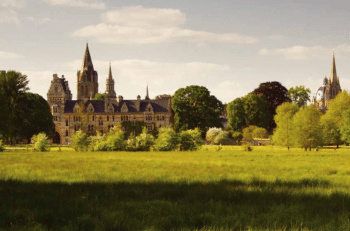
    Oxford, Britain

    North Oxford is a heartland of academia where leafy halls of residence mingle with stately homes and rarefied hostelries. Situated in almost the very centre of Britain a windless calm favours scholarly reflection removed from modernity’s fugue. Even the traffic is orderly with bicycles sensibly preferred. It is one of the most attractive places in the world. Spend an afternoon on the lawns at Christchurch if you doubt it. Oxford is world-class in so many ways: the city and the university. PWC and Demos rated it the best place to live in Britain, in 2012, across a wide range of criteria. Shanghai ratings names Oxford University the seventh best in the world. South Oxfordshire was recently named Britain’s best rural place to live. It is transcendent England. What has this to say about Brexit, the political issue of this generation? The City of Oxford is located on the confluence of the Isis (the idiosyncratic name for the Thames here) and Cherwell rivers. Broadly, it may be divided into three zones with a clear north-south divide: that affluent and mature north Oxford of Jericho and Wolvercote; predominantly twentieth-century suburbs including Cowley to the south; and the historical and commercial centre linked to Botley and Osney Island, built around an Anglo-Saxon settlement of which little remains. This contains renowned colleges such as Christchurch, Balliol and Magdalen. The first sign of incongruity is how close it nestles to the ‘any-town-UK’ commercial centre and its array of gaudy chains. Moving south, there is yet another Oxford as housing gets cheaper and industry is evident. The first industrial revolution passed Oxford by as colleges objected to the contagion of commerce. Only after World War II did significant manufacturing arrive as the city attracted a car industry. By the early 1970s, 20,000 people were employed in the sector and the original Mini Minor was developed here in 1959. Unfortunately, as in much of the country, a significant proportion of heavy industrial jobs have departed. The working class areas now face social problems familiar in many English cities. Living as a jobbing tutor and supply teacher in Oxford for two years I encountered classroom behaviour that made experiences in schools in socially-deprived areas of Dublin seem almost meditative. Oxford is a place of profound educational inequality. Oxford accomodates a great literary tradition: JRR Tolkien, CS Lewis, Lewis Carroll, Kenneth Graham and Irish Murdoch wrote from Oxford. The number of Prime Ministers that have passed through Oxford University is startling. 28 overall. Only Jim Callaghan and John Major, who revelled in his immersion in the university of life, among English Prime Ministers since Winston Churchill (who finally left office in 1955) did not pass along its quads. Alumna Theresa May (St Hugh’s, 1974) joins a list that includes Labour Prime Ministers Tony Blair (St John’s, 1974), Harold Wilson (Jesus College, 1937) and Clement Atlee (University College, 1904) as well as Tories Anthony Eden (Christchurch College, 1922), Harold MacMillan (Balliol College, 1914) Edward Heath (Balliol College, 1939), Margaret Thatcher (Somerville College, 1947), and David Cameron (Brasenose College, 1988). Oxford indubitably has seeded the post-War UK political establishment. Moreover, numerous Tory politicians maintain an association with the wider shire. Churchill himself was born in the nearby ancestral estate of Blenheim Palace (though he passed some of his early childhood in Dublin’s Phoenix Park). David Cameron, MP for Witney, Oxfordshire, lives in Chipping Norton close to Rebekah Brooks, Jeremy Clarkson and the rest of the well-placed Chippy set. Michael Heseltine (Pembroke College, 1954) dwells in style nearby though one imagines he looks slightly askance at the gobby neighbours. Theresa May grew up in the village of Wheatley a few miles east of Oxford where her father served as vicar. Further east towards London, Boris Johnson (Balliol College, 1987), the new foreign secretary, lives in Henley-on-Thames. Jeremy Paxman, Richard Branson, Kate Moss, Kate Winslet, Rowan Atkinson, Jeremy Irons and Ben Kingsley: celebrities, high-and-low-brow, live in Oxfordshire. Perhaps the county has a quality – an England of the imagination – that grandees of all sorts gravitate towards. It could be the low rural population density, a legacy of the Enclosure Acts (1760-1830) that placed formerly common land in the hands of expanding gentlemen farmers. Today, though located only an hour from some of the most in ated land prices in the world in London, it is possible to drive for long stretches without seeing a single dwelling. The hoi polloi were kept at bay, in Oxford and swathes of its hinterland. As an Irish person living in the city of Oxford I never had a sense that I was unwelcome, or at least any alienation was no different to that felt by the bulk of the population before a converging aristocratic and mercantile elite: unlike the ancient regime in France since the Tudor era, nobility has been open to the highest bidder and an Oxford education provides the polish. One must however acclimatise to the southern English reserve and a sardonic sense of humour. The historian Tony Judt (St Anne’s College 1980- 87), who concededly knew little of Ireland, wrote that the English are perhaps “the only people who can experience schadenfreude at their own misfortunes”. Succumbing to generalisation I regard English friendships as firmer than Irish for all the latter’s sociability. But these societies of companions generate mosaic communities often hostile to one another. Better the devil you know and bugger the rest. In the era of the Internet there is a growing suspicion of the ruling class of politicians. Many do feel “shat on by Tories, shovelled up by Labour” in the words of Uncle Monty in ‘Withnail and I’. They are often seen as a separate cast reflecting the cultural dominance of Oxford and Cambridge Universities (‘Oxbridge’) which extends to the media and business. This trend perhaps explains why maverick and grumpy (though otherwise profoundly different) outsiders such as Jeremy Corbyn, Nigel Farage (and Boris Johnson who went rogue over Brexit) are appealing to a jaded electorate; a state of

    Loading

    Read more