green party

Random entry RSS

  • Posted in:

    Green and Red: Ecosocialism and Ireland

    Ecosocialism promises more equitable social relations and less damaging, extractive technologies; a society that serves people rather than capital. by Niall Flynn Since survival of our species is at stake, all politics today, whether explicitly or otherwise, are ecological politics. Following this premise, all elections are now climate elections.  This, again, was supposed to be Ireland’s climate election, but it has not transpired that way. Health and housing have taken precedence, with climate in the back seat in much of the discussion happening around the country, as well as in the televised leaders debates. This may be traced to the fact that, as an article in Village claimed earlier this week, Ireland just does not get the environment. In this country, policy promises are broken and legislation goes unimplemented. Raising the problem of responsibility and obligation, the article by Village’s editor defends a progressive carbon tax through which “the richest corporations should be hammered but all of us should get a price signal”. In 2019, the ESRI published a report that showed how a well-designed carbon tax does not necessarily hurt poorer parts of society, and could in fact reduce inequality. The economics of carbon pricing remain contentious for now, retaining leverage across the political spectrum. In other words, the same mechanisms can be used to different ends: for right-wing environmentalism or for a progressive and equitable environmental politics. Smith suggests it is not clear whether Ireland’s Green party is of the left, and there is certainly a question mark as to whether we have an environmentalism in Irish life and politics today that understands how political, economic and ecological crises are entangled, and that works for normal, working people. With the current election campaign in full flow, it is worth focusing more on this. Free Market at a Crossroads Environmentalism has gone mainstream, with responses coming from diverse sectors of society. It is fair to say that forces like Greta Thunberg and Extinction Rebellion, and the mass media coverage they attract, have transformed the global political scene for the better.  In Ireland, many interest groups are offering their own manifestos on what climate action and policy in Ireland should look like. Often accompanying these manifestos is a critique of mainstream environmental politics. The Greens, for example, have come under fire for regressive taxation policy and for confused infrastructure plans. Even within the party, there is a struggle for policy direction, and differences around key topics like carbon tax and reducing the national herd. At the same time as environmental awareness is rising, institutions like the OECD and World Bank still believe in economic expansion, and seek to mitigate ecological disruption through technological solutions. Cracks in the system are beginning to appear as the realisation occurs that the dominant market power defended by these global organisations is necessarily challenged by ecological awareness and actions. Free-market capitalism has arrived, in disorienting fashion, at a crossroads. Mainstream Environmentalism Lacking Environmental politics in Ireland face a strong agricultural industry and a tax-averse populace. More troubling though is the political indifference that has emerged during this campaign. Lack of political will is the intractable barrier to sincere and concerted action on this fundamental issue.  Inaction on climate crisis is simply bad economics. More-than-decade-old warnings, such as the UK Government’s 2006 Stern Review on the economics of climate change, have not been heeded. Predictions about coming economic conditions continue to worsen, and all informed commentators agree a tardy response to climate crisis will far outweigh the costs of prompt and decisive action. Despite progress like the internationally leading Fossil Fuel Divestment Bill and innovative Citizens’ Assembly recommendations on climate action, Ireland is a poor performer in addressing EU and international ecological targets. The country is ranked low – and the worst in the EU – on the Climate Change Performance Index, which states that “near-term ambition needs to be ratcheted up quickly”.  Successive governments are not doing enough on this, and continue to fudge key issues like agriculture and transport. While the current government has gone further than predecessors, it is nowhere near enough. The target of reducing carbon emissions by 2% per annum should be at least 10% for the likes of Ireland, the Science implies. Nonetheless, General Election 2020’s party manifestos broadly represent more of the same: capitalism and incremental worsening of conditions. The major parties are wedded to market solutions and an economically-driven worldview. This is not adequate to the multiplying conjunctures of ecological crises. Looking to the UK, Labour’s recent General Election manifesto was a proportionate response to ecological crisis, which built upon principles of social justice and a vision of a radical Green New Deal. With the emergence of UK Labour as a force for social and ecological justice in their recent General Election, the UK Greens lost their central identity, and thus their legitimacy as an electoral force. Notwithstanding adroit politicians like Catherine Lucas, the Greens in the UK have been consigned to a fate of making minor, tokenistic manoeuvres without the ability to effect real change in the UK’s political landscape. In Ireland, however, the Greens still have a vital role to play. Indeed, Eamon Ryan asserts a strong agenda of ecological and climate action. At the same time, however, mainstream green politics are lacking teeth. Going forward, Ryan and his Greens must forcefully articulate a more radical, progressive environmentalism. This would supplant an environmentalism aimed at tackling individual patterns of consumption, which reproduces a neoliberal mindset.  A legitimate fear surrounding this dominant form of environmentalism is that impoverished people will bear the brunt of the costs of climate action. According to Social Justice Ireland’s Election 2020 Briefing, rural Ireland – with its low rates of meaningful work, and access to services and infrastructure – is particularly at risk from regressive climate action. Under current proposals, rural areas and agricultural communities would be disproportionately impacted by low-carbon policies and the push for green jobs. Conservative environmental policies also inform a media culture through which individuals become scapegoats for broader questions

    Loading

    Read more

  • Posted in:

    Villager February 2018

    Listen up around what they’re at Villager likes nothing more than a shafted preposition. Most of the articles that come in to this magazine are from academics writing ‘around’ their subjects. They go into Village’s file of death along with cover letters for CVs that sign off cheers. So he was thrilled to see the Irish Times say of Nama that is lending €384m to allow developers to “build out projects”. Zagantagonism It’s been a bad month for Rugby schools. Paddy Jackson, the Kiely’s set-to, the illicit publication of the letter from Eunan O’Carroll. And now Frank Armstrong. The editor and half the Champagne socialists/ environmentalists whose whimsies fill the pages of Village have been taken aback by young Armstrong and his piece in the current edition ripping apart Gonzaga College, alma mater to non-conformist and unbulliable egos of all sorts, from Ranelagh right as far as Bray. Hypocrisy on Equality Talking of which it was amusing to see Michael McDowell bemoaning inequality – “the rich getting far richer” in the Sunday Business Post where he ties down an, unpaid, column. When he had power he was largely an agent for liberalism – and inequality, even claiming the economy “demands inequality in some respects”. In 2004 he told the Eonomist Survey of Ireland that he “sees inequality as an inevitable part of the society of incentives that Ireland has, thankfully, become”. He was quoted by The Economist magazine as offering a robust defence of the gap between rich and poor in Ireland. And he told the Irish Catholic that “a dynamic liberal economy like ours demands flexibility and inequality in some respects to function”. It was such inequality “which provides incentives”. He said: “As far as I am concerned liberal politics and liberal economics go together. In a liberal society, equality of opportunity is an equal opportunity to become unequal. A society which legislates and controls in every way to create some sort of mathematical equality just doesn’t work”. In his pomp he believed: “Driven to a complete extreme, the current rights’ culture and equality notion would create a feudal society”. McDowell sat at the Cabinet table for a decade while the country was run – to disastrous long-term effect – in the interests of elites and cartels, including the legal one he still feeds off. McDowell pulled the plug on the Citizen Traveller campaign when it dared to be controversial. He delayed and censored the reports of his department’s own inspector of prisons, Judge Dermot Kinlan. Dodgy Donegal There is still no sign of a date for the High Court case being taken by Michael McLoone, former County Manager in Donegal, represented by barrister Michael McDowell, over a 2014 Village article titled ‘Dodgy Donegal Planning’, alleging improper behaviour in Donegal County Council’s treatment of planning matters. Nor is there any sign of the Department of the Environment’s report into the activities detailed in the impugned Village article, though it has been promised for years. Loughinisland threats Village has received correspondence from the Hawthorns, Ronnie and Hilary saying they will take legal action over the naming, in these pages, of Ronnie as chief suspect for the Loughinisland massacre in 1994 when six Catholics watching a world cup match were gunned down in a pub. The Hawthorns’ concern vacillates between defamation and privacy. But they seem to be having trouble getting anything beyond a few emails together. Colgan threats And Michael Colgan has apparently initiated proceedings against Village for “defamation of character”, though Village hasn’t been served with anything so we’re not really sure. Colgan alleges a recent editorial implied he was guilty of serious crimes and rape. Village claims it was accusing him of harassment. Unthreatening After all that hassle Villager often wonders if it isn’t better to just say nothing. Then you can become as popular as William and Kate, Royal heirs in waiting, who have literally never saidanything anyone can remember. Kith and Quinn Villager never gets cross, never raises his voice. But he hates those Quinns. Complaints by Sean Quinn jnr and his wife Karen Woods about a recent failure to pay some of their €100,000 annual living expenses should be seen in the context of a “scheme of misappropriation on a grand scale”, the High Court has been told. Some €10m has been extracted from a company in India “and we don’t know where that has gone”, Barry O’Donnell SC, for the special liquidators of Irish Bank Resolution Corporation, said. Documentation from India and Hong Kong showed “a scheme of misappropriation” was executed, over time and especially in 2010, at the instigation, and for the benefit, of members of the Quinn family. The transactions at issue “have never been explained” and while the family maintain they had no idea what was going on, that is “wholly implausible”, he said. This, and the fact Quinn and his wife are receiving close to €100,000 annually in living expenses, was of concern to the bank and it was “imperative” the matters were addressed. Villager absolutely begrudges them their 100k. If he had his way the radical left would have picketed the likes of the Quinns instead of faffing around harassing water-meter installers. And he wants to know where Peter Darragh Quinn, a nephew of the bankrupt former billionaire, on the run five years after an arrest warrant was issued for him, is. Ireland biggest environmental mess by a landslide In July 2008, the Court of Justice of the European Union (CJEU) ruled that Ireland had failed to carry out a proper assessment for the 70 turbine Derrybrien wind farm which was built in the early 2000s. The Government has yet to carry out the assessment on the site. The construction work on the wind farm led to a 2km landslide in October 2003, which the Commission itself has called “environmentally devastating”. The incident caused 450,000 cubic meters of peat to slide down the mountainside, which was washed into the local river systems. The European Commission has now requested that the

    Loading

    Read more

  • Posted in:

    Wicklow again

    Apolitical blast from the past has returned to haunt the much troubled Wicklow County Council and its former county manager, Eddie Sheehy. Former councillor and once prominent Green Party member, Deirdre de Búrca, recently learned that the Council has abandoned a Supreme Court appeal taken by Sheehy after she secured a High Court judgment in her favour in a long running zoning row. The story dates back to 2004 when de Búrca complained that Fianna Fáil councillor and solicitor, Fachtna Whittle, had breached ethics legislation when he proposed and voted for the rezoning of land near Brittas without disclosing that it was owned by a man represented by his legal practice. The ethics committee of the Council, including Sheehy and then cathaoirleach, John Byrne, considered that while Whittle had been “unwise to propose the motion he did” he had no “beneficial or pecuniary interest” in the zoning and therefore the complaint by de Búrca was “unjustified”. The then Green Party councillor challenged the decision to the High Court which decided in her favour with Judge John Hedigan ruling in 2009 that Sheehy and the Council had not dealt with the zoning and potential conflict-of-interest issues at the core of de Búrca’s complaint. He quashed their report and directed the Council to review the matter. This was not good enough for Sheehy who lodged an appeal, which has been trundling through the justice system ever since, with the Supreme Court. Following his retirement earlier this year, his successors, including acting county manager, Bryan Doyle, have decided to drop the appeal. To add insult to injury solicitors for the Council sought to impose a ‘gagging order’ on de Búrca as part of what has been described by the Wicklow Times as a “settlement” of the action which the former councillor refused to accept. This involves the Council absorbing the estimated hundreds of thousands of euro in costs accrued in the action, one of a number of legal actions Sheehy left behind when he departed earlier this year. Meanwhile, the Minister for the Environment, Alan Kelly, continues to deflect Dáil questions on the outcome of a number of inquiries into various matters involving planners, councillors and developers in the garden county during Sheehy’s tenure. These include the circumstances surrounding contracts agreed between the Council and the developers of the 1400 Charlesland residential scheme near Greystones, Sean Mulryan and Sean Dunne and their partnership company Zapi Ltd. As previously reported in Village a secret contract, providing the then high-flyers with road and other access to the previously landlocked Charlesland site for little or nothing, is under examination by department officials. The Council has insisted that the contract merely involved an ‘exchange of easements’ of six acres of its land. However, according to the agent who helped to acquire the lands, the road access deal was worth tens of millions to the developers with little or no payment in return to the Council. Before the Charlesland 200 acres site had road access it was worth €22m. Once it had planning permission with road access its value jumped tenfold – to €220m. Auctioneer Gabriel Dooley has claimed that he was present when Fianna Fáil councillor, Pat Vance, discussed maps of the planned development with Mulryan and Dunne in Dobbins restaurant in Dublin in early 2003 and offered advice on how to circumvent various planning obstacles including the objections of local members to any material contravention of the local area plan to facilitate the ambitious Charlesland scheme. Vance signed the ‘exchange of easement’ contracts along with Sheehy, the director of services, Tom Murphy and representatives for Mulryan and Dunne. Bray-based Councillor Vance has also been the subject of an ethics complaint by Dooley over failing to disclose property he acquired in the early 2000s om the town in his annual declaration of interests to the Council. A property in question at Saran Wood was sold earlier this year following publication in Villageabout the ongoing and bitter exchanges between Dooley and Vance, among others. Dooley has not been informed of the outcome of any investigation or if one has taken place. Mulryan, meanwhile, is involved with international investors and NAMA in a major residential development in Dublin’s docklands and will surely be hoping that the long-awaited departmental inquiry into the Charlesland controversy will not cause any difficulties. He may be interested to know that one of the senior official asked to deal with the various complaints from Wicklow has also recently retired which, no doubt, has delayed the investigation even further. Frank Connolly

    Loading

    Read more

  • Posted in:

    Urban enigma

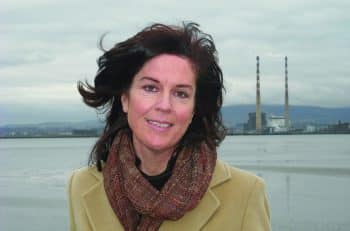
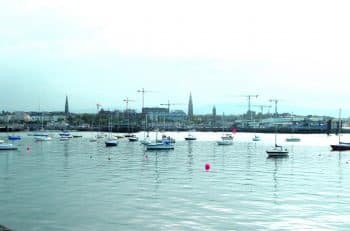
    Dún Laoghaire has never quite cut the umbilical cord that connects itself to Dublin City. Although it is the County Town from Dún Laoghaire-Rathdown it has never quite come to terms with itself, and is constantly under pressure from the relentless expansion of Dublin City. This manifests itself in a frenzy of land rezoning every few years when the County Development plan comes up for renewal. The gradual expansion of the county to the south and west puts pressure on Dún Laoghaire to expand and compete with shopping centres and retail parks in Dundrum and Cherrywood. However if properly planned, Dún Laoghaire can hold its own and compete successfully as a vibrant east coast town. Dún Laoghaire has a lot going for it. It has a magical location on the edge of Dublin Bay beside one of the largest harbours in the country. From many of its streets you can look across the Bay to Howth and the Irish Sea. The Stena ferry connects Dún Laoghaire to Wales and beyond. As a planner I believe it has many of the key components that make a successful mixed-use urban neighbourhood: the People’s Park and coastline are within walking distance; good public transport exists with the DART and bus routes running through the town; a mixture of housing and shops are side-by side with schools, pubs and churches within the town. The refurbished Royal Marine Hotel and the Pavilion Theatre attract many visitors, as does the Festival of World Cultures held every August. However, the town has its fair share of challenges, and action is required to ensure it does not get left behind. At the height of the boom new residents were all but excluded from the town. High residential property prices meant that many residents’ sons and daughters had to move to Wicklow or Kildare rather than closer to home to find affordable housing. Hopefully the current slide in house prices will attract more young families to the town to sustain schools that have suffered from declining numbers over the last decade. However, Dún Laoghaire has an ageing demographic compared to the younger suburbs of Dublin, and there is an opportunity to provide more services to an active older population. More housing will support shops and other facilities, but it is crucial that such development is well planned. For instance the rezoning of the Dún Laoghaire Golf Club lands was highly controversial. People saw this as a loss of a green lung of the town and worry that the price of new homes will be unaffordable to many. People fear that the higher densities of new development will overlook and overshadow existing neighbourhoods. Better planning and architectural standards are required to overcome people’s very real concerns. The retail heart of Dún Laoghaire has been challenged in recent years by the bling of the new Dundrum Shopping Centre. Perhaps as the economy changes gear, people will better appreciate the shops and businesses in Dún Laoghaire that did not succumb to the frenzy of the boom years. Some retailers need to pull up their socks, but there’s a healthy mix of shops in Dún Laoghaire.Dún Laoghaire Shopping Centre was refurbished recently yet still presents a brutal edge to the town. I’d be happy to see a controlled explosion on the site similar to the Ballymun Towers! It should be replaced it with a state-of-the-art mixed-use development. Liverpool recently redeveloped part of its city centre with a park and pedestrian streets beside the Mersey. Dún Laoghaire could benefit from that city’s imagination. At the other end of Georges Street, removing a cluster of three buildings in front of Bloomfields Shopping Centre could create a wonderful urban square beside St Michael’s Hospital with space for outdoor cafes and a fountain. In recent months a decision was made to reopen Georges Street to car traffic. This is a backward step. Instead, a decent parking and traffic management plan would allow for a proper car-free area in the heart of the County Town. Successful businesses such as Hughes and Hughes bookshop, Alexis Restaurant and Harry’s bar and Grill have increased footfall. There are bold plans by the Council for a new Library overlooking the sea, and for covering part of the railway line with a new pedestrian promenade. Hopefully the Council will also develop the Dún Laoghaire Baths site as a modest development with a public pool, seaweed baths and a seaside café. Dún Laoghaire has a bright future if it can strike the right balance: high density not highrise; smart growth not suburban sprawl and sustainable transport instead of more car dependency. I’m cautiously optimistic that it will build on its natural strengths as a seaside town of heritage and character, and reinvent itself for the twenty-first century. Ciarán Cuffe is a town planner and Green Party TD for Dún Laoghaire.

    Loading

    Read more