• Posted in:

    Let Theresa May, Who Has Not Sinned, Cast the First Stone: the 32-year cover-up of the Finucane assassination, its link to Kincora and the hypocrisy of the former prime minister.

    By Joseph de Burca. This week marks the 32nd anniversary of the assassination of the Belfast solicitor Patrick Finucane. In 1989 he was shot dead by UDA killers controlled by MI5 in front of his young family at his home. The British government continues to resist a judicial inquiry into the murder despite castigation from its own Supreme Court and human rights groups across the globe. No-one in the Tory party is putting Boris Johnson under any pressure to resolve the matter. LET THERESA MAY, WHO BELIEVES SHE HAS NOT SINNED, CAST THE FIRST STONE Johnson’s predecessor, Theresa May, however, has accused him of abandoning Britain’s “position of global moral leadership”. Johnson, she said, has failed to honour British values by threatening to break international law during Brexit trade negotiations. Another criticism was that he had backed away from Britain’s foreign aid targets. These two developments had not “raised our credibility in the eyes of the world”, she argued. She then proceeded to lecture him to live up to “our values”. And just what does she think the image of UDA assassins acting on the orders of MI5 to murder an Irish lawyer followed by a 32-year cover-up is doing for “Britain’s credibility in the eyes of the world”? Peter Cory, the Canadian judge who looked at the issue discovered that the murder had been discussed at “Cabinet level”. Sadly, May’s ‘values’ never included an attempt to bring the long-running cover-up that has swirled around the assassination of Finucane to a halt. In her attack on Johnson, May diverted to describe the election of the “decent” Joe Biden as US president as a “golden opportunity” for Britain to become a force for good in the world again. Would an inquiry and the resolution of the scandal surrounding the Finucane assassination not also provide a “golden opportunity” for Britain to show that it can become a “force for good in the world again”? WHAT THERESA MAY DID (AND DIDN’T DO) WHEN SHE WAS IN CHARGE OF MI5. There is a more to May’s hypocrisy than meets the eye: she was the Home Secretary who thwarted earlier demands for a judicial inquiry. MI5 is part of the Home Office and reported to her. At the time she was covering up for MI5, David Cameron was prime minister. He met with the Finucane family at 10 Downing Street where he told them that he could not order a public inquiry. When Finucane’s brother Martin asked him why, he turned to Mrs Finucane and said: “Look, the last administration couldn’t deliver an inquiry in your husband’s case and neither can we”. According to Cameron, this was because “there are people all around this place, [10 Downing Street], who won’t let it happen”. As he was saying this, he raised a finger and made a circular motion in the air. Cameron has not – and probably never will – expose the figures around him in Downing Street who were able to dictate what he could and could not do. Theresa May must know who the culprits are. (They are presumably high-ranking civil servants who have seen the files and know precisely who ordered the murder of Finucane. The list of suspects includes Margaret Thatcher whom May admires.) It clearly does not bother May that State officials have been – and continue to be – complicit in the perversion of justice. One of the officials suspected of complicity in the murder in 1989 – long-since retired – is still alive. So too is Patrick Walker the director-general of MI5 at the time. THE DAUGHTER OF A MAN OF THE CLOTH. May likes to project the image of a deeply religious woman with a moral compass handed to her by her father, a man of the cloth who also understood right from wrong and was possessed of the right ‘values’. Yet, if this was so, why did Team May scrub details of his life from Wikipedia? The mainstream media ignored this act of censorship. There are few comments about the development anywhere but it is addressed in this intriguing article: https://vocal.media/theSwamp/theresa-may-s-father As prime minister May was never bothered by British sales of weapons to an array of foreign powers. How does she feel about the tens of thousands of people who have died as a result? Clearly, slaughtering children in the Yemen is acceptable in her eyes if it generates income for the economy of the UK. Mark Curtis and his colleagues at Declassified UK have covered this scandal in great detail. Interested readers should consult: http://markcurtis.info/category/yemen/ SUFFER LITTLE CHILDREN Privately, May has always been disdainful of Johnson’s prodigious sexploits. Yet, Johnson’s sexual partners have always been adults who have been willing – no doubt eager – to sleep with him. This highlights another dimension to May’s hypocrisy: she is critical of consensual sex between adults while covering-up VIP sex abuse involving children. She helped to cover-up the Kincora scandal by assigning the latest investigation of it to the extraordinarily dim-witted and gullible Judge Anthony Hart who made an unholy mess of it. Hart even managed to contradict himself in the body of his own report, a first by any low standard. Unlike George Terry, the former Chief Constable of Sussex, who had reported on Kincora decades earlier, Hart was not corrupt, merely a fool who would have been out of his depth in a puddle. By giving it to this dolt, May was able to separate it from the ongoing Independent Inquiry into Child Sexual Abuse (IICSA) which was meant to investigate VIP sex abuse involving, inter alia, MPs. Assigning the probe into Kincora to Hart made no sense as it was part of an Anglo-Irish vice ring with connections to Westminster MPs. However, the existence of Hart’s impotent inquiry gave the dreadful IICSA grounds for ignoring Kincora and the abuse perpetrated by English VIPs of Kincora boys such as Enoch Powell MP, James Molyneaux MP, Knox Cunningham MP and others. Not a peep out

    Loading

    Read more

  • Posted in:

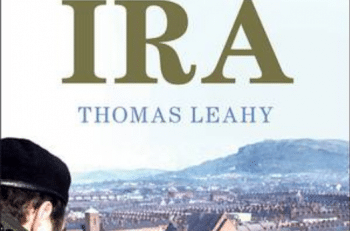
    Nobody Won: debunking the myth the Provisionals were brought to their knees by British spies. Margaret Urwin reviews ‘The Intelligence War Against the IRA’ by Thomas Leahy.

    By Margaret Urwin. In ‘The Intelligence War against the IRA’, Thomas Leahy, Senior Lecturer in Politics in Cardiff University, challenges the growing dominant narrative that the IRA was brought to the negotiating table in the 1990s because they had been ‘brought to their knees’ by British intelligence. Since the outing of State agents, Stakeknife and Denis Donaldson in particular, in the early 2000s, many academics, historians and commentators have concluded that the IRA campaign ended in defeat because it was fatally compromised by agents and informers. Existing books and articles, while not studying the intelligence war in any significant detail, yet conclude that British intelligence was vital in forcing the IRA into peace. Leahy meticulously, painstakingly and, indeed, convincingly, debunks that conclusion.  Leahy meticulously, painstakingly and, indeed, convincingly, debunks that conclusion.  The book is the first to evaluate fully the impact of British intelligence agents, SAS and other operations against the Provisional IRA. From the wealth of material examined in Irish and UK archives, interviews and memoirs, Leahy argues that British intelligence did not force the IRA into surrender and that political factors were crucial in delivering peace. He suggests that, in fact, particular intelligence operations may have, rather, increased IRA support in its heartlands because of anger against the British State. It is one of the first studies of the conflict that researches what happened by region. It examines British intelligence and security strategy impact on IRA urban units in Belfast and Derry but also rural units in south Armagh, north and mid-Armagh, Fermanagh, south Derry, north Down, south Down and Tyrone. The IRA campaign in England is also considered in detail. Leahy concludes that a previous major focus on the IRA in Belfast has overlooked crucial aspects of the overall picture of what happened and why during the conflict and the regional factors affecting it. A range of republicans (both pro-peace-process and dissentient) have been interviewed, as well as British security personnel; also memoirs from all sides of the conflict including self-confessed IRA informers and intelligence handlers have been accessed. Of particular value is the extensive use of the relatively new sources of personal papers of Brendan Duddy (intermediary between the IRA and the British at critical times during the course of the conflict), Ruairi Ó Brádaigh and Daithí Ó Conaill, which provide crucial behind-the-scenes insights. Both British and Irish Government policy towards republicans is reviewed. Leahy suggests that, from 1969 to 1972; 1973-74 and 1976-90, the British State sought to contain IRA violence at ‘an acceptable level’. Evidence is provided to show that that this policy failed. After the breakdown of the 1975 ceasefire, from 1976, in particular, policies were enacted to marginalise the IRA, e.g., the abolition of ‘Special Category Status’ and the introduction of ‘criminalisation and Ulsterisation’. The intention was ‘to isolate republicans from political settlements whilst eroding the IRA’s armed capacity to a point where they no longer had any influence on Northern Irish politics’. After Roy Mason was appointed as Secretary of State for Northern Ireland, he told Prime Minister Callaghan in January 1977 that there was no intention of engaging in further talks with Sinn Féin and he ended all contact with intermediary Brendan Duddy. As part of the strategy of marginalising republicans, from my own research I am aware that, also in 1977, the British made vigorous efforts to prove a link between Sinn Féin and the IRA  so that Sinn Féin, which had been a legal organisation since May 1974, could be re-proscribed. A lengthy intelligence operation involving surveillance, searches of Sinn Féin offices, seizures of documents and interviews with suspects were carried out for more than a year. However, when the investigation was complete and a report produced in October 1978, the result showed the evidence did not support the view that the IRA and Sinn Féin were inextricably linked and so Sinn Féin could not be re-proscribed. The book presents original evidence suggesting that republican leaders were seeking talks towards a political settlement in the early 1980s, as Sinn Féin’s electoral mandate was increasing. This was, however, ignored as the British Government tried to negotiate a ‘moderate’ peace settlement with the SDLP and the UUP. The book presents original evidence suggesting that republican leaders were seeking talks towards a political settlement in the early 1980s, as Sinn Féin’s electoral mandate was increasing. This was, however, ignored as the British Government tried to negotiate a ‘moderate’ peace settlement with the SDLP and the UUP. This initiative failed due to persistent IRA activity, Sinn Féin’s electoral mandate in Northern Ireland and, by 1990, both the Irish Government and the SDLP were anxious to include Sinn Féin in peace talks. The importance of the rural IRA to the overall campaign is emphasised. South Armagh, in particular, was the strongest unit and, with significant support from the local community, was almost impenetrable. The community had been incensed by the building of watch-towers and constant helicopter flights.  Its position of strength enabled it to carry out operations in England in the late 1980s and 1990s. If the IRA was heavily infiltrated it would not have been possible to carry out a litany of spectacular bombings in England – Brighton (1985); the Royal Marine School of Music (1989); a booby-trap bomb under a car killing Ian Gow MP (1990); the firing of mortars into the back garden of 10 Downing Street (1991); the bombing of the Baltic Exchange (1992) and the NatWest Tower at Bishopsgate (1993); the firing of mortars onto runways at Heathrow Airport (1994) and, after the breakdown of the ceasefire in 1996, the Docklands and Manchester City bombings. Leahy agrees with Jonathan Powell that talking to all sides involved in the conflict was necessary in order to deliver peace. Sinn Féin’s electoral support was too sizeable to be ignored in a political settlement. He suggests that, ultimately, it was the political mandate and persistent conflict that led all sides to negotiate and to accept a peace settlement. Nobody ‘won’. It

    Loading

    Read more

  • Posted in:

    Just declassified UK memo on John Hume reveals interest of PM John Major’s top civil servants in “possible press stories regarding John Hume’s private life”.

    By David Burke. A memo has just been released from Britain’s National Archives. It concerns discussions at the apex of the British government about salacious rumours relating to John Hume’s private life. It was sent to Sir Robin Butler, Cabinet Secretary to John Major’s government, and also to Major’s private secretary, Sir Alex Allan. Allan is not as well-known as Butler (although he once surfboarded to work on the Thames). He was later appointed Chairman of the Joint Intelligence Committee (JIC). The JIC overseas the activities of MI5, MI6 and GCHQ, which indicates Allan had plenty of experience in the murky world of intelligence before he became the head of the organisation which ran the whole show. The John Hume ‘private life’ memo Major, Butler and Allan are all still alive. It will be fascinating to hear any context they can add to the memo which is reproduced in full below: Recalling our conversation the other day about possible press stories regarding John Hume’s private life, you and Alex Allan to whom I am copying this letter may like to know of something John Hume said to me today (13 January [1997]) unprompted. In the course of the conversation on his discussions with Adams, John Hume mentioned that on at least two occasions over recent months he had been told of stories circulating among journalists to his discredit regarding his private life, specifically in terms of his conducting an affair or affairs in London and elsewhere. He said that following the article by Bruce Anderson a few weeks ago which did not name him but clearly pointed in that way, he had spoken directly to the Political Editor of the News of the World. He had been told that stories were indeed circulating, but that the News of the World had no evidence to support them and did not intend to print anything in consequence. For his part, John Hume said that he and his wife Pat would both dismiss such stories out of hand, and if anything appeared in print he would expect to become the richer in consequence. He said that the extreme form of the stories were that the IRA were blackmailing him: he said that that was the most absurd nonsense and anyway recent disputes, very public, with Sinn Fein on electoral matters gave it the obvious lie. Who is Bruce Anderson? Who is Bruce Anderson, the journalist who had so annoyed John Hume? Originally from Orkney, Anderson was apparently once a Marxist and even joined the People’s Democracy movement in Northern Ireland where he participated in civil rights activities including the march that was attacked by Loyalists at Burntollet bridge in 1969. In a bizarre twist, he later became the editor of the right-wing pro-Tory Spectator. Later again, he worked for Sir Tony O’Reilly’s UK Independent newspaper between 2003 and 2010. While at the Independent he wrote an article which would have shocked his former civil rights activist comrades in Ireland. It was entitled  “We not only have a right to use torture. We have a duty” (The Independent, 16 February 2010.) In that article he wrote that: When our intelligence services were invited to share the harvest reaped by the Pakistanis, there appears to have been no hesitation. Nor should there have been. We needed the information. Perhaps we should have offered the Pakistanis some advice on interrogation techniques which do not involve knife-work on suspects’ genitals. It may be that we have indeed done so, in private. But Pakistan is a sovereign state and an embattled ally; a far more attractive state and a far less dubious ally than Russia was in the Second World War. We should be grateful for the Pakistanis’ efforts on our behalf. Equally, what must Anderson’s former Marxist comrades make of his 29 December 2010 article in The Telegraph, where he propounded that: For decades, it has been apparent that the misuse of the welfare state has created an ill-fare state. As a result, work-shyness is cascading down the generations. There are at least a million people who believe that they have a hereditary right to subsidised unemployment. Nor are they all inactive. In plenty of cases, the devil finds work for idle hands. The ill-fare state is a recruiting office for the criminal underclass. Anderson defends MI5 and describes Patrick Finucane as ‘a senior Provo’. Anderson has defended the activities of MI5 (attached to the Home Office) in Northern Ireland and is one of a small number of commentators who has claimed that the solicitor Patrick Finucane, who was murdered by British agents in the UDA, was ‘a senior Provo’. (See Thatcher’s Murder Machine, the British State assassination of Patrick Finucane.) Clearly, Anderson has sources inside MI5 who talk to him. This is a most curious set of affairs as MI5 normally distrusts former Marxists, especially those who were involved with an organisation as radical as NI’s Peoples Democracy. Defending MI5 dirty tricks, Anderson wrote in the Independent that: According to Sean O’Callaghan, himself for many years a years a highly placed informer within the IRA, Pat Finucane was one of the guilty. Finucane, he claimed, was a senior Provo who used his privileges as a lawyer to liaise between the IRA and its operatives in custody. He was only innocent in the sense that no case had been proved against him in a court of law. It is also possible that the agents who may have been complicit in Finucane’s death were the same ones who intervened to foil the assassination attempt on Gerry Adams. The security services’ willingness to save Adams’ life does not suggest that they were out of control. There were problems. Back in the late Eighties, difficulties arose with intelligence co-ordination in Ulster because too many organisations were involved. The RUC Special Branch, the mainland Special Branch, the Army, MI5 and – for a time – MI6 were all operating. This inevitably led to departmental rivalries and conflicts of modus operandi. Policemen are

    Loading

    Read more

  • Posted in:

    MI6 traitor George Blake has died. The KGB’s penetration of British Intelligence may have gone far deeper than the public has ever been told. It may still be deeply compromised by Russia.

    By David Burke. George Blake has just died aged 98 at his dacha outside Moscow where Putin’s overseas intelligence service, the SVR, was protecting him from Covid-19. Blake was held in high esteem by the Russians. Putin has said that the “memory of this legendary person will be preserved forever in our hearts”. Putin awarded him a medal in 2007. Blake was arrested in London in 1961 and sentenced to 42 years imprisonment but escaped from Wormwood Scrubs in 1966 with the aid of Sean Bourke from Limerick. He then spent two months in London before making his way to East Germany. The story of his escape and the time he spent in hiding in London is astonishing. Blake may have been helped by Soviet agents inside the British Establishment. The Director-General of MI5, Roger Hollis, 1956-65, was believed by many to be one such agent. He retired the year before Blake made his escape, something which gave him four years to help the KGB prepare a plan to break Blake free. Roger Hollis, another traitor? Roger Hollis was investigated on an official basis on a number of occasions by MI5 and MI6 officers for treachery. The evidence against him was compelling. At the very least, if he was not a traitor, there must have been another very senior mole inside MI5. Outside MI5, Christine Keeler was adamant that he was a traitor. Keeler was at the centre of the Profumo spy scandal involving Stephen Ward. Keeler revealed that Hollis and Ward were part of a spy circle involving a confirmed MI5 traitor Sir Anthony Blunt. Further details can be found here: Keeler Concealer: the British Establishment’s severe embarrassment at the depth of the Soviet Union’s penetration of MI5 and MI6. If Hollis was indeed a traitor, he would have installed other agents inside MI5 to keep the red flag flying behind closed doors after he left. One possibility is that it was these who could have helped move Blake from London to East Germany in 1966. One thing is clear: it is inconceivable that the KGB would have let Blake rot in jail for 42 years if there was any chance to spring him. At the very least, his severe sentence was a deterrent to all of its agents and potential recruits in Britain. If Hollis was a traitor, it is obvious that the KGB would have relied heavily on him to help them plan Blake’s escape. Even if one allows that Blake’s escape from the confines of his goal in London was something he and the Irishman Bourke achieved on their own, there is still the difficult question of how he managed to hide in London for two months and then made it to East Germany. According to the official narrative, we are meant to believe that he had no help from MI5 traitors or the KGB, merely two CND activists, Michael Randle and Pat Pottle, who took him across Europe in a camper van. The allegations of Patrick Meehan The only evidence that MI5 – or a faction within it – wanted Blake to escape emanates from the late Patrick Meehan, a criminal from Scotland. He produced a book in 1989, ‘Framed by MI5’, in which he claimed that in 1963 he was approached by a man he dubbed ‘Hector’ to spring a ‘spy’ in an English prison. The man portrayed himself as a Soviet sympathiser but Meehan reckoned he was an MI5 officer. ‘Hector’ had known that Meehan had briefly been a member of the Communist Party in 1950. Nothing of substance emerged from the approach but it alerted Meehan to the possibility MI5 was prepared to stage an escape. Whether ‘Hector’ was a KGB officer who knew about Meehan’s communist past or an MI5 officer with the same knowledge, what is important is that Meehan concluded he was from MI5. After Blake escaped, he began to talk about this and circulated the theory that MI5 had wanted to spring Blake. Meehan was not involved in any way in the later 1966 escapade involving Sean Bourke. For his part, Blake has always maintained that Bourke acted without any outside help. The implications of Meehan’s Book Let’s give Meehan the benefit of the doubt and see where it takes us. For a start, this involves accepting that ‘Hector’, was indeed from MI5 and therefore acting on the orders of D-G Roger Hollis. This scenario raises one question MI5 should be made to answer: why did they never ask Meehan to help them in any sort of an inquiry into the mysterious ‘Hector’, the man who knew of Meehan’s communist past and wanted to recruit him to spring a ‘spy’ in an English prison. Meehan wrote the book in revenge for being framed for the murder of Rachael Ross in Ayr, Scotland in 1969. Although innocent, he was convicted but received a Royal pardon in 1976 after years in prison. He also received £40,000 in compensation after a campaign by the likes of Ludovic Kennedy. This, however, was not enough to assuage his anger and he had his revenge – as he saw it – by producing his book in 1989 while the Peter Wright ‘Spycatcher’ book storm was still raging. It was an expansion of an earlier book he had written in 1978 called ‘Innocent Villain’ (Pan books Limited 1978). Meehan’s conviction had been secured by ‘rigging’ an identification parade, the planting of evidence and the committing of perjury at his trial by high-ranking detectives. According to Meehan, “In the conspiracy to frame me high-ranking detectives, acting on the instructions of MI5, found it necessary to suppress evidence that would have led to the arrest of the two men who did in fact commit the Ayr murder; namely, William McGuinness and Ian Waddle. Framing me for the murder was an exercise calculated to put me out of circulation.” Waddle admitted his guilt. McGuinness was murdered in Glasgow. Meehan’s pardon was followed by a report by Lord

    Loading

    Read more

  • Posted in:

    Mountbatten’s paedophile abuse: letter from definitive biographer Andrew Lownie not published by Sunday Independent.

    By Andrew Lownie. A few weeks ago the Irish Times ran an article on the death of Mountbatten linked to the new series of The Crown in which the murder features in the opening episode. As the author of the most recent biography ‘The Mountbattens: Their Lives and Loves’, I was interviewed for the piece on the discrepancies between the reality and the drama, telling the paper the programme left out “some significant details about the killing, most notably that Mountbatten had ignored the advice of his personal security officer not to go to Ireland that year and that his security had been reduced”. The paper then raised some of the other discoveries  from my book namely the FBI file which revealed Mountbatten as a “homosexual with a perversion for young boys” and  my interview with two men, one of them from the Kincora Boys Home,  who claimed to have been abused by him in the summer of 1977 . In passing,  I mentioned there were rumours that Mountbatten had not been killed for political reasons but because of his paedophile activities. The article ended with references to my problems securing the release of the car logs for Classiebawn for August 1977 and the continuing closure of papers relating to the murder  and also the Kincora Boys Home in archives in Britain and Ireland . Some 40 years after Mountbatten’s death, there were details the authorities clearly did not want the public to know. Shortly afterwards Colin Armstrong popped up in the letters page of the Sunday Independent suggesting, as he has done in previous similar letters to papers, that the abuse could not have happened  because no one reported it. A former staff member at Classiebawn joined in the debate saying no-one at Classiebawn had seen anything and my assertions were pure fiction. This followed comments from Jeffrey Dudgeon that my interviewees were fantasists like Carl Beech and inferring that as they hadn’t appeared at the Hart enquiry they couldn’t be legitimate, and a story in the Sligo Champion/Weekender of “ignoring the facts”. In all this coverage, no journalist asked me to respond. I was quite happy to defend my research  and contacted  various journalists at the Irish Times, Sunday Independent and Sligo Weekender. No response. When I chased, I was told the story had moved on – after five days. So to set the record straight here is the letter I sent Dear Sir, It is natural and admirable that John Barry should seek to defend Lord Mountbatten, who employed him, his mother and brother but, just because Mountbatten’s  ‘family, friends, staff and local staff’ saw no paedophile activity, it  does not mean that it did not happen. By its very nature such proclivities are kept private. In fact my research shows that only one member of staff was well aware what was happening but chose to remain silent. If he reads my book ‘The Mountbattens: Their Lives and Loves’, rather than dismiss my findings as “implausible fictional claims” , he will see I have produced extensive evidence to back up my claims of Mountbatten’s paedophilia. Stories about Mountbatten’s proclivities have circulated in the media for over forty years including accounts in Private Eye and the International Times where the newspaper proprietor Cecil King described Mountbatten as a “sexual pervert”. There was also a report in Now Magazine in 1990 where the Northern Ireland author Robin Bryans claimed that “leading British establishment figures were in a vice ring which abused boys from the notorious Kincora Home in East Belfast” and named Mountbatten as one of them. It also reported that Mountbatten “was particularly attracted to boys in their early teens”. Bryans in private correspondence, which I have seen,  wrote that “Kincora and Portora Boys’ Schools were used as homosexual brothels by many prominent figures, including Lord Mountbatten”.  Joseph de Burca in Village Magazine has written extensively about Mountbatten’s paedophile networks. In my book I reproduce FBI files going back to 1944 with interviews with people in Mountbatten’s circle . One, the American writer and society figure, Baroness Decies, when interviewed on another matter reported ‘that Lord Louis Mountbatten was known to be a homosexual with a perversion for young boys’. Interestingly I was told that other FBI files I had requested under Freedom of Information legislation had been destroyed – after I requested them. Mountbatten’s wartime driver Norman Nield is on record saying he “was ordered to take young boys who had been procured for the admiral to his official residence in Lord Mountbatten’s Humber car” . According to Nield, Mountbatten, known as LL, used brandy and lemonade to help seduce the boys, who ranged in age from 8 to 12. I interviewed two boys who said they were abused by Mountbatten. Knowing of the controversy their testimony would generate, I was particularly keen to ensure what they said was true. Everything I could check was found to be accurate but clearly these were recollections over forty years after the event. One boy was abused in Classiebawn’s boathouse, away from the house, another in a local hotel where before the days of cctv it was very easy for a visitor to nip briefly upstairs. I have never suggested that boys stayed at Classiebawn castle itself let alone overnight. Contrary to claims, one has gone public with his claims and has brought legal action which is almost concluded. I am hoping he will shortly appear in a television programme on Mountbatten. Likewise my interviewee had agreed to participate in the HIA Inquiry but the Inquiry served several hundred pages of information on his solicitors just before the weekend prior to his appearance at the Inquiry.  His solicitors rightly told the Inquiry that, in the time allowed, it was impossible for them to read and study all the documents, let alone advise him properly.   In ‘The Mountbattens’,  I reveal that Mountbatten was probably himself abused as a teenager by a bachelor clergyman Frederick Lawrence Long who acted as a private tutor. On legal advice, some material was removed from my book , referring to Mountbatten’s paedophilia and murder,

    Loading

    Read more

  • Posted in:

    The McGurk’s Bar cover-up. Heath’s Faustian pact. How a British prime minister covered up a UVF massacre in the hope of acquiring Unionist votes to enable the UK join the European Economic Community, the forerunner of the EU.

    Tory PM Edward Heath concealed the identity of a paramilitary organisation which perpetrated a massacre in Belfast in 1971. He did so in the hope of acquiring the votes he needed to win a majority in the House of Commons to enable the UK to join the EEC, the forerunner of the EU. What he did has remained the best kept and murkiest secret of the EEC-EU-BREXIT saga of the last 50 years. A string of declassified documents have now emerged which, when read together, expose what Heath, the British Army, propaganda operatives and the RUC Special Branch did. The documents are about to be presented to the new British Cabinet Secretary, Simon Case. By David Burke. INTRODUCTION. Ted Heath’s role in the cover-up of the McGurk’s Bar bomb atrocity of 4 December 1971 is the best kept dirty secret of the EEC-EU-UK-Brexit saga of the last 50 years. It would have remained under wraps indefinitely but for the determination of the historian, author and McGurk’s bomb campaigner Ciarán MacAirt. Irrefutable documentary proof of the Heath-McGurk’s scandal is about to reach the Whitehall desk of Simon Case, the former GCHQ spook and Northern Ireland Office official who is now Cabinet Secretary to Boris Johnson’s government. Case was a key figure in the British Establishment conspiracy which refused to order a judicial inquiry into the murder of the lawyer Patrick Finucane two weeks ago. Everyone in Whitehall – including Case – knows that MI5-FRU and RUC agents in the UDA murdered Finucane with ‘cabinet level’ approval. If Case was unhappy with this, he did not resign or protest publicly (nor even discreetly to a friendly journalist). The Finucane decision was an affront to decency, democracy and a direction from the UK’s Supreme Court. Case has surely learnt by now that a key aspect of his job is to cover up for a certain type of murder carried out during the Troubles. He is now about to be put to the test again. On this occasion it will involve his approach to the massacre of 15 decent and honest people:  the innocent victims of The McGurk Bar bomb massacre of 4 December 1971 in Belfast. HEATH’s FAUSTIAN PACT In December 1971 the UK’s prime minister, Edward Heath, was working to secure Britain’s entry to the EEC, the forerunner of the EU. He needed all the votes he could attract to get his legislation over the line in Westminster. One group with the potential to help was the Official Unionist Party. It was led by Brian Faulkner, the Prime Minister of Northern Ireland. The Unionists held eight key votes in the Commons in London. Faulkner had just taken over from James Chichester-Clark as prime minster of NI on 23 March 1971 on the basis he was the Unionist hard man who would defeat the IRA. As minister for home affairs during the IRA’s Border Campaign, 1956 – 1962, he had introduced internment, something Unionists credited with defeating the IRA on that occasion. It has never been a secret that there was a price to pay to keep Faulkner happy: Heath was to re-introduce internment. Although Faulkner was prime minister of NI, he still needed Heath and his army to make it happen. Crucially, Faulkner wanted internment for the IRA only. This meant – and Faulkner knew full well – that the UVF, Red Hand Commando and the UDA would to be left alone to bomb, kidnap, torture and murder Catholics. Heath’s cabinet had sought a balanced internment with the IRA and loyalist groups being swept up at the same time. They also wanted guns held by rifle clubs called in. The overwhelming majority of these weapons were in Unionist hands. A third requirement was a ban on parades. None of this was acceptable to Faulkner who went as far as to suggest there was no evidence of Loyalist terrorism and that the guns held by the members of rifle clubs were not a security threat. A ban on parades, he argued, could not be enforced. Heath caved in on all three issues., save that there was to be a six month ban on parades. An overview of UVF terrorist actions – including those of the 1960s and the period 1970 – 1971, can be found at: https://en.m.wikipedia.org/wiki/Timeline_of_Ulster_Volunteer_Force_actions Despite the murders and bombings perpetrated by the UVF and Red Hand Commando, when internment was introduced in August 1971, Loyalist paramilitaries were not swept up by the Army. Instead, they were let go about their gruesome activities. Heath was a man with a ruthless edge perfectly capable of bending the rules to get what he wanted. As a junior minister in the Foreign Office, he had been involved in machinations that led to the murder of the democratically elected prime minister of the Congo, Patrice Lumumba. An official at the Foreign Office – Howard Smith – had started the murder ball rolling by suggesting that MI6 assassinate Lumumba. In his private life Heath was just as selfish. In August 2015 the Wiltshire Police launched ‘Operation Conifer’ into allegations that he had been a paedophile. In 2017 the force announced that grounds existed to suspect him of child abuse. As a matter of law, the force was not entitled to reach any conclusions about the potential guilt of Heath and it did not. The furthest it could go was to state that if Heath were alive, he would have faced further questioning about the accusations levelled against him. Mindful of this, the force revealed that Heath would have faced questions under criminal caution relating to: One incident of rape of a male 16; Three incidents of indecent assault on a male under; Four indecent assaults on a male under 14; Two indecent assaults on a male over 16. The investigation spanned the period 1956-92. None of these incidents took place while Heath was PM, 1970-74. See also Carl Beech and the ‘Useful idiots’ at the BBC. The inco6mpetence of the BBC has now made it

    Loading

    Read more

  • Posted in:

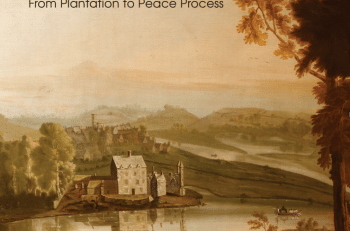
    Delving into the Past to Understand the Present, David Burke reviews Margaret Urwin’s ‘Fermanagh, From Plantation to Peace Process’.

    Margaret Urwin is known for her work with Justice for the Forgotten/the Pat Finucane Centre. Her published works include the pamphlet Counter-gangs (2012) which describes the activities of undercover British special force units in Ireland in the 1970s. In 2016 she published the highly- regarded ‘A State in Denial: British Collaboration with Loyalist Paramilitaries‘. She has now added ‘Fermanagh, From Plantation to Peace Process’ to this body of work. It delves back deeper into Irish history to help us understand the present. The book takes the reader on a compelling historical tour of Fermanagh. The early chapters deal with the Plantation and the Rebellion of 1641 and draw on depositions preserved by Trinity College, original material that brings the era vividly to life. The author then moves through the Cromwellian era and the Williamite wars. The penal laws, the famine, the Orange Order, Catholic emancipation, WW1 and the Easter Rising – and more – are all covered later. Focusing on the period from the 1920s onwards, Urwin examines what life was like in the new six-county state of Northern Ireland after partition – the systemic discrimination against Catholics in all areas of life; the role played by the Free State government; the fiasco of the Boundary Commission; the distrust of the Protestant community of their Catholic neighbours due to the IRA campaign of 1956-62; the more recent IRA campaign in the county which began after the introduction of internment in 1971. She reflects on the short-lived loyalist campaign in the county which ceased permanently in the mid-1970s, unlike in neighbouring counties, Tyrone and Armagh. Based on official declassified British and Irish Government documents, the role of the border during the conflict and Irish Government co-operation with its British counterparts are analysed while claims of ethnic cleansing and genocide are tested. The core of the book is the detailed analysis of all conflict-related deaths in the county which boosts the biographies contained in the seminal publication, Lost Lives. Case studies of particular killings are provided, e.g. Protestant civilians and alleged informers killed by the IRA; the Enniskillen bombing; the notorious ‘Pitchfork’ murders carried out by members of the British Army; the killing of IRA members by the SAS and loyalist killings of Catholic civilians. A consistent thread throughout the centuries is the enduring influence exerted by the Fermanagh aristocracy including the earls of Enniskillen, Erne and Belmore, and Baronets Archdale and Brookeborough. (The Brookeboroughs were later upgraded to Viscounts). An example of this influence occurred during the land war. This was a period of remarkable cohesion between Catholic and Protestant tenants, which gained a particular momentum in Fermanagh. (Urwin has drawn on local and national newspapers to bring this era to life). Throughout the period the aristocracy had met with limited success in their efforts to cause division but as Urwin demonstrates: In the autumn of 1882, Parnell disbanded the Land League and established in its place the Irish National League. The aims of the new organisation were more political than agrarian, the main objective being to assist the Home Rule movement. This decision sounded the death knell to Protestant and Catholic cohesion around the land issue. This at last provided the aristocracy with the opportunity they were hoping for and brought about an end to this sadly short-lived period of Catholic-Protestant cohesion The influence of the Fermanagh aristocracy was maintained up until the last century when one of their own, Sir Basil Brooke, served as prime minister of Northern Ireland 1943-63. Coming into more modern times, Urwin has conducted personal interviews with living witnesses. One of them was a participant during the IRA’s Border Campaign, Operation Harvest, 1956-62. He was involved in the best-known engagement of that conflict, the IRA raid on the RUC barracks at Brookeborough during which Seán South and Fergal O’Hanlon were killed. A fascinating fact which is brought to light in the book was the short-duration of the loyalist campaign in the county. Killings by loyalists ceased in 1975 and did not resume. This may possibly be attributed to the fact that Fermanagh is bordered on three sides by four counties of the Republic – Monaghan, Cavan, Leitrim and Donegal. Fermanagh loyalists may have felt more vulnerable to cross-border retaliation by IRA units than their neighbouring counties.   Urwin has identified another interesting fact about Fermanagh namely that it is the only county in present-day Northern Ireland that has an Anglican, as opposed to a Presbyterian, majority. Another section of the book deals with the election of hunger striker Bobby Sands as MP for Fermanagh-South Tyrone in April 1981. Urwin has unearthed new material in Britain’s National Archives. During the election campaign British officials were deeply concerned that Sands might win or, at least, get a ‘respectable’ vote. The implication of such an outcome would suggest that the Provos were a democratic alternative to the SDLP. However, the consensus among them was that a win for Sands was highly unlikely. They reckoned that, at most, 15-20,000 nationalists would vote for him. They were proved wrong and Sands emerged victorious. The result had a polarising effect which aroused huge resentment in the Protestant community. They felt betrayed by their Catholic neighbours. The events touched upon in this review are merely illustrative of the scope and breadth of this fascinating book. It will undoubtedly be received well in the subject county but has much to commend it to a wider audience. Fermanagh, From Plantation to Peace Process is published by Eastwood Books, www.eastwoodbooks.com

    Loading

    Read more

  • Posted in:

    SMITHWICK’s SECRET WITNESS

    By Deirdre Younge. The Smithwick Tribunal concealed its relationship with Freddie Scappaticci whom it treated as a credible source of information while the Kenova Inquiry is investigating him for multiple murders. The Smithwick Tribunal found Garda collusion in murder of RUC officers, but couldn’t name the colluder.  This was partly because it allowed a motley band of FRU operatives, informants and agents  like the serial ‘intelligence nuisance’ Fulton and elusive thug Scappaticci endlessly to mislead it on who the colluder was so that, when MI5 conduit Drew Harris gave definitive evidence to the contrary, the Tribunal was forced to give what the authorities, North, South and in the UK wanted: a false finding of collusion that was impossible for anyone, particularly an unnamed colluder, to challenge. Since this article was written the Public Prosecution Service of Northern Ireland has decided not to press charges relating to perjury against three people – two public officials and another, believed to be Freddie Scappaticci, on foot of files submitted by Operation Kenova.  The present DPP N.I Stephen Herron, appears to have accepted that Scappaticci was entitled to rely on the ‘defence of necessity’ in May, 2003 when he took a judicial review against Jane Kennedy, a Minister in the Northern Ireland Office. Scappaticci had asked the Minister to deny allegations in the media that he was the agent called ‘Steaknife’ or ‘Stakeknife’ which she refused to do on the grounds that it was standard policy to give a  ‘neither confirm nor deny’ (NCND) response to  questions related to National Security. The Minister’s decision was upheld in August 2003 when Scappaticci’s application for Judicial Review was dismissed.  An official in the Public Prosecution Service in 2006, reviewing Scappaticci’s sworn statements of 2003 on foot of complaints received, accepted that Scappaticci had committed perjury but that he was justified in claiming that he was not the agent ‘Steaknife’ or ‘Stakeknife’ in the circumstances, as to do otherwise would have put his life in danger – the ‘defence of necessity’. That decision was itself reviewed in 2018 by the then DPP Barra McGrory with the consequences explained below. The latest decision by the DPP Stephen Herron therefore, accepts Scappaticci’s defence.   Freddie Scappaticci, the British spy who came to Dublin to testify. Chief Constable Jon Boutcher, from Bedfordshire Police, is leading operation Kenova whose independent team is investigating a range of activities surrounding an elusive individual intriguingly codenamed Stakeknife, or Steaknife. Kenova detectives arrested and interviewed the British Army agent Freddie Scappaticci, a 72-year-old Belfast man, in early 2018. He is widely suspected of being that individual. A member of the Belfast IRA from the early 1970s, he was recruited as an agent for the Army’s Intelligence Corps in the mid to late 1970s. He moved to British Army intelligence Force Research Unit (FRU) in Northern Ireland which secretly penetrated terrorist organisations in 1982 with his then handler, Major David Moyles, who instructed him and channelled his information.  Scappaticci was observed operating around Dundalk and the Border region North and South from around 1982 until 1990. He is believed to have attempted to take over a unit run by another IRA man in Louth in the early 1980s. He was also described as the co-ordinator of its North-South operations. Later he was second in command to JJ Magee in the Internal Security Unit which conducted IRA interrogations along the border. He is linked to at least 20 murders.  But he fell out with the IRA, and in with MI5 and its emanations which paid him £80.000 a year. Serious allegations have emerged to the effect that, to protect his cover, the British government allowed up to 40 people to be killed via the IRA’s Internal Security Unit or ‘Nutting Squad’ which he led.  It appears Kenova is pursuing several perjury cases against Scappatacci for denying he is Stakeknife or Steaknife.  Some are sceptical whether he will be held to account as it has, for example, been alleged he retains tapes of his dealings with his handlers. A number of individuals connected to the Stakeknife scandal, and keen for an accounting, have claimed perjury is the easiest way to ensure the alleged spy will appear in a court of law. According to Henry McDonald in the Guardian, “The whistleblower who first publicly identified Stakeknife as Scappaticci, the former Force Research Unit soldier Ian Hurst, has described the perjury route as a ‘slam dunk’ if Boutcher and his detectives decide to prosecute on that front”. The focus of this article is on how such an eminently unreliable persona was allowed to elaborately subvert the naïve and misdirected Smithwick Tribunal that reported in the Republic in 2013. One gauge of the unreliability is perhaps that in court in 2019 counsel for Britain’s Ministry of Defence revealed the total number of lawsuits against the alleged spy. Tony McGleenan QC said: “There are 31 claims. Some have taken the form of correspondence [but] 24 writ actions have been issued. All of these name the second defendant (Scappaticci)”. Scappaticci had been outed as the alleged agent Stakeknife or Steaknife at the time of the Stevens Inquiry in London in 2003. The outing is credited to his sometime associate Peter Keeley aka Kevin Fulton. But it is also attributed to a former Sergeant in the Army Intelligence Corps and FRU, Ian Hurst aka Martin Ingram. Scappaticci was also the subject of allegations in relation to the Tom Oliver murder in County Louth in the book ‘Stakenife’ published in 2003 by Journalist Greg Harkin and Ian Hurst under his pseudonym Martin Ingram. That’s three different lineups alleging the identity. Keeley and Hurst are egregiously shadowy figures who were to feature in the Smithwick Tribunal and whose allegations led to Scappaticci being afforded unlikely credence and indeed getting legal representation there.  Members or agents of British Army Intelligence  were to play a huge role in the Smithwick Tribunal which investigated whether there was collusion between the Garda in Dundalk and the IRA killers of two RUC officers, Chief Superintendent Harry Breen  and Superintendent Bob Buchanan, who were shot dead

    Loading

    Read more