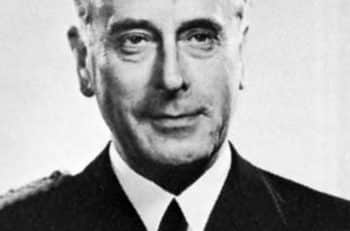
By Andrew Lownie. In 2015 I started researching my biography ‘The Mountbattens: Their Lives and Loves’. Little did I know then that six years later it would have locked me into a marathon legal battle with the Government and Southampton University. My quest was to find out what had happened to the personal diaries of the 1st Earl and Countess Mountbatten of Burma – Dickie and Edwina (who died in 1979 and 1960 respectively) – and the letters they wrote to each other. They had been extensively quoted in their official biographies by Philip Ziegler and Janet Morgan and published respectively in 1985 and 1991, but were nowhere to be found in the inventories of their papers at Southampton University. Dickie Mountbatten, an uncle of Prince Philip, had been Chief of Combined Operations and Supreme Allied Commander in South East Asia during the Second World War, and later Viceroy of India, First Sea Lord and Chief of the Defence Staff. But what interested me was his marriage. Both he and his wife were bisexual and had numerous affairs. His close relationships included the actress Shirley MacLaine; hers the conductor Sir Malcolm Sargent and India’s long-serving Prime Minister, Jawaharlal Nehru. The relationship with Nehru had huge ramifications for the perception of the couple’s impartiality over Indian Independence. Some of the early diaries up to 1934 have been released and from them I could see Mountbatten was scrupulous in describing who he met and where he went. There have long been rumours of his involvement in the Kincora scandal and, as the diaries run up to his death, I was interested to see when he had visited Belfast, when he was at Classiebawn alone except for staff, which house parties he had attended, how often he saw Peter Montgomery etc. There have long been rumours of his involvement in the Kincora scandal and, as the diaries run up to his death, I was interested to see when he had visited Belfast, when he was at Classiebawn alone except for staff, which house parties he had attended, how often he saw Peter Montgomery etc. The Broadlands Trust, a Mountbatten family trust, had sold the couple’s papers to Southampton, along with collections relating to the family’s ancestors, in 2011 , for almost £4.5 million, to save them being sold privately at auction and the collection broken up. The papers were bought after a huge fund-raising campaign with public monies, including almost £2 million from the Heritage Lottery Fund as well as the ‘Acceptance in Lieu’ tax scheme, which stressed their historical importance and the importance of them being “freely available to all”. Southampton’s fundraising claimed “this to be the most important archive to emerge in the last 30 years, only the Churchill Papers could be seen as comparable in terms of a loss to the nation if these were not secured”. Imagine my surprise to be told by the archivists at the University they could not help me on the diaries or letters and had no contact details for the Mountbatten family. I wrote to the present Countess Mountbatten and to the trustees of the Broadlands Trust. Silence. Eventually I was told that the diaries and letters had been closed in 2011 under a “Ministerial Direction”, under authority delegated by the Secretary of State for Culture, Media and Sport to the Museums, Libraries and Archives Council. I put in Freedom of Information (FOI) requests to the Cabinet Office, the University, the Heritage Lottery Fund, the Treasury, and the Department of Culture. No one seemed to know anything about such a Direction; even now, none of them has identified the name or status of the person who signed it. At the Cabinet Office’s suggestion, for swifter access, I also sought to focus on the diaries for one year – 1947. In June 2018, Southampton University disclosed that, shortly after its acquisition of the Mountbatten archive, a senior archivist had taken the initiative in procuring the Cabinet Office’s confirmation that the diaries and letters were “closed”. After my request, the archivist then approached the Cabinet Office with a view to its authorising his editing of the 1947 diaries for publication. 1947 was the year in which India and Pakistan gained their independence. Within weeks, the Cabinet Office held a series of meetings to facilitate the request. This is the very material that I have been struggling to access for years. From November 2018 I wrote several times to the then-Vice-Chancellor, Sir Christopher Snowden, the Chairman of the Council, Rear-Admiral Philip Greenish, and his deputy, Dame Judith Macgregor, a former High Commissioner to South Africa, about the University’s failure to comply either with FOI Act or with the ICO. No response. Eventually, after many letters, emails and calls, Sir Christopher replied, saying he was investigating and had asked for “a report be made to me and that a response be provided to you as a matter of urgency”. Two and a half years later I have heard nothing further. Indeed responses from both the University and the Cabinet Office to requests for information have been evasive and cursory; they have repeatedly missed statutory, regulatory and self-imposed deadlines for responding, and ignored correspondence from me, my lawyers and the ICO – to the extent the ICO was forced to take the unusual step of issuing an Information Notice and then the unprecedented step of commencing High Court proceedings for contempt to compel the University to respond. This decision was significantly delayed because the University failed to respond to the ICO’s investigation for over a year. It only did so after the ICO was forced to take the contempt of court proceedings. The ICO branded the University’s delay as “completely unacceptable” and in court filings complained about its “persistent, wholesale and unexplained failure to comply with the information notice…In effect, the (University) continues to flout its statutory duty under the Freedom of Information Act 2000″. In December 2019 the ICO finally ordered the University to release all the