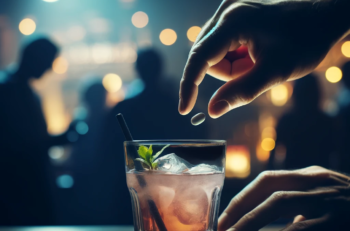
Untellable stories from Dublin’s nightlife By Ama Alzaki Let’s be honest: no one tells the full truth about nightlife. Not in Dublin, not anywhere. The headlines skim the surface: “safety on nights out,” “binge drinking”, “harassment in clubs”. But the deeper, messier stories? The ones that live in the blurry space between consent and coercion, pleasure and power, being wanted and being used? Those get buried in silence, shame, and disbelief. But I’ve had it with staying quiet. girls call it “a bad night” because calling it assault would mean facing how often it happens Because behind the sparkle of a Friday night and the rhythm of the DJ, there’s another reality: women waking up unsure if what happened was sex or something else entirely. Girls calling it “a bad night” because calling it assault would mean facing how often it happens. Men whispering apologies they don’t mean. And a city that parties hard while brushing everything else under the rug. I’ve seen it. I’ve lived it. When I first moved to Dublin, going out was the ritual. Every weekend, my friends and I would hit the clubs: shots, drinks from strangers, dancing until our feet hurt. We were out to have fun. But not every night ended with fun. Some nights ended with me waking up next to someone I didn’t know, with no memory of what happened or how I got there. And it wasn’t just because I drank too much. I’ve had nights where the amount I drank didn’t match the total blackout that followed. No images, no flashbacks — just silence. Once, I even fell asleep in a taxi, which I never do, and woke up completely disoriented. I started to wonder if my drink had been spiked. I still don’t know. But the fear that comes with not knowing, that feeling of not being safe in your own body, never leaves you. That’s not paranoia. In 2022 alone, Gardaí recorded more than 100 reports of drink spiking across Ireland. Experts say these numbers are wildly under-reported₁. In a survey conducted by SpunOut.ie, 59 % of young Irish women said they had experienced spiking or knew someone who had₂. Another survey by the Union of Students in Ireland found that 29 % of students believed they had been spiked.₃ “I didn’t bother reporting it. Half my friends told me the guards would never test me in time, so what was the point?”. That is what a 19-year-old respondent told a USI survey₃. That hopelessness isn’t unique to Ireland. A 2024 UK study by Drinkaware and Anglia Ruskin University found that 90 % of people who suspected they were spiked never contacted police — and half of them said they ‘didn’t see the point”4. Karen Tyrell, CEO of Drinkaware, put it bluntly: “Drink spiking is a serious crime that can happen to anyone at any time.”₅ A UK Home Office review of 1,261 police toxicology screens, published in December 2023, underscored the same mismatch: only 5% of suspected spiking samples contained any controlled drug at all, and benzodiazepines such as flunitrazepam (Rohypnol) were “rarely detected”.₁₃ Pop culture often trivialises those fears. British comedian Jimmy Carr once condensed the threat into a single gag—“See no evil, hear no evil, speak no evil. Rohypnol” —turning a violent crime into a punch line and reminding victims how casually their trauma can be dismissed.₁₄ But it’s not just about spiking. It’s the entire culture. In nightclubs, consent is a joke. A guy groping you as you pass is “normal.” A stranger grinding on you without asking is “expected.” You say no, and suddenly you’re the one ruining the vibe. The minute you walk into a club, your body stops being yours. It becomes part of the scene. We’re told this is freedom, but it’s not. It’s pressure. It’s performance. It’s sex without connection, touch without care, parties without protection. Hook-up culture is sold as empowerment, but for many of us, it feels like survival. And sometimes, survival means pretending you’re okay just to make it out. One night, I left a club around 1 a.m., tired and wanting to avoid the long, expensive taxi ride back to Blanchardstown. While waiting outside, a guy I barely knew offered to let me stay at his place instead. I said yes. At the time, it felt like a relief, a safe escape from the cold and a long commute. I thought I’d crash on the couch or in a spare bed and head home the next morning. But when we got to his flat, it quickly turned. He wanted to have sex. I told him no. I was tired; I just wanted to sleep. But no wasn’t an option to him. He became aggressive, his mood darkening fast. He told me I wasn’t leaving unless we had sex. I realised then that the “help” he offered was always, for him, going to come with strings. I froze. In that moment between no and yes, I understood exactly how powerless I was. The door was locked. He was stronger. I didn’t want to, but I went along with it because I was scared. The sex was rough, violent even. I wasn’t present. I was just trying to get through it so he’d let me go. After, I left shaken and silent. What would I even say? That it wasn’t rape in the way people imagine it? That I had said no, but also didn’t fight back? That I was afraid? That I didn’t scream? That I just wanted to get out? The truth is, I’ve told almost no one about that night until now. Since moving to Cork, I’ve never set foot in a nightclub. Not once. I’ve lived here for over seven years now, and that part of my life is over. The fear, the trauma, the questions that never got answered—they left a mark. It has taken seven years. And I’m not alone. This happens every weekend in Dublin, and in cities