• Posted in:

    Sinn Féin alone

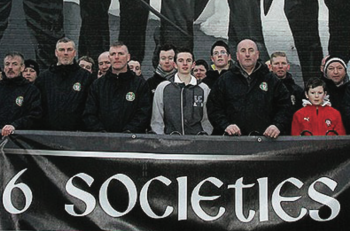
    Republicanism is fragmenting. That was  seen on Easter Sunday, when at least eight Republican groups held commemorations on Belfast’s Falls Road. At protests in the North, it is common for various ‘dissident’ groups to have more presence that mainstream Sinn Féin. That party has a much smaller activist base than a decade ago. Paradoxically, as that base has shrunk, the vote has increased. The exodus of members has not affected the vote. That was seen most starkly in last year’s assembly election for North Antrim. A councillor and 17 other activists resigned in protest when the party forced assembly Member Dáithí McKay to resign. Monica Digney, an able and respected former councillor, and one of those who had resigned, stood as an Independent. Sinn Féin’s vote increased by just under 3%. Digney polled just 435, lagging behind the Green Party. That is a stark version of trends across the north. A few years ago, even Sinn Féin strategists believed the vote had plateaued, and might even fall back. In last year’s Westminster election, Sinn Féin took 29.4% of the vote. That was a 4.8% increase in a year. The terminal decline of the SDlP has been hastened. Sinn Féin took the SDlP’s two perceived strongholds: South Down and, of greater importance, Derry. That is not to deny the importance of the exodus. There is a disillusionment with Sinn Féin. An Easter statement from Óglaigh na hÉireann prisoners sums up the dissidents’ problems: “It’s clear that presently the revolutionary Republican community appear to be facing challenging times and lack strategic direction in response to these events”. The largest single non-Sinn Féin grouping are the 1916 societies. There have spread out of their initial base in East Tyrone across the North, and into the South. They have a sizeable membership, mostly of an older generation, but they also have a small but significant membership from the post-IRA generation. They are an excellent symptom of how widespread the malaise in Republicanism is. They have engaged in some co-ordinated activity, such as calling for an all-Ireland Referendum on unity. However, their main activity is commemorations. This is the only activity on which all non-Sinn Féin Republicans can agree. They certainly cannot on a central debate for Republicans: whether or not there should be an armed campaign. Most are opposed. some, mostly from the anti-armed-campaign cohort, are becoming involved in community issues as individuals or through different organisations. There is no issue about which ‘dissidents’ can coalesce. In 1969-70, the Republican movement split into ‘official’ and ‘Provisional’ wings. (The ‘Provisionals’ became today’s Sinn Féin, while the remnants of the ‘officials’ are the Workers Party). The ‘Provisionals’ derived from the anger of many young Catholics, and a belief that the IRA had spent too much time on left-wing politics rather than preparing to defend catholic areas. This time, there is no single big issue to divide Republicans. There is a generalised unhappiness at Sinn Féin’s acceptance of Stormont and the PSNI. In some cases, unhappiness has spilled over into demoralisation. Some in Sinn Féin dismiss ‘dissidents’ as criminals. That is not to say there are not criminals using dissident groups as a cover; and others who, their war over, have turned to criminality but it is not the central case. The dissident groups are fragmented. The new IRA and the continuity IRA are continuing their campaign, while Óglaigh na hÉireann has called a ceasefire. All armed groups are riddled by infiltration by security-force agents. However, they have found a certain niche in carrying out punishment attacks. These grew by 60% between 2013 and last year. They are popular among a significant layer of the population in Catholic working-class areas. Part of the reason is the traditional hostility between the catholic minority and the police in the Northern state. Part is also that punishment attacks offer ‘quick x’ justice, without the necessity to take the time taken by a formal court system. Police seem willing to let punishment attacks continue, as long as the victims are perceived ‘hoods’. Vigilantism, though, is not a basis for building organisations that will be a serious alternative to Sinn Féin in Catholic areas. Sinn Féin could probably benefit from a bit of coherent opposition from people whose political premises, at least viscerally, it identifies with. Anton McCabe

    Loading

    Read more

  • Posted in:

    Labour starts to rebuild

    Is the Irish Labour party finished, is a question that’s been asked for nearly as long as the party has existed. In the last year or so however, or more accurately since a couple of years into the Fine Gael-led coalition, the party’s tail-spinning poll numbers have started to feel symptomatic of a terminal decline. The old question has a new urgency. The regular Irish Times’ poll with Ipsos/MRBI hasn’t placed Labour over 10% since February 2013. The same poll has yet to rise above the benchmark set in February last year, when the party’s support bottomed out at 6.6% in the general election. On some level, the party recognises that the negative association with the last government isn’t going away in a hurry. Asked whether Labour’s problems might stem from increased competition on the left, Councillor Martina Genockey, recently selected as the party’s candidate in Dublin South-West, is quick to retort that no, “our biggest problem is that we were in government for five years”. Abatement of hostility? “People are still seeing things through that lens”, she says. A year on from the nadir of Labour’s worst general election result, policy proposals are still met on the doorstep with shouts of “you didn’t do this when you were in government, you didn’t do that”. That isn’t to say that canvassing is as rough as it once was. The increased amiability on doorsteps is a recurring line in conversations with the new array of candidates. “I wouldn’t say there’s a swing to Labour”, says Andrew Montague, selected to run in Dublin North-West, “but the anger against Labour has dissipated”. Ged Nash, elected to the Seanad and selected in April to run for his old Dáil seat in Louth, says that “there’s been an abatement of the hostility experienced on the doors”. That the polls have, if anything, gone in the wrong direction since the election, misses the point, says Kevin Humphreys, also a Senator. “Don’t necessarily expect movement in the polls”. Labour, he says, are focussing on 15-20 winnable constituencies, such that national opinion polls may not reflect the party’s strength. How credible is this? According to a spokesperson for the parliamentary party, plans are well underway for the next election, whenever it comes. The plan is to contest a minimum of 30 out of 39 constituencies. All selection conventions are intended to be completed by Christmas, with conventions already on the cards to select Brendan Howlin, Alan Kelly, Seán Sherlock, Brendan Ryan and in Meath West, newcomer Tracy McElhenny. A draft manifesto has been prepared, a fundraising drive is underway, while a membership recruitment drive is ongoing, said the spokesperson. The stated aim of party leader Howlin has been to double the party’s Dáil representation at the next election. Achieving that, bringing Labour to around 14 seats, would see it back around its historical average. That’s when the real rebuild could begin, you might think. Labour’s problem lies partially in its vote distribution, says Adrian Kavanagh, a lecturer in political geography at Maynooth University. Until not that long ago, Labour’s real base was in rural Leinster and Munster, and not necessarily in Dublin. That changed after the amalgamation with Democratic Left in 1999. “The change in the last number of years is in the loss of traditional working-class areas”, says Kavanagh. The party’s result last year saw it shrink back to a core of largely personal votes in rural Leinster and Munster – with the likes of Howlin in Wexford, Willie Penrose in Longford- Westmeath, and Alan Kelly in Tipperary clinging on. This leaves the party in a precarious position as regards vote share. Its vote is more thinly spread than that of Solidarity-People Before Profit, who won only one less seat on a lower vote total. If Labour falls a few percentage points below the 6.6% from last year, “they’ll struggle to win any seats” says Kavanagh – his analysis of the most recent Sunday Business Post poll has Labour winning only one, with Brendan Howlin in Wexford perhaps the sole survivor. Such is the geographical distribution of Labour’s vote, this could come about even as Solidarity- People Before Profit leapfrog them to 7 seats, still on a lower vote share. On the other hand, if Labour go up a few percentage points, “then it’d be possible to get back up to the mid-teens in terms of seats, which is quite a respectable result”. Separate, and socialist? Fairly or not, the primary accusation that’s been levelled at Labour in the years since it entered government has been that it turned away from its working-class base, with the consequences being felt at the ballot box. Joan Burton, the then-leader, lost more than 3,000 votes at the 2016 election. Party figures are reluctant to give credence to this viewpoint – Labour stepped up in the national interest, they still say. According to Nash, Labour’s “unique selling point is that we’re prepared to put our money where our mouth is”, minus a harmful obsession with being “philosophically pure”. Humphreys rejects the idea that Labour’s social democratic roots were abandoned, and emphasises the traditional idea that the party has a record of delivery. “Protest, not People: is all those on the hard left are good for”. Labour are in many ways dealing with an old problem, says DCU academic Eoin O’Malley. “They’re not radical enough for lots of people, while at the same time, they’re a bit too radical for a lot of people in centrist Ireland”. Furthermore, says O’Malley, “as pragmatic as the Labour Party is, it damaged them as a brand to go into government”. Better in 2011, would have been to lean on Fianna Fáil to prop up a Fine Gael government, sailing into 2016 as the uncontested leader of the opposition for the first time in its history. Counter-factuals are fine but what should the party be doing? The party has taken the implications of its diminished representation seriously – rewriting the party constitution, re-energising ordinary supporters and, says

    Loading

    Read more

  • Posted in:

    SF won’t prop up FF, FG or Labour

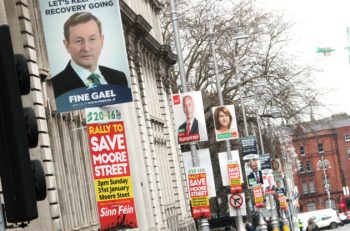
    The recent General Election was a very good one for Sinn Féin. We increased our number of TDs from 14 to 23. That’s a 65% increase – a success by any standards. Importantly, Sinn Féin also further increased the geographical spread of the party. There are now very few regions in the State in which there isn’t Sinn Féin Dáil representation. There is also in place, another whole raft of Sinn Féin representatives who, although not returned at this election are very likely to be elected next time around if they continue with the valuable work they are doing. So, Sinn Féin returns to the Dáil, not just with a significantly larger team but also with a team of very high-calibre TDs, including more women and more younger representatives. Sinn Féin had two clear objectives going into the election. The first was to get rid of a Fine Gael/Labour government that has brought chaos to housing and health, imposed unfair taxes and promoted mass emigration. We succeeded in that. In the early days of the election campaign we holed the coalition’s strategy below the waterline by proving that their figures were wrong and that they presented €2 billion which they did not have. I think we were also successful in demonstrating that you cannot have US-style taxes and at the same time invest in decent public services.Our other objective was to prove to people that there is a realistic, credible political alternative of which we are a significant part. That is very much a work in progress. We may not have succeeded, at this point, in getting enough seats to form a progressive Government but that will improve as we go on. But the realignment of politics in this State took an important step forward in this election and the next election will see that trend intensify. The political domination of Fine Gael and Fianna Fáil is finished. What we now need to do is increase the cohesion among those who advocate an alternative view of how the economy and society should be organised. Over the past five years, Sinn Féin has been the genuine voice of opposition in Leinster House, offering an alternative to the dreadful austerity policies of Fine Gael, Labour and Fianna Fáil. All of Sinn Féin’s pre-Budget submissions demonstrated a way of ensuring economic growth while also being socially equitable and protecting the vulnerable. We repeatedly warned the Government of the escalating homelessness crisis. The Government refused to listen and it became an emergency. We also consistently raised the issue of all-Ireland integration and the political, economic and social case for a united Ireland. Sinn Féin has now received an enhanced mandate to continue with that work. The post-election sham fight between Fine Gael and Fianna Fáil is nothing to do with the real issues affecting citizens. The people who were homeless last Friday will remain homeless under Fine Gael and Fianna Fáil. Patients will still languish on trolleys in our hospitals under Fine Gael and Fianna Fáil because those parties are not serious about resolving these issues. Going into this election Fianna Fáil picked up on a sense that voters were moving to the left, so they began to steal the phrases Sinn Féin was using about fairness and a recovery for all. That strategy resulted in a partial recovery of the Fianna Fáil vote itself but still left it far, far short, in his-torical terms, of where it once stood. Throughout the election campaign, Sinn Féin made it clear that we would not prop up those parties that created and sustained the economic and social crisis facing our people. That is the mandate we received and we will not break our commitments. Sinn Féin will continue to consult with others, including those aligned to the Right2Change platform, on the way forward. If not in the immediate period ahead, the objective of a genuinely progressive alternative Government in which Sinn Féin plays a lead role is a live possibility. Over 400,000 people voted for candidates aligned to the Right2Change platform to end water charges. The Fine Gael/Labour Government has been defeated and water charges should leave the stage with them. What is now clear from the election is that people voted for real change and a more equal society. Sinn Féin is committed to achieving that and to pursuing and preparing for the peaceful reunification of Ireland and the reconciliation of all our people. Whether in Government or in opposition, Sinn Féin will stick by the mandate we have been given. Gerry Adams Gerry Adams TD is President of Sinn Féin

    Loading

    Read more

  • Posted in:

    Post-election 2016

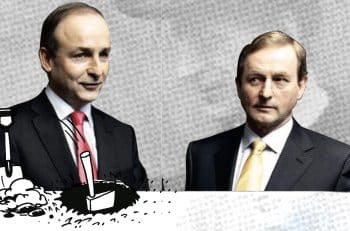
    The general election was tedious and it’s not really clear what message it purveys. The electorate seemed jaded and the politicians delivered no memorable new policies, apart from Renua’s utterly regressive at tax proposal. Village believes that elections should be all about ideas, ideology, policy (and how best to implement them). In these terms the election and its participants were a two-out-of-ten failure. Commentators from the equally idea-free media have interpreted the results in heterogeneous ways. Every sort of theory and cleverality was deployed to describe the drearily and precariously hung Dail: a triumph of democracy, a triumph of social democracy, the end of the civil war, the end/beginning of the beginning/end of the civil war. The perennial smart view that the electorate has failed the parties got several outings. If the second-rate sages had been able to they would have loved to interpret it as a triumph of angry white men. They couldn’t. Some saw it as a victory for the small parties and independents. But the Social Democrats did not increase, Renua was wiped out, the Greens gained only two seats in an era of climate-apocalypse. The People Before Profit/ Anti-Austerity Alliance finished up with only one more seat than they had before the election, and Direct Democracy did not gure. Before the election these were the only small parties. The truth is that this election was a triumph of the interchangeable FF/FG (FG/FF) duopoly, though its trajectory has been definitively defined as downward. Ideology is what political parties apply when they run out of policies. Since most of the parties’ manifestos are short and the events to which policies must be applied are unpredictable it is reasonable to expect that your candidate will have an ideology to guide her. Village for example favours an agenda of equality of outcome, sustainability and accountability. The ideology is comprehensive, it provides a solution for any situation, and a template against which policy formulation can be benchmarked. Candidates shouldn’t have to reflect Village’s ideology, but they’d be better having some sort of one. Neither civil-war party has an ideology. It is impossible to know what they will do once elected. How, therefore, could anyone who does not live under a stone be enthusiastic about a government of FF and FG? FF is a conservative party that believes in so little that it surrendered its entire ethos to a culture of provincialism and cronyism, last time it was in government. It believes in no more now so, though it is touting a centre-left agenda there is every danger it will return to populism, short-termism and promoting the only agenda it understands – the interests of the people its representatives actually know – a cronyist populism that always finishes up favouring those who shout loudest. It is naïve to think of FF as Micheál Martin and when it is the movement it has always known itself to be, of Eamon OCuív, of Barry Cowen, of Pat ‘the Cope’ Gallagher; and tens of marginally more presentable sons and daughters of best-forgotten FF dynasts. Kevin O’Keeffe, son of Ned O’Keeffe, anyone? FG is a conservative party currently dressed up as a Christian Democrat party. The ethos is exible enough that under Garret FitzGerald it was in effect Social Democrat. In its latest incarnation it has been right of centre, at a time when most people want fairness and an improvement in services. It failed to deliver an agenda of accountability and its representatives seem to believe in little beyond sound money, ‘Europe’ and law and order. Having once appeared to be purer than FF it is now tainted by the Moriarty Tribunal report and a perceived ongoing proximity to Denis O’Brien, Ireland’s richest man, as well as by its large number of low-grade County Councillors, whose corruption record is a hairsbreadth from as bad as FF’s. Though essentially conservative, both FF and FG contain some social democrats and liberals in their midst. These aberrations and those who vote for them are delaying the day a real Social Democratic party with coherent left-of-centre platform can become a force that could anchor a government. On the other hand it is clear that more people than is desirable voted FG in 2011 to get FF out and then FF in 2016 to get FG out. These people need to acknowledge that they are forces forconservativism. The incarnation of this is the dangerously articulate Éamon Dunphy who apparently voted FF in 2016 because he really believes in People Before Profit (or Sinn Féin. It isn’t clear). Anyone who thinks that FF was the solution to our problems in 2016 is part of the problem. So what next? FF and FG should merge as a conservative party though even coalition is for the moment some way off. FF is tactically sharper than FG and FG is in retreat so it is likely FF will tantalise FG to weaken and demoralise it during this Dáil. Nevertheless the (non-)ideological compatibility of the parties has been exposed and will generate its own momentum. While allowing this momentum its space the Left of all hues must use the logic of the momentum against FF and FG, and social democrats must colonise some of the space the dinosaur parties have occupied for tragically long.

    Loading

    Read more

  • Posted in:

    FF won’t see coalition as an ideological issue and FG is glued to stability

    The most extraordinary coalition formed in Ireland was the first one, in 1948. It involved Fine Gael and a then-new party headed by Sean McBride, Clann na Poblachta. The Clann was a lively mixture of liberals, left-wingers and Republicans with a deep immersion in the IRA. The surprise with the Clann was that its youthful enthusiasm and vigorous campaigns against partition very nearly toppled De Valera from his then hegemony over Irish politics. McBride himself was a former IRA Chief of Staff who subsequently cut out a career for himself as an international eminence becoming a Nobel Prize laureate and founding member of Amnesty International – the campaigning global Human Rights body. Because of lingering republican bitterness against General Richard Mulcahy’s role in the civil war, Mulcahy, the Fine Gael leader, stood aside to facilitate a coalition with the Clann and its tooth and claw republican militants. John A Costello became Taoiseach in the coalition instead. The point of all of this is to illustrate that, from the very outset, coalition formation in Ireland has been a pragmatic business where big parties and small ones dispense with ideological or philosophical differences in order to provide an alternative government and run the country. Down the years few, if any, Fine Gael or Labour leaders worried too much about the differences of left and right when it came to forming a government designed to extract Fianna Fáil from prolonged periods in power. In 1989 Charles Haughey led Fianna Fáil for the first time ever into a coalition arrangement with the Progressive Democrats, stating cheerily: “Sure, it was only me that could have done it”. His party colleagues resisted it furiously believing non-participation in coalition an absolute core value for the party up to that point. The bitterness of doing this coalition was magnified by the presence of Des O’Malley and his new party – composed of individuals who had fought Haughey, then split from him to create their own party. For Haughey it was just another deal but for the Progressive Democrats, who claimed to be policy-focused, it was about taxation and other precious policy items, including a public Tribunal into the goings on in the Beef Industry. Haughey worked hard to save his own skin and persuade his ministerial colleagues of the merits of going into coalition. Apparently at one stage in the discussions around the cabinet table he held out his arms sideways demanding in relation to the opposition: “D0 you want to give them all of this?”. Shortly afterwards the new Taoiseach Albert Reynolds formed a coalition with the Labour Party which followed an election in 1992 which featured advertisements generated by Fianna Fáil scaremongering about a left-wing takeover of the country by Labour. This was no small tactic and involved giant billboards and full-page newspaper adverts in a bid to frighten voters in a move that was redolent of the ‘red scare’ tactics of the 1950s and 1960s. During the actual campaign my father, the late Brian Lenihan Senior. When all about him were these banner advertisements called for an alignment with Labour rather than the PDs. His rationale was that Labour were more compatible with FF than what he viewed as the “Thatcherite ” Progressive Democrats. He was dismissed by the party bosses during the campaign only to find himself instrumental, behind the scenes, after the election in putting the coalition deal with Labour together. Albert Reynolds, a businessman, proved to be very pragmatic when faced with the post-election numbers and getting back into power. My father had key relationships and friendships within the Labour Party and within the labour movement generally. These relationships and ability to communicate became vital to the formation of this government. When people set out to cross party divides there is a need for credible and dependable intermediaries who can give assurances on policy and how the share out of ministries will play out when the negotiations get real. This was my own experience when I set out, at the request of Bertie Ahern, to put in motion the process of having a coalition with the Green Party in 2007. In fact the groundwork had begun in the immediate aftermath of the 2002 election. Ahern was already entertaining doubts about the future sustainability of the PD coalition because of problems with both policy and numbers. I knew a number of the key figures in the Green Party, including Trevor Sargent and had been in university with both Eamon Ryan and John Gormley. Part of the reason for having a coalition with the Greens was a concern within the party about the right-of-centre nature of the PD coalition, as well as a fear that the party was already becoming too visibly identified with the building industry and big capital. It was also made easier by the overarching atmosphere of mainstreaming environmental or green issues. When the post-election numbers showed a Green coalition was necessary Bertie pressed the buttons and appointed a skilled and experienced team of negotiators so that his own ministers were locked into the items agreed with the Greens. The government itself worked well together though it has to be said it was much more difficult for the Greens to get the coalition deal past their activists than it was for Bertie to get it past his parliamentary party. Rural TDs were the most resistant regarding Green policies on farming incentives as tantamount to treason. In the event they overcame their difficulties. As with the previous Labour Coalition, outside of the main negotiations, a series of reliable and discreet intermediaries were on hand to smooth out any issues that arose in the talks. Ahern himself was a very accomplished negotiator. General Election 2016 has been dominated by speculation of a grand coalition between the once very dominant big parties of Fianna Fáil and Fine Gael. The fact that both parties combined now count for slightly less than 50% of the popular vote has hastened a frenzy of speculation about such a

    Loading

    Read more