referendum

Random entry RSS

  • Posted in:

    BAIance under threat

    The well-worn phrase “it’s all over bar the shouting” couldn’t be more apt with regard to the Referendum which repealed the eighth amendment to the constitution (article 40.3.3). The referendum is all over, the shouting has begun and it is going to continue for some time. So far the shouting has been confined to a small number of very conservative Catholics on the one hand and people whose fury at the Catholic Church knows no bounds on the other. These relatively small numbers will grow. When clinics to provide abortion eventually open they will be picketed by conservatives and the pickets in turn will probably be picketed by left-wing groups. This has been the experience in the United States but at least in Ireland we can be reasonably confident that neither side will be armed. It is important that Ireland studies the American experience not only in order to learn from it but also because there is little doubt that US activists were involved in the referendum, largely on the NO side, but possibly in smaller numbers in supporting the winners. That the US is ultra-sensitive to foreigners intervening in its own electoral events added a touch of irony and paradox to the procedure. The decisions by Facebook to ban advertising from outside Ireland and by Google to ban all advertising highlighted the total absence of regulation not only of social media in general but also of the online activities of mainline broadcast media. Here’s an example of what is possible in a referendum or general election. The Broadcasting Authority of Ireland lays down the guidelines for election and referendum coverage and these include a moratorium on broadcasts from 2.00pm onwards on the day before the vote. So let’s take the case of a fictitious broadcaster called Radio Populism or RP for short. Its talk show is drawing a large listenership as 2.00pm approaches. One of the speakers says he is about to reveal some devastating information concerning corruption and bribery by his opponents. Just as he starts to make his statement the clock strikes 2.00pm. If the broadcast continues then RP will be in breach of the guidelines and get itself into trouble with the BAI. The presenter, however, makes an announcement saying that the discussion will be brought to an end on air but will continue as a podcast on the station’s website. RP, therefore, will move from the highly-regulated sphere of traditional broadcasting to the unregulated territory of the internet. Once that switch from one medium to another has been made the moratorium will not be broken because the BAI has no authority over internet podcasts and the only things that can deflect the speaker from accusing his opponents of bribery and corruption are the Courts of Justice and the law of the land in the form of the Defamation Act of 2009. The year 2009 was a busy one for legislation for it also saw the arrival of the Broadcasting Act under which the BAI was set up and the regulation of broadcasting in Ireland was brought up to date. Since then there has been an exponential growth in internet media, social and otherwise. What was up-to-date in 2009 is now outdated to almost prehistoric levels in 2018. One thing that has happened according to successive surveys is that a large majority o the younger cohort of the population listens to radio and watches TV over the internet rather than by traditional broadcast means. In our hypothetical case above while older listeners might have made a dash from radio to laptop to stay with the programme their younger fellow citizens would probably have used the unregulated internet to access the broadcast from the start. In years to come, therefore, the BAI could find itself with nothing to regulate. There are a number of options. The Act could be allowed to stagnate and we could be off on a Limbaugh-dance to US style Shock-Jock podcast radio where the concept of balance and impartiality of any sort would simply not apply. There are plenty of people with right-wing views who would welcome such a situation and who have enough money to exploit its political and social advantages. On the other hand a new Broadcasting Act could be introduced in an attempt to bring broadcasting regulation particularly in the area of coverage of the democratic process into line with today’s reality. The first necessity in any new legislation should be a re-organisation of the BAI itself. It is staffed by a highly professional group of public servants whose expertise made an extremely positive impression on me during my membership of the Authority’s board. Apart from the most publicised activity of dealing with complaints against broadcasters the BAI gives financial assistance to broadcasters under its Sound and Vision scheme and this has led to the production of very-high-standard programming especially from smaller independent companies with limited funds of their own. But the set-up imposed on the BAI by the 2009 Act has led to a highly-complicated situation which has been described, with reasonable accuracy, from within as a “three-headed monster”. The three heads are as follows: 1) The Authority which is essentially the board of directors of the BAI and set the strategic direction of the organisation. 2) The Contract Awards Statutory Committee that does exactly what it says on the tin. It awards licence contracts to broadcasters. 3) The Compliance Committee is another statutory body and it monitors broadcasters for compliance with broadcasting regulations such as impartiality. It also investigates complaints against broadcasters and publishes its decisions. But it’s even more complicated than that. As might be expected in any public or private company, decisions of the Contract Awards Committee are put to the board of the Authority for ratification. The Authority is, after all, the board of directors. The Compliance Committee’s decisions, on the other hand, are not ratified by the board. In effect therefore the Compliance Committee is an independent body with some membership links to the Authority itself (it includes two Authority members and two members of the

    Loading

    Read more

  • Posted in:

    Equality over freedom

    Politics is a continuum from equality to freedom. If freedom is the vertical axis of a graph and equality the horizontal axis, every society – and every citizen – decides where the balance should be. A libertarian society tending towards survival of the fittest will not foster equality; an egalitarian society may need to be enforced by a strong state to the detriment of individual licence, and so on. Philosophers from Tocqueville to Hayek to mainstream liberals accept there is a trade-off. Village tends to the egalitarian end of the scale: truly free equality, after education and reflection – precise processes for which have been touted by many modern philosophers – is a mature and more stable goal than equal freedom. Workaday politics can be charted and defined on the graph. However, the same political action can be justified by different points on the graph. Issues like divorce, gay marriage, and abortion can be deemed imperatives of either freedom or equality. In this respect the language used is not a definitive indicator of the politics. A campaign can claim to be about equality but in fact on analysis be defined by positions only of freedom. Any campaign fronted by Simon Harris or Leo Varadkar – agents above all of the propertied, of the status quo for the wealthy – is unlikely to be rooted in any real substantive equality. It is perfectly legitimate to campaign for gay marriage or abortion because you want yourself or others to exercise rights to freedom to get married or have an abortion. Telltale signs if you do so you may include that you are less likely to make common cause with campaigns for others suffering discrimination of all sorts. You may ignore issues like racial equality, Travellers rights; you may express no concern about economic, social and educational inequalities. It is legitimate but it is not Village’s political motivation of preference. For Village recent referendums reached the right solutions but were disappointingly rooted in the politics of freedom rather than that of equality. The egregious wrongs in Irish society are best resolved by solutions driven by equality. This society above all facilitates those who are economically adroit. It provides opportunity for people who are strong; worse still it provides opportunity for them to make mistakes (trashing the environment is the one posterity will most register). It provides very little vision as to how they should exercise their freedoms. – this is in part the problem of 100 channels but nothing on the television. But on a societal scale. It is now time to move on to new agendas that are really radical. These include: agendas of radical redistribution of wealth in society, of radical changes to the opportunities available to those who have suffered traditional discrimination, including (still) to women and to those of minority sexual orientations, to racial minorities including Travellers; of educational opportunities facilitated by positive discrimination so even (or especially) the poorest in society can be whoever they want to be; of redistribution of power so it is exercised at the lowest, most local, most democratic levels; of attenuation of property rights so they are exercised in the common good. The goods in society should be distributed by that society so those least well off are most compensated. Everyone in society is morally equal, they should be treated by society in a way so they can participate in the fruits of the earth equally. It is a myth that the fruits of the earth are distributed in accordance with merit – they have been accumulated largely by force and luck. The idea that in 2018 a child’s future is determined by the time it reaches two years old is an abomination. Ireland is growing up politically. Ireland has waved good-bye to the invidious influence of an unrealistic Church and voted the right way on divorce, gay rights and abortion. However, these are really liberal causes focused on issues of identity. It is time we addressed the issues of endemic inequality enshrined down the generations. As regards the Constitution we do need to abolish Article 41 which recognises the woman’s life within the home, so devaluing women who choose not to work within the home; and to eliminate the part of the preamble which invokes the Constitution “in the name of the Holy Spirit”. Indeed the Constitution’s premises relate to another era and the whole document should be reconceived. More generally, materialism, capitalism and competition have had their day, it is time to welcome in a new agenda – of equality of outcome/condition: equality of wealth and power, of quality of life, of environment, of education, of fulfilment and happiness, of respect and opportunity. This should be achieved through politics and laws. The constitution should be amended to reflect it too. The most radical change would be to enshrine equality of outcome/condition as a constitutional imperative across the range.

    Loading

    Read more

  • Posted in:

    When shall we three meet again?

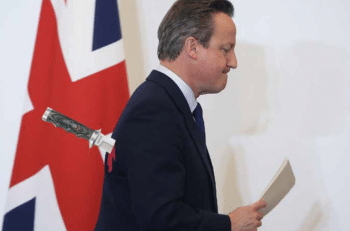
    This is a saga of sadness, a tragic tale of three ‘whiches’, a fairy ‘which’, a whichsoever ‘which’ and a wicked ‘which’. In initiating each of three referendums, David Cameron said, “You have a choice, ‘this’ or ‘that’, which do you want?”. So all three ballots were binary, and while the first two delivered what he wanted, the last one was, in effect, political suicide. All three outcomes were inaccurate reflections of ‘the will of the people’. Let’s have a look, and then let’s consider a better methodology. 2011 Referendum on the Electoral System After the 2010 general election, the UK had a coalition government: Cameron’s Conservative Party (Tories) and the Liberal-Democrats. And he probably thought to himself, “How can I rid myself of the Lib-Dems’ persistent pursuit of proportional representation, PR?” Hence the first ‘which’, so to silence any further debate on electoral reform. Some people liked single-seat constituencies, either the UK’s first-past-the-post, FPTP, a plurality vote; or France’s two-round system, trs, a plurality vote followed by a majority vote; both are single preference systems; or again, there is the Australian alternative vote, av, a preference vote which is like a knock-out competition – in a series of plurality votes, the least popular is eliminated after each round and his/her votes are transferred to the voters’ second or subsequent preference… until a candidate gets 50%. Meanwhile, many wanted PR in multi-member constituencies. There is the German half FPTP and half PR-list system called multi-member proportional, mmp. There is PR-list – in Israel, you vote for a party; in the Netherlands, for a candidate of one party; in Belgium, for one or more candidates of one party; and in Switzerland, for those of more than one party. Or there’s the Irish PR-single transferable vote, PR-STV, where voters can vote cross-party in order of preference; STV is like AV except that success depends on (not a majority but) just a quota of votes. Overall, then, the choice was huge. But Cameron’s 1st preference was FPTP and his 2nd av. So that was the 2011 referendum, the first ‘which’: “FPTP or AV, which do you want?” For countless (and uncounted) supporters of pr, this was like asking vegetarians, ‘Beef or lamb?’. Now maybe FPTP was the most popular but, based on data from just a two-option poll, impossible to say. For Cameron, however, it was a dream: he chose the question, and the question determined the answer, just as any fairy godmother would have wished: a massive 67.9 to 32.1%. Magic. Furthermore, the Electoral Commission said the question was fair. Amazing. The Ombudsman agreed. Incredible. And many thought this was all democratic. So that was the end of that argument. So why not a second fantasia, another referendum? Scotland 2014 “Double, double, toil and trouble”, said the witches in Macbeth. The Scottish Nationalist Party, (SNP), always on about independence. How can I rid myself of these skittish Scots? This was Cameron’s second problem, and so, as if on a broomstick from the darkest recesses of Westminster, the second ‘which’ enters the political stage. There were three options: (a) the status quo, (b) maximum devolution or ‘devo-max’ as it was called, and (c) independence. Thinking that (a) would easily beat (c) in a two-option contest, just as FPTP had wiped out av, Cameron waved his wizard’s wand and demanded a binary ballot. So the second ‘which’ was again dichotomous: “(a) or (c), which do you want?” In the campaign itself, however, the gremlins were grumbling, option (c) was gaining ground. Cameron twitched; no – panicked: and so, as if at the witches’ coven, a vow was made – zap! – and option (a) morphed into option (b). On the ballot paper, however, there was no switch, the ‘which’ was still “(a) or (c)?” So the result was a stich-up: 55.3% and 44.7% respectively were highly in ated levels of support for (a) and/or (c). Furthermore, the winner was (b)… but no-one had voted for it! For Cameron, though the potion was fading, the plebiscite was still successful, and that was the (very temporary) end of that argument too. We return to the diviners’ den. The EU Referendum Believing as it does in majority voting, the Tory Party (and many another) is a beast of two wings and no body. Little wonder that this weird creature is often in a ap, especially over Europe. “Those cursed Europhobes”, he might have muttered. And then, stage extreme right, another scary monster, the UK Independence Party, Ukip. “Oh how can I rid myself of these damned devils?” Ah-ha, the third… but this was the wicked ‘which’. The wrong side won. The Electoral Commission’s semantic change from ‘yes-or-no?’ or ‘in-or-out?’ to ‘remain-or-leave?’ did not change the poisonous potent of the poll, its binary bind, its divisive ‘positive-or-negative’ nature. The question – “Which do you want?” – was again adversarial. The campaign was horrible. And the result? 48.1% chose ‘remain’ to 51.9% ‘leave’. But nobody knows what the latter actually want! To suggest, then, that this outcome is ‘the will of the people’ is, again, bunkum. Meanwhile, politically, Cameron is dead, impaled on his own petard; in a word, ‘bewhiched’. Democratic Theory and Practice So what should have happened? Well, consider first a hypothetical example. The average age of the electorate cannot be identified by a majority vote. If such a piece of research were to be attempted, the question would probably be, “Are you young or old?” In which case, no matter what the answer and by what percentage, it would be wrong! If, however, the question were multi-optional, ‘Are you in your twenties, thirties, forties, etc.?’ the answer could be pretty accurate. With average age or collective opinion, as in a German constructive vote of con dence, voters should be positive. No-one should vote ‘no’ or ‘out’ or ‘leave’; instead, everyone should be in favour of something: for the UK to be in the EU, or like Norway in the EEA, or like Switzerland in a looser

    Loading

    Read more

  • Posted in:

    Irexit

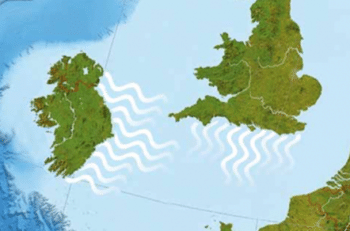
    Since the Brexit referendum in June I have been rapporteur of a Private Study Group of Irish economists and constitutional lawyers who have been examining what we should do when and if the UK leaves the EU. In August their report was sent to the Taoiseach, his Ministers and the Secretary-Generals of all Government Departments. It has been sent also to the EU embassies in Dublin, to UK Prime Minister Theresa May, her key Ministers and senior civil servants concerned with Brexit, and to a wide range of British Brexiteers whom my colleagues and I have got to know over the years. The report’s basic conclusion is that it is in the interest of the Irish people that Brexit should be accompanied by “Irexit” – Ireland exit. We applied to join the then EEC in 1961 because Britain and Northern Ireland did so. We joined simultaneously with the UK and Denmark in January 1973. Now that Britain and the North are leaving, we should do the same, for three principal reasons. The first is that Ireland is nowadays a loser, not a gainer, from EU membership. In 2014 we became a net contributor to the EU Budget for the first time, paying in €1.69bn and receiving €1.52bn. This means that in future any EU moneys that come to the Republic under the CAP, EU cohesion funds, research grants, support for community groups and the like, will be Irish taxpayers’ money coming back, employing some Brussels bureaucrats on the way. Henceforth the EU will no longer be the ‘cash cow’ most Irish people have regarded it as for decades, and which is the basis of much of our official and unofficial europhilia. A bonus would be that outside the EU Ireland can take back control of its sea-fishing waters. Eurostat’s estimates of the value of fish catches by non-Irish boats in Irish waters since 1973 are a many-times multiple of the EU cash we got over that time. The second reason why Irexit should go along with Brexit is that that is the only way of preventing the North-South border within Ireland becoming an EU external frontier, with new dimensions added to Partition, affecting trade, travel and different EU laws and legal standards as between Dublin and Belfast. For example without the UK as an EU Member alongside it, the Republic would be in a much weaker position to withstand pressure to adopt continental norms in EU crime and justice policy, which differ signi cantly from Anglo-Saxon ones in such areas as trial by jury, the presumption of innocence and habeas corpus. Such divergence would adversely affect good relations within Ireland as a whole and while it would not undermine the Peace Process, it would not help it either. If we stay in the EU while the UK leaves it would mean that for Irish reunification to come about at some future date the people of the North would have to rejoin an EU that Britain had long left, adopt the euro-currency, take on board a share of the €64bn of private bank debt which the ECB insisted that Irish taxpayers nance during the 2008-2010 currency crisis, and implement the further integration measures that are likely to be needed over the coming years if the Eurozone is to be held together. It would give 26 EU Governments in addition to the UK and the Republic a veto on eventual Irish reunification. Such a development should be unacceptable to all Irish nationalists. Another consideration is that if the South remains in the EU while the North leaves along with Britain, future Irish reunification would make the whole of Ireland part of an EU military bloc that is likely to come under greater Franco- German hegemony following Brexit. That potentially could be a security threat to Britain. This will surely change significantly the calculus of British State interest and give Britain a strategic reason for keeping the North inside the UK, an interest it has not got today. The third reason why most Irish people should now reassess their attitude to the EU is that the business case for Ireland remaining an EU member diminishes significantly if the UK leaves. Most foreign investment that comes here is geared to exporting to English-speaking markets, primarily the UK and USA, rather than to continental EU ones. Once the UK leaves the EU two-thirds of Irish exports will be going to countries that are outside it, as they are going today to countries outside the Eurozone, and three-quarters of our imports will be coming from outside. Outside also, Ireland’s 12.5% corporation tax rate would no longer be under EU threat. Of course our relations with the UK and the EU in the Brexit context are complicated by our membership of the Eurozone. Irish policy-makers abolished the national currency and joined the Eurozone in 1999 on the assumption that the UK would do so also and that by going first they would show how communautaire they were. It was an utterly irresponsible action in view of the fact that the Republic does most of its trade with countries that do not use the euro. With the pound sterling falling against the euro as the UK disengages from the EU, Ireland desperately needs an Irish pound that can fall with it, so maintaining its competitiveness in its principal export markets – the UK and America. That is why the Irish State urgently needs to get its own currency back. Economist Chris Johns noted in the Irish Times on 20 August that if the Irish pound existed today it would be worth some 10 percent more than the pound sterling. This was the level it reached in January 1994, when Irish industry was in crisis because of its overvalued exchange rate – explicitly then, implicitly today. That in turn precipitated the major devaluation which inaugurated our ‘Celtic Tiger’ years. Ireland needs to regain the freedom of being able to determine its own exchange rate. There is no legal way to

    Loading

    Read more