Ireland staying in the EU while Britain leaves will only make reunification more difficult, says Anthony Coughlan.
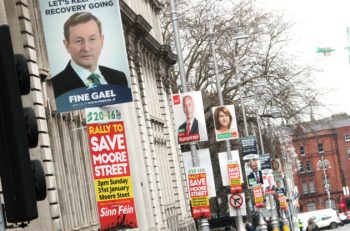
The recent General Election was a very good one for Sinn Féin. We increased our number of TDs from 14 to 23. That’s a 65% increase – a success by any standards. Importantly, Sinn Féin also further increased the geographical spread of the party. There are now very few regions in the State in which there isn’t Sinn Féin Dáil representation. There is also in place, another whole raft of Sinn Féin representatives who, although not returned at this election are very likely to be elected next time around if they continue with the valuable work they are doing. So, Sinn Féin returns to the Dáil, not just with a significantly larger team but also with a team of very high-calibre TDs, including more women and more younger representatives. Sinn Féin had two clear objectives going into the election. The first was to get rid of a Fine Gael/Labour government that has brought chaos to housing and health, imposed unfair taxes and promoted mass emigration. We succeeded in that. In the early days of the election campaign we holed the coalition’s strategy below the waterline by proving that their figures were wrong and that they presented €2 billion which they did not have. I think we were also successful in demonstrating that you cannot have US-style taxes and at the same time invest in decent public services.Our other objective was to prove to people that there is a realistic, credible political alternative of which we are a significant part. That is very much a work in progress. We may not have succeeded, at this point, in getting enough seats to form a progressive Government but that will improve as we go on. But the realignment of politics in this State took an important step forward in this election and the next election will see that trend intensify. The political domination of Fine Gael and Fianna Fáil is finished. What we now need to do is increase the cohesion among those who advocate an alternative view of how the economy and society should be organised. Over the past five years, Sinn Féin has been the genuine voice of opposition in Leinster House, offering an alternative to the dreadful austerity policies of Fine Gael, Labour and Fianna Fáil. All of Sinn Féin’s pre-Budget submissions demonstrated a way of ensuring economic growth while also being socially equitable and protecting the vulnerable. We repeatedly warned the Government of the escalating homelessness crisis. The Government refused to listen and it became an emergency. We also consistently raised the issue of all-Ireland integration and the political, economic and social case for a united Ireland. Sinn Féin has now received an enhanced mandate to continue with that work. The post-election sham fight between Fine Gael and Fianna Fáil is nothing to do with the real issues affecting citizens. The people who were homeless last Friday will remain homeless under Fine Gael and Fianna Fáil. Patients will still languish on trolleys in our hospitals under Fine Gael and Fianna Fáil because those parties are not serious about resolving these issues. Going into this election Fianna Fáil picked up on a sense that voters were moving to the left, so they began to steal the phrases Sinn Féin was using about fairness and a recovery for all. That strategy resulted in a partial recovery of the Fianna Fáil vote itself but still left it far, far short, in his-torical terms, of where it once stood. Throughout the election campaign, Sinn Féin made it clear that we would not prop up those parties that created and sustained the economic and social crisis facing our people. That is the mandate we received and we will not break our commitments. Sinn Féin will continue to consult with others, including those aligned to the Right2Change platform, on the way forward. If not in the immediate period ahead, the objective of a genuinely progressive alternative Government in which Sinn Féin plays a lead role is a live possibility. Over 400,000 people voted for candidates aligned to the Right2Change platform to end water charges. The Fine Gael/Labour Government has been defeated and water charges should leave the stage with them. What is now clear from the election is that people voted for real change and a more equal society. Sinn Féin is committed to achieving that and to pursuing and preparing for the peaceful reunification of Ireland and the reconciliation of all our people. Whether in Government or in opposition, Sinn Féin will stick by the mandate we have been given. Gerry Adams Gerry Adams TD is President of Sinn Féin
Posted in:
While focus over the past year has been on Loyalist alienation, there is also a significant level of nationalist alienation in the North. Dissident Republicans have small but real support. Far beyond their circles, there is a discontent: a feeling that the Assembly has not delivered, and that the DUP is running government: of dissent. There is no possibility, in the foreseeable future, of either the dissidents or the dissenters significantly eating into Sinn Féin support. A small trickle of recruits is joining dissident groups – despite their weakness on all fronts. Those who claim such groups have no support refuse to recognise a reality they dislike. The dissident groups can operate in a small pool. Support is underestimated because many people will not openly admit to holding an unpopular view. This is analogous to the way that opinion polls understated electoral support for Sinn Féin (and to a lesser extent the DUP) in the past. An older generation of dissidents came from Sinn Féin. To become the largest nationalist party, Sinn Féin dramatically moved to the centre. Its electoral strategists recognised that this meant shedding more hard-line voters. The loss was counterbalanced by taking votes from the SDLP. The more republican voters who left had nowhere to go: the votes taken from the SDLP have reduced that party. The older group which left Sinn Féin is now mostly inactive. Of more current significance is an angry section of Catholic working-class youth which has never accepted Sinn Féin. The dissidents have recruited among them. However, even some young Catholics with jobs consider themselves dissidents. Over the last few months, I have met a scatter- ing of young people who call watch your backs – both of you “ themselves Republicans, but disagree with the strategy of Sinn Féin. Some are in organisations, others not aligned to any. A Real IRA member once explained to me that the peo- ple they were recruiting had been active supporters rather than former members. Most now come from the post-ceasefire generation, tending to be between 20 and 40. Most are from deprived areas, but by no means all. Among dissidents convicted here have people with skilled and white-collar jobs. Militarily the dissident organisations are weak, and riddled with agents. Partly because of what Northern society went through during the Troubles, their military campaign is unpopular. Importantly, the dissidents do not have a cause to mobilise around. There are, though, always dangers of a British government blunder. However, three contentious issues have been resolved. Sixty-three year old Martin Corey from Lurgan has been released: he was a former Republican life-sentence prisoner whose licence was revoked and who was jailed for three years without facing any charges. A dirty protest by prisoners on the Republican wing in Maghaberry prison has been settled. The seriously ill Marian Price, who was a remand prisoner, was released on bail. Dissidents are active on the issue of marches by the Loyal Orders through perceived Catholic areas. These are resented by most residents in those areas, even many who would not call themselves Republicans. Dissidents have members in some of those areas, and oppose the somewhat conciliatory approach of Sinn Féin. There are wider symptoms of discontent than the small dissident groups. ‘1916 Societies’ have developed. These developed first in East Tyrone, the traditional heartland of Northern Republicanism. Initially they attracted an older generation. More recently, they have attracted numbers of young people from the post-Troubles generation. They are a loose network whose only clear policy is promoting Irish unity on the lines of the 1916 Proclamation. Members disagree with Sinn Féin for often conflicting reasons. They disagree on the central issue of Republican tactics: whether or not there should be an armed campaign. They are a network for ex-members of the IRA and Sinn Féin. More generally, there is discontent in the wider Nationalist community. All sections of the community feel the Assembly has not delivered on its initial promise. Among Nationalists, many feel Martin McGuinness is too conciliatory to the DUP. Despite the DUP having moved towards the centre there is a deep distrust of it in the wider Catholic community. Projects which many Nationalists saw as symbolic gains for them like the Maze/Long Kesh Peace Centre and the A5 dual carriageway from Ballygawley in Co Tyrone to Newbuildings, south of Derry City, have been cancelled. All this will have political implications. Of the Nationalist parties, the SDLP’s long decline continues. As Sinn Féin becomes a mainstream party, its active membership has decreased. Could it, like the SDLP ear- lier, lose contact with its electorate, and if so what would the consequence be? Anton McCabe
All elections are likely to be determined by how the parties are doing in the Dáil but voters for Fianna Fáil discern between types of election.
Posted in:
… in single-seat constituencies.
Posted in:
Progressive political forces and parties must ally electorally to offer a real alternative at the next election, says Peadar Kirby