Sinn Fein

Random entry RSS

  • Posted in:

    SECOND UPDATE: The Irish government has become complicit in the cover-up of British Royal sexual abuse committed in the Republic of Ireland. By David Burke.

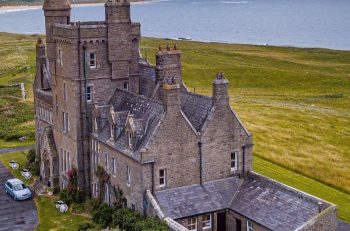
    1. The Classified Garda Files. The information provided by the brothers, John and Pat Barry, confirms that the Garda (Irish police) had a checkpoint at the gate of Classiebawn castle in August 1977. Garda security appears – by some accounts – to have been downgraded in 1979, shortly before Mountbatten was murdered by the Provisional IRA. Hence, while there might be a question mark about the existence of comprehensive Garda logs from 1979, there are no concerns about August 1977. The Classiebawn logs are the key to unlocking the sordid Kincora scandal. Boys from Kincora Boys’ Home in Belfast were trafficked to Mountbatten by Joe Mains, an MI5/6 agent who worked at Kincora. The same boys were trafficked to Loyalist paramilitaries and politicians by Mains as part of MI5 and MI6 ‘honeytrap’ blackmail operations. The Garda have shown no interest in the information at their fingertips. As far as can be told, the Government has displayed no curiosity either. The survivors of child sexual abuse deserve better. 2. Confirmation of a Garda checkpoint at Classiebawn. While the Barry brothers set out to defend the reputation of Mountbatten in their Sligo Champion interview – and did so in good faith – they have nonetheless highlighted a crucial issue about the Mountbatten-Kincora connection. It is one which could yet prove precisely the opposite of what they hoped to achieve with their interview. There is no doubt now that the Garda have a record of the registration plates of the vehicles they stopped at the gates. The existence of the Garda checkpoint was already an established fact, nonetheless, the confirmation by the Barrys is important as they  are living witnesses who can attest to its presence. It would now take a very daring – not to mention corrupt – Garda or Department of Justice official, to interfere with the files. The purpose of the interview with the brothers was to afford them an opportunity to put forward a defence for Lord Mountbatten whom they do not believe was a child abuser. John Barry, who was a boy at the time, made specific reference to a Garda ‘checkpoint’ and also that: “The guards wouldn’t have allowed some guy to come, a warden from Kincora [Boys Home in Belfast] who was supposed to have driven [child abuse victims to Classiebawn], and he was supposed to sit in the car for an hour outside the castle and let the boys in – or a boy in. And you think the guards wouldn’t have asked: ‘What are you doing here?’ No way”. His brother has confirmed the presence of Gardaí at the ‘checkpoint at the gate’. 3. Times and dates. In 2019 Andrew Lownie, author of a book about Mountbatten, sought the Garda logs taken at the checkpoint. Crucially, while the Gardaí refused to declassify the files, they nonetheless confirmed they were still in existenc.  See:  THE MOUNTBATTEN FACTOR: Boris Johnson should not bully Dublin over Brexit because the Irish Government has information which could damage the Royal Family What will the records reveal? In August 1977 Stephen Waring and another boy were abused by Mountbatten in an exterior building. They gained access to the grounds in a car which was driven through a Garda checkpoint. Waring took his own life the following November. See: SECOND UPDATE: Kincora boy abused by Mountbatten committed suicide months later. The Garda logs should contain the date and the arrival time of the car that brought Waring and the second boy through the gates of Classiebawn. They should also reveal when they left, along with the make, model and registration of the vehicle in which they were trafficked. 4. Liaison with the RUC The Kincora boys were driven to Classiebawn by Joseph Mains, the Warden of Kincora in August 1977. As a matter of routine, the registration plate of the car driven by Mains to Classiebawn would have been noted and logged. Next, the Gardaí would have sent them to Garda HQ. Then inquiries would have been made with the RUC. The RUC knew that Mains had connections to the Red Hand Commando (RHC), a Loyalist terrorist group. The Garda inquiry about the visit by Mains to Classiebawn would have raised a red flag. A senior RUC special branch officer would have taken control of the request. It is inconceivable that the Gardaí would have been told about Mains’ links to MI5/6 or the RHCs. The RUC special branch was complicit in the ‘honey trap’ operation that revolved around Kincora. Hence, the RUC undoubtedly told the Gardaí there was nothing to worry about insofar as the car driven by Mains was concerned. The RUC may even have expected a call from the Gardai and were ready for it. Rumours about Mountbatten’s involvement in the abuse of Kincora boys have circulated in security circles in Northern Ireland for decades. The Garda request about the visitor to Classiebawn in August 1977 may be at the root of the gossip. 5. A report on Mains may reside in Garda files at its Phoenix Park HQ in Dublin. The Garda inquiries that took place after Mountbatten was murdered on 27 August 1979, reached back to 1974. All of those who came into contact with him formed part of a massive inquiry. All of those who visited Classiebawn were investigated. A short report on Joe Mains may very well have come into existence as early as September 1979. Indeed, a record of his identity may have existed since his visit in August 1977 (and perhaps other visits in the 1970s). The Kincora scandal did not erupt until January 1980. Thus, when the Gardaí were making inquiries with the RUC in 1977 and/or 1979, about the car Mains drove to Classiebawn in 1977, there was no particular need to conceal his name, at least insofar as Kincora was concerned. The RUC hardly anticipated that Mains would become known as a child abuser in 1980. Mains was convicted of child abuse in December 1981. 6. 60 years

    Loading

    Read more

  • Posted in:

    The boot is on the other foot. Former British 'PSYOPS' officer Colin Wallace sues the MoD. His case demonstrates that lying to Parliament did not start with Boris Johnson.

      By Joseph de Burca.     Introduction to Village’s online pamphlet on the Colin Wallace Affair. The Tory Government of Boris Johnson is routinely accused of deceiving the House of Commons. Many British commentators behave as if this is a new low in their democratic history.  Yet, there is nothing unusual about the situation. The UK’s Parliament has been misled by ministers at the behest of Britain’s intelligence services, especially MI5 for decades. MI5 is attached to the Home Office and is responsible for internal security. The deception of Parliament has been nowhere more evident than in the case of Colin Wallace, the man who tried to expose the notorious Kincora Boys’ Home child sex abuse scandal.  Village readers will be familiar with the case of Wallace. In the 1970s he worked at the British Army HQNI at Thiepval Barracks, Lisburn. He had a public job but also a clandestine one. On the surface, he performed public relations duties for the army. Towards this end, he briefed journalists about an array of routine military activities. His ‘open’ superior was Peter Broderick, a very senior official of the Ministry of Defence (MoD). Broderick served as the head of the Army Press Desk. Secretly, Wallace was also reporting to Col Maurice Tugwell and later Col Geoffrey Hutton who were in charge of the Information Policy Unit (IPU) which conducted psychological operations known as ‘PsyOps’.  Hutton took over from Col Tugwell in March 1973 and was in post for two years.  He was in charge when Wallace left NI in February 1975. Wallace has just issued proceedings in the High Court in Belfast with the intention of prising out further documents which are in the possession of the British government which will confirm his PsyOps role in detail.  In 1974-75 Ian Cameron of MI5 plotted against Wallace who wanted to expose the Kincora Boys’ Home scandal and was refusing to engage in smear campaigns directed against British politicians. During the course of his work, Wallace was ordered to leak certain documents to the journalist Robert Fisk. He was then disciplined for what he had done. At his disciplinary hearing, MI5 and others conspired to deceive the tribunal hearing his case. They alleged that he had only one role – his ordinary PR duties – and therefore should not have leaked anything sensitive to Fisk. Secretly, Cameron contacted the chair of the tribunal and told him that Wallace was in the UVF. Wallace, of course, had nothing to do with the UVF. Wallace lost his job. Worse still, in the 1980s he was framed for manslaughter on the basis of fabricated evidence by a corrupt Home Office pathologist who lied to the Court. The conviction was later overturned but not before Wallace spent six years in prison. The MoD has alleged that all of the files belonging to the IPU were destroyed in 1980.  The Ministry has admitted that those responsible for the destruction of the files have never been interviewed. It is highly unlikely that the documents were actually destroyed. In the main, this article – which is intended as an online version of the old fashioned pamphlet –  has been drawn together from reports which have already appeared in Village. This account has been prepared in response to the launch of Wallace’s legal action in Belfast. The materials included in the ‘pamphlet’ merely represent a portion of the evidence which shows that Wallace has been telling the truth for decades and the MoD, NIO, Home Office, Conservative Party and Whitehall have been lying. Readers should also watch the documentary ‘The Man Who Knew Too Much’ which is available on Youtube. More information about Colin Wallace can be found at:  https://en.wikipedia.org/wiki/Colin_Wallace WALLACE AND THE PERILOUS  PANTIES Wearing his IPU hat, Wallace and the members of his team were responsible for waging psychological warfare against Loyalist and Republican paramilitaries.  It is important to bear in mind that psychological warfare is not solely about spreading false information, it is about the use of intelligence and factual information in such a way as to influence the behaviour of others.  For example, one of Colin Wallace’s more amusing and notable successes was to deter female members and collaborators of the IRA from transporting explosives for the organisation. Wallace put a story into circulation that the static from the typical female pair of nylon knickers generated sufficient  electricity to explode the bomb materials being carried. As a result, there was a great reluctance to transport explosives. There was a scientific basis at the root of the story, as can be seen from a document entitled: ‘Ammunition and Explosives Safety Standards’. At pages 85-99 it stated: Explosives. The explosives or explosive mixtures that are sensitive to static discharge (electro-static sensitivity of 0.1 joule or less) when exposed are generally primer, initiator, detonator, igniter, tracer, incendiary, and pyrotechnic mixtures. In reality, the chances of explosions being caused by static electricity were very small. Similarly, the PsyOps unit pointed out that the use of nitro benzene in home-made explosives was potentially carcinogenic.  This claim is supported by the United States Environmental Protection Agency who considered nitro benzene a likely human carcinogen. See “Nitrobenzene CASRN 98-95-3 – IRIS – US EPA, ORD”.  An excellent account of Wallace’s exploitation of fears about devil worship stories can be watched on the Man Who Knew Too Much documentary. THE INFORMATION RESEARCH DEPARTMENT (IRD) The Army’s IPU was not the only organisation engaged in PsyOps. The notorious Information Research Department (IRD) was too. The IRD was part of the Foreign Office and worked closely with the British Secret Service, MI6, which is also attached to the Foreign Office. The IRD operated from a building in London called Riverbank House. The IRD was a Cold War Intelligence organisation designed to counter Soviet expansion globally. Inevitably, its staff became involved in the propaganda war in Ireland. The department’s representative in NI was Hugh Mooney, a graduate from Trinity College with Irish roots who had once worked for The Irish

    Loading

    Read more

  • Posted in:

    The armalite and the ballot box: election results could vindicate Sinn Féin’s electoral strategy.

    Via violence to contempt to abstentionism to normalisation perhaps to government. By Dan Haverty. It is difficult to exaggerate the magnitude of Sinn Féin’s electoral performance in the Irish general election. Once the political wing of the paramilitary Provisional Irish Republican Army (IRA), Sinn Féin took down a political establishment that had been in power since the state’s foundation in 1922. It won the most first preference votes of any party, topping the poll in a shocking 24 out of 39 constituencies. It secured its place as the leading voice of the Irish left, probably marking the definitive end of the Labour Party’s 108-year run as a relevant force in national politics. Although it only ran 42 candidates across the 39 constituencies (thus ensuring it didn’t win even more seats), pundits agree that Sinn Féin is now one of the dominant forces in Irish politics. For outside observers, the results mark a dramatic realignment of Irish politics that began with the financial collapse in 2008. For republicans, Sinn Féin’s historic performance brings a highly controversial four-decade-old internal process of politicisation close to final vindication. The modern iteration of Sinn Féin emerged out of a split within the republican movement in 1970. The ‘Provisional’ faction of the movement (from which modern Sinn Féin emerged) opposed the ‘Official’ faction’s move toward electoral politics, choosing instead to pursue the full unification of Ireland through violence. Born in a culture of absolute contempt for party politics, Sinn Féin’s role was minimal, serving as little more than a mouthpiece for the far larger and more active Provisional IRA. Sinn Féin began to take on a more important role in the movement’s activities as tensions between authorities and republican internees in Long Kesh prison worsened in the late 1970s. In 1976, the British government chose to revoke political status from paramilitary prisoners in its attempt to “normalise” and “criminalise” the security situation in Northern Ireland. This sparked a spontaneous prison-wide protest among republican prisoners, culminating in the high-profile hunger strikes of 1980 and 1981. The republican leadership on the outside had little control over the direction of the protest movement, and rather than try to assert authority over its living martyrs, it opted instead to organise a grassroots campaign to support them. Sinn Féin was at the forefront of directing the day-to-day activities of the so-called Anti H-Block committees, organising street demonstrations and fund-raising campaigns that generated a renewed interest in—and sympathy for—the republican struggle. The campaign escalated sharply in March 1981, when independent Fermanagh and South Tyrone MP Frank Maguire died of a sudden heart attack, forcing a by-election for his seat. Sinn Féin was initially reluctant to contest the seat, fearing a loss would undermine support for the prisoners. But it ultimately decided that a strong enough loss would still serve its wider purposes, and it chose to stand lead hunger striker Bobby Sands on an Anti H-Block ticket. A groundswell of support followed, which Sinn Féin carefully channelled into electoral points for Sands. Sands won the election, sending shockwaves through both the British and Irish political establishments. Two more hunger strikers were elected to the Irish parliament in the general election in June of that year, convincing a large section of the movement that a well-organised, grassroots campaign in support of republican objectives could deliver tangible political results. In the aftermath of the hunger strikes, Sinn Féin opted for a new strategy combining armed struggle with electoral politics. But by the middle of the 1980s, the Gerry Adams and Martin McGuinness-led leadership decided a more comprehensive electoral strategy was needed to advance the struggle. They wanted to build a political movement in the Republic to support the fight for freedom in the North, but they knew this required an economic and social programme independent of the struggle that could appeal to Southern working-class voters. This necessarily had to include a commitment to take their seats in the Irish legislature, an institution Sinn Féin had never previously participated in because it was viewed as a British-imposed body with no legitimacy in Ireland. The ensuing debate over whether to end abstention from the Irish legislature opened a chasm within the movement, pitting traditionalists against reformists over the soul of republicanism. Abstentionism was first employed in the 1910s in an attempt to render the British parliament inoperable, but it was elevated to principle status after the revolutionary period of the 1920s. Traditionalists argued that it embodied their rejection of British-imposed institutions and thus justified the armed struggle. On a strategic level, traditionalists always argued that violence was the only force capable of pushing the British out of Ireland. If a political strategy was adopted, its needs would supersede the needs of the armed struggle, and the IRA would have to be restrained and eventually disbanded, thus depriving the movement of its cutting edge. Once defanged, the need to win votes would lead to ever increasing compromises which would push republicans to soften their political aims, thus neutralizing any meaningful threat to the state. But by the mid-1980s, the conflict was nearing two decades old and was seemingly in a stalemate, and the reformists privately arrived at the conclusion that the moment for armed struggle had passed and they could no longer achieve their aims militarily. They feared that if they did not change their tactics, they risked losing the tremendous wave of sympathy generated by the hunger strikes. They concluded that the conditions were ripe enough to move Sinn Féin and the IRA fully out of war and into politics. The reformists won out, and in 1986, the IRA made the historic decision to drop abstention from the Irish parliament and allow elected Sinn Féin representatives to take their seats. It followed an emotional (and deeply divisive) debate within the movement, leading a faction of traditionalists to leave and form their own breakaway group. It still took decades for Sinn Féin to build a respectable following in the Republic, but the change freed it to

    Loading

    Read more

  • Posted in:

    Sinn Féin: not quite yet.

    Sinn Féin’s exciting economic and social agenda needs to be weighed against its ambivalence on violence, its cultism and its environmental weaknesses. By Michael Smith. Village believes equality of outcome, sustainability and accountability are the most important policies.  So how does, now rampant, Sinn Féin fare under these criteria? Of course Sinn Féin has been attacked for the alleged profligacy of its manifesto. For me its manifesto is an impressive piece of work and the high point of Sinn Féin’s offering. Nevertheless, economically, it uses smoke and mirrors and it is not clear by how much it would exceed the alleged fair-weather fiscal space of €11bn.   The Economy Sinn Féin plans to abolish the USC for incomes under €30,000 (costing €1.2bn)  and abolish the local property tax (costing €485m). It would increase stamp duty on commercial property and introduce a 15.75 tax rate on employers’ PRSi on salaries over €140,000. It would increase CAT from 33% to 36%.  It would impose  a 1% wealth tax (over €1m) and a 5% high-income levy.  Exciting and progressive stuff. It would spend an additional €6.5bn on house-building and €1.6bn on health over a five-year government, It would giveaway €2.4bn in tax reductions every year, and increase overall taxation by  €3.8bn annually It claims it will run a surplus every year, rising to €3.4bn by 2025, and misleadingly claims that the Department of Finance has somehow endorsed its package as a whole. This generation has been so profligate in terms of consumption and environmental degradation that it should be aiming to live more within its means and only to borrow for the benefit of the rising and future generations. To this end, Sinn Féin’s economic and social manifesto seems a proportionately radical approach. It is regrettable it is not proposing increases in capital gains tax, even on windfall land rezoning profits, and it is offensive that a republican party would not tax property, an atavistic regression to the Irish obsession with the land, ill-befitting a modern party with left aspirations.  Its proposals on REIT and IREF property vehicles are informed and appropriate.  It proposes increasing the Dividend Withholding Tax (DWT) for REITs and IREFs from 25% to 33%, applying a rate of 33% Capital Gains Tax on all property disposals by REITs and IREF and applying the full rate of commercial stamp duty on REITs and IREFs . This is targeted stuff: someone in Sinn Féin’s been talking to subversives in real estate. However, it again betrays a lack of seriousness for a socialistic party in eschewing increases on our 12.5% corporation taxes, or financial transaction taxes.   Of course the manifesto is not everything, particularly in circumstances where coalition is its only route to government.  Sinn Féin’s commitment to actually implementing a radical left agenda is unclear bearing in mind its defining preference for irredentist nationalism first over socialist ideology second, and its willingness to coalesce with Fianna Fáil or even Fine Gael.  Track Record Nor is its track record in power impressive.  Its performance at local-authority level is consistently banal.  In Northern Ireland, apparently unbeknown to Mary Lou McDonald, there seem to be more homeless per capita than in the Republic (a 2017 report from the Northern Ireland audit office, for example, said that “since 2005-06 around 20,000 households each year have presented as homeless with an average of 50% accepted as statutory homeless“; and its health service is by far the worst in the UK.  The governance Sinn Féin has provided North of the border is not distinctive or particularly leftist. Dysfunctionalities More generally Sinn Féin is cultist, over-disciplined and secretive, hitched to supportive plutocrats in the US,  and ambivalent about democracy and transparency.  Its internal elections never seem fully open.  It had a serious internal bullying problem. Its leaders lie casually about its, and the IRA’s, past.   It was certainly the case in the past that Sinn Féin leaders deferred to the IRA army council.  It is alleged, with some evidence – e.g. Máirtín O’Muilleoir’s consultations with veteran republicans as Stormont collapsed, and Mary Lou McDonald’s volte-face on a border poll – still to be the case. If it is no longer the case – and this is definitive – at the very least Sinn Féin should explain when and how the transition occurred. Many Sinn Féin leaders accept that overall the IRA campaign, which killed 1800 (out of 3500 killed in total during ‘the Troubles’ was a mistake, despite the systemic and evil provocations.  The single biggest move that might attract nay-sayers to Sinn Féin would be to apologise for its largely blind support for the inexplicably still-undisbanded IRA. As it is, it is vulnerable to the, sometimes disingenuously contrived, efforts of the media and other political parties, to highlight the litany of Sinn Féin ambivalence to IRA violence, such as the focus on its dubious role in imputing criminality to Paul Quinn who the IRA appear to have murdered, after the cease fire.   Nationalism, particularly irredentist nationalism, is a dead end and ultimately incompatible with equality which seeks to eliminate barriers, including borders, to treating people equally. In Sinn Féin’s case nationalism has taken the shape of support for violence.  It seems to me that violence, in the North, verged too often on the anti-egalitarian.  If you support shooting someone you are in effect saying not alone are they not equal, or somehow worth less, you are saying they are worth nothing.  That was a bad start for an egalitarian agenda. If not sectarian, Sinn Féin is at least tribal. It is systematically scathing of Unionism and it is anti-British.   Whatever about the vicious lies told casually about Paul Quinn, Mary Lou McDonald took the opportunity to march behind an “England get out of Ireland” banner at last year’s New York St Patrick’s day and stated that Slab Murphy, convicted on overwhelming charges of tax evasion, was “a good Republican”. Sinn Féin is still the party of anti-Black-and-Tan-bandwagonning and the late-night Tiocfaidh.   Its efforts to reach out to Unionists in the North rarely seem tailored to actually appeal to sceptical Protestants. Even in the South it is divisive. Sinn Féin’s campaign rhetoric has not

    Loading

    Read more

  • Posted in:

    Sinn Féin and the politics of the struggle

    Ireland’s largest party of the left may soon have us at last, whether we like them or not By Rory O’Sullivan Gerry Adams, the President of Sinn Féin from 1983 to 2018, published five Audacity of Hope-style books – part-autobiography, part-political manifesto – during the most intense phase of the peace process in Northern Ireland. The last one, which came out in 2003, was entitled Hope and History: Making Peace in Ireland. “Hope and history” is from those lines of Séamus Heaney’s The Cure at Troy which are quoted constantly: “Once in a lifetime/The longed-for tidal wave/Of justice can rise up,/And hope and history rhyme”. The Cure at Troy, first staged in 1990, is a version of the play Philoctetes by Sophocles, in which the Greek heroes Odysseus and Neoptolemus try to convince the wounded archer Philoctetes to return with them to Troy. A prophecy states that the Greeks will need Philoctetes’ bow of Heracles to help win the Trojan war, but at its beginning Odysseus had marooned Philoctetes on Lemnos; he had been bitten by a snake and his screams were distressing the crew. Heaney’s play is clearly about Northern Ireland, with the characters’ eventual conciliation a kind of symbol, and a roadmap. The Cure at Troy is really a play about getting over the wrong someone has done to you in order to share a future with them. But this is not quite what the Philoctetes is about, since in the end what Philoctetes agrees is to go back and fight a war which will end in destruction and massacre at Troy. During the sack of the city, all three men will commit sacrilegious acts, things which today we would call war crimes. They will in turn be punished by the Gods for them, and all of this is foreshadowed at the moment of conciliation with which the play ends. Philoctetes is not simply a guide to achieving peace or justice; it asks what justice can really mean in a world of endless conflict and guilt.  And it is out of these two sides of the mouth that Gerry Adams speaks in the title of his book: “Hope and History”, the man who put down the armalite to fight with the ballot box instead; “Making Peace in Ireland,” the man who did it, not to reconcile with Unionists, but to defeat them. Even in 2003, it would never be ‘Northern Ireland’.  Adams, now retired, has a blog called Léargas where he posts from time to time; he posted an entry last Friday, 24/1/20, entitled “Keep your eye on the prize”. He offers a Sinn Féin-centred view of the peace process, saying of the Good Friday Agreement that “we had in fact established an alternative – a peaceful way to win freedom for the first time in our history”. He closes by saying, “Unity is no longer an aspiration – it is achievable. It is a doable project. It is the prize. There for everyone on this island. All of this is part of the continuum of struggle”. Peace, or Irish unity: which is the prize? It depends who you ask; and if you ask Sinn Féin, it depends who’s asking. In the book, Hope and History, Gerry Adams describes the Sinn Féin tactic of “love-bombing”, which unnerved and bewildered Unionists during the peace process. When Adams and the UUP’s Ken Maginnis appeared together on America’s Larry King Show after the Ceasefire in 1994, Adams repeatedly tried to shake his counterpart’s hand and pat him on the shoulder. Maginnis stiffened up and didn’t know what to do. He looked out of date.  The standard Unionist charge against Sinn Féin is that they committed to ‘Northern Ireland’ in the Good Friday Agreement only in order to destroy it, and have spent their time in Stormont using power-sharing against itself. Of course, this is a regressive point on Unionists’ part since it amounts to a demand that, as a precondition of peace and power-sharing, Republicans profess loyalty to the Union. But it is also true that Adams and McGuinness had long-believed that the Republican movement needed to be mainstream to win, and that this meant putting the political above the military as a matter of strategy.  In his book, ‘Blanketmen’, the hunger-striker Richard O’Rawe claims that Adams ordered strikers to die so as to increase support for Sinn Féin and open the political theatre of the struggle. O’Rawe’s claim is disputed, but it is clear that by 1986 Sinn Féin’s leaders were carefully laying out the path that the Republican movement would follow through the 1990s and 2000s. In that year’s Ard-Fheis the party ended its policy of abstentionism in Leinster House. It was over precisely this question that Provisional Sinn Féin had split from the party in 1970; and the 1986 decision caused another split, with Ruairí Ó Brádaigh and the party’s Southern old guard breaking away and forming Republican Sinn Féin, whose military wing is the Continuity IRA.  Ó Brádaigh gave a fiery speech at the 1986 Ard Fheis, excoriating Adams and McGuinness for betraying the core values of Republicanism. He said that ending abstentionism meant recognising the ‘Free-State’ as the government of Ireland, and therefore its army as the Irish army. In other words, and in contrast to Unionists like Maginnis, he argued that Sinn Féin were repudiating the principles behind the armed struggle. He ended the speech by saying: “In God’s name, don’t let it come about…that Haughey, Fitzgerald, Spring and those in London and Belfast who oppose us so much can come out and say “Ah, it took sixty-five years, but we have them at last”.  Neither Ó Brádaigh nor the Unionists were wrong, exactly, in their criticisms of Adams and McGuinness, but neither had managed to see the pair from both sides. What drove Sinn Féin through the peace process and into Stormont was a pair of contradictory principles, each espoused in turn to different listeners. The only concession Sinn Féin made in principle

    Loading

    Read more

  • Posted in:

    Abortion on the march

    After the abortion-repeal referendum, there is momentum for change in the North, though DUP-dependent Theresa May has indicated she will not not facilitate it. It has made reluctant bed-fellows of DUP traditionalists and Catholic moral conservatives. DUP Assembly Member Jim Wells has had the DUP whip withdrawn for openly criticising the party leadership. “I’m anti-gay marriage, anti-abortion. I would be conservative, and maybe that’s not the new image the party wants”, he has said. Wells went to Dublin to take part in the ‘Save the Eighth’ march. DUP leader Arlene Foster has noted support from former Sinn Féin voters disaffected by its stance on abortion, coming her party’s way. In early June Ian Paisley Jr tweeted: “I have a letter from a local priest in my constituency thanking the DUP for its stance on these issues and assuring me that he is urging his parishioners to vote DUP because of the stance we take on social matters”. Up to 50% of the North’s Catholics are estimated to be socially conservative, to varying degrees, with 2% to 3%, mostly urban, being fundamentalists. A minority of these actually vote DUP, for moral reasons. On the other hand, however, there are internal strains in the DUP, with some in favour of allowing abortion in certain circumstances and moving away from Paisleyite fundamentalism. Moreover, influence is not all one-way, with the recent West Tyrone by-election emboldening Sinn Féin to a Repeal stance. On May 3 Sinn Féin’s Órfhlaith Begley won that Westminster seat with a majority of just under 8,000. Pro-life campaigners ran a vigorous campaign targeting Sinn Féin in the election. The constituency is 68% Catholic, much of it rural and conservative. Sinn Féin calculates that it only lost approximately 1,000 votes on the issue. It accepts that not all its voters supported the right to choose, but most seem prepared to accept the party position. A factor was that Mary Lou McDonald came out clearly for repeal. Her statement may not have been as strong as most pro-choice campaigners would want, but it was clear. “Sinn Féin is campaigning in the upcoming referendum to remove the Eighth Amendment from the Constituion”, she said. “We are doing this because this is a public health matter. The Eighth Amendment should never have been put into the constitution because that was never the appropriate place to address issues of women’s health”. It’s a long way from the IRA in the 1930s which declared that it would take its social policy from Papal encyclicals. It’s even a big shift since the 2015 Westminster election in Fermanagh and South Tyrone. There pro-lifers had targeted Sinn Féin. In response, it circulated a lea et in the name of Martin McGuinness: “I hold very strong personal views on the issue (abortion) myself and have always been and remain pro-life… As one of the leading parties in the Assembly, Sinn Féin will continue to block the extension of the 1967 Abortion Act to the North”. Despite this letter, sitting Sinn Féin MP Michelle Gildernew lost her seat. While there has been no vote in the North on the issue, the clear majority of ‘yes’ votes in Southern border counties is suggestive of attitudes in the North, even in rural areas. These are areas where communities straddle the Border, and most people have family on both sides. Ballyconnell, Co Cavan, is on the Border with South Fermanagh. It voted ‘yes’ by almost two-to-one. Clones, Co Monaghan, is surrounded on three sides by Fermanagh. All five polling booths had a ‘yes’ majority. The same was true of parts of North Monaghan, physically, economically and socially intermeshed with Tyrone. The villages of Emyvale and Glaslough were strongly ‘yes’. That could be seen in East Donegal. Lifford, on the Border with Strabane, where most residents in several housing estates are from Strabane, voted 51% ‘yes’. From Monaghan and Donegal, there are indications that many members of the Presbyterian Church, the North’s largest Protestant denomination, did not support their Church’s call for a ‘no’ vote. In Aghabog, Co Monaghan, with a strong Presbyterian community, ‘yes’ took 160 votes to 140 ‘no.’ Nearby Drum is as Presbyterian and Orange a village as any in Ulster. It voted ‘no’, but narrowly, with 110 ‘yes’ and 119 ‘no’. In Monaghan even more than Donegal Presbyterians congregations are rural and doctrinally conservative. Thus, urban Protestants in the North could reasonably be assumed to be more pro-choice. In the longer term, the Referendum result will modify attitudes in the North. A significant driving factor of Unionism is the genuine fear of ‘Home Rule is Rome Rule’. Most Unionists would recognise there have been signi cant changes in the South, but would have certain doubts. This vote is proof of big change. In the foreseeable future it is unlikely that any significant proportion of the Protestant population will move to support Irish unity. A 2016 BBC poll showed 72% of them (and 47% of Catholics) against. But even in conservative Northern Ireland, now be sieged to the South and East by abortion liberals, a wave of change is rolling. Anton McCabe

    Loading

    Read more

  • Posted in:

    Villager June 2018

    Harris asleep Young Simon Harris seems to think the women of Ireland will stay loyal to him if he just puckers up and adopts the mantra that it was all an honour and done for Mná na hÉireann. The night before the referendum he tweeted in what is being seen as a ‘Song of the Camino’ moment: “will sleep tonight in the hope of waking up to a country that is more compassionate, more caring and more respectful. It has been an honour to be on this journey with you and to work #togetherforyes. See you all tomorrow!”. Unfortunately no-one cares how well the Minister for Health sleeps, they care how well the mistreated patients under his aegis sleep. And Villager has been struggling to get the image of the eager nightcap-topped and pyjama-ed Simon out of his fevered head. Sinna Gáel Sinn Féin’s new leader Mary Lou McDonald has said it wants to form a coalition government after the next election with either Fine Gael or Fianna Fáil. “I want to lead the party into government. I want to do that from the strongest possible position. I want us to discuss, debate, agree with others a programme for government”, Ms McDonald told The Irish Times in an interview. All those years, all that effort, pretending Sinn Féin wasn’t just Fianna Gael for slow learners. The view from Dalkey David McWilliams, a metaphorical bow-tie wearer, sometimes gets a hard times in these columns but his Irish Times Saturday feature packs an economic punch and is always accessible and often entertaining and there’s no worthy ideology he won’t eventually come around to or at least promote. But he’s what Villager’s primary teachers used to call a notice box and he’s often wrong. Recently he said Dublin needs to be like Belfast in its policy on high buildings in its historic centre, to avoid a housing crisis. No expert says height is a solution to the housing crisis. The real problem is one of density in Dublin’s suburbs not height in its uniquely-human-scale city centre. Indeed fiddling around with heights sows confusion and is partly responsible for inertia in the city centre as developers wait for ever greater flexibility in standards and correlative extra profitability for their hoarded sites. McWilliams also said people are emigrating because of housing. But Ireland has net immigration. Armchair planning. The view from Dublin’s South Inner City The ascendant Press Up group has outbid several property developers to buy the Celtic Revival style headquarters of New Ireland Assurance on Dublin’s fast-rebeautifying Dawson Street, a more elegant counterfoil to the jaded global offering of next-door Grafton St. The group led by Paddy McKillen Junior and Matt Ryan is paying €38 million for the two interlinking five and six-storey office blocks. Despite helpful suggestions from the Irish Times’ veteran property correspondent, Jack Fagan, Press Up won’t demolish the buildings, but instead will convert the ground floor into restaurant and other retail uses and to add the usual greedy extra office floor to bring the overall office content to 70,000sq feet. In his day Paddy McKillen liked nothing better than a bit of façade-retention but Junior is cornering the market in historic refurbishments with Roberta’s and Dollard in the former Temple Bar printers that Senior (and Bono and Edge) wanted to demolish a decade ago, and the exquisite Art Deco Stella Cinema in Rathmines for which demolition permission had been granted. A bit of authentic taste will get you quite far in sophisticated Dublin now. And if it’s not real, Pressup can elegantly fake it – as with the (actually newish) Vintage Cocktail Club on Crown Alley, and the ye olde Peruke and Periwig pub on Dawson St and Lucky Duck on Aungier St. No pub paraphernalia for these whizzes, as they reportedly prepare for a stock-market otation, but not, Villager is certain, for a downturn. Weird Norman defines normal Norman Tebbit, the former Chairman of the Conservative Party, has announced that he will be boycotting religious services at Bury St Edmunds, Suffolk, whenever the Reverend Canon Joe Hawes officiates, because the Rev is gay. Lord Tebbit has described him as a “sodomite”, an offensive term. Tebbit, who has been worshipping at the cathedral for nine years, has explained that he finds “it difficult to accept a sodomite as a member of the clergy who will, for example, be called upon to conduct marriage services. I will struggle to attend if he is officiating”. Lord Tebbit discovered that Hawes, aged 52, is in a civil partnership with another cleric, the Reverend Chris Eyden, from a newsletter last March and that he was destined to become the cathedral’s most senior official. “The cathedral has taken this decision and I disapprove of it but I do not wish to damage the cathedral in any way. I will maintain my financial support for it every year because it will be there long after the dean and I are gone”. Tebbit is part of a dwindling generation that deems loving relationships between adults of the same sex to be offensive. What is really sickening is Tebbit’s toleration of an actual sinner, Sir Peter Morrison MP, who served as his Deputy Chairman back in the 1980s. Morrison was a violent child rapist. We need look no further than official British archive records for proof of Morrison’s proclivities. The archives show that on 4 November, 1986, Sir Antony Duff, Director-General of MI5, wrote to Sir Robert Armstrong, Margaret Thatcher’s Cabinet Secretary, after allegations of child abuse had been made by separate sources against Morrison. Morrison had been accused (entirely accurately as it transpired) of child abuse. Duff opined that Morrison was only a minor “security danger”. After the Morrison memo came to light in July of 2015, Armstrong (famed for his use of the phrase “being economical with the truth”), defended his inaction thus: “Clearly I was aware of it…but I was not concerned with the personal aspect of it, whether he should or should not be

    Loading

    Read more

  • Posted in:

    Sinn Féin alone

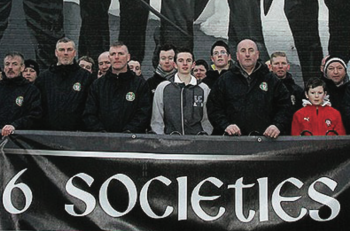
    Republicanism is fragmenting. That was  seen on Easter Sunday, when at least eight Republican groups held commemorations on Belfast’s Falls Road. At protests in the North, it is common for various ‘dissident’ groups to have more presence that mainstream Sinn Féin. That party has a much smaller activist base than a decade ago. Paradoxically, as that base has shrunk, the vote has increased. The exodus of members has not affected the vote. That was seen most starkly in last year’s assembly election for North Antrim. A councillor and 17 other activists resigned in protest when the party forced assembly Member Dáithí McKay to resign. Monica Digney, an able and respected former councillor, and one of those who had resigned, stood as an Independent. Sinn Féin’s vote increased by just under 3%. Digney polled just 435, lagging behind the Green Party. That is a stark version of trends across the north. A few years ago, even Sinn Féin strategists believed the vote had plateaued, and might even fall back. In last year’s Westminster election, Sinn Féin took 29.4% of the vote. That was a 4.8% increase in a year. The terminal decline of the SDlP has been hastened. Sinn Féin took the SDlP’s two perceived strongholds: South Down and, of greater importance, Derry. That is not to deny the importance of the exodus. There is a disillusionment with Sinn Féin. An Easter statement from Óglaigh na hÉireann prisoners sums up the dissidents’ problems: “It’s clear that presently the revolutionary Republican community appear to be facing challenging times and lack strategic direction in response to these events”. The largest single non-Sinn Féin grouping are the 1916 societies. There have spread out of their initial base in East Tyrone across the North, and into the South. They have a sizeable membership, mostly of an older generation, but they also have a small but significant membership from the post-IRA generation. They are an excellent symptom of how widespread the malaise in Republicanism is. They have engaged in some co-ordinated activity, such as calling for an all-Ireland Referendum on unity. However, their main activity is commemorations. This is the only activity on which all non-Sinn Féin Republicans can agree. They certainly cannot on a central debate for Republicans: whether or not there should be an armed campaign. Most are opposed. some, mostly from the anti-armed-campaign cohort, are becoming involved in community issues as individuals or through different organisations. There is no issue about which ‘dissidents’ can coalesce. In 1969-70, the Republican movement split into ‘official’ and ‘Provisional’ wings. (The ‘Provisionals’ became today’s Sinn Féin, while the remnants of the ‘officials’ are the Workers Party). The ‘Provisionals’ derived from the anger of many young Catholics, and a belief that the IRA had spent too much time on left-wing politics rather than preparing to defend catholic areas. This time, there is no single big issue to divide Republicans. There is a generalised unhappiness at Sinn Féin’s acceptance of Stormont and the PSNI. In some cases, unhappiness has spilled over into demoralisation. Some in Sinn Féin dismiss ‘dissidents’ as criminals. That is not to say there are not criminals using dissident groups as a cover; and others who, their war over, have turned to criminality but it is not the central case. The dissident groups are fragmented. The new IRA and the continuity IRA are continuing their campaign, while Óglaigh na hÉireann has called a ceasefire. All armed groups are riddled by infiltration by security-force agents. However, they have found a certain niche in carrying out punishment attacks. These grew by 60% between 2013 and last year. They are popular among a significant layer of the population in Catholic working-class areas. Part of the reason is the traditional hostility between the catholic minority and the police in the Northern state. Part is also that punishment attacks offer ‘quick x’ justice, without the necessity to take the time taken by a formal court system. Police seem willing to let punishment attacks continue, as long as the victims are perceived ‘hoods’. Vigilantism, though, is not a basis for building organisations that will be a serious alternative to Sinn Féin in Catholic areas. Sinn Féin could probably benefit from a bit of coherent opposition from people whose political premises, at least viscerally, it identifies with. Anton McCabe

    Loading

    Read more