social housing

Random entry RSS

  • Posted in:

    Estates of Fear

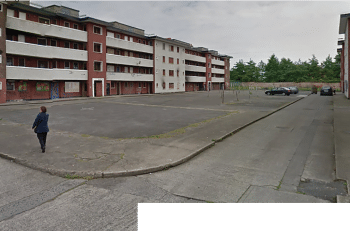
    Inept decision-makers ignore the wishes and interests of local authority tenants. By Mannix Flynn. Ireland’s Attitude to Social Housing Let’s be clear, though the middle classes could not care less, tenants in our local authority estates have rights. A few years ao it was reported that localauthorities had received 10,000 complaints about anti-social behaviour in just two years,  2015 and 2016. It’s an ongoing crisis. But only for those who live in the flats. You could easily miss this timebomb because the general view is that Council estates are the sinks of our society. This is partly because somuch of housing policy obsesses over how to facilitate private development and private reward. The unnecessary bifurcation between ownership classes for housing is deep-rooted and long-standing; and drives the self-image of far too many. It ownership classes for housing is deep-rooted and long-standing; and drives the self-image of far too many. It also affects construction. As long ago as  the report ‘Housing Conditions of the Working Classes in the City of Dublin’ concluded 14,000 new homes needed to be built to rehouse slum dwellers. Crucially this building programme needed to be undertaken by the State because the private sector had not made itself available to “any appreciable degree sufficient to grapple with the present needs of the city”. Inadequate supply of social housing remains an indictment of our society. There are at least 70,000 on social housing lists. But there are other age-old problems. The same report said there needed to be better enforcement of the laws in relation to rented accommodation. That’s a hundred years ago! A 2010 report criticised “housing managementpolicies that make enabling tenant purchase the priority”, to the detriment of quality, amenities and relationships. We don’t get social housing inIreland. Never have. It’s very diff erent elsewhere. In Vienna 62%live in social housing, good-quality social housing. The Legacy Anyway on we go, building sinks, ever since, from the grand scale of Herbert Simms through the 1966 Housing Act and a burst of high-riseincluding the 3,000-unit Ballymun development with disastrously diverted physical and social infrastructure to sprawling 1970s houses in desolate new towns to the limited vision over the last few decades of Part V and 10% allocations of social housing in, or sometimes away from, private housing developments. The quality and conditions are grim for those in the Ghetto. In the Inner City many of the flats are slums. Ordinary people feel abandoned, unsafe, distant from a regime they see as Stalinist. Mostly they feel fear There is a correlation between growing up ghettoised in a slum and dysfunctional behaviour. Ordinary people feel abandoned, unsafe, distantfrom a regime they see as Stalinist. Mostly they feel fear. Fear every day. Dysfunctionality from crime and poor conditions overflows into the inner city generally. Families and elderly people don’t go into the city any more. The multi-agencies that are supposed to be looking after the welfare of the homeless and the addicted fill their own coffers like Christmas. The Council and all the political parties including FFG, People Before Profit and Sinn Féin but also NGOs and community activists have abandoned the flats. Eoin O’Broin writes about a Tiocfaidh ár Lá dee daw utopia of social housing everywhere but people in the ghetto want safety first. Where is Amnesty’s Colm O’Gorman on the breaches of civil liberties for those abandoned in fear in the flats? God knows there must be a judicial review in it for those who bed down amid the mould and vermin. There are certainly enough Acts that are suppose to cover it. Worthy report after report is forgotten by the middle-class worthies paid to churn them out. Nothing ever changes. Social Housing Figures As to social housing, only 9% of Ireland’s housing stock is social housing compared to the European average of 20%. In 2017, there were 24,000Dublin City Council tenants paying more than €78 million in rent. On average, tenants paid €272 per month. You wouldn’t know they pay anything, the way they are abandoned by civil servants and Garda who live miles away, to anti-social behaviour. Anti-Social Behaviour This is defined under the Criminal Justice Act 2016: “A person behaves in an antisocial manner if the person causes or, in the circumstances, islikely to cause, to one or more persons who are not of the same household as the person –Harassment,Significant or persistent alarm, distress, fear orintimidation, orSignificant or persistent impairment of their useor enjoyment of their property”. Anti-social behaviour fails to describe what people are facing day and night in local authority estates, the place they call home – and withoutany help in the event of abuse. When drug lords shoot a lad dead in Gloucester Place or Sheriff St who picks up the pieces? Who deals with theterror residents feel passing the spot every day? It’s not as if anyone provides counselling. The knotweed of this criminality euphemised as anti-social behaviour is tightening its deathly grasp all over the city. A 2019 University of Limerick report found that only a relatively small number of people in social housing (estimated at under 2% between theages of 12 and 40) are involved in criminal and anti-social behaviour, but that their actions were having a continuing corrosive and damagingimpact on a far greater number. Up to 1000 kids, mostly from “chaotic” family backgrounds are groomed into criminal activities Crime in Social Housing Figures A third of Irish people say crime and anti-social behaviour in their community has had an impact on their quality of life. In Dublin the figure rises to four in ten residents who feel their lives have been negatively affected. As of 2018 Dublin’s north inner city had the highest crime rate in the State at over five times the national average. The Dublin North Centraldivision had the highest rate for 11 of the 14 main crime categories, including homicide, sexual offences, assaults, drug crime and public orderoffences, and had the second highest rate in the remaining three. The North

    Loading

    Read more

  • Posted in:

    State land could provide 114,000 dwellings

    Both NAMA (The National Asset Management Agency) and Local Authorities have been criticised for ‘land-hoarding’, ‘sitting’ on sites particularly in Dublin and the Greater Dublin Area (GDA) and not developing land that could be used to address the current housing crisis. Despite the amount of land under their control, Minister Eoghan Murphy has recently asked the Attorney General if powers to effect Compulsory Purchase Orders (CPOs) could be upgraded to encourage those with vacant homes and land to sell quickly. The enhanced powers are part of a new strategy on vacant homes and land due to be announced by Government in June (1). The Minister’s strategy is puzzling given that the State itself has been using less than one percent of its current zoned development land-banks for housing every year. Public land potential: Local Authorities, NAMA and Government A year ago the Department of Housing pub- lished ‘the Rebuilding Ireland Land Availability Survey’ which included details of State-owned land. This report confirmed that Local Authorities own zoned residential land with capacity for 37,950 dwellings (on 1,211 hectares) and that this represented just a portion of State-owned land (2). However, based on individual returns from seven Local Authorities, the figures are much higher. Local Authorities own zoned land with capacity for 48,724 dwellings nationwide (1,317 hectares). Dublin City Council owns zoned residential land with capacity for more than 18,000 dwellings and in County Dublin there is the potential to build 29,278 dwellings. When it comes to the NAMA, the picture is similar. It currently controls the loans on enough development land to build 65,399 dwellings (1,691 hectares); in County Dublin NAMA controls land with the potential for 43,075 dwellings. (3) Nationwide the State controls development land with the capacity for 114,123 dwellings (3,008 hectares) – more than 17% of all zoned residential land by area and more than one quarter of the potential housing capacity in the country. In addition, according to the Irish Times, at least 334 sites or buildings controlled by the Government are lying idle across the State, some of them for more than 30 years. The worst offender is the Health Service Executive with 137 unused buildings or sites. The other 197 sites are shared between nine Government departments, and include Garda stations, courthouses, military barracks and customs posts. Almost half of all County Dublin residential development land is State-controlled and between NAMA and Local Authorities there is the capacity for 71,425 dwellings (1,212 hectares). These figures exclude holdings owned by the Housing Agency and other State and Semi-state bodies. In Dublin City three out of every four vacant residential zoned sites are either owned by Dublin City Council or NAMA debtors. REFERENCES  1. “Government ponders increasing compulsory purchase powers” Irish Times, 14 May 2018; https://www.irishtimes.com/news/ireland/irish-news/government-ponders-increasing-compulsory-purchase-powers-1.3185489 2.“Almost 40,000 social homes could be built by local authorities” Irish Times Nov 2017; https://www.irishtimes.com/news/social-affairs/ almost-40-000-social-homes-could-be-built-by-local-authorities-1.3301442 3. NAMA Residential Delivery Updates (December 2017): https://www.nama.ie/development-funding/nama-residential-delivery-updates/. There is a reduction of 238 hectares from end-2017. There are number of factors for the reduction, including: the land has been built on, The land has been sold, the land has been re-zoned, the debtor has repaid or refinanced their debts and their loans are no longer in NAMA. In 2017, 2,503 were completed by debtors/ receivers funded by NAMA. 7,200 since counting began in 2014. Public Housing: Demand and Supply In the four years since 2014, 7,200 new dwellings have been completed by NAMA debtors and Local Authorities built 818 social homes. In the past twelve months 17,914 new households experienced rental distress and signed-on for Housing Assistance Payment (HAP). Official figures report that Local Authorities built 780 social homes (4) and a further part-State funded 1,078 were built by not-for-profit Approved Housing Bodies (5). However, when ‘turnkey’ units purchased from the private sector from developers are removed, Local Authorities built just 394 homes last year. 11 Local Authorities including South Dublin County Council built no (zero) homes. Approved Housing Bodies (AHBs) built only 270. In contrast in 2017 10.5% of all new homes sold were purchased by AHBs or Local Authorities nationwide as social housing. One year’s supply of purpose-built social housing is meeting less than two weeks of subsidised housing demand. Last year eleven Local Authorities built no social housing, including South Dublin County Council, which has more than 7,500 on housing waiting lists. Dublin County Council built just 232 homes and have more than 40,200 on housing waiting lists. Official targets for 2018 social-housing builds and acquisitions have been increased by just 11% on last year’s levels(6) (expect less than 450 Local Authority builds this year nationwide. By the end of 2018 one in three tenancies will be in receipt of some form of State rent assistance, making up almost 1950m. At current rates of increase by 2019 this annual spend on rent assistance will increase to over 11.1bn per year. In addition to zoned residential development land, the State owns massive landbanks, significant parts of which may be suitable to be re-zoned to residential use in the longer term. Even if a large percentage of the land controlled and owned by the State is not suitable for development, there is still more than enough to build 10,000 social homes per year, a recommendation of the All Party Oireachtas Committee on Housing and Homelessness in 2016 (7). The price of local authority housing (in Dublin City) should be 1175,000 for one-bed units, 1183,000 for two-bed units and 1200,000 for three-bed units. According to Simon Coveney: “The St Michael’s estate regeneration team proposal, ‘Our Community a better way: campaign for fair rental homes’, [launched on 26 April in Buswell’s Hotel] comprised 300 homes, of which 150 of which were social and 150 were cost-rental. The State would fund the capital cost of all units at a cost of 156 million. There would be a mix of one, two and three-bedroom apartments costing on average 1175,000, 1183,000 and 1200,00, respectively. Average monthly rent on a cost-rental basis would be 1900”. REFERENCES 4. Overall social housing provision | Department of

    Loading

    Read more

  • Posted in:

    Wicklow Council reacts to housing crisis

    A fiercely fought decision by Wicklow County Council officials to buy and demolish an Edwardian house in central Bray for 45 car spaces raises questions about the power of local authorities. The house, inhabited until now, was torn down on 12-13 April. Residents suspect that spending at least€1.3m to buy and replace it constitutes an indirect public subsidy to Paddy McKillen’s Oakmount/Navybrook. Oakmount is erecting the Florentine retail centre nearby, for which Wicklow council reduced the number of car spaces required compared to previous plans. Officials snubbed a last-minute appeal by local TD and Minister for Health Simon Harris who supported the residents’ call for independent legal advice before proceeding with, as Harris put it, “the irreversible action of demolishing this heritage house”. Minister Simon Harris TD and Sinn Féin’s John Brady TD, as well as the Green Party, An Taisce, Bray Cualann Historical Society and many local residents (including this writer) have objected to demolition. But a coalition of Fianna Fáil and Fine Gael councillors held firm and rejected calls by fourteen councillors for an independent legal opinion on the process followed. And the Office of the Information Commissioner has now informed residents that it has identified more than thirty records relating to St Paul’s Lodge that the council did not previously disclose to it on foot of a continuing Freedom of Information appeal by residents. Wrecking St Paul’s Lodge during a housing shortage is the latest in a series of controversies involving Wick- low County Council. Last year it was strongly criticised by a High Court judge. The Council was originally poised also to buy and demolish for more spaces at the same location a second house, occupied by Wicklow’s former county manager. Although the Council assured An Bord Pleanála that the planned Florentine centre included enough car spaces, it now claims that new spaces are needed elsewhere “urgently” and at public expense. Critics point out that at least double the number of spaces planned to replace St Paul’s Lodge are empty daily in the car park under the Council’s own civic offices on Bray’s Main Street, and objectors have also identified other alternatives. For some time critics have called on the minister for the environment to initiate an enquiry into how Wicklow Council does business. The management of Bray’s fire services and of related matters following the death of two firemen there, the presence of an illegal dump in West Wicklow that may cost the state tens of millions to clean up, the status of land near Greystones, and the sale of public properties on Bray seafront and elsewhere have given rise to concerns. It is remarkable (and not widely appreciated) that, when endorsed by a majority of councillors, plans to demolish or build on council-owned properties cannot be appealed even to An Bord Pleanála. The absence of any right to appeal may be unconstitutional. John Ryan, the Fine Gael councillor most prominently supporting demolition, recently filed a form declaring his interest in a contract to provide services to Wicklow County Council staff. But he did not inform or withdraw from meetings about St Paul’s at which councillors had to adjudicate between council staff and objectors. Nor did Fianna Fáil’s Pat Vance, who owns commercial properties facing the Florentine site. Eight of 32 Wicklow councillors represent Bray, with just one each from Fianna Fáil and Fine Gael (elected last and second-last respectively). Fianna Fáil’s Bray councillor is Pat Vance, currently deputy chair of Wicklow council. Fine Gael’s is John Ryan. Most independent councillors in Wicklow, especially retired garda Brendan Thornhill, along with Green Party and Sinn Féin councillors have strongly resisted the demolition of St Paul’s Lodge. Protesting councillors convened a special meeting of Wicklow County Council in March to question the way in which the decision to demolish St Paul’s Lodge has been taken. That meeting lasted over two hours but the large Fianna Fáil-Fine Gael bloc largely remained silent before voting against a proposal to take independent legal advice. It was backed by Bray District Chairman, Councillor Christopher Fox. Councillors from these two parties in Wicklow generally support one another, with implications for resources. Three trips abroad during the St Paul’s controversy cost the Council over €6,500 and saw Council chairman Edward Timmins in New York with the county CEO, while deputy chair Pat Vance and a Council official went to Dublin, California (twinned with Bray). With residents against the demolition of St Paul’s refused permission to address the full Council, and their requests to meet officials rebuffed since last June, such trips exacerbate a sense of exclusion. The Council told residents last June that it was examining all options for parking. In fact, as its appeal to the Office of the Information Commissioner has already revealed, the Council had earlier decided to try and purchase both St Paul’s Lodge and an adjacent house. No record has been discovered that reflects any consideration of options beyond Herbert Road. Nor have records been uncovered that record any authorising decision early last year to buy two houses, or that might reveal who inside or outside the Council first suggested this, or what budget was allocated for the transaction. The Council eventually spent well above its initial valuer’s estimate of €765,000 buying St Paul’s Lodge, and even covered the cost of the vendor’s auctioneer, solicitor and furniture removal to Spain. Residents would have campaigned earlier to stop demolition had they been frankly informed when they first enquired. They object especially to the fact that council officials closed the purchase of St Paul’s unconditionally before the necessary statutory ‘Part 8’ consultation was even commenced, and question the point of that consultation, in which 150 parties including An Taisce made submissions. The Council admits that it did not ask its own heritage officer for her opinion. Submissions opposing demolition were also not circulated to councillors but were instead dismissed in a report presented by the Council official who had directed the purchase of St Paul’s Lodge. Most of the undisclosed records now

    Loading

    Read more