If the goal of RTÉ is to be the nation on the airwaves, it always appears instead like a clique. By Suzie Mélange.
by admin
If the goal of RTÉ is to be the nation on the airwaves, it always appears instead like a clique. By Suzie Mélange.
by admin
Radical opinion from the European Court of Justice’s Advocate-General suggests EU Commission is closing down the EU’s non-scientific, short-term, socio-economic approach to total allowable catches of cod, whiting and plaice when those overfished stocks are caught as inevitable by-catch. By Tony Lowes. The EU Commission dealt with this in a way similar to the ‘no more chocolate from Monday’ promise; because, if Monday is not understood as a fixed deadline, one will keep eating chocolate and Monday will never come The abundance of marine life described by fifteenth-century seafarers is almost unimaginable today. As Callum Roberts records in his 2007 ‘The Unnatural History of the Sea’, they “described encounters with enormous shoals of fish that appeared almost limitless. The shoals were so dense that they could be seen from afar, darkening the surface of the water as far as the eye could see. The seas were alive with movement and colour as fish of all shapes and sizes darted through the water in a mesmerising ballet. The richness of the marine ecosystem was unparalleled, with an abundance of cod, herring, sardines, and other species that sustained both seafarers and coastal communities for generations. The seafarers spoke of a world that seemed untouched by human intervention, a paradise of natural abundance that existed in harmony with the oceans”. In her support of the challenge brought to the European Court of Justice by Friends of the Irish Environment to overfishing in Irish waters, Advocate General Tamara Ćapeta cited the Irish spirit of the oceans, Manannán Mac Lír. “Such was the abundance of his crop in the waters surrounding Ireland that when consecutive Royal Commission examined the fishing industry in 1863 and 1885, the leading ichthyologists of the day concluded that the fisheries were ‘inexhaustible’”. “Alas”, she continues, “they were wrong. Fish stocks are not a perpetual self-renewing resource, independent of human influence. As we have learned in this century, fish stocks require careful management in order to secure their survival”. Friends of the Irish Environment, supported by the resources of Client Earth, challenged the quota for total allowable catches [TACs] set in 2020 for cod, whiting and plaice when those overfished stocks are caught as inevitable by-catch Friends of the Irish Environment, supported by the resources of Client Earth, challenged the quota for total allowable catches [TACs] set in 2020 for cod, whiting and plaice when those overfished stocks are caught as inevitable by-catch during fishing operations that target other stocks, undermining the principle of ‘Maximum Sustainable Yield’ [MSY]. To protect these species from being part of the inevitable by-catch the target fisheries would have to be closed to allow them to recover, with financial ruin running “from northern Scotland to the southern Azores”, according to the industry. Certainly, achieving the scientifically recommended TAC at ‘0’ for whiting in the Irish Sea would temporarily close the Dublin Bay prawn fisheries, as they inevitably catch whiting because of the way they must carry out their trawling. As Ćapeta explains: “The concept of the Maximum Sustainable Yield (‘MSY’) is a harvest strategy globally used in fisheries. It assumes that there is a certain level of catch that can be taken from a fish stock without affecting its equilibrium population size. In essence, the idea is to harvest only the surplus of fish that naturally occurs as the stock reaches its equilibrium point and its reproduction rates slow down. Hence, by ‘shaving off’ that surplus, the reproduction rates remain maximised and the fish stock annually repletes itself without affecting its long-term survival”. Forty years ago, the European Union brought in the Common Fisheries Policy to ensure the sustainable management of fisheries resources. Citing the subsequent EU 2009 Green Paper review of the Common Fisheries Policy Basic Regulation, the Advocate General reported that “the Commission then found ‘the [previous] CFP has not worked well enough” and warned that an “ecological and sustainable vision of the CFP is a far cry from the current reality of overfishing and decline in the volume of fish caught by European fishermen”. According to experts, overfishing not only reduces fish biomass but threatens biodiversity, alters the marine food web, and degrades marine habitats. The experts estimate that in the EU at least 38% of fish stocks in the North East Atlantic and Baltic Sea, and 87% in the Mediterranean and the Black Sea, are being fished beyond their maximum sustainable yield. Hence, Article 2(2) of the 2013 CFP Basic Regulation provided that fisheries management “shall aim to ensure that exploitation of living marine biological resources restores and maintains populations of harvested species above levels which can produce the maximum sustainable yield by 2015 where possible and, on a progressive, incremental basis at the latest by 2020 for all stocks”. Critically, Ćapeta rebutted the attempts of the Commission to claim to have amended the binding targets through other measures, such as the Western Waters 2019 Regulation purportedly providing “implicit amendments”. Such amendments, even if valid (which she held were not) are “not transparent for the public”. They are “the very enemy of transparent lawmaking”, undermining the “requirement to allow for participation in the legislative process”, especially when “it concerns amendments of core elements of policy which may be of interest to the public”. As with many environmental restrictions, there is an argument for discretion, ostensibly here to allow the “balancing of the competing ideals of sustainability and fisheries management, on the one hand, with the economic and social objectives of the communities dependent on the sea for their livelihood, on the other”. “To my mind, however”, the Advocate General continued, “as of 2020, Article 2(2) of the CFP Basic Regulation removed from the Council those elements of discretion which relate to the decision as to whether and by when to achieve Maximum Sustainable Yield levels for the stocks covered by the Common Fisheries Policy Basic Regulation. Indeed, I consider that, by setting a fixed deadline, the EU legislature aimed to prevent the Council from putting short-term economic interests before
by admin
Introduction. Chris Moore, formerly a reporter with BBC NI, was among a small group of – genuinely – courageous journalists who put their lives and careers at risk by reporting the hard truth about the Kincora child abuse scandal when it first erupted in the 1980s. He has never stopped. Moore has posted a story on Ed Moloney’s ‘Broken Elbow’ website. It blows the lid on the attempts by MI5, the RUC and management at the BBC, to suppress vitally important facts about the scandal. 1. A ‘honey trap’ baited with children. Put simply MI6, MI5 and the RUC special branch ran Kincora and other homes as ‘honey traps’ to ensnare and blackmail Unionist politicians and paramilitaries who abused children. Kincora is arguably the worst scandal of the entire Troubles. Children were abused for decades at a variety of care homes and Portora Royal College. The abuse was organised by Stormont civil servants and politicians (such as Joss Cardwell MP) as well as by figures at the level of local authority, and by court officials (such as Ken Lamour). Joe Mains, the Warden of Kincora, was close to Loyalist terrorists such as John McKeague. William McGrath, was placed in the home as ‘housefather’ in June of 1971 – most likely by Sir Maurice Oldfield of MI6. McGrath was close to Paisley, the UVF and UDA. He was also an arms smuggler and commander of Tara, yet another paramilitary group. Mains and McGrath trafficked the boys to Loyalist terrorists and politicians. MI5 recorded sex sessions at the Park Avenue hotel in Belfast and elsewhere. The RUC special branch protected these operations. Loyalist killers were recruited via blackmail to murder on behalf of MI5. Politicians were compromised. VIPs such as Lord Mountbatten and other VIPs such as James Molyneaux MP, enjoyed access to a steady supply of vulnerable children. Hence, we have: child abuse, blackmail, the subversion of democracy, perversion of the course of justice, state sponsorship of terrorism, gunrunning, State malfeasance and murder, all rolled up into one compond of evil. After the scandal erupted, more crimes took place: police cover-ups, attacks on the freedom of the press, interference with the charter of the BBC, the intimidation of witnesses, perjury on an industrial scale at various inquiries, the misleading of Parliament, the forgery of documents and murder (McKeague was assassinated by British agents inside the INLA). This is why the Kincora scandal will not go away. This is why files on Kincora are to be locked away for decades yet. Kincora was so evil, the British state will never be able to admit the truth. It is simply too embarrasing. It would destroy Britain’s reputation around the globe if it came clean, even now. The British Royal family and the Conservative Party would sustain considerable reputational damage. Moore’s article, however, shines a considerable amount of light on the sordid Kincora cover-up. 2. An honest cop in the RUC. A particularly shocking passage in Moore’s article describes the role of ‘David’, an officer of the RUC, who discovered what was going on at the home five years before the Irish Independent finally brought the scandal to light. ‘David’ was quite clearly a diligent and honourable cop. If only there had been more like him in the RUC, a lot of children would have escaped the clutches of the Kincora paedophiles. Instead, the RUC was dominated by indisputably evil men who let the child abuse continue, and then covered-up the State’s role in this shameful scandal. 3. The Police Ombudsman of Northern Ireland In September 2022 the Police Ombudsman of Northern Ireland published a report which confirmed that the RUC knew about the abuse at Kincora yet failed to halt it. The excuse put forward for the RUC’s failure to intervene was that they were over stretched. Moore demolishes that myth. David had done all the work. Moore describes how: David’s inquiries led him to Kincora. He began to watch Kincora. He built up a profile of people coming and going at Kincora who had no legitimate business in going into the building. He told me he took photographs of individuals; captured car registrations and identified the owners. Among those he says he positively identified were Justices of the Peace; two police officers; businessmen and two Englishmen who were officials from the Northern Ireland Office based at Stormont. The Kincora scandal is one of the darkest stains on the reputation of the RUC. ‘David’ is the only RUC figure to emerge from it thus far with his honour intact. 4. MI5’s Ministry of Truth. The machinations at the BBC to destroy Moore’s relationship with ‘David’ were nothing less than Orwellian. Moore describes how: David said he had been hauled over the coals because one of my superiors in the BBC had allegedly informed an Asst. Chief Constable that David was my source and had identified him by name. Wow! Really? If David was correct, in my first ever investigative story I had been betrayed by someone within my place of work and who had also betrayed the principle of source protection adopted by journalists. I learned a painful lesson about trust. I thought I knew who had given up my source but never confronted that individual. Just learned an important message about trust! Understandably David severed all communication with me. With his disappearance from my life went all the material he had gathered and which he said he might hand over to me someday as it was obviously extremely relevant to Kincora. So if the aim was to kill off any prospect of a Kincora story emerging, it was now gone. Dead in the water, as they say. Somehow someone had managed to close down this potentially harmful information about Kincora.” 5. Moles at the Beeb. MI5 ran a secret office at the BBC in London from where it exerted a malign influence over the corporation. Moore’s revelations indicate it had a firm grip over key decision makers in BBC NI too. The assistant D-G of the BBC in the 1980s, Alan Protheroe, had links to the intelligence services, as did others. The corporation employed many ex-Ministry of
by admin
Introduction. In the very early 1970s, Brigadier (later General, Sir) Frank Kitson and his colleagues decided to confront the IRA, and only the IRA. Kitson’s superior, Lord Michael Carver, revealed in his memoirs that “a direct armed clash between the army and the [Loyalist Ulster Defence Association], when the former was already facing the IRA, was not a situation that anybody wished to provoke”. What Carver did not reveal was that the UK’s military, police and civilian intelligence services proceeded to exploit the UDA, and other Loyalist groups, as proxy assassins. This has become known as ‘collusion’, i.e., the British state used Loyalists to murder on their behalf. Paper Trail, a non-sectarian charity which helps the victims and families of people killed and injured during the Troubles, has unearthed records which shine a light on the co-operation which flourished between the British Army and the UDA in the 1970s. They prove that the State was in receipt of intelligence about the criminal activities of the UDA. Clearly, the State had informers inside the UDA’s death squads. The RUC and British Intelligence did not act on the intelligence to stop the torture and murder. The tortures took place in the UDA’s horrific ‘Romper Rooms’. What now follows is largely an extract from my 2021 book, ‘Kitson’s Irish War’. It relates primarily to Albert ‘Ginger’ Baker, an alleged British Army deserter who infiltrated the UDA. He became a member of the UDA’s most notorious assassination squad of the time. Baker’s true loyalty was to the British army. He was – or became – a deep cover penetration agent after he “deserted” from the British army and returned home to Belfast. His codename was ‘Broccoli’. Baker features heavily in the Paper Trail revelations. It is now becoming increasingly clear that British officials and RUC officers were guiding the UDA murder gangs through agents such as Baker. The Paper Trail revelations can be found here: https://www.papertrail.pro/british-soldiers-british-agents-uda-romper-rooms/ 1. Baker’s handlers walked free. Baker is still alive. He was convicted of some of his crimes in 1973. He went to prison. His intelligence handlers walked free. He has spoken – and written – extensively about his crimes. He was once prepared to co-operate with the Gardai in the resolution of crimes in the Republic. The late Laurence Wren, Garda Commissioner, 1983-87, and others, failed to exploit Baker’s offer The RUC and PSNI have covered up the full truth about the Baker case for more than half a century. Frank Kitson was the instigator and architect of State-Loyalist collusion. Baker was among the first wave of State-Loyalist killers. Kitson is being sued by one of Baker’s murder victims, Patrick Heenan. Risi Sunak’s legacy legislation – if passed – will let Kitson and the British Establishment off the hook and copper fasten the collusion cover-up. 2. Baker and the Dublin bombing of 1972. In 1976 members of Baker’s family implicated him in the bombing of Dublin in December 1972. It caused the death of two CIE employees. Baker transported explosives during a preliminary stage of the attack. He took them to Derry. Baker was a known associate of a senior UDA figure in Derry. His name also appears in the Paper Trail files. The senior UDA figure bears a passing resemblance to one of the Dublin bombers. The gardai prepared a photofit of the bomber. Larry Wren, the head of C3, Garda Intelligence, 1971-79, failed to circulate or publish the photofit. The suspect is still alive. Sunak’s legislation will also undermine any possible future inquiry into that attack. In a functioning democracy, Paper Trail’s discoveries would instigate an inquiry into State collusion with paramilitaries. Paper Trail appears to have found further files which they have yet to release which will cast further light on Baker and his associates. 3. Garda Commissioner Drew Harris. Garda Commissioner Drew Harris may have seen the British Intelligence files on the 1972 double murder in Dublin in his former capacity as the RUC/PSNI liaison officer with MI5. When Harris was appointed as Garda Commissioner, Fine Gael assured the public his former role as a senior RUC-PSNI officer would not generate a conflict of interest. As things stand, the Gardai have no interest in Baker or the resolution of the 1972 attack. This is not the only severe conflict of interest of interest involved in the appointment of Commissioner Harris. A former British military intelligence operative known by the pseudonym, Sam Rosenfeld, has divulged that a senior Irish government figure has served as an agent of British intelligence. Rosenfeld was attached to the clandestine Joint Support Group (JSG) and had some direct dealings with the Irish agent. The JSG carried out its duties on behalf of MI5. Rosenfeld was once brought inside Leinster House by a senior official who worked for London. Last December Rosenfeld told the Irish News: I will tell you what they (British intelligence) are super, super, super, sensitive about, they have somebody still working, and I am assuming there’s many still working in the Irish Republic, but one of them holds a very senior position in the Irish government. Rosenfeld added that he recently that he had looked and they are now even in a (more) senior position than they were previously and they still work for the British government, i.e., the army. Suspicion as to the identity of the Leinster House agent is gathering around one particular individual, a person active in the political sphere. For further details see: https://coverthistory.ie/2022/12/22/his-and-her-majestys-spies-in-the-dublin-government/ 4. Tuzo and his UDA allies A key date in the Baker case is 9 July 1972, when Maj-Gen. Harry Tuzo submitted a paper suggesting that the British government should “acquiesce in unarmed UDA patrolling and barricading of Protestant areas. Indeed, it was arguable that Protestant areas could be almost entirely secured by a combination of UDA, Orange Volunteers and RUC.” He also suggested that they be allowed retain weapons in the districts they controlled. Tuzo’s views were aligned to those outlined in Volume III of the MoD’s
by admin
The interdepartmental Rubik’s cube of work permissions for migrants yields a passive income for the official account owners from the labour of vulnerable non-European workers who have to risk life-and-limb while working without insurance, leading the basic payment per delivery for a Deliveroo worker in Ireland to drop from €4.39 to €2.90
by admin
The Environment and Emergencies Forum 2023 addressed how to balance environmentalism and humanitarianism, focusing on crises in Haiti, Bangladesh, Lebanon, Sudan and Ukraine
Posted in:
by admin
Ireland’s two years on the Security Council added little special and our diplomats should perhaps be more modest
Posted in:
by admin
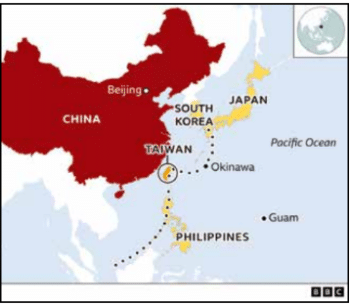
General Order No 1 issued by the US Chiefs of Staff and approved by President Truman, following Japan’s surrender at the end of World War II, mandated theoccupation of Japan and Japanese-controlled areas, including Taiwan, by forces of the Allied Powers
Posted in:
by admin
The second phase of the extinction appears to have been driven by global heating
Posted in:
by admin
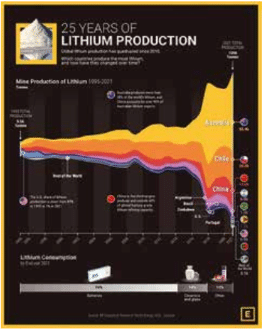
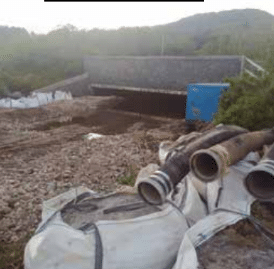
Moylisha on the Carlow-Wicklow border is united in hostility to the prospect of Lithium mining
by admin
Dealing with planning matters in a specialised planning list is better – and cheaper
by admin
EU Commission tells ECJthat social and economic, as well as scientific,factors, must be weighed by Minister for Marine in deciding if the taking of a fish species, that is safeguarded by a quota of zero but which is inevitably caught when targeting another fish species, renders the whole catch illegal
by admin
Only a handful of the rainforest projects managed by the world’s leading provider of carbon offsetting showed evidence of deforestation reductions
Posted in:
by admin
EPA research shows we are on track to cut emissions by only 12.8 per cent by 2030 instead of the government’s target of 35 per cent
Posted in:
by admin
Artists aren’t as replaceable as they think — or as people in other fields are
Posted in:
by admin
Ireland’s media are in difficulty due to finance, ownership and … Denis O’Brien
Posted in:
by admin
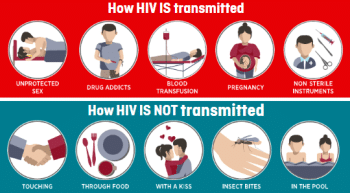
Society needs to recognise the science of HIV and AIDS, and staunch old and new vehicles for homophobia
by admin
It needs to aspire to sustained artistic excellence and to take risks in promoting pieces that offer a vision of radical political progress in Ireland
by admin
The role of the judge, legal procedure, laws of evidence, the role of equity, the separation of powers and the organisation of legal professionals are similar in Ireland and the UK