admin
- Posts: 3005
- Comments: 0
- Since:
- Website: http://www.villagemagazine.ie
-
-
-
by admin
The Man in Room Fourteen In one crucial respect, is like everyone else. He’s a working diagnosis about whom we know both far too much and nothing like enough The man in room fourteen spends twenty four hours either going to the toilet or not going at all; is never a happy medium for happy mediums don’t inhabit rooms like room fourteen His wife brings him a small brown Teddy bear made (naturally) in China, which he immediately names for the Minister For Finance. The man in room fourteen likely has somewhere between two years and a matter of months. While other possibilities stalk elite laboratories; and the walled gardens of certain medical imaginations; the man in room fourteen must now negotiate alone and from a position of weakness the narrow track through the dark that’s his only way back away from the jaws he can hear salivating below him.
-
-
by admin
Mr Cogito Considers The Side Effects after Dr. Janusz Crawczyk Baldness and shortness of breath a sudden urge to vomit on coats your own and other people’s. Drymouth, brittle nails, a tendency to be not very good at driving fork-lift trucks and to become even worse at pole vaulting than you already were. Explosive watery, diarrhoea and fecal impaction sometimes both simultaneously for the human body likes nothing better than a good argument with itself. Infertility, anaemia, thrombocytopenia, & Life, Life, Life, Life itself are all possible side effects of drugs such as these. KEVIN HIGGINS
-
-
-
-
by admin
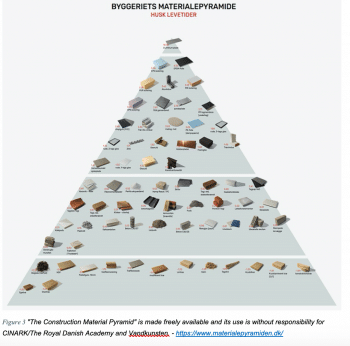
Construction educators ‘Common Knowledge’ promote empowerment to improve the environment, quality of life and the community. Their Co-Founder and lead instructor is on the television every Wednesday If inadequate housing remains Ireland’s biggest problem, new policy needs to be developed and implemented without delay. Build School “Within Common Knowledge, lies the potential to empower Irish people to create their own destinies, to build or improve their own homes and shelter”. — Manchán Magan Running since 2018 out of West Clare, Common Knowledge is a social enterprise founded by a small, talented and cosmopolitan group whose mission is to empower people with the skills, resources and sense of community for a more sustainable life. Social impact rather than profit is the aim: to support members in creatively managing just transition, removing stigma about actually building, and make living more affordable. The team at Common Knowledge They supplement intensive training with research and development, and community projects including plans for a building-tool library and sheep-fleece mobile scouring-unit. Their mission goes beyond mere concept or metaphor. High-spec Tiny Homes created by course participants got significant media coverage. Common Knowledge’s popular week-long house-building courses combine instruction, demonstration, and practice, shorn of common constraints and prejudices. They provide a comprehensive introduction to construction, covering basic principles so that skills learned on-site are relevant and transferable. “The course is designed for you to leave feeling equipped with the skills and confidence you will need to apply to any structure. So whether you’re planning a new build, dreaming of renovating a stone cottage, want to build your DIY skills and knowledge, or simply fancy the idea of collaborating and working alongside others for a week outdoors, this is the ideal introductory course for you”. Common Knowledge is a successful example of a type of organisation appearing around the country delivering potentially huge help for people to solve not just the housing but also the wider climate crisis. The State of Irish Housing According to the OECD, Irish houses now cost slightly more than the world average. The Department of Housing, Local Government and Heritage, which has lead responsibility, published the Housing For All policy in September 2021. This multi-annual, multi-billion euro plan promises to improve Ireland’s housing system and deliver more homes between now and 2030, to suit housing needs across the spectrum. The chief objective is universal access to good quality homes – to purchase or rent at an affordable price built to a high standard and in the right place offering a high quality of life All fine general principles with which few would disagree. For steady supply in right locations, and economic, social and environmental sustainability, an estimated 33,000 new homes are needed annually, to boost home ownership; eradicate homelessness; reduce resource-wasteful dereliction and vacancy; increase social housing delivery, new housing supply, and affordability; and support social inclusion. Multi-stakeholder input is reflected in 213 delivery actions. A newly-established Housing Commission is to examine themes such as tenure, standards, markets functioning, sustainability and quality-of-life issues, and to suggest wording for a housing referendum. When these exercises may become significant for ordinary house-seekers is unclear. Also emphasised is the non-commercial statutory Housing Agency, established by 2012 regulation to support government and local authorities perform functions under the Housing Acts, through services including: Housing Research and Analysis Housing Supply Supports and Advice Local Authority Services Approved Housing Body Services Mortgage Supports Acquisitions Programme Housing Projects and Procurement Services Pyrite Remediation The dearth of information on their website for everyday homeowners suggests a predisposition to a burgeoning professional and often multi-national corporate class involved in housing provision and management, not unlike the direction evidently being taken by the Residential Tenancies Board (RTB), a public body set up to support and develop a well-functioning rental housing sector. That existing tenants have no option rights on houses they live in if sold is a simple illustration of priorities. Though there has been a precipitous decline in their direct construction of housing in the last 40 years, local authoritiesare still heavily involved, through: building and purchasing houses supporting Approved Housing Bodies to buy and/or build providing accommodation using the private rented sector e.g. Housing Assistance Payment scheme, Rental Accommodation Scheme , Social Housing Leasing Expenditure Programme provision of grants e.g. housing adaptation grants other schemes which expand or improve current living conditions With many rental houses of low BER rating and accommodating resident who are unemployed or on low incomes, the Irish National Organisation for the Unemployed (INOU) and related bodies insist they need consistently distinct attention. The reality that families are being forced to split up to keep their housing eligibility not only violates social rights but confirms the need for new housing formats. State agency Solas is charged with fast-tracking construction training qualifications. A Feasta proposal argues for promoting regenerative hands-on technology in mainstream education. Starting up more organisations like Common Knowledge would foster such practical creativity while helping achieve energy-efficiency goals. Very useful is Citizen’s Information’s list of housing grants and schemes, details of which are often scattered across official and independent sources e.g. micro solar pv panels. Revenue also offers various, sometimes overlapping, reliefs relating to land and property. Planning questions and applications are dealt with by government departments, local authorities and An Bord Pleanála. Properties meeting conservation and heritage criteria may qualify for grants from bodies like the Heritage Council, local authorities, the Irish Georgian Society and others. Homelessness services are increasingly linked to the HSE and also, like health services themselves, being increasingly privatised. On building renovation, the Climate Action Plan 2021 focuses almost exclusively on retrofitting, even releasing a dedicated National Retrofit Plan emphasising four pillars: driving demand and activity; financing and funding; supply chain, skills and standards; and governance. The Sustainable Energy Authority of Ireland (SEAI) administers grants and schemes. The budget levy on concrete, a major producer of greenhouse gases, was for accounting rather than environmental reasons. But climate impact assessment should have top priority by now. Regarding the Plan’s Enterprise commitment
-
-
by admin
Sky News says that the resignation speech of Ms Truss lasted ninety seconds. For some it must have seemed like a lifetime, for others it just flew by. By any standard, it was grim. None of her colleagues appeared with her, not even Larry the No 10 mouser showed up. Her attempt at an Apologia was no more than a few sentences and was simply excruciating. Despite the enormous media presence, there was silence when she finished. Not a single question was directed to her back as she re-entered No.10. Her tenure as Prime Minister, the shortest in the history of the Office, can still be divided into three parts. Protocol, custom and practice meant that she officially became Prime Minister when meeting the Queen on September 6. Forty-eight hours later the Queen was dead. Truss had promised in the course of the Tory leadership campaign that she was going to hit the ground running, but very few expected her to so quickly take out a woman who had managed quite well for 96 years. One. This chapter of her 44-day stint was almost entirely taken up by an orgy of institutional and ornamental grief for the latest of the Saxe-Coburg-Gotha monarchs to pop their clogs. In the dim past there were John O’ Groats to Land’s End ‘races’, over the 867 miles between the two points. The eleven-day funeral odyssey to Windsor was the closest modern equivalent. It ground on and on, whereas Government ground to a halt. But it was not uneventful, in the early days of the reign of Elizabeth of Downing Street, her newly-installed Chancellor exhibited peculiar behaviour. Sitting in a pew at the Memorial Service in Westminster Abbey, laughing while making or taking a call on his mobile phone. As a participant on University Challenge in 1995, he became notable for audibly saying ‘fuck’ twice, during the programme. He had now been in office just 12 days, but had been extremely close to Truss for many years. Two. With the monarch disposed of came the next phase. Four days later the dingbat Kwarteng, stood up in the House of Commons and delivered his mini-budget, which immediately crashed Sterling to a historical low against the Dollar and, had it not been for intervention by the Bank of England ,would have collapsed some of the UK’s biggest pension funds. In the cacophony of panic and derision that followed, Truss stood by her man for a whole 25 days of incremental hysteria and insanity, until October 14 when she summoned him from an IMF conference in New York and sacked him as soon as he entered British airspace. One undenied version being that he learned of his fate on Twitter. Three. While her statement on the beheading of the Chancellor, ascribed no blame to him or herself for the financial meltdown he and she had caused, a head was needed and it was not going to be hers. She installed Tory nice-guy Jeremy Hunt former Minister and twice failed candidate for the top job, as Chancellor. She was now holding on by her fingertips, not yet her nails. Hunt’s political soundtrack is essentially lounge-lizard music and his designated role was essentially to glide fragrantly through the Treasury and make soothing noises in the Commons and in backbench caucuses. By the time Truss stood up at Prime Ministers Questions on Wednesday 19 October, hers and Kwarteng’s mini-budget which had been concocted without reference to any other member of Cabinet, was demolished with but one exception. Hunt had not touched the measure lifting the cap on Banker’s bonuses. In response to baiting by Starmer, who is by no means ever more than a three-star performer at the Dispatch Box, she lost it completely. Asked whether the “triple-lock” on Pensions would be maintained, she virtually yelled “Yes”. The look on Hunt’s face told it all. Installed as her minder, he had only a day previously declined to give such a guarantee, as had Downing Street. By the time she sat down, she was irretrievably washed up on the rocks. The Tory party may have been finished with her but she wasn’t finished with it. The decision to oppose the motion on fracking that same evening and the manner in which it was handled, led to riotous behaviour within the inner sanctum of the Members’ Lobby, almost as brutal as Bosworth Field. In seeking to retain the Crown, members of the Cabinet had clearly lost their marbles. Hours later, actually in the middle of the night, Downing Street issued a Statement which ludicrously attempted to ‘clarify’ whether the fracking vote which led to a genuine punch-up, was or was not a ‘confidence vote’. The flapping of the Men in White Coats now reached a crescendo. The constant flow of gibberish could no longer be tolerated. Into Downing Street in mid-morning on Thursday went the Chair and Vice-Chair of the Tory 1922 Committee, the Chair of the Tory Party, the Men in Dark Suits. and every jobsworth was required to iron out a pathway to replace her, in no more than seven days or even as early as Monday. Once they went in, they were not coming out until she agreed to stand down. She did not jump, she was pushed. At 2.30 in the afternoon, she came, she smiled a little whiningly and she scuttled away. Graham Brady, Chairman of the 1922 Committee already had the mechanism ready for replacing her by the time he spoke to the media a couple of hours later. The 100-plus number for nomination, squeezes Johnson probably too hard to allow him run. He could conceivably reach that threshold but he is too lazy to do anything other than let the ‘ERG/Bruges Group’ do the heavy lifting for him. He will enjoy basking in the the plaudits of this gruesome mob, but he is in that peculiar Trumpian position: the risk of getting on the ballot and then losing is more than his ego could
-
Posted in:
‘Lost Lear’ at the Project Arts Theatre reviewed by Rory O’Sullivan – thorough professionalism.
by admin
This play is brilliantly produced and performed. It is hardly uncommon these days to have a work of art whose central theme is dementia, but it is rare to see one this good. What distinguishes Lost Lear is the quality of its writing and production: the play is a carefully constructed piece of theatre with thoughtful detail and sharp drama. As the title suggests, the play depicts the rehearsals of an adaptation of Shakespeare’s ‘King Lear’ with Joy (Venetia Bowe), playing most of the parts, and Liam (Manus Halligan), playing most of the other parts. Silently in the background are the stagehands (Clodagh O’Farrell and Em Ormonde), and Conor (Peter Daly). Gradually we learn that Joy is a retired stage actor with dementia: ‘King Lear’ is just where her memories have taken her, and the other cast-members are all nursing-home staff whose care philosophy involves facilitating the constructed reality of her memories rather than trying to force her back into the day-to-day one of theirs. The exception is Conor, her son and the carrier of the play’s drama. Conor struggles to adapt to this strange way of being with his mother; he was never onstage in his life and when he is finally called to deliver lines keeps messing them up. Joy does not remember who Conor is, which breaks his heart twice over because of his past: he did not know his mother until he became a teenager. When he got in touch with her, she raised all his hopes and then rejected him, ignored him completely. Conor was never a part of Joy’s world and has carried the hurt and resentment of this through his adult life. For him, adapting to Joy’s disease simply repeats the pattern of their whole relationship in which it is Conor who must find a space, sometimes despite Joy’s best efforts, in her busy and irresponsible existence. I have just given away one of the show’s big twists – it is coy about the real circumstances of its ‘Lear’ rehearsals for a long time – but I have not given away everything because it continues to develop Joy and Conor’s relationship with great skill. Their perspectives are developed fully and without judgement, and then by circumstance forced to occupy the stage together. The drama comes naturally. The performance does not choose a side and audiences can read into it whatever they like. Maybe it is not a coincidence that a show loosely based on one of Shakespeare’s tragedies exhibits to such a degree one of his most important dramatic skills: the ability to ask questions without answering them. And it also points towards how, despite its marketing, this is not really a play ‘about’ dementia as such, but one in which dementia figures with its effect on one person’s life and relationships with other people. It is no more about dementia than ‘Raglan Road’ is about a street in Dublin. The acting is another highlight. In a high-quality cast, far and away the best performer is Manus Halligan as Liam: he moves seamlessly between roles. The acting is another highlight. In a high-quality cast, far and away the best performer is Manus Halligan as Liam: he moves seamlessly between roles corresponding to the different lived realities onstage, but every time he is completely believable. He is worth looking out for in something else. Venetia Bowe is a very convincing Joy, but sometimes the emotional changes of gear are a little jerky. Peter Daly’s Conor comes into his own as the show progresses, but at the start Conor’s nervousness is perhaps a little overplayed. Overall, the quality of each surpasses what you would normally see on one of the big stages in Dublin. This is one of those shows where elements of the stage and set design played a huge part in telling the story. Sometimes actors speak into a phone-camera on a stand stage-right which projects their faces Wizard-of-Oz-style onto a translucent curtain in front of the stage, behind which some other action is visible to the audience. Sometimes the actors say their lines in front of the curtain: this becomes important where the relatively young Venetia Bowe, who is obviously playing an old woman in Joy, speaks while behind the curtain Joy herself is represented by a puppet. Most such moments are effective as storytelling methods. The weakest one is the last, in which, sitting alone onstage, the puppet Joy’s brain lights up and the back of the stage shows a kind of intergalactic starry visual sequence with space-music as the lights go down and the curtain falls. The moment’s final emphasis on Joy’s dementia is understandable, if a little off-piste. The biggest problem is the scene’s diminution of Joy combined with its mystical mood of wonder: its ‘We are all made of stardust’ attitude. This is cheap even when Brian Cox does it on the BBC, because it is a completely manufactured sense of wonderment. What is wonderful, apparently, is the paradox that we human beings are simply a collection of chemical and physical processes whose workings are complex but essentially banal. The banality of the stars (as well as their disappearance from the modern night sky) is a central consequence of Western scientific metaphysics and engineering. But that means for artists they are not allowed to be so easily wonderful anymore, since they are nothing but instances of the mute universe that we ennoble by speaking on its behalf. The only wonderful and remarkable things are those on t Earth: we who ennoble the stars with our awareness and awe, as well as every plant and animal that does the same. Mystically the stars have nothing to give us, it is we who have everything them. There is no sense in which a person (in this case, Joy) is reducible to a pile of neural networks any more than they are reducible to their heartbeats or even something social like their nationality or which school they went to. Like
-
by admin
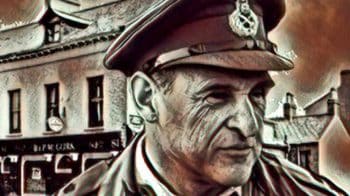
New evidence has emerged about the UVF’s bombing of McGurk’s Bar in Belfast in December 1971. The explosion caused the entire structure of the premises to collapse, killing fifteen Catholic civilians – including two children – and wounding seventeen more. It was the deadliest attack in Belfast during the Troubles. Brigadier (later General Sir) Frank Kitson commanded the British Army in Belfast 1970-72. He was a counter-insurgency guru who created havoc on the island before he was drummed out of it by William Whitelaw, the first British secretary of state for Northern Ireland. One of the conscious choices Kitson made while still in Ireland was to take on the IRA but not Loyalist terrorist gangs such as the UVF. This coincided neatly with the policy of the British government of Edward Heath which decided to intern members of the IRA but not Loyalist paramilitaries. On these grounds alone, the British state became indirectly responsible – through inaction – for the crimes of the UVF, including the McGurk tragedy. Worse still, there are indications that Kitson may have exploited elements of the UVF as a proxy assassination apparatus for the British state in Belfast. 1. Redaction of Evidence The sliver of new information about the massacre was recorded in a log by the 2nd Battalion Royal Regiment of Fusiliers (2RRF) approximately forty-two minutes after the bombing. It relates to the proprietor of the bar, Patrick McGurk, and the nearby Gem Bar. Britain’s Information Commissioner’s Office has upheld a decision by Britain’s National Archives to withhold a section of the log from the families of the victims of the massacre. The Archive acted in consultation with the British Ministry of Defence (MoD). The 2RRF log reveals: Owner of pub a moderate RC [Roman Catholic] unlikely to have allowed people to use it as a mtg [meeting] place. Bar close to Gem Bar which is a [REDACTED]. 2. The Gem Bar The information relating to the Gem Bar remains withheld even though the venue no longer exists. When they were making their case for a full declassification of the log, the families of the victims of the attack presented archival evidence to the Information Commissioner’s Office that the Gem Bar was: The original target of the bombers; Known as an Official IRA bar; Recorded in British Army files as the local HQ of the Official IRA; Under British Army surveillance; And that the premises had been targeted by 2 RRF two nights before the bombing during which 2 RRF arrested and questioned six customers from the Gem Bar raid. Put simply, the perceived connections between the Gem and the Official IRA was a known fact and therefore any information pointing in that direction was not going to endanger anyone, especially as the pub has long since closed. Moreover, former known members of both wings of the IRA walk about Belfast without any concern for their safety. Some of them have published books about their paramilitary careers, others have been interviewed on the record by the press, radio and TV Despite this reality, the log remains redacted. 3. Reaction of the families Ciarán MacAirt is a grandson of two of the victims of the McGurk’s Bar Massacre and has been fighting for sight of the information – all of it – for five years. He said: After 50 long years fighting the British state’s lies, our families are outraged but unsurprised that it is withholding evidence relating to the mass murder of our loved ones in McGurk’s Bar. The British state has lied to us from the moment the bomb exploded up to this very day. Police Service Northern Ireland and the Office of the Police Ombudsman either failed to find this evidence or found it and buried it again as it has been left to the families to expose the truth about the McGurk’s Bar Massacre and its cover-up by the British state. Nevertheless, even when we discover new evidence, the British authorities withhold it from us and deny us access to the truth. In the meantime, many of our older family members are infirm or have gone to their graves without any justice. A video about the attack can be accessed here: https://www.youtube.com/watch?v=uQRLFnBxoWQ 4. The shape of an extremely disturbing state of affairs. The redaction is deeply disturbing. There is no good explanation for it. Why do the MoD censors want the redacted words withheld from public scrutiny, even after more than fifty years? The shape of an extremely disturbing state of affairs involving dirty tricks, collusive murder and black propaganda is swimming into focus. The following scenario is one that offers an explanation for what happened in 1971, and why the British State still feels it necessary to redact the document. 5. Kitson and the IRD Brigadier Frank Kitson was involved in a black propaganda operation that swung into action shortly after the bombing. He was almost certainly aided and abetted by Hugh Mooney who worked for the Information Research Department (IRD) of the Foreign Office. Mooney had been sent to Belfast to destabilise the IRA through the deployment of psychological operations (PsyOps). Kitson, who commanded the British Army in Belfast and its environs, was a meticulous planner who became deeply engaged in propaganda operations during his two years in Belfast. He was also the British army’s foremost counterinsurgency expert having honed and developed his skills in Kenya, Malaya, Oman and Cyprus. His infamous treatise about counterinsurgency, ‘Low Intensity Operations’ was published in 1971. One of the hallmarks of Kitson and Hugh Mooney was the meticulous manner in which they planned their operations in Ireland, invariably well in advance of their deployment. The black propaganda operation that swung into action after the bombing of McGurk’s Bar was up and running a little over four hours after the attack. The operation was a sophisticated affair, one that involved the coordination of senior British Army officers (including Kitson and his superior Lt. General Sir Harold Tuzo, General Officer Commanding Northern Ireland), the
-
by admin
Perhaps Edna O’Brien is the greatest Irish author alive. ‘‘Country Girls’, Ireland’s ‘Bell Jar’, remains as gripping and elusive now as it must have been when it was first published. Bookshelves all over the country are crammed with inferior imitations by younger authors. O’Brien always exercises tyrannical verbal control of her writing. In ‘‘Country Girls’, that control is exerted to a stifling degree to portray a mind so straitjacketed it can barely express its own thoughts. On the other hand, ‘Joyce’s Women’ is a failure. Ironically it fails because of that same quality which made O’Brien’s writing so good throughout her life: here the straitjacket of control on the writing is unbearable in a bad way. The play’s characters are a variety of women from James Joyce’s life (of whom three appear the most: Joyce’s wife Nora, his daughter Lucia, and Nora’s housekeeper Brigitte), as well as Joyce himself and a few others. What turns O’Brien’s way of writing from good to bad here is the stage. Onstage everything feels stilted because there is no drama, nothing dynamic between the characters: they walk on and off, on and off, in-between they do not so much converse as deliver monologues about themselves, their pasts, their feelings. Even in these it is like they are indifferent to everything, the way ghosts are indifferent, because between them and every care there is the unscalable barrier of death. There are people who have managed to make this kind of play work on the page – I can think of TS Eliot’s ‘Murder in the Cathedral’ – but if there is a good reason plays like this are not staged commonly, this show exhibits it. Above all this show’s cast exhibit it, because clearly, they read the script and did not know what they were supposed to do Above all this show’s cast exhibit it, because clearly, they read the script and did not know what they were supposed to do. They had been hired to deliver dramatic dialogue for a show that did not really have characters. Obviously, the direction they received was either not clear enough or simply not good enough to bridge the space between the actors and the author. And so, like most actors when they do not know what to do, they chose to act against the script’s grain by performing their characters as the most stereotypical images of people possible. They read the script and decided to go to war with it. Something similar happens most of the time when actors are called on to play Shakespeare. The dialogue resembles nothing like modern speech, but the actors’ whole skill is at playing modern personalities. As a result, they play the script the only way they can: by amplifying, to a deafening and inhuman degree, the faintest sound of that personality in whichever character they are playing. The distortion is necessary to twist the lines into what the actors want them to be, but the effect on the drama is fatal. Goneril and Regan are spiteful and obvious grifters; Hamlet is a nice young man plagued by an unfortunate disease; Prospero is doddering and sentimental. The way out of this problem for a production team is to breathe deeply and work with the script they have rather than the one they wish they had. If the production team of ‘Joyce’s Women’ had done this, I do not know what would have happened. It is possible, perhaps likely, that the play as written is simply unworkable on the stage. But even if it had failed, the result would have been a more interesting failure than this one, which is so ordinary you will have forgotten it by the second drink in the pub afterwards. But, in defence of the cast, let me make two further observations about the writing. The best part of the entire show is the brief cinematic interlude that plays out on a large screen descended over the stage, depicting Lucia’s time in an asylum. It is the best part, not least because of the welcome dynamism afforded by the big picture and loud volume of the recording; those who fell asleep during the earlier scenes are likely to have been woken. But more than that, it is because Lucia’s story gives O’Brien a chance to use some of her obvious abilities to good effect. Two brilliant moments – when Lucia covers her face with the lunchtime gruel, and when she and the other inmate huddle together beneath a bedsheet – achieve the power of symbols. They are both like a prism through which the play absorbs and lets out multiple perspectives at the same time. What constrains the show’s ability to do this throughout the entire rest of the performance is the half-hearted simplicity of its central opposition between Joyce, the capital-A Artist who flits around among the cicadas of his mind, and the women – his women – whose lives are all damaged by this tendency. The opposition is half-hearted because none of the women seem overly to mind Joyce, and in no serious way does the play condemn him. The idea that things would be better off if Joyce had not written his books is never really contemplated. It is simplistic because it presents Joyce as an escapist, a dreamer, an artist of the kind talked about in the newspapers, and despite every quote in the script from his writings (as well as other works of Irish Literature), the play demonstrates no interest in what the books of Joyce are about. It strikes me that the author of ‘Ulysses’ had something different in mind than escaping to catatonic beauty when he wrote about the inmost dull thoughts of two men and a woman over the course of a single day in which basically nothing happens to any of them. If the more accurate image of Joyce and his art had been let into the play, it would have made him more comprehensible
-
Posted in:
Corbin the light
by admin
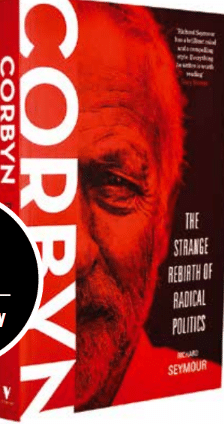
Jeremy Corbyn’s new politics and his Labour Party are torn between radicalism and power and he needs to address popular values, party organisation, electoral prospects and policy
-
Posted in:
Rory O’Sullivan reviews The Birdwatcher’s Trip to Alpha Centauri. A Fascinating Mood Journey
by admin
Rory O’Sullivan reviews The Birdwatcher’s Trip to Alpha Centauri This show is highly ambitious and, in many ways, daft: it takes a lot of risks, most of which pay off. Sometimes it is so absorbing it could make you forget to breathe; sometimes it is warm and relaxed, sometimes bizarre. Its biggest problem is that in the end it does not quite finish what it begins, but overall, it is fascinating and at times even profound. It features two men dressed in yellow fisherman’s raincoats and hats and red wellington boots playing music with sometimes one of them speaking poetry. A film plays behind them on a projector-screen of ships and the ocean, bridges, birds, clouds, colourful and abstract ambient-style shapes, and stars. There is no plot, but the piece begins with most of the last human beings on a spaceship leaving the earth. Its ambition is great in two senses. The first is theatrical: it is a film, a poem, a musical sequence and a staged performance all at the same time. The second is thematic: it tries to turn the cycle of natural life, from beginning to end, into a symbol for something else. The poetry is high-style and full of repetition like it is imitating the Rig Veda: “This”, such poetry always says of whatever it speaks about, “‘is a symbol of the entire universe”. It is hard to do that sort of thing while keeping an audience’s attention or respect. The reason it works here is that the sensibility behind the show is not an ideological but a sharp musical one. Nothing is about thought, and everything is about mood and image: what the poetry said mattered less than the feeling it evokes, and the music and film works together the same way. The film and costumes presses the analogy metaphorical connection between a spaceship and a ship on the ocean, which works: it made the ocean seem as it does in Homer, who calls it the ‘empty sea.’ The sea became a lifeless abstraction of materials bobbing alone in the void, just as we imagine space now. What distinguishes a musical sensibility is how it can move from one feeling to another: that journey is music. Here it is accomplishes by two means. The first is silence: the deep, slow, resonant sound of a huge ship, gradually falling into a complete soundlessness that made everyone sit back in their chairs. The technique did not wear out with repetition. The second means is surprise: the new sound which emerges from the silence is different enough – but also similar enough – compared with the old sound that it is emotionally interesting. The poetry is less successful because it quickly runs out of new images, and the repetition that so much characterises religious-style verse and music comes to feel in this script more like a scribe’s copying error than the chime of a six o’clock bell. Poetically, the purpose of a repeated phrase is like a four-four drumbeat. It is a canvas whose outstretching makes possible the play of infinite variation. What is profound in this sort of poetry when it is read out is that its naming of things one after another matches the perpetual creation and destruction of particulars in the cosmos: that is why most hymns involve lists. What the performance needs is to fill its lists with more images, appearing and disappearing as they are spoken, to make the poetry harmonise better with the rest of the piece. The other, bigger problem is that the show did not see its arc all the way through. Humans leave, the earth and space are empty, and then the earth belongs to new, rudimentary (cellular) forms of life. This is a move from the end to the beginning of an arc which is clearly implied to run from the latter to the former. The problem for the show is that when an arc runs from beginning to end, and from end back to beginning, it becomes a cycle. It would have been cheap and complacent to imagine the new forms of life burgeoning fully and taking the place of humans; so instead the show returns back to the scene of humans leaving the earth, and of an earth left behind by humans, with which it had begun. But, with that choice, it is the audience who become locked in a complacent cycle: the middle third of the show has not brought them anything new because in the final part they are back where they were at the beginning. The solution, I think, is to press the idea of a cycle of life on earth to the limit. Isn’t there something about the notion of things all repeating, again and again, that feels not easy or complacent, but appalling? Is the universe so-conceived anything more than a giant unyielding cosmic groundhog-day, tsious from start to finish, and start to finish once again? That awful prospect is where the first half of the show primes the audience to be taken, and it is a shame the production did not bring them there. It does not need to end as despairingly as I am imagining, but in any case the confrontation with despair would have been illuminating. The film made an excellent contribution to the show’s feelings because of the abstraction of its images. This falls away at the end with scenes recognisably shot in Bray: they spoil the fantasy. But overall, this is a very well-constructed piece: interesting to watch, absorbing to listen to, full of transitions straddling the edge of sense,; and emotions that feel more true than whichever nouns or on-screen images contain them. The next time this show runs, I recommend buying a ticket and smoking a joint half an hour before it starts – you would get double your money’s worth. This play
-
by admin
The writer, David Toms (from Waterford, living in Norway), has a rare congenital heart defect called transposition of the great arteries. For people with transposition the aorta and pulmonary artery are inverted, so that much of the blood running through their bodies is deoxygenated. As children this turns their skin blue at the extremities. The official medical term is ‘cyanotic heart disease’ from kuanos, the ancient Greek word for dark blue. Surgeries and medications treat the condition to some extent, but it is a lifelong illness that affects someone’s whole existence in ways big and small. Pacemaker is Toms’s memoir of life with transposition of the great arteries. But it is much more than that because it is also written with great artistry. Instead of the usual beginning-to-end narrative the book is divided up in loosely chronologically ordered vignettes (lots of one-paragraph pages) around thematic subjects such as his teenage experiences, the awkwardness of having an unseeeable disability, the effect of illness on his romantic life, and the pleasures of walking. The best part of the book, near the end, covers the period in early 2020 when Toms caught Covid-19 and was seriously ill. His partner, Miriam, and his mother, Maria cannot visit him in the hospital but get daily updates by phone from the staff; he prints their texts to each other. The next few years will be full people insisting to each other that, yes, despite what you may think, in this or that book the part about Covid-19 is actually very good. Here I insist. The Covid-19 part is extremely good. The reason why it works is that Toms uses the texts between Miriam and Maria to introduce, and for the most part tell, the story. The first ones effect a significant change of tone from the pages before, as if walking across the book suddenly you fall into a drain. They also, by depriving readers of the narrator’s voice, put them in the same position as Miriam and Maria: uninformed but needing to know. When the narrative voice finally reappears, there is such a release of tension that Toms’s gains a charge of powerful feeling. The sequence is enough to compensate for the book’s ending, which is an anti-climax. Obviously, Toms recovers – otherwise he would not have written the book – and that makes a formal problem because recovery is not the same as growth, and the drama of illness is not like a hero’s journey. The ending’s tone has too much of a ‘that’s over, back to normal’ sort of a feeling. In storyboard terms, it is less an arc than a boomerang. In one place in his book of aphorisms Kafka wrote, “‘And then he went back to his job, as though nothing had happened.’ A sentence that strikes one as familiar from any number of old stories – though it might not have appeared in any of them.” It certainly might have appeared at the end of Pacemaker. Probably what Toms needed to do was introduce some new element or point of view that could reach some further climax beyond the personal intensity of being hospitalised with Covid-19 (in Angels in America for example, Prior recovers from AIDS and so the play’s climax comes from one of its side-plots as well as a sweeping call-to-arms for the 1990s gay civil-rights movement). The book is well-written throughout and not over-written. What carries the writing is less the idiosyncrasies of the prose than the way in which details become charged with meaning enough that they turn into symbols. Toms then reintroduces these symbols at moments of high impact. That said, the book’s most effective symbols are not details but mantras. The best of these is the book’s first line: ‘Every time I write about my heart, I write about walking. Every time I write about walking, I write about my heart.’ This might as well have been ‘Ōṃ.’ The writing is blunt sometimes where Toms explains himself with a short ‘sum-up’ sentence, often at the end of a paragraph, that tells the reader what they are meant to take as the point of everything that has gone before. Here is the end a paragraph in which Toms describes making a walking stick: “It takes weeks. Patient waiting. The drying process. The removal of the bark. It is best to do in springtime when bark has not yet dried in and a stick is easily shorn. Then you must treat the wood. Resurrection is a process”. These words have a lovely whispering sensuality; but ‘Resurrection is a process’ undermines it. ‘Abstract Noun X is Abstract Noun Y’ – nothing of what comes before entitles Toms to make this jump straight from the realm of things to that of historically passed-on notions and abstractions. The only means by which writing ever can expect to pass to the transcendent realm is through the backdoor of the immanent. It would have been better to continue describing in more detail the treatment of the wood: to let it stand for itself as its own idea, its sense smaller and larger than any of its interpretations. Overall this is a sensitive and carefully written book worth reading. It is not an easy sort of book to write because of the temptations of false authority. In real life people who suffer for reasons beyond their control always deserve sympathy and respect. But literature is more cruel and no matter what, every narrator must work for their reader by being some combination of beautiful, interesting and manipulative. Pacemaker is sometimes beautiful, often interesting, and always manipulative in a way that makes it a success. I do not have a heart condition, but I identified with the scenes from Toms’s childhood and teenage years, as well as the few mentions of his experience studying at university. They made me see bits of my past differently and understand them better. That was because of Toms’s skill at literary manipulation: finding in
-
by admin
1. An amazing coincidence. The latest report into the squalid MI5/6-Kincora Boys’ Home child sex abuse scandal was released on 19 September 2022- the same day as the funeral of Queen Elizabeth II. The error strewn Hart Report was released during Donald Trump’s inauguration in January 2017. The Hart report received little or no real coverage as the airwaves and pages of Britain’s newspapers were swamped by the start of Trump’s shambolic presidency. Village readers are requested, where possible, to draw attention to the publication of the Ombudsman’s report – despite its manifest and multifarious shortcomings – and, more importantly, to highlight the following story about Richard Kerr, the brave Kincora survivor who is still looking for justice: Kincora survivor By an amazing coincidence, the latest Kincora report – which is no more than mildly critical of the RUC – will receive little or no coverage outside of Northern Ireland. It is a certainty there will be no coverage in Britain where the public has been taken for fools by the Murdoch press and its ilk for decades. So far, even this rather limp new report has been ignored – completely – by the mainstream media in Britain. Richard Kerr, a Kincora survivor, has told Village today that: “We were treated like throwaways but this throwaway is not going anywhere and the truth will come out one way or another”. Richard Kerr, a Kincora survivor, has told Village today that: “We were treated like throwaways but this throwaway is not going anywhere and the truth will come out one way or another”. 2. The scandal that still terrifies Whitehall and the Conservative Party. The Kincora scandal is one which will not go away despite the best efforts of Whitehall. It involves child sex abuse, the collection of ‘kompromat’, the blackmail of Loyalist politicians and paramilitaries; State-Loyalist collusion in murder, the protection of a gang of serial killing paedophiles, the trafficking of children to royal and VIP sex abusers, perjury, the perversion of justice, the making of threats to witnesses, the assault of at least one victim to deter him from attending a trial, the disappearance of evidence, the disappearance of court files, the misleading of the House of Commons by corrupt Tory ministers, a forty-year history of failed investigations and the ongoing vilification of survivors as liars and fantasists, some of whom have been driven to suicide. The Kincora scandal is one which will not go away despite the best efforts of Whitehall. It involves child sex abuse, the collection of ‘kompromat’, the blackmail of Loyalist politicians and paramilitaries; State-Loyalist collusion in murder, the protection of a gang of serial killing paedophiles, the trafficking of children to royal and VIP sex abusers, perjury, the perversion of justice, the making of threats to witnesses, the assault of at least one victim to deter him from attending a trial, the disappearance of evidence, the disappearance of court files, the misleading of the House of Commons by corrupt Tory ministers, a forty-year history of failed investigations and the ongoing vilification of survivors as liars and fantasists, some of whom have been driven to suicide. The latest miserable Kincora report is by the Northern Ireland Police Ombudsman. The mild criticism it contains relates to the fact that the RUC had a number of opportunities to end the sex abuse at Kincora but did nothing. Suffice it to say, like the Hart report, it does not get anywhere near the real dark heart of the story. It does not expose and traduce the key figures in MI5 and MI6 who exploited a string of children’s homes to collect ‘kompromat’ on key Loyalist political and paramilitary figures. Certain Kincora files remain classified until 2060. 3. The BBC continues in its failure to broadcast its own investigation into Kincora. The BBC has still not yet broadcast an investigation it has made about the murder of a group of boys by Alan Campbell. Campbell was a friend of Joe Mains and William McGrath. The report has also unearthed new evidence of MI5 complicity in the Kincora scandal. See a recent report from Phoenix magazine below: 4. The Irish government is singing from the same hymn sheet at London. In the Republic of Ireland, the Irish government is aiding and abetting the Kincora cover-up by withholding police logs which list the visitors to Lord Louis Mountbatten at Classiebawn Castle. One of those visitors was Joe Mains, the Warden of Kincora, who trafficked boys to Mountbatten. 5. MI5 admitted to Hart that it had ‘compromising’ film of a member of the Kincora gang – John McKeague a serial killer and paedophile. One of the key figures in the paedeophile gang which revolved around Kincora was John McKeague. MI5 admitted at the Hart Inquiry that it had compromising film of him and considered recruiting him as an agent, but, in the end, decided not to. They were, of course, lying. McKeague became one of their agents. McKeague was in charge of the Red Hand Commando (RHC) unit which murdered Seamus Ludlow in Co. Louth (in the Republic of Ireland) in 1976. The murderers reported to him after they carried out the murder. The RUC special branch suppressed evidence about the RHC unit which carried out the killing. Evidence was offered to Larry Wren, the former head of Garda intelligence. Wren rebuffed the offer. Why? Is the murder of Seamus Ludlow and the behaviour of Wren – who went on to become Garda Commissioner, 1983-87, not enough to get the Taoiseach and his ministers to act? 6. Britain’s guilty spies. The culprits who exploited the misery of the children include Sir Maurice Oldfield, Allan Rowley and Craig Smellie of MI6. Also, Ian Cameron and Denis Payne of MI5. Yet, even the tepid new report by the Ombudsman – as lukewarm as the risible Hart report – is still embarrassing to the British Establishment. One can only imagine their consternation were the real truth emerged. Village readers are requested, where possible, to
-
by admin
Introduction. Queen Elizabeth II received briefings from fifteen chiefs of the British Secret Service during her 70-year reign, much of it about Ireland. The briefings undoubtedly covered a wide spectrum from Charles Haughey, the bogeyman of Irish politics – as the UK saw it – to Martin McGuinness and the murder of Lord Louis Mountbatten. In the modern era the communications of Prince Harry and his American wife are surely being monitored by Britain’s vast espionage network, in particular, GCHQ. 1. Royal briefings. Richard Moore, the Chief of the British Secret Service (MI6/SIS), has offered his “deepest sympathy and condolences to the Royal Family”, adding that: Fifteen Chiefs of SIS held office during her long reign. Each of us were honoured to oversee the provision of intelligence to the longest running reader of intelligence reports. In my meetings with The Queen, I was always struck by her candour, wit and burning sense of duty. MI6 is Britain’s overseas intelligence service. It is part of the Foreign Office. (MI5 operates inside the UK and Britain’s colonies.) The fact that Queen Elizabeth II enjoyed meetings with no less than fifteen MI6 chiefs and that reports were submitted to her, may come as a surprise to some. However, readers of ‘The Secret Royals’ by Rory Cormac and Richard Aldrich will not be surprised. ‘Secret Royals’ came out in hardback last year and is about to be published in softcover shortly. The book is a genuine page-turner packed with one fascinating story after another, the cumulative effect of which is to afford a fascinating insight into the relationship between the British intelligence community and Buckingham Palace. It is no exaggeration to say that the TV series ‘The Crown’ is drab by comparison to it. (The book is known as ‘Spying and the Crown’ in some jurisdictions.) In full, the statement issued by MI6 Chief Moore (also known as ‘C’) reads as follows: 2. Charles Haughey was perceived as an enemy of the Crown. Many secrets, however, remain buried in the vaults. It would be fascinating to know what type of material MI6 showed to Queen Elizabeth about this country. Did they, for example, reveal what they knew about Charles Haughey, the perceived bogeyman of Irish politics? MI6, like the British establishment, never understood Haughey and tagged him as a clandestine IRA godfather, at least during the 1970s. In 1980, Robin Haydon, Britain’s ambassador to Dublin, described Haughey to Lord Peter Carrington at the Foreign Office as ‘no friend of ours’ and as a man who had the potential to become ‘hostile’ towards the UK. Haydon was known as ‘Sir Spy’ among Haughey’s inner circle. No doubt MI6 was just as critical of Haughey in its briefings at Buckingham Palace. 3. Reports about the Provisional IRA. The information furnished to Buckingham Palace in 1979 must have made for sombre reading. Did Martin McGuinness’ name crop up in the briefing about the murder of Lord Louis Mountbatten? If MI6 was any good, it should have. In later years, both parties shook hands with each other as part of the peace process. And what of the reports on Haughey after he became Taoiseach (Irish prime minister) in December 1979? An intriguing thought is that these reports may still exist in some shape or form at Buckingham Palace and may one day fall into the hands of historians such as Aldrich and Cormac. 4. MI6 and damage to Anglo-Irish affairs. How much damage did MI6 chiefs such as Sir John Rennie, 1968-73; Sir Maurice Oldfield, 1973-78; and Sir Arthur Franks, 1978-82, occasion to Anglo-Irish affairs by briefing Queen Elizabeth with faulty information about Haughey, Fianna Fail and the attitude of people in Ireland towards the IRA? A file released by Britain’s National Archive in London in 2009 revealed Queen Elizabeth’s “alleged dislike of the Irish”. The comment was made by a Foreign Office official in 1979. This (and other factors) shut down the possibility of a state visit to London by Irish President Patrick Hillery. A more extensive analysis of the queen’s hostility towards Ireland was not released. The effect of a state visit by the late President Hillery and a reciprocal one by Queen Elizabeth in 1979/80 is now difficult, if not impossible, to guage save to say that it could only have improved relations. Haughey’s first term as taoiseach spanned December 1979 to June 1981. In 1979, during a trip to Chicago, Princess Margaret commented at a reception hosted by the city’s mayor, Jane Byrne, that: “The Irish, they’re pigs.” (A claim was later made that she had uttered the word ‘jigs’ not ‘pigs’.) 5. A regular visitor to Ireland. Henceforth, Richard Moore will report to King Charles III. The new monarch, a popular figure in Ireland, will be eager to learn all he can about the Irish dignitaries he has met, and those he has yet to meet. Those who have met King Charles on his many visits to Ireland, such as President Michael D. Higgins, have praised him for the depth of his knowledge about the island. The President has even opined that he knows more about this country than ‘some’ British politicians. In private, senior Irish diplomats are voicing alarm not merely about the profound ignorance of senior Tory politicians, but also their advisers at the FCDO. 6. On Her – and now – His Majesty’s secret service. MI5 and GCHQ will also report to the new king. GCHQ monitors global communications including those of Ireland. King Charles has already established an excellent relationship with the intelligence community. As prince, he was patron of GCHQ, MI6 and MI5. On one visit to GCHQ he told his hosts that: Few people in this country will ever know just how great a debt we all owe you. But for those privileged enough to understand something of what you do, the difference you make to our security, our prosperity and to the defence of our values is both clear and invaluable. During a visit to
-
by admin
Two arts and culture festivals in Dublin this month Taking place this month in Dublin are two major arts and culture festivals – the Dublin Fringe Festival and Dublin Theatre Festival – both returning with a full programme of live events. The Dublin Fringe Festival runs from 10 September – 25 September. The Dublin Theatre Festival runs from 29 September – 16 October 2022. The fringe festival will feature a large lineup of events and installations in venues across the city. Included for example is the free event (€10 deposit) School Bus by Léann Herlihy, meeting at Bull Alley bus stop, which involves a bus journey and a history of queer, ecological and abolitionist survivalist groups. The theatre festival will feature performances in venues across the city including the Abbey, Gaiety, Pavilion, and Project Arts Theaters. It will also include performances in less traditional venues such as the National Maternity Hospital and Kennedy’s pub. Included in the lineup is Joyce’s Women, a new play by Edna O’Brien in the Abbey Theatre. Joyce’s Women examines the life of James Joyce through the lens of the women who surrounded him; including his wife, Nora, and his daughter, Lucia. The show runs from 29 September. Also included is a theatrical production in the Gaiety Theatre of Colm Tóibín’s novel The Blackwater Lightship about a gay man suffering from HIV/AIDS in Ireland in the 1990s, and his relationship with his mother. The show runs from 27 September. A full programme and tickets are available online at both festival websites: fringefest.com and dublintheatrefestival.ie. Prices for the fringe festival vary but many events are free. In some cases for the theatre festival tickets are available at a discounted price of €10. Many of the productions also have preview nights with tickets available at a cheaper price. Reviews of several of the performances will go up on the Village website in the coming weeks.