admin

  • Posted in:

    Interview: Joan Burton, Labour Deputy Leader and Finance Spokesperson

    I rang the doorbell on Joan Burton’s modest semi in the Dublin’s North inner suburbs, between Stoneybatter and Cabra.  I had been at a conference at Maynooth, and she agreed to an evening interview to save me a second trip from Galway.  She answered the door herself and insisted I rescue my wife from the car.  She ushered us into the family sitting room.  It was cluttered and informal, looking out on the small garden. Her husband supplied us with tea and snacks. The TD for Dublin West asked for a glass of white wine, but this was put aside, un-drunk, in her eagerness to respond to questions. Have you always been interested in politics? I think I was always interested in debate and discussion and I suppose I had an unusual background in that I grew up in Dublin City Centre in Stoneybatter and Oxmanstown Road which is now very fashionable but was deeply unfashionable then. I had been adopted at the age of two by the Burtons when they lived in Rialto, and then we got a house in the Northside near my mother’s family through the artisans’ dwellings. I liked school and I was always I suppose conscious of looking around me. Nobody in my family was really involved in politics, I mean, obviously, they had political opinions and the one thing they did was to talk and talk and talk! They were all great natural musicians, performers and craftsmen of the old style l. I wasn’t a musician or singer so I think I became a talker so that might have directed me in the way of politics. Imagine that we had a Labour-led government and you are Minister for Finance. What would be your priorities? I think that the major priorities would be to restore a balance to the tax system. Because I have a background as an accountant, I have never been convinced of the value of high marginal rates of tax. I’d prefer to have lower marginal rates but real effective rates which allow people to contribute proportionately with income taxes that are not excessively high. The second thing at the moment would be to find a way of having a stimulus programme for people who have become unemployed. The Department of Finance is notoriously conservative. How would you avoid being dominated by the standard Finance agenda and would you avoid going native? One thing that somebody who has the honour of being a publicly-elected member of government has to have is a clear set of priorities that they wish to see being implemented – because if they don’t, then senior civil servants will fill in that gap and I think it is a question of trying to have a running start. Clearly the department, in recent years, has had some extraordinary powerful ministers, particularly Charlie McCreevy who basically told the civil servants what he thought. I don’t see why the department therefore would not be equally open to people who come from the left of centre having very clear ideas. James Carville said he would like to be reincarnated as the bond markets because everybody would be afraid of him. Are you afraid of the bond markets? Was it Marx who says “Capitalism is not patriotic, it has no home other than profit”? Globalisation in terms like derivatives and in terms of the flow of information has so speeded up that political structures are simply lagging far behind. Yes I think you should respect the bond markets but I think it would be foolish to be too afraid of them and as a consequence feeling helpless. I would like to believe that I am a realist, but that I am not particularly fearful. Do you support a Tobin tax to slow the excesses of global finance? Yes. There was in the 2006 Budget a proposal to introduce a 1% stamp duty tax, same as the stamp duty on share transactions, into stock exchange transactions in relation to specially contracts for difference. Funnily enough, I had a discussion with the current Taoiseach, Brian Cowen. I thought the tax was a good thing and I supported it. There was a lobby, a short sharp lobby and Cowen withdrew it.   In saying so at the time and getting advice from various people they were kind of warning me off in that this was not the appropriate thing to say. I wasn’t to know but that that was one of the vehicles for what happened with Quinn Insurance. In terms of the Tobin tax, yes the party of European Socialists has a kind of standard position now advocating that – a Financial Transactions’ Tax. Building on that, what ideas does Labour have for stiffening the regulation of the Irish banks? My view of regulation is probably very old-fashioned, I think that regulation is about the detail, but it is far more about integrity and the courage to eyeball people who are perhaps very very rich and say what you’ve done is wrong and to be a regulator as opposed to a cheerleader. I mean obviously light-touch regulation failed dramatically partly because the people at the very top of the regulation and Central Bank system, thought that part of their job was to applaud Irish banking and IFSC transactions. Do you think there is a Golden Circle in Ireland? Yes. The Golden Circle was that Anglo Irish was a specialist developer’s bank. Those specialist developers were all Fianna Fáil supporters. The bank was growing at a phenomenal rate  so the bank funded the developers and the developers funded Fianna Fáil. That was the relationship and nobody was prepared to say stop. During the NAMA Debate, the Labour Party came out in favour of nationalising the banks. What are the advantages of this? In March, 2008, when Anglo’s price fell and the highpoint of the boom was over, the Oireachtas Finance Committee actually met the US Fed.  They were kind of saying we don’t know where this

    Loading

    Read more

  • Posted in:

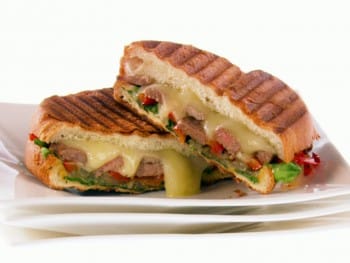
    Inanimate Icons of contemporary Ireland: 1 The Panino

      For more years  than we care to remember, it has been the staple of the Irish diet. Whole generations were reared on this humble foodstuff which  cannot be found outside Ireland. But our love for it peaked in the boom and, as with all affairs, the flower of romance has begun to droop of late. And today we run the risk of losing part of our culinary heritage forever. Isn’t it time we fell back in love with the Panino, putting it at the centre of the spiffing new smart economy that we’re all so excited about? The Facts But first, the facts. For centuries, the Panino’s provenance has been shrouded in a dense mist, like the fog around Bertie Ahern. But recent research has shovelled the cold hard light of miserable day all over this traditional squashed bread snack and debunked 34 per cent of the myths surrounding it: A little history 1. The first Panino was introduced to Ireland by Sir Walter Raleigh: Wrong. We now know that this piece of black propaganda was circulated by MI6 during a long tea-break in The Troubles. In fact, the honour goes to Guido Nervi, a brightly clad fifteen-year-old from Naples. The teen smuggled a Panino into Ireland on board a Ryanair flight in 1991. But the hot sandwich escaped into the wild when Nervi (unaware of Ireland’s red-trouser ban) was viciously attacked by a group of angry eight-year-olds on O’Connell Bridge (they now work in “digital media”). The Panini, meanwhile, multiplied and went feral. 2. The Panino was invented by Giovanni Panino: Close, but no Cohiba. Certainly, the legendary Venetian explorer gave his name to the snack. But as with every aspect of our lives today, the Chinese were ultimately responsible. Legend has it that Signor Panino discovered the toasted roll during a trade mission to Western China and was so taken with the delicacy that he foil-wrapped it and carried it all the way home to Venice, from a Londis in Szechuan province. 3. Panini sales account for one third of Ireland’s GDP: This is based on old data. And even now when we no longer own 97 per cent of the world’s large cranes and 83 per cent of Bulgaria, this is a stretch. Certainly most economists agree that the figure only stacks up if you include sales of breakfast rolls and batter burgers. 4. A Panino is just a bit of old toasted sandwich: False. The Panino is both squashed and toasted – a far cry from a miserable plastic-coated “toasted special”. Some science So, now we’ve undone a few of the lies and legends surrounding  Irish Panini. But one mystery remains: What is it that makes this hot meta-sandwich such a uniquely Irish taste sensation? Here’s just a sapore of some theories which have gained currency in recent years: Famine Fear: The collective memory of the starvation endured in the Great Famine means the Irish will eat pretty much anything that’s handed to them. A sanger in the hand beats eating a bush, as the saying goes. Historians have noted that in the Post-Famine era, Irish farmers cutely moved gradually away from the potato crop and towards their nearest Spar where Panini were a more reliable food source. Symbolic Sandwich: For psychologists, the lure of Panini is more deeply rooted in the Irish psyche. Panini  – they say – are nothing less than a bready embodiment of the Irish people. Half-baked, uninspired, over-priced and easily filled with rubbish – in the Panino we see a mirror of ourselves, and everything that makes it great to be Irish. Aspirational Snack: Those in the field of sociologists have a very different theory. For them, the Panino is the quintessential “aspirational” product. Straight off the griddle and steaming hot, the Panino offers consumers a chance to bite into the swash-buckling, cut-throat world of profiteering which all of us aspired to, until last Tuesday week. Certainly, the Panino and the property market share an identical business model: First, take poor quality ingredients, add a foreign name (Westminster Downs, Westminster Panini etc.), then overheat furiously. Of course that’s as far as the Panino/Property analogy can stretch. Because as we all know, a Panino quickly cools down leaving a soggy mess that no one in their right mind would deal with. Going forward we  need to develop a new language for a Panino for a new generation. We should export it. There may be a particular market in Italy, where the IDA is already having success with another Celtic Tiger refugee, Ciabatta. Panini should become the new River Dance –  Johnston, Mooney and O’Brien white slices rendered exquisite for the twenty tens. We must save them from the fate of their abandoned European cousins, Boxty and griddle-bread.  The Panino is a displaced icon awaiting a nostalgia.

    Loading

    Read more

  • Posted in:

    The secret is out

    In late November 2009, hundreds of emails allegedly exchanged by some of the world’s leading climate change scientists over the previous thirteen years were stolen by hackers from the University of East Anglia’s Climate Research Unit, and leaked online. George Monbiot publishes the secret email that shows that global warming is makey uppy.

    Loading

    Read more

  • Posted in:

    Bagram Prison: The new Guantanamo

    When Obama came to power last year, he pledged to close the prison at Guantanamo within one year, by January 2010. Not only did he fail to do that, but he has also maintained a second similar prison in Afghanistan, at Bagram Air Base, near Kabul.

    Loading

    Read more

  • Posted in:

    Mayor can transcend office’s limitations

    Before new legislation for a Dublin Mayor is introduced, Dublin City’s Lord Mayor, Emer Costello, explains how a Mayor can work under the existing legislation   Last June I was deeply honoured to be elected the 340th Lord Mayor of Dublin – the seventh woman to hold the position. I was elected unanimously by the City Council, the first time this had happened in over 100 years.   The Lord Mayor can exert influence in all spheres of City life that can transcend the limitations of the office. Certainly, being Lord Mayor opens doors and presents opportunities to the incumbent. The challenge is how to maximise those opportunities. Leadership is the key and I have striven to lead from the front. From the outset I decided that economic renewal in the City, specifically dealing with the increasing problem of unemployment would be the focus of my term as Lord Mayor. The stark figures showed that urgent action was needed – 71,000 jobs lost to the city between June 2007 and June 2009. In June 2009, when I became Lord Mayor, 100,000 people were on the live register and 1 in 4 were considered long-term unemployed. At the same time, the greater Dublin region accounts for four out of every ten jobs and half of all goods and services produced in Ireland and must become the engine of national economic recovery. One of the first actions I took was to establish the Lord Mayor’s Commission on Employment to promote employment and economic renewal in the City. In September 2009 the Lord Mayor’s Commission put out a public “Call for Ideas” in a bottom up approach which really caught the public imagination. We received 120 submissions, with many innovative and creative ideas for boosting the City’s economy, creating employment and improving our competitiveness. The Commission is examining all of these proposals and holding workshops and conferences . The soul of any City is its people and the Lord Mayor of the City, the first citizen, needs to find and understand that soul. Since last June I have travelled the length and breadth of the City and met an extraordinary range of individuals and groups. Each of these experiences has informed my work. My own professional background is in international co-operation in education. As I wish to make Dublin the jewel in the crown of European Cities, I also sought to create and develop transnational links between Dublin and other cities. My role as Lord Mayor involves meeting with Ambassadors to Ireland and helping to promote and develop links between our countries. I have engaged with our twin cities of Barcelona and San Jose. In March I will lead a delegation of the City Council and the Dublin Chamber of Commerce to Silicon Valley in California and will meet the Mayor of New York to establish business and fraternal links and hopefully create business and employment opportunities for Dublin. The City Council has invested heavily in the promotion of international cultural festivals in Dublin such as the Chinese New Year Festival and the Festival of Russian Culture and I have been happy to play my part in fully supporting these events. As Lord Mayor I have a particular responsibility in bringing the City Development Plan to fruition. Following intense debate over four meetings of the City Council, the Draft Dublin City Development Plan (2011 – 2018) has been put on public display. As Lord Mayor I have been active in promoting dialogue with our citizens on one of the most fundamental and important vision statements for our City. The challenge for the Development Plan is to ensure that Dublin can project itself as a dynamic competitive city, open for business and capable of attracting inward investment while at the same time ensuring that we protect our quality of life, culture, heritage and identity. The document on display is a proposal and we need the input of the citizens of the City to ensure we get it right. Other challenges which faced the City Council this year included the controversial introduction of the Bus Corridor at College Green and the extension of the 30K speed limit in the City Centre. The debates on these matters both in the Council Chamber and in the media show that the City Council does have the flexibility and capacity to listen to its citizens and to review decisions in the best interests of all the citizens. Highlights of my year include the arrival of the Samuel Beckett Bridge which I have no doubt will become an icon for Dublin in future years. The Luas to the Docklands area has greatly enhanced our transport infrastructure and will bring much needed footfall to the area. Dublin was designated European Capital of Sport for 2010. The Dublinbikes scheme has proven to be an unprecedented success. The Innovation Dublin Festival, in November, held almost 500 events showcasing innovation in the City, proving Dublin to be a creative, smart, outward and forward-looking twenty-first-Century City.

    Loading

    Read more

  • Posted in:

    RTE’s investment propaganda

    At my increasingly advanced age, I have learned a healthy scepticism about stuff the media tells me. So when lots of papers and pundits were telling me that George Lee was a uniquely talented individual, a thoroughbred among cart-horses who, given the chance, would have got on to the rail and won us victory in our race against permanent recession – no, I didn’t believe it.

    Loading

    Read more

  • Posted in:

    Dumping SF for labour: Killian Forde

    Councillor Killian Forde was once considered the rising star of Sinn Féin, until he followed a recent countrywide trend and left for pastures new. The opening of the last decade – when Sinn Féin held a seat in Europe, and there was talk of a move into Government in the republic, and murmurings of Gerry Adams for President – seems a long time ago. These days a Councillor leaving Sinn Féin is no longer out of the ordinary

    Loading

    Read more

  • Posted in:

    Vincent Salafia – Coming To A Campaign Near You. Village profile

    By Michael Smith and Ruadhán Mac Eoin The heroic but failed champion of Tara is leading the campaign against a motorway near Newgrange Vincent Salafia is back with a “Save Newgrange” campaign. A man with a panache for publicity, the populace associates the 43-year old with the Tara/ M3 and Carrickmines Castle campaigns. Now he is to address plans for a Slane bypass within a half kilometre of the boundaries of the World Heritage Site at Newgrange. Given the history of 22 road fatalities in Slane – caused primarily by articulated lorries – there are good reasons why Slane’s residents want trucks to bypass their town. The NRA’s costly plan effectively delivers a motorway parallel to the M1, at one point only four miles distant, while causing significant environmental impacts once again in the Boyne Valley, making this the third motorway in the valley. It cuts between Slane and the Brú na Bóinne complex of Knowth, Dowth – and closest of all to Newgrange, Ireland’s most famous pre-historic site. There appear to be serious questions about Salafia’s suitability to front this campaign. He has a history of falling out with campaigns over the years. As far back as 2004 Phoenix Magazine commented that he “seems to foment trouble in his own camp wherever he gets involved”. It also noted that in 2003 “Salafia was accused by then An Taisce press spokesman, [Ruadhán] Mac Eoin (one of the co-authors of this piece), of censoring An Taisce press releases from the Carrickminescastle.org discussion forum, of which Salafia was the moderator”. Endless self-referential and often abusive emails were exchanged between assorted environmentalists pleading with Salafia to co-operate with mainstream heritage groups, and Salafia and a small group of his cohorts. Salafia, for example, was accused of subverting an attempted alliance called the Friends of Carrickmines. Now in 2010, Salafia has another campaign. Once again cyberspace reverberates with personalised environmental vituperation and Salafia is being accused afresh of censorship, removing comments and distorting information. Meanwhile Salafia himself has just issued a press release, implicating others in cyber-attacks, stating “a complaint has been filed with the Garda Bureau of Fraud Investigation’s Computer Crime Investigation Unit, and Facebook Ireland, on behalf of the Save Newgrange campaign, alleging harassment, intimidation and cyber-stalking by the Bypass Slane Campaign”. It also complains “there has been a coordinated smear campaign against the Save Newgrange group” and that “attacks are increasing in intensity and malice”, before calling for “an investigation into the conspiracy, including links to the Fianna Fail party”. Salafia for his part says that, “the website is for supporters of the campaign only…we directed people to go to Boards [website boards.ie] and have those discussions” and that it is not a discussion forum. As far back as 2001, the Sunday Business Post had carried a report titled “Hacker destroys Brehon Law research website”, detailing how Salafia had made a complaint to the Garda computer crime division that his website had mysteriously been attacked. How then does this heritage hero get so enmired in bitterness and fractiousness, having apparently split or been ejected from four high-profile environmental campaigns – “Carrickminders”, “Save Tara Skryne Valley”, “Campaign to Save Tara”, and most recently, “Shell 2 Sea”? He told Village “the thing is, in every single campaign in Ireland, there are always disputes: that’s just the nature of campaigns. It was the nature of the revolution in this country”. Vincent Salafia first came to prominence in September 2002, as an occupation began at the Carrickmines Castle archaeological complex in county Dublin. At this stage Salafia was intermittently using the name “Michael O’Toole” (his birth name; he also passes as Ó Tuathal). At the outset of the Carrickmines campaign, Salafia had bravely indicated he would be the plaintiff in the proposed High Court action. He indicated he was a lawyer. Yet ultimately these cases were taken by fellow heritage activists Dominic Dunne and Gordon Lucas – with a subsequent case taken by Michael Mulcreevy. While he had legal training in Florida, Village understands that although he applied many years ago to the Florida Board of Bar Examiners, he has yet to gain full qualification. Very early on at Carrickmines differences emerged between the campaigners. Around this time the first of multiple reports emerge of Salafia leaving behind debts, particularly to well-meaning environmentalists for rent. An unconscionable inability to work with others was gaining traction and there was a strong element of fractiousness in his relations with his fellow campaigners, with the proceeds from a benefit gig providing a source of acrimony here; a borrowed generator going missing there; and unapproved statements proving divisive thither. According to Phoenix Magazine in 2004, Salafia was “booted out as a spokesman by the rest of the Carrickminders after several solo runs to the media”. In December 2003, while court action was underway, a press advisory was issued by Carrickmines plaintiff Dominic Dunne and others, stating Salafia “had no consent to either act on our behalf or imply any approval to do the same”. It also claimed “certain statements by him [Salafia] alluding to speak on behalf of others have been unreliable and misinformed”. Three years later in 2006, in the last of the three Carrickmines court cases, Salafia was once again turning up outside the Supreme Court, briefing the media. Once again a contradictory advisory was issued by Dominic Dunne. Salafia told Village that Carrickminders voted “democratically” for his continued involvement in the campaign, but others dispute this. One of the more remarkable rows regarding Salafia took place in May 2004, involving the “Save the Tara-Skreen Valley Campaign”. Again campaigners issued a “please do not publish” press advisory, stating Salafia did not have either “consent or authority” to make press statements on behalf of the campaign or its individual members. As was reported in Phoenix, any committee members who voted for such action “got a solicitor’s letters from Salafia”. As at Carrickmines, Salafia had held himself out as the litigant for a legal action – while also

    Loading

    Read more

  • Posted in:

    Irish revolutionism is half-baked

    The fundamental problem with Irish politics is not our much-decried proportional representation electoral system or the absurd subatomic fragmentation of politics into parish-pump power brokerages. The most rotten aspect of our political environment is the culture of clientelism that underlies the foundation of society.

    Loading

    Read more

  • Posted in:

    High-rise Dublin City

    There was a terrible rumpus in Fine Gael and Labour as they realised they voted for the draft Dublin City Development Plan provisions on height – without understanding them. Not surprising really: the Irish Times totally misreported them also. And they are complicated. Management of course always manoeuvre these things and, in this case, describing the changes as “modest” when they were dramatic helped grease the voting wheels of some uncomprehending local councillors.

    Loading

    Read more

  • Posted in:

    Ombudsman reviews European vote investigation

    The Garda Síochána Ombudsman Commission – acting through local Gardaí – is currently reviewing an investigation of the original Garda probe into how Declan Ganley acquired 3,000 first-preference votes from independent candidate, Fiachra Ó Luain, in the European election count in early June 2009 in Castlebar.

    Loading

    Read more