admin

  • Posted in:

    Dr Jekyll… An Bord Pleanála and Mr Paul Hyde. By Michael Smith.

        • An Bord Pleanála’s manifest ethical weakness in perspective • The planning appeals board, An Bord Pleanála, has been brought into disrepute by its deputy chairperson’s property deals, by his criminal failed declarations of property interests and mishandled conflicts of interests, and by his receiverships.  He must go.   System of Planning Appeals The 1963 Planning Act prescribed that planning appeals from local authorities would be decided by the Minister for Local Government.   An Bord Pleanála formed After years of unease with the corruptible system that resulted, An Bord Pleanála (ABP) was established in 1977 under the Local Government (Planning and Development) Act, 1976 and has ever since been responsible for the determination of appeals and certain other matters under the Planning and Development Acts 2000-2019, and of applications for strategic infrastructure development including major road and railway cases.   It is an independent, statutory, quasi-judicial body.   Change to system of appointment of ABP members Board members were directly appointed by the Minister until 1983 when the system was reformed following unease with appointments of acolytes, including his own constituency advisor, by corrupt Minister Ray Burke in the golden era of Fianna Fáil-led planning corruption.   The reforms established a new ‘arms’ length’ approach where members of the board, who take the decisions,  are appointed by a committee chaired by the President of the High Court and selected by different interest groups. When I was chairman of An Taisce I was ex officio on the committee that appointed the chairman in 2002 and I can vouch for the thoroughness of the interview process. Mind you, the system does favour the Minister’s, or at least the Department’s,  preferred candidate since the Department’s Secretary General is always a force on the committee,  hosts the meetings and reads the rules.   The membership of the board, which is based in Marlborough St in Dublin 1, is determined by the Planning and Development Acts.   A Chairperson of the board holds office for seven years and can be re-appointed for a second or subsequent term of office. The Chairperson is appointed by the Government.   ABP’s performance In 2020, the board received a total of 2,753 cases. Planning appeals (1,956 cases) accounted for over 71% of all cases received in 2020, with two-thirds of all appeals relating to residential developments. Only 47% of all appeals are taken by third parties (i.e. not developers/applicants). The chart below shows that ABP overturns local authorities’ decisions in 27% of cases, varies them in 47% of cases and confirms them in 26% of cases.  It grants permission in 65% of cases and refuses it in 35% of cases. Compliance with ABP’s 18-week-decision target continued in an upward trend from 39% in 2018 to 69% in 2019, and 76% in 2020. Legal challenges Between 2017 and 2020, the number of legal challenges brought against decisions of An Bord Pleanála increased by 74%. An Bord Pleanála’s rulings were successfully challenged in 63% of High Court cases in 2020, according to the planning body’s annual report.   There were 51 legal cases in 2020 and the board lost 32. ABP’s legal costs were  €8.2m in 2020, more than twice the figure for 2019. The figure was similar in 2021. Legal costs scandalously account for almost half ABP’s public funding and 30 percent of its total budget.     In 19 cases the High Court quashed the planning permission while in 13 cases the board admitted to defects in its decision-making process.   Only 11 decisions were upheld while another eight were discontinued or withdrawn.   The Bord has a terrible track record with controversial SHD (Strategic Housing Development) – large-scale residential applications which bypass local authorities. However, the percentage of overall planning decisions that are subject of legal challenge annually remains very small (only 0.3% in 2020) and only 0.07% of decisions were overturned by the courts.   Financing ABP’s income in 2019 totalled €28 million. Just over €6 million, or 23%, was comprised of fee receipts. Grant funding issued from government amounted to €18.6 million in 2019. Expenditure on salaries and related costs amounted to €16.2 million, representing approximately two thirds of the board’s expenditure in 2019. It had 175.3 whole-time equivalent staff and nine board members.   Expenditure on legal fees amounted to €8.2 million. The balance of expenditure of €5.4 million related to premises and other operating expenses. The surplus for the year was €2.8 million.   Quality of decisions The current board is particularly pro-development.  Partly this is driven by edicts, for example on height, density and small apartment sizes, which bind it.  The board has always tended to apply local authority development plan standards more stringently than the local authorities themselves. This is because it is not subject to the parochial lobbyings of county councillors.   For a long time that led ABP to higher standards than those of local authorities.  However, since the time of former Fine Gael housing minister Eoghan Murphy and his predecessor Labour’s Alan Kelly, in particular, national standards have been lower than those local authorities would like to apply, and the era of a stringent ABP pushing an official government agenda of sustainable development has passed.   Membership of board The Minister for Housing, Planning and Local Government appoints up to nine ordinary board members, including the deputy chairperson, plus the chairperson, making ten members (there is one current vacancy). Normally, board members are proposed by four groups of organisations representing professional, environmental, development, local government, rural and local development and general interests. Sometimes, one member of the board can be a civil servant appointed by the Minister. Ordinary board members normally hold office for five years and can be re-appointed for a second or subsequent term.   Its Chairperson is Dave Walsh who was appointed for the period of seven years in October, 2018. He had been Assistant Secretary in the Department of Housing, Planning and Local Government, with primary responsibility for planning policy, including

    Loading

    Read more

  • Posted in:

    McKinseygalitarian no more

    The young man with the enormous brain who had come racing in to rescue us from the Banks, the IMF and Fianna Fáil had decided that the only way you solve the problem of Fianna Fáil was by joining it
    Loading

    Read more

  • Posted in:

    Immationalism

    Fianna Fáil and Fine Gael deny any historical analogy between their own party histories and the process which Sinn Féin/IRA are currently going through to make the transition from political violence to fully peaceful democracy; and Sinn Féin confuses the inspiration nationalists have drawn on from preceding generations of revolutionaries with institutional continuity
    Loading

    Read more

  • Posted in:

    Stalker Nobbled

    In his ril summing up, Lord Jusice Gibson conroversilly sed h he officers were “wholly blmeless” nd celebred h Tomn, Burns nd McKerr hd been brough o he “finl cour of jusice”

    Loading

    Read more

  • Posted in:

    Putin puts in the boot. The West and its weakest link here, Germany, face a formidable foe and test. By Eddie Hobbs.

      By Eddie Hobbs   What is Putin’s big Disruption Strategy? To find out I’ve been engaging with geopolitical experts. I don’t dwell here upon the effectiveness of the mounting responses to Putin’s aggression.  He faces a coalition of overlapping opponents: the EU, UK, NATO, USA – many countries and multinational corporations. The military strategy of the West may be to fight Russia down to the last Ukrainian, then do a deal;  but that strategy presupposes that Ukraine is his main objective.  After research, I don’t believe that is so.     Putin has been planning this meticulously for a long time, well over a decade. It is multi-faceted and, he has weaponised economics and finance as part of his plan. His objective is a multi-polar world with Russia the epicentre of the Eurasian sphere.   He seeks the diminution or disintegration of the EU. His chief target is Germany, its weakest link. His most potent weapon is energy supply.   Crippling the EU, he fractures NATO and diminishes the transatlantic alliance, disabling the USA, its economy and potentially its currency. This is a global financial and economic war, the kinetic theatre of which is Ukraine. Disruption to supplies of Russian hydrocarbons and Ukraine harvests will exacerbate inflationary forces. Both recession and stagflation are real risks. Central banks, led by the Fed raising rates to head off inflation add to the uncertainties. This is a climate of asymmetric risks, there is no safe haven.   Putin is a Christian Conservative and authoritarian, but first and foremost he is a Russian nationalist.  He despises what he determines to be fascist, but he also hates the extremes of the former USSR.   He is not irrational or insane when you examine the tensions created by the backing of liberal democracy, the EU and NATO up to his front door as he sees it.  This is not to excuse the invasion of a democratic neighbour despite its record of corruption and the prevalence of the far right.   Putin’s hero is Peter the Great – he determines Ukraine to be part of greater Russia, and an artificial creation. Ironically his invasion, faced with a skilled and determined opposition, is creating the foundation identity story for the remarkable people of Ukraine.   The truth is Putin doesn’t care whether political opposition in Europe and the USA is hard left or hard right, so long as he can foment instability by financing it.   He already has assisted in establishing what is a hard-right Tory administration in the UK which broke away from the EU.   Russian bankers have financed Marine Le Pen, Russian monies flow into far-right movements like the AfD in Germany and elsewhere including ethnic Russian populations in the Baltics.   Russian banks have financed Trump’s hard-right economic nationalism and Russian digital assets were deployed to support Trump’s candidacy.   Brexit was Putin’s greatest victory in the EU and since then he’s focused on Le Pen in France. Brexit reduced the EU to one nuclear power and isolated the other at its outer orbit.   He now hopes on foot of popular support for Le Pen and for the Left, that the French National Assembly elections in June will lead to political paralysis in France, and for the EU.   Putin is placing his chips on the inability of NATO to hold at the centre, he considers Germany Europe’s biggest and strongest economy to be weak at the centre.   Germany’s disastrous policy of reliance on Russian gas, oil and coal led by East German, Angela Merkel, and blinkered by Putin, puts Germany at the epicentre of his plans.   He expects that pragmatic Germans, faced with a horrible winter of rationing of industrial opening hours, autobahn driving, cooking and heating, will weaken in their resolve to remain in the EU and do a deal with the Russian sphere.   He is also banking on Hungary voting no in NATO, just as he banks on weakened subsidies to former East Germany to grow political extremes.  This is where the pro-Dexit (German EU Exit) and AfD (Alternative für Deutschland) have their stronghold as does Die Linke with roots through to the Marxist-Leninist ruling party of former East Germany.  Both are Russophiles but who may publicly say otherwise.  Sinn Féin and Die Linke, together with a host of communist and socialist parties form The Left grouping at the European Parliament.   He further understands the vulnerability of Target 2, (the ECB trade settlement system structured like the USSR Comecon) at the heart of the Eurozone.   Germany leaving the Euro or faced with France, Italy or Spain leaving would mirror the USSR breakup.   It would leave huge unpaid debt of over €1trillion owed by Central Banks across Europe to the Bundesbank and would leave behind inflation-ravaged replacement currencies, fertile ground to stoke old rivalries thought long dead in Europe.   In military terms Putin can move Russian assets along the Suwalki Gap, separating Poland from the Baltics in a line between Northwest Belarus and Kaliningrad, the headquarters of his Baltic Fleet, without breaking treaties.   Military exercises have ramped up in the Kaliningrad Oblast where he over twenty thousand troops and intermediate nuclear missiles.  He may be calculating that Poland wouldn’t wait for an Article 5 consensus vote or be delayed by German prevarication.   Poland would be unlikely to stand idly by and watch a repeat of Crimea in the Baltics especially when its historic links to Ukraine and its bloody history with Russia is considered.  A failure of consensus over Article 5 would end NATO as a functioning alliance. Poland, in Putin’s calculations, could be left isolated and vulnerable: a scenario in preparation for which he may be blooding his army in Ukraine.   To the Northwest of Kaliningrad lies the strategic island of Gotland part of Sweden but from which the Baltics can be dominated.   Directly north sitting at the mouth of the Gulf of Bothnia, that separates Sweden from Finland, lies

    Loading

    Read more

  • Posted in:

    TWITT

    When it comes to naming Bloody Sunday murderer, Soldier F, Twitter isn’t enforcing its own rules that allow censorship only in accordance with the laws of the tweeter’s own country

    Loading

    Read more

  • Posted in:

    EnRight, twice

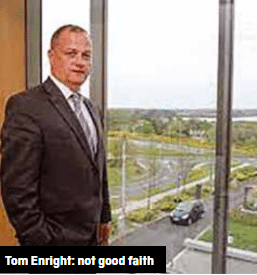
    After SIPO decided he’d breached the Ethics Acts Wexford County Council CEO Tom Enright and Councillors who ovated him breached Ethics Acts again by disrespecting the decision, and in Enright’s case by denying findings of bad faith and of impropriety of content not just tone against him

    Loading

    Read more

  • Posted in:

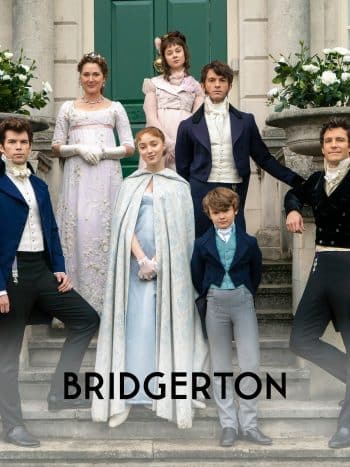
    Rory O’Sullivan watched Bridgerton Season 2 yet wonders why anyone would bother.

    Rory O’Sullivan watched Bridgerton Season 2 yet wonders why anyone would bother. A period-piece represents the past and by representing dominates it. In general, the past survives only mythologically, as a collection of loose figures and attitudes in the present. In a period-piece, the prevailing attitude imbues these figures with itself and alters the past in its image. Strictly speaking this is inevitable, which is to say that there is nothing wrong with it. But as a result the hardest, most important task for a period-piece is to avoid smugness and try to be a little searching about its own time, the time representing rather than represented, which Bridgeton does not do, ever. Season Two, Episode One: Kate and Edwina walk procession-style into what seems a purpose-built ballroom on the edge of a manicured think-of-Versailles Garden (the building looks weirdly like the White House), where two anonymous servants grandly open its doors to the dollying camera: inside there are innumerable pairs of perfectly in-sync dancers sashaying between neoclassical columns garlanded with floral wreaths. The music is a strings-version of ‘Material Girl’ by Madonna. Turning to Edwina, Kate says: “Remember to breathe”. Eighteenth Century, Actors of Colour, Madonna, Ballroom: Wow!Bridgerton is smug. At the heart of it is not so much a sense of fun as of giddy triumph. Some of this comes from the feeling all Netflix shows have that there is a joke everyone but the viewers is in on, but mostly it comes from this period-piece demeanour for which the normal and completely wrong word is irreverence. Irreverence is what you do in front of something sacred, powerful, a defiant sort of thing that leaves others staring at you in shock and awkwardness. On the other hand, for what Bridgerton does the word is domination. This show fills the eighteenth century with United States Democratic party donors: racists and sexists alike lose the day, every day, but no one says the obvious things about the British Empire; the country’s sarcastic but soft-hearted ruler and attendant are the queer-coded Queen Charlotte and Lady Danbury, the heads of the two main families are men in name but in fact women, and all the fun is had by the people who are either young or in charge; and the sex scenes, disappointingly fewer and less varied than advertised it must be said. But if Bridgerton is about renewing our culture’s relationship with the mythology of the past, then the real lesson here is how much, in dominating these figures, in turn the show is dominated by them. Painfully so: ballroom-dancing, marriage plots, an absurd formal manner of speech that leaves you wondering why this show, so feminist-seeming, makes everyone say so often the words “My Lord”, and of course that soulless and destructive thing people mislabel ‘wit’. In Bridgerton’s plot there is nothing to spoil because in each storyline everything is so familiar and laid bare from the beginning, besides which, from the start to the end the characters do nothing except identify themselves on the moving escalator of these implicit figures. This makes the dialogue so awful that sometimes the show sounds like a bunch of spliced-together video game cutscenes. For example: Kate is in love with Lord Anthony Bridgerton, a fact to which she constantly alerts us by too much protesting – her every word is to do either with him or else how she loves her sister, who (from the beginning it is made obvious) is the romance plot’s blocking figure, and becomes engaged to Anthony until the viewer has waited long enough when she steps aside with the most figurative drama, but least actual fuss possible. One confusing thing about the show is the exalted place it affords writing. The pamphlets of ‘Lady Whistledown’ give both a plot device and the voice of the show’s narrator, but also some strange lines of dialogue here and there such as “It is rather clever the way she uses plant puns to belittle”. They make an identification of good writing with cleverness, about which there is nothing automatic in a series that no one would ever turn to for a good line. Indeed in general a healthy question to ask is why anyone would bother in this short life to turn to Bridgerton at all. Perhaps they wrongly think the colourful costumes and sets compensate for the bad writing, and those accents.  Personally all I can think of is that if they were to opt to ignore it they would miss the last shot in the fifth episode of the first season, the greatest moment in the entire series – even if accidental, short – because for once almost it tells the truth. In the first season Daphne, who is innocence pictured, meets and eventually marries the worldly Simon, and just before this moment, just married and with Bridgerton’s usual strings in the background playing Strange by Celeste, they have had sex for the first time in a scene which impressively skirts the line with porn. It is interesting how that sex scene’s intensity comes from when Daphne tells Simon that she masturbates to him – meaning that they both have sex with, or in or else under, the idea of her masturbating just as much with each other – which nicely proves Lacan’s point that at the heart of sex is the imagination and there is barely anything carnal about it whatsoever. But when they are done in bed Simon turns and asks, “How do you feel?” and lying there she says, out of breath, not very convincingly, “I feel…I feel wonderful”. There are at most three seconds before the cut to credits during which we see nothing except her face. What is her expression? Forcing a smile – but for some reason the barest emptiness. Yasujiro Ozu would have kept the camera there for twenty seconds. Bridgerton is available to view on Netflix but may be streamed illegally without much difficulty.    

    Loading

    Read more

  • Posted in:

    ‘Seven Steeples’ by Sara Baume reviewed by Rory O’Sullivan: “a brilliant, captivating book which unfortunately does not get to the heart of the matter”.

      In Spring, when I was born, Ireland was full of daffodils: in the city in window-boxes and the front-gardens of houses, apartment-buildings, and on the stony small ridges beside footpaths as well as here and there in forests and uncultivated fields. I have always identified strongly with the daffodil. I have never said so openly before to a single person – nor, to be honest, have I remembered it much myself; and yet every Spring, like when an old friend’s favourite piece of music comes on in the car, suddenly, entirely they fill my thoughts at the centre. I am convinced that the part of everyone’s life we call ‘inner’ is like this: what Baudelaire described as “forests of symbols/who watch us with familiar looks”.  Our deepest selves are less a stream of ideas than a criss-crossing lattice of relations, memories, habits, and desires all around particular things. For everyone who exists there is a kind of secret symbolism, a non-verbal language, revealed to them and them only: it is their passport through life. A novel tries either to elaborate one new such symbolism in its writing; or else to depict in some way the conditions in which it forms, to discover or at least raise the possibility of an Ur-language, a theory of universal totemism; or else simply to scold and terrify people, or make them laugh. ‘Seven Steeples’, the latest novel by Sara Baume, is of the second kind. It is much less a story than a list of the objects and creatures encountered by Bell, Sigh, and their two dogs, who have left Dublin to seek out a way of life in the South-West far away from everybody. Insects, nettles, the washing machine – each other – the book is really about its paragraphs, like musical phrases, each describing an encounter with something, new or old, and its conversion into a symbol. Insects, nettles, the washing machine – each other – the book is really about its paragraphs, like musical phrases, each describing an encounter with something, new or old, and its conversion into a symbol. Baume’s sentences rhapsodically repeat words and make liberal use of the ‘Tab’ and ‘Enter’ buttons on the keyboard; sometimes the paragraphs feel like they were written by Alice Oswald. But if in Oswald’s poetry, which is after all made of verses, the point is to approximate by turns the gushes and drips of water, in Baume’s paragraphs it is to approximate the wind. As symbols, both water and wind are varieties of nothingness, which is to say that these stylistic approaches are both about accommodating non-being in speech. But if water is a refracting spread that pulls reality apart, then wind is a blustering movement that sweeps it all together. The embedded theme of Seven Steeples is oneness: symbiotic oneness, how things live by encounters with each other; erotic oneness, the drive towards the whole which is the greatest significance of love; and beneath these, symbolic oneness, the idea that in truth everything is one. The embedded theme of Seven Steeples is oneness: symbiotic oneness, how things live by encounters with each other; erotic oneness, the drive towards the whole which is the greatest significance of love; and beneath these, symbolic oneness, the idea that in truth everything is one. In a way this idea is very old – at least as old as the Greek philosopher Empedocles – the tone, shape, and themes of this book recall the Ancient Greek novel Daphnis and Chloe. What is new is how this deathly wind, this oneness gusting everything into symbols, is so strongly aligned in the book with interiority and the rejection of other people. As a result what we are given here is essentially a beautiful but false and virtual reality. People often say that virtual reality is something in the future – the day we can put on glasses and see the Spotify menu in front of us – but at least in sound rather (and more importantly) than sight, it is already here. Everywhere now public spaces achieve a kind of altered reality through music. For anyone who uses headphones this virtualisation of experience is even more profound, more personal, more constant, and in the end more solipsistic – think of the stereotype of the teenager with headphones tuning out the world. In ‘Seven Steeples’ headphones come up a surprising amount, even if near the end they are replaced: “In November the song of the house was a gurgling in the throat of the bathroom tap, a crackling emitted by the tangled TV cables. The boiler growled. The fridge purred”. Whereas in the past a ‘song’ was conceived as a public performance, something you went and looked at, someone talking to you, here it is imagined as something lived and moved around in: this kind of ‘song’ has not been widely available for more than a few decades. It is a great metaphor – two hundred years ago would someone have come up with it? I am not sure. None of Bell and Sigh’s friends of family (who do not appear in the book) understand what they are trying to do, which is to transport themselves into a reality as solipsistic and virtual – as musical – as can be. None of Bell and Sigh’s friends of family (who do not appear in the book) understand what they are trying to do, which is to transport themselves into a reality as solipsistic and virtual – as musical – as can be. This is not to say that the alternatives to which the book refers (emails and The Nine O’Clock News) are any less virtual; but Seven Steeples is about Bell and Sigh swapping one dream for another, somebody else’s for their own. The two dreams have the same basic origin. In A Line Made By Walking, also by Sara Baume, the main character takes photos of every dead animal they find. It is typical of her characters

    Loading

    Read more

  • Posted in:

    Lord Widgery, the judge who covered-up the murders of Bloody Sunday. How and why he did it.

    By David Burke. This article was first published on 2 July 2021. It is republished to mark the 50th anniversary of the publication of Lord Widgery’s infamous report which defamed the victims of Bloody Sunday and exculpated those who murdered them. 1. Brigadier Frank Kitson subverts the law. Brigadier Frank Kitson of the British Army was a so-called counterinsurgency guru. He was sent to Northern Ireland in 1970 to tackle the IRA. The following year his astonishingly indiscreet book, ‘Low Intensity Operations’ was published. In it he explained that there were two ways of administering the law during a counterinsurgency, the first one being that: the law should be used as just another weapon in the government’s arsenal, and in this case it becomes little more than a propaganda cover for the disposal of unwanted members of the public. For this to happen efficiently, the activities of the legal services have to be tied into the war effort in as discreet a way as possible … The other alternative is that the law should remain impartial and administer the laws of the country without any direction from the government. [Kitson (1971), p. 69.] The first tribunal investigating the events of Bloody Sunday – Widgery – is a good example of how the law was used as “just another weapon in the government’s arsenal”. On Monday 31 January 1972, Tory Home Secretary Reginald Maudling announced in the House of Commons that there would be a judicial inquiry into the Derry massacre. That evening British Prime Minister Ted Heath and Hailsham, his Lord Chancellor, asked Lord Chief Justice Widgery to chair it. Widgery had been a surprise appointment as Lord Chief Justice of England and Wales by the Tories the previous year. He was not viewed as a jurist of the first rank by his peers. His career was one which would ultimately descend into bedlam. Private Eye magazine would report that “he sits hunched and scowling, squinting into his books from a range of three inches, his wig awry. He keeps up a muttered commentary of bad-tempered and irrelevant questions – ‘What d’you say?’, ‘Speak up’, ‘Don’t shout’, ‘Whipper-snapper’, etc”. [Private Eye Issue 436, 1 September 1978.] These comments were published two years before he stepped down from the bench. The view expressed by the Eye is reflective of Widgery’s reputation for having been ‘difficult’ by members of the Bar in Britain. ‘Difficult’ in this context is a polite euphemism. Widgery was despised by the legal profession which viewed him as a second rate political appointee who strove to conceal his shortcomings in the traditional manner of the lower tier judge:   by hectoring, pelting and bullying. 2. Judicial compromise The night before Heath asked Widgery to conduct an inquiry, he had expressed his belief to Taoiseach Jack Lynch that Kitson’s paratroopers had behaved properly in Derry. If Heath truly believed what he had said to Lynch, he had an unusual way of showing it. He chose Widgery – a safe pair of hands – and left him in no doubt that he was to pervert the course of justice. At the meeting on 31 January Heath told Widgery that it “had to be remembered that we were in Northern Ireland fighting not only a military war but a propaganda war”. It is hard to conceive of a more compromising comment made by a British prime minister to a senior member of the judiciary, let alone the man at its pinnacle. No matter what way one looks at it, the comment demonstrates a breath-taking lack of esteem on the part of Heath for the independence of the judiciary. Yet Widgery did not rise to his feet and leave the room in protest. Instead, he did what his master bid him to do. 3. An Allegedly Independent Judge pre-judges the Murder Victims by Attending a Meeting at which they were referred to as ‘the other side’ At the same meeting at which Heath had given Widgery his riding orders, the parties to the discussion had also referred to the victims as the ‘other side’. [Para (viii) of minute of meeting of 31 January 1972.]  Moreover, according to confidential notes by a Widgery associate, the “LCJ” [Lord Chief Justice] could be counted on to “pile up the case against the deceased” even though the evidence provided “a large benefit of the doubt to the deceased.” [‘Hidden Truths’ (1998), p. 95. 4. Threats to Muzzle the Ever Compliant British Media In the days after the massacre, the journalist Murray Sayle and his colleagues completed a report which was submitted to the Sunday Times. There was internal opposition to its conclusion, namely  that Colonel Derek Wilford,  who had led 1 Para in Derry on Bloody Sunday, had set out to provoke the IRA into coming out into the open so his troops could wipe them out. Harold Evans, the editor of the paper, decided to ring Widgery. “I said we had done a great deal of interviewing and proposed to publish this Sunday. We also had compelling photographs. I told him I presumed contempt would not apply since nobody had yet been accused. It would be an exaggeration to say he was aghast, but he made it very clear it would be ‘unhelpful’ to publish anything and yes, he would apply the rules of contempt. .. I withheld the article, but that week I took the chance of publishing the shocking photographs by Gilles Peress of unarmed men being shot”.  [Harold Evans,  ‘My Paper Chase, True Stories of Vanished Times’ (Little, Brown and Co, New York, 2009), p 474.] On Sunday 6 February, the paper reported that, “The law is that until the Lord Chief Justice completes his enquiry nobody may offer to the British public any consecutive account of the events in Derry last weekend”. [Sunday Times 6 February 1972.] Heath’s press office rowed in declaring that anything which anticipated the Tribunal’s findings would amount to contempt. This was a highly contentious assertion without

    Loading

    Read more