admin

  • Posted in:

    (Almost) nobody could read the accounts properly

    24March/April 2022ON 7 April 2009, the Minister for Finance, the late Fianna Fáil TD Brian Lenihan, introduced the National Assets Management Agency, a “bad bank”.In response to the Ministerial announce–ment, Bank of Ireland assembled an internal ‘Specialist Property Group’ with the task of identify–ing what they could sell to Nama.By that September, this Group collated loans styled as ‘Financial Assets Held for sale’ (AFS). In their announcement, Bank of Ireland stated this AFS was worth €16 billion. This was a valuation already based on better days. This €16 billion toxic loan bundle was responsible for 12% of their total loan book.Brian Lenihan always made it very clear that Nama would not be stumping up on the valuations the par–ticipating banks were citing.In total, these banks quoted roughly €77.4 billion for these toxic AFS lots.When all the dust settled; Nama would pay €31.7 billion. So the banks took a 59% price reduction on their ‘high hopes’ valuations to sell to NAMA. The Financial Statements for the year ending 31.03.2008 contained within the Annual Report pre–sented at the Bank of Ireland AGM earlier that year (July) reported that they had doubled the rate of impairment charges against their loan book; 14% of total loan book value (LBV) at year-end 2007 as against 28% LBV by 2008. So an avid reader of the Bank of Ireland Annual Report and accompanying (Almost) nobody could read the accounts properlyBy Vanessa ForanHow Bank of Ireland opened the gateway to private equity and morphed Ireland into a fertile habitat for cuckoos and vultures Nothing points you to receipts, only to impairments and lossesFinancial Statements would already have know their loan assets were heavily impaired by the time NAMA was instigated.So the 12% of customer lending assets now being treated as a toxic AFS on the same balance sheet, had already thrashed the bank and its shareholders with impairments.Providing for estimated bad debts is a standard practice usually based on specifc events assessed on industry standards: on payment history and on external factors, like market and regulatory condi–tions such as taxation and legislation. What the originating drawdown value of these loans, plus the loss of their expected interest income was before their send-of to Nama, is anyone’s guess, but we do at least know, because PWC confrmed it in their Audit Report, that within domestic lending oper–ations alone, standard debt provisions went from €63 million in 2007 or 14% of total LBV, to o 28% LBV (or €146 million) by year end 2008. You might now also recognise that Bank of Ireland was still aggressively growing its loan book throughout 2008. Then there are additional Impairment Charges. In the Annual Report for the nine months of the year to 31.12.2009, “impairment charges” are mentioned 73 times. Of the total Impairment Charges subtracted from the Loan Books, 55% of them or € 2.778 billion had to be taken from that AFS, leaving it worth €12.235 billion within months of its €16 billion prom–ise, before getting further treatment in the small print of notes.What the drawdown worth of the individual loans NEWSBank of Ireland was vulturised by funds that understood its confusing accounts March/April 2022 25within that AFS might have been when con–tracts were signed between the creditor bank and the borrowing debtor could give rise to some dirty thoughts, because that is the stage and value when agents’ commissions and bankers’ bonuses gets earned. In fact, I would contend that there is a public right to know about these sums, even as a ‘How it started; how it’s going’ exercise. We did after all guarantee and pay for many of the loans, after bonus’ and commissions were paid out.Those loans might have had vastly diferent originating values to where they now ended up, in an impaired toxic bundle quoting €16 billion in September 2009, that dwindled to €12.235 billion by December, that when matched with its year-end Impairment Adjustment, if you managed to follow it through the notes.(pg 204-205 Note 25) was really €9.457 billion.The purpose of fnancial information is to help users make decisions and form opinions.My own confdent opinion is that if all their orig–inal contract drawdown values were combined, then a value of upwards of €40 bil–lion for that €16 billion AFS bundle is not impossible. By the end of 2012, when all the diferent transfer stages were completed, Nama agreed €5.433 billion for this AFS. Paid by using Nama bonds of diferent shapes.None of us would have known this, as none of the consideration is lined out as income earned; or as a beneft receipted from the sale of a material asset, even a toxic held-for-sale asset, on the bank’s 2010 Income Statement. That is the trading period during which the vast bulk of this loan book moved out from Bank of Ireland.No matter who was reading those accounts, this AFS asset was most defnitely material (capable of infuencing a decision) to the fnan–cial position of Bank of Ireland as 12% of Total Lending Assets makes it material, even if based on a March 2009 Balance Sheet position; 12% of total lending assets is self-evidently material. If you were reading those accounts, you might have got the gist of the sales to Nama from the netting and rounding of you can make out within the notes (specifcally 15, & 16, pg 240 YE2010). These all declared the impair–ments and movements in losses, but not the consideration or beneft received. Likewise in the 2010 Cashfow Statement nothing points you to receipts, only to impair–ments and losses. The post-transfer losses of this Bank of Ire–land AFS Loan Bundle were now around €10 billion.There is commentary in notes, small print of course, and there is mention of the loss being limited to €9.45 billion (pg 220 Critical Esti–mates and Judgements: also, pg 251 Note 28). When values are reported in millions and bil–lions, rounding can be signifcant. However, even from the September 2009 market announcement informing the world of Bank of Ireland’s newly prepared €16 billion toxic loan bundle, tracking its

    Loading

    Read more

  • Posted in:

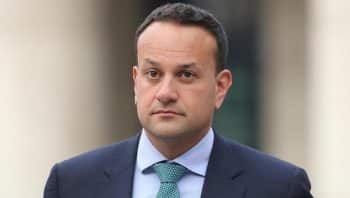
    Garda investigation of Leo Varadkar

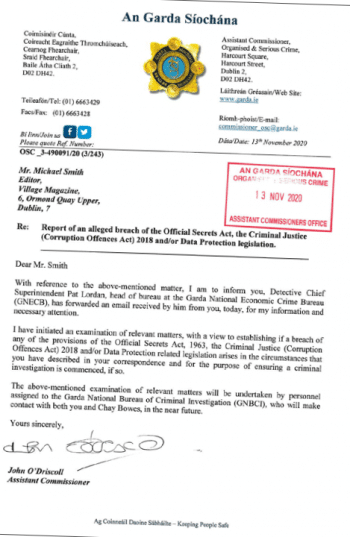
    March/April 2022 23Ifrst reported in Villagethat Leo Varadkar had improperly passed a draft contract to a friend Maitiú O Tuathail. The article was published on 31 October 2020.The story was headlined “Leo always delivers’, the cover was ‘Leo Law Breaker’. The cover of the following edition was ‘It’s a Crime’. Under cover of Dáil privilege Varadkar said he’d received advice the frst Villagearticle was defamatory, accused Villageof being “fringe” and said it had no resources so he’d been advised suing would be “like suing Twitter”. It would not. He also swiftly issued a long and badly conceived statement saying he had not broken the law. There was a furore. I wanted at all times to frame the issue as one of breaking the law. Few enough of the TDs, who debated the issue with much heat on two occasions as an issue essentially of impropriety, or the media, saw it thus. After that I drove an initiative to have the matter investigated by the Garda. On 13 November 2020, I wrote to the Detective Chief Superintendent in charge of the Garda National Economic Crime Bureau on behalf of myself and Chay Bowes, who had informed the entire Law Breaker story and who, unlike me, had direct evidence. He and I separately met detectives from the National Bureau of Criminal Investigation soon after. I have met them several times since, the last time in January 2022.The position of a journalist or editor making a criminal complaint is invidious and I have tried to balance the proprieties – for example my obligation to the truth with my concern for justice. I’m also a lawyer by training.All this has led I believe to extreme circumspection on my part and considerable circumspection on the part of the magazine in commenting on the ongoing investigation.I have never predicted the outcome of the detectives’ work, never given details of, or described the nature of, the evidence I have given, never commented on whether Mr Varadkar should be prejudiced in his advancement if the investigation remains unresolved, or indeed on whether he should resign. I have not given interviews or replied to his disparagements including that some of those behind the complaints (and there are NEWSBy Michael SmithGarda investigation of Leo Varadkaronly two of us) support another political party in competition with his own. Whatever anyones says the document leaked was a draft contract, a “confdential” ‘Terms of Agreement’ between the Irish Medical Organisation, the HSE and the Department of HealthI do, however, reserve the right to clarify the basic record. I have a right to say I have at all times facilitated the inquiry and reacted quickly to requests for meetings. I don’t believe there have been any attempts to frustrate the Garda’s work, which they seem to be carrying out carefully and efectively. Some basic errors have become received wisdom in media reports.I also think it is appropriate to put the document above into the public demesne as it clarifes the rudiments of the complaint.

    Loading

    Read more

  • Posted in:

    Sinn Féin is democratically centralised

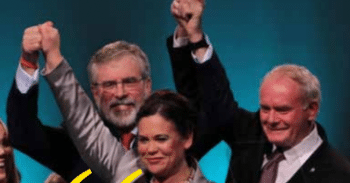
    March/April 2022 21Kerrane replied that “Despite attempts to endow a rather mundane committee with wide-ranging powers, the reality is that this is an administrative sub-committee, with no policy role and subject to the Ard Comhairle on all matters”.In fact most real power doeslie with the Coiste Seasta of eight. Five are Northern based. Only Assembly member Declan Kearney is an elected representative.Other fgures, unelected even within Sinn Féin, wield equally disproportionate power. This was established during the inquiry into the North’s Renewable Heat Incentive scandal. During the crisis in the Executive December 2017-January 2018, emails that were disclosed showed Finance Minister Máirtín Ó Muilleoir taking guidance from Pauric Wilson, Martin Lynch and, particularly, Ted Howell.In an email to Howell, Ó Muilleoir wrote “there is no further reason for me to hold up signing this business plan…would you be content if I were to sign of the business plan on Wednesday afternoon?”. This was a complex decision, worth hundreds of millions of pounds. The Assembly had already passed the legislation, but Ó Muileoir had to sign of.Wilson was IRA commander in the Maze prison. Lynch has been named as a member of the IRA Army Council. Howell holds no elected position, even within Sinn Féin. He is one of the least-known among Ireland’s most powerful. Howell was Gerry Adams’ most trusted advisor. He is secretive, and even opponents concede he is a deep thinker and personable.In the Dáil, Sinn Féin plays the parliamentary game well. However, there are diferences to other parties. The party apparatus, not the TDs, recruits its staf. There are arguments for this: other parties have used it too frequently to create jobs for family members. However, this power grants powers of patronage to the unaccountable.The backroom leadership also takes decisions IT WAS interesting to see the recent standof between former Minister for Justice Michael McDowell, and former Dublin correspondent of the GuardianJoe Joyce on the one hand, and Sinn Féin TD Claire Kerrane on the other, in the often anti-Sinn Féin Irish Times. McDowell’s repeating theme for a generation now has been as he put it that “Sinn Féin is not, and will not be, a conventional democratic political or parliamentary party”. Kerrane replied that “Sinn Féin is not “controlled from Belfast” [but] an open and democratic political party whose leadership – Ard Comhairle – is elected annually at our Ard Fheis”.The truth is that its backroom leadership runs Sinn Féin in the style of Stalin’s interpretation of democratic centralism. Real power lies in the Coiste Seasta, and in advisors who have no formal standing. Power has moved to them from a withering IRA Army Council, without transition to internal democracy.Formally in Sinn Féin the Ard Fheis is the supreme body, the Ard Comhairle supreme between Ard Fheiseanna. This has 48 members, making it unwieldy. In the Irish TimesJoyce and McDowell both refer at some length to the existence of a party business committee, the Coiste Seasta, which manages Sinn Féin departments such as fnance, training and HR; and where they claimed real power resides.FF was controlled by developers and FG tends to the will of property-owners but SF’s backroom regime is even more powerful than those in other big parties.Sinn Féin is democratically centralisedBy Anton McCabeActually the IRA drove Sinn Féin to the centre, delivering the ceasefre, decommissioning, and support for policeNEWS 22March/April 2022regarding the Oireachtas group. That would include appointing government ministers if Sinn Féin goes into government. There has to be concern if such decisions are taken by an apparatus that is not open to scrutiny or real democratic accountability.All parties have unelected bodies and individuals wielding disproportionate powers. You might argue that Fianna Fáil was controlled by developers or that Fine Gael often tends to the will of businesspeople and property-owners. However, Sinn Féin claims a diferent and radically progressive vision of society, though its backroom regime is even more powerful than those in other big parties.That can be seen in the Northern Ireland Assembly. Twelve of Sinn Féin’s current 27 members were co-opted. They include Communities Minister Deirdre Hargey. In both Foyle and West Tyrone, co-opted Sinn Féin members were replaced by further co-options. In Foyle, neither Sinn Féin member elected in 2017 is now an Assembly member.When the Assembly was established, co-option was introduced to protect minorities. If a member from a minority party died or had to step down, it ensured that party kept constituency representation.So Sinn Féin is acting within the rules. All parties have used co-option, but Sinn Féin much more than any other. That is despite none of its Assembly members having died. Voters have elected representatives; found themselves with diferent representatives; and, in two cases, found themselves with different representatives again. The problem is that the process of choosing co-optees is not transparent.The co-options refect a strategy of replacing those associated with the IRA so as to widen the party’s electoral appeal. In the frst Northern Assembly elected in 1998, eight of 18 Sinn Féin members were former Republican prisoners. They included Gerry Adams, who has always denied ever being an IRA member).Of 27 current members, fve are former Republican prisoners. Since the last Assembly election in 2017, fve former prisoners have stood down. In Northern Ireland councils too there has been a replacement of the IRA generation. Paradoxically, some Unionist councillors fnd the replacements more difcult to deal with.In the Republic, Sinn Féin follows a similar trajectory. In Sinn Féin’s frst electoral breakthrough in 2002, two of fve TDs were former IRA prisoners. Only one of the current 37 TDs is a former prisoner. Most are too young to have been involved in the IRA.Sinn Féin is now mostly of a post-IRA generation. Partly this is due to former IRA fghters ageing.And to be fair, the IRA Army Council no longer plays the role it did because IRA structures have withered. It is 25 years since the second and fnal ceasefre. Signifcant recruitment ended some time after that, in the mid-noughties.Slamming the party because

    Loading

    Read more

  • Posted in:

    Sinn Féin no i Shoe-in – for i First Ministry i

    20March/April 2022A SINN FÉIN First Minister is by no means certain after the Northern Assembly election in May. It is most probable Sinn Féin will be the largest party in terms of votes. In the last Assembly election, it was only 1,000 behind the DUP. However, there is a precedent for the largest party in votes not being the largest party in seats.In the frst Assembly election of 1998, the SDLP received the largest vote. It was over 5,700 votes ahead of the Ulster Unionist Party (UUP). Howev–er, the UUP was four seats ahead.At time of writing, the latest opinion polls put Sinn Féin on 23.2%. That is 3.8% ahead of the second-placed DUP.There are two warnings. The poll is three months before the election.And just as importantly, the election takes place across 18 bitterly fought constituencies.Sinn Féin currently stands on 27 seats. The DUP is on 28. For Michelle O’Neill to become First Min–ister requires Sinn Féin to hold 27, and the DUP to lose at least one seat. That is because, according to the St Andrews Agreement, if the two largest parties have an equal number of seats, the one with the largest vote gets the First Ministership.Currently, it is difcult to see where Sinn Féin can take any extra seats. Seat numbers seem maximised. In 2017 the party benefted from a perfect storm. The Assembly had been reduced from 108 seats to 90. That meant fve, rather than six, members per constituency. Sinn Féin’s As–sembly representation was only reduced by one seat. It lost two and gained one.At the other end of the storm the DUP sufered a perfect disaster in 2017. It lost 10 seats. This time the only seat in apparent serious danger for the party is the third seat in Strangford. This was held by 225 votes ahead of the SDLP fve years ago. Sinn Féin no i Shoe-in – for i First Ministry i By Anton McCabeFissiparous DUP may give it a run for its money in May electionpolity. it is too early to say if the UUP’s Doug Be–attie has done major damage with his foolish tweets. At best, rather than going forward he has been bogged down in damage limitation. He is also sufering from miscalculating in West Ty–rone. He removed a popular local candidate and imposed an outsider, again attracting negative publicity.Meanwhile DUP leader Sir Jefrey Donaldson has made his sixth threat in fve months to col–lapse the Assembly over the Northern Ireland Pro–tocol. This shows poor negotiating strategy and confusing supporters. Edwin Poots is beavering feaverishly away seeking to break the law on agri–cultural inspections for EU imports. And Sinn Féin isn’t necessarily more dignifed. After the controversy over the Beattie tweets, Radio Ulster’s Nolan Show decided to examine tweets from other parties. At the time of writing, 11% of Sinn Féin Assembly members have been found to have posted inappropriate tweets.DUP First Minister Paul Givan has resigned in protest at the Protocol. This seems to have largely satisfed the DUP faithful. They had been restless at threats that were not followed through. Howev–er, the DUP clearly intends to go back into the As–sembly. Party leader Jefrey Donaldson may well have trouble selling that to the base, as it is very unlikely the Protocol will be removed.All forecasts, of course, could be thrown into the air if the irreconcilable diferences in the DUP erupt into schism before the election. In the North things remain in a nasty fux. For Michelle O’Neill to become First Minister requires Sinn Féin to hold 27 seats, though its seats seem maximised; and for the DUP to lose at least one seatHowever, the SDLP has historically always been close there, but never close enough. The SDLP has also lost the momentum which it took from the 2019 Westminster election.On the surface, the latest polls look good for Alliance. It is in joint third place with the UUP. However, it has limited opportunities for gains. Currently the eight Alliance Assembly members are either in Belfast, or in constituencies border–ing it. Party leader Naomi Long is an able politi–cian. Otherwise, for a party perceived as drawing from the middle-classes, it is strangely low on tal–ent. Its most realistic chances of extra seats are in North Belfast, where it was close to the second Sinn Féin candidate; in South Down, where it was close to the second SDLP candidate; and possibly in North Antrim, where it polled well in the 2019 Westminster election. Taking one of these three would be doing well.Alliance has traditionally benefted well from transfers. However, the reduction in Assembly members has increased the number of votes nec–essary to reach quotas.Contrary to Alliance, the Traditional Unionist Voice (TUV) is transfer-unfriendly. The latest opin–ion poll puts the TUV on 6%. Five-seat constituen–cies put the TUV at a disadvantage. Its candidates would have to be at or close to quota on the frst count to have a chance. Beyond party leader Jim Allister, the party lacks known candidates. On a bad day for the DUP, TUV transfers would save some of its seats.Meanwhile all is turmoil in this dysfunctional NEWS

    Loading

    Read more

  • Posted in:

    Rezoning for Mammon

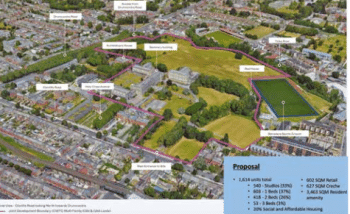
    March/April 2022 19scheme is purely for rental and does not meet the need for local residents and their community for housing which is integrated and provides for people of mixed incomes as well as appropriate social housing. The scheme includes provision for the required 10 per cent social and 10 per cent afordable housing.Rory Hearne of Maynooth University said the “mega build-to-rent scheme would essentially be a private enclave set apart from the local area, owned by overseas institutional investors”.“This is a reversion of 100 years in the social progress of land ownership and is part of a race to the bottom in the Irish housing system”.It also appears to confict with an assurance by former Archbishop Diarmuid Martin in advance of the, Vatican-approved, Clonlife sale that the priority for the diocese was “to ensure the buildings and lands would be used for the beneft of the local community and a legacy for the city of Dublin”.The land deal certainly benefted the Church and the GAA which hailed it as the best in its history and “the key achievement for the year, if not the decade” in 2019. “The Archbishop was very anxious that he would sell to the GAA and he really wanted to deliver a social and afordable housing complement to that part of the city,” explained GAA stadium and commercial director, Peter McKenna. a hotel, two new pitches, a clubhouse and ofce facilities on the 11 acres it has retained from the land deals. Instead of helping to resolve the housing crisis, as the church says it wants to do, many of the 120 parties who objected to the Hines application have argued that it will exacerbate the emergency.The €610 million Hines plan proposes 12 apartment blocks ranging from two storeys to 18 storeys in height on the former site of the former Holy Cross seminary and college.Among those with reservations was Dublin City Council which said that it was disappointed with “the disappointingly high quantum of single aspect and studio and one-bed units” which, it argued, “is not considered appropriate to the area and could constitute an unbalanced form of development”. DCC said the proposed 71 per cent of studio and one-bed units within the scheme “is alarming” adding that “it is considered unlikely the development will provide an attractive mixed-use sustainable neighbourhood….in compliance with the Dublin City Development Plan 2016-2022”. The local authority did not, however, recommend against the planning application.What must also concern the Catholic Archdiocese is the criticism of the Clonlife and Croke Park Residents Association that the The move by the Catholic Archdiocese of Dublin to alter the zoning of lands where 33 churches are located across the city has once again raised the question of its potential role in the provision of afordable and social homes in the midst of a deep housing crisis.In mid-February, it lodged a 130-page submission in response to the Dublin City Council development plan opposing zoning rules which preclude housing or office developments in all but “highly exceptional” circumstances on such lands.In the document, solicitors Mason Hayes and Curran claimed that “the proposed changes are unlawful insofar as they affect religious institutions such as our client”.Some of the churches “are located in disadvantaged areas where the delivery of housing is taking priority over additional institutional land uses”, according to the planning consultants Brock McClure, which contributed to the church submission.The development comes after a request last year by housing minister, Darragh O’Brien, to the Catholic archbishop, Eamon Martin, to identify vacant buildings or lands which are owned by the Church and could be used to alleviate the housing crisis. In response, the retired bishop of Killaloe, Willie Walsh, agreed in August 2021 that the church should be doing everything it could to help address the housing crisis.“I would have always had the attitude that church land is not private property. church land is land belonging to the people. The people involved in the church. It is not belonging to the bishop or parish priests or that sort of thing. It is the people’s land and I think that anything the church can do to help the housing situation I think it should be there and trying to do it”, Walsh said.All well and good. Since then, however, the Dublin Archdiocese has come under intense criticism over the circumstances surrounding its sale, in 2019, of a 31.8-acre site at Clonlife Road to the GAA from which it netted a reported €95 million. According to its fnancial report for 2020, the Catholic Archdiocese received a further sum of almost €3 million due to a to a clause in its contract with the GAA that it would receive “a share in the profts made by the GAA if they sold on any of the lands or buildings to a third party”. The allocation followed the sale of 19 acres of the lands by the GAA to US investment fund Hines which has been granted planning permission by An Bord Pleanála to build almost 1600 ‘build to rent’ apartments on the site. It is understood that the GAA received €105 million for the lands it sold to Hines and plans to provide NEWSRezoning for MammonThe Catholic Church had high ideals in getting its land rezoned but there is little sense its Clonliffe lands will be used for the common goodBy Frank Connolly

    Loading

    Read more

  • Posted in:

    RISING TENSIONS

    March/April 2022 17around Moore Street was not refected in the fnal recommendation.Claims that the compensation offer was conditional on accepting the Hammerson proposals have been rejected by ofcials of the Council and the Department of Heritage with knowledge of the negotiations. Butcher, Stephen Troy, has claimed his business on Moore St will be severely disrupted during construction and received no ofer of compensation from the developer. The representatives of the traders did not participate in the vote taken by the Advisory Group in relation to the Hammerson proposals before it published its recommendations in May 2021.The Taoiseach, Micheál Martin, has also been dragged into the controversy after he publicly endorsed the Hammerson project as the planning application was submitted to DCC. He confrmed that he attended a private meeting with Hammerson executives in April last year after which he provided a statement to the company for a press release it issued some weeks later.The Taoiseach was accompanied by the Plans to redevelop the north city centre from the GPO in O’Connell Street to Parnell Street and including the Moore Street fish and vegetable market have led to a fresh outbreak of hostilities on the historic site linked to the 1916 Rising.The lands, known as the Carlton site, have been the subject of prolonged planning controversy going back to the late 1990s when architect Paul Clinton, and a number of property owners on Upper O’Connell Street, sought to develop a retail scheme and conference centre. For almost three decades, the site has remained derelict and a monument to the neglect, by several governments and Dublin City Council (DCC), of the main street of the capital city.A row has recently erupted over a proposal to compensate 17 street traders, who hold licences issued by DCC, for any disruption to their business caused by UK developers Hammerson, which has been granted partial planning permission to build a large shopping, residential and ofce complex on the largely disused landbank.Details of a scheme to give €1.5 million to the traders in compensation while construction work is underway were confrmed at a meeting of the Council in early February by DCC chief executive, Owen Keegan. Villagehas learned that this ofer was raised to €1.7 million in early May 2021 following discussions between the Council and the traders and that an offer of further negotiations was made on Sunday, 20 February.However, tensions over the compensation issue were dramatically raised when it emerged that a planning consultant acting for the traders said that they wanted €34 to €40 million, or more than €2 million each, to move their stalls during the construction of the Hammerson scheme. A subsidiary of Hammerson, Dublin Central GP, had agreed to pay €1 million towards the compensation package, with the Department of Housing, Local Government and Heritage and DCC contributing £300,000 and €200,000, respectively, to the overall €1.5 million ofer. In a statement in reply to a question by SF €34 to €40 million, or more than €2 million each, to move their stalls during the construction of the Hammerson schemeNEWSHammerson scheme, viewed from O’Connell StreetDebate as to whether 30-year-derelict Carlton site should be developed though scheme demolishes much of the Moore St battle siteBy Frank ConnollyRISING TENSIONSCouncillor Micheál MacDonncha, Keegan said: “In the spring of 2021, prior to a planning application….Dublin City Council’s Housing & Community Services Department, Casual Trading Section began to engage in a commercially sensitive process to try and put a framework in place to compensate traders in the event of development.This was a tripartite framework with DCC, Department of Housing, Local Government & Heritage and Dublin Central GP Ltd. (Hammerson) partaking to compensate traders as all three….brought forward proposals that may have an impact on traders over the coming years: DCC on the upgrading of Moore Street, the Dept. on the restoration of the National Monument as a commemorative centre and DCGP on the delivery of the Dublin Central site and Enabling Works for Metrolink”. The Council chief executive insisted that the process was “entirely separate from that of the Planning Authority and that the Planning Authority has no role in matters of compensation”. Two out of three planning applications relating to the Hammerson project were granted in late 2021 after an Advisory Group set up by the Government and including politicians, street traders and relatives of those who fought in the Rising recommended support for the commercial development. Some of those who participated in the advisory group have claimed that their opposition to the development which, they argue, will destroy much of the historic battlefeld site Butcher, Stephen Troy speaking at a recent ‘Save Moore Street’ protest 18March/April 2022secretary general of his department, Martin Fraser, at the meeting on 19 April, 2021 with Connor Owens, Ireland Director of Hammerson, its development manager Ed Dobbs and architect Friedrich Ludewig. At the meeting, Owens set out the company’s vision of the scheme including the restoration of Upper O’Connell Street, pedestrian entrances to Moore Street through a new public square and its provision of works for a Metrolink station. He said that Hammerson would retain all pre-1916 buildings on Moore Street and construct a new archway to commemorate the Easter Rising. The development includes the construction of 94 new homes, 210 hotel rooms, retail outlets, restaurants, ofces and shops.In a press release by Hammerson in early June announcing its decision to lodge the planning application, Micheál Martin was quoted as welcoming the rejuvenation plans, which, he said, “will enhance the status of O’Connell Street by developing new transport links and delivering new homes, retail facilities and ofces which will boost employment in the area. The locations around Moore St and the GPO will see an increasing number of visitors who will be drawn into the seminal role it played in our history”. He added that “it is important to continue to liaise with the street traders and those concerned with heritage conservation”. Connor Owens joined Hammerson in early 2021 from NAMA where he was Head of Asset Management Recovery,

    Loading

    Read more

  • Posted in:

    The State, led by Micheál Martin, lied and destroyed me

    14March/April 2022IN 1999 the chairman of ISME (the small and medium enterprise lobbyist), Seamus Butler, wildly alleged that – in my capacity as CEO of ISME – I’d been involved in fraud of the EU by submitting unpaid invoices for payment of EU grants. In fact, unknown to me and after ISME had claimed the grant, the EU changed its rules, to prohibit what was formerly standard practice – its own acceptance of such unpaid invoices – across the EU. It was that change that gave credibility to the allegation. Butler and others in ISME wanted to get rid of me, since I adamantly opposed ISME’s involve–ment in the social partnership process which was becoming central to its operations. Butler’s supporters were actually in private discussions with Mary Harney, Tánaiste and Minister for Enterprise, concerning her decision to include ISME in the partnership process despite my opposition. I had not been informed. Since I had the overwhelming support of the members and I had refused the inducement of £100,000-plus to resign, getting rid of me was not going to be easy. Butler, however, was willing to go to considerable lengths to destroy my character and thus directweaken my authority. So, as explicitly threatened, Butler implemented threats to ensure that I would “never work in this country again” by making “poor controls and management…. look like fraud”. To that end he conspired in 1999 to bring phoney complaints to the Garda. Nevertheless in 1999, despite the prior faxed threats and to everyone’s The State, led by Micheál Martin, lied and destroyed meBy Frank MulcahyMartin said he’d correct his statements implicating me in fraud after the EU showed that far from committing fraud I’d been set up by his department, but didn’t a) to protect a party colleague and b) to protect the exchequer from a maladministration claim. Indeed the State eventually effected a useless Inquiry process to cover the scandal upNEWSFax from accountants confrming ISME leaders Hynes, Hobdell and O’Loinsigh threatened in 1998 that “Frank Mulcahy’s name will be blackened, he will never work in this country again”.surprise, his allegations were treated seriously and forwarded to the DPP. In the end no prosecution was recommended. Two years later, after an inter–nal ISME report concluded that Butler had justifed his allegations by discreetly corrupting previously audited accounts, I endeavoured to engage March/April 2022 15Department of Finance briefng note confrms that, after department lobbied, it EU Commission committed to not replying to further correspondence from Mulcahywith the Garda. Responding, the Garda authorities declined to accept a copy of that report. They dismissed my complaint of audit corruption as “impossible”.In 2004 Micheál Martin as the Minister for Enterprise, when replying to Deputy Ruairi Quinn and others, emphatically endorsed the basis of Seamus Butler’s complaint. The Department wrote that its Minister was acting in “absolute” good faith. We had no reason to doubt that. Further we knew of no relationship between the Department, its Minister and Seamus Butler which might have explained that endorsement.However, in 2005 after we established further unsettling evidence , Assistant Commissioner of the Garda, the later discredited Martin Callinan, undertook to reinvestigate the allegations levelled by Butler. He gave a “per–sonal guarantee” as to the thoroughness of that reinvestigation. Time passed. It proved that Callinan was not a good bet on a personal guarantee. In November 2007, when no investigation ensued, I made technically unauthorised email contact with the civilian forensic accountant to the Garda, Dave McManus. He was straightforward. He endorsed what ISME had concluded in its private report in 2002. That was damning of his Garda colleagues and particularly of Martin Callinan’s stated position.I immediately wrote to Callinan noting that the Garda’s forensic account–ant’s contradiction amounted in law to admission that the Garda had engaged in collusion with Butler. However, when I met the investigating gardaí in December 2007 they extraordinarily denied any contact with their forensic accountant. Immedi–ately after that meeting the forensic accountant was sent to Coventry, my emails were blocked by the Garda and I was prevented from ever again con–tacting the forensic accountant or any ofcer by their direct email address. Despite repeat enquiries by Assistant Commissioner Noirin O’ Sullivan, by the GSOC and in 2010 by the Minister for Justice, the Garda adamantly denied the block. This interdiction lasted ten years until 2017. This was accepted recently in his report by Judge McMahon, appointed.Faced with an inexplicable wall of hostility by agents of the State, I eventu–ally turned in despair to the EU Commission for clarity. It was then that I slowly pieced together the tale of how the Department of Finance had been locked in a battle with the European Commission since 1998 because of the EU demand that the Irish exchequer “repay” over one billion euros in European grants. That repayment demand arose from the Department of Enterprise’s “systematic maladministration” of EU grants since 1994 and the“overlapping” drawdown (EU code for double charging) of EU Cohesion funds.In 2009/10 the Department of Finance endeavoured to prevent the EU Commission from communicating directly with me [top right] Memo. Indeed they recorded that they had secured that commitment. However, as if in a studied response, three months later the EU Commission wrote and dis–closed that the culpable party (in respect of Butler’s allegation) had been the Department of Enterprise, itself. The EU Commission specifcally exon–erated me. In a second email the Commission ofered to give evidence to Martin Callinan and any relevant Irish Authority. Here’s the email:“From: Brian Gray <Brian.Gray@ec.europa.eu>To: mulcahyfm101@eircom.netCc: ruairi quinn <ruairi.quinn@oireachtas.ie>, eamon gilmore Sent: Mon, 05 Jul 2010 17:19:58 +0100 (IST)Subject: RE: Brian Gray Dir General, Int Audit Services, EU CommDear Mr Mulcahy, I confrm my availability to reply to any questions your interlocutors may have on the requirements of EC regulations as regards the declaration of expenditure of structural funds. Kind regards, Brian Gray”.That ofer has, to this day, never been availed of, presumably because the implications were so unacceptable. The EU revelations meant that some party had knowingly used

    Loading

    Read more

  • Posted in:

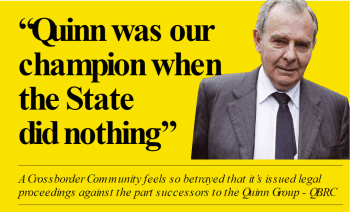
    Quinn was our champion when the State did nothing

    10March/April 2022This is a tale of greed, destruction, violence, corruption and betrayal.The Quinn Group business employing 7000 with profts of €500m/year has turned into a husk of itself with only 800 employees and meagre profts with its construction division scandal–ously losing money. Conventional wisdom blames the recklessness of Sean Quinn but there was a further betrayal of the community that, refecting national indif–ference to the border counties, has gone untold.Keep your eye on who was in charge as the Quinn Group has disintegrated! The name of the Quinn Group was changed to Aventas in 2013 to Quinn Industrial Holdings in 2015 and to Mannok in 2020. Along the way it sold of Quinn Glass, Quinn Plastics and Quinn Radia–tors abroad. The sale of Quinn Packaging did not complete.However, the frst big event that should detain us is that on 30 March 2010, following an application by the Central Bank of Ireland, the High Court appointed joint provisional administrators to Quinn Insurance Limited, “Quinn was our champion when the State did nothing”By Michael Smith A Crossborder Community feels so betrayed that it’s issued legal proceedings against the part successors to the Quinn Group – QBRC The name of the Quinn Group was changed to Aventas in 2013 to Quinn Industrial Holdings in 2015 and to Mannok in 2020. Along the way it sold off Quinn Glass, Quinn Plastics and Quinn Radiators abroad. The sale of Quinn Packaging did not completethe frst manifestation of regulatory stringency that has now been playing out for 12 years. Then, in April 2011, a share receiver was appointed over the whole Quinn Group, by Anglo Irish Bank Group (then owned by the State), to which the Quinn Group owed over €2.8 billion. A receiver took control of the Quinn family’s equity interest in the Quinn Group (Quinn had divested himself some years earlier), replacing them with a board of outside professionals. This served the interests of bondholders who now owned 25% but had 75% voting right, with the balance held by the State. Formerly the bondholders interest had been contingent not a shareholding and they technically had no voting rights.That is the principal grievance of Sean Quinn – he accepts that he had scandalously over-invested in con–tracts for diference (CFDs – suspended payments, i.e. agreements to exchange the diference in value of a fnancial instrument between the time at which a con–tract is opened and it is closed) but feels the situation could have been salvaged if nerves in government had been held and the bondholders not indulged. The Quinn Group and its advisors considered it could repay the €2.8 billion it owed including the €2.34 billion it owed Anglo for share support. Others say that would have depended on retaining institutional confdence that he had done a great deal to lose.Anglo and Quinn had been in discussions to avoid a legal dispute over the way Quinn had supported Anglo’s shares, with awareness from State regulators that the State has disingenuously always tried to deny. But the plug was pulled.NEWS March/April 2022 11Quinn was declared bankrupt in the Republic on 16 January 2012.The State’s motivation may or may not have been primarily the welfare of the local community and its jobs. But it compromised on legality. A notable delinquency was ignoring the outrageous actions of Anglo Irish Bank. Ann Nolan, the Second Secretary General at the Department of Finance with responsibility for fnancial stability/risk management gave evi–dence in 2015 to a case taken by the Quinn family against IBRC, and Sean Quinn and former Quinn Group directors. The family had had a 25 per cent stake in Anglo, held through the CFDs. It later converted this into a 15 per cent stake in the bank, using bank fnance, partly channelled through Quinn Direct Insurance, while other long-term customers, of the bank (the Maple 10) used further loans from the bank to buy the other 10 per cent. This con–version had the efect of preventing a food of shares coming onto the market. But it was ultimately illegal and improper to facilitate the wind-down of Anglo and the Quinn Group without resolving this extraordinary illegality for it was predictable that the Quinns would get some very substantial ben–eft if it could be shown that their own delinquencies were known to the regulatory section of the Department of Finance, the State.Nolan stated [above] that a draft letter dated 3 February 2009 from the then chairman of Anglo, Donal O’Connor, to Minister for Finance Brian Leni–han stated: “As requested, I enclose a report on the extent of lending for the purposes of share acquisitions and contracts for diferences generally and Anglo shares in particular”. However, she also drew attention to an alterna–tive version of the same letter, dated the next day which was amended to read: “The total extent of lending by the Bank for the purposes of acquiring publicly quoted shares is €1.767bn (See Annex 1). We do not lend for the purpose of taking positions in contracts for diferences. Of this total, €918.6m relates to lending for the purpose of acquiring shares in Anglo Irish Bank”.The letter was changed to omit a reference that would show the Depart–ment of Finance knowing in 2009 that Quinn Group had a CFD position. There were a lot of improprieties associated with the Quinn Group, espe–cially related to the support of Anglo’s share price. The problem was that Anglo had benefted from Quinn’s support and indirectly therefore so had the state. If the support was illegal and had been approved by Anglo and the State then the State might ultimately have to sufer some of the loss that it in the end seemed determined to dump on Quinn himself and his group.The Central Bank came to a weird, presumably embarrassed, settlement with Quinn Direct Insurance, the vehicle for the share support, and some of its directors. In December 2019 the Central Bank entered a settlement agree–ment with Liam McCafrey in his capacity as a former director of Quinn Insurance which

    Loading

    Read more

  • Posted in:

    Village Editorial: NI Institutional Abuse apology is meaningless because the extent to which MI5 used Kincora to compromise senior figures remains uninvestigated.

    After an inexplicable delay of five years, the public apology recommended in the final report of the Historical Institutional Abuse Inquiry will finally be made by the Northern Ireland Assembly (on 11 March). The announcement of the apology has been received with little enthusiasm by some of the abuse victims who say that they will not attend the event because it is “insincere and futile”. Understandably, some Kincora victims believe that the announced apology and the decision to demolish the Kincora Home will now be used by the authorities in a futile attempt to draw a line under the abuse allegations that linked British Intelligence with what happened at that establishment. The victims also feel that the apology will be totally meaningless, if the role of senior Government officials and Intelligence officers in deliberately inhibiting the setting up of a much preferred judicial tribunal, as allowed by the Tribunals of Inquiry (Evidence) Act, 1921, into such abuse is not now admitted by the relevant Government departments as part of the apology.  So far, there is no indication that any such admission will be forthcoming.  It is also believed that there will be no apology made on behalf of MI5 and other Intelligence agencies for misleading the British Parliament about abuse issues and for obstructing past investigations. The concerns of the victims are understandable given the abysmal record of dishonesty by past Inquiries.  Bearing in mind the threat to democracy posed by unelected officials unduly influencing elected politicians, it is important to examine how past Inquiries were manipulated for the benefit of the Intelligence Services and at the expense of the victims. The concerns of the victims are understandable given the abysmal record of dishonesty by past Inquiries.  Bearing in mind the threat to democracy posed by unelected officials unduly influencing elected politicians, it is important to examine how past Inquiries were manipulated for the benefit of the Intelligence Services and at the expense of the victims. When the HIA Inquiry was set up Prime Minister David Cameron and Home Secretary Theresa May assured Parliament that “no stone would be left unturned” in establishing the truth about the abuses. In a letter to one Member of Parliament, Theresa May stated: “I want to take this opportunity to make it absolutely clear that all officials, Government departments and agencies will give their fullest possible cooperation to his Inquiry. This includes the Security Service and the Ministry of Defence, if it transpires they have any relevant information to share”.  Theresa May’s letter was triggered by a report in the Belfast Telegraph on 1 August 2014, which said: “Retired judge Sir Anthony Hart, who is leading the Historical Institutional Abuse Inquiry (HIA), has said the inquiry “does not have sufficient powers” in its present form to investigate issues relating to the Army or MI5“. Sadly, despite Sir Anthony Hart’s publicly admitted concerns, Theresa May gave him no added powers and his Inquiry was doomed to failure.  In the light of the failures of the earlier Terry and Hughes Inquiries, Sir Anthony Hart must have known that he had been given a ‘poisoned chalice’.   For example, despite what Theresa May said, a telex message from MI5 staff at the Northern Ireland Office on 5 August 1982 to MI5’s Legal Adviser, Bernard Sheldon, in London, restating a general directive by the Director General of MI5, made it clear that: “no serving or former member of the Security Service should be interviewed by the police”. Sir Anthony Hart must have been aware that the Terry Inquiry, which was established by James Prior in 1982 and led by Sir George Terry of the Sussex Police, misled Parliament by failing to disclose that a senior MI5 officer at Army HQ NI, Ian Cameron, had ordered an Army Intelligence Officer, Captain Brian Gemmell, to stop investigating allegations of sexual abuse by William McGrath at Kincora.  Moreover, contrary to what James Prior told Parliament, Sir George was not a truly ‘independent’ chief constable. Records now show that he was actually “the preferred choice of Sir John Herman”, Chief Constable of the RUC, whose officers had been accused of covering up the Kincora abuse!  Had Parliament been told the full truth about these matters, a public inquiry would, almost certainly, have been inevitable. It is also likely that Sir Anthony Hart would have known that, during the Terry Inquiry, senior officials at the Northern Ireland Office had stated in one report that the Director and Coordinator of Intelligence at Stormont (Hal Doyne Ditmas MI5):  “..was worried about the likely intrusion of the inquiry into Intelligence matters if the terms of reference were as wide as those we had in mind.  He went on to say that “at least two possible witnesses who could come forward (i.e. Fred Holroyd and Colin Wallace) with evidence which (unless restrictions were imposed on what could be said) might touch directly on the extent to which the Intelligence services were or were not aware of homosexuality in this area, and might reveal (perhaps gratuitously) information about the structure and range of activities of these services at the time in question.  Names might be mentioned“. According to official records, the DCI: “.. was also concerned about what would be said about the secret work very close to extreme Protestant organizations, and close therefore to some politicians.  If these activities were to be revealed – through a leak if not through a public session of the inquiry – there could be a brisk reaction”. To cater for the DCI’s concerns, the NIO officials believed the Secretary of State for Northern Ireland “might want to suggest” to the Home Secretary and the Attorney General that  “an inquiry limited to the child care aspects (presumable therefore under the NI Powers, not the 1921 Act), or a 1921 inquiry with limited terms of reference“. That proposal by a senior official is appalling given the assurances that Theresa May and David Cameron had given Parliament.   It is very clear that MI5 was not only

    Loading

    Read more

  • Posted in:

    Villager News Miscellany

    August/September 20225Crick you brickOne inspiring perspective on politics, relevant to the abortion debate, came from Bernard Crick, a British political theorist who died in 2008. He wrote that politics, is a marketplace where irrec–oncilable interests come to resolve their difer–ences through compromise in order that people can devote their passions to the really important things in life.X, Why?Flashbacks to Ireland’s X case 30 years ago in Ohio which passed a law in 2019 that made abor–tion illegal around six weeks, when a foetal heart–beat can be detected. Hours after the Supreme Court overturned Roe, the Ohio law took efect. A ten-year-old girl, who had been raped, and was six weeks and three days pregnant,was forced to travel across the state line to Indiana to undergo an abortion. Formerly of course the Supreme Court had required all states to provide abortion services on the basis that the right to abortion de–rived from the Constitution.#ElonGateVillager loathes Elon Musk primarily because he seems to feel he is worth listening to when in fact all he is good at it making money, a capacity which in Villager’s mind is not a correlative of per–cipience. And inept quasi-wife-stealing. Anyway Nominative DeterminismWith the demise of Boris Johnson go a genera–tion of politicians with good, English, meaningful names. Mike Freer, resigned as the equalities minister, giving him more time to devote to freedom, the political inverse of equality. Robin Walker, a stalwart of a series of ministe–rial jobs under Johnson, moved on following the scandal raging about Chris Pincher’s pinchings. And Laura Trott…just left. According to Sky News: “Robert Halfon, the MP for Harlow, withdrew his support for Boris Johnson saying he had given the “beneft of the doubt” to Mr Johnson before, but recent events were “un–acceptable”. ‘Irishwoman’ Penny Mordaunt lost the Tories’ leadership election as she needed to daunt more. James Cleverley became education minister for a few minutes and, according to the Sunday Times, Conor Burns, a Mad Dog loyalist, is fuming that he didn’t promote him. Johnson’s former Security Minister James Brokenshire, who died last year, is now the subject of an annual lec–ture on “public service and restoring faith in poli–tics” at the Institute of Government.A crimeWell, Varadkar is not to be prosecuted for his breaches of the Ofcial Secrets Act (OSA) and perhaps the Corruption Act. Time was up for the OSA which has a six-month time-limit when, as it would have been here, it is prosecuted summar–ily. He’s had a hard enough time over the whole afair and he should be let get back to business though ideally with a little less deference to unfet–tered global capitalism, refex anti-environmen–talism and unedifying insistence on attacking those who made the complaints against him at every opportunity on TV3 and Virgin.News MiscellanyVillagerhe’s gratifyingly bungled his purchase of spammy Twitter, for $44bn, though it is now worth more than a quarter less than that. He is trying to extract himself — showing that he certainly is no gentle–man. Villager hopes he’s stuck with the inefable thing, which generates $6 per US user monthly in ad revenue, but has only one seventh the number of users (230,000) and one fourteenth the proft ($3.2bn in 2021) of Facebook, while its share price is roughly what it was when it foated nine years ago. Tik-Tok takeTikTok on the other hand is down with the kids — Twitter for adolescents — and makes creating flms easy. It has done for video-editing what In–stagram (whatever that is) did for photo-editing a decade ago, allowing amateurs to turn wobbly recordings into slick-looking flms.And whereas young audiences are now luke–warm about Facebook, TikTok has them hooked. Some 44% of its American users are under 25, compared with 16% of Facebook’s. According to the Guardian, which implausibly argues that “news fnds us in the best possible way and al–ways has”, it’s where we talk about Love Island. After 25 you’re fnished, Elon.Out of the toilet into the cold houseDavid Trimble, who has just died, was a cold man in the now luke-warm house. On the one hand he walked Vicky, his lesbian daughter, down the Laura TrottOhio goes back to basics, thirty years from 1992 6August/September 2022 aisle and later voted against his party’s line by supporting gay marriage in 2019 in the House of Lords when it was pushed on the North, though he had once opposed it in the Assembly. On the other hand Trimble’s daughter said he had been “taken aback” and “put his head in his hands” when she told him in 2013 that she was gay. “A lot of parents have a much worse reaction to their child coming out”, she noted plaintively. Vicky’s wife Ros said she frst met her future father-in-law while she was wrapped in a duvet and coming out of the bathroom of his London fat, where Vicky was liv–ing at the time. “I came out of the toilet and said to him that I wasn’t expecting anyone and he re–plied: ‘Neither was I’”, she recalled. “He’s always been really lovely and has become a father fgure to me”. Less endearingly, the awkward Lord told peers: “I have found myself taking a particular po–sition with regard to same-sex marriage which was forced upon me when my elder daughter got mar–ried to her girlfriend. I cannot change that, and I cannot now go around saying that I am opposed to it because I acquiesced to it. There we are”. Vicky told theBelfast Telegraph she had been “a little surprised” by her father’s comments. Book FestivalA really convenient short-cut every time the word Dalkey appears in the media is to just substitute the word money and see if that makes things clearer.The Dalkey Book Festival is the Marks and Spencer haberdashery department, the Magill Summer School, the Irish Times, the Kelly’s Hotel, of literary outings.Agog at agriIreland’s 135,000 farms produce 37 per cent of national emissions. The biggest agricultural pol–luters are intensive dairy farms. According to Pro–fessor John Sweeney, Teagasc estimates that the average dairy farm income last

    Loading

    Read more