admin

  • Posted in:

    Feeling the Heat

    72March/April 2022to participating in climate demonstrations – it appears that being photographed waving a banner remains a “bridge too far” for the majority of working scientists. Whether this too changes as climate impacts intensify remains to be seen.While as individuals, most scientists are happy to engage in advocacy, three quarters of respondents did not think the IPCC itself should engage in advocacy work, believing it is more efective when it is seen to be strictly “sticking to the science”. Given the repeated eforts, mainly from the right, to politicise climate science and to discredit scientifc evidence by casting doubt on the integrity and honesty of the entire IPCC process, this caution is understandable.The stone wall that most scientists erect between their personal lives and their work has, in the face of the climate emergency, begun to crumble. Two in five survey respondents admitted that their knowledge of global warming has afected their decision on where to live. When it came to the most intimate personal decision on whether or not to have children, some 17% stated it had had an impact, while 21% said that global warming had infuenced their lifestyle choices, including those relating to diet, transport and travel.Being a professional in a feld often confers feelings of invincibility: many doctors for instance intuitively believe that illness is something that happens to other people, and can feel genuinely shocked to fnd themselves as patients. Similarly, scientists may have hitherto felt professionally immune to touchy-feely concepts like “climate anxiety”. We now know for sure that this is no longer the case. John Gibbons is an environmental journalist and commentatorassessing the causes and extent of climate change. It published its Working Group report last August.According to the IPCC: “Unless there are immediate, rapid and large-scale reductions in greenhouse gas emissions, limiting warming to close to 1.5 °C or even 2° C will be beyond reach”. When asked whether they believed they would witness “catastrophic impacts of climate change in your lifetime”, an astonishing 82% of respondents said yes. With ages of IPCC scientists ranging from the 30s-60s, this indicates just how close the great majority believe we are now to catastrophe.On a more positive note, one in fve scientists said they still expect nations to act to limit global warming to around 2°C.While traditionally, scientists have been extremely reluctant to engage in climate advocacy of any kind, fearing it might be seen as a loss of objectivity, the Nature survey found 81% of respondents agreeing that climate scientists “should engage in advocacy on this issue”.Some two thirds of scientists report that they already engage in climate-advocacy work, with science-promotion via speeches, articles and videos being by far the most common mediums. Two in five said they personally contacted lawmakers or government ofcials to advocate on climate-policy issues, and a similar number sign petitions and letters supporting climate action.However, just one in four scientists admitted As the climate emergency deepens, the pendulum of public and political opinion is swaying wildly, from optimism to absolute despair, and every point in between. However, one group uniquely placed to ofer both a personal view and an expert perspective are the hundreds of scientists who co-author the mammoth Intergovernmental Panel on Climate Change (IPCC) assessment reports.The science journal Naturerecently canvassed the views of these IPCC experts. The results are far from encouraging. A total of 234 scientists replied to the anonymised survey, and three in fve of them believe the Earth will heat by at least a devastating 3°C by the end of the century. The target of the 2015 Paris Agreement was to limit global warming to “well below” the 2°C danger line, and ideally, to as close to 1.5° as possible. Seven years and one global pandemic later, global emissions remain on an extremely dangerous trajectory.When asked if they believed the world now faces a “climate crisis”, nine in 10 respondents agreed. Almost two thirds of the scientists surveyed admitted to personally experiencing “anxiety, grief or other distress” because of their concerns over climate change.What is particularly sobering about these fndings is that senior scientists are professionally sceptical and cautious, with their careers built around objective observation and empirical data, rather than personal feelings or impressions. They are, in essence, the very last group you would expect to be sounding the alarm bells – unless they truly believe the situation is indeed dire. The scientists surveyed by Nature are members of the IPCC working group charged with The science journal Nature reported three in fve IPCC experts believe the Earth will heat by at least a devastating 3°C by the end of the centuryFeeling the HeatEven the scientists admit to feeling personal anxiety, grief or distress, over global warmingBy John GibbonsENVIRONMENT

    Loading

    Read more

  • Posted in:

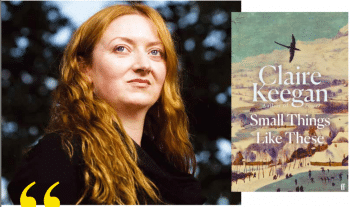
    The work of Claire Keegan: Can you ever have the same thing twice?

    66March/April 2022WEXFORD-BORN CLAIRE Keegan burst in on the Irish literary world in 1999 with her aptly named collection of short stories, ‘Antarctica’. These studies in extremity were followed by another collection, ‘Walk the Blue Fields’ (2008), which saw Keegan apply a less heady, more sedate artistry. But it was in 2010 that ‘Foster’, her novella and winner of the Davy Byrne’s Award for Irish Writing, frst located her alongside Maeve Brennan, William Trevor and John McGahern as one the fnest The work of Claire Keegan: Can you ever have the same thing twice?The ideal short story is like a knifeWhen working within the confnes of a short story, the result will either work or it won’t.practitioners of the short form. After an eleven-year-long wait Keegan has resurfaced with the highly anticipated ‘Small Things Like These’, another miniature study. Many writers have agonised over that perfect thing, that mythic little creature, the short story: so favoured and pursued and perfected, most obvious–ly by the great minds of Irish and American storytell–ing. Still more voices have sought to conjure the ex–act formula required for its construction. Where does that instinct come from we may wonder, the instinct By Nadia WhistonCULTURE March/April 2022 67to categorise the elements that must combine to ensure that a miniature work of art happens in the way it is meant to. Perhaps this aware–ness tells us that, when working within the confnes of a short story, the result will either work or it won’t. It is either a perfect thing or is not. The success of the thing is absolute.For F Scott Fitzgerald the secret lay in fnd–ing the “key emotion”. Michael Swanwick felt that the short story “should be something that can be held in the mind all in one piece”, that the “ideal short story is like a knife – strongly made, well balanced, and with an absolute minimum of moving parts”. Claire Keegan’s ‘Foster’ (originally pub–lished as a short story in the New Yorker, later as a novella by Faber) has haunted readers for a long time. It is the type of story that comes to rest in you. When you think of it, you can feel it there, the way you remember the feeling of your dog’s head in your hands, its weight, its memory. It tells the story of an unnamed 10-year-old narrator and her stay with the Kinsellas on their farm in Wexford in the hot summer of 1989. Her mother is pregnant again and she is to stay with them until she is called back. It is the familiarity of ‘Foster’, its clarity, its specifc mode of humanness which makes it a difcult book to get over. Linguistically it is propelled by the purity of vision in the describ–ing ‘I’ of the narrator. Her essential innocence acknowledges and uncovers, without senti–mentality, the pain of the adults whose world she enters. She enables their grief to breathe, to be understood. And while she tells us who they are, about the tenderness with which they treat her, we come to glimpse her pain and her longing. With remarkable, bafing, simplicity readers are reminded of the imperative for, and the exquisite consequences of, afection; of our need for it, of the moment when we re–alise what having it feels like, of the moment when it gets taken away from us. In ‘Foster’Keegan re-entered, shape-shifter-like, into a space she had occupied before. In her debut, ‘Antarctica’, Keegan had stepped weightlessly a handful of times into the soul of a pre-adolescent girl. It is a role over which she displays quixotic power. One which, by vir–tue perhaps of its timing, ofers the author the ability to intercede upon the privacy of their thoughts, capturing them with a light androgy–nous hand. These very young women are often watching their mothers, see their fathers mis–understand – often mistreat – their mothers, they watch their mothers try to be women, try to be mothers, they watch their mothers fall, retreat, rebel and collapse. Interestingly and refreshingly, their almost tomboyish observa–tions ofer no feminist stance, no pointed or driven critiques. The women’s tales are set among the very physical provincialism of rural Ireland, root–ing them in an earthy salty muddy very real and quite asexual nightmare. Humanness is positioned directly against the elemental; the harsh demands of life take the form of trau–matised chickens. Heifers cry and moan and bewildered sheep are driven to the sales in the boot of the family Volkswagen. There is a degree of comedy which binds the margins be–tween nature and love, sex and violence very close together, and it has the efect of neutral–ising the many elements, establishing them as inseparable forces; capturing the ofbeat, awkward, cruel, often tragic reality of human existence. But through all of this Keegan exerts an im–pressive control over her visions which prohib–its drama. And unlike, for example, the important voice of feminist short-story-teller, Meave Kelly, Keegan communicates the devastating emo–tion of her stories with images rather than by lines of reported thought: we are not told what to feel, nor what our characters feel, instead meaning is trapped inside the images of what our characters see. The efect is not strident, it does not protest; it is evocative, poetic and necessary. The androgyny of Keegan’s voice draws un–expected comparison with other Irish voices in literature. Colin Barrett’s ‘Young Skins’ (a collection When you think of Keegan’s ‘Foster’, you can feel it there, the way you remember the feeling of your dog’s head in your hands, its weight, its memoryfrom 2013 which won the Frank O ‘Connor International Short Story Award, the Rooney Prize for Literature, and the Guardian First Book Award) has the abrasive power of early Keegan. Barrett’s ‘Bat’, like Keegan’s ‘Love in the Tall Grass’,is one of the fnest studies of a life I have ever read. Unlike the author of ‘Foster’, Barrett chooses as his constant stage the Irish provincial town; his hero the male adolescent. His characters do not witness sexuality, they are

    Loading

    Read more

  • Posted in:

    Irish as ecology

    62March/April 2022SoulPÁDRAIG PEARSE, the Irish revolutionary leader of 1916, declared “Tír gan teanga, tír gan anam,” which translates as “A country without its language is a country without a soul”. Certainly, by 1916 Ireland was a country that had lost its sense of self. Although acts of rebellion ultimately resulted in an independent state for roughly two-thirds of the island, much of what was hoped would be restored fell by the wayside. The reasons for Ireland’s predicaments are, of course, historical. The sins of colonialism reach into contemporary Ireland still. What Ireland has become is an imitator of trends, as opposed to a nation certain of itself and its defning characteristics. What Pearse described as the country’s soul remains lost. This sense of loss predominates in us as a people since residing in Ireland’s language Gaeilge(Irish) lies much of our heritage. It’s a language most of us don’t know. The language is at the periphery of a nation dislocated from itself. Irish as ecologyBy Liam Tiernach Ó Beagáin and Laoise Ní FhearchairThe language: from politics to culture to society marketed as environmentalismis promised for us, the humans. Neoliberalism is winning the ideological battle. The Irish view of life is weakening. But it can be resuscitated by the gems held in our language. Our culture is often mocked and belittled. The language is often demeaned. Viewing one language as superior to others is utterly rejected, indeed disdained, by contemporary linguistic theory but how often do we hear of contemptuous alienation from the simple pieties of the Leaving Certifcate novel, ‘Peig’. Modern life is full of this. The relentlessly driven ‘power-couple’ Vogue Williams and Spencer Matthews (we shall refer to them as “WM”) recently described Gaeilgeas “an ugly language”. Ryanair, Ireland’s low-fares airline openly mocked the language when Irish speakers asked for an Irish-language option on its website, while 3 Mobile asks people with “difcult” Irish names to translate them into English. Attitudes like these are not new. For example, the great Catholic emancipator and royalist Daniel O’Connell viewed Gaeilgeas inferior to English. We discuss here how our currently unused language can help move us toward a psychologically healthier, more culturally rich and caring society, and in doing so end the alienation of a nation. 1. Contemporary Ireland: Neoliberalism, humans and superhumansToday Ireland is haunted by colonialism, while a rampant capitalism perpetuates deference to outside ideologies that confict with who we are as a people. Neoliberal ideology encourages the false neo-Darwinian belief that it’s sink or swim. One must outdo the other to ‘get ahead’. But always inherent in the Irish attitude to life is zeal for strength in unity: that we are all in this together and that we look out for one another. This is what we want, but it’s not what we have. On the one hand, massive tax-free profts are guaranteed for multi-billion dollar corporations that we will describe as the superhumans. While, on the other hand, little CULTURE March/April 2022 63Some of these mind-sets towards Irish culture can be summarised in the following aphorism: what was: inferior, what’s now: superior. But it’s an absolute myth. What we currently have is an unsustainable greed machine built on a post-colonial porridge of wafe-ideology. Certainly, whatever of O’Connell, contemporary views such as WM are driven by the language of a specifc individualism that, for example, Friedrich Nietzsche so despised (‘On the pathos of truth’, 1872) – one that Jean-Paul Sartre warned would lead us to an inauthentic life (‘Being and Nothingness’, 1943). In buying into the view of life that the superhumans ofer, the individual, believing themselves to be free, hands over responsibility for their lives to them. From a deontological perspective, the individual is but a means to an end, who is unknowingly used in acts of repulsion towards Kant’s ethical demands and thus becomes the amadán or fool. If a language not only represents societal concepts but also shapes them, in what the great linguist Wilhelm von Humboldt (1767–1835) described as a nation’s “character of language”, then perhaps the language common in Ireland today (whatever its tongue might be) describes where our values lie. Elite decisions appear to result in ever-greater choices for everyone. However, choices trend to what seem to be consumer-driven demands, since these choices are agreeable with elite interests. Vacuous freedoms of choice in consumer purchases are illusions. Actual choices in other areas bear this point out, since there are little or no choices. Healthcare and housing are not easily available unlike, say, noodles.Humans demand togetherness. For example we want afordable healthcare and housing and we want the superhumans to pay their fair share. However, this is not in the interest of the superhumans who are so neatly entwined with government. For example, over half of Ireland’s TDs are millionaires tied to property and fnancial instruments (Philip Ryan and Wayne O’Connor, ‘Revealed: Half of Ireland’s TDs are Millionaires’, The Irish Independent, 13 May 2018). The cosiness between elites and TDs has been encouraged by successive Irish governments through tax-exemptions that allow the superhumans to buy up large swathes of housing, efectively barring the humans. What has resulted is another governmental crisis and is one that is best swept under the rug since such stories are not becoming in a media concerned with elite interests (the classic by Herman and Chomsky, ‘Manufacturing Consent’, 1988, explains why). Real freedom is saved for persons seen to be of merit. Despite what their very own mythoswould have us mere mortals believe, these superhuman entities are not signs of humanity overcoming itself, but more than likely, if allowed to continue they are signs of humanity ending itself. Let us focus on tax for a second. It is estimated that multinational corporations have avoided €1 trillion in taxes through what is known as the Double Irishtax loophole (Paul Mark, ‘Ireland is the world’s biggest corporate “tax haven”, say academics’, Irish Times, 13 June 2018). Apple has been an egregious benefciary of the Double Irish. While Ireland was still struggling under

    Loading

    Read more

  • Posted in:

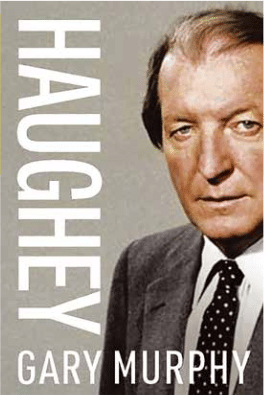
    Haughey: Conor Lenihan reviews the well-written, but unfortunately authorized, biography of the disgraced former Taoiseach

    60March/April 2022Both the source of the Haughey money and his energetic libido deserve more detailed exploration GARY MURPHY of Dublin City University hit the pre-Christmas market with a 716-page tome on Charles J Haughey. Unfortunately it will not be the last word on his subject.It is not a criticism of this book to state that many more books will emerge on the topic of Mr Haughey. Murphy has provided the most exhaustive account to date. The DCU academic has been greatly helped by his access to the Haughey private papers and assistance from the Haughey family. The result is a colour portrait of a man who has often been painted in black and white.My own book, ‘Haughey – Prince of Power’,  written in 2015, drew from my own connections with the former Taoiseach. The pressure for me was to pare the material down to make my biography readable and accessible to younger readers. Gary Murphy, as befts an academic, has written at length and in great detail. His  portrait of Haughey’s early years and fam–Haughey: Conor Lenihan reviews the well written, but unfortunately authorised, biography of the disgraced former TaoiseachHis assertion that “there was no evidence of any political impropriety by Haughey in relation to the monies he received” counts as one of the most egregious misjudgements in recent Irish political biographyily background is new and insightful. However, Murphy treads carefully and too cau–tiously on the two explosive aspects to the Haughey career – his corruption and his 27-year relationship with femme fatale Terry Keane.The frst Moriarty report concluded that Haughey “unethically” received more than £9m from busi–nessmen between 1979 and 1996, and that he had done corrupt favours for some donors including a youthful Revenue-challenged Ben Dunne and a passport-seeking Arab sheik. The incidence and scale of these payments, Moriarty declaimed, “particularly when governments led by Mr Haughey were championing austerity, can only be said to have devalued the quality of a modern democracy”. CULTUREFlash, for the 1960s March/April 2022 61Murphy unwisely downplays this. His assertion that “there was no evidence of any political impropriety by Haughey in relation to the monies he received” counts as one of the most egregious misjudgements in recent Irish political biography. Certainly the book sufers as the ofcial or authorised biography and UCD professor Diarmuid Ferriter inferred that Murphy was derailed by deference. It as if Murphy has both a disdain and mental reservations on Haughey’s prime delinquencies. Wide-ranging existing research on his seamier sides: corruption and Keane, goes unreferenced. Keane gave a series of very telling interviews about her fery and longstanding relationship with Haughey. Both the source of the Haughey money and his ener–getic libido deserve more detailed exploration. For instance with the Haughey millions stashed in the Crown colony of the Cayman islands it is hard not to believe that CJH was fatally compromised in relation to dealing with the British, a belief propounded by his successor Albert Reynolds. Haughey’s furtive ofshore accounts can hardly have passed unnoticed by hostile UK security services.I knew Terry Keane and conclude the opposite to Murphy –  she was very infuential and did act as a political confdante to Haughey throughout their time together. My father, Brian, often dined with the couple. He often noted that in many respects her political judgements were far more acute than Haughey”s. Terry Keane also brought an eclectic string of new admirers to the Haughey table – drawn from the world of media, the arts, and fashion and not naturally supporters of Fianna Fáil.Haughey’s supreme failure was his caution. He rarely refound in his late career as leader and Tao–iseach the extraordinary reforming and enlightened approach that he purveyed as Minister for Justice and Finance in the 1960s – the Succession Act, the tax exemption for artists and free travel for the el–derly.   The decisiveness of the early years years was later superseded by a surprisingly dithering Charvet modality.The Arrns Trial, a serious car crash and repeated health problems seem to have rendered him risk averse on key agendas. On the positive side, unlike his nemesis Garret FitzGerald, he had tremendous executive skills and could both conceive and imple–ment big, some might say grandiose, projects or plans; the IFSC, Temple Bar, the Museum of Modern Art. Haughey was also the frst Taoiseach to hire an advisor on the environment, academic ornithologist David Cabot, well before ecology was normalised in the Irish public consciousness.For ofcial Ireland his greatest shame is his naked venality and criminal pursuit of money to support his lavish lifestyle and high-maintenance political career. Ownership of racehorses, a Gandon Mansion with a stocked cellar and an island of Kerry, sparked rumours but embarrassingly little media investiga–tion. It’s honestly difcult to say if the same caution would prevail today.Unfortunately, very few villains of Irish public life actually go to jail. The irony in Haughey’s case was that it was prejudicial gauche comments by the often zealous Mary Harney that allowed him to avoid the rap of the criminal law.In the Gary Murphy version Haughey’s dodginess reads like the prosaic graft and cor–ruption of US city bosses like Boss Croker and James Cur–ley of Boston. Such carry-on was of course antithetical to statesmanship. Counter-intu–itively the abrasive Haughey was chronically insecure ap–parently preferring to play as a big fsh in a small pool than risk his strokes in a big pool. The novelist Francis Stuart once acerbically remarked that the problem with Haughey was that he wasn’t gangster enough.Disillusioned with his early experiences as Taoiseach Haughey confded in Terry Keane that he wanted to quit public life and settle in the South of France, with her of course. Sadly he spent so much efort becoming Taoise–ach he was either too cynical or too exhausted by the time he ascended. His success after 1987 was largely due to an under-appreciated new-found humility and the knowledge that he only had a very short time to confound his critics.Insecurity didn’t cut across his ego. PJ Mara recorded that Haughey had “a

    Loading

    Read more

  • Posted in:

    Donkeys and Lions led by Lyons

    56March/April 2022GRADUATE RESEARCH students are often told of a drunk who has lost his keys elsewhere but insists on searching for them under a street lamp “because that’s where the light is”. It is a warning of the danger of relying on data merely because they are available rather than because they address a research question. More formally termed “convenience sampling”, data gathered by this methodology, unlike random sampling, are treated with caution because of difculty in applying the results generally.For this reason, academic research papers publish a prominent statement of the limitations of the scope and application of their methodology. Acknowledge–ments of any such limitations are conspicuously lacking in the coverage of reports of Irish property markets published by the two leading property web–sites, Daft and MyHome. Nor, for that matter, do such considerations prevent politicians waving these reports at each other across the Dáil chamber as con–clusive proof of their arguments. Admittedly, it is difcult to explain nuance and com–plexity. But that is precisely the job of experts, and all the more so when they have chosen to put themselves forward as a public commentator. Too many of the con–tributions to our debate on housing are either blithely, or wilfully, ignorant of just exactly what is being meas–ured in the reports that are so readily quoted. In some instances, the reports themselves do little to correct these misconceptions. What qualifcations J Vivian CookeDaft:the solution to the housing crisis depends on facts-led public-policy but we need to be discriminating about the facts we choose and who chooses them, even when it’s Ronan Lyons Daft Reports whose “statistics are based on properties advertised on Daft.ie for a given period” all too readily confate the observations of its sample with the overall national situationand explanations are to be found skulk at the very back of the reports in the small print.Daft Reports whose “statistics are based on proper–ties advertised on Daft.ie for a given period” all too readily confate the observations of its sample with the overall national situation. And they do so with a shocking casualness that would not be accepted in peer-reviewed academic publications. Just one of the many examples of this tendency is the commentary in its Q4 2021 Rental Report, which refers to “712 ads for rental homes in Dublin”, but, in the report’s headline, this becomes “712: The number of available rental homes in Dublin”. And, in the Irish Times: “Daft.ie’s rental price report for the fnal quarter of 2021 shows there were just 712 properties available in Dublin, the lowest level since its records began in 2006”. This was inac–curate and the Irish Timeswas far from alone in misrepresenting it.What the Daft property fgures measure is not a crisis in supply available to rent, but – to be entirely accurate – a crisis in the number of adverts on its web–site. While Daft could be, indeed most likely is, experiencing a cashfow squeeze due to underlying market shortage in property supply, such a conclusion is suggested but not proven by their own data. Property website reports are unable to overcome problems generated because they do not capture transactions that are:• Not advertised on their website (!);• Actual prices paid as distinct from the initial prices advertised (also !);MEDIADonkeys and lions led by Lyons March/April 2022 57• The rents paid by people in existing tenancies;• Of-market transactions;• Self builds;• Institutional activity.This fawed methodology also explains the discrepancy between Daft’s fnding that “(T)he number of available rental homes in Ireland is 1,397” in Q3 of 2021 rental market, and record–ing by the Residential Tenancy Board of 15,711 new tenancies in the same period. While the data underlying both statistics are true, they present very diferent pictures from each other. Diferences in research design and methodol–ogy inevitable leads to diferences in fndings. The Department of Finance’s comparisons of property reports from diferent sources show sig–nifcant variations in their results. The magnitude of their diferences precludes the possibility that all of them are accurate. suggested technical refnements to the Council’s predictive model, PII were satisfed with a call for an “independent review of the HNDA and supply targets to ensure that Dublin can achieve its full potential”. Both submissions were true to their authors’ track records and concluded that DCC should remove existing restrictions on the con–struction of build-to-rent projects. Supply and Demand is an important analytical construct, but it has its limitations. Most notably, it only holds true when all other things are equal; yet all other things never remain constant. This is a point that Lyons made in these pages back in the November 2014 issue: “Everything else being equal. . . [U]nfortunately, everything is not equal”. The information generated from a simplifed model of supply and demand can inform a coun–terfactual situation: that is what prices would have been for a diferent quantum of supply. Which, although interesting of itself, only pro–vides a necessary but insufcient frst step to explain price movements. Accurate, real-world observations of the property market require more methodological sophistication that, among other things, account for intervening variables and con–trol for diferences within a sample population.For instance, in addition to other limitations, the author qualifes the Daft Report fndings by highlighting how market trends have changed due to the increase in the proportion of longer terms tenancies – ie 4-year tenancies. It is difcult to see how the Daft Rental Report controls for this factor as the flter on its website only provides for tenancy terms as far as 3 years. Even then, the 6 properties nationally returned by this flter as available for a minimum tenancy term of 3 years, put the minimum term as 1 year + in the text of their adverts. If the Daft Rent report only uses observations from its own listings, then it is fail–ing to account properly for what its author admits Supply and Demand is an important analytical construct, but it only holds true when all other things are equal; yet all other things

    Loading

    Read more

  • Posted in:

    Byrne should burn

    March/April 2022 55“Fact Check!”. He proceeded to rollick through two minutes of almost entirely accurate fact checks while pointing at an ill-at-ease but plushly-suited Michael O’Flynn and a very not-ill-at-ease Jennifer Carroll MacNeill. Claire Byrne let herself down at one stage by interrupting him to confrm that his name was Tony. She would not have asked that of Jennifer, even when no-one knew who Jennifer was.There was a bit of fak for Sinn Féin’s Matt Carthy, but none of it stuck as much as it could have it had been better-directed and a few punters who seemed open minded were allowed to ventilate without correction. But it was too late. Groves had won the evening; and RTÉ had lost the day.If RTÉ wants to treat Sinn Féin diferently from everyone else, it had better say why. The Broadcasting Act commits RTÉ to fairness and impartiality: Current affairs broadcasts, including matters of public controversy or debate, must be treated in a manner which is fair to all interests concerned.This show was not impartial, it was clumsily biased. Having embarrassed themselves with this exercise RTÉ needs to do the same for every other party, certainly every other big party. Let’s hear a folksy evocation of what Fine Gael, as neoliberals, does to people with two cows. To achieve that special RTÉ balance, RTÉ will need to fnd equivalents to Eddie Hobbs, Jennifer Carroll MacNeill and Michael O’ Flynn. Has anyone in there still got the numbers for Dessie O’Hare, Joan Burton and Tom McFeely?It was ludicrous, crude, nasty and inappropriate but most of all it was inefective. After that, you would almost vote for them. and 30 Things to do with your SSIA. Let me stop things there: before entering politics he ran a series of shows about how to make money and avoid rip-ofs. So it’s sub-optimal that before entering politics his main legacy was the auto-erotically-named Brendan Investments which pissed away €13m, 90%, of its investments, on the world’s worst properties, mostly the savings of little old ladies from Cork. That was before he entered politics. Politicswas Renua, the world’s least successful party – with no (0) elected representatives and a platform culled from the rural 1970s. And before he became an anti-vaxer.As an antidote, Jennifer Carroll McNeil came on with very unwild eyes and the world’s most expensive shoes to say that capitalism works for everybody, though nobody could stop thinking that it had worked so well for her that there probably wasn’t much left for everyone else. Moneybags ex-Nama and FF builder Michael O’Flynn’s eyes wandered when he was under pressure but like the other two there was never a ficker that his view could ever be changed. After consummate performances from this not terribly-likeable trio, it was time for someone called Tony Groves. Fans of left-wing twitter will know Groves as the man who says he is Ireland’s leading left-wing tweeter (he’s not) and takes his shirt of a lot. He also co-fronts the ‘Tortoise Shack’ podcasts, probably the most popular socialist programmes broadcast from Ireland. Groves has clearly never been invited anywhere outside his shack before so he’d prepared, with his shirt on and the killer opening line You know it was important television because the Irish Timesdidn’t review it and it wasn’t mentioned again on RTÉ after it had been narrowcast. It was of course Claire Byrne putting the boot into Sinn Féin.I’m all for the exercise, and think SF deserve a hard time because of all that killing they defended, a dubious commitment to democratic accountability and because they’re not actually going to deliver a radical left-wing agenda, and are anti-green.I wish they were radicals but we can tell from their performance in the North, from what they do at local government and from their policies and manifestos that they’re not really going to be the antidote to a hundred years of FF and FG. I’ve said before I’d like to see them commit to increasing equality by 1% annually, stringently measured by say the Gini Coefcient. And if they’re not achieving it they should leave whatever miserable coalition is in their way. They won’t though because they want, and have scented, power and because they will go into coalition with whoever will take them, including right-wing parties, if they feel they can pursue a mandate to push an unhurriable United Ireland.Having said that, they’re competent politicians, SF/IRA have ended a longstanding war, making them peace-makers, and they seem to ofer the best opportunity of some left-wing policies, if – which is unlikely – they can get a critical mass of (other) left-wing parties in with them in coalition. Whatever about that, RTÉ had lined up Eddie Hobbs (property man), Michael O’Flynn (property man) and Killiney-based Jennifer Carroll MacNeill (Fine Gael) as antagonists to Sinn Féin, on a programme that was mostly about property. It launched with a wild-eyed Eddie Hobbs’s anecdote of how socialism gives one of your two cows to losers. According to Wikipedia before entering politics Hobbs was known for presenting RTÉ shows such as Give or Take Club, Rip-Of Republic, Show Me the Money Byrne should burnBiased.Michael Smith reviews Claire Byrne Live: The Rise of Sinn Féin (14 February, RTÉ 1)MEDIA

    Loading

    Read more

  • Posted in:

    2022 Media blues

    54March/April 2022Such campaigns could end up being at least as signifcant as any aid made available as a result of the recommendations of the Commission on the Future of Media. The funding problems the Future of Media Commission must address are obvious. In addition to plummeting newspaper audiences, RTÉ has not had an increase in its licence fee since 2008, despite increased competition from satellite and streaming services. Realistically RTÉ needs a signifcant funding increase, and to break the link between television sets and the licence fee. This was attempted before, with a proposed move to a “screen tax”, but the idea was long-fngered and eventually dropped after water-tax protests made introducing another household tax unpalatable.The other issue for RTÉ is reliance on advertising revenue. A look across Europe shows many diferent variations in public service broadcasting, from the BBC’s licence only to a household and business fee in Germany, an electricity surcharge in Greece and Serbia, and grants paid directly from central government in other countries.One novel suggestion, put forward by solicitor and writer Simon McGarr, is to allocate a share of central funds to RTÉ. Not only that but the proportion would be fxed as a percentage of government revenues, and locked in for a signifcant term, say a decade.This would release RTÉ from dependence on commercial advertising (and so help commercial television, which could them attract more advertising revenue), while allowing RTÉ to plan over the medium- to long-term without having to worry about near-bankruptcy every year. In addition to securing its future as a news source, the station would also be able to invest in developing indigenous drama distinct from the latest American or other imported programming, some of which it might even sell on to streaming services and other broadcasters internationally. last autumn, and there it has sat ever since, gathering dust. News media in Ireland have been in crisis for over a decade, ever since the perfect storm of a property advertising prolapse at the same time that Apple launched the iPhone and Facebook/Google (Meta/Alphabet?) achieved critical mass, leading to the crumbling of both circulation and advertising revenues.The government seems much more excited about the similarly named but distinct Media Commission, which will replace the Broadcasting Authority of Ireland and regulate not only traditional broadcasting but streaming media, and potentially every internet company headquartered in Ireland. That is: the new Media Commission may also be a New Media Commission.Despite what some may fear, this is unlikely to lead to overreach by an Irish regulator possessed of powers to rival the Great Firewall of China. This government has no interest in upsetting the large tech companies whose accounting practices boost the Irish tax take. A government which went to European courts to prove it did not have to tax Apple is not going to interfere with their business models.However, both backbenchers and ministers will seize on the opportunity to make antagonistic noises about cyberbullying and online trolls, while doing little in practice beyond setting up a Commission with a commissioner whose major power will probably be the right to nag people to be civil online.The new Media Commission may end up doing old media a favour if that is the case. Given a likely mandate to promote civil behaviour online and discourage trolling, the media will need an advertising budget. Some of that will inevitably go on Facebook ads, and on glossy online videos and audio inserts to podcasts, but some of it will also go to much0needed newspaper, television and radio advertising.Looking to the year ahead, it is hard to feel optimistic about the multiple current reviews of the media landscape in Ireland though certain reports that the Minister for Justice is fnally to bring the 2022 review of defamation law to Cabinet and that she will recommend abolition of juries in High Court defamation actions and safeguards against SLAPP orders, though hardly radical, did warm the journalistic cockles a little in February. Freedom of information (FOI) law is being reviewed again, and the signals are not good. There is a tendency for new FOI laws to be less about opening up public information, and more about giving civil servants new excuses to refuse FOI requests. The last freedom of information review grudgingly rolled back the requirement that citizens should have to pay to obtain public information, but not without an intense and sustained campaign for a more open government. During the review, one government minister was prompted to complain about freedom of information being abused by “two guys with a website”. This was a reaction to a case which went to the Supreme Court after the Information Commissioner found that NAMA, the State’s ‘bad bank’, was indeed subject to access to environmental information regulations, an EU law similar to freedom of information legislation but covering environmental issues.On another front, the government continues to drag its heels in publishing the report of the Future of Media Commission. The report was delivered to the desk of minister Catherine Martin The Future of Media Commission report was delivered to the desk of minister Catherine Martin last autumn, and there it has sat ever since.2022 Media bluesPessimism prevails about Freedom of Information, Future of Media Commission and Media CommissionBy Gerard CunninghamMEDIA

    Loading

    Read more

  • Posted in:

    Blowers are Flowers

    52March/April 2022IntroductionWhistleblowing is usually seen as a cousin of “snitching”, whereas it might be more helpful to view whistleblowing on a spectrum of willing–ness to circumvent group consensus, either head-on or indirectly.This by-passes the tendency to scrutinise the whistleblower for personal “defects”, as is nor–mally the case in whistleblower conficts.According to a recent Village article, ‘Enemies of the People’ citing Kate Kenny’s book, ‘Whistle–blowing: Towards a New Theory’, journalists often exacerbate the sufering of whistleblowers by scrutinising the whistleblower, as if the answer to the confict is to be found in the whistleblower’s character.Ultimately, no matter what the group might say in its defence, or no matter what allegations the group might make to suggest that a whistle–blower is crazy or criminal or defective in some other way, whistleblowing is not really about the whistleblower at all, it is about the group.MobbedDr Janice Harper, an American cultural anthro–pologist, observed a colleague whistleblowing on a water quality issue. The colleague was then discredited by management with attacks on her character. The usual destroy-the-whistleblower response. Harper had assumed that the people who attacked her friend were “bad” people, in contrast to her own “enlightened” circle of friends and colleagues.But it was only when she herself was demon–ised following a faculty disagreement in the Blowers are FlowersBy Eamonn KellyWhistleblowers save us from ourselves; their bullies driven by primeval instincts for survivalGroup psychology operates very differently from individual psychology – I hadn’t stood a chance when I opened my big mouth and fought for ‘principles’university where she was employed as a lecturer in anthropology that she realised that she had misunderstood the collective “bullying” her friend had experienced. This collective “bullying” she calls “mobbing”, the title of her book: ‘Mobbed: What To Do When They Are Really Out To Get You’.At frst, when she was subjected to hostility by work colleagues, she sought clarity by read–ing up on adult bullying, but discovered, too late, that the advice such books ofered only exacerbated the situation when acted upon.She writes:“What I did not see clearly was that focusing on the ‘bullies’ made it impossible for me to see what was going on with those who were not ‘bul–lies’. What I did not see or understand was that group psychology operates very diferently from individual psychology – and that I hadn’t stood a chance when I opened my big mouth and fought for ‘principles’”.Harper, a university professor who special–ised in organisational cultures and warfare, realised, when teaching a course on genocide, at the same time as she was “battling” with her employers, that many of the same psychologi–cal processes that enable a population to follow an autocratic leader to genocide are apparent in the manner in which management can lead workers towards demonising an individual. This is dramatic stuf.She writes:“Their [the target’s] diference is communi–cated to others and, in time, meaning is conferred on that diference to suggest they are inferior to the rest of the workplace…they are called names to dehumanise them (making it easier to harm them); and the rest of the work–force learns that they could become targets themselves if they align with the target, but could beneft if they help leadership get rid of them…”.In other words, the targets, through pro–cesses of dehumanisation and exclusion become friendless candidates for what psychol–ogists’ call “normative violence”. That is, violence that is morally approved of by the group.One of the greatest ironies about a workplace mobbing is that eventually the target may be given a label that goes against the values of the group, allowing the group to then “legally” be rid of the individual.In Harper’s case she was labelled a bully. This is kind of brilliant in its cheek. But it’s conveni–ent too, not just in getting rid of the by now labelled “trouble-maker” on trumped-up charges, but also making the group “victims” of the target, exculpating the group, in the eyes of its members, of any wrong-doing in the destruc–tion of the target individual.The bully label also had the efect of causing people outside the group to disbelieve Harper’s story.“Somehow the worse my employers and co-workers behaved toward me, the more the perception shifted from what they were doing to me, to what I had done to deserve it”.This idea of somehow “deserving it” possibly OPINION March/April 2022 53also underlies the idea that whistleblowers tend to be “egoists”. But this is just a diferent name-calling that has a similar efect of causing people to believe that they somehow deserve their mal–treatment through some character defect.WhistleblowersOne of the things that happens to a person when they become the target of injustice, is that they become rattled, and when it comes time to say exactly what it is they are rattled about, the story tends to come tumbling out in a disjointed, often garbled way, having the unfortunate efect of causing people to back of in uncertainty rather than engage with the story the person is trying to tell.Village magazine’s series of articles on Frank Mulcahy, former CEO of business group ISME, , who has been in such a confict with various heavyweight parties for the past 20 years, dis–plays this quality of tumbling grievances. Perhaps Frank McBrearty too.This is possibly why it is so easy to side-line whistleblowers, because often they are alone, usually against an organisation or a collective of some description, and they are rattled as indi–viduals, for very human reasons related to group dynamics and a sense of belonging.It is easy then, and even amusing for some, to gaslight such people. This is a standard weapon used by organisations and groups against indi–viduals, often supplemented by accusations and charges of sexual impropriety, as hap–pened with Julian Assange and Maurice McCabe.Primitive GroupsIn Janice Harper’s case, when she found herself the target of a faculty mobbing, her training as an anthropologist kicked in to fnd some per–spective in the otherwise traumatic experience she was undergoing.She was able to bring her learning to bear on the situation, providing some striking insights as to what was actually

    Loading

    Read more

  • Posted in:

    One-off Housing fritters €5.6bn(on Broadband provision)

    50March/April 2022Over 60 per cent of households in County Galway, for example, were one-of houses, the highest in the country. Roscommon (56%) and Leitrim (52%) weren’t far behind.After 2016 there was an improvement as more apartments were built.5481, 5622 and 5292 one-of houses were built in 2018, 2019, 2020 and 2021 respectively – representing respecivel 19%, 14%, 12% and 23% of the total dwellings including apartments built and adding more than 1% to the stock of one-of houses annually. There were 442,669 one-of houses at the time of the last census in 2016, representing 26 per cent of all occupied dwellings in the State.Almost 40 per cent of all homes constructed between 2011 and 2016 were one-of houses (detached houses with individual sewerage systems), suggesting no lessons had been learnt. Despite the pretence of difculty obtaining permissions, remarkably in 17 counties one-of housing comprised over half of all dwellings built since 2011.If you don’t plan to optimise the social, environmental and economic effects of your policies, quality of life suffers and everyone paysBy Suzie MélangeOPINIONOne-off Housing fritters €5.6bn (on Broadband provision) March/April 2022 515481, 5622 and 5292 one-off houses were built in 2018, 2019, 2020 and 2021 respectively –19%, 14%, 12% and 23% of the total dwellings built and adding more than 1% to the stock of one-off houses annually.Refecting the Covid-driven increase in one-of-house building (which is less regulated than say apartment building), in December 2021 Property Industry Ireland (PII), an Ibec front, said “Given the National Planning Framework and the Climate Action Plan objective of more compact living it is concerning to see the growth in permission for one-of housing relative to multi-development housing and apartments”.Despite a Green component the Programme for Government is silent on one-of housing. Though individual Green Party members are typically concerned about planning, its elected members don’t like to be seen to say No. They’re happy to champion a ‘Town Centre frst’ policy but would sooner manage a McDonald’s than oppose one-of housing or even sprawl, in case someone scream ‘God gave me the land’ or ‘Housing Crisis’at them. The media and public have entirely failed to register that for the modern Green TD planning is very yesterday.The 2018 National Planning Framework guides the whole framework. Those oxymorons are important – it is mostly fouted and intended to be fouted, on one-of housing. Ofcials pontifcate about planning while one-of housing builders get on with the business of breaching the policy because of the Third Secret of Fatima of Irish Planning: local authorities don’t have to follow their own plans. In a part-EU-law-driven departure from the 2005 Rural Housing Guidelines, the NPF mooted the concept of “demonstrable economic need”  as an alternative to the current“local housing need” as the relevant s criterion for one-of rural housing in the commuter hinterlands of all cities and towns. Meanwhile the actual guidelines promised for January 2021 have been delayed because the Greens are too embarrassed to face up to another climbdown, for a while. Junior (anti-)Planning Minister Fine Gael’s Peter Burke is plotting more of the same. Remember the more stuf is mooted the more the Greens can avoid taking any responsibility for what is actually happening. Of course the problems with one-of housing are long-documented and long-ignored. They are rooted in the fact that non-planning is unsustainable i.e. doesn’t balance economic with social and environmental imperatives (though of course all of these agendas are swept aside to meet the housing defcit, itself caused by long-term deference to the market). The fabulous thing about one-of housing for the nouveau-peasant anti-ideologues is that it is shit on all of these agendas, perhaps most of all economic. The social problems of isolation and de-energised towns and villages; and the environmental problems of water pollution and car-pollution dependency are very serious. But economically one-of housing is extravagant. Dense communities serve society well as they can be served with public transport and good facilities and infrastructure. They beneft from something that economists rate highly – economies of scale. For example a terraced community has fewer walls, can be more easily heated and of course is more easily served by postal, electricity, gas, water, waste and other services. And by broadband. All the while we have a National Broadband Plan (NBP) which, according to Eoin Burke-Kennedy writing in the Irish Times“promises what no country on the planet has done – to connect a scattergram of remote cottages and out-of-the-way holiday homes, to a state-of-the-art broadband network, bypassing 50 years of bad or zero planning. The cost? A whopping €5½ billion, including a €2.6 billion State subsidy and without ownership of the end product”. He notes that the rollout has been “mired in delays and difculties to do with the complex terrain and dilapidated condition of existing infrastructure – poles and ducts”.This was all predictable. “Other countries have made similar promises but for example Boris Johnson’s Conservative party recently ditched its £5 billion election manifesto pledge to give all homes across the UK superfast broadband by 2025. Leinster House, underpinned by a strong rural lobby, has written a blank cheque to fx the problem. Due diligence and cost-beneft analysis were shoved to one side”.The Department of Public Expenditure said precisely this in a 2019 letter to the Minister for Finance, recommending against the plan on grounds of afordability, risk and value for money.When you don’t plan – when you ignore the social, economic and environmental costs of major policies, everyone loses.

    Loading

    Read more

  • Posted in:

    Death by media

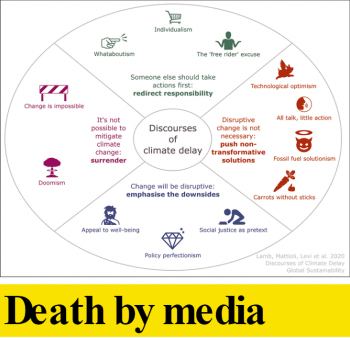
    48March/April 2022How the media stoke the climate crisisYES, WE should rake over the coals. And the oil, and the gas. Democratic accountability means remembering who helped to stoke the climate crisis. We should hold the fossil fuel companies to account.In 1979, an internal study by Exxon concluded that burning carbon fuels “will cause dramatic envi–ronmental efects before the year 2050”.In 1982, as the Guardian’s Climate Crimes series recalls, an Exxon memo concluded that the science of climate By George Monbiotchange was “unanimous”. Then it poured millions of dollars into lobby groups casting doubt on it.They didn’t call themselves lobby groups, but “thinktanks” or “research institutes”. Across the world, the media took them at their word.So scientists and environmental campaigners found themselves fghting the oil companies at one step removed, and with one hand tied behind their backs. When some of us were pitched against a “thinktank” in the media, if we tried to explain that it was not what it claimed to be, or asked it to reveal Death by mediaOPINION March/April 2022 49its funders, we were accused of being “conspiracy theorists”, or of “playing the man not the ball”. But if we didn’t, its false claims about climate science were given equal or greater weight. After all, who were we, a threadbare bunch, beside those respect–able-sounding institutes with ofces in Washington or Westminster?When we criticised the media for its determined naivety, we were frozen out. Before long, the think–tanks and trade associations had a clear run. They were the serious, sensible people, to whom the media turned to explain the world. And still turns.If the oil companies are to be held to account, so should the media that amplifed their voices. It scarcely needs to be said that the billionaire press took the lead in attacking climate science. After all, the owners have long perceived an attack on one corporation or plutocrat as an attack on all. But far more dangerous were the public sector broadcast–ers – which tend to be taken more seriously, as they are widely seen as independent and unbiased.For Channel 4, winding up environmentalists became a blood sport. In flms such as Against Nature and The Great Global Warming Swindle, the mistakes and distortions came so thick and fast that it was hard to see them as anything but deliberate provocations. When I complained, the channel sought to justify them with further unfounded claims. All that counted was noise: Channel 4, at the time, clearly couldn’t give a damn about the impacts.The BBC’s role was more insidious. Its collabora–tion arose from a disastrous combination of gullibility, appeasement and scientifc ignorance. It let the fossil fuel industry walk all over it.When some of us pointed out that failing to ask its contributors to reveal their sources of funding was a direct breach of its own editorial guidelines, the BBC produced a series of bizarre, catch-22 excuses, and carried on breaking its rules for several years. It gave the oil and tobacco companies just what they wanted: in the words of the American Petroleum Institute, “victory will be achieved” when “recogni–tion of uncertainties becomes part of the ‘conventional wisdom’”.Only in 2018, a mere 36 years after Exxon came to the same conclusion, did the BBC decide that cli–mate science is solid, and there is no justifcation for both-sidesing it. But the nonsense continues.Until last year the GCSE module on BBC Bitesize listed the “positive” impacts of our global catastro–phe. Among them were “more resources, such as oil, becoming available in places such as Alaska and Siberia when the ice melts”; “new tourist destina–tions becoming available” (welcome to Derby-on-Sea); and “warmer temperatures could lead to healthier outdoor lifestyles”.In a sterling example of the corporation’s endless confusion between balance and impartiality, the list of positives was roughly equal to the list of nega–tives. The greatest crisis humanity has ever faced looked like six of one and half a dozen of the other.Only when it caused a social media storm did the BBC remove this content. I asked it how, when and why this list was included, whether external organisations were involved, and why the corpora–tion ignored previous requests to improve the module. It told me it would not be commenting. So much for public service.The frontier of denial has now shifted to the big–gest of all environmental issues: farming. Here, the BBC still gives lobby groups and trade associa–tions sowing doubt about environmental damage (especially by livestock farming) more air–time than the scientists and campaigners seeking to explain the problems.Not just airtime, but kudos. The head of the National Farmers’ Union, Minette Batters, has sought to undermine the ban on neonicotinoid pes–ticides, pressed for continuation of the cruel and useless badger cull, and lobbied against reductions in meat consumption, among other harmful posi–tions. But last year, BBC’s Woman’s Hour included her on its power list of “30 inspiring women whose work is making a signifcant positive contribution to the environment”. She was placed above true envi–ronmental heroes such as Gail Bradbrook, Judy Ling-Wong, Franny Armstrong and Safa Minney. The BBC continues to confuse mainstream with respect–able, and respectable with right.The lesson, to my mind, is obvious: if we fail to hold organisations to account for their mistakes and obfuscations, they’ll keep repeating them. Climate crimes have perpetrators. They also have facilita–tors. This article frst appeared in the Guardian. www.monbiot.comThe thinktanks and trade associations are the serious, sensible people, to whom the media turn, to explain the worldIf the oil companies are to be held to account, so should the media that amplifed their voices. The billionaire press took the lead in attacking climate science

    Loading

    Read more

  • Posted in:

    Michael Williams wants an end to Judges trespassing into the role of elected legislators especially through inference of rights from the constitution

    42March/April 2022Michael Williams wants an end to Judges trespassing into the role of elected legislators especially through inference of rights from the consitution. Michael Smith wants a new constitution but meanwhile, apart from theoretically (!), is relaxed about whether judges inferring rights is democratic and useful.OPINION March/April 2022 43Judges exceed their constitutional powers.In 1937 our grandparents adopted a Constitution, Bunreacht na hÉireann, laying out how they wanted their country to be governed. They specifed it would be a democracy. Only elected legislators would make laws. If we were not satisfed with how they served us,we could reject them at the next election.Over eighty years later, judges have infated their role. ‘Superior Court’ Judges, especially in the Supreme Court, make law by annulling legislation that is compatible with the people’s Constitution, if they fnd it incompatible with “rights” they identify, but which the Constitution does not mention. They have changed the rules on how public money is to be spent, how referenda to amend the Constitution are to be managed and who may claim Constitutional rights. They refused a Habeas Corpus hearing to a man who credibly claimed he was unlawfully imprisoned. The constitution promises that everyone who makes a stateable case that he is imprisoned unjustly, has a right to a speedy hearing by a judge and prompt release if he is entitled to it.  In Edward Ryan v. Governor of Midland Prison, the Supreme Court efectively inserted the word “not” before “everyone”. They adjudicate on what legislators do or say in the course of their work. Judges should be bound to enforce legislation compatible with all express terms of our Constitution. In a 1965 High Court case, Gladys Ryan claimed that the The Health (Fluoridation of Water Supplies) Act, 1960 was unconstitutional because it authorised the addition of a small amount of fuoride to piped water. She said this contaminated water supplied to her home, claimed she and her children had an implied right under our Constitution to an uncontaminated water supply and the Act infringed their right by depriving them of that supply. She asked the Court to examine scientifc material, to disagree with the decision of the Oireachtas on the merits of fuoridation, and to “correct” the “blunder” of the Oireachtas, by annulling the legislation. Article 15.2.1o of our Constitutiondeclares the power of the Oireachtas to make laws for the State to be “sole and exclusive”. Those words must Michael Williams doesn’t approve of judicial additions to Constitutional rightsMichael Smith argues that a new constitution is needed but that for the moment the judges can be trusted as much as other forces for democracyNew constitution and constitutional convention neededI think Bunreacht Na hÉireann betrays ancient and religious thinking in a modern and post-religious world. It is is after all invoked “in the name of the holy spirit from Whom is all authority and to Whom, as our fnal end, all actions both of men [sic] and States must be referred” The spirit infuses the whole document. It should be taken out. My personal – probably radical – view is that we should have a new constitution-making process, somewhat similar to the Citizens’ Assemblies we have had on several issues, but with everybody involved – and steered to take not their own interest but the public interest or common good as their guide on every issue. I think a series of citizens’ assembles should preface a non-religious, progressive, liberal and egalitarian new document enshrining civil, political social, environmental and economic rights. It would also guarantee against fascism, Trumpery and Putinism.  In places it should replicate the existing Constitution to avoid years of clarifying litigation. The new document should be regularly reviewed following further citizens’ assemblies and additional rights enshrined.Meanwhile…This does not seem to be on the political agenda and, while we wait for radical change, I am relaxed enough about judges inferring rights from the fact the rights are, crucially, stated not to represent a comprehensive iteration. However, needless to say the separation of powers between the judiciary and the government and legislature is important. I appreciate that the separation of powers is crucial and that there is a technical danger of judicial tyranny. But not in Ireland in 2022. An ideal constitution would aim to make all rights explicit. It would rewrite the role of judges but would also rewrite the roles of the executive and the legislature. One overarching concern is that the appointment and censure of judges should be a lot less political and more stringent and seems anywhere close to being the case at the moment.Interventionism peaked in 1970sActually the courts have been more and more reluctant to intervene to infer rights.  The court of Chief Justice Cearbhall Ó Dálaigh was the most interventionist or “activist”, 40 or 50 years ago, and current judicial thinking refects the unfashionability, perhaps driven by the debate in the US of judicial interventionist. The recent move from unenumerated to derived refects lack of enthusiasm for the swashbuckling theories of the optimistic 1970s. Derived rightsAmong the derived rights identifed by the Clarke-led Supreme Court is that to seek work. A 2020 Supreme Court judgment, written by Gladys Ryan: her case precipitated inferred rights 44March/April 2022mean that even if, as Mrs Ryan contended, the Oireachtas had been wrong in its conclusion about the benefts of fuoridation, a judge had no power to correct it. But Judge Kenny, who heard the action, came up with a new theory that in his eyes justifed him in hearing and deciding Mrs. Ryan’s claim. This was that the short list of citizens’ rights mentioned in the Constitution was not meant to be exhaustive, and citizens might have other rights. Elected legislators in the Oireachtas could of course legislate to recognise such rights, but Judge Kenny asserted that judges might also identify rights. If they did, the “right” they identifed would notionally be added to the Constitution, so that if an Act of the Oireachtas was incompatible with that “right” he or she had authority to

    Loading

    Read more

  • Posted in:

    McKinseygalitarian no more

    March/April 2022 41Then a very terrible thing happened. In February 2017, he announced that he was joining Fianna Fáil which had: “the best team most closely aligned with my politics”. It was Roger Waters leaving Pink Floyd to join Foster and Allen. The young man with the enormous brain who had come racing in to rescue us from the Banks, the IMF and Fianna Fáil had decided that the only way you solve the problem of Fianna Fáil was by joining it. Donnelly’s idea of the “best team” now included Willie O’Dea and Pat ‘the Cope’ Gallagher.Donnelly seems really to be one of those people who thinks you can transcend ideology by being the smartest person in the room. The problem with Ireland wasn’t a structural one – our gross disparities of wealth and fanatical adherence to low corporate tax rates.. The real problem was that Stephen Donnelly wasn’t on the committee running the country. A man of enormous importance in his own mind, he genuinely believed back in 2008-11 that the solution to Ireland’s banking crisis would have been to have himself in the room when the big decisions were made. When he joined the cabinet as Minister for Health in 2020, all that was solved. Given this mentality, it’s no surprise he stepped forward to lead our health service through the Covid apocalypse or that he appears unlikely to be the one to deliver the free universal health care which everyone now pretends to be in favour of. He has given us many amusing moments, though, for which we must thank him. My personal golden Stephen Donnelly moment was when he told a television journalist that children were more likely to catch Covid on a trampoline than they were at school. I think that’s what he said.Even were he to be forced to fy into political exile in a second-hand helicopter it wouldn’t knock of a fitter of his granite opinion of himself. His political career probably won’t fnish in exile unless it’s the sort where some international think tank or European institution pays him to think important thoughts in Brussels or New York. But the thoughts won’t be of us. just one of twenty TDs to vote for Clare Daly’s early bill proposing a referendum to repeal the 8th Amendment. The entire Labour Party voted against, while Sinn Féin abstained because their Ard Fheis had not yet voted – though it soon afterwards did – for repeal, butDonnelly voted yes. When the Social Democrats were formed in 2015, Donnelly was announced as one of the party’s three co-leaders. He easily retained his seat in the 2016 general election but bizarrely told the media in early September 2016 that he was leaving the Social Democrats to again sit as an independent. “Some partnerships simply don’t work”, was all he had to say. It’s the sort of thing withered male academics tell friends over bottles of good red wine after their wife has found them naked with their students in the hot tub. One guessed that there had to be more to it. I mean, he’d only been a member of the Social Democrats for a little less than fourteen months. One imagined perhaps some vicious internal Social Democrat power struggle? I picture two very well-mannered people, both with the weekend Irish Timesrolled up under their arm, racing to get the last of the anchovies in Sheridan’s, Galway. Around that time he was interviewed in this magazine by egalitarian Niall Crowley who found yes Donnelly was sort of egalitarian too. “Are we short of political vision? Yes. Do we need more political vision? Yes. Would the public respond positively to this? Yes… politicians need to get better at laying it out”. He seemed afre at the end of the interview. McKinseygalitarian was the headline.When management consultant Stephen Donnelly strode majestically onto the Irish political stage just before the 2011 general election I was impressed. I particularly remember an appearance on Tonight with Vincent Browne during which he was asked if there had ever been an example, in the history of the world, of a country which had cut and taxed its way out of an economic slump. Donnelly answered without a blink: England during the industrial revolution, in the immediate aftermath of the Napoleonic Wars. By the time of this television appearance – I can still see the brothel-red background which was just one of the things which made that show so memorable – Donnelly had been elected as an independent TD for Wicklow in a campaign directed by his protégé and acolyte Niall O’Tuathaill, who in the last two general elections was the Social Democrats candidate in the Galway West constituency. It was aided too by paid PR consultant Conor Dempsey who years later got into a little trouble over too assiduously, and unpaid, promoting Donnelly’s interest on Twitter.Donnelly’s smartness appeared to be part of a refreshing political reset after the years during which Irish politics had been dominated by Fianna Fáil, a party which during Brian Cowen’s Taoiseachship often gave the impression that if its IQ dropped one point it might turn into a piece of hairy bacon. Donnelly continued to impress during his frst Dáil term when he was McKinseygalitarian no moreThe Enormous Mind of Stephen Donnelly at work for Fianna Fáil and the country in time of post-CovidBy Kevin HigginsPOLITICSThe young man with the enormous brain who had come racing in to rescue us from the Banks, the IMF and Fianna Fáil had decided that the only way you solve the problem of Fianna Fáil was by joining it

    Loading

    Read more

  • Posted in:

    Immationalism

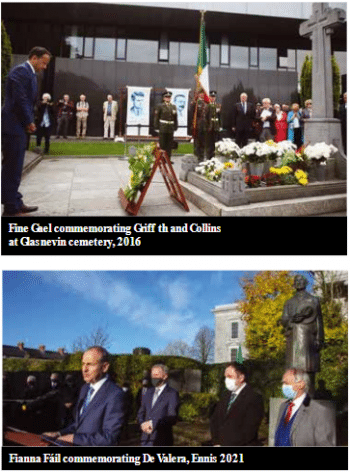
    March/April 2022 39Fine Gael commemorating Griffth and Collins at Glasnevin cemetery, 2016Fianna Fáil commemorating De Valera, Ennis 2021Sinn Féin commemorating Wolfe Tone, Bodenstown 2019All the nationalist parties misappropriate history, immaturelyImmationalismPOLITICSFianna Fáil and Fine Gael deny any historical analogy between their own party histories and the process which Sinn Féin/IRA are currently going through to make the transition from political violence to fully peaceful democracy; and Sinn Féin confuses the inspiration nationalists have drawn on from preceding generations of revolutionaries with institutional continuityTHE REPEATED vandalism of a necrology wall in Glasnevin Cemetery shows that Ireland has not avoided the paroxysms of iconoclasm that have tormented British and American cultural activists since 2020. There is an important diference in as much as the wall in Glas–nevin Cemetery was not a public monument. In a civilised society it should be reasonable to expect that a monument to the dead in a cemetery, of all places, might be exempt from such attempts to erase history.The listing of all those who died during the Irish War of Independence is proving contentious 100 years after the event. Ireland seems eager to move on from the event as quickly as possible. We adopted a new urban nomenclature to purge selected Irish place–names of their British associations: with Sackville Street being renamed O’Connell Street; Gloucester Street changing to Sean MacDermott Street; and King Street becoming MacCurtain Street. We also enacted a perfunc–tory programme of cultural defenestration for the most egregious representations of royal authority. However, very quickly, semiotic purity yielded to convenience and, rather than remove every ofensive symbol of the crown, it was simpler just to paint them green – think of the royal mono–grams on many surviving Victorian or Edwardian cast-iron post boxes.Unfortunately, such relaxed historical sensibilities were not, indeed could not be, reproduced in Northern Ireland. There, one literally cannot turn a corner without being confronted by contentious murals, fags or symbols that are as much intentionally ofensive as commemorative.Sadly, Glasnevin is only one of an increasing number of signs that the animus prevalent in such matters there is beginning to infect the use of his–tory in the Republic. As a result, in Ireland, the populist history is being misused increasingly for petty political gains with disastrous consequences for our national identity and social cohesion. When Professor Jane Ohlmeyer exercised her professional expertise and experience as a historian to explore the nature of the Irish experience of British imperialism, one hysterical key–board warrior felt her work amounted to an ofence under incitement to hatred legislation and should be investigated by the Garda as such. Simi–larly, the two measured and considered interventions that President Higgins By J Vivian Cooke 40March/April 2022made about Irish history this year were met with equally ludicrous overreac–tion and manufactured outrage. Clearly, there are large parts of the public which have no appetite to broaden their understanding of Irish history if that entails the slightest devia–tion from a pre-existing narrative from which they draw comfort. However, mature societies confront exactly those difcult parts of their history to allow themselves self-awareness. Time and again, we have seen recently that Ire–land continues to lack the necessary intellectual bravery to do this. Of course, in this we are not alone: one need only look at how French historians continue to struggle to account for their wartime collaboration or the Algerian War of Independence or indeed Britain’s perception of its role in World War II. The neglect of history as an academic discipline within our education system has allowed a populist form of history to take root. It is a variety of history that strays from the academic rigour demanded of professional his–torians and, even more worryingly, it leads to a misunderstanding of actual history itself. It is useful in this context to consider the diferent uses that can be made of the term ‘History’ as: actual history as things that happened in the past; academic history as the systematic study of things that hap–pened in the past and; populist history as collective memory of historical events and how those memories are reproduced through various cultural representations. Unfortunately, some populist history has become untethered from aca–demic and actual history. Populist history tends to be mesmerised by narrative arcs that can be sketched only by treating actual history as artif–cially discrete incidents, at the cost of ignoring important aspects of establishing context and arriving at balanced judgements. Each of the dif–ferent mediums of cultural representations through which populist history fnds expression imposes specifc sets of constraints on the capacity for nuance and the degree of accuracy it can achieve. Actual history has a dif–ferent relationship with a Hollywood historical blockbuster from that it has with a BBC documentary. Ron Chernow’s treatment of the life of Alexander Hamilton has a relationship with the actual history that is very diferent from that in the representation ofered by Lin-Manuel Miranda. Populist history has a legitimate function in creating common historical memories that act as shared points of culture that bind nations together. At its best, populist history can spark people’s interests in actual history or be an introduction to academic history, so that people can broaden and deepen their engagement. Sadly, too often, engagement arising from populist his–tory only results in the regurgitation of the half-digested gristle and bone of actual history. While delivering the 1961 George MacCaulay Trevelyan Lectures, E H Carr colourfully noted the selectivity of history: “(facts) are like fsh swimming about in a vast and sometimes inaccessible ocean; and what the historian catches will depend, partly on chance, but mainly on what part of the ocean he chooses to fsh in and what tackle he chooses to use – these two factors being, of course, determined by the kind of fsh he wants to catch. By and large, the historian will get the kind of facts he wants”.The essential skill of the historian is to sift through all the things that occurred in the past, most of which are trite, quotidian and insignifcant; to identify

    Loading

    Read more

  • Posted in:

    Blowing in the wind

    38March 2022externally. This was deemed to be incompatible with the EU directive. It was also found the requirement to “cooperate, as required” with an investigation into wrongdoing should be removed, as there could be valid reasons for not cooperating with such an investigation. This recommendation was taken on board.• That the new bill/Act should be retrospective in nature to ensure protected disclosures made before the enactment of the amended legislation receive the full beneft of the legislation • That the definition of penalisation be broadened to include “vexatious proceedings brought against a discloser” and “attempts to hinder further reporting”. This was taken on board.• That there should be a legal requirement to accept anonymous reports of breaches and determine follow-up on the same basis as other disclosures. This was taken on board.• That consideration be given to the removal of caps on awards for those seeking fnancial redress. This was not taken on board.• That free legal and psychological counselling services be provided to those making protected disclosures. This was not taken on board. The report is quite detailed so I would encourage those with an interest to take a look for themselves. It can be found on the Finance Committee’s homepage. It should also be noted that the December deadline for the government to transpose the EU directive, through its own bill, has now passed and this State could fnd itself fned for this, as we were previously with our failure to enact the Anti-Money laundering directive on time.The fastest way for the government to do this, and avoid and a potential fne, is to enact Deputy Farrell’s own Protected Disclosure (amendment) bill which has proceeded to second stage. This bill already gives expression to many of the recommendations of the report, as it was crafted in consultation with legal practitioners, academics and whistleblowers themselves. This government, just like those that went before it, is happy pay lip service to the bravery of whistleblowers. And yet it is in reality quite content to allow the organisations, in which wrongdoing was revealed, to attempt to extinguish them.At the start of this year the Taoiseach claimed that “disinformation” is now “a very real threat to the sustainability of free democracies”. When I heard that, I wondered what the numerous whistleblowers who appeared before the Committee to tell their stories would have made of those words. I’m sure they felt like their attempts to reveal the truth were often misconstrued as “disinformation”. Cillian Doyle is Advisor to Sinn Féin’s Spokesperson on Public Expenditure and Reform, Máiréad Farrellgiving any new protections to those whistleblowers whose cases remain unresolved. The Minister says this matter is currently with the Attorney General for consideration, but whistleblowers themselves already see this as a red fag and an indication that the Minister is not serious in this regard.“Key problems include that while the existing Act protects people from dismissal, the protections from penalisation are much too weak.The Minister has broadened his defnition of ‘penalisation’ in line with what the Committee recommended, and this is welcome.However, he has pushed ahead with his requirement to add restrictive conditionality for public service workers complaining outside their organisation, only if there is a so called “emergency situation”, which is of questionable compliance with the EU Directive. With regard to private sector organisation the Minister no proposes to include organisation with 50 employees or more withing the regime. So if you work in an organisation with 49 workers…well tough luck!These problems simply go unaddressed in the bill. Of the 60 recommendations the following were key, and are identifed as having been taken on board or not:• The frst recommendation, and arguably the one where there is the greatest doubt, is whether the new legislation will be retrospective in nature and any additional protections be given to whistleblowers who have unresolved cases. This has yet to be taken on board.• That consideration be given to the new “restrictive conditionality” for making a protected disclosure to the relevant Minister – as it may be incompatible with the EU Directive. This recommendation was not taken on board • The Committee, in consultation with the Ofce of Parliamentary Legal Advisor (OPLA), found that the changes in the Ministers forthcoming bill found that the requirement for a reporting person to believe that the perceived wrongdoing “was substantially true”, rather than simply “true” as under the current act raised the current threshold for reporting In January the Oireachtas Joint Committee on Finance, Public Expenditure and Reform and the Taoiseach published the infuential “Report on the Pre-Legislative Scrutiny of the General Scheme of the Protected Disclosures (Amendment) Act 2021” on the government’s whistleblowing bill.The report dealt with some of the current system’s shortcomings, while assessing the bill, which is being introduced to transpose an EU directive. The Directive and therefore the transposed bill provides protections not just to traditional employees but to a broad range of reporting persons, including shareholders and volunteers. The report identifed signifcant shortcomings in both the current legislation and Minister McGrath’s new bill. It made extensive reformist recommendations and highlighted potentially “regressive” aspects of the Government’s new bill.In total the report sets out a total of 60 conclusions and recommendations which arose from detailed scrutiny of the legislation from experts, academic and professionals. As well as the detailed and harrowing evidence provided by former whistle-blowers themselves, whose names would likely be familiar to Village readers.The Committee, to its credit, undertook the scrutiny of this bill with the seriousness that it warranted, with Deputy Mairéad Farrell, Senator Alice Mary Higgins and the Chairman John McGuinness having distinguished themselves in particular. The Minister has now published his bill and whilst some of the recommendations were taken on board, others were not. The Minister is now on record in the Dail is stating that he is willing to work at committee stage to see if additional improvements can be made. It begs the question why these recommendations were not automatically included?Will he resist his ofcials and the peculiarly

    Loading

    Read more

  • Posted in:

    Stalker Nobbled

    March/April 2022 35IntroductionCounty Armagh, 1982. In just over a month six men, one only 17-years-old, were killed in controversial circumstances by a RUC Headquarters Mobile Support Unit (HMSU). On 11 November, Sean Burns, Eugene Toman and Gervaise McKerr, all members of the Provisional IRA (PIRA) were killed after allegedly driving through an RUC roadblock in Lurgan, injuring one ofcer. The ofcers of the HMSU fred some 109 shots, killing By Nick CliftonThirty years ago this year, three IRA men were murdered by the RUC. John Stalker was appointed to investigate but he was set up, his report defused and the truth about the murders he was investigating confounded so that RUC impunity could prevailIn his trial summing up, Lord Justice Gibson controversially stated that the offcers were “wholly blameless” and celebrated that Toman, Burns and McKerr had been brought to the “fnal court of justice”Gervaise McKerr, Eugene Toman and Seán Burnsall three men. Two weeks later, 24 November, Michael Tighe was killed, and Martin McCauley seriously injured in a Hayshed, again in Lurgan. The HMSU opened fre because the two men allegedly pointed Mauser rifes at them. Lastly, on 12 December, Roddy Doyle and Seamus Grew, both members of the INLA, were killed after allegedly trying to fee a police checkpoint in Armagh City. Constable John Robinson claimed that he heard a loud noise emanate from the reversing car, so he opened fre and killed both men. Doyle and Grew, like Burns, Toman and McKerr, were all unarmed. Shoot-to-Kill?But all was not as it seemed. In McCauley’s subsequent trial for possession of the frearms in the Hayshed, the three ofcers involved admitted that large parts of their witness statements were untrue: they had claimed they had come across an armed gunman outside the Hayshed whilst on a routine patrol, when they had actually been keeping the location under close observation. The presiding judge, Lord Justice Kelly, decided the ofcers’ statements should not be considered as they were “tainted with lies”. McCauley painted a diferent picture of the incident. They had climbed through the open window of the Hayshed and seen the Mausers. Without warning they were sprayed with bullets, killing Michael Tighe. When the fring stopped, the RUC ofcers ordered the men to surrender but when McCauley attempted to, they delivered another burst of gunfre, seriously injuring him. Lord Justice Kelly also disbelieved McCauley’s testimony, handing him a two-year suspended prison sentence.This was not an isolated incident though. Constable Stalker NobbledPOLITICS 36March/April 2022attack on a RUC patrol at Kinnego Embankment. Tragically, Sergeant Sean Quinn, Constable Alan McCoy and Constable Paul Hamilton were killed instantly in the explosion.Casus Belli?Stalker revealed that the same informant had told Special Branch that four men were behind the attack; Eugene Toman, Gervaise McKerr, Sean Burns and Martin McCauley. Were their deaths part of an RUC vendetta? He was aware the Hayshed had remained under investigation following the Kinnego murders and strongly suspected that the informant had become an agent provocateur as all three incidents involved an ambush by HMSU ofcers. Damningly, Stalker also found that a report from the informer claiming Michael Tighe was a member of the Provisional IRA had been faked, as it had been forged after the entirely innocent teenager had been killed. But he found that the RUC Chief Constable would not allow to him listen to the tape or even read the fles relating to the informer. So, after months of failed negotiations with Jack Hermon, Stalker produced a 10,000-word interim report. It stated that new and extensive “independent forensic evidence” supported claims that all fve men “shot dead in their cars were unlawfully killed by members of the RUC”. He suspected that Michael Tighe was also unlawfully killed but could not confrm this until he had heard the tape. Hermon delayed handing the report to the Direct of Public Prosecutions, Sir Barry Shaw, but when he did Shaw unequivocally decided that Stalker would have access to anything he wanted. Conspiracy of LiesThis sent of an unforeseen chain of events. In late-may, 1986, Stalker was called into GMP’s HQ and suspended from duty. He was now being investigated for impropriety. He was not told what he was alleged to have done, but he was informed John Robinson stood trial for the murder of Seamus Grew. He too admitted that his witness statement had been fabricated by ofcers of RUC Special Branch. Three more HMSU ofcers stood trial for the murder of Eugene Toman and were subsequently cleared. In his summing up, Lord Justice Gibson controversially stated that the ofcers were “wholly blameless” and celebrated that Toman, Burns and McKerr had been brought to the “fnal court of justice”. Stalker by Name and by NatureThough Gibson appeared to condone the killing of three unarmed men, it was Robinson’s false witness statement that had political repercussions. The RUC’s Chief Constable, Sir Jack Hermon invited the Deputy Chief Constable of Greater Manchester Police (GMP), John Stalker, to investigate the three Shoot-to-Kill incidents. Stalker was the 45-year-old rising star of Britain’s policing community with over 20 years’ experience as a detective. He had a great deal of experience in the GMP’s drugs and serious crimes squads as well as investigating other constabularies. But from the moment Hermon passed a fattened cigarette-packet highlighting Stalker’s mother’s Irish Catholic ancestors, he realised this would be an altogether diferent proposition. In Hermon’s words, Stalker “was in the Jungle now”.Still, Stalker conducted a thorough investigation, one that sufered from constant interference, obstruction and obfuscation, but his team’s fndings were alarming to say the least. They found that the ofcial narrative of the killing of Sean Burns, Eugene Toman and Gervaise McKerr, was entirely false. There had been no roadblock and the ofcers involved had been removed from the scene immediately after the killings to be debriefed by Special Branch ofcers. The original forensic investigation left much to be desired as it had initially studied the wrong crime scene, then Stalker’s forensic investigators found fragments of the bullet which

    Loading

    Read more

  • Posted in:

    TWITT

    March/April 2022 33THE BAN against naming Soldier F, one of the Bloody Sunday murderers, by his real name, remains in force, but only in the UK. Last July, Colum Eastwood, leader of the SDLP, got around the prohibition by naming him under privilege in the House of Commons. War criminal‘Soldier F’ shot a number of people including Patrick Doherty on Bloody Sunday. He did so while Doherty was lying on the ground crawling away from him. Barney McGuigan stepped forward with a white handkerchief looking to help him whereupon Cleary dropped to one knee, aimed his rife and shot McGuigan in the head.By David Burke POLITICSTWITTWhen it comes to naming Bloody Sunday murderer, Soldier F, Twitter isn’t enforcing its own rules that allow censorship only in accordance with the laws of the tweeter’s own countryThe victims and families are not a threat to Soldier F’s life?The survivors and families of Bloody Sunday’s innocent murder victims have known perfectly well who F is for years and have left him alone. He has even posted selfes on social media, including one taken on a recent holiday. There is another one of him in circulation in what looks like a bar or hotel. Does the IRA pose F a threat? Hardly. If they wanted him dead, it would have happened by now. There is little chance that the IRA’s Army Council would sanction a hit with their minions in Sinn Fein edging close to political power in the South. Moreover, it suits them to have him alive as he is a propaganda stick with which to beat the British government. The same argument applies to dissident Republicans.There is only one realistic threat to F, and that is from his own side. F and his former superior, Colonel Derek Wilford, Commander of 1 Para, know the full truth about what happened on Bloody Sunday. Wilford had a secret conclave with soldiers F and H immediately before the Bloody Sunday massacre. Soldier H has since died. If, as I suspect, Wilford gave F and H orders to provoke the IRA by shooting at anyone who looked like a possible IRA volunteer, then F has a lot to fear. 34March/April 2022Twitter squall After the murder charges against F were dropped last year, his name appeared on notices in Derry, proving, yet again, that his name was well-known. The ban on naming F only applies to the United Kingdom. F was named by this magazine on its website A number of residents of the Republic retweeted posts emanating from Village highlighting the publication of the articles. They and Village were suspended by Twitter, mostly for a 12-hour period. A few weeks ago, ‘F’ was named by Peadar Tóibín in the Dail. Village reported Deputy Tobin’s speech later that night.  Feargal McCann, whose father was murdered by paratroopers ten weeks after Bloody Sunday, read the story and transmitted a tweet about it. Twitter locked McCann’s account.A twitter force feld to protect the ukFor a while it looked like Twitter might have had a point. It could have argued that tweets are international. Hence, one emanating from the Republic could reach the UK. The consequences of such an argument, however, have a far-reaching potential. If, for example, a Russian Court were to ban coverage of Alexei Navalny or Pussy Riot, Twitter might lock the account of anyone who mentioned them. Now it transpires that Twitter had the ability to block tweets from the Republic fying across the border all along. Will the PSNI pick on someone else?Someone – presumably the PSNI – is putting pressure on Twitter to provide them with the details of other account holders who have transmitted F’s name. At things stand, at least one such individual, Jim Smith, not a resident of the UK, has asked Twitter not to breach his GDPR rights by furnishing anybody with his details. No doubt the PSNI is hoping to fnd someone who is a resident of Northern Ireland and with a low profle, to make its point. The lone wolf argumentThe judge in Derry who acceded to the PSNI’s request for the ban pointed out in his judgment that threat assessments had been carried out in July 2019 and March 2021 which had found that F was at low risk from dissident republicans but that the threat level could rise if F was to be denied anonymity. The judge also stated that F faced a threat not only from dissident republicans but “from a lone actor, not a member of any organisation, but someone who might be prepared to carry out an attack”.These were perfectly reasonable grounds upon which to reach a determination, especially in light of the dire warnings put before him by the PSNI. However, in the months that have passed, no one from any quarter has lifted a fnger against F. If this precedent is to come the norm, it will become virtually impossible to name any defendant in future since anyone named in public could be targeted by “someone who might be prepared to carry out an attack”. Perhaps this could be a good thing – a robust extension of the idea that all accused are innocent until proven guilty – but it is notable that the PSNI is only making it for F, not for other criminals.Byron lewisParatrooper Byron Lewis broke ranks and told the truth about what he witnessed F do on Bloody Sunday.. In 1998 the Saville Inquiry – then up and running – recorded that Lewis “has had to move out of his home. Last night 2 men attacked the person he has been sharing a bungalow with while he was outside the house in his car. First they attacked the car, then they dragged him [the other man living at the bungalow] out of the car and beat him up…They ofered him a block of concrete and said, ‘That’s your one chance. Give it your best shot, because afterwards we’re going to kill you”. They mentioned Bloody Sunday,

    Loading

    Read more

  • Posted in:

    Infamous Death-Squad Killer Dies

    March/April 2022 31Infamous Death-Squad Killer Diesserious shooting incidents, but he has escaped justice once and for all. He goes to his grave with many of the UK’s secrets regarding its dirty war in Ireland.That suits the British government and its armed forces but leaves victims and survivors bereft of truth and justice.Clive Graham Williams (British Army number 24031479) received a decorated soldier’s funeral, having risen to the rank of Major follow–ing an exchange with the Royal Military Police (RMP) in Britain and the Royal Australian Corps of Military Police (RACMP) in the 1980s.Lieutenant Colonel Craig Kingston of the Aus–tralian Army gave a cofn-side oration at Williams’ funeral:“Taf has many RMP highlights and the most notable being the award of the Military Medal when serving… in Northern Ireland in the 1970s. Today’s not the occasion to detail the circum–stances of how Taf was awarded the Military Medal, however it is the day to detail why a AN INFAMOUS killer, wanted in connection with a series of murders and attempted murders of Irish civilians in Belfast in 1972, has died.Clive Graham Williams, or Taf as he known to his fellow gang members, died just before Christmas.Despite proof of their involvement in serial mur–ders and attempted murders, the British courts brought neither Williams nor any members of his gang members to justice.The reason is simple. They had a licence to kill; and killed Irish civilians for the British state.Clive Graham Williams was a leading member of Britain’s Military Reaction Force (MRF), an extra-legal, covert, ofensive British Army unit which stalked the streets of Belfast in the early 1970s.In 2020, I collated archival evidence from secret British military logs which proved that Wil–liams and his death-squad were guilty of a litany of unprovoked and vicious attacks on unarmed civilians, including young teenagers. I presented this evidence in a report for the charity Paper Trail (Legacy Archive Research) which we then submitted to an independent investigative police team working under former English police Chief Constable, Jon Boucher.Only in June 2020 did the Police Service of Northern Ireland (PSNI) refer fles on seven former MRF soldiers to the Public Prosecution Service (PPS) although the British justice system has failed to hold any to account yet. Williams’ name had to be on one of those fles as I proved he was directly responsible for several By Ciarán MacAirtTaff’s secretive Military Medal was for nefarious murders in Northern IrelandThe reason for Lieutenant Colonel Kingston’s tasteless nudge-nudge-wink-wink about Williams’ medal citation may be because it covered the period when Williams and his death-squad were shooting unarmed civilians on the streets of BelfastMilitary Medal is bestowed on an individual. It is awarded to personnel for bravery in battle, for acts of gallantry and devotion, to duty under fre… Taf did not speak often about his medal and many who knew him in later years had no idea about his past, such was his humility”.Normally, the circumstances of the award of such a prestigious Military Medal would be the centre-piece of any British military commemora–tion, but, as I discovered over a decade ago, Williams’ Military Medal was recorded in the London Gazette of 3 October 1972.The reason for Lieutenant Colonel Kingston’s tasteless nudge-nudge-wink-wink about Wil–liams’ MM citation may be because it covered the period when Williams and his death-squad were shooting unarmed civilians on the streets of Belfast.Williams did not talk about the circumstances of his MM as it would have left him open to pros–ecution for serial murders and attempted murders. In my published research, I redacted his name and the other MRF shooters named in the fles to ensure I facilitated the work of the families’ legal teams.On 6 May 1972, then Sergeant Williams is named in relation to a report of the MRF sighting and fring upon 3 alleged gunmen beside Oliver Plunkett School in West Belfast. That area of Glen Road was a favoured hunting ground for Williams and his death squad.POLITICS 32March/April 2022The 39 Brigade Commander’s Diary records that the MRF fred 24 rounds from a submachine gun and claimed “1 hit defnite”. It alleged that the gunmen had a rife and 2 pistols, and fred two rounds in return. [See image i above]Williams and his unit had not hit a gunman. Wil–liams had just shot and badfrsly injured an 18-year-old unarmed teenager.The following night, an MRF patrol in the same area alleged it was fred on again and that they returned fre, claiming one defnite hit. [See image 2 above]. Lies again. The MRF had blasted and nearly killed a 15-year-old boy who was walk–ing home from the local disco.A few nights later, just after midnight, 13th May 1972, the MRF attacked local residents in nearby streets minutes apart. The neighbours were man–ning local vehicle checkpoints to protect the area from attack. [See image 3 above].A teenager was shot by the MRF whilst alight–ing from a taxi at one checkpoint in Slievegallion and a few minutes later the MRF alleged that it shot at seven gunmen in Riverdale. Again, there were no gunmen, just a group of local unarmed civilians – easy targets for the Brit–ish Army death squad. The MRF shot fve men, murdering one. Patrick McVeigh was a married man with six children.The British Army admitted no responsibility for the shooting but informed the media that there was a gun battle which was disputed by the local parish priest. Then, British Army PR told the media that the attempted mass murder was “an apparent motiveless crime” and only admitted it involved its troops many weeks later.At the time of his death, Clive Graham Williams was wanted for questioning for this murder and attempted mass murder too.He escaped justice for another attempted mass murder of unarmed civilians a few weeks later, although he was questioned and brought before the court, albeit a pro-state British court that was heavily weighted against the innocent civilians.Around midday on 22nd June 1972, Williams and his MRF death squad attacked the bus termi–nus on the Glen Road just

    Loading

    Read more

  • Posted in:

    Maximus, Maximum profits, Minimal benefits

    March/April 2022 29Recently, the Irish Times(of 22 January) reported the entry of a major American company called ‘Maximus’ into the Irish market ostensibly to “get the country back to work”. The report stated: “A large US government contractor has made moves to expand to Ireland and is understood to be considering bidding to run State schemes aimed at getting jobseekers back to work.Maximus, a multinational company and significant US government contractor, has incorporated a subsidiary company in Ireland, which has yet to begin trading”.A quick Google search revealed that Maximus, both in the US and the UK, has a colourful track record.Obstructionist StrategyIn the US a Maximus strategy is to low-ball for contracts, making them seem like good value on the face of it. But the service they provide, which is more of a strategy for obstructionism than an actual service, means that their costs are negligible anyway, while their profts are always healthy, unlike the individuals, usually disabled, they leave in their proft-making wake. The US leftist magazine Mother Jones reports that “Most of what Maximus earns does not come from moving people into the “self-sufciency” that… is the goal of work requirements. It comes from managing the hurdles placed between the poor and public aid”.In the US in 2020 the company, described as being “notorious for backlogs and lost documents”, lost a contract in Kansas. According to the Kansas City Star, this followed “years of complaints about backlogs and mishandled Medicaid applications”.FalsifcationIn the UK, Labour MP Louise Haige described the company’s activities as revealing “a disconcerting pattern of behaviour” which included using By Eamonn KellyA company notorious in the UK and US for obstructing those seeking benefts is bidding for Social Welfare contracts in Ireland Labour MP Louise Haige told a parliamentary committee that: “There seems to be an alarming trend of cases being rejected based on factual errors or even – I hesitate to say this – falsifcation”“ftness for work” tests and often falsifying the results.During a debate in 2016 Haige told a parliamentary committee that:“There seems to be an alarming trend of cases being rejected based on factual errors or even – I hesitate to say this – falsifcation. I have had several cases of people telling me that their assessment report bears absolutely no relation to the assessment that they experienced with Maximus…One or two cases could be dismissed as an honest mistake, but the situation appears to reveal a disconcerting pattern of behaviour that indicates that the trade-of between cost-cutting and proft maximisation is being felt by very vulnerable people”.The idea that Maximus is in the business of “getting jobseekers back to work”, as the Irish Timeshas it, appears to be a deliberate falsehood. The nature of this deception was covered in a lengthy article by Tracie McMillan in a 2019 issue of Mother Jones. The article claims that Maximus was one of the leading companies in what the magazine calls “Trump’s war on the Poor”. The job-creation aspect is actually more of a Trojan horse for a system that is designed to place itself between providers of public services – usually health and welfare – with a view to dissuading people from applying for benefts they may be qualifed to claim. They achieve this by deliberately applying bureaucratic overload to applicants, based primarily on the false lure of job creation. Simply put, they snow people under in paperwork when the applicants try to prove eligibility for, and an ability to, work.Job CreationBut in practice the company shows little or no interest in job creation. In fact, when applied to disabled people, as it was in the US and the UK, the ruse was cynical in its pitch that it was simply “helping” people towards independent living, when in fact the trick was to help Maximus by disqualifying those who were eligible for help and services.The company was so successful in this in Kansas that nursing homes began to go out of business due to a sudden dearth of qualifed seniors. But worse than that, “assigning the contract to a private company had eroded the state’s capacity to perform the work itself”.The result was that Kansas had to continue employing and paying Maximus to perform inadequate work, simply because Maximus had supplanted the previous infrastructure, much as Maximus intends to do now with the Local Employment Service Networks in Ireland. They will probably be used, judging on past Maximus performance, as “hides” to seek cuts to welfare and health benefts and to discourage applications for services, as well as allowing Maximus’ entry to the Irish market to ofer other Maximus, Maximum profts, Minimal beneftsNEWS 30March/April 2022similar “services” in health and welfare.Similar to the strategy used in the UK, Maximus essentially buries applicants for medical care in paper-work related to job-searching, until the applicant gets weary of ever applying for the benefts they may be qualifed for, and simply gives up.Maximum HarmIn the Irish context it is to be hoped that Maximus will employ staf from the old Local Employment Service Networks. But potential employees might be wise to hesitate before hitching their wagon to Maximus.In February 2020 the Topeka Capital Journal reported that “Communications Workers of America…fled a complaint against Maximus with the US Department of Labor alleging Maximus classifes highly skilled employees as low-level workers to avoid paying higher wages”.This complaint preceded a report entitled ‘Maximum Harm’ by the Government Contractor Accountability Project.The report said: “Problems at Maximus have at times directly impeded vulnerable Americans from accessing the health services that they desperately needed…Maximus has also been implicated in performance failures that afect the security of health system information, health care provider payments, and stewardship of public dollars”.The company then is associated with poor performance generally, and in particular with poor fnancial management of public monies and with treating data with inadequate confdentiality. In Ireland it is envisioned that Maximus will supplant the already existing Local Employment Service Networks, using the network to create a false job-creation front in order to go

    Loading

    Read more

  • Posted in:

    Wrong,Twice

    28March/April 2022EnRight, twicelanguage”. Content andtone. And also found that “Mr Enright did not act in good faith”.Nevertheless by 30 in favour and 1 abstention [Councillor Pat Barden] the Councillors voted to “note [SIPO’s] Report and to take no further action in the matter”. Director of Services Eamonn Hore then made a statement on behalf of the Management Team “strongly supporting the Chief Executive Mr. Enright”.It is clear that legal advice to the Council, which perhaps improperly was not minuted, was ofered by its law agent who, being responsible to the CEO and normally providing his legal advice – sometimes in the face of the Councillors – must be deemed to lack the necessary independence and to be objectively biased. Section 168 of the Local Government Act provides: “In carrying out their functions it is the duty of every member and every employee of a local authority to maintain proper standards of integrity, conduct and concern for the public interest”.Section 2.2 of the Code of Conduct for Employees provides inter alia: “Local authority employees must maintain the highest standards of integrity by:- • acting in a way which enhances public trust and confdence;• ensuring that their conduct does not bring the integrity of their position or of local government into disrepute. • serving their local authority conscientiously, honestly and impartially”Readers will make up their own minds as to whether the CEO of Wexford County Council, his congratulatory management team and Councillors who applauded him with a standing ovation on the occasion of consideration of a report from SIPO detailing serious ethical contraventions have themselves, in so doing, breached the Ethics Acts and Code of Conduct. contraventions too.On 14 January 2022 the Irish Timesreported that Wexford County Council voted that day not to take any action against Tom Enright following the fndings. They were legally required to consider what action to take. At a special meeting to do so they gave “a standing ovation to Mr Enright at the meeting’s conclusion”.A Statement delivered by Tom Enright that day, went as follows:“I welcome that the Elected Members of Wexford County Council have today decided that no action will be taken in relation to the fndings in the SIPO report published last week.I wish to state again that I regret the tone of the two e-mails sent to South East Radio. However, I was standing up to the radio station who were shown to have breached the Broadcasting Act and who I was informed were acting in a deliberately biased manner against the Council.I am very passionate for the work that Council staf and Councillors do to make County Wexford a better place and some of that passion overfowed into these two e-mails. I cannot thank people enough for their support during this time. I have been overwhelmed and humbled by the large outpouring of support. Hundreds of messages of support, many from people I don’t even know and have never met…”. Skimpy minutes of the Council meeting record that:“The Council invited the Chief Executive to make a submission in respect of the Report…There followed a lengthy discussion to which many members contributed. Members spoke positively about the Chief Executive’s contribution to the Council and to the County, with many expressing the view that Mr. Enright had acted in good faith at all times and in the best interests of the Council.But SIPO had found the CEO’s emails “fell below what is expected of someone in his position, in terms of content, tone, style and In December 2021 the Standards in Public Office Commission (SIPO), found that Wexford County Council CEO Tom Enright breached the Local Government Act in sending two emails to South East Radio in August 2019 in which he threatened to withdraw Council advertising with the station, during a dispute over the station’s coverage of the Council.SIPO set out detailed particulars of contraventions of the Local Government Act: of section 168 (failing to maintain proper standards of integrity, conduct and concern for the public interest); and of section 169(3) – (failing to be guided by the Code of Conduct for Employees).The three contraventions related to Mr Enright’s emails and the second and third contraventions were premised on the contention that the emails amounted to “putting pressure on the station to alter their broadcasting practices by threatening to withdraw funding from the station”. As regards the frst contravention, SIPO found: “The emails were not the appropriate recourse and amounted to an over-reaction and inappropriate confation of issues on Mr Enright’s part. They fell below what is expected of someone in his position, in terms of content, tone, style and language. The emails amounted to an inappropriate confation of the issues of, on the one hand, the coverage of the Council on South East Radio and Mr Enright’s dispute with Mr Fitzpatrick, and on the other hand, the Council’s commercial relationship with the station. In this way, Mr Enright misused the Council’s position as the station’s primary advertiser, in efect ‘throwing around the weight’ of the Council’s purse. Mr Enright’s conduct in this regard was a serious contravention of the statutory provision. In addition, the Commission fnds that Mr Enright did not act in good faith, nor in the belief that his actions were in accordance with guidelines published or advice given in writing under s. 12 or s. 25 of the Ethics Act”. He was found to have committed the two other NEWSAfter SIPO decided he’d breached the Ethics Acts Wexford County Council CEO Tom Enright and Councillors who ovated him breached Ethics Acts again by disrespecting the decision, and in Enright’s case by denying fndings of bad faith and of impropriety of content not just tone against himBy Michael SmithTom Enright: not good faithWrong

    Loading

    Read more