Posted in:
Putin: Village Idiot March 2022
by admin
The author of this article, Des Dalton, was a member of Republican Sinn Féin for over thirty years, serving as President from 2009-2018. He resigned from Republican Sinn Féin in March 2021 following an interview he gave to the University of Liverpool’s Institute of Irish Studies Civic Space in which he stated that the ongoing armed actions of republican groups such as the CIRA and New IRA could not be justified in present circumstances and were counterproductive. He holds a BA Hon in English and History from Carlow College. The 1962 IRA Ceasefire: Lessons for Today. By Des Dalton. Sixty years ago, on February 26, 1962, the IRA announced the end of ‘Operation Harvest’, or as it has become known in popular parlance the ‘Border Campaign’.’ The statement, penned by the Chief of Staff of the IRA, Ruairí Ó Brádaigh, set out the reasons for ending the campaign. The thinking and conditions which informed the IRA leadership’s decision to end its campaign are not merely of historical interest but are relevant to Ireland of 2022. Today there are a small section of traditional republicans, namely Republican Sinn Féin and Saoradh, who conflate the continuance of sporadic armed actions, however ineffectual and counterproductive, with keeping faith with traditional republican goals and ideals. They base much of their ideology on a reading of republican history that is deeply flawed. Such an attitude and lack of historical understanding contrasts sharply with the IRA leadership of sixty years ago, who in announcing the end of their military campaign, did not signal any political retreat or compromise on the IRA’s core republican goals of securing a British withdrawal and the end of partition. For them the demarcation lines between the practical considerations of the means, and the principles and ideology of the end, were crystal clear. They were secure in their republican beliefs based on a sound historical understanding of the physical force republican tradition and their place in it. The attitude of the IRA leadership in 1962 to the continuance of an armed campaign in unfavourable conditions was not unique. Similar discussions and analysis were grappled with and acted upon by IRA leaders such as Tom Barry, Frank Aiken and Liam Pilkington in 1923. It can be argued that in 1972 and 1975 Republican leaders such as Dáithí Ó Conaill and Billy McKee also proved capable of separating the means from the end in calling military cessations. In each case, adherence to core republican demands was reaffirmed while practical decisions on the efficacy of continuing an armed campaign were made coldly and logically. The IRA launched its military campaign, which it labelled ‘Operation Harvest’ at midnight on the night of December 11/12, 1956, with a series of attacks across the Six Counties. From Torr Head in the far north of Antrim to Derry City, Magherafelt, Co Derry, Enniskillen, and other points around Lough Erne, Armagh attacks were carried out on a variety of targets from electricity powers stations, a courthouse, custom and B Special Huts, bridges and the British Army’s Gough barracks in Armagh, with varying degrees of effectiveness and success. Nevertheless, as J Bowyer Bell points out: “Ineffectual or not, the scale of the attacks, the presence of Cork men at Torr Head, and the possibility of further action had a sobering effect on the authorities at Belfast”. By the end of 1961, despite a slight increase in attacks, mainly cratering of bridges, the cutting of the Dublin-Belfast rail line and the levelling of custom posts, it was increasingly evident the campaign was faltering, as Bowyer Bell noted “…the final spurt had still not reached a level beyond nuisance value”. All the measures of a functioning and effective republican movement were showing in the negative. The Garda Special Branch estimated IRA membership at 1,000, which according to Matt Treacy was “smaller than at any time since 1957.” Sinn Féin had a membership of approximately 5,000 members, with 336 cumainn. The movement’s paper the United Irishman, was printing 60,000 copies per month, half of the monthly print run in 1957. The number of active IRA volunteers had declined to about 50. The number of IRA operations had declined from a high of 341 in 1957 to 27 in 1959.In the October southern Irish general election Sinn Féin lost the four TDs it had seen elected in 1957, polling only 3% of the total poll, which had a profound effect on the morale of the remaining volunteers in the field. The introduction of Military Courts in November 1961, by the then Justice Minister, Charles J Haughey, is often perceived as the final nail in the coffin. In and of itself the introduction of increased draconian measures would not end the IRA’s campaign, but they certainly added significantly to an already growing list of problems. Then IRA Director of Operations, Mick Ryan, in his memoir, My Life in the IRA, says that even before the Military Courts were set up, the Army Council had decided to end the campaign “with minimum loss of prestige, men and ammunition”. By the end of the year, Ó Brádaigh, his Adjutant General, Martin Shannon and Mick Ryan were the only members of the IRA’s GHQ still at large. When they met at the end of December their situation was bleak. According to Ryan “Police activity was intense, our billets had almost dried up, and the few that were still open to us were under regular surveillance. Free State intelligence had an almost complete breakdown of our structure or what was left of it.” Ryan estimated that by this point the arsenal of accessible and serviceable weapons numbered about twenty, with little or no transport or finance available. Ruairí Ó Brádaigh’s biographer, Robert W White states that it was Ó Brádaigh’s assessment at this point that “without a
by admin
Léirmheastóir – Cormac Ó Dúlacháin Is Abhcóide Sinsir é Cormac Ó Dúlacháin. Tá MA i Scríobh & Cumarsáid na Gaeilge bainte amach aige le deireanas ó UCD. Tá sé ina Cathaoirleach ar an sain-chumann nua dlí, Cumann Barra na Gaeilge, a saolaíodh i mbliana. Tá éacht déanta ag an abhcóide Dáithí Mac Cárthaigh agus leabhar léannta scríofa aige, An Ghaeilge sa Dlí (Leabhar Breac). Tá stíl shoiléir sa leabhar atá oiriúnach don léitheoir nach dlíodóir é nó í. Bíonn sé deacair cothromaíocht a fháil idir an doimhneacht agus cruinneas a éilíonn cúrsaí dlí agus an tsoiléireacht agus gontacht atá riachtanach do lámhleabhar, ach sin é go díreach atá déanta ag Mac Cárthaigh agus scéal na teanga, stair na tíre agus tionchar an Aontais Eorpaigh uirthi go léir anseo. Tá ardmholadh ag dul do Leabhar Breac as an téacs a stiúradh chun a chló. Teanga í an Ghaeilge nach raibh aon stádas aici sa saol poiblí is dócha ó 1200 ar aghaidh. Fásann impireachtaí trí fhorlámhas a rogha teanga féin a chur chun cinn. Caithfear dílseacht don ré úr a chinntiú tríd an sean-slabhra cultúrtha a bhriseadh. Is suntasach, mar shampla, an scrios a rinne Ríocht na Spáinne ar theangacha dúchasacha Mheiriceá Theas, Láir agus Thuaidh agus iad ag cur lena n-impireacht. Fiú sa lá atá inniu ann tá cos ar bolg á dhéanamh sa tSín ar gach teanga a thagann idir an saoránach agus dílseacht don pháirtí mór atá i réim. Pléann an leabhar seo le fealsúnacht na hAthbheochana, staid an dlí roimh bhunú an tSaorstáit, an Ghaeilge sa chéad Bhunreacht agus sa Bhunreacht atá go fóill againn. Díríonn sé isteach ar thagairtí don Ghaeilge in achtanna agus ionstraim reachtúla éagsúla, mar shampla i réimsí an oideachais agus an chraolacháin agus i gcúrsaí pleanála agus teanga. Déantar cíoradh chomh maith ar an sainmhíniú dlí ar cad is Gaeltacht ann. Déantar sár-anailís ar Acht na dTeangacha Oifigiúla agus mínítear don léitheoir cad go baileach atá leagtha amach ann. Tógtar sinn ar thuras trí chásanna cúirte a bhain nó ar bhain gné díobh leis an nGaeilge, cásanna ina raibh Daithí agus a leathbhádóir – an t-abhcóide sinsearach Séamas Ó Tuathail – lánpháirteach iontu go minic. (Is é Séamas atá ina eagarthóir comhairleach ar an leabhar seo.) Tá sé fíordheacair aon chorpas dlí a thógáil ar bhonn cásanna cúirte. Is minic go mbíonn ort fanacht blianta don chás ceart, cás leis an gcomhthéacs agus na fíricí cearta agus go fiú ansin ní bhíonn gach rud mar ab fhearr leat é. Ach bhí Séamas Ó Tuathail agus Dáithí Mac Cárthaigh ann chun cásanna a thabhairt go muiníneach agus gan eagla orthu an Stát a náiriú nuair ba ghá é sin a dhéanamh agus Dáithí ag tarraingt go minic ar fheasacha dlí ó Cheanada agus áiteanna eile. Tá glúin óg abhcóidí agus aturnaetha oilte agus spreagtha acu beirt chun cearta teanga a éileamh agus a chosaint. Bhí Dáithí Mac Cárthaigh go mór chun cinn san fheachtas chun lánaitheantas a bhaint amach don Ghaeilge san Aontas Eorpach agus ina dhiaidh sin i mbunú na gcúrsaí nua oiliúna don ghairm nua Dlítheangeolaíocht. Beart de réir a bhriathair, gan aon agó. Luíonn scáth Airteagal 8 den Bhunreacht go trom ar an leabhar. Cheapfá go raibh feidhm shuntasach ag baint le foclaíocht shimplí. ‘Os í an Ghaeilge an teanga náisiúnta is í an phríomhtheanga oifigiúil í.’ Ach de réir mar a d’fhás an státchóras, chaitheadh le hAirteagal 8 mar a chaithfeá le leac cuimhneacháin – tugadh cuairt anois agus arís air chun an caonach a ghlanadh de le féachaint cad a bhí scríofa ann. Ní fada go mbeidh gá le heagrán a dó don leabhar seo. Tá an bille chun Acht na dTeangacha Oifigiúla a leasú nach mór achtaithe. Tá muid ar thairseach aitheantas reachtaíochta a bhaint amach don Ghaeilge ó thuaidh. Tá cásanna cinniúnacha Gaeilge os comhair na gcúirteanna faoi láthair agus tá an tAontas Eorpach ar tí muid a náiriú trína thaispeáint go féidir dlíthe agus breithiúnais chúirte a fhoilsiú go comhuaineach sa Ghaeilge. Ní amháin gur leabhar dlí é seo ach leabhar spreagúil is ea é ina bhfuil an tírghrá fite fuaite sna tagairtí agus san anailís. Is leabhar misniúil é a thagraíonn do cad é is féidir a bhaint amach don Ghaeilge. Céad-fhoilsíodh an léirmheas seo in Comhar, Eagrán na Nollag 2021 https://leabharbreac.com/Teideal/an-ghaeilge-sa-dli/
Posted in:
by admin
Ukraine: Ireland to Russia’s UK Fragile, vibrant, modern Ukraine is being overrun by 190,000 Russian troops, driven by an autocrat frustrated at the loss of its one-time sphere. By Michael Smith. Ukraine Ukraine may have been a backwater until recently but it is the second biggest country in Europe (after Russia of course). It is a thriving democracy with a free media and free speech, and a vibrant economy, culture and social life. Kyiv and Odessa I visited Kyiv, Ukraine’s capital, and Odessa, in August 2021. Both are sophisticated, affordable, modern cities with swanky bars full of beautiful people drinking cocktails, artesan IPAs and local champagne; lively parks swarming with rollerskaters; and cinemas showing Hollywood movies. Kyiv, where the average salary is €620 per month, is an IT hub, dotted with high-rise apartments under construction – their ubiquitous realtor-branded photographic hoardings in English showcase the cosmopolitan residents they seek to attract. Odessa is the best-preserved Neo-Classical city in the world with a ritzy beach resort. Odessa has the most stylish restaurants East of Paris. We stayed in the Londonskaya Hotel, a Renaissance style palace built by a French confectioner in 1828 near the steps that feature in Sergei Eisenstein’s revered 1925 movie Battleship Potemkin. He stayed there too. All changed in 2014 Ukraine hit the spot after its 2014 ‘Revolution of Dignity’ when protesters at Maidan square in Kyiv ousted the democratically elected president Viktor Yanukovych a thuggish Russian-backed mafioso. By then he had purloined around $100bn, equal to more than half the annual economic output of Ukraine. Leaned on by Putin, in 2013 Yanukovych had abandoned Ukraine’s Association Agreement with the EU and moved to join its Russian-led rival. Yanukovych ordered police to shoot protesters who opposed him. When the crowds swelled, Yanukovych fled to Russia where he remains, poised, allegedly hauling $32 billion dollars in cash across the border in trucks as his power crumbled. History: shared heritage The shared heritage of Russia and Ukraine goes back more than a thousand years to a time when Kyiv was the capital of the first Slavic state, Kyivan Rus, the birthplace of both Ukraine and Russia as Vladimir Putin recently asserted: “Russians and Ukrainians are one people”. Ukraine has been carved up down the centuries by marauding empires. Mongols, Polish and Lithuanians in a way that Russia was not. In the 17th century, Russian tsars ruled lands to the east of the Dnieper River as “Left Bank” Ukraine while lands to the west of the Dnieper, or “Right Bank” Ukraine, were ruled by Poland, though in 1793 those lands too were annexed by Russia. A Russification policy banned the use of the Ukrainian language, and pressurised Ukrainians to convert to the Russian Orthodox religion. The people were generally known as Rusyns or Ruthenians and the ethnonym Ukrainians came into wide use only in the 20th century after the territory of Ukraine obtained distinctive statehood in 1917. Stalin organised a famine that killed millions in the 1930s and shipped in lots of Russian speakers. Ties to Russia Because eastern Ukraine came under Russian rule much earlier than western Ukraine, people in the east have stronger ties to Russia, often speak Russian (Russian and Ukrainian share 60% stem words anyway) and have been more likely to support Russian-leaning leaders. Annexation of Crimea Crimea was occupied and annexed by Russia, irritated by the defenestration of Yanukovych, in 2014, followed shortly after by a separatist uprising in the eastern Ukrainian region of Donbas that resulted in the declaration of the Russian-backed People’s Republics of Luhansk and Donetsk. Ukrainian forces have been fighting pro-Russia rebels in the east since 2014 in a conflict that has killed some 14,000 people. Threat of imminent war Exploiting its overwhelming military superiority,Russia amassed 190,000 troops on Ukraine’s borders heralding an attack simultaneously on several fronts, from the north-east, the Donbas and Crimea. and Belarus. Airstrikes will possibly underpin a lightning drive south to seize the capital, Kyiv. And encircle Ukraine’s army, neutralising the country and its leaders. The US estimates artillery, missile and bomb strikes and ground clashes could kill 50,000 civilians. War After making an angry speech and berating his security council Putin moved troops into Luhansk and Donetsk which have been armed, financed and politically controlled by Russia since 2014. But until now were recognised as part of Ukraine. At 530 am on 24 February Putin launched a full-scale invasion of Ukrainian territory for a second time following the 2014 annexation of Crimea. But in this case, Russia has not annexed the territories. A document signed by Putin on Monday also allows him to establish military bases or place missiles in the territories. The bourses were diving, Germany suspended its Nordstream gas-pipeline collaboration with Russia and Boris Johnson was tearing around finding Russians to sanction. It is the most incendiary invasion of another country’s territory in Europe since the Second World War. This is modern war.
by admin
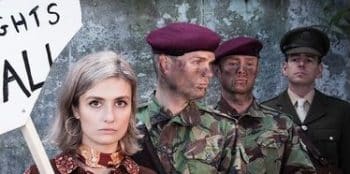
When Stephen Spielberg was making ‘Schindler’s List, in the early 1990s, he invited some of the Holocaust survivors who had been saved from the gas chambers by Oscar Schindler onto his movie set. The guests mingled with the actors and crew during a break. Amid all the lights, the electrical wires criss-crossing the set, the extras who were playing the SS chatted amicably with each other. Someone noticed something odd: the SS group – and they alone – were being shunned by Spielberg’s special guests, the survivors. This was because the extras looked so much like the real thing, they exuded a cruelty that, nearly half a century later, disturbed the visitors. I felt something similar watching the actor playing Sergeant Hutton of 1 Para during Gerard Humphrey’s riveting new play about Bloody Sunday, ‘One Para’ at the New Theatre. Andrew Kenny plays a foul mouthed, racist bigot who bullies one of his more junior colleagues, Scarrif, urging him to shoot at the unarmed and harmless civil rights marchers in the Bogside. His bragging about his colonial exploits in 1 Para is a whirlwind education in the crimes committed by men like him. Every so often he cracks a crass joke or make a jibe that should make the audience wince but something more disturbing happens: there is nervous laughter. The audience out in the dark is cowed by Hutton. If you want to know what Stockholm syndrome is like, go and see this play. Sergeant Hutton on internment and the Ballymurphy massacre: We sorted Belfast out in one night… You saw the photos put up on the wall in the corporal’s mess. .. we swept down the Black Mountain straight into Ballymurphy and shot forty bogwogs – we wasted eleven of them. Victor got himself a priest and all. He won the regimental sweepstake! The UDR wallahs told him he should put in for a bounty! While the menace and darkness of this 75 minutes play shoots at the audience through the mouth of Kenny, the piece works because each cast member hits their target dead centre. The overarching ingredient, however, is the crisp dialogue Gerry Humphreys places in their mouths. He manages to convey the complexities of Brigadier Frank Kitson, the MRF death squads, the Ballymurphy and Bloody Sunday massacres with rapid fire shots of succinct dialogue that hits you in the solar plexus. He has a genius for boiling down the complex into brilliant historical one liners. When Hutton is asked about his actions by a military police officer he barks: “I am a professional soldier. If I had not shot – I truly believe he would have shot me! The military police officer snaps back at him: With a handkerchief? Humphreys sprinkles the script with the occasional piece of humour to lighten the brutal dialogue, but he does so with such subtlety and deftness that he never once crosses the line or disturbs the equilibrium of what is a deadly serious issue. One Para is directed by Anthony Fox. The set design is by Robert Ballagh. The show continues until the weekend. If you can, catch it. The run comes to an end on Saturday. OTHER STORIES ABOUT BLOODY SUNDAY, THE BALLYMURPHY MASSACRE, BRIGADIER FRANK KITSON AND COLONEL DEREK WILFORD ON THIS WEBSITE: Bloody Sunday: Brigadier Frank Kitson and MI5 denounced in Dail Eireann The covert plan to smash the IRA in Derry on Bloody Sunday by David Burke Soldier F’s Bloody Sunday secrets. David Cleary knows enough to blackmail the British government. Learning to kill Colin Wallace: Bloody Sunday, a very personal perspective Lying like a trooper. Internment, murder and vilification. Did Brigadier Kitson instigate the Ballymurphy massacre smear campaign? Where was Soldier F and his ‘gallant’ death squad during it? Another bloody mess. Frank Kitson’s contribution to the wars in Afghanistan and Iraq. 300,000 have died in Afghanistan since 1979. Lying like a trooper. Internment, murder and vilification. Did Brigadier Kitson instigate the Ballymurphy massacre smear campaign? Where was Soldier F and his ‘gallant’ death squad during it? A Foul Unfinished Business. The shortcomings of, and plots against, Saville’s Bloody Sunday Inquiry. Kitson’s Private Army: the thugs, killers and racists who terrorised Belfast and Derry. Soldier F was one of their number. Soldier F and Brigadier Kitson’s elite ‘EFGH’ death squad: a murderous dirty-tricks pattern is emerging which links Ballymurphy with Bloody Sunday. A second soldier involved in both events was ‘mentioned in despatches’ at the behest of Kitson for his alleged bravery in the face of the enemy. Mentioned in Despatches. Brigadier Kitson and Soldier F were honoured in the London Gazette for their gallantry in the face of the enemy during the internment swoops of August 1971. Soldier F, the heartless Bloody Sunday killer, is named. Mission accomplished. The unscrupulous judge who covered-up the Bloody Sunday murders. Soldier F and other paratroopers have been protected by the British State for five decades. None of them now face prosecution. This perversion of justice began with the connivance of the Lord Chief Justice of England and Wales, John Widgery, a former British Army brigadier, Freemason and oath-breaker. Counterinsurgency war criminals, liars and cowards: Kitson and Wilford, the brigadier and colonel who led the soldiers who perpetrated the Ballymurphy Massacre. Brigadier Kitson’s motive for murdering unarmed civilians in Ballymurphy. The McGurk’s Bar cover-up. Heath’s Faustian pact. How a British prime minister covered up a UVF massacre in the hope of acquiring Unionist votes to enable the UK join the European Economic Community, the forerunner of the EU.
by admin
The musician Feargal McCann has followed the saga revolving around the mass murderer David Cleary. McCann’s father Joe, was shot by paratroopers in 1972, only ten weeks after Bloody Sunday. Cleary, better known as ‘Soldier F’, was one of those responsible for the Bloody Sunday massacre of innocent unarmed civilians. Cleary shot Patrick Doherty while he was lying on the ground crawling away from him. The bullet tore up the man’s spine. As he lay crying out in pain, Barney McGuigan, stepped forward with a white handkerchief looking to help him. Cleary dropped to one knee, aimed his rifle and shot McGuigan in the head. Cleary was named in the House of Commons by the leader of the SDLP, Colum Eastwood, last year. This circumvented a ban on naming him which had been issued by a court in Belfast. Last week Cleary was named by Peadar Tóibín in the Dail. The ban does not apply in the Republic of Ireland. Village reported Deputy Tobin’s speech later that night. Feargal McCann read the story and transmitted a tweet about it. Twitter has now locked McCann’s account. In addition, it is stipulating that by deleting the tweet, McCann acknowledges that he ‘violated’ Twitter rules. Twitter might point out that there is a court order in place which prohibits the naming of Cleary, albeit one that only applies in the UK. No doubt, Twitter might argue further that since tweets are international, McCann’s transmission could have been read inside the UK, and hence they had no choice but to shut the musician’s account down. The consequences of such an argument could be far-reaching. If, for example, a Russian Court bans any coverage of Pussy Riot or other dissidents, will Twitter enforce any such ban? And what about Kim Jong-un? If he or a North Korean court banned the naming of the assassins of his half-brother, Kim Jong-nam, would Twitter lock the account of a person in Ireland who named the killers? Or is Twitter merely going to enforce injunctions about a mass murderer like Cleary who shot innocent Irish people? The pages of Village are open to Twitter to respond. Eamon de Valera invented the concept of the ’empty formula’ to get around having to take an oath of allegiance to the Crown in 1927. Those suspended or locked down by Twitter might draw inspiration from this to get around Twitter’s censorship of their accounts for naming Cleary. It could be called ‘Empty Twitter formula’. OTHER STORIES ABOUT BLOODY SUNDAY, THE BALLYMURPHY MASSACRE, BRIGADIER FRANK KITSON AND COLONEL DEREK WILFORD ON THIS WEBSITE: David Cleary, mass murderer, aka Soldier F, named in Ireland’s parliament. Bloody Sunday: Brigadier Frank Kitson and MI5 denounced in Dail Eireann The covert plan to smash the IRA in Derry on Bloody Sunday by David Burke Soldier F’s Bloody Sunday secrets. David Cleary knows enough to blackmail the British government. Learning to kill Colin Wallace: Bloody Sunday, a very personal perspective Lying like a trooper. Internment, murder and vilification. Did Brigadier Kitson instigate the Ballymurphy massacre smear campaign? Where was Soldier F and his ‘gallant’ death squad during it? Another bloody mess. Frank Kitson’s contribution to the wars in Afghanistan and Iraq. 300,000 have died in Afghanistan since 1979. Lying like a trooper. Internment, murder and vilification. Did Brigadier Kitson instigate the Ballymurphy massacre smear campaign? Where was Soldier F and his ‘gallant’ death squad during it? A Foul Unfinished Business. The shortcomings of, and plots against, Saville’s Bloody Sunday Inquiry. Kitson’s Private Army: the thugs, killers and racists who terrorised Belfast and Derry. Soldier F was one of their number. Soldier F and Brigadier Kitson’s elite ‘EFGH’ death squad: a murderous dirty-tricks pattern is emerging which links Ballymurphy with Bloody Sunday. A second soldier involved in both events was ‘mentioned in despatches’ at the behest of Kitson for his alleged bravery in the face of the enemy. Mentioned in Despatches. Brigadier Kitson and Soldier F were honoured in the London Gazette for their gallantry in the face of the enemy during the internment swoops of August 1971. Soldier F, the heartless Bloody Sunday killer, is named. Mission accomplished. The unscrupulous judge who covered-up the Bloody Sunday murders. Soldier F and other paratroopers have been protected by the British State for five decades. None of them now face prosecution. This perversion of justice began with the connivance of the Lord Chief Justice of England and Wales, John Widgery, a former British Army brigadier, Freemason and oath-breaker. Counterinsurgency war criminals, liars and cowards: Kitson and Wilford, the brigadier and colonel who led the soldiers who perpetrated the Ballymurphy Massacre. Brigadier Kitson’s motive for murdering unarmed civilians in Ballymurphy. The McGurk’s Bar cover-up. Heath’s Faustian pact. How a British prime minister covered up a UVF massacre in the hope of acquiring Unionist votes to enable the UK join the European Economic Community, the forerunner of the EU.
Posted in:
by admin
Deputy Peadar Tóibín, leader of Aontú, referred to Soldier F by his real name, David James Cleary, in Dáil Éireann, the Irish parliament, yesterday (9 February). Cleary was a cruel, cynical and clinical killer. He shot Patrick Doherty in the buttock on Bloody Sunday while he was on the ground crawling away from him. The bullet tore up his spine. As Doherty lay crying out in pain, his life draining away from him, Barney McGuigan, an exceptionally brave and humane man, stepped forward with a white handkerchief looking to help Doherty. Cleary dropped to one knee, aimed his rifle and shot McGuigan in the head. A UK injunction prohibiting the naming of Cleary does not apply in the Republic of Ireland. The Cathaoirleach of the Dáil had no difficulty with Deputy Tóibín’s contribution. Village magazine named Cleary last year in a series of articles about the Ballymurphy massacre and Bloody Sunday. Twitter suspended our account after a tweet we issued named the soldier. Other accounts were suspended too, including one belonging to the brother of one of those murdered on Bloody Sunday. In a move that is the very definition of perversity, the PSNI are threatening to prosecute him. One can imagine the international outcry that will ensue if the force pursues a prosecution. The Irish contingent in the US Congress will be incandescent. There will be an anger that will unify Dáil Éireann as one if they dare proceed. The fact that Cleary has been named by Deputy Tóibín under Dáil privilege has been tweeted and retweeted by a number of people living in the Republic of Ireland. Cleary’s name is now permanently available on the website of the Oireachtas. It will be interesting to see how Twitter responds this time around. A TikToc with a recent photo of the former 1 Para lance corporal is in circulation. Yet another recent colour photograph has been transmitted on Twitter (the publication of this picture did not lead to a suspension of the relevant, presumably as it went under the Twitter radar.) Deputy Tóibín’s contribution was made as part of a question he put to the Taoiseach. Micheál Martin had no difficulty with the fact Cleary was named. Deputy Tóibín’s question was as follows: Ten days ago the Taoiseach laid a wreath at the Bloody Sunday Memorial in Derry. At the time and since then the Taoiseach has indicated the families of those who were lost, who were murdered, on Bloody Sunday need to find justice. We are looking at the likelihood that there is going to be an amnesty. If there is an amnesty in the North of Ireland, it means there is no rule of law and that the perpetrators will get away with murder. I attended the 50th anniversary of the Ballymurphy massacre, and speaker after speaker got up on the trailer that day and said the British Government quite simply wants to get away with murder. That is what is happening here. Over recent debates in which I have participated, I have made an effort to name every single victim of the Bloody Sunday massacre, the Ballymurphy massacre, the Springhill massacre, the murders that were researched in Operation Greenwich and those today in the Ombudsman’s report. Is it not shocking that we know the names of the people who lost their lives, the people who were murdered, but we do not know the names of the people who perpetrated those murders. Most people, for example, would not know Lance Corporal David James Cleary, better known as Soldier F, who is accused of murdering civilians on Bloody Sunday. Most people would not know the alphabet of British Army perpetrators of murder. We need to ensure people know their names. The Taoiseach has recounted what has happened, but I am asking him what steps will he take to ensure those names are known throughout the country for the murders they have committed. The Taoiseach responded as follows: In the first instance, I have told the Deputy what we are doing. I do not agree with the amnesty at all and I do not take it as a likelihood. The Irish Government has entered into discussions with the British Government and all of the parties in Northern Ireland in respect of the proposals that emanated from the British Government last year. We have made it very clear we do not accept any unilateral actions in respect of legacy that would represent a breach of the Good Friday Agreement and subsequent agreements. OTHER STORIES ABOUT BLOODY SUNDAY, THE BALLYMURPHY MASSACRE, BRIGADIER FRANK KITSON AND COLONEL DEREK WILFORD ON THIS WEBSITE: Bloody Sunday: Brigadier Frank Kitson and MI5 denounced in Dail Eireann The covert plan to smash the IRA in Derry on Bloody Sunday by David Burke Soldier F’s Bloody Sunday secrets. David Cleary knows enough to blackmail the British government. Learning to kill Colin Wallace: Bloody Sunday, a very personal perspective Lying like a trooper. Internment, murder and vilification. Did Brigadier Kitson instigate the Ballymurphy massacre smear campaign? Where was Soldier F and his ‘gallant’ death squad during it? Another bloody mess. Frank Kitson’s contribution to the wars in Afghanistan and Iraq. 300,000 have died in Afghanistan since 1979. Lying like a trooper. Internment, murder and vilification. Did Brigadier Kitson instigate the Ballymurphy massacre smear campaign? Where was Soldier F and his ‘gallant’ death squad during it? A Foul Unfinished Business. The shortcomings of, and plots against, Saville’s Bloody Sunday Inquiry. Kitson’s Private Army: the thugs, killers and racists who terrorised Belfast and Derry. Soldier F was one of their number. Soldier F and Brigadier Kitson’s elite ‘EFGH’ death squad: a murderous dirty-tricks pattern is emerging which links Ballymurphy with Bloody Sunday. A second soldier involved in both events was ‘mentioned in despatches’ at the behest of Kitson for his alleged bravery in the face of the enemy. Mentioned in Despatches. Brigadier Kitson and Soldier F were honoured in the London Gazette for their gallantry in the face of the enemy
by admin
By Tony Lowes. Ireland has joined 9 other member states in torpedoing proposed transparency in pesticides-use Regulations which would require farmers to use micro-data transmission to report annual farm-level data on pesticide use. There are currently no precise data showing which pesticides are used for food production in the Member States and where, when and in what quantities they are used. This is in spite of the fact that farmers are obliged to, and have been, collecting this data in their farm records for many years; and Eurostat has provided statistics on crops and animals for many decades. A 2020 report from the EU Court of Auditors said that “progress in measuring and reducing the risks of pesticide use in the EU has been limited” and biodiversity loss on agricultural land “has not been halted”. The European Commission is unable to precisely monitor the effects or risks resulting from pesticide use because there are currently no precise data to enable the implementation of the European Green Deal aim of 50% pesticide reduction by 2030. Samo Jereb, the Member of the European Court of Auditors responsible for the report, says: “An opportunity to properly address this issue was offered by a new Common Agricultural Policy coming into force in 2021, but was unfortunately missed”. While statistics are not a tool to control the compliance of individual farmers with the rules on pesticides, they are a tool to control whether the regulations in place are achieving their targets. According to the Commission, which – along with the Parliament – supports the Regulation, data collections are not harmonised and coherent to a satisfactory degree because new data needs are emerging, legislation has been developed separately over many years, and there are sometimes different definitions and concepts in different agricultural areas. The Regulations would make the parts fit together and makes the output more significant than their sum. The Regulations also adopt international recommendations such as the guidelines for reporting greenhouse gas emissions of the Intergovernmental Panel on Climate Change. The Regulations must be approved by the Council which of course comprises members’ Ministers, where Ireland and nine other member states are opposing their adoption, in forthcoming ‘trilogues’. The member states argue that “It is not the purpose of European statistics to control the behaviour of farmers, but such an image would be created if this proposal would be realised”. Under the current system, while every farm is required to create and keep pesticides records, only a selection of farms answering voluntary surveys are reported every five years. Sales-data, the current benchmark, is not use-data. The failure to adopt the Regulation will also undermine the Aarhus guarantee of the existing right of citizens to know what is emitted in their environment. Tony Lowes Tony Lowes is one of the Directors of Friends of the Irish Environment.
by admin
This brings me to the appalling and unilateral decision by the British Government to bring forward legislation to prohibit future prosecutions of military veterans and ex-paramilitaries for crimes related to the Troubles and to impose a statute of limitations on Troubles-era prosecutions. Deputy Sean Haughey tonight denounced the activities of General Sir Frank Kitson in Dail Eireann. The full text of his speech is set out below: The 50th anniversary of Bloody Sunday was marked on 30 January last. As we know, a march for civil rights in Northern Ireland took place in Derry that day. The participants marched for basic civil rights and equality, to be treated equally in a society where the minority were seen as second-class citizens by the government. The first battalion of the British army’s parachute regiment opened fire on innocent civilians, killing 13 people on the day. This followed the killing of other innocent victims by the parachute regiment in Ballymurphy the previous August. These events cast a long shadow over politics in Northern Ireland and this remains evident to the present day. The hastily established Widgery inquiry found the soldiers had started firing only after they had come under attack, among other adverse findings. This was deeply offensive to the families of those killed or injured, but it demonstrates what the establishment in a so-called democratic state can do, if so minded, to arrive at a false and predetermined outcome. The barrister David Burke, in his book published last year entitled Kitson’s Irish War: Mastermind of the Dirty War in Ireland, outlines how Bloody Sunday and other killings of innocent civilians in Northern Ireland by British soldiers were part of a ruthless, dirty war that commenced in 1970, when brigadier Frank Kitson, a counterinsurgency veteran, was sent to Northern Ireland. Burke further outlines how Kitson organised a clandestine war against nationalists and ignored loyalist paramilitaries. How shocking is that? The families of those who were murdered have campaigned for justice ever since. They have three basic demands, namely, a rejection of the Widgery report, an official acknowledgment of the victims’ innocence and the prosecution of the soldiers involved on the day. They campaign tirelessly and have to date been successful in achieving two of their three objectives. The then British Prime Minister Tony Blair established the Saville inquiry in 1998. It totally exonerated the victims and placed the blame firmly on the British army. Subsequently, the then British Prime Minister David Cameron issued a state apology and expressed his deep sorrow for what had happened. As we all know, however, the prosecution of the soldiers has, unfortunately, run into difficulty. The Public Prosecution Service for Northern Ireland announced in 2019 that only one soldier, Soldier F, would be prosecuted, but this was dropped and the matter is now before the courts. This brings me to the appalling and unilateral decision by the British Government to bring forward legislation to prohibit future prosecutions of military veterans and ex-paramilitaries for crimes related to the Troubles and to impose a statute of limitations on Troubles-era prosecutions. This has been widely condemned, rightly so. It was condemned by the Taoiseach in Derry at the weekend, when he said the soldiers involved should face prosecution. It has been condemned by the political parties in Northern Ireland, by victims groups and their families, by several international human rights organisations, including the Council of Europe’s commissioner for human rights and the United Nations special rapporteur, by Michael Posner, US Assistant Secretary of State, and by the Committee on the Administration of Justice in Northern Ireland – the list goes on. This move essentially overturns a crucial part of the 2014 Stormont House Agreement, which was agreed by the British and Irish Governments and the political parties in Northern Ireland. For example, a commitment was given to establish an independent historical investigations unit as part of this agreement. In July of last year, talks were initiated between the parties in Northern Ireland and all of the relevant stakeholders on dealing with the legacy of the past and implementing the provisions of the Stormont House Agreement. These talks should be ongoing and the Irish Government must continue to make known to the British Government its total opposition to these proposals. I would also like to raise another issue in this context. A range of rights-based commitments have been made in Northern Ireland, starting with the Good Friday Agreement and right up to New Decade, New Approach. This is not happening fully. For example, there has been a failure to progress a bill of rights in Northern Ireland. These objectives would give human rights protections to the people of Northern Ireland. In New Decade, New Approach, a commitment was given to establish an ad hoc committee on a bill of rights in Stormont but this has run into difficulty. Various proposals in this area are being obstructed in the Executive and the Assembly, using different veto mechanisms. This is very regrettable. What all of this clearly indicates is that we need full implementation of all aspects of the Good Friday Agreement and subsequent agreements. All of us need to work at that – the British and Irish Governments, the parties in Northern Ireland and Ministers and parliamentarians in these islands, using the bodies established under the Good Friday Agreement, and civic society. We must rededicate ourselves to implementing all of the provisions of the Good Friday Agreement. The role of MI5 was raised by Deputy Patrick Costello of the Green Party We can talk about the Cory inquiry’s hard drives being seized by MI5 and arson at the Stevens inquiry – all these deliberate attempts to cover up the truth.. His contribution in full was as follows: One of the recurring themes when we talk about the legacy issues is the responsibility of the British Government to act. It does have a responsibility and I will get to it in a minute. However, we also have a responsibility here in Dublin. We are co-guarantors of
by admin
“We cannot even get guarantees there will not be religious iconography on the walls” – Deputy Duncan Smith on Government plans for the new maternity hospital. Deputy Catherine Connolly has challenged the the Taoiseach to give a commitment on the planned maternity hospital “that reflects the will of the Dail”. Speaking in the Dáil in January, she stated that the new facility must be a public hospital on a public site that will be owned and run by the State. The existing plan is to build, with public funds, a privately owned hospital on a privately owned site that will be owned and run by Catholic private companies. See also: Rolling back the Eighth Amendment: the Church’s power grab for the new national maternity hospital — backed by government. By Marie O’Connor. . Her demand followed a Dáil debate on 19 January, 2022, when Deputy Joan Collins (Ind) moved a Private Members Motion calling on the Government to use a compulsory purchase order to buy the proposed site at Elm Park, which is owned by the Catholic Church. The Religious Sisters of Charity have repeatedly refused to sell the land. . The message from the Opposition, that, to guarantee reproductive healthcare free of religious diktat, the facility must be publicly owned and run on a site owned by the State, was transparently clear. The motion passed unanimously. . This was the third such motion in seven months to come before the House. As Deputy Duncan Smith (Lab) observed, “this debate would not be happening in any of our sister democracies in Europe”. He criticised the Government’s decision not to oppose the motion while not supporting it. Not saying it or not putting it to a vote, he said, was “a dishonest way of putting forward that Government position”. Deputy David Cullinane described the current situation as “a mess of Fine Gael’s making”. Like other Deputies, he found the absence of the Minister for Health from the debate “completely unacceptable”. Frustration at the democratic deficit on this issue was palpable at times. Supporting the motion, Deputy Catherine Connolly said: “if that [delay] is the strongest reason the Tánaiste can come up with for not using a compulsory purchase order on the site, it is totally unacceptable…All we want is for the Government of the day to listen to the overwhelming voices of the people in the Dáil on behalf of the people of Ireland who say enough is enough”. She described Minister Donnelly’s speech, read out by the Minister of State at the Department of Health, as “an insult to the women of Ireland”. If that [delay] is the strongest reason the Tánaiste can come up with for not using a compulsory purchase order on the site, it is totally unacceptable… Deputy Duncan Smith said: “nobody has convinced anybody in this House, including people on the Government benches, that the new national maternity hospital will be free from religious ethos … No guarantees have been given on that”. Illustrating just how thin the ice is on this particular government skating rink, he added: “we cannot even get guarantees there will not be religious iconography on the walls, as there currently is in the National Maternity Hospital”. Deputy Duncan Smith said: “nobody has convinced anybody in this House, including people on the Government benches, that the new national maternity hospital will be free from religious ethos…”. Deputy Roisin Shortall (Social Democrats) skewered claims that there would be no religious ethos in the new maternity hospital. ‘The constitution and the operational values of the hospital are intended to be based on the original values and ethos of the Religious Sisters of Charity.”. She anticipated a “major problem” relating to “the curtailment of services” in the new facility, and said that where jobs had been advertised by St Vincent’s Healthcare Group, there was “a requirement to follow the religious ethos of the [Group’s] owners”. The constitution and the operational values of the hospital are intended to be based on the original values and ethos of the Religious Sisters of Charity. Deputy Duncan Smith emphasised the “massive risk” the Government was taking, post-Repeal, in driving forward the plan to build the maternity hospital on land owned by the Religious Sisters of Charity: “the Government is going down the path of least resistance, taking a gamble at a time when we are four years on from repealing the Eighth Amendment and we still have women having to travel”. In his view, “there is a critical mass within the Government that knows this [full State ownership of the new facility] is the right thing to do. The Government is not doing it”. The project, he underlined, is fraught with uncertainty: “even the clinicians in favour of the move to Elm Park know they cannot provide these guarantees [of freedom from religious ethos] … They have said it to us”. Even the clinicians in favour of the move to Elm Park know they cannot provide these guarantees [of freedom from religious ethos] … They have said it to us. Deputy Thomas Pringle (Ind) zoned in on the operational control of the new hospital, saying he was “completely opposed” to St Vincent’s Healthcare Group or “any other religious or private group” running it. “The possibility of the Catholic ethos overriding legislation is very concerning”. Minister of State at the Department of Health, Deputy Anne Rabbitte told the House the Government was “very aware” of the “concerns voiced” that “centre on the ownership and clinical independence of the new hospital”. She stated that the “draft legal framework” aimed “to copper-fasten these arrangements”. How was left hanging. Deputy David Cullinane was of the view it was “reckless to proceed with building a hospital when the State will not own the land”. He assured the Minister that his (the Minister’s) assurances that there would be no “religious interference” in the new hospital were “not good enough”. Describing St Vincent’s as “a proxy organisation for the Religious Sisters of Charity”, Deputy Mick Barry asked a rhetorical question: “is the Government seriously considering allowing
by admin
By David Burke. The Irish Government has condemned – and continues to condemn – the proposed legislation by Boris Johnson’s Conservative government in London to enact legislation to put an end to legacy cases arising out of the Troubles in Northern Ireland. The Irish government has become part of a chorus of condemnation of the proposed legislation. Simon Coveney, the Minister for Foreign Affairs, has pointed out that the Stormont House Agreement, which deals with legacy issues, must be honoured. The government is singing off the same hymn sheet as all of the major Nationalist and Unionist parties in the North, not to mention an array of relatives of victims of violence perpetrated by British Army and various paramilitary organisations. UN Petition The Taoiseach and his ministers may not yet be aware that they are about to be cited as respondents in a petition which will call upon them to deal with a case that has a legacy dimension to it but is also a current issue. It is being brought before the United Nations by Osgur Breatnach for the failure on the part of all Irish government since the 1970s to conduct an inquiry into his arrest along with that of Nicky Kelly, Brian McNally, Mick Plunkett and John Fitzpatrick and Michael Barret allegedly for the Sallins Mail Train robbery. The heist, which took place on 31 March 1976, was carried out by the Provisional IRA. Over £300,000 (€M1.5 in today’s money) was stolen from the Cork to Dublin mail train near Sallins, Co. Kildare. Scandal None of the men who were arrested had any hand, act or part in the robbery. It was perpetrated by the Provisional IRA, a paramilitary organisation. The Provisionals admitted responsibility for it in May of 1980. Breatnach and his colleagues were members of the Irish Republican Socialist Party (IRSP), a political organisation. None of those arrested were connected with, or involved in any form of terrorism, let alone armed robbery, a fact the courts belatedly acknowledged. None of those arrested were connected with, or involved in any form of terrorism, let alone armed robbery, a fact the courts belatedly acknowledged. Breatnach’s petition to the UN will ask the UN to conduct an inquiry into the conduct of the Sallins case. The petition is being endorsed by all Irish human rights associations (Amnesty International, the Irish Council for Civil Liberties, Committee for the Administration of Justice, and the Pat Finucane centre) and Nicky Kelly, Brian McNally, John Fitzpatrick and Michae’ Barret. During garda interrogation Breatnach and the others – with the exception of Plunkett – signed alleged confessions. Significantly, they sustained extensive bruising and injuries they claimed were inflicted by members of the Gardai. The Gardai claimed the wounds were self-inflicted. Miscarriage of Justice The case was thrown out of the District court as no evidence at all was produced after six months. A trial proceeded against Breatnach, McNally, Plunkett and Kelly in the Special Criminal Court. Judge John O’Connor of the Circuit Court was one of a three judge panel. It collapsed after he died sixty-five days into the hearings. A second trial commenced on 10 October 1978. Medical evidence of beatings was presented during both trials, doctors claiming the injuries were not self-inflicted. The court held that the wounds the men had suffered had been self-inflicted or inflicted by the co-accused. One of the accused, Nicky Kelly, had no confidence that justice would prevail and jumped bail – later fleeing the country before the conclusion of the second trial. Breatnach and the other two were found guilty, solely on the basis of their alleged confessions. They were sentenced to between nine and 12 years in prison. (33 years between them). Kelly was sentenced in his absence. The following May, Breatnach and McNally were acquitted on appeal. It was determined that their statements had been taken under duress, the Appeal Court’s language equating the duress to torture. Kelly returned to Ireland from the USA in June 1980. He spent the next for years in prison. He was eventually released on “humanitarian grounds” in 1984. He was given a presidential pardon in 1992. Even this is hardly satisfactory for there was nothing for which to pardon him. Nonetheless, the public has accepted it as an acknowledgement of the miscarriage of justice that he, Breatnach and the others had suffered. Suffering Breatnach spent 17 ½ months in prison. He suffered – and continues to suffer – post-traumatic stress disorder. His life was derailed by the scandal. He has been campaigning for an inquiry into the wrongdoing behind the case but has been met with State deaf ears for decades. Precedent The Sallins case did not take place in a vacuum. Its roots can be traced back, at least, to the Arms Crisis of 1970. In that case Peter Berry, the Secretary at the Department of Justice, and others, engaged in witness statement tampering, perjury and forgery. Witness statement interference: Colonel Michael Hefferon was the Director of Irish military intelligence, G2. He retired in 1970 before the Arms Crisis erupted. Prior to his retirement, he had kept James Gibbons, the then Minister for Defence abreast of efforts by G2 to secretly import arms with the knowledge and permission of the State. A witness statement Hefferon made prior to the first Arms Trial was altered. If Peter Berry was not the actual culprit, he certainly knew about the interference. The alteration was designed to cover-up the role of Gibbons in the importation. Des O’Malley, the Minister for Justice, read and initialled the file which showed the deletions of the Hefferon’s account. After this, the statement was retyped before it was placed in the Book of Evidence. Perjury James Gibbons and Peter Berry committed perjury on behalf of the prosecution at the arms trials. Forgery Jerry Cronin, who succeeded Gibbons as Minister for Defence, became an unwitting participant in the creation of a forged military memorandum. He did so in conjunction with the then taoiseach, Jack Lynch. Cronin later
by admin
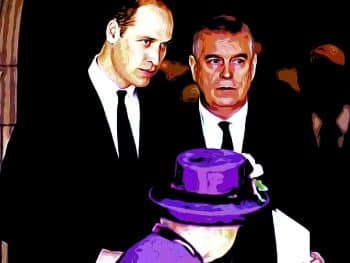
Buckingham Palace went to extraordinary lengths to cover-up the involvement of Prince Andrew, the Duke of York, in the Jeffrey Epstein-Ghislaine Maxwell sex trafficking scandal. The Royal was supplied with a 17-year-old-girl, Virginia Roberts (Giuffre), who was commanded to have sex with him three times, once in London. Palace officials threatened to blackball ABC, an American TV station which got hold of the story in 2015. The latest development is that Prince Andrew has sold his Swiss chalet which will provide him with millions with which to finance a settlement with Roberts. The case will proceed as the judge in the US has rejected his application to discontinue it. What if it is now to late to settle with his victim having branded her a liar? To make matters worse for the Duke, a witness has come forward who can confirm that Roberts spoke to her about her involvement with the Duke at the time of the abuse. The witness saw the infamous picture of the Duke with Roberts and Ghislaine Maxwell shortly after it was taken. What will the Metropolitan Police do if he manages to settle the civil action by handing over five or six million – or even more – to Roberts? An innocent man would fight his corner rather than enrich a liar who has destroyed his reputation, especially to the extent of making her a multi millionairess. The Duke will hardly settle with Roberts without a guarantee from her that she will boycott any future criminal prosecution brought against him in London. A criminal prosecution would be doomed to failure without her full co-operation and testimony. Surely, Met. Comissioner Cressida Dick would have to resign if a deal on those terms Is concluded. She refused to investigate the case when Roberts was prepared to co-operate fully. The behaviour of the Royal Family has been a shambolic disaster thus far. In 2015 ABC was warned that Prince William and Kate would shun them in the future if they ran an interview they had recorded with Roberts. She was 17, he was 41. ABC backed down. More details can be found here: Judge a (future) king by his courtiers: Prince William and the Duchess of Cambridge, pawns in the cover-up of a transatlantic paedophile network. A video of Amy Robach, the ABC reporter can be accessed via the video in the links below: Remember when @ABC dropped the ball on this investigation, because they were threatened by #PrinceAndrew family? #JeffreyEpstein #GhislaineMaxwell pic.twitter.com/SwDGUaAaDb — Resilient (@KaindeB) January 4, 2022 https://twitter.com/AliciaJ1985/status/1477687840473554944?t=B8z0BI8jD34n1oEQEfJUcA&s=19 In the wake of the conviction of Ghislaine Maxwell, the Palace is now trying to rewrite its sordid role in the cover-up. So-called ‘anonymous’ sources are pretending that there was no concealment, rather that matters got out of hand because of the arrogance of the Duke. The Duke has enjoyed the unwavering support and protection of his devoted mother, Queen Elizabeth. Clearly, he is now being thrown to the wolves by her courtiers. It is not fanciful to speculate that the monarch is viewed as a lame duck by her senior retainers as she battles ill health, fatigue and great old age. If the control of Buckingham Palace is indeed passing to Prince Charles, it can be inferred that he has decided that his brother’s sexual excesses are not going to ruin his forthcoming reign as king. The latest message from the Palace via The Daily Mail is that the Queen is refusing the bail out Prince Andrew, her reputed favourite child. It is more likely that she has had her elderly arm twisted than that she has abandoned Prince Andrew out of a sudden disgust at his behaviour. The Daily Mail was the conduit for the new PR line which the Palace began taking last week. It reported last week that: “Speaking on condition of anonymity, a senior former royal adviser stressed that while there was no knowledge of the extent of the duke’s friendship with Epstein and Maxwell to anyone outside of the prince’s private office, the ‘Andrew problem’ was a long-running issue for the royal household in general. ‘Anyone who even dared to offer their professional advice that maybe his way wasn’t the right one was met with a decisive ‘f*** off out of my office’,’ the source said”. The account is backed up by other former royal staff, all of whom claim the prince acted as if he “didn’t have to answer to anyone” and was allowed to “go rogue”. Particularly troublesome, it was said, was Andrew’s role as a roving trade ‘ambassador’, which saw him repeatedly criticised for cosying up to highly controversial world leaders and businessmen. A former Buckingham Palace staff member recalled how it was an “impossible job” to persuade the prince or his advisers to take any instruction. “The duke made clear that the only person he answered to was the Queen”, they said. “He wouldn’t take advice from anyone. [He] acted with total impunity and staff were just too scared to stand up to him as a member of the Royal Family. Her Majesty almost always backed him and he fully exploited that. There’s an element of Buckingham Palace sleepwalking into his whole crisis. Andrew would tell his family that it was all untrue and it would all go away”. It would stretch credulity beyond breaking point to suggest that the Mail’s primary ‘source’ and the other ‘former’ courtiers have all emerged at the same time with the same deceptive story by coincidence. The sources also appear to have no fear of any repercussion for breaking their duty of silence to the Palace. There can only be a tiny pool of people with this background who have retired in the recent past. It would be easy to identify them. Would they all risk losing a pension just to vent some exasperation at the Duke? Or is this all part of a structured PR offensive? More importantly, why are the Mail’s sources concealing the true history of the Royal
by admin
June 2021 Village Magazine
by admin
Introduction. The 50th anniversary of the Bloody Sunday massacre falls next month. The official position of the British Government is based on the 2010 report of Lord Saville of Newdigate, i.e., that a group of paratroopers engaged in the massacre of thirteen innocent people in Derry with a fourteenth dying later, for no reason. Unfortunately, Saville ignored or discounted much evidence that indicates that the soldiers were acting on orders. He paid scant attention to the crucial role played by a deceitful agent run by Military Intelligence and MI5 called ‘Observer B’. He was unduly harsh on Byron Lewis, a paratrooper who blew the whistle on his colleagues. The two companies of paratroopers of 1 Para that went to Derry on Bloody Sunday were meant to be on the same mission, following the same orders. Yet, they behaved as if they were on different operations. The orders followed by Support Company, also known as ‘Kitson’s Private Army’, indicates that a secret mission was assigned to them, or some designated number of them. The ‘Kitson’ referred to here was Brigadier Frank Kitson, the counter-insurgency specialist who ran Belfast and its environs. 1. Chain of Command The senior British officers present in Derry on Bloody Sunday and mentioned in this article in order of their seniority were: General Robert Ford, Commander Land Forces Northern Ireland. Brigadier Patrick MacLellan of 8 Brigade, which ran Derry. Colonel Derek Wilford, who commanded 1 Para. Major Edward Loden who commanded Support Company of 1 Para. No criticism is made of Brigadier MacLellan in this article. If there was a hidden plan that unfolded on Bloody Sunday, it was conceived and executed behind his back. 2. General Ford foists 1 Para on Brigadier MacLellan In the run up to Bloody Sunday, the Brigadier of 8 Brigade in Derry, Patrick MacLellan, was ordered by his immediate superior, General Robert Ford, to make preparations to prevent a Northern Ireland Civil Rights Association (NICRA) march from reaching the Guildhall in Derry on 30 January 1972. Ford was based at HQNI at Lisburn. MacLellan was lent troops from 1 Para to assist him on Bloody Sunday, or so he was led to believe. 1 Para was based at Palace Barracks, Hollywood, outside Belfast. They normally conducted their operations in that city. 3. ‘Corking the bottle’ Ostensibly, the plan for 30 January was to prevent the NICRA march from reaching the Guildhall and, if appropriate, arrest likely rioters. The rioters were to be caught by putting “a cork in the bottle”, as Captain (later General Sir) Michael Jackson of 1 Para has described it. This meant encircling and trapping the rioters before arresting them. This operation was to take place at the end of William Street. Please look at the map which accompanies this article. The rioters were to be captured between Barrier 14 (shaded yellow) and the junction of Little James Street and William Street. The Support Company troops who were meant to be behind Barrier 12 (shaded red) could have swung around from Little James Street (red arrow) and blocked an escape route back along William Street or up Rossville Street. The peaceful NICRA marchers followed the line shaded in purple from William Street to Rossville Street. A group of rioters did present on the day. 4. Two Companies which were meant to – but didn’t – perform the same task Two different companies from 1 Para were sent to Derry on Bloody Sunday: C Company and Support Company. In theory, they fell under the temporary command of Brig. MacLellan. (Their brigadier in Belfast was Brigadier Frank Kitson). Although both groups were allegedly assigned the same task by their commander, Col Wilford, Support Company behaved in a completely different manner to C Company. C Company was put behind Barrier 14. Support Company was sent to a yard at a Presbyterian Church on Great James Street which was much further away from the area where the rioting was expected to take place. 5. Differences in preparation and deployment There were a number of differences in the deployment of the two companies [C company and Support Company], which include the following: Location of Forming Up Points (FUPs) Use of rifles instead of batons; Application of war paint; Use of vehicles; Discharge of shots. {i} Location of Forming Up Points (FUPs) C Company’s FUP was behind Barrier 14 which is shown on the map that accompanies this article. This makes sense in terms of MacLellan’s plan. They were well positioned to block the march should an attempt have been made to break through to the Guildhall. It also left them strategically placed to rush forward and encircle any potential rioters. Support Company would have been well advised to have formed up as close to the junction between William Street and Little James Street as possible. Barrier 12 should have been moved up much closer to the junction. They should have been behind it in light clothes ready to swing around to ‘cork the bottle’. The two companies could have infiltrated the side roads as well and thereby blocked any attempts to escape through them. Yet, Support Company – based at the churchyard – were not within running distance from the likely rioters whom the army termed the ‘DYH’ [the Derry Young Hooligans]. There was little chance that Support Company could ‘cork the bottle’ from a starting point at the Presbyterian Church on Great James Street. The rioters would have seen soldiers running at them from Little James Street in plenty of time to make an escape by sprinting up Rossville Street. The deployment of Support Company at the church was guaranteed to defeat the purpose of MacLellan’s arrest plan. {ii} Primary use of rifles instead of batons; C Company wielded batons or kept their arms free to grab, wrestle and tackle the rioters when they went into action. Some may have used the butts of rifles strapped over their shoulders to strike the rioters. Crucially, they did not deploy with fingers on