admin

  • Posted in:

    Out of Time

    How the newspaper of reference dealt with correspondence challenging an important article it published about equality Brendan Ogle Of Unite submitted the following article to the Irish Times on 15 December 2020 Unite House Unite the Union 55/56 Middle Abbey Street                        Dublin 1 D01 X002 Republic of Ireland Republic of Ireland Head Office 15th December 2020 On 14 December 2020 Jerry Buttimer stood up in the Seanad and said that in terms of personal finances, Ireland was becoming a more equal place. ‘The reality is that income growth and inequality is falling in our country at this time’ he said, ‘and as Mr. Pat Leahy wrote recently in The Irish Times, people are getting richer and we are becoming more equal.’ Those seeking to help families and individuals suffering from shocking deprivation here this Christmas will be shocked at this news. And so they should be. Because it is false. It is not acceptable for Journalists to present as ‘facts’ things that are not facts and present them as seasonal gifts to ideologically driven Politicians practised in the policies of division, isolation, poverty and deprivation.  The article cited was published the previous week and contained the claim that rising incomes and falling inequality ‘is a neat trick, managed by very few.’ Both Buttimer and Leahy also criticised the naysayers and NGOs who argue otherwise in tones that remind me of Bertie Ahern’s infamous ‘pre-crash’ invite to those ‘talking down’ the economy to consider suicide. Leahy put himself out there as far as to say ‘the data is the data, the facts are the facts… we have been getting richer, and also more equal at the same time.’  Wow! So let’s talk about ‘facts’. Leahy highlights this quote from a 2020 report on inequality by TASC: “while inequality was on the rise elsewhere, it was falling here.” But the next sentence – literally the next sentence – says that ‘Another explanation for Ireland’s stability is that it is only apparent, and that inequality has actually been increasing. The data presented so far has ultimately been drawn from surveys, which have well-known limitations when it comes to the measure of income, and hence inequality.’ Leahy leaves this vital context out.  The survey in question is the CSO’s annual Survey on Income & Living Conditions (SILC). It supplies the information for calculation of the ‘Gini coefficient’, a formula used to calculate income inequality that Leahy presents as showing falling inequality. The SILC is a sample survey of just 4,183 households out of 1.7 million in the state (around 0.2 per cent of the total).  The survey is voluntary and only 40% of those sampled agreed to take part. Almost 2,000 households refused outright, while another 2,800 gave various reasons listed as ‘other’ by the CSO.[1]   So, while the CSO conducts a random selection of private households for the initial catchment, within that random selection there is a form of self-selection, there are households that will not share their income data, and it is only those that freely volunteer the information that end up in the survey.  But that’s not all. The CSO employs around 100 people to carry out this work, but often they call to a house and not everyone is at home. So they conduct interviews ‘by proxy’ –  information is provided by ‘another resident of the household due to unavailability of the person in question’. [2]   Up to 50 percent of all interviews for the income survey are by proxy, which gives rise to issues ‘with the quality of data for proxy responses for certain variables’. [3] This leads to acknowledged and well flagged ‘statistical bias’ that Leahy leaves out in his rush to declare what ‘facts’ are. He also fails to tell us that the report actually says ‘high incomes tend to be underreported when they do respond.’ It is no surprise then to hear that the data collected from household surveys has to be ‘cleaned up’ by the CSO before it ends up in the final survey. This requires the use of various statistical weights and assumptions to compensate for missing data and known bias.  However, even if the survey and its methodologies were absolutely flawless, there would still be issues with their underlying assumptions within an Irish context. The ‘Gini coefficient’ formula strives to capture income distribution after income tax and social welfare transfers, which it labels as ‘disposable income’. However, the Irish welfare system is different from others within the EU in that it is geared more towards monetary transfers and less towards the provision of services.  Put simply, in Ireland the formula does not take into account the cost of housing, rent, health, childcare, utility services, transport, or education. In other words ‘Gini’ only measures ‘income’ before Irish people pay their bills. So much for ‘facts’! It gets worse. The second source that Leahy draws upon is an article by UCC economist Seamus Coffey which is on RTÉ’s Brainstorm website. Coffey argues that Ireland is ‘one of the few developed countries that has had high income growth and falling inequality’. He says that while people may disagree on the way forward, they cannot disagree on that point. As with Leahy, he says that the facts speak for themselves. Coffey underpins his point with data taken from a paper that was published in the Journal of Income Distribution in 2018 entitled, ‘Rising Income Inequality and Living Standards in OECD Countries: how Does the Middle Fare?’.  Guess what he uses? Yes, you got it, the ‘Gini coefficient’. He even uses it to claim that Ireland ‘is the only country in the sample to achieve both high income growth and falling income inequality’.  However, the 2018 paper from which Coffey draws this information cites not one, but two, indicators of income inequality.  The first is ‘Gini’ which measures everything except what poor people need to live, and the second is the income share going to the top 1%. This shows income inequality rising. In fact it’s not only rising. Ireland actually had the third highest rise in income share going to the top

    Loading

    Read more

  • Posted in:

    NAMA Shrugs Again

    State’s bad bank fails to take responsibility for another inept hit to the public purse as it improperly sells to someone connected to the original debtor, blaming IT systems. By Frank Connolly (November edition, Village) NAMA Chief Executive, Brendan McDonagh, appearing before the Oireachtas Public Accounts Committee (PAC), failed to deliver a credible explanation as to how the agency handled the disposal of a lucrative portfolio of loans which was sold at a significant loss. The Committee was convened to discuss the investigation by the Comptroller and Auditor General (CAG), Seamus McCarthy, into the dis- posal in 2012 by NAMA of Project Nantes, which was part of the larger Avestus portfolio. Avestus included valuable properties in Europe and the US which in turn were part of the loans of former Revenue Commissioner, Derek Quinlan and the Quinlan Partnership. According to the CAG, the agency, contrary to its code of practice, “did not seek current inde- pendent valuations of the Project Nantes loans or of underlying property collateral. Furthermore, NAMA did not pursue a competitive sales pro- cess”.The final valuation was short by some €29 million, the CAG said. Instead, NAMA negotiated exclusively with a US-based fund, Clairvue, which was introduced to the agency by Avestus, the owner of the dis- tressed loan portfolio before it transferred to NAMA. What emerged from the CAG’s investigation is that Avestus was informed by the agency of the “residual amount NAMA needed to raise through the Project Nantes loan sale in order to achieve its repayment target. The Clairvue offer was very close to that amount”. At the request of NAMA, Clairvue made a dec- laration  that it was not connected  to  the debtor i.e. Avestus, before it purchased Project Nantes. However, it emerged in 2018 that the loans  were purchased by a Luxembourg-based com- pany in which a former Avestus director was in- volved. This revelation by then-TD, Mick Wallace, prompted the CAG investigation. In his response to the PAC on 8 October last, McDonagh confirmed that NAMA made a loss of €10 million on the sale of Project Nantes and that it had made a miscalculation in setting a tar- get of €125.5 million for the portfolio. He said the mistake was due to the fact that “the transaction occurred early in NAMA’s life cycle when we had no central IT systems and relied on multiple spreadsheets with volumes of data”. PAC member and FF TD, Marc MacSharry, sought to interrogate McDonagh and his col- league about the weakness of the valuation process and the research carried out by NAMA in relation to the disposal. “At what point during the normal company searches that can be done did NAMA become aware that somebody was a director and share- holder of both Avestus and Clairvue-Nantes?”, MacSharry asked. McDonagh said that Avestus and Clairvue had signed a declaration stating that the buyer was not a connected party (to the debtor) but conceded that “it would have been better if Avestus was upfront…”. However, he said “the man was not, nor had he ever been, a NAMA debtor and Avestus was never a NAMA debtor”. “The only failing was a moral failing on the part of Avestus because it should have been up- front with us and said that one of its colleagues had been asked to be a director of this entity by Clairvue but that he was not a NAMA debtor”, he said. SF TD, Matt Carthy, asserted that NAMA was ‘played’ by the individual and companies in- volved and should be “angry as hell” at the outcome. “A guy who was operating for a company that it employed was also a director of the company for somebody who was purchasing the portf lio that was for sale through a non-competitive process…I do not understand why Mr McDonagh is not as angry as hell with this individual and the companies involved because they played NAMA”. According to McDonagh, he is angry and unhappy that Clairvue-Nantes did not inform NAMA that “one of their colleagues who was not a NAMA debtor was being asked by Clairvue to be- come director of this Luxembourg entity which bought the portfolio”. Fortunately for McDonagh, he was not more closely questioned on the role played by the NAMA office which dealt directly with Clairvue in relation to the sale. When Clairvue purchased the Project Nantes portfolio in 2012 its US executives wanted to issue a press release to mark the successful ac- quisition. The NAMA office involved said that the agency did not wish such publicity as “the loans were not openly marketed”. NAMA told Clairvue that “it should be satisfied they acquired the loans at arguably below market value”. For some members of the PAC there were echoes of the Project Eagle debacle when the massive Northern Ireland portfolio of distressed loans was sold by NAMA in 2014 to US fund, Cerberus, in extremely controversial circumstances. McDonagh deflected the issue by insisting that he was prohibited from discussing Project Eagle due to the ongoing and lengthy inquiry by Judge John Cooke into the controversial sale. One of the reasons it has gone on for so long has been the delay by NAMA in handing over crucial documents to the State investigation.

    Loading

    Read more

  • Posted in:

    Garda Investigation Did Not Have FoI Material*

    Documents released to Village under FoI reveal false pretences behind €25,000 paid by Meath County Council to former employees of plant-hire company owed the money. By Frank Connolly Official documents obtained by Village have revealed in considerable detail the manner in which a County Meath businessman was defrauded by a former employee in 2008 and 2009. The documents, provided by Meath County Council following requests made under FOI, include a series of invoices provided under false pretences by a former employee of plant-hire provider, P Sheils Plant Hire of Duleek in County Meath. As previously disclosed in Village over the past two years, the owner of the company, Patrick Sheils, was never paid for a number of contracts he completed for MCC in 2008 and 2009. In July 2009, he discovered that two of his former employees had formed a company called PSPH Contracts Ltd. (using the initials of his company name) and had sought and obtained payment from MCC for work carried out by P Sheils Plant Hire. The claim Sheils had been paid was made despite a letter from another senior official of the Council that Phoenix Civil Engineering Ltd. “was part of the P Sheils group of companies” When Sheils submitted invoices in 2009 and 2010 for 13 specific jobs totalling over €25,000 he had completed for the Council in various parts of County Meath, he was informed that another company, PSPH (Phoenix Civil Engineering Ltd.) had been contracted to carry out the same work and had been paid. It also emerged that Phoenix Civil Engineering, owned by his former employees Sinéad McNamara and David O’Donoghue, was on the list of approved and registered contractors for the Council and was obtaining work for which Patrick Sheils had tendered and previously had carried out for MCC over many years. PSPH Contracts Ltd. was formed by directors David O’Donoghue and his wife in 2008 and the name was changed in the Companies Office to Phoenix Civil Engineering Ltd. in May 2009, with McNamara and David O’Donoghue as directors. The documents obtained under FOI confirm that Sinéad McNamara submitted a series of invoices in the name of the new company PSPH Contracts Ltd. during 2008 and 2009 and received the payments from MCC. The invoices covered up to 13 different jobs carried out by P Sheils Plant Hire and awarded, after a tender process, to the firm during over the period. McNamara used the phone number and health and safety documentation of P Sheils Plant Hire in her contacts with the Council, without authorisation from the firm. According to the documents received under FOI, executive engineer for MCC in Trim, Martin Walsh, signed off on a number of the invoices for Ms McNamara and also helped to process the required purchase orders and other authorisations before the payments were made. There is no suggestion that Mr Walsh was involved in anything improper or illegal in this regard. When Paddy Sheils sought payment, in June 2009, for repairs carried out by his employees with his equipment at Rathmolyon Road, Summerhill, County Meath on 30th March, Mr Walsh replied that “Meath County Council, Trim Area office, didn’t hire P Sheils plant hire (sic) to carry out this work so Meath County Council will not be paying this invoice”. After Sheils submitted further requests for payments in August and September 2011, Walsh again asserted that the work was “carried out by a Contractor other than P Sheils Plant Hire”. In his letter of 14 September, 2011, (below), Walsh stated that “P Sheils Plant Hire was not authorised to carry out these repairs by Meath County Council, Trim Area and as such we are unable to process your Invoice in this regard”. Another senior official of MCC also wrote in September 2011 to Patrick Sheils “to advise that PSPH Contracts Limited (Phoenix Civil Engineering) were engaged by Meath County Council to deal with an emergency leakage on the water main at Rathmolyon, Summerhill on 26th March, 2009”.“The Council have paid PSPH Contracts Limited for the work done, including the materials used and cannot accept that your company has any title to or ownership of these materials. The works in question were not carried out by your firm on behalf of Meath County Council but rather by PSPH Contracts Limited and they have been paid for same. There is no basis for including the Council in any legal proceedings which you may be contemplating as the issues you have raised are clearly between yourself and PSPH”. This assertion was made despite a letter from another senior official of the Council writing in June 2010 that Phoenix Civil Engineering Ltd. “was part of the P Sheils group of companies”. The letter signed by MCC administrative officer, Eamon Lynch, was provided following an FoI request in June 201o. It stated: “the following is a list of companies which we believe are part of the P Sheils group of companies that have carried out/continue to carry out work on behalf of the Council: P Sheils Plant Hire Ltd, P Sheils Quarry Ltd, Phoenix Civil Engineering Ltd”.In fact, Phoenix Civil Engineering Ltd was never part of the P Sheils group of companies. It was set up by McNamara and O’Donoghue in late 2008 and has operated since then from a business park at Collon, County Meath. McNamara left the employment of P Sheils Plant Hire in January 2009 but continued to send invoices to MCC for work done by the firm after that date. As previously reported in Village, the role of McNamara and David O’Donoghue and another former employee in obtaining monies due to Patrick Sheils was the subject of a fraud investigation carried out by the Garda in the wake of complaints he made in 2009 and 2010. Sheils and other employees confirmed to the gardai that they had carried out the work on various jobs for which McNamara sought and obtained payment on foot of false invoices submitted to Meath County Council. Siobhán Ryan pleaded

    Loading

    Read more

  • Posted in:

    Dag Hammarskjold

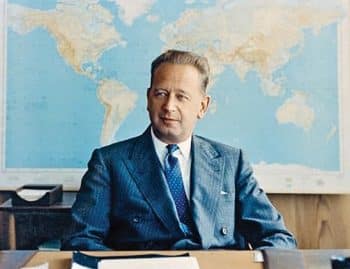
    The youngest and best UN Secretary General, 60 years after his assassination. By Chay Bowes Dag Hammarskjold was the second ever, and some say the greatest, Secretary General of the UN. When he died sixty years ago this year, President John F Kennedy suggested that Hammarskjold had been “the greatest statesman of our century”. At 47 years of age on his appointment, Hammarskjold was the youngest ever secretary-general of the United Nations and one of only two people to ever be awarded the Nobel prize posthumously. Are his life, innovations and untimely death relevant in 2021? Dag Hjalmar Agne Carl Hammarskjold was born in 1905 to a wealthy Swedish ‘noble’ family, the son of a future Swedish prime minister and politician Hjalmar Hammarskjold, who would serve during the first part of the first world war. Dag Hammarskjold had a relatively privileged early life at the family home at Uppsala castle. Despite his materially comfortable surroundings, Hammarskjold experienced much personal difficulty within his conservative and emotionally rigid family. Roger Lipsey, in his work ‘Hammarskjöld: a Life’ (2016) suggests: “There were enough confusing psychological crosscurrents to generate sterile excellence and recurrent personal misery”. Essentially Lipsey posits that Hammarskjold was given ample opportunity to achieve a life of “high-level mediocrity” but despite the restrictions and emotional limitations of his upbringing he would achieve great things. Hammarskjöld has been credited with coining the term “planned economy”. He co-drafted the legislation that opened the way to the creation of Sweden’s welfare state Hammarskjold attended the “Katedralskolan” one of the oldest educational establishments in Sweden (Est 1236 ) and went on to take law and philosophy degrees in 1930 at the University of Uppsala. He had by then already been appointed to the post of assistant secretary of the “committee on employment” in the Swedish government. Hammarskjold excelled as a civil servant and by 1936 had been appointed to the Swedish central bank serving as secretary of its general council between 1941 and 1948. Hammarskjöld has been credited with coining the term“planned economy”. He co-drafted the legislation that opened the way to the creation of Sweden’s welfare state. In 1947 Hammarskjold was made Sweden’s delegate to the organisation for European Economic Co-operation where he assisted in the implementation of the Marshall plan to resurrect Western Europe economically. Despite being appointed by a government of Social Democrats, Hammarskjold never actually joined any political party himself. The United Nations By 1951 Hammarskjold joined Sweden’s delegation to the United Nations General Assembly in Paris. Hammarskjold’s conviction that smaller, less powerful nations should be protected was central to his vision for the UN as a peacekeeping entity. He quickly became Chairman of the Swedish delegation. Hammarskjold wanted the United Nations to be a dynamic tool for its members with pragmatism at its core. The Suez Crisis, Innovation and Pragmatism Hammarskjold exercised his own personal diplomacy to get the UN to nullify the use of force by Israel, France, and Great Britain following Nasser’s commandeering of the Canal; At the outbreak of the Suez crisis in 1956, the United Nations had never deployed peacekeeping forces. rticle 43 of the UN Charter provides that All Members of the United Nations, in order to contribute to the maintenance of international peace and security, undertake to make available to the Security Council, on its call armed forces, assistance, and facilities, including rights of passage, necessary for the purpose of maintaining international peace and security. Working alongside Canada’s foreign Minister Lester Pearson who had initially sown the seeds of the concept in Hammarskjold’s mind, the concept of peacekeeping as we know it today was formulated. Hammarskjold pulled together enough support and commitment from member states to establish the United Nations Emergency Force or UNEF which stood ready for deployment in weeks. The essential tenets of that initial UNEF mission remain at the core of all UN missions to this day. The Congo, Context and Global Relevance The decolonisation of Africa had reached a pivotal moment by mid-1961. Neither the Soviets nor the Americans supported colonialism. They nevertheless saw the relinquishing of colonial possessions by Britain, Belgium, France and Portugal as an opportunity to expand their influence in newly independent states. Certainly the remaining minority-white governments of the region such as South Africa and Rhodesia had significant concerns about the decolonisation process. In 1960 the Belgian government officially relinquished its sovereignty in the Congo and a nationalist leader Patrice Lumumba was elected Prime Minister. In a vain attempt to appease his rivals and preserve unity, he appointed the opposition leader Joseph Kasavubu as president. However, days later the army mutinied. In the midst of this turmoil, large umbers of white Belgian settlers began to leave the Congo with Belgian forces intervening on the grounds of protecting its citizens. In May 1960 Moise Tshombe announced that the province of Katanga, which held most of Congo’s mineral wealth, was declaring independence. Among the valuable minerals and deposits Katanga held were uranium and cobalt. A Belgian commercial entity called the “Katanga mining union” immediately began to support the breakaway government based in Elisabethville. The immediate effect of such financial support for Katanga was that it was wealthy enough to stand alone against Congo proper, with the Belgian mining interests ensuring that their assets in the region would remain under their control. In September 1961 Hammarskjold was on a mission to facilitate an end to this evolving conflict in Katanga. Hammarskjold firmly believed that the post-colonial growth and liberty of the newly independent Congo should not be influenced or restricted by its old colonial ruler, Belgium. The defence and preservation of the infant independent Congo became a personal priority. He along with 15 others died in a plane crash on 18 September 1961 in what is now Zambia. He was on his way to negotiate a  cease-fire between UN forces and Katangese troops under Moise Tshombe. In her definitive work, which served to stimulate renewed UN investigation into Hammarskjold’s death, British academic Susan Williams, (‘Who killed Hammarskjold?’, Oxford University Press 2014) contends that

    Loading

    Read more

  • Posted in:

    The Death Spiral Of Trust In Capitalism

    In the US, UK and Ireland Trump, Johnson – and throttled SMEs – threaten a revolution By Gary McCarthy Ireland’s consumption collapsed by 20% in the first half of 2020 – the worst in Europe except Spain and the UK. The economy is on its knees and SMEs have only drawn on €180 million of state funding’ All that was missing from the Truman balcony of the White House was the horse. The mad emperor was back. Only a few days previously a seemingly healthy President Trump had hosted a Supreme Court nomination ceremony for Judge Amy Coney Barrett (not a horse) in the gardens below. Historians with a fondness for the Game of Thrones fantasy series may in years to come refer to this Rose Garden event as the ‘Red Wedding’ viral massacre of the Republican leadership. The Covid-19 super-spreading ceremony resulted in the hospitalisation of Trump, the infection of 34 people across the Trump White House staff and the quarantine of most of the top brass in the US military. Trump instructed the nation to face the Covid-19 virus without fear and witness the “immunity” of their “favourite President”. There was no mention of the now 225,000 deaths caused by the virus, the millions of jobs lost and levels of social unrest not seen since the Vietnam War era. The world’s foremost capitalist empire is burning literally and politically but the Washington DC insanity continues. Trump wanted a Supreme Court appointment secured before a fiscal support package for the nation’s struggling economy. The traditional Republican and big business voices of ‘responsible capitalism’ and economic liberty for the individual are curiously quiet and in effect enabling an administration swamped by its own corruption, lies and incompetence. US capitalism has reached a crisis where the pandemic is revealing truths which cannot be spun through the Fox News fear factory. The deaths of more than 225,000 people, 25% of the global total, is already adding to the decades-long erosion of trust in US institutions. However, the emergence of a K-shaped economic recovery which destroys the livelihoods of the asset poor and accelerates the wealth build of the asset-own- ing top 1% of the population might be the tip- ping point for trust in capitalism itself. Income inequality fueled by strong financial markets of recent years has been as pronounced as it was in the 1930s. That’s probably not a great decade with which to resonate. Worryingly, the situation has worsened with the global pandemic. According to the Guardian, ten of the richest people in the world boosted their already vast wealth by more than $400bn in the first nine months of the coronavirus pandemic b as their businesses were boosted by lockdowns and financial crises across the globe. In a related report, the campaign group Americans for Tax Fairness estimated the collective wealth of America’s 651 billionaires has risen by $1.1tn over the same period. Meanwhile, only 9 million of the 22 million US jobs lost in pandemic shutdown had returned by November 2020. Vast swathes of the US retail, travel and hospitality landscape remain in deep freeze. Yes, there is recovery in the broader US economy but there is a real danger of capital- ism evolving into K-shaped ‘Kapitalism’ with a subsequent extreme social and political back- lash. The Trump report card will be brutal and lay bare an exercise in mass delusion. Twenty years of successful capitalism and economic growth has been based on three key drivers: technology, trade, and population/immigration growth. The final one might surprise but the US has added an additional 100 million people to its current population of 330 million in less than 40 years. The current stewards of right-wing capitalism in the Republican party have misty-eyed economic memories of the Reagan years but they depend on facilitating immigration. Trump of course has curtailed it. Instead, the Trump economic focus is on “clean coal” and automobile factories. Technology, science and climate change are mistrusted. Trade wars and ripped-up international treaties are apparently putting America first but the US monthly trade deficit has just hit a 14-year high. US farmers must be thrilled. Furthermore, the first and second generation immigrant founders of much of the US technology sector are warning of similar unplanned damage being inflicted on the economy if the world’s best minds and ideas can no longer find a home in the United States. However, the US is not the only capitalist champion trying to convince its citizens to em- bark on a nostalgic economic journey. Boris Johnson and his Conservative Party don’t even have the benefit of a world-beating technology sector. The recent Covid-19 testing fiasco involving an Excel spread sheet error is a stark reminder of how badly the UK has fallen behind in global technology leadership. The UK has chosen Brexit to “take back control” of trade and immigration on an Elgar sound track of ‘Rule Britannia!’. Sadly, dreams of empire have spawned epic levels of delusion and in- competence. The mad emperor Boris has not yet managed to appoint a horse to sit in Cabinet but there are no shortage of donkeys in his current administration. The risky and complex departure from the largest trading bloc in the world is in the hands of serial incompetents like Gove, Patel, Williamson and Hancock. Meanwhile, the rest of the world watches aghast as the Brexit clown car hurtles towards economic chaos whose enormity remains unclear. They are not just watching, they are selling UK assets too. The once proud benchmark of UK capitalism, the FTSE 100 index of Britain’s finest, is now boasting a total value which doesn’t even match the value of one technology company, Apple Inc. The Great British Pound now trades with a volatility which would typically be associated with emerging market currencies but the delusion of future trade success continues. Ireland would be tempted to laugh but not this time. The damage of Brexit will have a big economic impact here and the timing is particularly poor as the

    Loading

    Read more

  • Posted in:

    Covid Leaves Youth With Nothing To Waste

    As Covid takes everything from the Young, Society and the Media single them out for even rare breaches of the rules. By Zoë Jackson McGrath Youth is about the only thing worth having, and that is about the only thing youth has. Unfortunately a global pandemic has challenged even this iron law of cynicism and regret. Nature gives youth a great deal, but appears to be the only force on its side – this generation are maturing in a society typified by housing crises, limited job opportunities, boundless inequalities and a planet that appears to be wilting before our very eyes. As such, anxiety among the young had heretofore become remarkably prevalent in Ireland, the youngest country in Europe. The last thing the these already precarious conditions and pessimistic outlook of this generation needed was an all-encompassing Act of God or Nature (or the last hoorah of Twentieth-Century Man). It appears the received wisdom on Covid-19 is often purveyed by those who seem to have forgotten what it is to be young. Pope Fran- cis condemned the “cruel abandonment” of the elderly in his third encyclical published in early October. He is not wrong. The elderly and those with underlying medical conditions – the most vulnerable among us – are undeniably the most strongly affected by the pandemic. In Ireland approximately 90% per cent of those who have died with Covid-19 are over 65, a demographic which has been subject to oppressive, if necessary, cocooning and which inevitably has been suffering commensurately from angst over possible infection, and ennui around frittering away scarce months in the absence of cherished loved ones, who often tend to disproportionately illuminate the lives of those in old age. Notwithstanding these truths, the wide- spread social and emotional impact of the pandemic cannot be understated. The physiological risk is greatest for the elderly and those with co-morbidities but the indirect consequences endured by younger generations have been inadequately addressed. An EU-wide survey by Eurofound in April 2020 reported that almost a quarter of aged 18-23 in Ireland felt lonely all or most of the time over the two-week period before inter- view – the second highest rate in the 17 EU countries for which data was available. Euro- found said that the “lowest levels of mental well-being are reported among young people and those looking for work”. A recent report, ‘How’s Your Head?: Young Voices During Covid-19’ found the Covid-19 crisis had negative effects on young people’s health and well-being, especially amongst some marginalised groups. The most common negative effects related to the mental health of respondents, including overthinking, concern, worry, anxiety, depression and a sense of utter hopelessness. In all 751 (35 per cent) of 2,173 people aged between 15 and 24 said not being able to see their friends, boyfriends and girlfriends, was the most difficult consequence of the pandemic and pursuant lockdown. They report a distinct lack of “timely” and “clear” communication during such a transient and formative period in their lives about “important matters”, such as the Leaving Certificate and college accommodation. One in 10 could not name a single positive about their pandemic experience. What effect can this have on the innocence, effervescence and adventurousness of youth? The youth have been deprived of rites-of-passage and legitimate youthful expectations due to Covid-19, left unable to engage in the activities that should colour our formative years. Young people work disproportionately in retail, hospitality and tourism – these sectors have been devastated by the fallout of the virus. Unemployment among those aged 15-24 in Ireland is estimated at 51 per cent compared to 26% in the population generally before the October ‘level 5’ lockdown. Economic scarring results in young people who leave school or college in recessions being doomed to occupy a lower wage bracket for the entire duration of their careers compared with those who graduate in more economically favourable times. According to Irish Times economist, David McWilliams: “When American baby boomers (born 1946-1964) hit a median age of 35 in 1990, they collectively owned 21 per cent of the wealth. By contrast, my generation, the Gen Xers (born 1965-1980) who collectively turned 35 in 2008, owned just 9 per cent of American national wealth. The Millennials (born 1981-1996), are on average 31 now. They only own 3 per cent of America’s wealth. It’s hard to see them ever catching up under present policies”. Over four in ten younger adults in the CSO’s Social Impact of Covid-19 Survey reported that the pandemic had a negative financial impact on them, compared to two in ten of respondents aged 70 and over. Leaving Cert 2020 has been an infamous debacle: students were robbed of experiences previously taken for granted, tirelessly rehearsed plays were never staged, hours of training and tactics for sports finals went to waste and the concept of a graduation ceremony to celebrate and even say goodbye to their friends was unthinkable. They then had to endure the distorted calculation of grades, compounded by fundamental data errors and revisions: a disgraceful experience for these individuals to be forced to undergo at a stage in life where pressure has always been notoriously heaped on them. For those who then made it to college the would-be ‘college experience’ has been utterly diminished by the virtualisation of lectures, reducing education to academia, which should be merely one facet of this varied, enriching time. Young people work disproportionately in retail, hospitality and tourism – these sectors have been devastated by the fallout of the virus.  Playing or watching live sports have been almost eliminated. Night-life is entirely gone with no promise of a future for an unprecedented amount of time. Forming new friendships and relationships is almost impossible, and temporary emigration has become impracticable. This demographic have endured “by far the biggest well-being hit of anybody who hasn’t directly suffered from the disease”, confirms the ESRI’s Behavioural Research Unit. When America’s Centre for Disease Control and Prevention carried out a survey this summer, it found that one

    Loading

    Read more

  • Posted in:

    Our Congested Transport System Needs an Era-Defining Reset, Now

    A recent EPA Report has highlighted how policy problems are interconnected, and need a whole-of-government response By Tadhg O’Mahony Transport and the environment are in the air. Recent weeks have brought debates on CETA and the evolving Climate Bill, and on radical moves by local authorities to facilitate pedestrians and cyclists. Far deeper EU targets have been set for reduction of greenhouse gas emissions, 55% by 2030, and a new EU mobility strategy. The EPA produced a report, Ireland’s Environment: An Integrated Assessment 2020. Published every four years, the report is “not optimistic”, and shines a new light on the transport sector in Ireland. Transport is our second-highest carbon-emitter, and emissions continue to grow, despite the urgent need to rapidly reduce its footprint. Globally, transport is a major carbon emitter. It is associated with significantdeath, injury and disease, from air pollution and road traffic accidents, and imposes major costs on economies through traffic congestion. In Ireland, many of these problems are even more pronounced. Our carbon emissions, per capita, are the fourth highest in the EU, while our cities rank amongst the most congested in the world, according to data collected by INRIX and TomTom. Six years on from Ireland’s original Low-Carbon Development Act 2015, and after declaring a ‘climate emergency’ in 2019, Ireland still has no plan to reduce emissions to 2050, and transport is a chief area for concern. As the pressure for change builds, understanding how Ireland has developed these systemic problems is essential to moving forward. Our History in Transport, and how we Became ‘Locked-In’ The total number of vehicles on our national roads, squeezing into our towns and cities, is now heading towards three million, and the private car has come to dominate travel in Ireland. According to the latest survey from the CSO, almost 80 per cent of journeys are made by private motorised forms, even dominating the shorter journeys of up to two kilometres. “National energy and emissions modelling studies have consistently focused on changing vehicles, fuels and behaviour – reinforcing the dominance of the private car and road freight, pushing more beneficial systems change out of policy discussion” The Irish transport system was very different a century ago, at the time of Independence. Dominated by sustainable modes, an extensive rail network served communities throughout the country, from the Hills of Donegal to the Dingle peninsula. Much of our national rail network was dismantled over the course of the last century. This coincided with the rise of the private car, and glossy industry advertising promising ‘freedom’.The car was marketed as a potent status symbol, and signifier of ‘success’, and it was adopted in ever greater numbers as the expression of a prosperous lifestyle. Fast forward to the 1980s, and the vision of successive Irish governments to grow the economy, develop the regions and drawdown European funding, was for major investments in roads, and a new motorway network. Incomparison, public transport largely stagnated, rail freight became almost non-existent, and walking and cycling were reduced to more nicheactivities than sensible mobility options. We were diverging substantially from our European neighbours. At the same time, laissez faire spatialplanning allowed proliferation of one-off housing in the countryside, and low-density suburban and commuter developments. This ‘urban sprawl’renders alternatives to the private car far more difficult to implement. Our towns and cities were increasingly designed, car-first, human-second,with wide roads and narrow paths making our public realm more unsafe for vulnerable users and less comfortable for everyone. Our physical settlement and infrastructure were becoming deeply set. From the mid-1990s, policy, investment, market and lifestyle all dictated that we would funnel our growing economy and population into the private car. When all of these factors line-up it is called ‘lock-in’. Described by global sustainability expert Gregory Unruh, and later platformed by the Nobel-winning Intergovernmental Panel on Climate Change, ‘carbon lock-in’ becomes both inevitable and difficult to escape, blocking off options for more beneficial outcomes. Successive spatial, transport and emissions policies came and went, and all failed. The focus, largely fromengineering and economics, was on improving technology, through efficiency, and implementing a carbon tax. This narrative, andthe measures it encouraged, were far too weak to overcome lock-in. Throughout the ‘boom years’ transport carbon emissions continuedtheir inexorable rise. The financial crisis and recession, in the late noughties, were a blip in the long-term trend of increasing vehiclenumbers and burgeoning emissions. An Appetite for Change, but Deep Structural Problems Block our Progress In recent years, the Citizens Assembly and an Oireachtas Committee have demonstrated that there is significant public and political appetiteto change course. The main policy response, the government’s 2019 Climate Action Plan, had the laudable goal to bring a new seriousness to tackling emissions, to pursue our 2030 targets, and “put the country on a trajectory to net zero by 2050”. Yet two critical flaws had already undermined the Plan’s approach to transport, and these were baked-in from its inception. The plan did not address the long-term, to at least 2050: a key precondition documented by the Intergovernmental Panel on Climate Change, the gold standard of scientific knowledge on the topic. Even more problematic, the most important decisions had already been taken, in the much heralded ‘Project Ireland 2040’. This establisheda settlement plan up to the year 2040, known as the ‘National Planning Framework’, and an infrastructure investment plan to 2030. It aimedfor 40 per cent of new housing development to be “within or close to built-up areas”, and for the addition of 500,000 active and public transportjourneys per day. The targets are at the lower-end of ambition – compromises that could evade political challenges, but insufficient to overcome lock-in and support transition. Project Ireland was not subject to analysis of the long-term emissions implications, of the kind that couldprovoke reflection on alternative paths. As the Climate Action Plan was developed, it became clear that Project Ireland would not help in achieving 2030’s emissions targets, let alone2050’s. In a sign of desperation, the Plan continually ramped up the number of electric

    Loading

    Read more

  • Posted in:

    Mother and Baby Homes: A Crime against Humanity.

    By Christopher Stanley. [i] “Ireland was a cold harsh environment for many, probably the majority, of its residents during the earlier half of the period under remit. It was especially cold and harsh for women”. (page 1) The Irish government may have hoped in vain that the publication of The Report of the Mother and Homes Commission of Investigation would provide a moment of catharsis and suture to what Caelainn Hogan calls The Republic of Shame for the people of Ireland. It did not. [ii] Criticism of the work of the Commission; and of its Report and Recommendations has been fierce from victims/survivors. In addition it is the tone of the prose of the Report which also angers: “Responsibility for that harsh treatment rests mainly with the fathers of their children and their own immediate families. It was supported by, contributed to, and condoned by, the institutions of the State and the Churches. However, it must be acknowledged that the institutions under investigation provided a refuge – a harsh refuge in some cases – when the families provided no refuge at all”. (page 1) As the Taoiseach stated on the day following the publication of the Report “the shame was not theirs; it was ours”. Therefore, everyone is to blame, and no-one is to blame – because there is no evidence in spite of the testimony of survivors. This statement only serves to demonstrate the continued and entrenched lack of respect for the dignity and rights of victims/survivors of a system of coercion, control and abuse administered by the church and funded by the state over decades of of systemic human rights abuses. As Colm Toíbín noted in The Sunday Times (17 January 2021): “The problem with these apologies is that we cannot be sure that those who offer them really mean them. In his apology, the prime minister, Micheál Martin, said that the report presented ‘all of Irish society with profound questions’ and ‘we did this to ourselves…All of society was complicit in it””. Toíbín reads this as letting the church “off the hook”. Not that the church co-operated with the Commission to any great, extent noting that its archives are private. The Commission was “perplexed and confused” by this deliberate block by the church. As Emer O’Toole noted in The Independent (14 January 2021): “Tuesday’s report does not close a dark chapter in Irish history. Rather, it opens a book filled with fragments and missing pages, with many vital details redacted and a narrative voice that comes to feel less trustworthy the more you read. This story is still being written, and we must support survivors as they continue their fight for justice.” She continued: “The investigation was conducted in secret, in a manner completely incompatible with international best practice for inquiries into human rights violations. Those affected had no access to evidence or their own records; they could not testify publicly or suggest modes of enquiry. Despite government assurances that survivors have the legal right to access their records, the commission of investigation is still denying any requests for information. In short, survivors and adopted people continue to be treated appallingly.” [iii] For example, one of those fragments referred to by O’Toole is that within the Report there is only one mention/example/testimony of the medical procedure of symphysiotomy, an outdated surgical procedure in which the cartilage of the pubic symphysis is divided to widen the pelvis allowing childbirth when there is a ‘mechanical’ problem. As the Commissioner for Human Rights of the Council of Europe noted following his visit to Ireland (22 to 25 November 2016): “184.  It is estimated that 1,500 women underwent symphysiotomy in Ireland mostly between the 1940’s and the 1980’s. Symphysiotomy is a surgical procedure that involves sundering the mother’s pelvis to enable difficult childbirth. This procedure was not performed in other European countries during the same time period, as caesarean section was the procedure generally used in cases of difficult births.” The United Nations Human Rights Committee noted (19 August 2014) also noted: “The Committee expresses concern that symphysiotomy, a childbirth operation which severs one of the main pelvic joints and unhinges the pelvis, was introduced into clinical practice and performed on approximately 1,500 girls and women in public and private hospitals between 1944 and 1987 without their free and informed consent … The State party should initiate a prompt, independent and thorough investigation into cases of symphysiotomy, prosecute and punish the perpetrators, including medical personnel.” This is just one significant example of absence/silence within the Report but it is indicative and illustrates the human rights deficit criticism which plagued the work of the Commission throughout the duration of its work. But the Commission was not mandated to conduct a human rights investigation: “Prior to the establishment of this Commission, the Irish Human Rights Commission (now the Irish Human Rights and Equality Commission) told the Government that ‘it is critically important that any such investigation should take place within a human rights and equality framework and in particular that it conforms with the State’s human rights obligations under the Constitution and under international human rights law’. The Irish Government did not opt for that approach in its mandate to the Commission.”(36.2) The Commission states: “36.80. There are no clear absolute rights.” Article 3 ECHR (the prohibition against torture, inhuman and degrdaing treatment) is an absolute right. [iv] The Irish government has therefore failed to discharge its positive investigatory obligations as demanded under the ECHR following a human rights violation, specifically regarding the right to life (Article 2), the prevention of torture, inhuman and degrading treatment (Article 3) and the right to private life (Article 8). This is why there have been calls for a human rights’ compliant investigation into Mother and Baby Homes. Taken together with demands that the Garda investigate the criminality and culpability of both individuals and organisations both religious and state. This should include those employed within the medical profession and social services and those charged with their governance and

    Read more

  • Posted in:

    THE ACCUSED AND THE ACCUSERS: CLOSED SESSION

    By Christopher Stanley Litigation Consultant KRW LAW LLP Belfast. Last year I wrote piece for Village called The Accused and the Accusers: If Not Now, When? There,I offered an analysis of the proceedings of the Independent Inquiry into Child Sexual Abuse Inquiry (IICSA) in relation to its investigation into the allegations of child sexual abuse against former British Labour MP Greville Janner (Lord Janner of Braunstone QC). (Braunstone is mentioned in the Domesday Book of 1086, giving a population of “two sokemen and four villeins”). Child sexual abuse whether within a public (institutional/official) or private (familial/domestic) setting occurs behind closed doors. Part of the power/violence of the abuser is the assumption of or enforcement of silence upon the abused. The abused is made mute even though their abuse may be known by many who either decide not to intervene or are themselves objects/subjects of abuse. It is ironic therefore that on the 12 October 2020 IICSA commenced its ‘public’ hearings under the title “Institutional responses to allegations of child sexual abuse involving the late Lord Janner of Braunstone QC”. Public hearings about silenced acts in private spaces from muted voices. These hearings were subject to a Restriction Order under Section 19 of the Inquiries Act 2005. Restriction Orders and Notices were controversial additions to the Inquiries Act 2005 as they have the effect of running counter to the principles of transparency and openness in the administration of justice and due process. A Restriction Order denies the public access to the hearing (in whole or in part), it denies the public access to the oral and written evidence (in whole or in part) and it restricts an inquiry from publishing a complete report of Conclusion and Recommendations (in whole or in part). It excludes the public gaze. It can also appear to exclude or silence the victims if an investigation is examining a matter such as systemic institutional abuse where the testimony of the victims is core to testing the allegations. The IICSA accepted the need for anonymity of victims: “As a matter of law in this country, a complainant who makes an allegation of sexual abuse is entitled to lifelong anonymity. The right to anonymity is enshrined in section 1(1) of the Sexual Offences (Amendment) Act 1992. This prevents any matter being published, which includes, for these purposes, references in a speech or in writing, about the complainant which might enable the public to identify them as being someone against whom a sexual offence has been said to have been committed.” Open Session 12 October 2020 page 20 A distinction needs to be made for the sake of clarity. When identifying witnesses there are those witnesses who are the victims of Janner’s alleged sexual abuse. They are identified by the IICSA as the Complainant Core Participants. These witnesses speak through their witness statements and through their legal representatives. They may waive their anonymity. Then there are those witnesses who represent institutions, police officers, prosecutors, politicians. They cannot waive their anonymity but give their oral evidence either in Open or Closed session. Evidence of several witnesses is read into the Record of the Hearings. The ‘institutional witnesses’ are identified by their Name in the Timetable of the Hearings but become Witness 1 in the Open Summary of the Closed Session. For example, Matthew Baggott 26 October 2020 of the IICSA hearing becomes Witness 2 in the Open Summary of the Closed Session of 26 October 2020. I refer you to the Timetable for Week 1 Closed Session (1). There were 17 morning and afternoon sessions timetabled. 13 were Closed Session. The Witnesses being heard were either from members of the police service or from the Crown Prosecution Service (CPS). The Timetable for Week 2 commenced hearing evidence from more police officers or prosecutors Closed Session (2).The Timetable for Week 3 Closed Session (3) heard evidence from the police and members of the Labour Party including former Prime Minister Tony Blair. Janner (dead) cannot be a witness save through the venting anger of his family. No victims’ voices are heard save by way of their witness statements and the voices of their legal representatives. Some victims may not want to speak or accept they can be spoken for, but some may want to be heard in their own voice either as themselves or as their ciphered selves. The List of Core Participants identified in the IICSA include 28 ciphered persons in the Janner Investigation. These are victims or as IISCA identifies them the Complainant Core Participants. They are Janner’s Accusers. “6. In summary, I have concluded that, by reason of the allegations they have made, all the complainant core participants have (and, for the avoidance of doubt, continue to have) a significant interest in the matters under investigation.” “10. Messrs Janner and Butler are wrong to say that only three of the complainant core participants had made allegations of abuse against Lord Janner at the time that the Inquiry was established. On the Inquiry’s present understanding of the evidence, 19 of the 33 complainant core participants had made such allegations to the Police by the time that the Inquiry was established in March 2015.” Determination 27 October 2017 But the only ‘live’ voices in these virtual hearings were from the Corridors of Power (Westminster) which Janner stalked, or those institutions charged with investigating the allegations against him (the Labour Party, the police and the Crown Prosecution Service (CPS), and Local Authorities). The Chair of IICSA must have been relieved that there were hearings at given the resistance and protestations of the family of Greville Janner which I examined in my earlier piece. In a spirit of transparency IISCA has published certain documents referenced or relied upon in its investigation. For example, “Charges brought against Lord Janner in 2015” including: “6. INDECENT ASSAULT on a Male Person contrary to section 15 (1) of the Sexual Offences Act 1956 (multiple incidents – forced JA-A27 to perform oral sex on him) Between 21 November 1972 and 22 December 1975”

    Read more

  • Posted in:

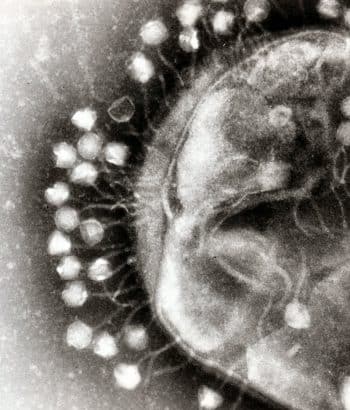
    Accelerating The Three-Billion-Year-Old Dance of Phages With Bacteria

    As Covid-19 and other diseases spawn resistance to over-used antibiotics, phages – viruses that naturally infect and kill bacteria – may be a long-term replacement By Shane Raymond Doctors Globally worry daily about fighting Covid-19. However, some doctors and medical experts now worry not just about the damage the virus can cause, but about the medical battles that will follow in its wake. Under guidelines produced in April  by  the  Health  Service Executive’s Antimicrobial Resistance and Infection Team, antibiotics are to be given to Covid- 19 in-patients with symptoms of bronchitis or pneumonia, or who produce coloured sputum when they cough. The guidelines also stated that “frail elderly patients” are at greater risk of death from infections and, so may need to be prescribed with antibiotics far earlier than doctors might otherwise do with patients of that age. While often necessary to save lives, the long- term result of a growth in the already high use of antibiotics worries some healthcare professionals, including Dr Liam Burke, a bacteriology lecturer and researcher at the Centre for One Health at NUI Galway. “With Covid, the whole world is using tons of normally don’t cause any problems at all. But, when our immune system is down they can cause an infection. The more antibiotics we use, the more bacteria get resistant”, he considers. The World Health Organisation (WHO) has stated that antibiotic resistance is “one of the biggest threats” today, warning that a host of infections including pneumonia, tuberculosis, food poisoning and gonorrhoea are becoming harder to treat as antibiotics become less effective. Because of that, WHO says health professionals should only prescribe antibiotics when necessary and patients should make sure not to share or use leftover antibiotics. New treatments are needed, but they are hard to come by, Dr Burke says. Antibiotics take years to develop, cost billions, and are only taken for a few days by most patients and so are not lucrative. Drugs for chronic diseases such as diabetes are taken daily for years, and so are far more profitable. The incentive to develop new antibiotics is also reduced by bacterial resistance – since Big Pharma cannot sell a drug that no longer works. One of the most promising avenues, Dr Burke goes on, is the use of phages – viruses that naturally infect and kill bacteria. Colin Hill, Professor in the School of Microbiology at University College Cork, is a leading researcher in the field: “Phages are the most abundant biological entities on the planet”, he says. There’s about ten quintillion

    Loading

    Read more

  • Posted in:

    Let Theresa May, Who Has Not Sinned, Cast the First Stone: the 32-year cover-up of the Finucane assassination, its link to Kincora and the hypocrisy of the former prime minister.

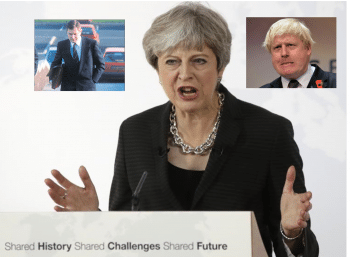
    By Joseph de Burca. This week marks the 32nd anniversary of the assassination of the Belfast solicitor Patrick Finucane. In 1989 he was shot dead by UDA killers controlled by MI5 in front of his young family at his home. The British government continues to resist a judicial inquiry into the murder despite castigation from its own Supreme Court and human rights groups across the globe. No-one in the Tory party is putting Boris Johnson under any pressure to resolve the matter. LET THERESA MAY, WHO BELIEVES SHE HAS NOT SINNED, CAST THE FIRST STONE Johnson’s predecessor, Theresa May, however, has accused him of abandoning Britain’s “position of global moral leadership”. Johnson, she said, has failed to honour British values by threatening to break international law during Brexit trade negotiations. Another criticism was that he had backed away from Britain’s foreign aid targets. These two developments had not “raised our credibility in the eyes of the world”, she argued. She then proceeded to lecture him to live up to “our values”. And just what does she think the image of UDA assassins acting on the orders of MI5 to murder an Irish lawyer followed by a 32-year cover-up is doing for “Britain’s credibility in the eyes of the world”? Peter Cory, the Canadian judge who looked at the issue discovered that the murder had been discussed at “Cabinet level”. Sadly, May’s ‘values’ never included an attempt to bring the long-running cover-up that has swirled around the assassination of Finucane to a halt. In her attack on Johnson, May diverted to describe the election of the “decent” Joe Biden as US president as a “golden opportunity” for Britain to become a force for good in the world again. Would an inquiry and the resolution of the scandal surrounding the Finucane assassination not also provide a “golden opportunity” for Britain to show that it can become a “force for good in the world again”? WHAT THERESA MAY DID (AND DIDN’T DO) WHEN SHE WAS IN CHARGE OF MI5. There is a more to May’s hypocrisy than meets the eye: she was the Home Secretary who thwarted earlier demands for a judicial inquiry. MI5 is part of the Home Office and reported to her. At the time she was covering up for MI5, David Cameron was prime minister. He met with the Finucane family at 10 Downing Street where he told them that he could not order a public inquiry. When Finucane’s brother Martin asked him why, he turned to Mrs Finucane and said: “Look, the last administration couldn’t deliver an inquiry in your husband’s case and neither can we”. According to Cameron, this was because “there are people all around this place, [10 Downing Street], who won’t let it happen”. As he was saying this, he raised a finger and made a circular motion in the air. Cameron has not – and probably never will – expose the figures around him in Downing Street who were able to dictate what he could and could not do. Theresa May must know who the culprits are. (They are presumably high-ranking civil servants who have seen the files and know precisely who ordered the murder of Finucane. The list of suspects includes Margaret Thatcher whom May admires.) It clearly does not bother May that State officials have been – and continue to be – complicit in the perversion of justice. One of the officials suspected of complicity in the murder in 1989 – long-since retired – is still alive. So too is Patrick Walker the director-general of MI5 at the time. THE DAUGHTER OF A MAN OF THE CLOTH. May likes to project the image of a deeply religious woman with a moral compass handed to her by her father, a man of the cloth who also understood right from wrong and was possessed of the right ‘values’. Yet, if this was so, why did Team May scrub details of his life from Wikipedia? The mainstream media ignored this act of censorship. There are few comments about the development anywhere but it is addressed in this intriguing article: https://vocal.media/theSwamp/theresa-may-s-father As prime minister May was never bothered by British sales of weapons to an array of foreign powers. How does she feel about the tens of thousands of people who have died as a result? Clearly, slaughtering children in the Yemen is acceptable in her eyes if it generates income for the economy of the UK. Mark Curtis and his colleagues at Declassified UK have covered this scandal in great detail. Interested readers should consult: http://markcurtis.info/category/yemen/ SUFFER LITTLE CHILDREN Privately, May has always been disdainful of Johnson’s prodigious sexploits. Yet, Johnson’s sexual partners have always been adults who have been willing – no doubt eager – to sleep with him. This highlights another dimension to May’s hypocrisy: she is critical of consensual sex between adults while covering-up VIP sex abuse involving children. She helped to cover-up the Kincora scandal by assigning the latest investigation of it to the extraordinarily dim-witted and gullible Judge Anthony Hart who made an unholy mess of it. Hart even managed to contradict himself in the body of his own report, a first by any low standard. Unlike George Terry, the former Chief Constable of Sussex, who had reported on Kincora decades earlier, Hart was not corrupt, merely a fool who would have been out of his depth in a puddle. By giving it to this dolt, May was able to separate it from the ongoing Independent Inquiry into Child Sexual Abuse (IICSA) which was meant to investigate VIP sex abuse involving, inter alia, MPs. Assigning the probe into Kincora to Hart made no sense as it was part of an Anglo-Irish vice ring with connections to Westminster MPs. However, the existence of Hart’s impotent inquiry gave the dreadful IICSA grounds for ignoring Kincora and the abuse perpetrated by English VIPs of Kincora boys such as Enoch Powell MP, James Molyneaux MP, Knox Cunningham MP and others. Not a peep out

    Loading

    Read more

  • Posted in:

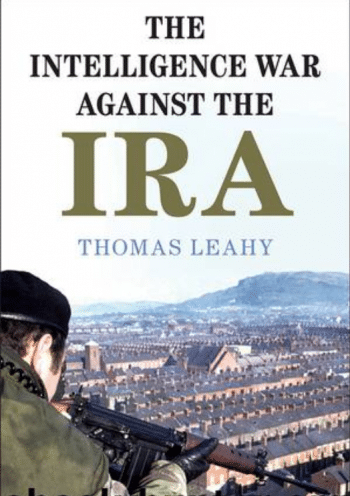
    Nobody Won: debunking the myth the Provisionals were brought to their knees by British spies. Margaret Urwin reviews ‘The Intelligence War Against the IRA’ by Thomas Leahy.

    By Margaret Urwin. In ‘The Intelligence War against the IRA’, Thomas Leahy, Senior Lecturer in Politics in Cardiff University, challenges the growing dominant narrative that the IRA was brought to the negotiating table in the 1990s because they had been ‘brought to their knees’ by British intelligence. Since the outing of State agents, Stakeknife and Denis Donaldson in particular, in the early 2000s, many academics, historians and commentators have concluded that the IRA campaign ended in defeat because it was fatally compromised by agents and informers. Existing books and articles, while not studying the intelligence war in any significant detail, yet conclude that British intelligence was vital in forcing the IRA into peace. Leahy meticulously, painstakingly and, indeed, convincingly, debunks that conclusion.  Leahy meticulously, painstakingly and, indeed, convincingly, debunks that conclusion.  The book is the first to evaluate fully the impact of British intelligence agents, SAS and other operations against the Provisional IRA. From the wealth of material examined in Irish and UK archives, interviews and memoirs, Leahy argues that British intelligence did not force the IRA into surrender and that political factors were crucial in delivering peace. He suggests that, in fact, particular intelligence operations may have, rather, increased IRA support in its heartlands because of anger against the British State. It is one of the first studies of the conflict that researches what happened by region. It examines British intelligence and security strategy impact on IRA urban units in Belfast and Derry but also rural units in south Armagh, north and mid-Armagh, Fermanagh, south Derry, north Down, south Down and Tyrone. The IRA campaign in England is also considered in detail. Leahy concludes that a previous major focus on the IRA in Belfast has overlooked crucial aspects of the overall picture of what happened and why during the conflict and the regional factors affecting it. A range of republicans (both pro-peace-process and dissentient) have been interviewed, as well as British security personnel; also memoirs from all sides of the conflict including self-confessed IRA informers and intelligence handlers have been accessed. Of particular value is the extensive use of the relatively new sources of personal papers of Brendan Duddy (intermediary between the IRA and the British at critical times during the course of the conflict), Ruairi Ó Brádaigh and Daithí Ó Conaill, which provide crucial behind-the-scenes insights. Both British and Irish Government policy towards republicans is reviewed. Leahy suggests that, from 1969 to 1972; 1973-74 and 1976-90, the British State sought to contain IRA violence at ‘an acceptable level’. Evidence is provided to show that that this policy failed. After the breakdown of the 1975 ceasefire, from 1976, in particular, policies were enacted to marginalise the IRA, e.g., the abolition of ‘Special Category Status’ and the introduction of ‘criminalisation and Ulsterisation’. The intention was ‘to isolate republicans from political settlements whilst eroding the IRA’s armed capacity to a point where they no longer had any influence on Northern Irish politics’. After Roy Mason was appointed as Secretary of State for Northern Ireland, he told Prime Minister Callaghan in January 1977 that there was no intention of engaging in further talks with Sinn Féin and he ended all contact with intermediary Brendan Duddy. As part of the strategy of marginalising republicans, from my own research I am aware that, also in 1977, the British made vigorous efforts to prove a link between Sinn Féin and the IRA  so that Sinn Féin, which had been a legal organisation since May 1974, could be re-proscribed. A lengthy intelligence operation involving surveillance, searches of Sinn Féin offices, seizures of documents and interviews with suspects were carried out for more than a year. However, when the investigation was complete and a report produced in October 1978, the result showed the evidence did not support the view that the IRA and Sinn Féin were inextricably linked and so Sinn Féin could not be re-proscribed. The book presents original evidence suggesting that republican leaders were seeking talks towards a political settlement in the early 1980s, as Sinn Féin’s electoral mandate was increasing. This was, however, ignored as the British Government tried to negotiate a ‘moderate’ peace settlement with the SDLP and the UUP. The book presents original evidence suggesting that republican leaders were seeking talks towards a political settlement in the early 1980s, as Sinn Féin’s electoral mandate was increasing. This was, however, ignored as the British Government tried to negotiate a ‘moderate’ peace settlement with the SDLP and the UUP. This initiative failed due to persistent IRA activity, Sinn Féin’s electoral mandate in Northern Ireland and, by 1990, both the Irish Government and the SDLP were anxious to include Sinn Féin in peace talks. The importance of the rural IRA to the overall campaign is emphasised. South Armagh, in particular, was the strongest unit and, with significant support from the local community, was almost impenetrable. The community had been incensed by the building of watch-towers and constant helicopter flights.  Its position of strength enabled it to carry out operations in England in the late 1980s and 1990s. If the IRA was heavily infiltrated it would not have been possible to carry out a litany of spectacular bombings in England – Brighton (1985); the Royal Marine School of Music (1989); a booby-trap bomb under a car killing Ian Gow MP (1990); the firing of mortars into the back garden of 10 Downing Street (1991); the bombing of the Baltic Exchange (1992) and the NatWest Tower at Bishopsgate (1993); the firing of mortars onto runways at Heathrow Airport (1994) and, after the breakdown of the ceasefire in 1996, the Docklands and Manchester City bombings. Leahy agrees with Jonathan Powell that talking to all sides involved in the conflict was necessary in order to deliver peace. Sinn Féin’s electoral support was too sizeable to be ignored in a political settlement. He suggests that, ultimately, it was the political mandate and persistent conflict that led all sides to negotiate and to accept a peace settlement. Nobody ‘won’. It

    Loading

    Read more

  • Posted in:

    AstraZeneca

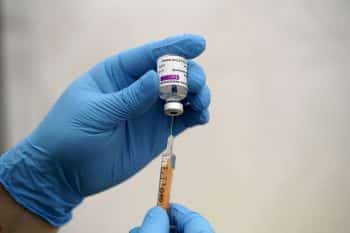
    A poem in the pandemic, by Kevin Higgins after Brian Patten  Now all the old gods have died or are on life support in the prison infirmary psychiatric wing we have a new name for the absolute: AstraZeneca. Even those who get  emotional at dinner parties about the state of the planet know there’s no talking back to AstraZeneca, the one who now decides who gets to go outside and who must remain in the cupboard. Old women, whose husbands haven’t come back out of  the bedside locker since this time last year, get down on their bony knees and ask AstraZeneca to please keep them in there for good. The Minister for Exams clasps her sad hands together and pleads that AstraZeneca intercede  before she’s pushed  through the streets by students in a shopping trolley  wearing a dunce’s hat. Diplomats, Popes, and  Patriarchs of Constantinople  issue joint communiqués begging AstraZeneca to save us  from the Russians. Like most gods, AstraZeneca  has a customer help-line  it never answers. But we dial it in any case, our nerve endings electric at the thought of what we’re at the mercy of. As the next war starts every side claims this new deity belongs to them, and the streets ring with the sound of AstraZeneca laughing.

    Loading

    Read more

  • Posted in:

    The public interest for sale in Kildare.

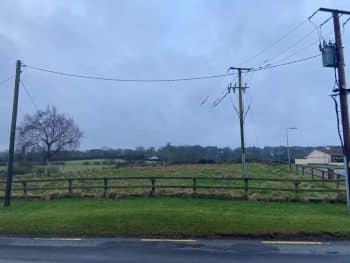
    Kildare Councillors flouted the public interest and perhaps the law in approving the sale of Council land without including its additional actual value to the purchaser as a “ransom strip” – following a valuation by a former Fine Gael Councillor By Fiona McLoughlin Healy. The role of Councillors in disposing of assets is an important one.  It is a power vested in them by Section 183 of The Local Government Act.  The Council’s Chief Executive has the power to acquire land but only the Councillors, ie the elected members of the Council acting collectively, can approve the sale of publicly owned land. Under Section 211 (2) of the 2000 Act, the disposal of publicly owned land must be for “the best price reasonable obtainable”, and if it is not, the Housing Minister’s consent is required for the sale.  The disposal of publicly owned land must be for “the best price reasonable obtainable”, and if it is not, the Housing Minister’s consent is required for the sale. Just five of 31 Councillors present (and a total membership of 40) voted against the sale. On Monday 30 November 2020, Kildare Councillors voted to dispose of 0.796 acres of publicly-owned land in Athgarvan to a private individual for the sum of €100,000. Just five of 31 Councillors present (and a total membership of 40) voted against the sale, and in substance in favour of my proposal that, as a result of concerns expressed, we adjourn the decision to dispose. Adjournment would have allowed for a second valuation to provide reassurance in relation to some of the issues I outline below.   The founder of Sherry Fitzgerald Reilly, the man who carried out the valuation is a former Fine Gael Councillor. The founder of Sherry Fitzgerald Reilly, the man who carried out the valuation, is Sean Reilly, a former Fine Gael Councillor. Here’s his signature on the valuation: Given the responsibility that rests with Councillors to obtain the best price reasonably obtainable, one would expect a certain level of due diligence in considering a disposal of state land. Having access to and being able to review the valuations that form the basis for the proposed sale price is, I would aver, a basic due diligence requirement.  Certainly as the schedule below shows a lot of money is spent annually by the Council on the services of estate agents and valuers.  But reviewing valuations  has not been the practice in Kildare. At the previous full Council meeting in October 2020 I had again raised my concerns that, despite repeated requests and reassurances given, the Council Management were still failing to circulate valuation documents with Section 183 notices.  As a result, my colleagues and I were provided with a copy of the full valuation carried out by an auctioneer for and on behalf of the Council for the proposed disposal of .796 acres at Athgarvan, at the November 2020 meeting. Two things struck me after reading the valuation document, the Council’s notice and the map circulated to Councillors in advance of the meeting.  First, although section 183 (v) requires that notices to elected members include “any covenant, conditions or agreements to have effect in connection with the disposal” ie for Councillors to be fully informed as to the piece of the jig-saw they are looking at, the explanation provided under that section left me unclear about why we were selling the land to the applicant. In fact I was more confused about why the land was being sold after reading the valuation and the Council’s notice.  The value of the piece of land being disposed of lay not in its intrinsic development value but in its value as the only access route to two developments that had been given planning permission a year earlier Second, here is the valuation document with map. It appeared to focus on the negatives as opposed to the benefits of the land and therefore read more like a valuation one might expect from a potential buyer, not from a seller. It highlighted for example that:  “The majority of the land would be extremely difficult to develop as it is undulating and at different levels”.  And without clarifying the relevance and significance of planning permissions 19/117 and 19/118 it further added that the: “Different levels etc of the land, planning ref 19/117 and 19/118, will make it very expensive to develop”. This is just not the way things operate with valuations. Quite why an opinion had been offered on how difficult it would be to develop the land was perplexing particularly as it was clarified under  “valuation assumptions, caveats and disclaimers” that “in undertaking the valuation we did not, unless otherwise stated; carry out a structural survey or test grounds for stability, bearing, capacity, presence of rock or other matters. Any comments in our report concerning the state of repair, structural condition, ground conditions etc are of a superficial nature only and may require to be verified by a building surveyor or structural engineer”.  Having read the document and the Council’s notice of disposal I proceeded to look up the two planning applications that had been referenced but whose relevance had certainly not been clearly articulated in either document.  It soon became apparent that the value of the piece of land being disposed of lay not in its intrinsic development value but in its value as the only access route to two developments that had been given planning permission a year earlier – one consisting of 90 units, the other of 14 units.  Neither development was shown on the map, issued to Councillors, that had accompanied the valuation. The full jigsaw had not been presented. The value of the adjoining developments not shown on the map, is crudely estimated to be anywhere in the range between €20 to €30 million. Thus, the piece of land being disposed of was a ‘Key Value’ site.  Extraordinarily, Kildare County Council had effectively asked the valuer to include the ransom-strip/key-site value but the valuer had not; and now Councillors were approving the deficient valuation. The relevant case law for valuing what is termed a ‘Key Value Site’ or  ‘Ransom Strip’ is Stokes vs Cambridge (1961) which determined that if a parcel of land was needed for access to develop adjacent property, its owner was entitled to up to one third of the resulting value of the developed property.  Based on a crude calculation, had the shoe been on the other foot and the Council required the piece of land in question to develop adjacent land, it would have had to fork out somewhere between €6 and €10 million to acquire the land in question. It’s difficult to be more

    Loading

    Read more

  • Posted in:

    Apologies

    By Kevin Higgins Inspired by the apologies of British Labour Party leader Leader Keir Starmer for his party’s “anti-Semitism” and his recent appointment of a former Israeli intelligence officer as Labour’s head of social media. To any white South Africans hurt  by the anti-Apartheid movement. To any tobacco plantation owner’s son barred  by Emancipation from dragging his father’s  private property for a spot of fish-eyed non-consensual in a barn that has seen it all,  despite the absolute lack of light in there. To General Custer for any inconvenience  caused by the tribes who sent him home  by a road he did not know.  To any Frenchmen or women savages with Russian guns robbed  of their own personal slice of Algeria. To any Havana casino owners or pimps offended by the extent of Fidel Castro’s facial hair.  To the small part of Ian Paisley Junior that dies every time someone calls Judea and Samaria or Londonderry by its proper name.  To any cats hurt by mice who didn’t lie down and just  let themselves be eaten. KEVIN HIGGINS 

    Loading

    Read more

  • Posted in:

    So help me God

    Drafters of the US Constitution foresaw violent demagogues, and Presidential Inaugurations have mostly befitted the momentous transfers of power By John Vivian Cooke. Exactly on the stroke of noon on 20 January, Donald Trump will be out of office. There will be no more lies, frauds, outrages, or broken laws from President Trump.    His presidency as a whole, and the violent death throes of its final days, have stretched democratic norms to their breaking point, but the inevitable messy end of his term proved the resilience of the US Constitution.    Some of the dangers they sought to guard against were instability, confusion and attempts by factions to mask violence under the Constitution The drafters of the Constitution foresaw exactly such a demagogue. They published extensive commentaries addressing concerns about the effective operation of republican forms of government. Their plan sought to resolve the paradox that without order there can be no freedom; to give sufficient powers to the government to allow it to fulfil its essential functions without diminishing the liberties of citizens. Some of the dangers they sought to guard against were:  ¨(T)he instability, injustice, and confusion introduced into the public councils, (which) have, in  truth, been the mortal diseases under which popular governments have everywhere perished”. (James Madison, Federalist Number 10)  They foresaw the danger posed by organised and violent malcontents, whom they knew as ¨factions¨, who would seek to subvert the operation of government.   ¨By a faction, I understand a number of citizens, whether amounting to a majority or a minority of the whole, who are united and actuated by some common impulse of passion, or of interest,  adversed (sic) to the rights of other citizens, or to the permanent and aggregate interests of the  community”. (James Madison, Federalist Number 10)  Benefitting from thorough classical educations, they readily drew on analogies from antiquity.   ¨It is impossible to read the history of the petty republics of Greece and Italy without feeling sensations of horror and disgust at the distractions with which they were continually agitated,  and at the rapid succession of revolutions by which they were kept in a state of perpetual  vibration between the extremes of tyranny and anarchy”. (Alexander Hamilton, Federalist Number 9) Supporters of Publius Clodius Pulcher, Trump in a toga, sacked the Senate in 52 BC If they had witnessed Trump’s mob desecrating the Capitol Building, they would have recalled the career of the ancient Roman politician, Publius Clodius Pulcher, whose enraged supports attacked and destroyed the Senate building (Curia Hosta) in 52 BC.  Indeed, the parallels between Clodius and Trump are more than incidental. Clodius was a demagogue with a record of numerous public sex scandals; a wealthy aristocratic who surrender his status as a Patrician to further his anti-elites appeal to the poor; whose term as a Plebeian Tribune in 59 BC was marred by violence, intimidation, and the abuse of power in the vindictive settling of old scores. In short: Donald Trump in a toga.   Informed by historical precedent and wary of the risks of disorder, the Constitution was designed with such specific hazards in mind.   ¨If a faction consists of less than a majority, relief is supplied by the republican principle, which  enables the majority to defeat its sinister views by regular vote. It may clog the administration,  it may convulse the society; but it will be unable to execute and mask its violence under the  forms of the Constitution”. (James Madison, Federalist Number 10)   Donald Trump has repeatedly attempted to frustrate this safeguard.  His attempts to overturn the election results escalated into an act of domestic terrorism that was an attack on the personal, physical, and institutional manifestations of American democracy.  That those efforts failed when Congress completed the constitutional processes of certifying the election results vindicates James Madison`s opinion that:  ¨AMONG (sic) the numerous advantages promised by a well-constructed Union, none deserves to be more accurately developed than its tendency to break and control the violence of faction.  The friend of popular governments never finds himself so much alarmed for their character and fate, as when he contemplates their propensity to this dangerous vice. He will not fail, therefore, to set a due value on any plan which, without violating the principles to which he is attached, provides a proper cure for it”. (James Madison, Federalist Number 10) The inauguration ceremony for President-elect Joe Biden and Vice-President-elect Kamala Harris will be a celebration of this transfer of power in accordance with the democratically expressed will of a sovereign people.   This ceremony has occurred with metronymic regularity since 1797, and each scheduled change of president (with the exception of Rutherford B Hayes` inauguration of 1877) has been celebrated in public.  Quadrennial public inaugurations of the president also serve the practical political function of legitimising the handover of power from one party to another and are the reason the bipartisan Congressional Joint Committee on Inaugural Ceremonies has chosen ¨Our Determined Democracy: Forging a More Perfect Union” and ¨America United¨ as this year`s themes.  The Presidential Inauguration Committee, which is responsible for organising broader celebrations, has been forced to abandon many longstanding traditions to comply with public health restrictions so, although the Pass in Review by members representing every branch of the armed services will still take place, this year there will be no Capitol luncheon, no inaugural parade and the series of inaugural balls have moved online.    What remains is the formal inaugural ceremony during which the incoming Vice President and then incoming President will swear their oaths of office, followed by the new President’s inaugural address. While all the pomp and ceremony are familiar, only the administration of the oath of office is constitutionally mandated. Article II, Section 1, Clause 8 states:  ¨Before he enter on the Execution of his Office, he shall take the following Oath or Affirmation:  – I do solemnly swear (or affirm) that I will faithfully execute the Office of President of the  United States, and will to the best of my Ability, preserve, protect and defend the Constitution  of the United States”.  Franklin Pierce is the only president to have affirmed rather than sworn the oath of office. Many witnesses to Herbert Hoover`s inauguration thought

    Loading

    Read more

  • Posted in:

    The Treaty

    Having failed to crush, flatten, or close our borders against it, as Winter begins to put its uncouth fingernails all over us there is talk of negotiations. King Virus comes to the table  wearing a crown of spikes that fans out to fill the whole room and can’t be removed except on the day of its state funeral, for which – item one on its agenda – we’re expected to pay. Its minions scuttle in all sporting slightly smaller but equally spiky headgear not to be hung on the hat-stand until its wearer has been scrubbed to death by soap and alcohol even a journalist wouldn’t drink. We are busy being impressed by the tall portraits of its ancestors which adorn the conference room walls when its chief negotiator cuts through gristle to bone: it wants all our old age pensioners and chronics.  In terms of the drag they are on the economy,  it’s doing us a favour taking them  to the processing plants it’s building here, here, and there on the map it keeps pointing at with its big long stick. Being realists – on financial matters at least – we have no alternative but to agree and, as is our custom on such occasions, offer it a little extra: everyone over the age of sixty. Its final condition, to which we’re delighted to nod statesmanlike agreement: the rest of the population will be known by this treaty, which will have full force of international law, as the ‘unoccupied zone’. Congratulating ourselves on another deal done, we bark our ribs up (or try to)  and sweat in unison  into the perfect white of the handkerchiefs  we brought to wave at the world’s media. KEVIN HIGGINS 

    Loading

    Read more

  • Posted in:

    UNambitious

    Ireland will again exercise its place on the Security Council to promote consensus rather than vision and values. By John-Vivian Cooke Ireland took a seat on the UN Security Council for the term 2021/22 on 1 January. This is the fulfilment of a key strategic goal of Irish foreign policy. However, having secured that seat on the Security Council, what will we do with it? If the record of our last term on the Security Council in 2001/2 is anything to go by, the answer will be disappointingly little.  Our feeble performance then was despite a highly professional and effective team representing us in New York but largely due to a  deliberate choice to set modest ambitions: a tactic that shows every sign of being repeated again in January. The tragedy is that Ireland is capable of so much more. There are two reasons to be pessimistic that we will deliver this time around. The first is the excessive strain likely to be placed on the organisational capacity of the Department of Foreign Affairs and Trade (DFA). The Department`s budget could well face deep cuts as a consequence of the current Covid-19 recession, a recession which could be made worse by a hard Brexit in the new year. Any cuts to the DFA`s budget will occur precisely at a time when it is trying to meet the additional demands for resources for our Security Council term. Moreover, Ireland’s Security Council  agenda will have to compete for funding with other budgetary priorities such as meeting our international development aid commitments and the planned expansion of the number of missions around the world. The plan to open 26 new diplomatic missions has only reached the half way mark and the if the department is to meet its targets under the Global Ireland strategic plan, funding will need to be found for the remaining 12 missions. Even if the department finds a way to balance its budget, there will be other pressures on its institutional resources.  There are absolute limits to the time that any minister, in general, can dedicate to any specific policy issue and Brexit will be the topic that will preoccupy the Minister for Foreign Affairs. This preoccupation is set to be replicated throughout our diplomatic structures with the consequence that expertise and experience that, in normal circumstances, would be available to support the UN team, will be diverted to manage Brexit. No matter the quality of our diplomatic representation at the UN, the ability to set policy priorities and give direction on diplomatic strategy can only come from the legitimate and formal authority of the elected minister. Second, even in ideal domestic circumstances, the structure of international relations imposes intrinsic limitations on Ireland`s ability to determine outcomes at the UN. The distinction between the elected members of the Security Council and the five permanent members (P5) institutionalises the privileged position that the P5 members are granted under the UN charter in their role as Great Powers. Notwithstanding the notional sovereign equality of states in the charter, and under international law generally, the blunt truth of international relations is that the P5 do act differently and they are treated differently from other, lesser, states. Great Powers are qualitatively different from all other states by virtue of the resources they possess: elements of power that simply are not available to even medium-size states. The quintessential qualification for Great Power status is the ability to project military power, both conventional and nuclear. The measure of a state`s power is proportionate to the magnitude of its forces; the distance they can be projected; and the duration for which they can be deployed. This power, in turn, rests on the fiscal and economic resources of the state.   But to acknowledge the difference among states is not to condone or excuse it. The fact that the US ¨doth bestride the narrow world like a Colossus and we petty men walk under his huge legs¨ does not mean that we must ¨peep about to find ourselves dishonourable graves”. But, if we are to accomplish honourable ends, we must set ourselves far more ambitious goals while still retaining an unsentimental understanding of how world politics operates. There can be no mistaking that the distribution of power creates a difference of kind rather than a difference in degree between the permanent and elected members of the Security Council. Some analysts describe the P5 as having a systemic role in constituting international norms and institutions while small states such as Ireland are ¨System Ineffectual¨. Yet the temptation is for elected members to see themselves as merely mini versions of the Great Powers and to develop strategies that compensate for their lack of power. The Norwegian Minister for Foreign Affairs, Ine Marie Eriksen Soreide, succumbed to exactly that temptation in her comment that: ¨(N)o-one can take care of Norwegian interests like Norway can. To uphold and strengthen the multilateral system and rules-based order, that`s a core foreign policy interest for Norway”. Instead we should adopt a new sui generis understanding of how small states such as Ireland operate in international politics. The established perspective on international relations treats all states as unitary actors that exercise various forms of power in pursuit of their national interests. This puts small states in the same category as Great Powers and predicts that the foreign policy of small states will be oriented to increasing their autonomy. In practice, the opposite occurs: small states seek to limit the autonomy of the Great Powers by enmeshing them in the constraints of international norms and regimes. Simon Coveney acknowledged as much when he said ¨(T)he basis for our campaign to be on the Security Council was to be vocal on these key issues around adherence to international law standards that apply through international structures and systems that protect small and weaker states as well keep dominant and powerful states in check”. Indeed, the current ‘Global Island Ireland’ strategy paper makes the point that ¨the European Union and United Nations in amplifying Ireland’s voice and extending

    Loading

    Read more

  • Posted in:

    Assange’s Extradition, for Conspiracy and Espionage, Unlawfully Political

    London extradition hearing was the last stand of either Wikileaks founder or Western Intelligence Imperialism, and awaits January decision By Caroline Hurley Queensland-born Julian Assange (49) founded Wikileaks in 2006. Four years later it published several huge and devastating leaks provided by US Army intelligence analyst Chelsea Manning, including: the Afghanistan war logs, the Iraq war logs and Cablegate. Wikileaks notably published 250,000 redacted documents and footage of US troops in an Apache Helicopter gleefully shooting dead what turned out to be two Reuters employees and Iraqi civilians fleeing in Baghdad (Collateral Murder video). Evidence of torture of Guantanamo Bay detainees also created shockwaves, as did revelations of Hilary Clinton’s entanglement with Wall Street and military regimes.The model of public-interest publishing pioneered by Wikileaks, which facilitated anonymous submission of classified material and organised collaborative reporting across jurisdictions, is now widely practised in mainstream media. The threatened indictment of Assange, symbol of press freedom, puts all investigative journalism on trial.Critics of Wikileaks’ releases included Julia Gillard, then Australian Prime Minister, who said they were illegal, and the then US Vice-President, Joe Biden, who significantly called Assange a terrorist. In 2017 then-CIA director Mike Pompeo declared that Wikileaks was a “hostile intelligence service” aided by Russia.AccoladesOn the other hand, Julian Assange was named Time Magazine Person of the Year in 2010, and then awarded the Martha Gelhorn Prize in England and the Walkley, an Australian Pulitzer Prize equivalent. However, the US Justice Department embarked on a mission to criminalise him and his associates. Swedish Rape Allegations As Assange kept slipping through his pursuers’ fingers, new jeopardy swooped in 2011 from Sweden where, surviving largely without a fixed address, Assange had been spending much of his time. He was recalled there for questioning about two women’s accusations of sexual assault. He agreed to travel from his temporary UK base to answer the charges on condition the Swedish government promised not to extradite him onwards to America. Assange Seeks Asylum Refused these terms, and after exhausting British legal options, in 2012 Assange sought asylum at the Ecuadorian embassy in London.In 2016, the UN Working Group on Arbitrary Detention upheld Assange’s plea as eligible, supported by various statements including one signed by 500 high-profile figures from more than 60 countries. Nothing changed. His house-arrest-like limbo lasted until 11 April 2019 when he was handed over to police.On 20 February 2019, the International Monetary Fund had given Ecuador a $4.2 billion financial package subject to Washington’s approval. Within days, Wikileaks’ prize source, Chelsea Manning, was subpoenaed to inform on Assange, and punished for non-co-operation by a month in almost total solitary confinement, during which time Ecuadorian president Moreno, formerly a fan, came out against Wikileaks.With Assange firmly in the clutches of Anglo-American law enforcement, the Swedish sexual assault charges were finally dropped. Assange Jailed After the police arrest, Assange appeared at Westminster Magistrates’ Court. The District Judge remanded him to Belmarsh maximum security prison until 2 May 2019, when another Judge at Southwark Crown Court sentenced him to fifty weeks in jail for violating his 2012 bail conditions.Handled like a violent criminal, Assange was held in an isolation cell and denied virtually all contact with other prisoners, visitors and his legal representation. Reports of his deteriorating mental and physical health spread. US Indictment The US government launched a criminal investigation into WikiLeaks and is now seeking Assange’s extradition from the UK. He faces one charge of conspiracy and 17 charges of espionage.On 11 April 2019, the US District Court for the Eastern District of Virginia unsealed a 2018 indictment charging Assange with conspiring to commit computer intrusions by assisting Chelsea Manning with breaking a US-government password. Having, under extradition rules, only a 60-day window from the date of Assange’s arrest in London to add more charges, the US Department of Justice unveiled a further seventeen criminal charges against Assange on 23 May 2019, alleging he contravened the Espionage Act of 1917 by publishing the names of classified sources and conspired with and assisted Manning in obtaining access to classified information. The eighteen charges mean a potential cumulative 175 years in prison on conviction.The US-UK extradition treaty cited in the demand that Assange be handed over explicitly forbids political extraditions – and the US government itself had designated him a political actor in 2010.Human Rights Watch and others condemned the move as a regulatory weapon of mass destruction aimed at journalists, whistle-blowers and other truth-tellers. Pariah Assange remains a controversial figure, due mainly to allegations about his temperament and conduct, to the sexual assault allegations and to his alleged support for Donald Trump during the 2016 US Presidential Election when WikiLeaks released documents from the Democratic National Committee (DNC) showing that it favoured Hillary Clinton and had tried to subvert Bernie Sanders. In 2018, Special Counsel Robert Mueller charged twelve Russian intelligence officers with computer hacking and working with WikiLeaks and other organisations to disseminate the documents but Assange said that the Russian government was not the source of the DNC documents. In 2019 CNN reported that Assange had used the Ecuadorian embassy to meddle in the 2016 election.Perhaps partly because of this record, the media internationally went cold on Julian Assange. The BBC’s website covered the hearings in just four – unquestioning – pieces. The Logistics of the Hearing The extradition hearing began at Woolwich Crown Court on 24 February 2020 but was largely adjourned until 7 September. Consortium News and Courage Foundation supplied coverage daily; Counterpunch and Defend Wikileaks did frequently. Even The Guardian engaged though not enough to impress demonstrators outside its offices or signatories of a petition complaining it profited from publishing his leaks yet did not cover the extradition hearing every day one of many leading news outlets, including the Bureau of Investigative Journalism that had extensively exploited Wikileaks files.Reporters Without Borders (RSF) was the only NGO permitted court access. A crowd of hundreds gathered outside the Old Bailey as the case began – speakers included Wikileaks’ Editor Kristinn Hrafnsson, journalist

    Loading

    Read more

  • Posted in:

    Stalwart Hopes, Stunted Growth.

     Cloughjordan Ecovillage Two Decades On. By Caroline Hurley. Cloughjordan So Far In September 1999, at the Central Hotel Dublin, Gavin Harte and Gregg Allen launched Sustainable Projects Ireland Ltd. (SPI) trading as The Village, whose aim was to create Ireland’s first eco-village, with a stress on sustainability, community, and promoting mainstreaming environmentally-friendly ideas.  Rising property prices pushed site options farther from the capital than originally envisaged but after advertising in the Farmers Journal, specifying requirements for clay-rich soil to build, a south-facing orientation, and adjacency to an existing village (a serendipitous Council stipulation contrary to SPI’s green-field site preference), community leaders from Cloughjordan on the Tipperary-Offaly border made contact to urge purchase of land meeting these criteria, which were being sold by the Baker family.  Cloughjordan’s population then, about 400, was one-tenth of its pre-Famine size. As the transaction progressed, talks eventually allayed locals’ concerns about an influx of strangers with fringe beliefs and practices.  Cloughjordan’s population then, about 400, was one-tenth of its pre-Famine size. As the transaction progressed, talks eventually allayed locals’ concerns about an influx of strangers with fringe beliefs and practices.  North Tipperary County Council agreed to rezone the agricultural fields for sustainable development, and the application for outline planning permission for private houses, roads and community buildings was made after land purchase was finalised in 2003. Planning permissions sought and granted can be viewed on www.eplanning.ie using reference numbers 04511649 and 08510334. An archaeological survey conducted on the sixty-seven acres by Dennehy and Gowan revealed signs of occupation from the Bronze Age. Regrettably never signposted, findings included Fulachta Fiadh, ring forts and barrows, ditches, a moat, a fever hospital and starch house.  In 2007, a Village Finance Group published a comprehensive document entitled ‘Information About Site Prices’, explaining how 2004 site costs were calculated, why they had gone up so much by 2007, and steps being taken – such as bulk buying – to curb higher price impacts. The low-lying aspect of the field, formerly containing an old well, hugely upped infrastructure quotes.  The plan to complete building on all 130 sites by 2010 was frustrated by exorbitant boomtime bills putting almost half of the subscribers to flight.  Delays were compounded by the recession and logistical complications. The plan to complete building on all 130 sites by 2010 was frustrated by exorbitant boomtime bills putting almost half of the subscribers to flight.  Delays were compounded by the recession and logistical complications. Borrowings were in the millions, contrary to the original no-debt policy, resulting in unintended long-standing liabilities, and diluting autonomy.  The County Council absorbed more funds after rejecting developer proposals for a social-housing element provided for by Government housing-legislation guidance at the time. Those who paid deposits for initially oversubscribed plans were later asked to sign “statements of integrity” undertaking to build by a certain date, but many could not meet changing conditions as escalating site costs were re-calculated, and as properties they meant to sell to pay balances lost value. Marketing to find replacements for drop-outs had to be stepped up again as subscribers still-in forged ahead, though SPI’s weakening finances led to staff being let go. Researcher Campos (2013) noted, “the project hasn’t been able to get around the predatory price system of the formal economy”, and Nelson (2018) added, Cloughjordan “is the most market-oriented … and the least affordable” of several ecovillages analysed, placing it outside the price bracket of many desirable ecovillage candidates. Steps to address this barrier are now afoot. Already, the presence of ‘communities within the community’ has been observed.  By 2011, diverse nature-inspired buildings were going up on certain sites sold; mainly of passive timber frames with sundry insulations and finishes including Durisol blocks (blocks of chipped waste-wood bonded with eco-cement), sheep’s wool, and cellulose (shredded newspaper). Constructions with hemp-lime (traditional Irish finish of lime, strengthened by adding hemp) and cob (clay, sand and straw) also feature, as does a Canadian stick-frame house with double stud walls (with no cold bridging), and kit houses. Anyone with business ideas could opt for live-work units.  Natural slates, recycled plastic roof-tiles and ‘green roofs’ are on display. This distinctive colourful collection of low-carbon emission builds secured some of Ireland’s best Building Energy Ratings (BER). 28 bought sites not yet developed are levied charges, variably met, leaving 47 sites to sell as of 2021. Instead of using fossil fuels, the District Heating System (DHS) burns biomass: waste wood from a Galway sawmill.Although this cutting-edge renewable solution of the noughties has since drawn scrutiny due to forestry pressures and particulates affecting air quality, the system meets village-wide heating and hot-water requirements, emits no excess greenhouse gases, and has been estimated to save about 113.5 tonnes of carbon annually compared to conventional house heating. 2.5 kg of piping distributes hot water to all sites.  Manufacturer failures jinxed the ground solar array slated to support the DHS. About a fifth of residents have roof photovoltaic panels. In 2014, a survey carried out by Tipperary Energy Agency confirmed an ecological footprint of 2 global hectares, the lowest recorded for an Irish settlement. Rainwater harvesting is a common feature. The Sustainable Drainage System (SuDS) is designed to direct water runoff from houses, roads and hard surfaces to a stream leading offsite. Stormwater is managed as close to source as possible to mimic natural drainage and encourage efficient biological infiltration, attenuation and passive treatment. Water flows through conventional roof drainage pipes and road surface filter drains (stone filled trenches) to swales or basins to be stored during periods of heavy rainfall, before stream discharge.  As of 2021, fifty-five unique energy-efficient houses and a hostel are occupied by 135 residents, many of whom work from home. Most remain involved in the myriad businesses of ecovillage life and, even if bruised by experience, report satisfaction As of 2021, fifty-five unique energy-efficient houses and a hostel are occupied by 135 residents, many of whom work from home. Most remain involved in the myriad businesses of ecovillage life and, even if bruised by experience, report satisfaction.  This well-educated population of teachers, nurses,

    Loading

    Read more