admin

  • Posted in:

    NAMA shrugs again

    State’s bad bank fails to take responsibility for another inept hit to the public purse as it improperly sells to someone connected to the original debtor, blaming IT systems
    Loading

    Read more

  • Posted in:

    Leo always delivers

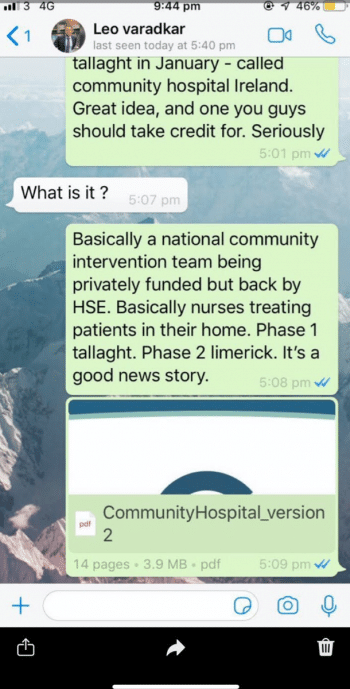
    WhatsApp correspondence shows Varadkar transferred confi dential IMO contract to rival medical organisation, a crime under the Offi cial Secrets Act and maybe under the Corruption Act, carrying a penalty of up to 10 years in jail and prohibition from offi ce
    Loading

    Read more

  • Posted in:

    Delving into the Past to Understand the Present, David Burke reviews Margaret Urwin’s ‘Fermanagh, From Plantation to Peace Process’.

    Margaret Urwin is known for her work with Justice for the Forgotten/the Pat Finucane Centre. Her published works include the pamphlet Counter-gangs (2012) which describes the activities of undercover British special force units in Ireland in the 1970s. In 2016 she published the highly- regarded ‘A State in Denial: British Collaboration with Loyalist Paramilitaries‘. She has now added ‘Fermanagh, From Plantation to Peace Process’ to this body of work. It delves back deeper into Irish history to help us understand the present. The book takes the reader on a compelling historical tour of Fermanagh. The early chapters deal with the Plantation and the Rebellion of 1641 and draw on depositions preserved by Trinity College, original material that brings the era vividly to life. The author then moves through the Cromwellian era and the Williamite wars. The penal laws, the famine, the Orange Order, Catholic emancipation, WW1 and the Easter Rising – and more – are all covered later. Focusing on the period from the 1920s onwards, Urwin examines what life was like in the new six-county state of Northern Ireland after partition – the systemic discrimination against Catholics in all areas of life; the role played by the Free State government; the fiasco of the Boundary Commission; the distrust of the Protestant community of their Catholic neighbours due to the IRA campaign of 1956-62; the more recent IRA campaign in the county which began after the introduction of internment in 1971. She reflects on the short-lived loyalist campaign in the county which ceased permanently in the mid-1970s, unlike in neighbouring counties, Tyrone and Armagh. Based on official declassified British and Irish Government documents, the role of the border during the conflict and Irish Government co-operation with its British counterparts are analysed while claims of ethnic cleansing and genocide are tested. The core of the book is the detailed analysis of all conflict-related deaths in the county which boosts the biographies contained in the seminal publication, Lost Lives. Case studies of particular killings are provided, e.g. Protestant civilians and alleged informers killed by the IRA; the Enniskillen bombing; the notorious ‘Pitchfork’ murders carried out by members of the British Army; the killing of IRA members by the SAS and loyalist killings of Catholic civilians. A consistent thread throughout the centuries is the enduring influence exerted by the Fermanagh aristocracy including the earls of Enniskillen, Erne and Belmore, and Baronets Archdale and Brookeborough. (The Brookeboroughs were later upgraded to Viscounts). An example of this influence occurred during the land war. This was a period of remarkable cohesion between Catholic and Protestant tenants, which gained a particular momentum in Fermanagh. (Urwin has drawn on local and national newspapers to bring this era to life). Throughout the period the aristocracy had met with limited success in their efforts to cause division but as Urwin demonstrates: In the autumn of 1882, Parnell disbanded the Land League and established in its place the Irish National League. The aims of the new organisation were more political than agrarian, the main objective being to assist the Home Rule movement. This decision sounded the death knell to Protestant and Catholic cohesion around the land issue. This at last provided the aristocracy with the opportunity they were hoping for and brought about an end to this sadly short-lived period of Catholic-Protestant cohesion The influence of the Fermanagh aristocracy was maintained up until the last century when one of their own, Sir Basil Brooke, served as prime minister of Northern Ireland 1943-63. Coming into more modern times, Urwin has conducted personal interviews with living witnesses. One of them was a participant during the IRA’s Border Campaign, Operation Harvest, 1956-62. He was involved in the best-known engagement of that conflict, the IRA raid on the RUC barracks at Brookeborough during which Seán South and Fergal O’Hanlon were killed. A fascinating fact which is brought to light in the book was the short-duration of the loyalist campaign in the county. Killings by loyalists ceased in 1975 and did not resume. This may possibly be attributed to the fact that Fermanagh is bordered on three sides by four counties of the Republic – Monaghan, Cavan, Leitrim and Donegal. Fermanagh loyalists may have felt more vulnerable to cross-border retaliation by IRA units than their neighbouring counties.   Urwin has identified another interesting fact about Fermanagh namely that it is the only county in present-day Northern Ireland that has an Anglican, as opposed to a Presbyterian, majority. Another section of the book deals with the election of hunger striker Bobby Sands as MP for Fermanagh-South Tyrone in April 1981. Urwin has unearthed new material in Britain’s National Archives. During the election campaign British officials were deeply concerned that Sands might win or, at least, get a ‘respectable’ vote. The implication of such an outcome would suggest that the Provos were a democratic alternative to the SDLP. However, the consensus among them was that a win for Sands was highly unlikely. They reckoned that, at most, 15-20,000 nationalists would vote for him. They were proved wrong and Sands emerged victorious. The result had a polarising effect which aroused huge resentment in the Protestant community. They felt betrayed by their Catholic neighbours. The events touched upon in this review are merely illustrative of the scope and breadth of this fascinating book. It will undoubtedly be received well in the subject county but has much to commend it to a wider audience. Fermanagh, From Plantation to Peace Process is published by Eastwood Books, www.eastwoodbooks.com

    Loading

    Read more

  • Posted in:

    Please answer the questions, Tánaiste.

    These four questions need now to be asked in the Dáil, as Leo Varadkar has not replied to Village‘s attempt to get answers. By Michael Smith. Since we live in a democracy lying to the Dáil is a resigning offence.  Village has made the case that the Tánaiste Leo Varadkar has run to cover over his leak of the confidential IMO-negotiated contract to his mate. Meanwhile most though not all of the media have moved on to the next issue. Here are the questions I asked of the Tánaiste on Monday 16 November.  I annotate them below:  “Dear Tánaiste,Thank-you for the email I received on your behalf…on 13 November.It remains unclear which precisely of the alleged encounters referred to in https://villagemagazine.ie/at-least-10-times-not-2-or-3/  you have denied. Can you provide clarification?Are you still claiming that you were in Barcelona at a time that proves you could not have had any particular one of the ten alleged encounters with Dr Ó Tuathail; and if so can you please say when in 2019 you were in Barcelona?Can you please state whether Matt Barrett spoke to Dr Ó Tuathail on your behalf or otherwise, during the nine days you referred to in the Dáil, about the leak affair and/or its fallout; and whether during that period Mr Barrett spoke to Dr Ó Tuathail about the accuracy of the references to the encounters that were referred to in Village‘s statement, or about Dr Ó Tuathail denying them. Can you please say if you forwarded the brochure and any other correspondence you received by WhatsApp or otherwise from Dr Ó Tuathail promoting Community Hospital Ireland, as opposed to Community Health Ireland, on a private account, to an official government account. I would be grateful for a reply tomorrow 17 November to meet a deadline”. No reply was received. Here are explanations of the questions: 1) It remains unclear which precisely of the alleged encounters referred to in https://villagemagazine.ie/at-least-10-times-not-2-or-3/  you have denied. Can you provide clarification? [AS PART OF HIS EFFORT TO DENY LAWBREAKING THE TÁNAISTE CLAIMED THE PURPOSE OF LEAKING THE DOCUMENT COULD NOT HAVE BEEN TO ADVANCE THE INTERESTS OF HIS FRIEND MATT Ó TUATHAIL, PRESIDENT OF THE NAGP, AS HE WAS NOT A CLOSE FRIEND BUT SOMEONE HE WOULD MEET “TWO OR THREE TIMES A YEAR”.  VARADKAR CONJURED AN IMAGE OF  HIMSELF AS TAOISEACH SOWING HARMONY BETWEEN THE NAGP (AN ORGANISATION SOME OF WHOSE LEADERS MAY SHORTLY BE  PROSECUTED FOR THEFT AND CORRUPTION) AND THE IMO. VILLAGE TORPEDOED THIS DEFENCE WITH EVIDENCED ALLEGATIONS OF TEN MEETINGS IN 2019. IT SAID THAT IT DID NOT NEED TO PROVE ALL OF THESE FOR IT TO BE EVIDENT THAT THE NUMBER OF MEETINGS WAS QUALITATIVELY DIFFERENT – OF A DIFFERENT ORDER – FROM TWO OR THREE, ESPECIALLY WHEN NO NORMAL PERSON RECORDS ANYTHING MORE THAN A FRACTION OF THEIR SOCIAL ENGAGEMENTS WITH A FRIEND, ON WHATSAPP!  VARADKAR THEN SEEMS TO HAVE DISPROVED ONE MEETING, ON 30 JUNE 2019 – WHEN HE WAS IN BRUSSELS THE DAY AFTER HE, PASCHAL DONOHOE, SIMON HARRIS, KATE O’CONNELL TD AND OTHERS IN FINE GAEL HAD BEEN PHOTOGRAPHED MEETING Ó’TUATHAIL DURING 2019’S PRIDE FESTIVITIES.  WE ATTACH A NEW PHOTO OF O’TUATHAIL WITH HARRIS AND O’CONNELL THAT DAY.   CHAY BOWES RECEIVED TEXTS FROM Ó TUATHAIL SHOWING HE WAS UP VERY LATE [HE SAID HE FELT “FUCKED”] FOLLOWING PRIDE AND WAS EXPECTING TO MEET DONOHOE AND VARADKAR ON 30 JUNE. LIKE SOME MEETINGS PLANNED THE NIGHT BEFORE, IT CLEARLY DID NOT HAPPEN AS ENVISAGED.  MEANWHILE CHAY BOWES HAS UNEARTHED ANOTHER ALLEGED MEETING BETWEEN Ó TUATHAIL AND VARADKAR (AND HARRIS) – IN THE ROYAL HOSPITAL KILMAINHAM, ON 17/18 AUGUST 2019]. 2) Are you still claiming that you were in Barcelona at a time that proves you could not have had any particular one of the ten alleged encounters with Dr Ó Tuathail; and if so can you please say when in 2019 you were in Barcelona?  [IN HIS CRUCIAL RESPONSE TO THE MOTION OF CONFIDENCE IN HIM ON 10 NOVEMBER VARADKAR CLAIMED THAT MANY OF THE CLAIMS MADE ABOUT HIM “WERE TRUMPED UP OR MADE UP”. HE SAID VILLAGE’S ARTICLE “WAS JUST ONE EXAMPLE OF THIS.“IT ALLEGED TEN ENCOUNTERS, MANY OF WHICH SIMPLY DID NOT HAPPEN AND COULD NOT HAVE HAPPENED AS I WAS IN BRUSSELS ON TWO OCCASIONS, BARCELONA ON ONE, OUT OF DUBLIN ON ANOTHER, OR DEMONSTRABLY DOING GOVERNMENT BUSINESS”.  THERE IS NO VERIFICATION HE WAS IN BARCELONA OR WITH WHOM HE WAS THERE, AND NO INDICATION BEING OUT OF DUBLIN OR ON GOVERNMENT BUSINESS PRECLUDED MEETING Ó TUATHAIL WHO HAS SAID HIS MEETINGS WERE TYPICALLY VERY INFORMAL.  3) Can you please state whether Matt Barrett spoke to Dr Ó Tuathail on your behalf or otherwise, during the nine days you referred to in the Dáil, about the leak affair and/or its fallout; and whether during that period Mr Barrett spoke to Dr Ó Tuathail about the accuracy of the references to the encounters that were referred to in Village‘s statement, or about Dr Ó Tuathail denying them. [VARADKAR  POINTEDLY TOLD THE DÁIL DURING THE CONFIDENCE MOTION THAT HE HAD NOT SPOKEN TO DR Ó TUATHAIL IN NINE DAYS, AFTER HE UNDERSTANDABLY SPOKE TO HIM ON THREE OCCASIONS AFTER VILLAGE‘S STORY BROKE.  THIS WOULD BE MEANINGLESS IF ANY ASSOCIATE HAD SPOKEN TO Ó TUATHAIL DURING THIS PERIOD. O’TUATHAIL IS A CLOSER FRIEND TO BARRETT THAN TO VARADKAR.  SO SOME OF THE CLOSENESS OF VARADKAR’S FRIENDSHIP COMES VIA THEIR MUTUAL CONNECTION WITH BARRETT.  THIS IS BECAUSE THE TWO WORKED TOGETHER IN ST VINCENT’S HOSPITAL AND WOULD GO FOR WEEKLY PINTS UNTIL THE PANDEMIC. IT IS ALSO THE CASE ACCORDING TO Ó TUATHAIL HIMSELF AND TO THE PROBING SUNDAY INDEPENDENT; AND INDEED IS SUGGESTED BY THE FACT THE ONLY PERSON MATT BARRETT FOLLOWED ON TWITTER WAS Ó TUATHAIL UNTIL VILLAGE’S STORY BROKE WHEN THE FOLLOW WAS TERMINATED – ONLY TO BE REINSTATED WHEN Ó TUATHAIL DISHONESTLY DISAVOWED HIS CORRESPONDENCE WITH BOWES TO CONFIRM VARADKAR’S STORY; AND THAT BARRETT ISSUED A CONTEMPORANEOUS STATEMENT TO CHIME WITH Ó TUATHAIL’S STORY].  4) Can you please say if you forwarded the brochure and any other correspondence you received by WhatsApp or otherwise from Dr Ó Tuathail promoting Community Hospital Ireland, as opposed to Community Health Ireland, on a private account, to an official government account. [ON 5 NOVEMBER THE TÁNAISTE TOLD

    Loading

    Read more

  • Posted in:

    Tánaiste’s reply to questions from Village

    On Thursday Village‘s editor, Michael Smith, wrote to Leo Varadkar: “Dear Tánaiste, You referred in the Dáil on 10 November to the impossibility of yourhaving had ten encounters in 2019 with Dr Matt Ó Tuathail.  You saidmany of the encounters referred to athttps://villagemagazine.ie/at-least-10-times-not-2-or-3/  wereimpossible.  Can you please say how many, and which of them, youconsider you have now shown – as opposed to just stated withoutevidence – did not happen.   Can you kindly please give informationthat shows you were in Barcelona at a time that proves you could nothave had any particular one of the ten alleged encounters with Dr ÓTuathail. You also pointedly told the Dáil you had not spoken to Dr Ó Tuathailin nine days, after you understandably spoke to him on three occasionsafter Village‘s story broke.  Can you please state whether MattBarrett spoke to Dr Ó Tuathail on your behalf or otherwise about theleak affair and/or its fallout  in that nine-day period. Can you please say if you ever discussed Community Hospital Irelandwith Dr Ó Tuathail. I would be grateful for a reply within 24 hours to meet a deadline. Kind regards,Michael Smith Editor, Village Magazine6 Ormond Quay Upper, Dublin 7, Ireland”. This evening (Friday) a spokesperson for the Tánaiste replied: “The Tánaiste answered questions on these matters in two sittings and over five hours of Dáil debate. In relation to Community Health Ireland, Dr. O’Toole sent a brochure to the Tánaiste in November 2018 for information and informed him that it was being piloted in co-operation with the HSE. The Tánaiste did not take any further action on the matter”.

    Loading

    Read more

  • Posted in:

    Where do the press and Fine Gael stand on the intimidation of Village and its whistleblower?

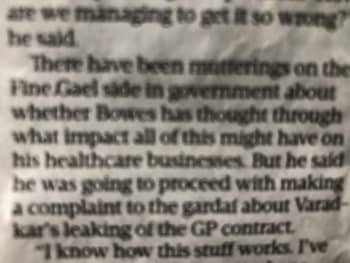
    We live in a democracy and a free press is supposed to be important. So why have the mainstream media been silent when Village, a small, serious, independent magazine and its whistleblower, Chay Bowes, have been threatened and bullied by perhaps the most powerful political party in the State, Fine Gael, and perhaps the most powerful man in the State, the Tánaiste, Leo Varadkar, past and future Taoiseach? A report in the  Business Post last Sunday, 8 November, by its respected Political Editor Michael Brennan, contained the following: “There have been mutterings on the Fine Gael side in government about whether Bowes has thought through what impact all of this might have on his healthcare businesses. But he said he was going to proceed with making a complaint to the Gardaí about Varadkar for leaking of the GP contract”. This seems to be intimidation of Bowes, probably primarily for saying he will lodge a criminal complaint. Intimidation is of course a crime. Section 41 of the Criminal Justice Act 1999 says that a person: “(a) who harms or threatens, menaces or in any other way intimidates or puts in fear another person who is assisting in the investigation by the Garda Síochána of an offence… (b) with the intention thereby of causing the investigation or the course of justice to be obstructed, perverted or interfered with, shall be guilty of an offence”. Who is doing the threatening?  “The Fine Gael side in government”.  That is more than just a group of hand-rubbing backroom boys.   The Fine Gael side.  In government. Outside of a banana republic Fine Gael must be asked to account for itself.  It must state who speaks for “the Fine Gael side in government”, it must ascertain if the intimidation is authorised at the top level and it must, in a democracy, remove anybody associated with these threats, all the way to the top of the organisation and its leader,  Mr Varadkar if necessary. The whole party is implicated because no attempt has been made by anyone in it to correct or investigate the Business Post report, in the three subsequent days. Naturally, Village will be making a complaint. Meanwhile, on two occasions now under the veil of Dáil privilege Mr Varadkar has abused Village magazine.  Twice he has called it a “fringe publication”.  There is no interpretation of the word, whose connotations all but the politically naïve know well, that would fit Village which is a left-wing, sometimes-though-not-always-dull, magazine that covers news, politics, environment, media, culture, and foreign affairs in a serious-minded and evidence-based way. Cursory perusal of the current magazine or of Village’s website would prove this to anyone who bothered. Varadkar also solemnly told the Dáil he would be deterred from  suing the magazine as that would be like suing someone on Twitter.  I am the author of the relevant pieces, and the magazine’s editor.  The magazine has never sheltered behind any of the normal protections for small investigative media: offshore corporate registration, editor a person of straw, etc. Most people who have sued Village magazine have sued the editor as well.  In my 12 years as editor Village has never paid anyone anything for defamation but I do have sufficient means to be a mark for the costs of litigation if we did lose a case. Varadkar’s allegation is inaccurate and an abuse of Dáil privilege.  He should withdraw it from the Dáil record.  More sinister still than the Tánaiste’s cynical mischaracterisation of the magazine, and his idle threats to sue, is that in the important Dáil debate of confidence in him on 10 November, he complained that Village is “unregulated”.  That suggests one of the country’s leaders considers that it should be regulated beyond the long-standing commitment to the Code of Conduct of the Press Ombudsman/Press Council clearly flagged on the inside page of the magazine. Believing, and implying in parliament, that a solution to your prolonged political discomfiture is “regulating” press that you do not like but choose not even to sue, is sinister in a democracy.  We heard a lot about the influence of Donald Trump yesterday.  Here is its definitive incarnation. It is extraordinary that none of the press or broadcast media have expressed any concern about this. Not one of the reports of the vote of confidence in Varadkar, whose importance was itself denigrated in much of the press, even mentioned it. But then Village’s evidence-driven pursuit of Mr Varadkar’s illegal leak of a confidential draft IMO-negotiated GP contract to his friend, the head of a rival organisation, has been distorted by some of the mainstream media, some of the most established of which have never referred to the WhatsApp screengrabs that grounded our reports – as they apparently do not have the wherewithal to assess their probative value. The screengrabs, it is Village’s case, showed a) criminality and b) lying, from the Tánaiste. Illustrating the distortion is some of the press coverage of our  9 November release of a trove of information from Varadkar’s friend O’Tuathail suggesting their relationship was closer than Varadkar stated in the Dáil.  That information  needed to be released in full.  I was involved with the publicisation of James Gogarty’s allegations which led to the establishment of the long-running planning tribunal (1997-2012).  Fully 19 years after he made substantiated allegations (to me and others) that were verified by the tribunal many of the substantiated allegations/findings were overturned in the High Court in 2014 on the sole ground that he should have been examined about allegations that did not stand up as well as those that did (as it was relevant to his credibility).   Village showed evidence, and stated, that Matt Ó Tuathail, like most people whose information highlights wrongdoing is not entirely reliable; and he has anyway latterly turned or been turned (a matter for another day) under pressure – definitively proving that unreliability.   Village simply suggested that evidence of ten meetings was enough to prove that the Dáil had been misled by Varadkar who had solemnly declared “two or three”, especially when it was clear that Village did not have, and could not he expected to have, information about the existence of all meetings between the two. Village put all the information into the public domain. That is a proper and fair approach when dealing with people whose information

    Loading

    Read more

  • Posted in:

    At least 10 times not 2 or 3

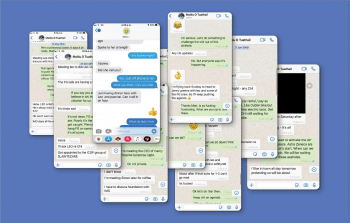
    Statement from Village, 9 November 2020 The cardinal political sin is lying to Parliament. It is a resigning matter for a Minister to lie to the Dáil. Village submits evidence below that suggests the Dáil has been lied to on what is currently an important and topical issue. In his Statement and replies to questions in the Dáil last Tuesday (3 November), Tánaiste Leo Varadkar defended his ostensibly illegal transfer to a friend of a confidential contract, by then a matter of serious political and ethical concern and scrutiny, on the basis of his “motivation”.  The central part of what he called his “defence” was that he transferred the document to Dr Matt Ó Tuathail with the motive to advance the public interest, to sow harmony: “to get the [GP-contract] deal done and ensure it secured universal acceptance across the GP community”.   There are several problems with this.  a) the recipient Ó Tuathail, head of an organisation that was a rival to the IMO, has said he intended to “destroy” the IMO, and would use the document to take “the wind from [the IMO’s] sails, especially with 17 roadshows to go!!”.   b) it seems strange if Varadkar was acting in good faith to promote government policy to unite feuding doctors’ groups, albeit covertly,  that he waited for his mate to approach him rather than doing anything at all of an overt nature to foster that unity. But this piece is not about how the transfer was not done with the intention of advancing the public interest, it is about what the transfer was. Its motivation was a favour for a friend.  A friend who was closer than Varadkar says. Village has contradicted, and can contradict, much more of what the Tánaiste has said, and for a magazine that generally avoids concerns about anyone’s social life it is discomfiting to be analysing anyone’s socialising, but fair-minded observers will accept that the issue of his friendship was the central one in the defence the Tánaiste himself made. As part of this defence the Tánaiste told Pearse Doherty TD in the Dáil of his relationship with O’Tuathail: “Yes, we are friends. However, there are friends and there are friends. We are not close friends. Dr Ó Tuathail is the kind of friend I would meet two or three times a year, probably at a drinks reception or through overlapping social circles. Otherwise he would have been in touch with me about medical matters such as Safetynet, the charity he works for through which GPs provide medical care to the homeless. I have had some involvement in that. We are not best mates or anything like that”. Speaking of O’Tuathail the Tánaiste stated: “Someone who is known to me, who is a friend but not a close friend, made out to various people that he was closer to me than he was”. And he said, “This is somebody who is not a close friend but is a friend. He is in my wider social circle”.   He then referred to just two meetings in the last year which is not the period for which Village has evidence. Note also that we are looking only at that part of his statement that dealt with meetings not contacts. So in summary the Tánaiste has solemnly told the Dáil he met Ó Tuathail “two or three times a year”. And this was particularly relevant for it characterised their relationship: Ó Tuathail was “the kind of friend I would meet two or three times a year”.  So is this the truth? Village here shows evidence by way of screenshotted WhatsApp exchanges (and one iMessage) between Chay Bowes and Matt Ó Tuathail and other independently verifiable evidence of at least 10 meetings between Ó Tuathail and the then-Taoiseach, around the relevant period in 2019 when the document was leaked and when favours – such as Ó Tuathail, personally, cheerleading for Varadkar – were possibly being done for Varadkar as a quid pro quo  for the leak.  There is no reason to think this is anything like an exclusive list.  The Tánaiste himself in his Dáil statement referred to “Christmas drinks” with Ó Tuathail within the period. Bowes has told Village that he met O’Tuathail and Varadkar along with Matt Barrett and others once during the period, at an uncertain date during the summer of 2019 in The Taphouse pub in Ranelagh, in the presence of two gardaí; and Darragh Bowes his son confirms picking Bowes up after the evening and discussing it.  Ó Tuathail and Varadkar also met at a festival on 29 June 2019 and there is ample evidence of this on the web and indeed in recent newspaper articles and the original Village piece. These were not included in the trove of WhatsApp exchanges (and iMessages) Village has obtained. Of course everyone knows that only a fraction of our social meetings with any individual are likely to be recorded in writing. In this case readers will make allowance for the fact there are definitely other meetings (three of which have just been described) but also that the trove of WhatsApp messages sent by Ó Tuathail is likely not to even include all his WhatsApp or other written evidence of meetings, since Bowes received only a limited selection. So Village has evidence of ten meetings in a year, seven evidenced by way of WhatsApp (and iMessage) communications some of which can be verified by independent research of the record and the media; and three verifiable entirely independently of Ó Tuathail. Any of the Ministers pleading their diaries do not describe these meetings should attract scepticism. Ministers’ diaries notoriously do not describe social meetings, especially with friends who have a business angle.  We have done some analysis of the time frames and are aware that, for example, the alleged lunchtime meeting on 30 June 2019 was on the same day as the then-Taoiseach went to Brussels.  We do not consider the meeting was impossible since a flight to Brussels takes 100 minutes and a car to the European Council from the airport only 15 minutes.  We could not find evidence to disprove that any of the meetings took place.  Dr Ó Tuathail

    Loading

    Read more

  • Posted in:

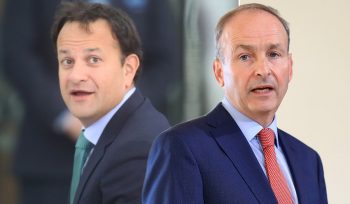
    Leo Varadkar Must Go

    Cheating politicians cheat us all. By Paul Murphy TD. Leo Varadkar is either a liar or a very unlucky man. According to what he told the Dáil on Tuesday, the only time he ever leaked a confidential document was the time it ended up in Village magazine. After throwing Maitiú Ó’Tuathail under the metaphorical bus and repeatedly reversing over him in the Dáil on Tuesday, Varadkar is looking like he might somehow get away with it. The narrative pushed by government TDs – that he is damaged but will continue as Tánaiste – was echoed in the Irish Times front page headline: “Varadkar survives Dáil interrogation”. If he does, it will be a scandal no less outrageous than Varadkar’s leaking. A scandal perpetrated not just by Fine Gael, but by Fianna Fáil and the Greens as well, who have all colluded to cover up for him. The facts of this scandal are so remarkably simple that it is almost impressive how Varadkar and Martin and their supporters managed to make it appear complicated. Varadkar spent his speech on Tuesday talking about his deep passion for healthcare, the importance of the GP contract and presented his leaking as “honouring a political commitment previously made by the Government”! The facts The truth is this. Varadkar leaked a confidential document to a personal friend and political supporter. That document was the almost finalised GP contract being negotiated between the government and the Irish Medical Organisation (IMO). His friend, Maitiú Ó’Tuathail, was the President of the National Association of General Practitioners (NAGP), a rival organisation to the IMO.  What is important, in terms of the relevant Codes of Conduct and the Corruption Offences Act, is firstly, that the leaked document was confidential and secondly, that there was a potential gain or advantage conferred on the recipient of the document. In the Dáil on Tuesday Varadkar tried to squirm away from the reality of both points.  However, he was forced to accept that it was a “confidential document” (his words) and that if the IMO knew he had given this document to Dr. Ó’Tuathail, “certainly it would have been annoyed”. Why would they be annoyed? Because he was breaching their confidence! He tried to maintain that there was no advantage conferred on Dr Ó’Tuathail. That is laughable considering the communication between leading NAGP figures about the information. Ó’Tuathail’s reputation among them was clearly enhanced. They also clearly considered this information as conferring an advantage on the NAGP, given that they talked about using the information to “steal their [the IMO’s] thunder”. Rules broken All of this means, as I have complained to the Standards In Public Office Commission, that Varadkar was clearly in breach of the Code of Conduct for TDs and the Code of Conduct for Public Officials. These require office holders to “respect confidences entrusted to them in the course of their official duties” and state that TDs “must not use official information which is not in the public domain, or information obtained in confidence in the course of their official duties, for personal gain or the personal gain of others”. It also means that there is a strong argument that Varadkar is in breach of both the Official Secrets Act and the Corruption Offences Act, which I understand Chay Bowes has is complaining to the Garda about. In particular, I think he may be in breach of Section 7(2) of the Corruption Act which sets out: “An Irish official who uses confidential information obtained in the course of his or her office, employment, position or business for the purpose of corruptly obtaining a gift,consideration or advantage for himself or herself or for any other person shall be guilty of an offence”. Varadkar’s repetition in the Dáil that the Official Secrets Act simply does not apply to him is deeply concerning. Equally worrying is the fact that this completely incorrect interpretation of the law was repeated by Colm Keena, the ‘Legal Affairs Correspondent’ of the Irish Times on Monday. Us and them Varadkar’s position as Minister and Tánaiste should be completely untenable. He should resign immediately. But whether Vardkar comes under renewed pressure at this stage depends on what more information emerges. Maybe Dr. ‘Zero Craic’ Ó’Tuathail will be annoyed after his depiction as a dreamer who was pretending that he had Leo constantly “pulling strings” for him. He could provide evidence of how Varadkar “always delivers” as he suggested in a message to Bowes. Even if Varadkar does survive for now, people have seen behind the curtain of establishment politics. It functions on the basis of a series of golden circles of insiders who look after insiders. Maitiu O’Tuathail supports Varadkar’s campaign to be leader of Fine Gael. In return he gets access to a confidential document that he shouldn’t have.  The contrast with the treatment of the paramedics in NASRA at the same time as this leaking was happening is striking. The government refused to negotiate with them, never mind the Taoiseach leaking them confidential information. They were forced to take strike action.  Varadkar made a career of presenting himself as a clean and straight-talking politician. The fact that he has been exposed as just as grubby as his Fianna Fáil colleagues is helpful in revealing the reality of establishment politics today. The brown envelopes from developers may not be as frequent as the past, but insider access and ‘you scratch my back, and I’ll scratch yours’ politics hasn’t fundamentally changed.  Both Fine Gael and Fianna Fáil are parties that represent big business and the ruling class in this state. The revolving door between Fine Gael politicians and the banking lobby, the Golfgate dinner, and this scandal all show how this relationship works in practice.  Moneybags Their cosy relationships can be upended, but it will take a major movement from below. Corruption is endemic to the capitalist system, which functions on the basis of profiteering. The moneybags emoji from Ó’Tuathail to Bowes inviting him to get involved in Direct Provision illustrates it disgustingly. Those with political access also get the opportunity to profit from the provision of

    Loading

    Read more

  • Posted in:

    More info for public consumption; much more to come

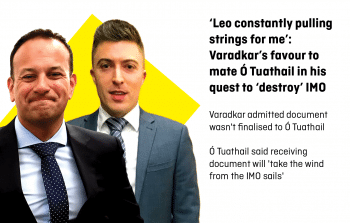
    On Tuesday, Village magazine shared communications with RTÉ, The Irish Times and the TDs who were leading Dáil questions of Tánaiste Leo Varadkar yesterday. We here link to a PDF of what we shared. Beneath are the most important of these. Readers will make their minds up as to whether the material was effectively deployed and analysed by those media and in the Dáil. Meanwhile we will be releasing important new material in due course. ‘ Ó Tuathail: ‘Leo constantly pulling strings for me’ Ó Tuathail lobbies Harris in Twitter DM – Harris didn’t comply with request Ó Tuathail’s motivations: ‘destroy IMO’

    Loading

    Read more

  • Posted in:

    Senior Counsel’s opinion, for Village, affirms being a Minister does not exclude you from the obligations of the Official Secret Act

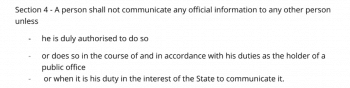
    :           Ruadhán Mac Aodháin, Solicitor, Prospect Law Re:       Whether the Official Secrets Act applies to Ministers and TDs? Client:  Ormond Quay Publishing Limited Date:   3rd November 2020 From:  Diarmuid Rossa Phelan SC Thank you for your instructions of last night raising the above question to be answered by noon today. The short answer is that there is no exclusion in the Official Secrets Act, 1963, to the person prohibited from communicating official information by virtue of the person’s status simpliciter as Minister or member of the Oireachtas. Whether the prohibition on the disclosure of official information falls within Section 4 of the Act applies depends on whether the information is “official information” within the meaning of Section 2(1) of the Act and if so whether it is excepted. Official information includes a document  which is confidential or expressed to be confidential, and which is or has been in the possession custody or control of a holder of public office or to which the holder of public office has or had access, where such control or access is by virtue of the public office holder’s office. Public office includes an office or employment which is wholly remunerated out of the Central Fund or out of moneys provided by the Oireachtas, but does not include membership of either House of the Oireachtas. Therefore information does not become official information by virtue of it being in the possession etc. of a member of the Oireachtas. However, official information does not cease to be official information solely by virtue of the fact that it has come into the possession custody or control of or accessed by a member of the Oireachtas, or indeed any other person who is not a holder of public office as defined by the Act. If the information falls within the definition of official information, the prohibition on disclosure of official information applies to a person without qualification or exclusion de ratione personae. However the communication by any person may nonetheless be excepted from prohibition, not because of status for example as member of the Oireachtas or Minister, but if the disclosing person either is duly authorised to communicate the official information – “duly authorised” here means (S.4(4)) authorised by a Minister or State authority or by some person authorised in that behalf by a Minister or State authority to communicate the official information, or communicates the official information in the course of or in accordance with his or her duties as the holder of a public office (not including membership of the Oireachtas), or when it is his or her duty in the interest of the State to communicate it.

    Loading

    Read more

  • Posted in:

    Dáil debate must focus on whether release of document was in public interest; and on criminality

    In advance of the Dáil debate on Tánaiste Leo Varadkar’s now-admitted leak of a confidential document last year, Village wants to express a hope that the debate will be forensic, not the usual populist, adjective-heavy grandstanding, that may let a culprit off a lazily-cast hook.  To this end we suggest that TDs framing the debate about wrongdoing not criminality are wasting parliamentary time. It is to be hoped that the public and media can distinguish such speakers. For the moment we want to address assertions a) that Mr Varadkar’s agenda was in the public interest and b) that his offence is minor – one of ‘less than best practice’ (!) –  not criminal. The reason the public interest is important is because if the release were in the public interest it might exculpate Mr Varadkar under the Official Secrets Act which essentially excludes from its ambit Ministers acting, driven by the public interest (i.e. when they have a duty – and importantly not merely a power – to do so) but not otherwise. So looking at the public interest, scandal-blower Chay Bowes has told Village that Matt O’Tuathail told him he had approached Varadkar to get him the draft document, as a favour to a friend. Not – as FG is spinning it – that Varadkar considered it would be in the public interest, and chose the President of the NAGP as the conduit. It has not been as clear as it could be that Varadkar and O’Tuathail were friends. A major absurdity is that Mr Varadkar is claiming he leaked the document to facilitate agreement by the NAGP: “Mr Varadkar hoped to use Dr Ó’Tuathail’s influence to encourage all GPs to accept it”, as the Tánaiste’s Halloween statement has it -when the Village article shows it was received by his mate on the basis it would be used by the NAGP to undermine the IMO’s negotiating stance.  Village has copies of messages showing this. As to the second point – criminality – the Act, let us be clear, applies to ‘people’, all people.  It is utterly wrong in law for the Tánaiste, supported by torpid commentators who have not taken legal advice, to say the Act does not apply to Ministers or then-Taoisigh. The media are failing to do basic research about this – allowing Varadkar to bluster behind legal bluffs as in his windy Halloween statement. The Official Secrets Act says at Section  4.—(1) “A person shall not communicate any official information to any other person UNLESS he is duly authorised to do so or does so in the course of and in accordance with his duties as the holder of a public office or when it is his duty in the interest of the State to communicate it”. . The rule applies to PERSONS – all persons including Oireachtas members.  That is the central case. The EXCEPTION  to the rule is for holders of public office acting in a particular way not for public office holders per se. (and in any event Ministers and Taoisigh are excluded – so excluding Mr Varadkar from the exception not the rule). The Tánaiste’s Halloween statement says “the ambit of the [Official Secrets] Act is limited to persons holding a public office”. It is to be hoped he will be asked today if he considers the Act does not apply to him as Tánaiste. So, the Minister did not act in the public interest.  And he has committed a crime.  That is why the Village article was framed as “Leo, Law Breaker”. We hope these issues are properly explored in the debate.

    Loading

    Read more

  • Posted in:

    Robert Fisk exposed Tara, the organisation linked to MI5 and the Kincora scandal. His career was a counterbalance to the lies and distortions of the Murdoch media empire and its ilk.

    By Joseph de Burca. It is no exaggeration to say that Robert Fisk, who has passed away, was one of the finest journalists of the last half-century. He reported on the Troubles during the 1970s for The Times of London before it was taken over by Rupert Murdoch, produced a book on the 1974 Ulster Workers Council strike and another on Irish neutrality during World War II. He had the dignity and self-respect to walk away from The Times after Murdoch began to interfere with his reporting. He soon became recognised as an international authority on the Middle East among his many other achievements. He purchased a house in Dalkey, County Dublin and became an Irish citizen. Clearly, he relished the intellectual freedom of the country and became a regular guest on the Pat Kenny and other radio shows. Hundreds of thousands of lrish people benefitted from his objective and insightful analysis of world events unlike the many millions who were fed drivel and propaganda by the Murdoch media, especially in the UK and USA. Significantly, he became a fearless opponent of the dirty tricks deployed by various Western intelligence services in their efforts to manipulate the press. He first clashed with these shadowy forces in Ireland in his 20s. 1. Fisk exposed the Loyalist paramilitary organisation TARA which was run by the ‘Housefather’ of Kincora Boys’ Home, William McGrath Although it is not mentioned in any of the many glowing  – and well-deserved  –  tributes from around the globe, Fisk was one of a tiny number of journalists who attempted to expose the activities of Tara, a Loyalist paramilitary group. Tara was led by William McGrath, a long-time friend and associate of Ian Paisley, the leader of the Democratic Unionist Party (DUP). McGrath was probably the person who introduced Paisley to the notion that the Protestants of Northern Ireland were the descendants of one of the lost tribes of Israel (i.e. British-Israelites). McGrath, who was nearly a decade older than Paisley, met Paisley while the latter was in his early 20s. McGrath was convicted in 1981 of the sexual abuse of residents at Kincora Boys’ Home in Belfast. (See also: Blackmailed? [Updated Version] The man who supplied Fisk with the information about Tara was Captain Colin Wallace, a PSYOPS officer at British Army HQ at Lisburn.  Wallace often supplied journalists such as Fisk with documents and briefings. This was always done on orders from his superiors as part of his job. Fisk published a report about Tara in London’s New Statesman magazine on 19 July 1976. In the report he explained that Tara had been the subject matter of a private British Army report and described it as “well-armed” with links to a Northern Ireland political party. He drew attention to the fact it was also “perfectly legal’. He then proceeded to quote from a document supplied by Wallace which read as follows: “Commanding officer uses non-existent evangelical mission as a front…Tara organised initially in platoons of 20, now probably in companies, and drawn almost exclusively from members of the Orange Order, each platoon has a sergeant/QM (quartermaster); and IO (Intelligence Officer)”. 2. MI5 exploits the provision of ‘restricted’ documents by Colin Wallace to Robert Fisk to destroy Wallace and protect a paedophile network. At the time William McGrath was acting as an agent of MI5 which is attached to the Home Office. Previously, he had been an agent of MI6 which is attached to the Foreign Office. Ian Cameron, a senior MI5 officer based at MI5’s station at Lisburn, had been alarmed at Wallace’s attempts to expose what had been going on at Kincora. Cameron was in overall charge of running the sordid and utterly reprehensible Kincora operation at ground level in the mid-1970s. McGrath and the Warden of Kincora, Joseph Mains, had supplied boys to other Loyalist terrorists such as John McKeague, who was blackmailed and recruited by MI5 in 1976. For further details about McKeague and MI5 see: The Anglo-Irish Vice Ring Chapters 8 – 10 The MP and leader of the Official Unionist Party, James Molyneaux, was also an abuser of underage males and a friend of McGrath see: JAMES MOLYNEAUX AND THE  KINCORA  SCANDAL. A senior figure within the DUP, “the Wife Beater” was also compromised by his association with McGrath and McKeague. Enoch Powell, Sir Anthony Blunt and others were likewise involved. Kincora was merely part of a wider Anglo-Irish Vice Ring. For details about Powell see: Suffer little children Cameron reported to Denis Payne, the Director and Co-ordinator of Intelligence (DCI) at Stormont Castle. Payne was fully aware of what was taking place at Kincora and at other childrens’ homes. Payne was also an MI5 officer. Some officials at Stormont such as Peter England and John Imrie were themselves paedophiles who raped children in care in Ireland. (See also: John Imrie, MI5’s Flasher-General Unlike MI5, there were some officers in the British Army such as Wallace and his superior, General Leng, who were quite prepared to expose the vile abuse of children in Ireland. Capt. Brian Gemmell also deserves credit for his part in uncovering what was afoot. MI5 set out to destroy Wallace to preserve the Kincora secret in 1975. They made their move in early 1975 after Wallace sent some papers to Fisk. Crucially, he had done so – as he had always – with the permission of his military superiors.   Cameron also made a formal complaint against Wallace for allegedly “breaching security by briefing the press about Tara and McGrath”, Wallace has explained. “This was based on a piece that Robert Fisk wrote for The New Statesman… Cameron knew, of course, that I had been briefing the press about McGrath since 1973 at the request of my Army superiors”. Wallace’s boss at HQ NI in 1974, Peter Broderick, is on public record saying that he initialled a 1973 press briefing document about Tara that Wallace used and instructed him to disclose it. The document was also initialled by Lieutenant Colonel Peck, the then head

    Loading

    Read more

  • Posted in:

    Trustworthiness – Editorial, November; US election.

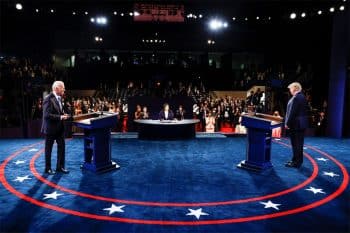
    Biden is unexciting and past his best but not mad ‘Vote Joe’ For Village’s agenda of equality of outcome, sustainability and accountability, Bernie Sanders was the best champion.   By comparison, his conservative Democrat vanquisher Joe Biden is ideologically vague, compromised,  wedded to mid-twentieth-century agendas and lacking timely radicalism. Biden’s persona is attractively folksy grandfatherly – and Irish-American – but he is past his best, inarticulate.  Biden’s opponent Donald Trump is post-ideological/psychotic with no interest in ideas, still less in the ideas that comprise Village’s agenda. His persona is entirely self-unaware, crass and bombastic.  He delivers his incendiary lies in  repetitive, unyielding chunks like a fairground barker. Trump is narcissistic to the point of insanity making him again the most dangerous candidate President in history.  His paralysed opponents haven’t realised that only attacks that puncture his – and his supporters – image of himself ‘Brand Trump’ work – not ones that, for example show him immoral or illiberal.   Trump does not distinguish truth from lies, argument from abuse or policy from whimsy. Even Reagan and W Bush regarded themselves as accountable for untruths; he does not.  A self-confessed greedy plutocrat he lies about his wealth, dodges taxes, abuses women, and plays with public health. He is incompetent. He takes no responsibility for anything at all.  He expressly says he takes no responsibility for the, at least 100,000, excess Covid-19 deaths. Worse, he casually incites hatred. Trump has incited hatred against Muslims, Mexicans and Chinese, and denigrated Black Lives Matter and victims of police racism. In practice he has reduced the US’ intake of refugees from 86,000 in 2016 to 11,000 in 2020. Parents of 545 children separated from their families at the Southern border as part of the Trump administration’s “zero tolerance” policy cannot be found. Economic immigration is down by 50%. Trump has never had clear policies, only policy-substitute mantras, instincts chief of which – after self-advancement – is aiding both the richest and the ordinary white supremacist.  Nevertheless some of his stuff amazingly, worked out ok.  He has not started any wars or incited as much violence as might have been predicted. He has undermined some international trade, particularly with China.  For Village that is not a bad thing.  It is fair too to record that Trump has managed the US economy effectively if explosively – by deregulation against the common good.  According to the Economist magazine: “GDP growth was somewhat faster in 2017-19 than it was in either Barack Obama’s first or second term, according to official data. America also did well relative to other countries…There is clear evidence of an acceleration in the growth of America’s median household income from 2017 onwards”. While  Biden wants to raise taxes on high-income households – over $400,000 –  Trump still aims to cut taxes for all income brackets – with no budgetary concern. The deficit for 2020 is over $3tr. The US national debt is over $27tr.  On abortion, Biden is pro-choice; Trump, on the back of fake religiosity,  is pro-life. Biden would pass a federal law that protects a woman’s right to have an abortion so that even if the Supreme Court bucks the Roe v Wade precedent going back almost 50 years, that right would still exist. Trump aims to achieve a strong conservative majority in the Supreme Court that would probably leave the States to legislate on abortion, making it illegal in most parts of the US. Trump is an incoherent climate denier. He claims ‘It’ll start getting cooler. You just watch… I don’t think science knows, actually”.  In practice US carbon dioxide emissions peaked on Trump’s watch in 2018. They fell for the last two years, but remain higher than they were before he took office. The average American emits 16.56 tonnes of CO2 a year, over twice as much as the average Chinese or European. Implementing the fruits of a joint Sanders-Biden taskforce on climate, Biden’s climate plan has improved but he supports unsustainable fracking and is a devotee of the US car industry, albeit moving to electric,  and indeed of his own cherished sports car. That these two defective candidates compete for the most powerful office in the world says more about the system than it does about the candidates. But most of all it bespeaks problems with the political culture of what has passed for a great nation. Ultimately Biden will take us back to the political era of his biggest mentor, Obama. This piece is consciously and remarkably similar to a piece in Village from October 2016 assessing the  respective appeals of Hillary Clinton and Donald Trump.  Biden will disappoint even people considerably less radical than Village.  Trump’s policies on climate, foreigners and equality; his iconoclastic geopolitics and his tiny fingers on the nuclear button; risk taking us back to the stone age.  So, in the unlikely event you have a vote, use it for Sleepy Joe.

    Loading

    Read more

  • Posted in:

    Statement from Village after Tánaiste says it defamed him (31 October 2020)

    Mr Varadkar’s statement provokes dramatically more questions than it answers.  The Tánaiste’s statement says “the ambit of the [Official Secrets} Act is limited to persons holding a public office”. It is a grotesque and unbecoming misconstruction for the Tánaiste to so cynically and brazenly – presumably following days of legal advice – misinterpret the Official Secrets Act which of course applies to Ministers, Taoisigh indeed to EVERYONE. It says at Section  4.—(1) “A person shall not communicate any official information to any other person UNLESS he is duly authorised to do so or does so in the course of and in accordance with his duties as the holder of a public office or when it is his duty in the interest of the State to communicate it”. . The rule applies to PERSONS – all persons including Oireachtas members.  Everybody knows that. The EXCEPTION  to the rule is for holders of public office (from which Ministers and Taoisigh are excluded – so excluding Mr Varadkar from the exception not the rule). Mr Varadkar’s statement giving  the timeline intended to show whether the document was confidential when forwarded is inaccurate and is contradicted by for example by  the statement of Stephen Donnelly – main Opposition Health Spokesperson – in the Dáil on 16 April that at that date  “we have been denied access to any of the detail of the agreement” https://www.oireachtas.ie/en/debates/debate/dail/2019-04-16/32/ It also fails to reflect the fact that members of the NAGP `s council, who could have been  expected to be fully on top of how much they knew of what had been agreed –  as extensively shown by WhatsApp exchanges exhibited in the https://twitter.comVillage article,  regarded the forwarding of the document marked “confidential” to them as `’the real deal” – asking  “where did you rob it?”.  O’Tuathail expressly  told them “please say nothing and KEEP this confidential” [emphasis added] -. “must not leak”. Another message from the NAGP’s chairman as late as 18th April, says “remember IMO GPs are not seeing the contract document… just what the IMO are telling them”. Why did Mr Varadkar not remove the first page saying “confidential” and replace it with a blank page if by then the document was no longer confidential?   As outlined in the magazine, there is a breach of the codes of conduct for Dáil Members and Ministers. There may also as shown in the piece be a breach of the Corruption Act if Mr O’Tuathail’s slavish subsequent championing of Mr Varadkar in the media  is deemed to be a quid pro quo.

    Loading

    Read more

  • Posted in:

    Leo Varadkar, lawbreaker: Tánaiste transferred confidential document to friend.

    Fine Gael leader Leo Varadkar has come to be known as a leaker. The hashtag #leotheleak has trended on Twitter on several occasions after Varadkar was accused of publishing things he shouldn’t. That Leo leaks however hasn’t yet been proven—or become a political liability for the tánaiste. That may change with evidence from a healthcare whistleblower that Varadkar, while taoiseach, leaked a confidential document to a personal associate.

    Loading

    Read more