Archives
OK
-
-
-
Posted in:
Freedom politics
by Village
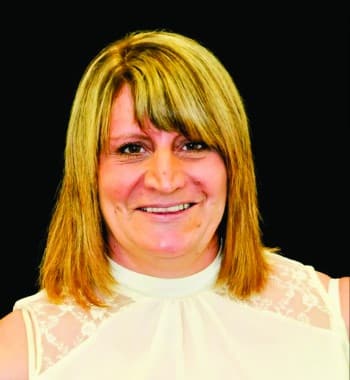
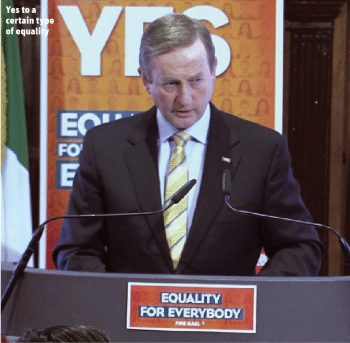
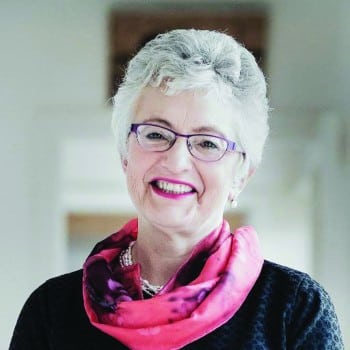
By Senator Katherine Zappone My decision to run as an Independent candidate in Dublin South West for the next General Election affords me the freedom to think, build relationships, negotiate and act outside of the strictures and regulations of party politics and whips. Independence allows a greater creativity to bring one’s own gifts and experience to the political agenda. Freedom to think and act with imagination is precisely what Ireland needs now to change its direction from austerity politics to the politics of generativity and equality for everyone. We don’t have this kind of politics yet, but it could be fashioned. This is what I want to work towards in the next Dáil on behalf of the citizens and communities of Dublin South West. As an Independent member of Seanad Éireann I have learned the practice of freedom politics and witnessed its impact and effectiveness. Freedom politics involves a carefully crafted methodology that begins with one’s own values and experience. Having worked as an educator, human rights advocate and progressive entrepreneur in the communities of Dublin South West and national civil society organisations, my politics start with deep and respectful listening to people’s needs and dreams. Early in my Oireachtas career I invited a group of young transgender people into Leinster House at a time when there was no legislative action towards securing legal recognition for transgender people in Ireland. Our conversation prompted my conversion to participate in this civil movement. I worked with advocates and legal experts to publish a Bill that set high benchmarks for the parties in power. Today Ireland has one of the most progressive laws in Europe on this issue. An Independent’s political freedom demands a critical review of the Programme for Government put together by the political party or parties in power. Sometimes this means resisting the decisions of the powerful, with little or no resources, and calling on the strategic creativity and perseverance required to bring about better alternatives. Our current Government put forward Seanad abolition as one of its prime ideas to reform politics, with little apparent credible rationale. While the practice of politics did and does require substantial reform to implement policies and laws that open opportunity for all of our people, I judged that shutting down one of the houses of parliament would consolidate power in the hands of the few rather than share it so that all public representatives could have more effective voices. So, with a small group of committed democrats, we built a campaign over the course of two years that resulted in the Seanad’s retention. Subsequently, the Seanad Reform Bill written by Democracy Matters and published by Senator Feargal Quinn and me, has significantly influenced recommendations for the reform proposals put forward by an Independent group appointed by the Taoiseach. As an Independent, I am also free to support Government ideas contained in its Programme, if they resonate with my values, experience and judgment. It was a tremendous privilege to work alongside Government and other political parties, in strategic cooperation with Yes Equality, to advocate the successful Yes vote in the Marriage Equality referendum. As a founding member of the marriage equality movement in Ireland, practising the politics of freedom in this instance provided a way to draw on my experience of a decade of human rights advocacy. Being an Independent, then, is not simply about freedom from a party whip, or political party discipline. Being an Independent provides freedom for thinking and action that often can be suppressed in political parties, leading to the extinguishment of creativity and the passionate pursuit of ideals rooted in one’s experience and self-knowledge. I have witnessed this happen to colleagues and it will continue to happen unless there is imaginative reform of the practice of politics (including within political parties) and a re-balancing of power between the Cabinet and members of parliament. One of the prime reasons for the rise of the number and popularity of Independents, I think, has to do with their effective efforts to bring personal power to bear on the direction of law, policy and the investigation of corrupt or unethical practices in public, political, social and economic institutions. This personal power is most effective when it is rooted in a creative vision inspired by the needs and dreams of our people. It provides a stronger base from which to negotiate the compromises that generate significant change. If elected as an Independent in the next Dáil, I want to work with citizens and communities, civil society organisations and legal experts, to manoeuvre the Government compass closer to the politics of generativity and equality for everyone. •
-
Posted in:
O’BRIEN-DESMOND LETTER
by Village
Dear Dermot, “Sir, “And so a citizen, about whom falsehoods are uttered in the Dáil, upheld by the Dáil’s Committee on Procedures and Privileges, decides to seek vindication, is admonished by The Irish Times (Editorial, “In defence of Dáil privilege”, August 5th). “Not only that but such action is described as “dangerous”. “Is this the same newspaper that was engaged in a “deliberate act of destruction” (of documents), as described by the Chief Justice in 2006? – Yours, etc, “DENIS O’BRIEN, Got them there, did you see? Nothing worse than a deliberate act of destruction. I’ll show them falsehoods. Falsehoods that show that that Catherine Murphy is a charlatan. At least I’ll either do that or just keep on going go on and on about falsity, and hope that people have forgotten or got bored by what I said when Cregan produces his IBRC report. I may even do a Creganreport.com job on it like I did with Moriarty. You don’t mess with Denis. Reminds me of the time I drove my Mum’s car across the cricket pitches in High School in the snow and got suspended; but bounced back cos they needed me for the rugger team. Always bouncing back. Waterford Whispers, whatever that is (Morrissey – on retainer – found them) wimpishly removed an article about me from their site, following a threat of legal action from solicitors. Going on about bloody Esat and the opinions of the Moriarty tribunal on my dealings with Lowry. Jokers. The article was accompanied by a digitally altered image of me with the head of a criminal superimposed. It made me really sad, but I bounced back. Meaghers wrote it was a “malicious and deliberate defamation of the most serious kind”, and demanded it be removed from the website. Failure to comply, they said, would lead them to “take all necessary steps to vindicate our client’s good name and reputation”. Good lad, Paulie. One of the great benefits of going to college is friendships. Broadsheet.ie ignored the letter I sent their way almost AS IF THEY DON’T KNOW WHO I AM. Work-shy SIPTU-heads. I don’t really want to play out the whole issue of whether paying Lowry after he awarded us the licence could possibly be classified as corrupt. I mean what if I sue Broadsheet and the DPP presses charges? I’m sure, as an Esat investor you’re with me on that. I see Mr Justice Colm Mac Eochaidh will be taking over the defamation list in the High Court (ring of steel) from October. Beak criticised my attacks on Moriarty’s opinions. Anyway I’m currently also suing the Oireachtas Committee on Procedure and Privileges, accusing it of interfering with the courts and breaching my Constitutional rights after ruling that She and Pearse Doherty did not abuse Dáil privilege when they made claims about my banking arrangements with IBRC in the Dáil chamber. Is this the same Sinn Féin that engaged in deliberate acts of destruction? The idea that I had favourable terms or that for some reason I was keen to defer my loans is a falsehood so great that it shakes most people’s faith in civilisation. Top guys William Fry (super firm), which is representing me in the case, has been appointed as legal adviser to the Cregan commission of investigation into transactions by IBRC, including deals with me. Frys has a long-standing relationship with me, dating back to the Esat bid, and represented me in the recent case against RTÉ as well as in previous proceedings against the Revenue Commissioners. Digicel invested in UCD-based Heystaks which analyses Smartphone use. Named after my hair. And bunged a few quid into San Fran-based Wrap Media to create a “groundbreaking mobile storytelling platform”: what’s not to love about that? Bailed out of British fuel company, Harvest Energy. Bought a new jet. Got the usual fawning coverage of that in the Irish media. But the big picture now is the Digicel flotation in New York due before the end of the year. As to you, Sir, Dustin Johnson, the world’s number four golfer, apparently prepared for the British Open with a summer weekend in Dublin visiting you and your kids, Brett, Ross and Derry (mighty names big boy), the trio who brought the Five Guys burger franchise to Ireland. CPL founder Anne Heraty, Galway solicitor Brian Lynch, you and I, sir are among a group that has given green-jersey seed funding for early work on a new Irish tall ship which will teach young people to sail. You’d have to agree with Maurice Manning that while not the sharpest, I do make up for it with infectious enthusiasm. The vessel will cost €16m to build, funded by State and philanthropic donations. Ireland has had no tall ship for training purposes since the Asgard II sank in 2008. I’ll help you with the philanthropy, and make sure you keep up the golf – and the burgers. The real action, Dr Desmond, is this direction. And I always bounce back. See you in Twickenham. Denis
-
Posted in:
Transformative.
by Village
By Vanessa Lacey The Dáil passed the Gender Recognition Act last July. This legislation allows transgender people to be legally recognised in their preferred gender. It was a joyous moment for the transgender community. It is great to see this legislation passed before the celebrations in 2016. Now the Proclamation means so much more for me. I feel cherished equally in my country as a proud Irish woman. I lived as male for over 40 years until I transitioned to my female gender eight years ago. This was very painful for all involved. However, it vastly improved my mental health and, over time, people close to me began to understand my circumstances and decision. Living within a gender that I didn’t identify with, from as far back as I remember, was extremely challenging. I experienced shame and guilt due to internalising the stigma associated with trans people. This damaged my thought processes about my identity. I thought I was disgusting and some sort of a mistake as a human. This perception was compounded by media messages that also shaped attitudes within the wider society and exacerbated the stigma. It was during the late 1990s while I was watching the news that I questioned my perceptions for the first time. The item was about a dentist from the midlands, Dr Lydia Foy, fighting for her human right to be identified by the state in the gender that she identified as – a woman. From that moment I began to change my thoughts and feelings about myself and decided to fight back. I expressed myself in my female gender, against the odds. I volunteered with a LGBT group in Waterford. When I began to work with TENI in March 2008, I was ready to take on the spirit of Dr Foy to build an awareness of and capacity for the transgender community throughout Ireland. Over the past six years I feel we have achieved this to some extent, but there is still lots to do. Legal recognition means we are finally being recognised as human beings by the Irish state in the gender that we identify. This is empowering. The model of self-declaration in the legislation means that we do not have to ask a psychiatrist, psychologist or endocrinologist to decide on our gender identity. This provides us with the licence to be human. Legal recognition means that every time I have to produce documentation to prove who I am, I have the right identification that shows me as I am, not who I was. Now I can avoid that embarrassment for both myself and the civil servants involved. I don’t have to be anxious. How good that feels! Most importantly I have documentation that reflects my true gender. It is all very positive but what about the families, especially the families of children who are under 16? The current legislation does not meaningfully include young trans people, and excludes anyone under 16. However, transgender children do exist and we are seeing an increase in their numbers every year. These children are very vulnerable. In many cases they have been trying to explain to their parents that there is something different about them for many years. Parents often feel confused, scared and angry when faced with their children’s gender identity and should seek help. These families are faced with the decision to allow their child to dress and express themselves in the gender with which they identify at home so as to reduce anxiety for all involved, and, in some cases, to allow their child to transition in school, both national and secondary. This is a situation that causes sleepless nights and angst-ridden days. Many parents experience loss and grief but still, through the love for their child, they advocate on their behalf. Unfortunately those wonderfully courageous parents, siblings and young transgender children have been ignored by our legislators for now. They are not protected in the legislation and this is sad. As an optimist I am trusting the legislators will readdress the issue in two years time as they have promised us. I hope this will top off very progressive and ground breaking legislation. In the eight years since I began my journey to be myself I have faced many challenges. Gender recognition is an important step but we need this to cascade into a holistic form of care for our community. Vanessa Lacey is the Health and Education Manager at Transgender Equality Network Ireland (TENI)
-
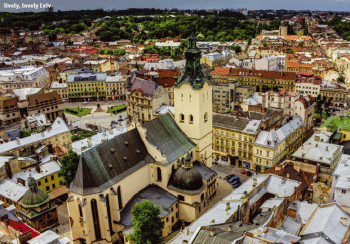
Crossing from Slovakia into Trans-Carpathian Ukraine at the Çop junction, trains from the West halt in deference to the different rail gauges used on the other side. Stalin contrived this to prevent easy entry for invading armies; or escape. Crossing the frontier into the former Soviet Union might instil a little trepidation even into a seasoned traveller. An illuminating mural in the cavernous train station depicts heroic scenes of triumphant Socialism. Trains that retain wooden benches recall another age. I knew I had left a rapidly converging Europe when the conductor smilingly declined payment after I presented too large a denomination. I was among three other visitors to Ukraine arriving by train from Slovakia, although a border guard told me frequent car trips are made to avail of cheap petrol. The frustration of waiting on a windowless, stationary carriage – akin to a panelled sardine tin – during a heatwave was offset by the friendliness of customs officials who simply checked for contraband medicines. No visa is required for EU visitors but the continued low-level warfare in the faraway east is deterring visitors despite a favourable Euro to Hryvnia exchange rate. Borders are often a legacy of ancient battles or coincide with impassable mountain ranges or rivers that deterred conquest and absorption. A change in topography often gives rise to socio-economic boundaries; shifts from upland, semi-nomadic pastoralism to settled arable land bringing larger settlements: different political regimes and ethnic compositions may arise. But twentieth-century Europe brought more artificial borders imposed by distant remote peace treaties or later omnipotent Superpowers, and saw the decline of multi-ethnic empires. Thus Hungary was reduced from one part of a dual empire (the Austro-Hungarian) to a disgruntled rump that ruefully surveys its over two million ethnic brethren in neighbouring countries. The hated Treaty of Trianon after World War I was reflected in that country’s alignment with Nazi Germany during World War II. Revanchist Hungary remains a potential source of instability. There is no obvious difference in terrain between Trans-Carpathian Ukraine and eastern Slovakia, and the region contains a sizeable Hungarian minority. Yet as one travels into the surrounding countryside a different agriculture becomes apparent from the ubiquitous cash crop of maize on the Slovak side to traditional hay stacks in Ukraine gathered as of old with scythe and pitch fork. Since the twentieth century, political frontiers have acted like natural boundaries accentuating patterns of development. In Eastern Europe north of the Balkans, the legacy of Soviet victory in World War II remains largely intact. Apart from the amicable separation of Czech Republic from Slovakia in 1993 the frontiers are unchanged. The recent land grab by Russia of Crimea and incursion of irregular troops into Donetsk may herald a more turbulent phase in European history. Borders rarely shift without an accompanying tide of blood, even more perilous in an era of mutually assured destruction. The most dramatic legacy of World War II was Poland’s westward shift, forcibly ceding significant territory to the Soviet Union in return for large swathes of eastern Germany. Millions of Poles were removed from their ancestral homes and re-located in the west. Among the territory lost was the historic city of Lviv (Lvov to Poles) to Ukraine. It contained an inter-war population two-thirds Polish. Lviv is now almost entirely Ukrainian although reminders of the Polish period include a statue to their national poet Adam Mickiewicz, who was actually born in Vilnius, the capital of Lithuania. Lvov was annexed by the Austrian Hapsburg Empire (and re-named Lemberg) in 1772, in the first Partition of Poland, becoming capital of Galicia which was the poorest province of the Empire. But this period left a remarkable architectural legacy that prompted UNESCO to designate the historic centre as “World Heritage”. Today Lvov is relatively prosperous, drawing a large number of tourists from neighbouring Poland. Predictably the old city is fringed by a swathe of functionalist Soviet-era apartment blocks, but it retains an abundance of old world charm and the hum of cafés that spill onto carless streets. There are nonetheless signs of a country at war with stands erected by the Far Right Svoboda Party supporting the war effort and offensive toilet roll featuring a picture of Vladimir Putin available in souvenir shops. I spoke to one women of student age who railed against a terrorist, separatist threat to the integrity of the state. She could have been mistaken for someone referring to the existential threat posed by ‘enemies of the people’ in Soviet times. The uncompromising language of extremism is unmistakable. The demise of the archaic, multinational Hapsburg Empire after World War I might be seen as the death knell for so-called Mitteleuropa. Most successor states that emerged in the Versailles settlement were inspired by a nationalist vision promoting a single culture, and hostile to diversity within the confines of the state. In contrast during the imperial era cities at least were a mosaic of religious and linguistic groups. The population of ethnically variegated Mitteleuropa was particularly unsuited to the identification of a nation with a single state that reached a violent apotheosis with the Nazi ideology of the master race. Transnational Jewry were the most obvious victims but anti-Semitism was not limited to the Nazis, continuing into the Cold War-era: as late as the 1960s thousands of Jews fled Poland in the wake of a number of purges. Jews had flocked to Poland in great numbers at the end of the Middle Ages due to the tolerance shown there compared with in the rest of Europe. It became known as paradisus Iudaeorum (paradise for the Jews) and contained two thirds of the continent’s Jewish population. Great centres of learning were establish in cities including Lvov, and agrarian settlements known as shtetl that contained many layers of Jewish life dotted the countryside. There Yiddish, a Germanic language written in Hebrew script, found its highest expression. The writings of Joseph Roth (1894-1939) recall the extraordinary cultural diversity of the Austro-Hungarian Hapsburg Empire. Born a Jew in
-
The Taoiseach got our man at the UN, David Donohue, in to co-chair the process. That looked good and he seemed to do a great job. We need more than rhetoric now though. It would have been better if in addition to signing it he had meant it. There are enough good intentions around to save the planet twice over. It’s pretty big really, the UN’s proposed text on ‘Transforming Our World: The 2030 Agenda for Sustainable Development’. Universal development goals and targets are proposed that involve the whole world, even little Ireland. Can the Taoiseach not imagine a world determined to end poverty and hunger, combat inequalities, and ensure the protection of the planet and its natural resources? He could become part of that really. It’d look great on his CV when he moves on. He shouldn’t get too carried away though, because so far no one seems to want to pay for it. And he wasn’t too generous on that score either. Still, that doesn’t mean he couldn’t head on and make some progress on it back here. There are 17 sustainable development goals and 169 targets. That worries me too. Will Enda Kenny ever keep track of them all? The proposed text says that these goals and targets are “integrated and indivisible”. He’ll have to pursue all of them together, without cherry picking. Will he just sign it and shelve it? Will he hand it over to the makers of indicators and the drafters of reports? We do great reports here but reports never changed much. Ending poverty, inequality and planetary destruction needs more and, let’s face it, the UN are putting it up to us. There is a target to “reduce at least by half the proportion of men, women and children of all ages living in poverty” by 2030, under the goal to end poverty. This government hasn’t been great on poverty. Deprivations levels continue to rise since the coalition took over. Deprivation means people can’t afford two from a list of basic items, but they know that. The deprivation rate in Ireland stood at 30.5% in 2013 and it probably hasn’t got any better since then. That’s at least 1.4 million people. One thing they’re asking for here is the creation of “sound policy frameworks based on pro-poor and gender sensitive development strategies to support accelerated investment in poverty eradication actions”. No one could argue that this government has invested in any way in poverty eradication. Is this all going to change? It must if the Taoiseach is sincere about poverty. The proposed text is big on equality. This is not a value that seems to animate the Taoiseach at all and it would be great if this could change. Yes, he did the marriage equality referendum and that was fantastic. Full marks there. But equality is a bit on the indivisible side too. You can’t do it for some and not for others. Kenny will have to up his game on this one. One goal is to “achieve gender equality and empower all women and girls”. The Taoiseach should be moving to end all forms of discrimination, and to eliminate all the particular forms of violence, against women and girls. He’ll really have to work on this violence one. In 2014, the EU Fundamental Rights Agency found that 26% of Irish women surveyed had experienced physical and/or sexual violence by a partner or non-partner since the age of 15. There is another goal, to “reduce inequality within and among countries”. The government is going to have to “progressively achieve and sustain income growth of the bottom 40% of the population at a rate higher than the national average” by 2013. The Taoiseach’s problems with the tiny minimum wage increase proposed don’t bode well. The starting point for him isn’t great either, with the top 10% of households getting 23.5% of all net income here in 2012 and the bottom 10% only getting 3.1%. It’s almost a case of ‘nothing done, more to do’ on this one. He’ll also have to “ensure equal opportunity and reduce inequalities of outcome” and to “empower and promote the social, economic and political inclusion of all, irrespective of age, sex, disability, race, ethnicity, origin, religion or economic or other status”. Kenny’s track record here, to be honest, is miserable. Under the goal on “cities and human settlements” he’ll have to ensure access for all to “adequate, safe, and affordable housing” by 2030. This is one this government only seems go backwards on. And all that’s before we get to saving the planet. The Taoiseach should go on and sign it anyway. Then come back for the plaudits but get stuck into preparing and publishing the ‘ambitious national response’ the UN is looking for. Make us the best little country to do sustainable development goals in. That’s what he’d really be remembered for, if he cared. •
-
Posted in:
Witnessing Halawa’s purgatory
by Lynn Boylan
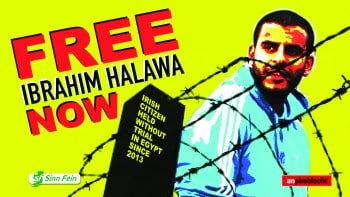
Everyone I have spoken to says Ibrahim Halawa is a character: a joker who, like many teens, always wanted to be famous. A sad irony that fame has come to him in such awful circumstances: Ibrahim Halawa, along with 492 other protesters, faces the death penalty. Human Rights NGOs Amnesty and Reprieve have both investigated his case and deem him a prisoner of conscience. His trial has been postponed repeatedly. He is not permitted to testify in his defence. His lawyer is not permitted to visit him in prison to hear his version of events. When the court sits, Ibrahim and his co-defendants are kept behind a glass wall and cannot hear the evidence being presented against them. Ibrahim travelled to Cairo in 2013 to visit relatives. He was there when the first democratically elected president of Egypt, Mohamad Morsi, was overthrown by the military. He joined the thousands of others who protested. No matter what your opinion of Morsi and the Muslim Brotherhood, what unfolded on the streets of Cairo was shocking. Over one thousand protestors were left dead. Hundreds, including Ibrahim, were imprisoned. Frustrated at the lack of progress in securing this Dublin teen’s release, I travelled out to Cairo for his tenth trial date. I was accompanied by his legal representative in Ireland, Darragh Mackin. We witnessed first-hand the arbitrary nature of these show trials. Families of the defendants waited outside in the blistering heat; entry to the proceedings is at the whim of the judge. Only lawyers were permitted into the hearing this time. The trial was then summarily postponed until the 4th October. Hopes were dashed again, with devastation for the Halawa family at the realisation that Ibrahim would enter a third year of detention. Once a week Ibrahim is permitted a three-minute visit from a relative. There is no physical contact allowed during these visits. Darragh Mackin and I accompanied Khadija, Ibrahim’s sister, as she made the weekly trek across Cairo to where the permits are issued. It is then an hour-long drive into the desert to Wadi Al Natroon prison. Khadija explained how relatives with permits are regularly turned away. At any point the permit can be rejected. We were brought into the Governor’s office when they realised I was an MEP. We sat there for an hour while they got Ibrahim ‘ready’. Khadija explained how they would shave and dress him in clean clothes for his visit with a parliamentarian. When Ibrahim entered the room, his sister rushed to hug him. The emotional reunion of the two was heartbreaking. Deprived of physical contact for over a year, Ibrahim clung to his sister’s hand for the whole visit as he detailed the horrific prison conditions. He is confined to a 5m x 4m cell with nine other prisoners, twenty-four hours a day. There are no beds, no shower, just a tap and the toilet is a hole in the floor. Every morning he wakes to the sounds of prisoners screaming. He himself was beaten two weeks ago. A glimmer of the ‘joker’ Ibrahim, I had heard so much about appeared as the visit progressed. He mocked his sisters shoes. Through tears there were smiles as she told him to stop. A normal sibling interaction in a very abnormal setting. It was hard to listen to this young man talk about his depression, how he spent days trying to remember school lessons to try to keep his mind active. He should be two years into his engineering degree in Trinity. Instead he sits in a cell in Cairo facing the death penalty. The Irish government has opted for a strategy of quiet diplomacy. From my conversations with NGOs and human rights lawyers working in Egypt and London I disagree with this strategy. There are, however, still a number of simple measures that the Irish government could take that would improve Ibrahim’s situation. Ibrahim has asked to see an outside doctor for breathing difficulties. He struggled to breathe when we met with him. Minister Flanagan should write to his counterpart asking that this request be granted. There has been no ambassador in Egypt since April. The consulate based in Cairo covers four other countries. Fast-tracking the appointment of the new ambassador would ease the workload on the consulate. More importantly, an ambassador carries more status for dealing with Egyptian officials. The Australian Consulate brought Peter Greste’s family with them when they visited him in prison. The Irish Consulate should seek to do the same for the Halawas. These steps may be small but they would make a huge difference to the morale of this young Dublin teen. •