Archives

OK

Random entry RSS

Loading

  • Posted in:

    A literary fascism.

    By Frank Armstrong. Literary deities loom over Ireland like US Presidents carved into Mount Rushmore. It isn’t philosophers, engineers, chefs, painters or even composers who summoned the Irish nation, but poets. Yet conversely their hovering presence barely registers; just as most contemporary Florentines scurry about unmoved by Brunelleschi’s dome, few here look to the sky in awe. Poets build bridges of a more indeterminate kind than engineers. As W.H. Auden writes in a poem occasioned by the death of William Butler Yeats: “Mad Ireland hurt you into poetry. / Now Ireland has her madness and her weather still, / For poetry makes nothing happen”. Auden goes too far with that dismissal of poetry – whatever about his contemptuous view of Ireland – correcting himself by acknowledging a few lines later: “it survives / a way of happening, a mouth”. This ‘way of happening’ is in the realm of quantum uncertainty where the extraordinary occurs: coincidences beyond logic, or the ill-defined emotion generated by a sight of great aesthetic beauty. Poetry does not fit with classical renderings of reality, the routines of life and the seemingly static laws of nature are defied. It is unsurprising that poets, Yeats foremost, should dabble in the occult and mysticism, scouring every system of thought, even the eccentric, for explanations for the mysteries they encounter. June 13th 2015 is the 150th anniversary of W.B. Yeats. Born in Sandymount he spent much of his adult life in London, but moved permanently to Ireland after the War of Independence, purchasing a former tower house, Thoor Ballylee, in County Galway where he “paced upon the battlements and stared” at the birth pangs of the Irish state. Yeats will always be identified with County Sligo, the home of many of his ancestors. Innisfree on Lough Gill, Lissadell, ‘far off Rosses’, Knocknarea and Ben Bulben under which he is buried form the mythical backdrop to his Romantic musing. The riveting landscape triggered imaginative contemplation perhaps unsurpassed in the English language: “Come away oh Human Child / To the waters and the wild / With a fairy hand in hand / For the world’s more full of weeping than you can understand”. The enchanting surroundings engendered Yeats’ poetry but simultaneously he made that landscape poetic. When we view immanent Ben Bulben now we are to some extent honouring the songlines that brought its majesty a reality apart. But for all his evocations of that county, in his descriptions the people are more ethereal than real, moulded in the fairy-realm of his imagination. A far cry from the gritty characters in Joyce’s ‘Dubliners’. Like rebellious children questioning the authority of their father, most of the Irish literary pantheon have had a difficult relationship with their homeland, often preferring exile and ruminating on it from afar. Beckett went so far to write in French to escape the excesses of English, to write “without style”. But Yeats stayed and grew embittered that the nation did not accord him the accolades he felt his due. Perhaps he aspired to a presidential role similar to that later bestowed on Vaclav Havel when the Czechs gained their independence after the fall of the Iron Curtain. But he probably would have found delinquencies to fulminate against. Politics is the art of the possible, its grubby affairs a torment to the idealist. Long before independence Yeats was bemoaning a Romantic Ireland dead and gone and castigating those that fumbled in their greasy till. But the lofty aspiration he had for his country was always doomed to failure, like his enduring affection for Maud Gonne which he finally consummated unsatisfactorily in later life before soon proposing to her daughter. Independent Ireland could never reach his expectations, a romantic relationship has ultimate failure encoded in its DNA. Crucially Yeats came from the Protestant Ascendancy, “the men of Burke and of Grattan”, and to many among the ascendant Catholic nation who inherited the independent state he had only a shallow claim to being Irish. This separation worked both ways as the poet who initially embraced and breathed life into Irish nationalism through the cultural revival and plays such as Cathleen ni Houlihan, later identified himself with an aristocracy that he saw as providing a natural leadership for a Creole nation. Here he fought a losing battle against the enduring tradition of republicanism that rejected aristocracy and prized equality and democracy. He also contended with the powerful force of sectarianism that would not contemplate Yeats and his caste at the helm. For many hard-bitten Catholics who retained a collective memory of the privations of the Penal Laws and the Famine, independence was an opportunity to build a Catholic state for a Catholic people. The inter-war period (1918-39) beheld terrible years of fear, poverty and continued conflict in Europe that foreshadowed the cataclysm of World War II. In the immediate aftermath of World War I Yeats wrote prophetically: “Things fall apart; the centre cannot hold; / Mere anarchy is loosed upon the world, / The blood-dimmed tide is loosed”. In response to what he perceived as the failings of democracy he chose a reactionary Right as opposed to an egalitarian Left which, as he saw it, would brutally sweep aside an aristocratic elect and usher in a doomed era of materialism. This made Yeats sympathetic to fascism and perhaps even Nazism. In his exploration of the ill-defined ideology of fascism the historian Roger Eatwell writes: “Fascism has become a latter-day symbol of evil, like the Devil in the Middle Ages. Demonising all aspects of fascism, a founding form of Political Correctness, has its uses. But failure to take fascism seriously as a body of ideas makes it more difficult to understand how fascism could attract a remarkably diverse following in some countries”. We might therefore talk of fascisms, and see them in historical context: a reaction to the chaos unleashed by the Great War and the responsibility of rampant capitalism for the Great Depression as well as the shocking excesses of triumphant Marxism

    Loading

    Read more

  • Posted in:

    Arising from Ashers.

    By Niall Crowley. If I am a baker am I really going to run the rule over all my customers to see how they intend to use my cakes before I make a sale? Baking would get a lot harder and a lot less commercial if I took on that task. I would not be a happy baker if someone made me liable for how my cakes were used, what they celebrated, and whose events they graced. I am a baker I would say and this is none of my business. Ashers bakery in the North would have it otherwise in refusing to bake a cake with a motto supporting same sex marriage for a gay customer. They argued for freedom of conscience but actually sought the freedom to discriminate. A Belfast Court has just found them guilty of discrimination on foot of a case supported by the Equality Commission of Northern Ireland. The case has generated mixed responses. Fintan O’Toole appeared to agree with Ashers Bakery in a recent Irish Times article. The bakers won’t bake the cake for the wedding. If that got wings where would it all end? The printers don’t print the invites. Well that’s already happened south of the border. Maybe jewellers will lose the run of themselves and won’t sell the rings. Travel agents will refuse the bookings. We all know what you’ll be doing on your honeymoon. The hotel, inevitably, won’t make a room available. How could it? Same-sex marriage, will not be much fun if this became the new norm. It’s easy to parody it all, but it would be a mistake to forget that discrimination hurts. It hurts so much that people generally put the head down, suck up the insult, and turn their back without challenging it. It’s too hard and nothing seems to change anyway. Discrimination, where somebody is treated less favourably just because of who they are, undermines not just your confidence, it drains your sense of self worth. Discrimination doesn’t do much for the perpetrator. Stereotypes cloud reason, common sense, and any ability to relate as humans. Personal characteristics get in the way of common humanity and permit you to do things that, in any other context, you would find abhorrent. You end up contradicted in your values and diminished in your potential. Discrimination is bad for society. It divides society into the ‘normal’ and the ‘other’. A false and suffocating homogeneity takes hold and ties us all to its yoke. Societal values are undermined and the world becomes a harsher place to live in. Conform or leave becomes the only choice. Disadvantage becomes so common it is as if this is the way life is supposed to be. That is why we have legislation, north and south, to prohibit discrimination. You only get mutual acceptance where a basic standard of non-discrimination is set out in law and enjoys popular acceptance. No one forced us to do this. Politicians in the south campaigned on the promise of introducing such legislation way back in 1992. We elected them on the basis of this promise and, strange as it may seem, they kept that promise. We have had the Equal Status Act since 2000. The Act prohibits discrimination in the provision of goods and services. Nine grounds are covered including the ground of sexual orientation. There have been a small number of important cases on this ground but no landslide. In part this is because of under-reporting by those who experience discrimination. In part it is because people accept that discrimination is not to be tolerated, for everyone’s sake. You would want to have a very good reason to allow discrimination given its negative impact. That is why there are few exceptions in our equality legislation. In fact, it is why there should be even fewer exceptions. Exceptions diminish the foundation stone established by the legislation and end up endorsing discrimination. As an egalitarian baker I might not be too happy where some of my cakes end up too. Even though discrimination on any of the nine grounds might not be involved, I should have to accept that I am only a baker. I can call up the boundaries of incitement to hatred legislation, but only when the extremes really misuse my cakes. There is argument now in the North for a freedom of conscience exception in the legislation. The Ashers Bakery case is not a matter of conscience. It is a matter of exclusion. It is not a matter of one person’s religious belief being compromised. It is a matter of discrimination. Just as same sex marriage does not threaten religious freedom, baking a cake does not undermine freedom of conscience. The Equality Commission for Northern Ireland has done us all a service in taking this case. It did so in a context of harsh political pressure, and prevailed. It has valuably established why we need effective and independent equality bodies, for everyone’s sake. •

    Loading

    Read more

  • Posted in:

    Sierra Leone after Ebola.

    By Frank Armstrong. In Sierra Leone an amusing assortment of greetings has evolved to replace ‘pressing of the flesh’ that could give rise to Ebola contagion. From elbow jabs to clasped-hand bows, a gallows humour has derived. The reality of Ebola is hidden from visitors: the main reminder the hand-held, infra-red thermometers that assail passers-by at checkpoints that have been set up at regular intervals along most highways. Statements such as “Ebola Stops With Me” are also emblazoned along roadsides, and posters showing symptoms are widely dispersed. After an estimated 10,000 cases, the steady flow has reduced to a trickle and the country is ready to move on. But stoical Sierra Leoneans are accustomed to other epidemics such as AIDS and ubiquitous malaria, and endured a frightening decade-long civil war (1991-2002) that witnessed limb-severing among other horrific punishments. Inhabiting temperate north-west Europe it is hard to grasp the challenge of this region’s climate. Throughout the year daytimes are stiflingly hot, rarely dipping below 30 degrees while during the wet season the force and duration of rain is such that at times one marvels at how much moisture the clouds contain. The territory of Sierra Leone, like the rest of Africa, was framed by European colonisers without regard to its tribal constituents. But well before the ‘Scramble for Africa’ those societies had been destabilised by the arrival of European weapons and extensive raiding for the horrific trans-Atlantic slave trade. Freetown, the capital of Sierra Leone, like Monrovia in neighbouring Liberia, was established by the British as a colony for freed slaves and the national lingua franca Kreo comes from those first settlers. Sierra Leone became a British protectorate in 1896. Today the human indicators in Sierra Leone are among the worst in Africa. Up to 40% of the population’s growth has been stunted due to poor nutrition in the womb and infancy. Rates of literacy are low. Above all it is poverty that makes the task of containing Ebola difficult. Throughout the country electricity is intermittent and internet available only to aprivileged few, albeit many of the poorest seem to carry mobile phones. There are some decent roads but heavy rains make light work of others. The undulating surfaces are ruinous to vehicles; any driver must be a mechanic. Commerce is everywhere in Sierra Leone, at any road stop a line of individuals, mostly women and children, greet vehicles usually with luscious fruits and vegetables. In Freetown and other cities market stalls and small shops line every artery. Money changes hands constantly, transactions are negotiated at every turn. As the state provides little or nothing, individuals must carve out niches to survive. Donor countries and NGOs, including Ireland Aid, are assisting development. It is said that the Chinese are building a new airport outside Freetown and a road through the north of the country to Liberia. Some of this aid may be driven by commercial interest, but its continued flow is crucial to raising human wellbeing. But, unfortunately, environmental considerations rarely register in the face of human intransigence. In time this may prove a grave mistake as Sierra Leone is reckoned to be the third most vulnerable country in the world to climate change. Only a tiny proportion of Sierra Leone’s once abundant forests – part of the wider Upper Guinea belt – survives. Local wisdom has it that a meal is not complete without rice, which originated in Asia but whose impact is apparent here in the expanses of charred tree stumps everywhere. This slash and burn agriculture requires a twenty-year fallow period. Indeed a shift in dietary preferences towards other carbohydrate staples such as native cassava, plantains and yams that do not exert such a toll would be of great benefit, and would improve nutrition. The country’s future food security might depend on this as more land is degraded by demographic pressures. At least the presence of pests such as the tsetse fly deters large-scale ranching, though the goat, the main domesticated ruminant in Sierra Leone, often adversely affects recovering forests. The multinational timber trade is also a leading cause of deforestation. Moreover, scaffolding for building works mainly comes in the form of bamboo derived from vulnerable forests. A simple measure would at least require development agencies to import steel scaffolding for their construction projects. Then there is mining, including of fabled ‘Blood Diamonds’, competition for whose extraction was an underlying cause of the Sierra Leonean civil war. Both rebels and government troops collaborated in their extraction and the associated deforestation. Today as well as artisanal operations, bigger players including Western companies have moved to extract iron-ore, bauxite and diamonds. The consequences of centuries of exploitation are everywhere apparent. With hillsides denuded of forest cover, top soil turns to suffocating dust in the dry season which is drained away when the rains arrive. The sea around Freetown acquires a brownish hue that stretches for miles. Millennia of accumulated humus cannot easily be regained. The economic value of biodiversity, or natural capital, is increasingly recognised, especially as manifest in clean water, food and climate. But only more slowly are we recognising its value as a good in and of itself. Unfortunately most Sierra Leoneans are too impoverished to be able to see beyond immediate material considerations but there is a growing appreciation of nature in a region which exhibits extraordinary diversity. A trip to Tiawa island, along the River Moa, brought to mind Joseph Conrad’s description of a similar profusion of life along another African river: “Going up that river was like travelling back to the earliest beginnings of the world, when vegetation rioted on the earth and the big trees were kings. An empty stream, a great silence, an impenetrable forest”. Maintaining the integrity of the biodiversity on the island depends on a delicate balancing that has required extensive consultation with local villages. An EU project has brought solar power to many nearby. In turn, village elders deter their tribesmen from hunting for the array of primates that

    Loading

    Read more

  • Posted in:

    Balance is a foreign land. The media, the BAI and the referendum.

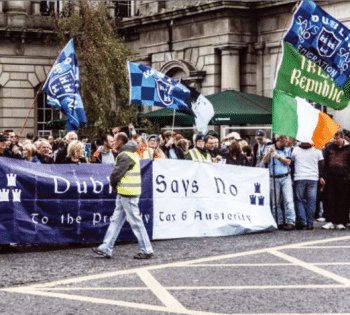
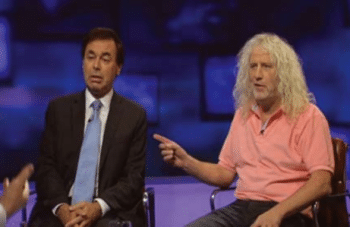
    By Gerard Cunningham. Daniel O’Donnell best showed RTÉ’s literalist interpretation of broadcasting balance in its full absurdity. In an afternoon interview with Ray D’Arcy the Donegal crooner was asked about the referendum, and spoke on the topic for three minutes. As he finished, D’Arcy asked “have we got a stopwatch on that?”, and made a lame joke about the man from Del Monte, before moving on to the next topic. Half an hour later, D’Arcy welcomed David Quinn on air, and read out to him a summary of what Wee Daniel had said, asking for his responses. A clearly unprepared Quinn (“I’m sort of reacting on the hop here”, he began) gave his initial thoughts on air, until he was interrupted by D’Arcy, saying “I have to finish up there, I know it’s rude David but you know the way things are done – three minutes”. And so, in the name of balance, both sides of the debate were given three minutes, but arguments were interrupted in mid sentence. The hashtag #BAIBalance was popular on twitter during the referendum debates: protesting at the artificial balance imposed by RTÉ’s simplistic stopwatch solution.  A lot of the cynicism was unfair to the Broadcasting Authority of Ireland, and the referendum guidelines they apply which derive from section 39 of the Broadcasting Act. The Act requires news and current affairs to be presented “in an objective and impartial manner and without any expression of the broadcaster’s own views”. It does not require that balance be achieved over a single stilted programme, instead allowing that “two or more related broadcasts may be considered as a whole, if the broadcasts are transmitted within a reasonable period of each other”. And if that’s not clear enough, the BAI’s guidelines state clearly that there is “no obligation to automatically ‘balance’ each contribution on an individual programme with an opposing view” and “no requirement to allocate an absolute equality of airtime to referenda interests during coverage of the referenda”.  D’Arcy’s view of ‘the way things are done’ was a distortion. RTÉ is a professional organisation, so doubtless it digested the BAI guidelines. Yet instead of the rounded approach the BAI encourages, advocating a multiplicity of voices reflecting differing strands of opinion, much of the referendum coverage was reduced to simplistic stopwatch speeches. Somewhere, RTÉ lost the plot. So how did we get here? The Referendum Commission (RefCom) exists because of the 1995 McKenna judgment, where Patricia McKenna took the government to court, and established that the State could not fund one side in a referendum debate. Five years later, in Coughlan v Broadcasting Complaints Commission, the courts found that broadcasters had to remain impartial. Anthony Coughlan had no complaint about RTÉ’s conduct in referendum debates, which he monitored, and he accepted that both sides got roughly equal access to the airwaves. However, RTÉ also transmitted party political broadcasts, and since almost all parties were advocating a Yes vote, the result was 40 minutes for Yes and only 10 minutes for No. Add to that legal history the jitters in RTÉ caused by everything from the Fr Reynolds libel case to Brendan O’Connor’s interview with Pantibliss in 2014, and you end up with risk-averse production staff taking the path of least resistance. Meanwhile, coverage of the second referendum on the age of voters for the Presidency was close to non-existent, possibly because RTÉ was unable to find pairs to argue both sides of the question. And for many local stations around the country, even coverage of the contested marriage referendum was difficult, as producers struggled to find speakers for the No side. “I’m not sure what the fix is, I think that the fix is that media organisations simply need to honour the spirit rather than the letter”, says NUJ Irish secretary Seamus Dooley. “It was never intended to be a mechanical exercise”. “Normal rules of balance should have been enough, but I think the Panti thing had them all terrified”. During the campaign, the filter bubble was a constant distortion on Twitter. The bubble, caused by the social media phenomenon of listening only to like-minded friends, amplifies agreement in an echo chamber and downplays dissenting voices, leading observers to overestimate support. Opinion polls were scoured for clues, and when they too agreed with the dominant Yes narrative on Twitter, they were followed by warnings about “Shy No” voters, and reminders of how the gap narrowed in the final days of the divorce referendum, which was carried by less than one vote per ballot box. The fear of an echo chamber effect may even have been a factor in the #HomeToVote campaign, where recent emigrants still registered flew and sailed home to cast their ballots. In the end, it became clear that the echo-chamber effect didn’t really exist, and the bubble reflected reality. Yet the iron adherence to stopwatch debates created a different kind of mirage. Iona Institute director David Quinn acknowledged in an interview with the US Family Research Council sponsored Washington Watch that Iona (“a small organisation, we had a budget of about €180,000 a year”) and the No side generally punched above its weight, with only 12 contributors between Iona and Mothers and Fathers Matter (MAFM) across many debates. The lack of new faces on the No bench became apparent as the debates went on, and may even have played a part in the No campaign’s claims that unseen supporters were being silenced. As an aside, the accounts presented to SIPO, the Standards in Public Office Commission, should make interesting reading. Of a budget of €180,000, it has been estimated, based on published Youtube rates, that Iona spent €70,000 on Youtube pre-roll advertisements, with MAFM spending multiples of that. Iona also sought to make an issue of foreign funding from Atlantic Philanthropies for several groups advocating a Yes vote, but only raised the talking point late in the day, perhaps reluctant to answer questions in return about its own funding. Atlantic gave the Gay and Lesbian

    Loading

    Read more