Archives

OK

Random entry RSS

Loading

  • Posted in:

    A spree before the apocalypse, Minister Kelly.

    By John Gibbons. While global pollution crises, from climate change to plastics in the oceans, are showing no signs of improvement, the worst effects, we in the ‘developed world’ are reassured to believe, are clustered in poorer countries and distant ecosystems. One of the many environmental paradoxes is that, while global ecological  indexes are in free-fall, the more prosperous parts of the world have never had it so good. The outsourcing of heavy industry from much of Europe and the US to the Far East over the last two decades has been a win-win for the West. The cost of manufactured goods plummeted thanks to the vast new pools of cheap labour, leading to the last decade and a half turning into the greatest shopping spree in human history, for us. While we shopped, they dropped. China today burns nearly half the world’s coal. Air pollution is now so severe that Chinese scientists have described its effects as being akin to a nuclear winter, with photosynthesis in plants being disrupted – potentially wreaking havoc on China’s food supply. A 2014 report from the Shanghai Academy of Social Sciences stated that that Beijing’s pollution levels made the city “almost uninhabitable for human beings”. While the climate-altering greenhouse gases spewing from thousands of new smokestacks across Asia are demonstrably as much a threat to Ireland as they are to China or India, it remains alarmingly easy for our politicians and policy-makers to deride the concentrations of an invisible, odourless gas like carbon dioxide (CO2) while instead tilting their serious antagonism, Don Quixote-style, at ‘unsightly’ windmills. And while the silent apocalypse being fomented by the unrestrained burning of fossil fuels draws near, we can at least console ourselves that it’s a problem for ‘other’ people (those divided from us either by geography or by time) to deal with. This narrow view was shattered by a recent report from the World Health Organisation (Europe) which took an in-depth look at the costs to Europe right now from air pollution. The word they used to summarise their own conclusions was “staggering”. It’s hardly an overstatement. The WHO study attributed some 600,000 deaths in Europe every year directly to air pollution; it calculated the annual cost of illness and death from air pollution at some $1.6tn (yes, trillion). This enormous sum is the equivalent of some 10% of the GDP of the entire European Union. “Curbing the health effects of air pollution pays dividends. The evidence we have provides decision-makers across the whole of government with a compelling reason to act”, according to Dr Zsuzsanna Jakab, WHO Regional Director for Europe. “If different sectors come together on this, we not only save more lives but also achieve results that are worth astounding amounts of money”. The economic cost of deaths accounts for over US$1.4tn per annum. Another 10% is added to this to account for the cost of diseases caused by air pollution, resulting in the total of around US$1.6tn. The economic cost of deaths and diseases due to air pollution can, according to the WHO, be valued in terms of the amount societies are willing to pay to avoid these deaths and diseases with necessary interventions. In these calculations, “a value is attached to each death and disease, independent of the age of the person and which varies according to the national economic context”. More than nine in ten people living in the European Region are exposed to annual levels of outdoor fine-particulate matter that are in excess of the WHO’s air-quality guidelines. This translates into 482,000 premature deaths in 2012 from heart and respiratory diseases and strokes, as well as lung cancers. Indoor air pollution accounted for another 117,200 premature deaths, five times more in poorer than in higher-income European countries. A related WHO study tallied that one in four Europeans falls ill or dies prematurely from environmental pollution. So much for this simply being a far-away problem affecting people and places we know and care little about. The law of unintended consequences applies to attempts at curbing pollution. Many European governments, including the Fianna Fáil/Green coalition, moved to introduce reforms in motor taxation to favour vehicles that produced lower CO2 emissions. While this undoubtedly nudged car-makers into producing cleaner engines, the single biggest switch was from petrol to diesel combustion. The massive shift to diesel on Irish roads has happened rapidly. This seemingly ‘environmentally friendly’ move (diesel engines produce around 20% less CO2 per kilometre travelled than petrol equivalents) generates a nasty sting in the tailpipe. Diesel engines emit ten times the amount of fine particles and up to twice the amount of nitrogen dioxide (NO2) of petrol. These toxins have been linked to 7,000 deaths in the UK each year. A study in the medical journal the Lancet in 2011 implicated traffic exposure to particulates as the single most serious preventable trigger of heart-attack in the general public, and the principal cause of 7.4% of all attacks. Particulates are classed as carcinogens by the WHO. Fine particulates (those below 2.5 micrometers, or more than 30 times smaller than the width of a single strand of hair) are particularly dangerous. These microscopic particulates penetrate deep into the lungs, and into individual alveoli, passing through cell membranes and migrating into other organs. Established health effects include asthma, lung cancer, cardiovascular and respiratory diseases, premature delivery, birth defects and premature death. Infants and children are particularly at risk from the effects of particulates, and these in turn are most intense in urban areas in proximity to heavy traffic. In April 2015, its Supreme Court ruled that the British government must take urgent steps to tackle air pollution in cities. The UK is facing huge fines from the European Commission for failing to cut levels of nitrogen dioxide (NO2). The Supreme court ordered the UK Department for the Environment to draw up new air-quality plans by the end of 2015, setting out how it plans to dramatically tackle air pollution. According to the WHO analysis,

    Loading

    Read more

  • Posted in:

    New Left alliance taking shape.

    By Frank Connolly. The prospect of an alliance of left-wing, trade-union and progressive organisations in advance of the general election took a tentative step forward following a meeting hosted by the Communications Workers Union in Dublin on Mayday. A gathering of up to 200 political, trade-union and community activists heard speakers from the Syriza government in Greece and the Spanish social movement, Podemos, describe how they have built a progressive alternative to the traditional conservative and social democratic parties in their respective countries. Syriza activist, Konstantina Tzouvala, explained how Syriza grew from student mobilisations in 2006 and 2007 when the main universities were occupied for over a year and campaigns against the privatisation of water and austerity in more recent years. Since its election the new Syriza-led government has restored the minimum wage, reinstated many public-service positions, ended compulsory HIV testing for drug addicts and sex workers, released immigrants from detention centres and of course, battled its EU partners over debt repayments and bailout terms. In Spain, Podemos, according to Eduardo Maura, has broken the traditional two-party system in place since the death of Franco in the mid-70s and has built on the successes of the Indignados movement in 2011 to build a new force “not left, not right but at the heart of Spanish politics”. While some of those present took exception to his dismissal of traditional political dividing lines he argued that the new movement was seeking to build a social majority and last year secured 1.2 million votes and 5 MEPs in the European Parliament elections. Both speakers eloquently described the crisis of legitimacy in their respective countries and the “kidnapping of democracy” by the corrupt elites – which can only be challenged by a united movement of the people. The Syriza activist who was subjected, arrogantly, to some patronising criticism by some of the purer Leftists in the room about her government’s failure to unilaterally renege on its debts responded that it was a promise that was never made by her party. She accurately identified, and criticised, the tendency of some on the Left to indulge in the “fetishism of small differences” and to behave as the “professionals of disagreement” in remarks that resonated with many of those present. Berlin Water Movement activist, Dorothea Haerlin, also spoke. The meeting included representatives from the four unions involved in the campaign against water charges: the CWU, Mandate, UNITE and the CPSU; as well as from SIPTU, Sinn Féin, the Anti-Austerity Alliance, People Before Profit and other left-wing groups and think tanks. The general secretary of the Irish Congress of Trade Unions, Patricia King, also attended the event which was formally opened by Congress president, John Douglas A number of left-wing independent TDs including Catherine Murphy, Clare Daly, Mick Wallace, Thomas Pringle and Roisin Shorthall were present along with TDs Mary Lou McDonald, Joe Higgins, Ruth Coppinger and Richard Boyd Barrett representing their respective parties. In a powerfully presented analysis, economist Michael Taft argued for an alliance of the Left that could unite progressive parties and independents, unions and community activists and which was based on credible and workable policies. Wealth has to be generated before it is distributed and the provision of decent public services depends on the collection of sufficient and fair taxes to fund them, he argued. Paddy Mackel of the NIPSA trade union spoke about the campaign against water charges and privatisation in the North. Maynooth university lecturer, Rory Hearne, delivered a paper on the political analysis of the Irish water movement, while Stephen Nolan of Trademark addressed the meeting on “Political Economy: Democratising Knowledge”. With over 40% of voters supporting parties and candidates standing on Left policy platforms in 2011, the responsibility of those seeking a progressive government is to develop a platform of economic, fiscal, taxation and social policies which a majority of voters can support and which can survive the forensic scrutiny of the right wing parties and the media. The meeting was presented with a list of ‘Policy Principles for a Progressive Irish Government’ which included proposals on water, health, education, housing, decent work, debt justice and democratic reform. All of those present, who were largely Dublin-based, were asked to consider the document and submit responses and proposals on the policies outlined and any other ideas, before a follow up event in mid-June. The participation of 200 activists of the Left for an afternoon of discussion on the experiences of progressive movements in Greece and Spain and their willingness to engage in detailed discussion on policy proposals which could form the basis for an agreed election charter for progressive parties and candidates is a positive development. Hopefully it will be advanced without “inflating the significance of our differences”. •

    Loading

    Read more

  • Posted in:

    Ansbacher – cover-up upon cover-up.

    By Frank Connolly. The controversy over the naming in the Dáil by Mary Lou McDonald of several former politicians in connection with offshore accounts continues to rumble on. The Sinn Féin deputy leader has rejected a finding by the Oireachtas Committee of Procedure and Privileges (CPP) that she abused her parliamentary privilege when she named the politicians, including former ministers, in the Dáil on 3rd December last. She has also asked for the legal advice given to the Committee on which its finding of abuse of privilege was based. Despite attempts by the political establishment, aided by the usually compliant voices in the mainstream media, to close down the controversy, and the loud legal threats emanating from some of the former ministers named in the House, the issue has not gone away. Revenue Commissioner, Josephine Feehily, has told the Public Accounts Committee (PAC) that her officials had fully investigated the allegations contained in the dossier prepared by authorised officer, Gerard Ryan. Former politicians allegedly used Ansbacher/Cayman Island accounts managed by accountant Des Traynor and after his death, by Padraig Colleary – from the 1970s to the mid 1990s. Feehily, who has since been appointed to head the new independent policing authority, told the PAC that she was satisfied the matter had been dealt with but could not comment on individual tax investigations. Her response does not rule out the prospect that for all their forceful denials some of the individuals named did settle outstanding revenue issues arising from offshore accounts. What also emerges from correspondence between McDonald and the CPP over recent months is that Ryan is supported in his contentions by “two senior colleagues, both forensic accountants”. In a letter to the CPP in February last, McDonald strongly defended her action in naming the former politicians including a number of former Fianna Fáil ministers and one Fine Gael minister; and claimed she did so after she received advice from a parliamentary legal advisor to the effect that the only forum where she could raise the serious allegations of tax evasion was on the floor of the Dáil. Previously, the PAC had been advised that it could not investigate the allegations set out in a detailed dossier prepared by Ryan (much of which was published in Village in a recent edition). She said Ryan was “a senior civil servant who had been appointed as the authorised investigating officer into allegations of tax evasion and Ansbacher accounts by a previous Government. His professional competence as a forensic accountant is not in question. He made his disclosure in accordance with the Protected Disclosures Act 2014. I believe that this disclosure is made in good faith and in the public interest. His allegations are documented and are backed up by two senior colleagues, both also forensic accountants”. One of these is senior counsel John Hennessy who was retained by the Department of Jobs Enterprise and Innovation to assist and advise Gerard Ryan. The other officer has not been publicly identified. McDonald also described in her lengthy submission how a significant claim by Ryan, that the current Minister in the department, Richard Bruton, had sat for two years on a detailed witness statement the authorised officer had prepared and only released it to the Garda Bureau of Fraud Investigation when the controversy broke in November 2014. “For my part I made no assertion of wrongdoing against any individual”, McDonald wrote. “I merely referred to those allegations made – and subsequently stood over – by the whistleblower. In doing so, I very consciously and specifically refrained from offering an opinion on the veracity of the allegations, and moreover I did not assert that they were true. It is in the public interest that these allegations of tax evasion and political obstruction be publicly stated and investigated”. In response to her letter the CPP informed the deputy that her Dáil remarks were “in the nature of being defamatory” and “prima facie an abuse of privilege” and asked her to “make a personal explanation to the House: in effect to withdraw the utterances without qualification”, failing which the committee would recommend that she be reprimanded. Unsurprisingly, McDonald did not accept this finding and is still awaiting a response to her request for the legal advice given to the CPP to support it as well as the minutes of all relevant meetings where the matter was discussed. The CPP also released copies of letters from the former politicians who claimed that they had been defamed by McDonald’s remarks in the Dáil and from former Tanaiste and PD leader, Mary Harney, who denied the “untrue and defamatory” allegation that she had terminated Ryan’s investigation when it threw up the name of a prominent politician associated with her. Harney first appointed Ryan as an authorised officer to investigate the tax evasion scheme operated by Guinness & Mahon and its subsidiary, Ansbacher (Cayman), in 1998. In July 1999 the High Court, at her request, appointed inspectors to investigate the Irish business of Ansbacher (Cayman). The investigation was headed up by the late Declan Costello, former TD, Attorney General and President of the High Court, until he resigned for health reasons in 2000. It found that Guinness & Mahon (Ireland) Ltd. and its former managing director, Des Traynor had promoted a scheme of tax evasion in Ireland through offshore trusts and that Ansbacher (Cayman) Ltd had operated as an unlicensed bank in this country (including from the offices of Cement Roadstone Holdings in Fitzwilliam Square in Dublin for many years). In 2003, Ryan discovered that Costello had held a deposit account in Guinness & Mahon from 1976 to 1978 containing £15,000 which was managed by Traynor. When contacted by Ryan, Costello denied ever having such an account or having dealt with Traynor.  Ryan claimed that the High Court investigation was compromised by what he described in the dossier circulated last year as Costello’s “major conflict of interest”. In June 2004, four months after Ryan informed Minister Harney that he had uncovered

    Loading

    Read more

  • Posted in:

    Villager – May 2015.

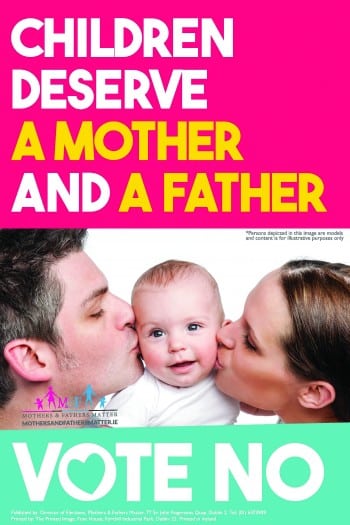
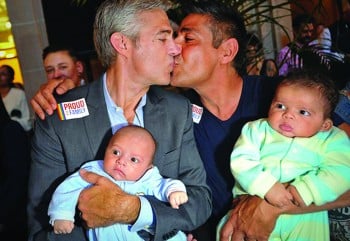
    Border Fox The Facebook site of ‘Dessie O’Hare Crafts’ fronted by ‘Dessie from Keady who attended St Patrick’s High School’ sells innocuous  republican memorabilia: glass Easter lilies and the like. But have no doubt it is the Border Fox gone retail. In October 1977, O’Hare and his IRA gang killed Margaret Ann Hearst, a female part-time member of the UDR, in front of her three-year-old daughter, in Armagh. In 1979 O’Hare was shot twice and arrested after a car chase through County Monaghan ended when O’Hare crashed his car through a herd of cattle into a farmer’s car, before coming to rest in a field. He broke both ankles in the crash but his companion in the car was not so lucky and died. In 1979 he led an Irish National Liberation Army offshoot gang which had intended to seize Austin Darragh, moneybags owner of the Institute of Clinical Pharmacology, in Dublin but Darragh had moved out three years before and it was occupied by unfortunate dentist, John O’Grady, his son-in-law. O’Grady was kidnapped and initially held in a Dublin basement before being moved to Cork, where he was held in a cargo container. After ransom demands were not met O’Hare cut off the little finger from each of O’Grady’s hands with a hammer and chisel and sent them to Carlow Cathedral (as you did in the 1970s). In a telephone call to the Gardaí O’Hare stated: “It’s just cost John two of his fingers. Now I’m going to chop him into bits and pieces and send fresh lumps of him every fucking day if I don’t get my money fast”. O’Hare became the most wanted man in Ireland with the Gardaí offering a £100,000 reward for information on his whereabouts. He surfaced in County Louth, where he allegedly fired shots into a takeaway during an altercation with his wife. In late November O’Hare was arrested and shot eight times during a fire-fight, in which his companion was killed. An Irish Army soldier was wounded in the affray. He received a 40-year sentence but was finally released in 2006 and the PSNI has said it will not pursue him for the 30 cases of unsolved killings in which he was under suspicion. Through imprisonment he developed an identification with the plight of the disabled and participated in fund-raising events for them, though he says he has no regrets. Sure why would he? Borderline Dog A rat the size of a dog has been found swimming in a Tipperary Irish river – and now wants a good home. Three-foot long Rodney, a coypu American swamp rat native only to South America, is three times the size of the average Irish rodent though around half the size of the average local politician. He’s now being cared for at the Kildare Animal Foundation Wildlife Unit which told RTé Radio One’s ‘John Murray Show’: “He’s not just an ordinary Irish rat, there’s no fear there’ll be an epidemic”. The search is now on to find a home for the furry creature with a spokesman adding: “He doesn’t have any fear in him so we think he must have been a pet”. He’s not then related to another rat, 24-inch long and native, which came to the attention of Dubliner homeowner Grace Walters last year after she heard loud scratching sounds coming from over her ceiling.   Borderline Dogmeat McDonalds shares sagged after they recently announced a new Plan to replace the general tactic for the last decade of covering the plastic in stuff that looks like wood. But guess what: a leadership reorganisation won’t do it.  Investors (a surrogate for only slightly more interesting customers) believe it’s got too many items on its menu – 40 new ones, and it should use apps more. Sounds a bit like Village.     Straw man Iona-institutionalised Villager is 100% behind Gay Marriage. But jaysus has the media and political coverage been biased towards the Yes vote. Villager particularly recoiled from the piece by the Irish Times’ increasingly unreadable Jennifer O’Connell who joins us photogenically from San Francisco whence she sparks rueful envy in the gut of bemired middle Ireland. “Gay Marriage causes abortion? Now I’ve heard it all”, blasted her headline in what was essentially ‘straw man’ argumentation. Because if the views of the minority of loonies on the Yes side were subjected to analysis in this way liberals would be incandescent. Nobody’s making these arguments Villager murmured heterosexually to himself. Then his attention was drawn to the Iona Institute’s David Quinn who recently made just this connection. He told a room of supporters that “if we lose the [gay marriage referendum] badly, I think they will have an abortion referendum in 2017. If we keep this close, or we manage to win, it’ll frighten them off an abortion referendum for years to come. So I think, actually, this is connected to protecting the 8th amendment of the constitution which is a pro-life amendment”.     Riddle me this, Enda The Greens’ somewhat painful leader in Britain, New Zealander Natalie Bennett, highlights, by contrast, what effective communicators the leaders of Ireland’s Greens were during their last period in the sun. Most famous for having cascaded into a bundle of inarticulate sniffles on the airwaves earlier in the year, Bennett has recently said she is ‘open’ to considering polyamorous marriages. These used to be known as polygamous and were not regarded as progressive – though admittedly the model was patriarchal, and there is now a matriarchal variation. Speaking in a question-and-answer session with PinkNews, Ms Bennett was reacting to a reader who asked: “As someone living with his two boyfriends in a stable long-term relationship, I would like to know what your stance is on polyamory rights. Is there room for Green support on group civil partnerships or marriages?”. Lib Dem Parliamentary candidate Zoe O’Connell recently opened up about living in a polyamorous relationships with her partners. Natalie Bennett’s partner Jim Jepps came under scrutiny earlier

    Loading

    Read more

  • Posted in:

    Too big (and weird opes).

    By Michael Smith. In 2013 the ESB announced its  intention to demolish its Dublin headquarters on Fitzwilliam Street. The edifice had been designed in 1962 by then-fresh-faced young (subsequently Ansbacher-account-holding) architect-tyros Sam Stephenson and Arthur Gibney. The ebullient young pair won the competition to replace the street, which dates from 1792, after a report by eminent English architectural historian Sir John Summerson, who seems to have been an unworldly purist, denounced the historic buildings of Dublin’s Georgian (three-fifths of a) mile and their magnificent interiors as “by Georgian standards rubbish…a sloppy, uneven sequence…one damned building after another”. There was much opposition to the demolition including, creditably from the City Council and its officials, but Stephenson said: “…Georgian buildings are not intended to last more than a lifetime”, and the Minister for the ESB, Erskine Childers, was unmoved. The President of MIT reportedly wept in the street as the ball and chain bore down. As to the replacement, the ESB chairman said it proved that “…architects of the eighteenth century did not have a monopoly on talent, imagination and good taste”. Professor Christine Casey in her book, ‘Dublin’, is surely stretching it when she says that it is “a clever contextual design”. She particularly likes the “ground floor recessed, modestly and elegantly expressed as as alternating panels of brick and glass” and considers that “the counterpoint between the ground and upper floors is particularly effective”. In the end, however, she damns the buildings because “though the design endures, the coloured concrete is shabby”. In any event, the ESB wants to replace this monster with a €150m development doubling the capacity of the existing offices. Architectural critic Shane O’Toole has actually lodged an appeal suggesting the buildings should be retained. The current proposed scheme, designed by Grafton Architects and O’Mahony Pike, did not at first comply with the Dublin City Development Plan which required the Georgian facades of the original 16 buildings to be reinstated. So city councillors voted last March to change the development plan, replacing the requirement to replace facades with one to “reinstate the Georgian rhythm” by dividing the building into five blocks or “fingers” to suggest the width of historic house plots. The proposal was for a scheme that would have been seven storeys high, far taller than the surrounding Georgian houses, but planning conditions reduced the height of two blocks by one floor, and floors linking some blocks were removed. That permission has now been appealed to An Bord Pleanála which will no doubt host an oral hearing on the matter in the summer. Interestingly, subversive appeals have been lodged by Ruadhán MacEoin and Peter Sweetman, the twenty-first century inverse of Stephenson and Gibney, though not by the Irish Georgian Society, which led the 1960s opposition. In its appeal An Taisce emphasised the significance of the site, noting that it forms part of a number of important settings – including for the modernist icon former Bank of Ireland building on Lower Baggot Street, for the Pepper Canister Church terminating Upper Mount Street and for the renowned ‘Georgian Mile’ with its long urban vista towards the Dublin mountains. Furthermore, the site has significant visibility from the adjacent Merrion Square, a prime Georgian city square. The site itself contains numerous protected structures and most of the surrounding streets are lined with protected structures. The primary areas of the site have the Z8 conservation-oriented land-use zoning which is to “protect the existing architectural and civic design character, to allow only for limited expansion consistent with the conservation objective” while the inner part of the site has Z6 enterprise and employment creation zoning. The An Taisce appeal, which is signed by Kevin Duff, considers that the proposed development is seriously at odds with the variation to the City Development Plan, which now governs the site, and which he quotes at length: “The proposed façade to Fitzwilliam Street, with its extensive use of unproportioned, full-height window opes up to the top floor, and double-height window and door opes at ground floor along the mid section of the façade, does not constitute ‘an exceptional urban design and architectural response’ and does not maintain the ‘character and composition of the Georgian streetscape in terms of the solid to void ratio, the rhythm of windows and doors [and] the proportion and scale of the ground floor storey to the upper storeys’ as required by the Variation  and having regard to the consistent, classical design of the area. It is essential that the rhythm of opes and proportions to the street as seen here – which is a particular Dublin characteristic deriving from buildings built in groups – is maintained in any redevelopment of the ESB section of the street. The current proposal fails to achieve this”. An Taisce and other parties have expressed serious concern about the major scale and bulk of the proposed development to the rear of the Georgian streetscape. It states that the proposal steps up excessively to the rear, overdeveloping the highly sensitive Z8-fronted Georgian site and overwhelming the setting of the surrounding four-storey Georgian Protected Structures which dictate the scale and design of the area, and the Conservation Area. It declares that the development as proposed would unbalance the very specific scale of Georgian Dublin, appearing to ‘pile up’ in the south-eastern corner of Merrion Square and in other views, and as such would be contrary to the “limited expansion” allowed for under the Z8 conservation zoning of the site. It is concerned about the overwhelmingly commercial nature of the proposed scheme and the applicant’s failure to meaningfully consider the Fitzwilliam Street frontage for residential use (or live/work use) in the face of the Dublin City Council document ‘The Future of the South Georgian Core’ (2012). An Taisce claims that, following introduction of a levy exemption for residential conversion of Protected Structures, as recommended in the 2012 document, a significant increase has been seen in change of use applications (in part or whole) from office/non-residential use to residential use

    Loading

    Read more

  • Posted in:

    Seán MacBride would not take on IRA involvement in murder.

    By Kieran Fagan. The recent pardon for Harry Gleeson, hanged in 1941 for a murder he did not commit, brings into focus the early career of Seán MacBride. MacBride, then barely four years after relinquishing the role of chief of staff of the IRA, was a controversial choice as Gleeson’s junior counsel, working with James Nolan-Whelan who was a more experienced senior. Gleeson managed his elderly uncle John Caesar’s farm at New Inn, County Tipperary and, as his uncle was childless, expected to inherit it. One morning in November 1941, he was out in the fields looking for wandering sheep when he discovered the body of Mary McCarthy lying in the corner of a field. On finding the body, Harry Gleeson ran back to the farmhouse to talk to Bridget Caesar, his uncle’s wife, to know what he should do. She told him to go over to the Garda station at New Inn and report his find, but not to “let on” that he knew who the woman was. Moll was a scandalous woman, and it was better to have no knowledge of her. Moll Carthy, as she was known locally, was approaching 40 years of age, and she lived with her brood of six children in a cottage adjoining Caesar farm. Moll was a bit of a problem for New Inn, having had different fathers for each of her six children, and local efforts to get her to move on or have the children taken into care had failed. A murder investigation began, and fairly soon the finger of suspicion pointed at Gleeson. He had been carrying on with Moll, it was said, and she was blackmailing him, threatening to tell John Caesar who would disinherit his nephew, and Harry was charged with murder. This was the case that Gleeson’s solicitor brought to MacBride, whose legal brilliance had become the envy of other more established practitioners at the Irish Bar. The question which my book asks of Seán MacBride is: why, if he was so talented, did his client hang? The difficulty which many writing about MacBride quickly encounter is which of MacBride’s many personae is in the frame? Is it the gilded youth of the Irish independence struggle, scion of Major John and Maud Gonne MacBride? Is it the hardened gunman of the 1920s and 1930s? Or the gifted lawyer who would earn international acclaim? Ahead of him lay initial domestic political success, founding Clann na Poblachta in 1946, entering government in 1948, and later winning Nobel and Lenin peace prizes, and being the grand old man of liberation struggles in Africa and elsewhere. For Gleeson’s solicitor John Timoney, MacBride’s reputation as a brilliant and disruptive lawyer was enough. The two lawyers, united by their belief in Gleeson’s innocence, soon became friends and Timoney won a Dáil seat for Clann na Poblachta in 1948. MacBride’s file on the Harry Gleeson trial still exists and it bears witness to his meticulous preparation, and much burning of midnight oil in the weeks before, during and after the trial leading up to the hanging. His approach to finding discrepancies in witness statements is instructive: he drew a big timeline on which witnesses’ whereabouts were plotted. His old nemesis de Valera would have approved of the scientific approach. After conviction it shows MacBride tirelessly working his contacts, political and legal, to try to get his client pardoned. But the file also contains material relevant to another facet of MacBride’s complexity – efforts to mediate between de Valera and the IRA, then under severe pressure because of the failed English bombing campaign of 1939. It also makes reference to the IRA kidnapping of Michael Devereux, one of its own members, who was suspected of informing to police. The hue and cry to find Devereux – he was dead at this stage and MacBride would have known that – was putting pressure on IRA sympathisers in south Tipperary in late 1940 when Moll McCarthy was murdered. But the question remains. Why did MacBride not challenge his former IRA comrade Thomas Hennessy when Hennessy gave evidence of hearing shots which the prosecution said were those with which Gleeson murdered Moll McCarthy? Why did MacBride ignore the existence of a group of former IRA activists in New Inn, people who had an interest in silencing Moll McCarthy because they believed she had become intimate with Garda sergeant Anthony Delaney, and was committing that most Irish of reserved sins, informing on them to the police? To MacBride’s credit, he did not let the case rest. Throughout his long life he continued to insist that Gleeson should not have been hanged. Harry Gleeson liked him, and MacBride dealt gently with the extended Gleeson family and friends, and with other victims of miscarriages of justice who approached him. But on the occasion of Harry Gleeson’s trial it is fair to conclude that it was not the defendant’s past which caught up with him, but that of his defence  counsel. •

    Loading

    Read more

  • Posted in:

    Beades.

    By Frank Connolly. If you want to know a bit more about New Land League founder, Jerry Beades, just ask Frances Cullen. She was made a widow when she and their three children in Coolock in north Dublin lost her husband, Gerry, three years ago. He died just a few years after he fell, in January 2009, from ‘rotten scaffolding’ and suffered injuries which forced him out of work as a builder’s labourer, and according to his wife, to an early grave. He worked for a construction company owned and run by Jerry Beades which was building apartments at the Richmond Avenue site in Fairview when the accident occurred. He was employed by Mendit Construction Ltd. and/or Jerry Beades Construction Ltd. “Gerry fell 18 feet from the scaffolding. He was brought to James Hospital badly bruised and cut and with a back injury. After that he had constant back pain and couldn’t walk properly. He never worked again and was only 58 when he died suddenly a few years later from a blood clot in his bowel. He was in good health before he fell and needed to be to keep up work as a builder’s labourer”. Another worker, a non-national, also fell from the scaffolding and suffered even more severe injuries. In 2011 Gerry Cullen was awarded €39,150 in compensation for his injuries and loss of work. He died nine months later, in February 2012, without seeing a cent as Beades had failed to comply with the terms of his company’s insurance policy, according to Frances Cullen. In an affidavit to the court, Beades conceded that he had failed to notify the insurance company immediately after the accident, as required under the policy. He unsuccessfully tried to join Quinn Insurances to the action taken by solicitors for Cullen. Cullen’s application for redundancy was also delayed after he failed to obtain any constructive co-operation from his employer, Beades. Cullen managed to secure almost €4,000 in his redundancy entitlements after two appearances at the Employment Appeals Tribunal but never received the almost €40,000 compensation award.  Contacted by Village, Beades blamed everyone but himself, including legal advisors, for the failure to notify his insurance company. His firm had gone into liquidation soon after the accident and he now owes over €9.7m to Bank of Scotland and another €2.5m to Ulster Bank. Frances Cullen insists that her husband had nothing but problems over the years with his boss. “There were always problems with Beades. Gerry was often left waiting for his wages to be paid at the end of the week. When he was injured Beades never got in touch. When we took him to court he sat on the other side of the room and never even acknowledged us. He is not a nice man”, said Frances Cullen. In 2013, summary  judgment was granted against Beades for €3.5m to Ulster Bank. €1.3m had been taken out of an account with the assistance of a bank manager, as a result of “theft”. He says that he intends to bring a claim against the bank arising out of this alleged wrong. Mr Beades further argued he did not accept claims by the bank that a signature on a loan document was his. He also argued that he had taken out the loans with Ulster Bank Ltd, an entity he said no longer exists having been wound up several years ago. He was also pursued by Bank of Scotland for nearly €10m lent for property development. Commercial court judge, Peter Kelly, asked if Beades had received the monies at issue from Bank of Scotland – but received the response “I refuse to answer that question”. Jerry Beades is now the self-appointed leader of the self-styled New Land League and fights for others in difficulty with the banks. Most recently he has been championing the oppressed residents of Gorse Hill, the ‘bog standard’ Killiney mansion occupied by solicitor, Brian O’Donnell and his family in their failed battle against receivers acting for Bank of Ireland. O’Donnell owes over €70m to the bank and Beades has taken up the cause with his followers to highlight the hundreds of other distressed borrowers against whom eviction threats have been made up and down the country. Whatever his band of merry men might think, Jerry Beades is no Michael Davitt, the Mayo man who founded the Land League in the late 19th Century, who was the antithesis of a dodgy builder who does not look after his workers and never accepts blame. Beades was a member of the national executive of Fianna Fáil  when the party under Bertie Ahern was leading the people over the economic cliff. After his own financial collapse he formed ‘Friends of Banking Ireland’ to highlight the lax regulation of the industry, including those to whom he owed millions. He went on to lead the charge against public auctions of repossessed properties and has promoted himself as the latest saviour of the oppressed even though most viewing his recent antics on Vico Road and at the High Court – and how much he seemed to enjoy it all  – might think the opposite. •

    Loading

    Read more

  • Posted in:

    Catherine Murphy interview. Channelling anger into questions, and vision.

    By Michael Smith. I interviewed Catherine Murphy, Independent TD for Kildare North, in a sunny Dáil coffee shop on May 5th. She was accompanied by her advisor Anne Marie McNally. They were both friendly, informed and irreverent. Though she was due on the Ray D’Arcy show Catherine Murphy appeared relaxed. She used the term “we” a lot, rarely “I”. I asked her how she would describe her political philosophy. “I’m in the centre, which has shifted, a social democratic. I believe in a more equal society, good public services. I’m passionate about good-quality institutions. We’ve never been good at institution-building. I’m an admirer of [Aneurin] Bevan [who spearheaded Britain’s post-war National Health  System]. He said: ‘the whole point of power is to give it away’. You’d be picking up bits of Chomsky”. So how important is equality and what does she mean by it? “It’s equality of outcome very definitely. Great levels of inequality preceded all the great crashes. I’m not saying things should be perfectly equal”. I push her as to how much inequality is acceptable and she says that’s a harder question than she can answer. “The idea of bankers not getting out of bed for half a million a year is on the Richter scale end of it. In Switzerland they’d a referendum to ban anyone earning thirteen times anyone else. I’d go lower”. She won’t say how much lower. “It can’t be in the begrudgery area if someone has spent  a lot of money and a long time and become expert. But the returns can’t be so great as to be offensive”. What’s the first thing she’d do if she were Taoiseach? “Who said I wanted to be Taoiseach? I so don’t. My political priorities are widespread. For example, on this island we’ve got to deepen democracy, put institutions in place based on subsidiarity. Regional government is a must”. But national development priorities can’t be scattergun or ‘one for everyone in the audience’. “We need three cities outside, and as a counterbalance to Dublin: Cork, Galway and to some extent Limerick – competing. They need to attain a critical mass for public services and transport etc”. She says she has strong ideas on planning, transport, transparency, institutional reform and technology. Why did she go into politics? “My motivation was to change things. I’d been moaning to the  editor etc. There’s no point moaning unless you’re willing to step up to the plate and do something. The first time I was elected was after the water charges campaign in the early 1980s. It can be both frustrating and rewarding, probably more frustrating.  I can be quite solitary. I like to do my own research before I open my mouth and that can be an asset – but it can also be bad: you can do 95% of the work and someone else gets 70% of the credit.  I’m at my best when I’m angry but containing it”. What does she think of the Labour Party and its performance in government? “I don’t notice them. I wish I did. It looks like a Fine Gael government. A huge disappointment. I was in them [Labour] but it wasn’t a happy experience”. How has she fared in the technical group (she’s its whip)? “We exploit it to the maximum – private members time, committees, speaking time. It critically opens up the diversity in the group. People may have expected more of a coalition but we’re too diverse for that ever to have been possible”. Is she interested in a new political party? “I don’t dismiss that though I value and am comfortable with my independence. I wouldn’t like to be controlled by a press office. The person you elect should be who you see in Parliament. Put it this way I am talking to people, though nothing conclusive. A number of things are happening. What’s happening with  the unions the other day [a Mayday gathering of 200 political, trade-union and community activists organised by the Communications Workers Union in Dublin] is particularly interesting. I was interested in the Podemos guy from Spain there. You have to look at where the people are, though you have to give some leadership within that and have an idea of what you want to achieve. I’ve always seen the positive. I think this is a great country, despite the political and administrative institutions!”. What was the alternative to austerity?  “I’m angry about the debt. Admittedly the tax base collapsed because of the  change in the  take from the building sector. We had to balance the books but we were sold out on the debt. I’m particularly angry about the promissory notes being turned into a sovereign debt and the amount of money thrown at unsecured bondholders. We’re spending the same servicing the national debt as on the education system. We need a debt conference. There are debt problems all over Europe not just in the programme countries. We need to see where we need physical expansion and in particular deal with climate change”. She doesn’t accept that most important reason for the increased debt and tax burden was the collapse in construction-driven taxes, rather than the banking implosions and bailout. “Some of the things we did were stupid. We had cuts instead of reform. We didn’t look at who was leaving the civil service”. She thinks benchmarking when comparisons are made with other countries is good especially with similar European countries but it’s more expensive to deliver services when you’ve a dispersed population. She’s sceptical about its value if the comparison is within Ireland. What are priorities in her constituency? “Housing. We need a rental model that’s attractive to people across the income divide and funds are available for this from the European Investment Bank. Planning. We’ve been quite good in Kildare because some of us have been a thorn in the side. I’m not against development if it can be linked to services and decent public transport, if it can provide local

    Loading

    Read more