Archives

OK

Random entry RSS

Loading

  • Posted in:

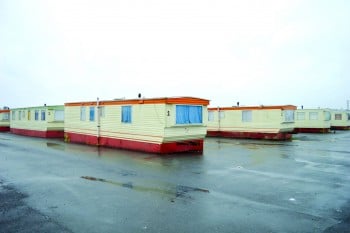
    Replace direct provision

    By Reuben Hambackachere On the 21st of April 2015 I officially submitted my resignation as the named individual representing the Core Group of asylum-seekers and Refugees on the Government Working Group established to examine improvements to the protection process and the Direct Provision system. The working group was set up as the Government’s response to the countrywide protests by asylum-seekers living in direct provision and their supporters. This response presented the Government with an opportunity to remedy a broken system for asylum-seekers. The structure of direct provision raises cause for concern for the Irish state, given the level of public resources invested in the system and its administration. I felt that, coming together with so called experts on the issue, this was a step in the right direction to overcome the cultural blindness that I believe is one of the factors underpinning this failed system alongside the fact that there is no legislative framework for these reception centres. There were restrictions in the terms of reference in relating to coming up with an alternative for those who live in this system. I felt this needed to change immediately if there was to be any credibility that the rights of asylum-seekers would be upheld in line with Ireland’s international obligations under various human rights instruments. However, I took up my position with the hope that the Working Group would be committed to the liberation of people who are being oppressed. It was not long before I discovered that some members of the group could see the problem but did not think they were a part of it. My participation on the Working Group was an opportunity to see and learn how decisions are made or not made. I am glad I stayed up to the time I did. I participated in the consultation process and most of the plenary and thematic meetings. I felt I was well informed and had given it my best when I made my decision to exit. I initially agreed to be on the Working Group on the basis of a mandate to negotiate and safeguard that the report and its recommendations would offer real progressive change, and restore the dignity of asylum-seekers and their children through the creation of a protection system underpinned by human rights and in line with international best practice. During the period that I was a Working Group member I pushed hard to ensure that the voices of asylum-seekers and refugees were heard. I believe that the issues of concern to asylum-seekers were well articulated during the consultation process. It was therefore my realistic hope that these issues would inform the recommendations of the Working Group. However, after conscientiously going through all three thematic sub-group draft reports, which will form the final plenary report, I feel that the proposed recommendations fall far too short of my own expectations and probably those of the asylum-seeking community Central amongst my concerns was that without the option to discuss any alternative to direct provision or even to submit an alternative report without referring to the terms of reference, very little change would be made to the current system. Personally, as things stood I could not stand over the limited recommendations that were going forward from the sub-groups to the plenary, nor sign my name to them. My conscience will not allow me to endorse an exercise that has not truly taken into consideration the issues that were clearly articulated by asylum-seekers during the consultation process and through other submissions. However, the decision of the Core Group of asylum-seekers and refugees is to stay on and continue to fight. It is my hope that the Core Group will capitalise on my resignation and push further for recommendations that have some positive outcomes for the people caught up in this system.  Communities which experience inequality, poverty and injustices should be protected and their rights vindicated. Ultimately, I believe high standards must apply to any reception system underpinned by the requirements of the EU Reception Directive. I am still participating in the struggle to end direct provision and I will continue to campaign and fight for the rights of all people let down by the current system which is broken and only results in further marginalisation. This system props up a flawed model that does not work for my comrades in the core group and beyond them for the wider community of asylum-seekers. •

    Loading

    Read more

  • Posted in:

    Progress amid community carnage.

    By Ann Irwin. Development and change at local authority level continue apace. We have had the formation of the Local Community Development Committees (LCDC), as part of the largely unpopular process of alignment of community development and local development with local authorities, which many believe undermines local participatory structures. We have had the very unpopular process of tendering for the new Social Inclusion Community Activation Programme (SICAP), as if the achievement of social inclusion is something that can be tendered out to bidders. Now we have more planning with Local Economic and Community Plans (LECP) to be prepared by each LCDC in all local authority areas. These could be better. There is no doubt that these new LECPs have the potential to provide a roadmap for the economic and community development of the local authority area. However, the flaws of the past need to be addressed if there is to be meaningful engagement from all sectors and there is no evidence of any evaluation of the past that might lead to this. The Local Economic and Community Plan will be the primary strategy guiding the development of each local authority area and is to be an important implementation vehicle for relevant national and regional policy. The plans are to comprise an economic element, the development of which is primarily the responsibility of the local authority and its Economic Strategic Policy Committee (SPC), and a community element, the development of which is primarily the responsibility of the Local and Community Development Committee (LCDC). Each local authority will establish an Advisory Steering Committee with representatives of the LCDC, the Economic SPC, local authority staff and others deemed to have a role to play. The Committee will devise a draft socio-economic statement for the city or county with high-level goals for the plan. This must be based on socio-economic evidence to be gathered by the local authority. While this sounds promising, experience suggests that it is the local authority, and not the democratically selected LCDC or even the Advisory Steering Committee, which is making most of the key decisions. This is leading to considerable frustration amongst community and voluntary sector representatives. Local Economic and Community Plan guidelines stress the importance of consultation with stakeholders, and that public consultation must take into account the importance of designing consultation processes to match the needs of different stakeholders across the economic and community sectors. However, there is no State budget assigned for the development of the LECP and each local authority will have to fund the development of the Plan from internal resources. Some local authorities will have the resources and capacity to undertake meaningful consultation, others will not. One of the keys to the success of the LECP will be the capacity to develop buy-in from a range of stakeholders, including communities that will be the focus for actions and strategies. The consultation phase of the Plan is crucial for this. Whether local authorities have the capacity to achieve this form of consultation is yet to be proven but many community sector representatives are not hopeful of any meaningful exercise in participatory consultation and planning. The LECPs will replace the strategies devised by the former City/County Development Boards. In most cases, these were ambitious roadmaps for the economic, social and cultural development of local authority areas. Communities and community organisations committed a lot of time and energy to the development of these strategies. However, in most areas, no proper review or evaluation was undertaken of what actions were or were not implemented. According to many community sector representatives who were directly involved in these bodies, their biggest weakness was in failing to ensure that local resources were focused on achieving the strategies agreed. The funds available to Local Community Development Committees are small in comparison to the budgets of the key statutory and other agencies involved. The success of the LECPs depends on convincing these agencies to focus their funding on the implementation of actions and strategies agreed. It is not clear whether the Department of the Environment, Community and Local Government has managed to persuade other Government departments to commit their funding to the LECP strategies agreed. Notwithstanding the argument that the local authority is not best placed to manage and co-ordinate local development and community development, the LECPs have potential to harness new and innovative ideas for the development of local areas, bring together social and economic development so that those in the most marginalised communities will benefit, and embed sustainability, equality and human rights in all development strategies. This needs goodwill, capacity and willingness to do the job properly. •

    Loading

    Read more

  • Posted in:

    Unique not unequal

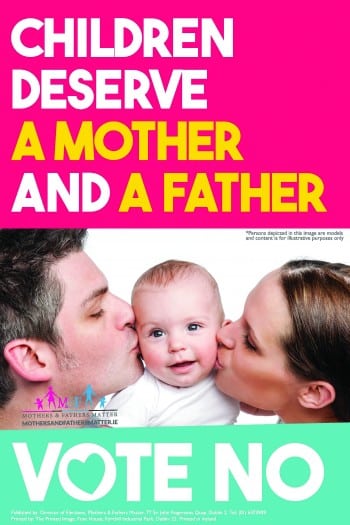
    By Niall Crowley Diarmuid Martin believes in a “culture of difference” equality. He is not saying that gay and lesbian people are deficient compared to others, he talks about a ‘uniqueness’ They’re all for equality, Diarmuid Martin, GLEN, the Iona Institute, Marriage Equality, even the Government. The “Yes” and “No” sides in the May referendum on same sex marriage seem united. “Yes Equality”, the civil society group seeking a “Yes” vote, argue, that “voting yes will be saying yes to marriage, yes to equality and yes to strengthening Irish society”. The Government named the Bill to amend the Constitution, “The Thirty-Fourth Amendment of the Constitution (Marriage Equality) Bill 2015”. The Iona Institute was aggravated, but David Quinn is still for equality. “Those of us who will be voting no in May are not voting No to equality. Instead we’re voting to ensure that different situations are treated differently”. Diarmuid Martin is advocating a “No” vote but remains committed to equality. “An ethics of equality does not require uniformity. There can be an ethic of equality which is an ethic of recognising and respecting difference. A pluralist society can be creative in finding ways in which people of same sex orientation have their rights and their loving and caring relationships recognised and cherished in a culture of difference”. Diarmuid Martin believes in a “culture of difference” equality. He says: “I am not saying that gay and lesbian people are unloving or that their love is somehow deficient compared to others, I am talking about a uniqueness in the male-female relationship”. David Quinn is more blunt about the consequences of a Yes vote: “We will be saying that families consisting of two married men or two married women are just as fundamental to society as a family consisting of a married man and woman”. Mother and Fathers Matter agree: “Men and women who marry will be denied proper recognition and celebration of the distinctiveness of their union and, even more importantly, any recognition of their role and responsibility in creating and nurturing children”. “Culture of difference” equality is at ease with discrimination. It is redolent of pre-Civil Rights attitudes to ‘Negroes’ in the US: ‘separate but equal’ It has echoes of the “equality before the law” except in case of “differences of moral capacity and social function” that extraordinarily continues at the heart of the Constitution’s provisions on equality but which owes its origin in the thinking of the nineteen-thirties. Article 40.1 still provides that: “All citizens shall, as human persons, be held equal before the law. This shall not be held to mean that the State shall not in its enactments have due regard to differences of capacity, physical and moral, and of social function”. This thinking infuses The Evangelical Cross Denominational Response to the Same-Sex Marriage Referendum which complains: “Service providers such as caterers and photographers would be acting illegally if, on grounds of conscience, they were to decline services for same-sex weddings”. And Fathers and Mothers Matter worry that: “any business connected with marriage or weddings could find itself before the courts if it refuses to provide its goods or services for a same sex marriage”. “Freedom of conscience” becomes a cover for discrimination. “Culture of difference” equality comes with some essentialist rendering of men and women. Mothers and Fathers Matter argues: “Men and women complement one another. Children benefit from the balance that mothers and fathers and bring to parenting”. The Evangelical Cross Denominational Response to the Same-Sex Marriage Referendum suggests: “This change would deny the importance our society places on the complementary role of mothers and fathers in raising children”. This smacks of the insidious results of stereotyping that serve to underpin the fact that women in couples do nearly three quarters of the unpaid work and more than half of the total work per day in a household. Difference has practical implications. A failure to take account of such implications does lead to exclusion. The fact that gay and lesbian people form loving and sexual relationships with people of the same sex means they are different to heterosexual people. The fact that marriage fails to take account of this difference means that lesbian and gay people are excluded from any status or benefit it might offer. Yes, says the “No” side! That is why you have Civil Partnership for lesbian and gay people. “Culture of difference” equality cannot even deal with difference. Making adjustments to the general provision of rights so as to ensure access and inclusion has to be the first response to difference. Separate provision is only a last resort or it becomes segregation and discrimination. Another constraint derives from this “culture of difference” equality here. Breda O’Brien says if gay people want to live a Christian way of life, like all unmarried couples, they should abstain from sex. “If you can live up to this very demanding thing, I think it will make you happy [to abstain]. It will be excruciatingly difficult, I think you will need huge support, huge help, lots of very strong, loving relationships”. You are different but we are unique. We don’t want to do business with you. We will all retain our traditional roles. You can have civil partnership but you can’t have sex. This “culture of difference” equality is not convincing. Best stick with “Yes Equality” if you want equality. •

    Loading

    Read more

  • Posted in:

    Don’t tell me my family’s ‘not ideal’.

    By Daire Courtney. As far as my family are concerned, my two mothers are married. They tied the knot in New York  just under a year ago. The Irish state does not recognise their marriage, but with luck it will soon. With two weeks to go, the posters are up, the debate is in full swing and every nay-sayer wants to know: should gay couples be raising children? The Children and Family Relationships Act may have decided that issue legally, but the No campaign aren’t trying to debate marriage. They are looking to scare up No votes. They are asking people to prevent same-sex couples from bringing up children, despite the fact that they already are bringing them up. I am twenty years old. My mother came out as gay when I was two and she met her partner when I was eight. People often want to know what my childhood was like, but mostly they want to know what was wrong with it. This is the kind of subtle homophobia that comes from assumptions that you weren’t parented properly. Did you have the right kind of role models? Were you bullied? Did you feel like something was missing? Ultimately it all comes down to asking you if you regret that your parents are your parents. This is and always has been hurtful to me not only because it is homophobic, but also because it’s deeply offensive to every day I’ve lived with my parents. My parents are wonderful people. I won’t hear a word against them. Or I wouldn’t if I had the option to choose. The referendum has given space to many more hurtful opinions than usual. It’s frustrating to listen to people on TV saying your family is “not ideal”. It’s insulting to have to answer probing questions and educate people. I never had doubts about my family’s legitimacy. I don’t need the state to tell me that my parents are my parents. But the lack of legal recognition causes problems. When I was five years old, my mum’s first female partner was diagnosed with terminal breast cancer. She was given six months to live but she lived three years. I considered her as a parent. I started thinking about what would happen if my other mum died. When my new mum came into our lives, I felt more secure. But I realised at some point that my new mum had no legal claim to me. If something happened to my birth mum, where could my sister and I go? Both of our parents could be taken away. Not many ten-year-olds have to worry about things like that. It is also about having watched my parents campaign for years for marriage equality. Even without the problems for me growing up, my parents want their marriage recognised. That’s a good enough reason or me to campaign for a Yes vote. The easiest way for the No side to win seems to be to wax lyrical about the child’s ‘right to a mother and a father’, as if those concepts mean anything specific. Every parent is different. There are no characteristics that are unique to mothers or fathers, unless you believe in gendered stereotypes of Daddy breadwinners and Mammy bakers. The No side are using children to play on the fears of people. Not everyone knows a queer person and fewer people know a queer family. We have the statistics and the reports to counteract fears, but people need to see our families and connect with how the referendum affects us to understand. Canvassing for marriage equality has always been more successful when queer people go door to door and tell the story of how happy they and their partner are. For us children, this debate means opening up childhood memories and showing them off. Being a poster child is tough, but it is the only way to show voters who queer families are. This referendum is about LGBTQ children having equality in their future. It is about LGBTQ couples who have been waiting years, or even decades, for a real wedding. And yes, it’s about the children who have been told their whole lives that their families are not equal. •

    Loading

    Read more

  • Posted in:

    Letters – May 2015

    On the article about Aosdána in issue 36 of Village (See Mannix Flynn’s reply on page 32) Dear Editor, In his article in your publication, dated 14th April 2015, Mannix Flynn is wrong when he states, regarding election to the position of Saoi of Aosdána, “Currently, if a position is vacant for one of the Saoi (Saoithe) all it needs is for certain insiders in Aosdána to get together 15 members to put a name forward to guarantee the elevation”. The procedures for nominating a member of Aosdána to the honour of Saoi are laid down in the rules of Aosdána, clearly and unambiguously. They state that at any time, fifteen members may propose in writing another member for election as Saoi. There is no such thing as “guaranteed elevation”. When a nomination has been correctly put forward, it then goes to the entire membership for ratification by secret ballot. A successful nomination must gain the positive votes of 50% of the entire membership plus one. Mannix Flynn’s contention that this process can be hijacked in secret by what he calls “certain insiders” is therefore factually wrong. Having been a member of the Toscaireacht (Steering Committee), from 2007 to 2011 Mannix Flynn is, or should be, familiar with the rules of the body. The current Saoithe were nominated by a very wide range of members. At a conservative estimate, more than half of the members have been involved in these nominations. Mannix Flynn’s definition of “certain insiders” is, therefore a most peculiar one. Mannix Flynn’s motion before the last General Assembly proposed that, on a vacancy arising, the Toscaireacht should advise all members that a vacancy exists. The fact is that both the Registrar of Aosdána and the Arts Council/An Chomhairle Ealaíon issue condolence notices to all members when a Saoi dies. Given the status of the Saoithe as artists, there is invariably extensive media coverage of the death. Mannix Flynn is extremely economical with the facts when he refers to the contribution of our member Theo Dorgan to the debate on Mannix Flynn’s motion at the 2015 General Assembly. Theo Dorgan, as the minutes show, made the larger point that the honour of Saoi is conferred to acknowledge the work of the most gifted of our artists.  Theo Dorgan’s view was that, as an honour freely conferred by the membership, it would be inappropriate to make the position of Saoi the subject of a competitive election with multiple candidates, which was the thrust of Mannix Flynn’s motion. It would be equally inappropriate, for example, to institute competitive elections for the honour of Freedom of Cities of Dublin, Belfast, Cork etc. Honours are properly, freely given – neither sought nor competed for. Mannix Flynn put his motion before the General Assembly and, following a full and open debate, his motion was put to the meeting; it was overwhelmingly rejected. Yours faithfully, Mary FitzGerald, Chair of the Toscaireacht, Aosdána, 70 Merrion Square, Dublin 2

    Loading

    Read more

  • Posted in:

    Yes – Vote yes for gay rights, but stay reserved about state support for marriage

    The case for gay rights, pioneered in this country by David Norris through the courts and the European Convention on Human Rights, is unanswerable. Everyone has the option – philosophically – to believe the equality of gay people or to deny it. But the fact is that if people chose – in a practical or political way – to register their offence at what others get up to where no nuisance is caused to third parties, there would be no end to the asymmetrical busybodiness that would undermine public and individual welfare. For this reason society is best served by freedom for consenting adults to exercise whatever sexual preferences best fulfil them. Village feels no more need to indulge the preferences of gawkers that others should deny their sexuality – the Iona Institute’s Breda O’Brien recommends gay abstention – than it feels the need to indulge the preferences of bigots that seek to count people as inferior by virtue of their race, sex, able-bodiedness or any other accident of birth. Indulgence of such bigotry would be a charter for Nazis and eugenicists. Village is driven by an egalitarian approach to  rights. It is not impressed with assertions of rights to property by those with lots of it for example (the O’Donnells and the Quinns), or noisy campaigns against property taxes, at least fair ones, or against capital acquisitions and gains taxes. It treats very seriously the ordinary right to life, as the most fundamental manifestation of the  equality of humans; it promotes equality of education and equality of health treatment. It believes in equality of quality of life. And Village considers that future generations have an equal right to the fruits of the earth giving rise to an obligation to care for the environment, sustainably. Equality is Village’s stringent thing. Equality of rights is not something to be casually touted around. If something should not be a right then there should not be equality of the right. For example, Village would not acknowledge the right of a ethnic minority to form a gentlemen’s club that excluded women: there should be no right to form clubs that exclude women so there should be no equal right for that ethnic minority to do so. Against this background while it takes gay rights very seriously, it is much less impressed with the case for marriage, even gay marriage. Marriage should be an emotional and social privilege not a legal right. A right is something that everyone can avail of. Marriage is something that only people who are linked through love can avail of. Furthermore, marriage discriminates in favour of the fortunate (those lucky enough to be linked through love), including through tax advantages. Egalitarians would ideally indulge only institutions that promote the less fortunate, not institutions designed to enshrine iniquity. The understandably fraught debate on marriage equality in 2015 has been remarkably unphilosophical with the Yes campaign absolutely ascendant in the media and amongst decision-makers but characteristically driven by emotionalism, a visceral and right-on sense of the modern and, for the most part, a freedom-dressed-up as-equality-agenda which says if straights have a right to marry then so too should gay people – without ever questioning whether straights should indeed have that right, whether marriage serves the vision of a progressive society. This unradical view of society begets a politics that wishes to get the state off the back of the citizenry. Village’s agenda is for the state to be active in promoting the needs of all the oppressed. Agendas rooted in freedom and liberalism rather than equality are less likely to see opportunities for solidarity with other oppressed groups. So there has been little common purpose made between the gay-marriage campaign and those fighting for unfashionable rights for Travellers, asylum-seekers in direct provision, or (most controversially since they are disdained as being counter to the still substantially unrealised feminist agenda which like wise can be rooted in either freedom or equality) fathers’ guardianship rights, for example. Hopefully this common purpose will evolve in due course. Being moved by recent celebrations of legislative change in the US and France and an underlying visceral preference for the views of the LGBT movement rather than those of the Iona Institute is simply not enough to justify affording marriage a status it does not deserve. Certainly as was recently underlined by Judge Ruth Bader Ginsburg in the US Supreme Court marriage has moved on from the era, only a generation ago, when it was a capsule within which men could treat women as chattels. Nevertheless at its essence it defines, patriarchically and Thomistically, a relationship centred on a woman’s utility as a child-bearer and primary rearer. A radical and egalitarian agenda is to undermine state support – including financial support – for marriage, not to extend the numbers who can benefit from the unfair privilege. Equality of access to marriage would extend it to people in polyamorous relationships, housekeeper and housekept and indeed to all singles, in love or not. That is not envisaged so the issue in this referendum cannot truly be said to be one of equality, either. Perversely, perhaps undermining it is the best thing gay marriage can do to this complacent institution. Moreover, you do not of course need to advantage the married in order to generously and directly support children. Supporting children is a separate issue from supporting marriage. It is an imperative which the State can address without buoying marriage. Assuming gay marriage becomes constitutionally possible, the best interests of the children should be the overwhelming, overarching guide to parenting and adoption. There is no evidence that gay couples, married or unmarried, provide inferior parenting. Or that well-supported parenting by good single parents cannot serve the best interests of the children. Therefore gays should have equal rights to adopt, but so too should well-adjusted loving single people. All that said, in a society that elevates marriage, and where the options are Yes or No, it would be terrifying to vote

    Loading

    Read more

  • Posted in:

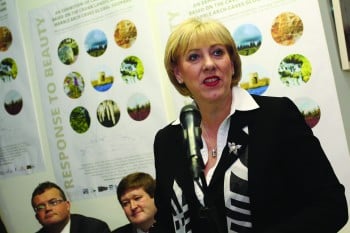
    Whatever the Heather. Profile Heather Humphreys.

    By Michael Smith. Not that it seems to matter but Heather Humphreys is the Minister for Arts, Heritage and the Gaeltacht. A stranger to a national profile she came from nowhere to succeed Jimmy Deenihan, the only minister to lose that rank in July last year. Actually, she had been elected to Dáil Éireann in the 2011 general election as the first woman ever to be elected for Fine Gael in the Cavan-Monaghan constituency. She had been Mayor of Monaghan County Council in 2009, having previously chaired the Council’s Strategic Policy Committee on Planning and Economic Development and also served on the Council’s An Coiste Gaeilge, though she spoke no Irish. Humphreys was educated at St Aidan’s Comprehensive School in Cootehill, County Cavan, married farmer Eric Humphreys, has two daughters, one of whom was involved in a bad car crash last year, and lives on a farm in Aghabog. She worked with Ulster Bank and then became Manager of Cootehill Credit Union. Before being appointed as Minister for Arts, Heritage and the Gaeltacht, she was a member of the Joint Oireachtas Committee on Finance, Public Expenditure & Reform, the Joint Administration Committee and  the Organisation for Security and Co-Operation in Europe (OSCE). Her mentor was Seymour Crawford TD and Humphreys and Labour’s Jan O’Sullivan are currently the only Protestant TDs in the cabinet. None of this, even the last bit, shouts Arts, Heritage, Gaeltacht. According to her website: “Heather’s financial experience in both personal and business matters combined with a farming background makes her a strong voice for the people of Cavan and Monaghan”. So far so humdrum in the cabinet of the man who wants to make Ireland the best little country in the world to do business. But there’s more: “She is acutely aware of the challenges facing indigenous industries and small business and understands the importance of cash flow to businesses and has made this issue one of her main priorities as a new TD. Heathers [sic] approach to politics focuses on common sense, honesty and practicality. This goes hand in hand with her businesslike attitude and a willingness to roll up the sleeves and get the job done”. A fair observation is that added to her vapid track record she does not appear to have any vision or ideology (outside improving cash-flow for business). She is best known for her ignominious performance in the controversy over the appointment of failed local election candidate, John McNulty, to the board of the Museum of Modern Art (IMMA), just days before he was announced as Fine Gael’s nominee for the Seanad by-election last year. Humphreys gave a faltering performance in a doorstep interview with journalists and refused to reveal who within Fine Gael told her to put McNulty on the IMMA board. More endearing tales are that she was “absolutely shocked” to be appointed a Minister and that she asked her Secretary-General to call her Heather when she first met him. He refused and of course she quickly yielded: “Well if that’s the way you do it, that’s fine with me . And then he goes, ‘Yes, Minister’”. With the Arts Council dishing out the cash to the luvvies, and Junior Minister Joe MacHugh belatedly brushing up on his Irish and doing the Gaeltacht bit, Humphreys is uniquely lumbered with the unpopular but nonetheless serious legal responsibility for Heritage. While she seems, after a slow start, to be addressing the Rising centenary, through the National Parks and Wildlife Service she is also required to enforce the fractious and, more importantly, tedious EU Habitats and Birds Directives, and to facilitate Irish compliance with the UN Convention on Biological Diversity. On top of this she is charged with application of the Council of Europe Conventions on archaeology, architectural heritage and landscape, and with the National Museum, Library and Gallery and other cultural institutions. Concern or action on nature conservation have been startlingly absent since her appointment as Minister.  Her vanishing if gamey predecessor Jimmy Deenihan – now Minister for the diaspora or some such – remarked during his time that: “Part of me wishes that the portfolio had been kept to arts, sports and tourism”. Heather Humphreys has gone one better and acted as if it already had been.  Jobs, jobs and the odd forklift truck factory in Monaghan are the staples of her social-media outings. The occasional commemoration here. Maybe a bit of 1916, there. The apex of her tenure is represented by gushings about sitting next to the former First Lady in New York on St Patrick’s Day: “what an honour to meet with Hillary Clinton” etc. Where heritage issues impose on her busy schedule it is usually some soft-focused divagation like preserving an historic corrugated iron church in…Monaghan. What the new Minister really appears to love is attending nice arts events around the country. Indeed those following her Twitter account may be confused and think that she is a junior functionary working for Richard Bruton. In mid-March An Taisce reviewed Minister Humphreys’ previous 200 tweets – going back more than 150 days. It discovered that the Minister had mentioned nature or wildlife topics only twice. The lonely tweets addressed the Rural Development Programme and the Deer Management Framework. An Taisce put these findings to the Minister via Twitter, who responded, “Lots of good work going on. For eg this week I secured Govt approval for publication of National Landscape Strategy”. In early March 2015 the EU European Environment Agency published a report on Europe’s wide-ranging biodiversity loss, explaining how 25% of species are threatened with extinction. The main drivers for this were identified as habitat loss, urban expansion, agricultural intensification and climate change. Ireland has no strategies to deal with these pressing threats. A weak climate act is passing uselessly through the Oireachtas. The 50% increase in milk production and other agri-business targets under the meaty Food Harvest 2020 agriculture policy are accelerating climate change and the destruction of habitats, especially wetlands. Iconic Irish bird species such

    Loading

    Read more