Posted in:
Ireland undervalues equality
The equality agenda is collapsing


Ireland's political and cultural magazine
Posted in:
The equality agenda is collapsing

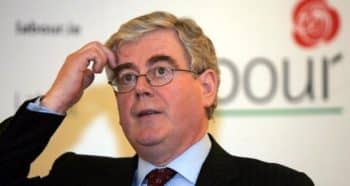
“Should I Stay or Should I Go?” – so sang The Clash in their classic hit of the 1980s. According to two contributors to the December edition of Village, it is a question being asked by many members of City and County Councils, particularly in the Dublin area. In the December issue, former Councillor Mick Rafferty told us why he was leaving and Fine Gael’s Councillor Gerry Breen why he was staying. The common feature of both was their sense of defeatism. Mick is calling it a day because he thought the procedures and politicking were too much and Gerry is staying, even though he is unhappy with the ways things work, or more accurately don’t work. Regrettably Gerry offered no new ideas and Mick retreated to the concept, so beloved of those who actually wield power, of “participative democracy”. A policy that sounds good in theory but ensures in practice that real power remains with the elite. The picture Mick painted of the role of a Councillor, is not one I recognise. The reality is that these Strategic Policy Committees were designed to contain Councillors rather than empower us. “Keep them busy and they will be less of a nuisance”. In my sixteen years as a member of Dublin City Council I am proud of a record of achievement that has benefited both Dublin and my own electoral areas. I have also by and large enjoyed the work. Nor do I agree with Mick’s apparent view that all Councillors somehow share the same agenda and should work as if we are all on some agreed common course. I am a Labour member of the Council. I seek to advance my Social Democratic policies. I do not share the political objectives of Fianna Fail, Fine Gael or Sinn Fein. It is worth noting that of the sixteen, some went because they were elected to the Oireachtas, others because a political career had effectively been closed off by rivals, one moved to live abroad and some because their personal lives had changed since their initial election. In general we as Councillors do not set the rules by which the Council operates. More often than not they are imposed on us from the Department of the Environment in the Custom House. It was from there that the Strategic Policy Committees, Corporate Policy Groups and City and County Development Boards were dreamt up. It is these unproductive structures that impose the wasteful time constraints on Councillors. These are but some of the areas we need to change. Mick is correct that the Housing Strategic Policy Committee, chaired by my colleague former Councillor Mary Murphy, over the last few years published progressive policy papers on housing and related matters. In better times I hope that these yield fruit. Yet, the reality is that during our “Celtic Tiger” years, as the policy papers piled up, the housing and homelessness list of Dublin City Council rose in parallel. The reality is that these Strategic Policy Committees were designed to contain Councillors rather than empower us. “Keep them busy and they will be less of a nuisance”. We will not however force change by walking away from the problem. For me Local Government matters. In terms of planning, housing, community development, provision of accessible recreational, cultural and sporting opportunities it is very often the first point of call. The fact that it has been starved of funding over the last decade should not obscure that fact. While the detail of such reform is extensive the essentials are not. If they are to be in any way meaningful they must include: An Independent source of funding for Local Authorities – not subject to the whims of the Department of the Environment. Reform of the City and County Managers Act, creating a new post of Chief Executive Officer – accountable to and appointed by the relevant Local Authority following recruitment through the Public Appointments Commission. A directly elected Mayor of Dublin with a five-year term and accountable to an enhanced Dublin Regional Authority. The extension of the role of the Dublin Regional Authority to include Transport and Planning and subsuming bodies such as the Dublin Transport Authority and the Affordable Housing Partnership. Real controls and limitations on electoral spending at local elections. Yes, I want real reform. I sought election many years ago to improve my local community and because I enjoyed the cut and thrust of political life. In one of the many deserving tributes to the late Tony Gregory, one person wrote of Tony’s legal struggle to remain a member of the City Council following the ban on holding the dual mandate. Tony sought to retain his Council seat because he too knew that Local Government matters. The author of that tribute was Mick Rafferty. Mick was right. I have never regretted my decision to seek election to the Council and my belief that local government is the best model to deliver real reform to Irish Society has intensified over those years. The Public need and deserve a better system. It is time for those who agree to Stand up for Democracy, Stand up for Local Government and in my case Stand up for Dublin.
Posted in:
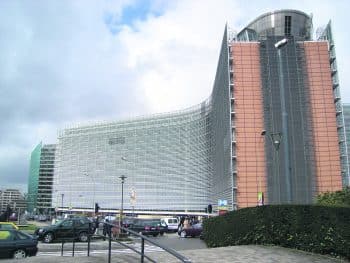
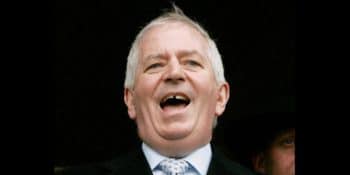
One thing you can’t fault Charlie McCreevy for is his consistency. The palpitations in the world economy might have exposed his allergy to financial regulation as reckless, yet McCreevy’s faith in unfettered capitalism remains undimmed. Since taking up his post as the EU’s single market commissioner in 2004, McCreevy has repeatedly recited the mantra ‘less is more’. “For far too long the EU has been adopting rules at EU level, simply for the sake of having rules at that level”, he told a conference in Cape Town during 2007. “Once adopted the rules have been left to gather dust on the statute book. My approach is a different one. We should adopt fewer, better quality rules and then devote our energy to making sure they are properly enforced”. Superficially, this appears like McCreevy has been trying to replace the Euro-twaddle of the Brussels elite with the plain-speaking of Kildare racecourses. The truth, however, is that he has gone to enormous lengths to shield some of the most dubious practices in modern finance from oversight. During January, The Financial Times described McCreevy’s approach to hedge funds and private equity as “more nuanced” than those of his direct boss, European Commission president José Manuel Barroso. Leaving aside that this may be the first time the word ‘nuanced’ has been applied to anything advocated by McCreevy, the FT claim is untrue. McCreevy has maintained that hedge funds should be subject to no more than voluntary codes of conduct. He has, however, been pressurised by Barroso into drawing up plans for binding regulation so that they can be formally proposed ahead of the European Parliament elections in June. By arguing that hedge funds can manage themselves, McCreevy is out of sync with a growing body of international opinion. Barack Obama’s nominee as Treasury Secretary Timothy Geithner has signalled that he is in favour of mandatory registration and surveillance in this field. So, too, have Angela Merkel and Nicolas Sarkozy. He has an extremist position and is a full believer in the casino style of capitalism that has now collapsed. McCreevy has maintained that hedge funds play a largely positive role, ignoring how they helped trigger the sub-prime crisis in the US and how they have engaged in shortselling banks on this side of the Atlantic. “I think he is finding it very hard to accept that his beloved unregulated market has failed”, said Poul Nyrup Rasmussen, the former Danish prime minister and now a Socialist MEP. “He has certainly been trying to delay and where possible avoid regulation on hedge funds and private equity. I can’t say what lessons he has learned from the crisis but he does not seem to have changed his dislike of market regulation which is a pity because practically everyone else has realized that better regulation is unavoidable and necessary. I suspect we will encounter further efforts by him to put off regulation”. Some clues as to why McCreevy remains so convinced of the virtues of hedge funds may lie in time in domestic Irish politics. Although hedge funds were banned in Germany until 2004 because their speculative activities were considered too risky, McCreevy had no qualms about welcoming them to Ireland as the country’s finance minister. And by the time their global value was estimated at $2.5 trillion last summer, the IFSC in Dublin stood alongside London and New York as one of the major onshore centres of hedge funds in the world. “Mr McCreevy behaves like a lobbyist for the hedge fund industry,” says Peter Wahl from World Economy, Ecology and Development (WEED), a German anti-poverty group. “He has an extremist position and is a full believer in the casino style of capitalism that has now collapsed”. Once dubbed the most right-wing finance minister in Europe by Proinsias de Rossa, McCreevy has used his platform as a commissioner to identify with the chief architects of market fundamentalism. While his ideological preferences were never really in doubt, he nonetheless chose December 2005 as his ‘coming out’ month. He praised Margaret Thatcher for how she had “economically transformed” Britain. And he quoted Milton Friedman, intellectual guru to Ronald Reagan and Augusto Pinochet, to support his contention that tax competition between nations is healthy. Again, McCreevy finds himself marginalised in holding that view. In December last year, a UN conference in the Qatari capital Doha recognised the kind of tax competition McCreevy favours as a major contributor to global poverty. Obama has also promised to crack down on tax havens. According to the World Bank up to $800 million in untaxed capital leaves poor countries or economies in transition each year, frequently because multinational firms have received tax breaks from the host countries. This dwarfs the $100 billion that such countries receive in annual development aid. Accountancy firms have provided invaluable advice to companies about how they can conceal their profits and thereby evade tax. The four biggest firms with global reach – PricewaterhouseCoopers, KPMG, Ernst & Young and Deloitte – have all paid huge settlements in recent times after they were sued for breaching financial rules. Yet they have a staunch ally in McCreevy, himself an accountant by training, who has recommended that the four (joined together in the International Accounting Standards Board) should effectively set the rules that companies listed on the EU’s stock exchanges should follow. This has thwarted moves to introduce the kind of international system that is needed to tackle tax evasion: one where every multinational firm has to state what profits it makes and what taxes it pays in every country where it operates. “Published accounts will always be like bikinis – much more interesting for what they conceal than for what they reveal”, McCreevy has said. “The view that more frequent reporting by companies increases transparency is one about which I am deeply sceptical”. Despite speaking about opaque financial transactions in colourful and accessible terms, McCreevy has snuggled up to a largely unaccountable corporate elite. “The IASB is a private company,” said
Posted in:
Progressive political forces and parties must ally electorally to offer a real alternative at the next election, says Peadar Kirby

Posted in:
The loss of almost 2,000 jobs at Dell’s Limerick plant was a body-blow to the city as the recession started to bite
Tensions rise as media standards fall Media need to look to the facts, not ideology Tensions between the local community and the Shell-led gas consortium in north-west Mayo have considerably deepened following the sinking of the shellfish boat owned by Pat ‘the Chief’ O’Donnell in mid June. The sinking of his boat and the arrest of his son, Jonathan, as they exercised their historic rights to fish in Broadhaven Bay have removed a key obstacle in the company’s attempts to lay a pipeline from Glengad to the Corrib gas field. Last summer, close observers of the controversy surrounding the proposed high pressure gas pipeline and terminal at Bellanaboy suspected that the withdrawal of the massive pipe-laying vessel, the Solitaire, was primarily influenced by a fear on Shell’s part that O’Donnell might be successful in a High Court application to protect his historic fishing rights. Shell to Sea activist, Maura Harrington, was for a number of days also on hunger strike in protest at the presence of the ship in Irish waters before the sudden departure of the Solitaire last year although the company claimed that the pipe laying exercise was suspended due to technical problems. Many suspected that a court decision in favour of O’Donnell’s right to fish was a key consideration by Shell executives who feared that such a development could further delay by years an already seriously troubled project. Now with the forced removal of the O’Donnell’s from the water, however temporarily, and relatively mild weather conditions over the coming weeks Shell is hoping that the pipes close to shoreline can be laid without too much further disruption by opponents of the project. Pat O’Donnell and his son Jonathan have been arrested on a number of occasions and another of their boats seized since the shellfish boat Iona Isle was sunk on 11th June off Erris Head. There has yet to be a decision by An Bord Pleanála following its recent oral hearings into Shell’s renewed application for a revised pipe line route during which significant health and safety issues, similar to those raised over the previously unacceptable route, were raised by a number of interested parties. (see Michael McGaughan article page?). There has been some media speculation, fuelled by Shell advisors and spin doctors, that Pat O’Donnell may have sunk his own boat, and his livelihood, in the early hours of 11th June in order to gain sympathy for his position and of many others who want the proposed pipe line and terminal moved to a location where it does not threaten the health and safety of local people or the environment. This notion is rejected by O’Donnell and his crew member in the lengthy and detailed interview with Miriam Cotton which is reported in these pages. Both men are adamant that the boat was sunk when four armed and masked men with Eastern European accents boarded the trawler and held them at gun point while releasing water into the vessel. Similar allegations of attempted media manipulation by those opposed to Shell’s activities were made against local farmer, Willie Corduff, when he complained that he was beaten, again by masked men, after he emerged from under a truck where he was protesting against what he and others saw as Shell’s attempts to illegally fence off from the public an area at the Glengad landfall. In the early hours of April 23rd Corduff claimed that he was attacked and beaten around the head and body at the Glengad site by men wielding batons or heavy rubber instruments and subsequently hospitalised. Among the commentators to question the veracity of Corduff’s account was Peter Murtagh who suggested in The Irish Times that the former member of the Rossport 5 – who was jailed for ninety days in 2005 – was making it all up. Murtagh claimed that Corduff had not provided him with his hospital records which might substantiate his injury claims. The respected IT editorial executive did not record the fact that obtaining hospital records is not something that can be achieved within the deadline demands of a newspaper but can sometimes take weeks, as Village has learned. Witnesses including professional journalists who saw Corduff in hospital testified to his bruised condition as did a photograph published in The Irish Times on the day after the attack and s other photos published subsequently in Village magazine. The hospital and ambulance service records obtained and paid for by Willie and Mary Corduff and furnished to Village are consistent with his account of how he sustained injuries which left him in Mayo General Hospital in Castlebar for twenty-four hours. The diagnosis prepared by Mr Osama Elfaedy, the registrar to consultant surgeon Kevin Barry and sent to Corduff’s GP, Dr Brendan Molloy in Belmullet, records that Corduff suffered from bruising and had been kicked all over the body during an alleged assault at Glengad. Willie Corduff was suffering from kicks, headaches, nausea and vomiting upon his admission on 23 April. It also records that he had suffered a possible loss of consciousness. The hospital carried out a CT scan and X Rays on Corduff’s spine, chest and ankle where the bruising and pain were most pronounced. He also complained of pains to his legs and thigh. He was treated with pain reliefs and analgesia and advised to rest before his release from hospital on 24th April. Ambulance records note that Corduff complained of pains around his head and body when he was collected at Glengad and that he may have lost consciousness after he said he was beaten by masked security guards. In early July, Amnesty International reported that Shell and other oil producers in the Niger delta in Nigeria were responsible for serious environmental pollution along the routes of its pipelines in the West African country. Communities had been ravaged by leaks and explosions devastating farmland and ruining the environment and the health and safety of local people over many years. Amnesty accepted that there had also been a campaign

Journalism, politics and property are interdependent.

No sooner had the boom come crashing down in 2008-2009, than right-wing commentators came out of the woodwork insisting on a ‘quick fix’