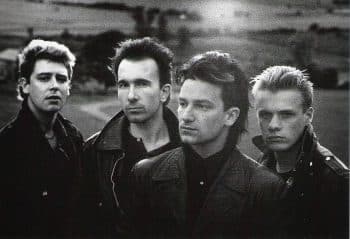
U2’s music is acclaimed, but its members pursuit of profit is not very Rock ‘n’ Roll.


Ireland's political and cultural magazine
U2’s music is acclaimed, but its members pursuit of profit is not very Rock ‘n’ Roll.
Posted in:
How can a tax on the pension of a public sector worker earning just €15,000 be justified when the government plans to inject €8 billion and perhaps as up to €15 billion into the major banks without any idea of the scale of their toxic debt from bad property loans?

Posted in:
He scratched himself, yawned, and looked out the window. But Kevin Haugh was always listening.
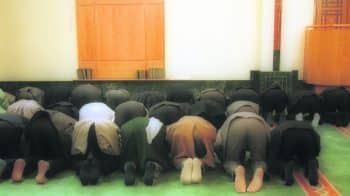
In March 2003, the Minister for Communications, Mr Dermot Ahern, invited expressions of interest in the cause of religious advertising on RTE. Many of the submissions had the appearance of being orchestrated, and shared the same view: if advertising tarot cards is OK, why not religion? The outcome of the consultation process was that the Minister decided to leave well enough alone. The context of Minister Ahern’s review of religious advertising – the Broadcasting Authority Act, 1960 and the Radio and Television Act, 1988 – was too narrow. The Constitution is paramount. In 1972, the people removed the recognition by the State of several denominations and the special position of the Roman Catholic Church. Consequently, the State is, in theory, essentially neutral as and between all belief systems. Of course we know this is not the case, but it is a reasonable goal. Statute law relating to equality between gender, religion, etc, is another constraint. Civilised standards of decency and social policy oblige the state to be even-handed or better in the treatment of law-abiding minorities. This requirement was taken to the extreme in the Supreme Court judgement in the McKenna case which assured equal radio and TV representation of antigovernment view in referenda. Neutrality and equality would have been better guides than the legislation for the review. The present position At present broadcasters cannot take paid advertising from any religion or group of religious interests, even if it only to create awareness of innocuous and inoffensive matter such as newspapers, magazines, events or campaigns. An example of this absurdity is the rejection of a harmless advertisement for Veritas, the Catholic publisher, this Christmas. However, the paid religious- advertising impediment is regularly circumvented through the editorial control of unpaid ads and propaganda about religious themes, which are a charge against broadcasters’ revenues. The most controversial is the Angelus which was introduced at the behest of the Episcopal bully, John Charles McQuaid, some 50 years ago. It is broadcast at peak time at considerable opportunity cost to the broadcaster and those who pay it. There’s also Newsround’s TV coverage of religious processions, the merits of Padre Pio, Opus Dei, etc. Like all advertisements, nothing is challenged; they are all of the ‘soft sell’ kind. Editorial discretion comes from persons ranging from those broadly supportive of religion, through to closet zealots. Because of its Constitutional obligation to respect religion, the State cannot easily facilitate unfettered criticism of religion. There is tension between this and other Constitutional imperatives not to endow religion, not to discriminate or make any disabilities on grounds of religious belief or unbelief, or the religious status of a person, and the right to freedom of expression. Conundrums which must be faced. In facilitating or supporting organised religion in any way, it is time the Irish State faced several conundrums which it and the mainstream media have not faced to date. They are all the more pressing now: Have institutional religions, which enjoy charitable tax status, the right to subvert the civil law, for example, by secretly marrying persons under the lawful age or acquiescing in the genital mutilation of infants? Have religious institutions the right to subvert public norms, such as the equality of the genders? Have religious institutions the right to undermine personal self-assuredness, contrary to the best interests of individuals and society, through fatalism and dependence on miraculous intercessions or cures? The Campaign to separate Church and State would prefer if religions did not have these rights, nevertheless we respect the right of others to differ, but only on condition that none of them is allowed to dip their hands into the State purse to benefit their institution. This is merely another expression of the Constitutional prohibition of the endowment of religion by the State. If the State believes that taxes should be used in support of religious endeavour, there is the German remedy: levy a discretionary religious income tax for these purposes. At present RTE – unlike commercial broadcasters – provides religious services, usually weekly. These facilitate the needs of house- or hospital-bound members of a few denominations, enabling them to join in a communion of worship. The facility does not extend to the growing number of immigrants – many with a foreign tongue – who are geographically scattered and who follow Islam, Hinduism, or Christian ‘hot gospel’ or ‘bible-hall’ sects. The Irish Times (8th December) claims that there are now over 360 migrant-led churches. The current, free-broadcast, religious programming restricted to a few favoured Christian religions is discriminatory and seems to be contrary to the Constitution and The Equal Status Act, 2000. Uncritically presented religious editorial material advocating religious beliefs can constitute endowment of religion by the State where the broadcaster receives mandatory licence fees. It is inappropriate and should not be permitted. It is also objectionable if broadcast from any station taking commercial advertising; in a liberal society it is unfair to require the general public to subsidise religious propaganda through such revenue. Suggested Reform The present system of free, religious broadcasting must be reformed so that it is subject to critical and balanced editorial control and conforms to Constitutional and Statute law. The absolute prohibition on religious advertising is contrary to the Constitutional entitlement to freedom of expression by religious and by humanist groups. The obvious solution is to regulate it in an open fashion. All religious advertising should be vetted by a body beyond reproach and accountable, to ensure that no element of public policy or law is breached. Religious advertising should be carried at commercial rates. Religious advertising of an editorial kind needs to carry a rubric identifying it. This has been done, to some extent by RTE TV. Within this framework, broadcasting stations wholly financed by churches and established primarily for the promotion of denominational purposes, would, if subject to public order and morality, be lawful. Free broadcasting of religious ceremonies generally aimed at the sick, or infirm, or scattered minority denominations and humanist groups, if done in moderation

Posted in:
Dún Laoghaire has never quite cut the umbilical cord that connects itself to Dublin City. Although it is the County Town from Dún Laoghaire-Rathdown it has never quite come to terms with itself, and is constantly under pressure from the relentless expansion of Dublin City. This manifests itself in a frenzy of land rezoning every few years when the County Development plan comes up for renewal. The gradual expansion of the county to the south and west puts pressure on Dún Laoghaire to expand and compete with shopping centres and retail parks in Dundrum and Cherrywood. However if properly planned, Dún Laoghaire can hold its own and compete successfully as a vibrant east coast town. Dún Laoghaire has a lot going for it. It has a magical location on the edge of Dublin Bay beside one of the largest harbours in the country. From many of its streets you can look across the Bay to Howth and the Irish Sea. The Stena ferry connects Dún Laoghaire to Wales and beyond. As a planner I believe it has many of the key components that make a successful mixed-use urban neighbourhood: the People’s Park and coastline are within walking distance; good public transport exists with the DART and bus routes running through the town; a mixture of housing and shops are side-by side with schools, pubs and churches within the town. The refurbished Royal Marine Hotel and the Pavilion Theatre attract many visitors, as does the Festival of World Cultures held every August. However, the town has its fair share of challenges, and action is required to ensure it does not get left behind. At the height of the boom new residents were all but excluded from the town. High residential property prices meant that many residents’ sons and daughters had to move to Wicklow or Kildare rather than closer to home to find affordable housing. Hopefully the current slide in house prices will attract more young families to the town to sustain schools that have suffered from declining numbers over the last decade. However, Dún Laoghaire has an ageing demographic compared to the younger suburbs of Dublin, and there is an opportunity to provide more services to an active older population. More housing will support shops and other facilities, but it is crucial that such development is well planned. For instance the rezoning of the Dún Laoghaire Golf Club lands was highly controversial. People saw this as a loss of a green lung of the town and worry that the price of new homes will be unaffordable to many. People fear that the higher densities of new development will overlook and overshadow existing neighbourhoods. Better planning and architectural standards are required to overcome people’s very real concerns. The retail heart of Dún Laoghaire has been challenged in recent years by the bling of the new Dundrum Shopping Centre. Perhaps as the economy changes gear, people will better appreciate the shops and businesses in Dún Laoghaire that did not succumb to the frenzy of the boom years. Some retailers need to pull up their socks, but there’s a healthy mix of shops in Dún Laoghaire.Dún Laoghaire Shopping Centre was refurbished recently yet still presents a brutal edge to the town. I’d be happy to see a controlled explosion on the site similar to the Ballymun Towers! It should be replaced it with a state-of-the-art mixed-use development. Liverpool recently redeveloped part of its city centre with a park and pedestrian streets beside the Mersey. Dún Laoghaire could benefit from that city’s imagination. At the other end of Georges Street, removing a cluster of three buildings in front of Bloomfields Shopping Centre could create a wonderful urban square beside St Michael’s Hospital with space for outdoor cafes and a fountain. In recent months a decision was made to reopen Georges Street to car traffic. This is a backward step. Instead, a decent parking and traffic management plan would allow for a proper car-free area in the heart of the County Town. Successful businesses such as Hughes and Hughes bookshop, Alexis Restaurant and Harry’s bar and Grill have increased footfall. There are bold plans by the Council for a new Library overlooking the sea, and for covering part of the railway line with a new pedestrian promenade. Hopefully the Council will also develop the Dún Laoghaire Baths site as a modest development with a public pool, seaweed baths and a seaside café. Dún Laoghaire has a bright future if it can strike the right balance: high density not highrise; smart growth not suburban sprawl and sustainable transport instead of more car dependency. I’m cautiously optimistic that it will build on its natural strengths as a seaside town of heritage and character, and reinvent itself for the twenty-first century. Ciarán Cuffe is a town planner and Green Party TD for Dún Laoghaire.

Posted in:
If the government had acted four years ago on conflict the of interest arising from the membership of former Anglo Irish Bank chairman, Sean FitzPatrick, on the board of the Dublin Docklands Development Authority (DDDA) much of the enormous damage that has been done to the Irish banking sector could have been avoided. Roche dismissed Gregory complaint In November 2004, the late Tony Gregory TD asked then environment minister, Dick Roche, about potential conflicts of interest on the board of the DDDA. His question followed the disclosure that Anglo-Irish was to provide £300 million in funding for the Spencer Dock development which Treasury Holdings, the company controlled by Johnny Ronan and Richard Barrett, was building on the north quays. As a member of the DDDA board FitzPatrick was party to its decision to grant Section 25 planning status for the massive Spencer Dock scheme, incorporating the proposed national conference centre. He was also involved in meetings of the board when it made crucial decisions on the scale of the development, the height, size and density of individual apartments and the location of the social housing in the residential component of the scheme. Gregory, local Dáil deputy, and community activists in the Docklands area were concerned that the Anglo chairman was involved in making decisions which directly affected the bank’s and, as a major shareholder in Anglo, his personal financial interests. The minister’s response was, to say the least, dismissive. Roche told Gregory that there had been no breach of the DDDA’s code of conduct. “The code of conduct is published. In so far as I have any information, there is nothing to say it has been breached,” Roche said. “On appointment, members are expected to furnish details which has been done. When an item for discussion creates a conflict that may be discussed”. The minister went on to say that state agencies such as the DDDA required the financial expertise and business acumen of people such as FitzPatrick. His answer was prepared by senior officials in the Department of the Environment which is also represented on the board of the DDDA. It was clearly an inadequate response as subsequent events were to later prove. If more than a cursory investigation had been undertaken by the Minister he would have found far deeper conflicts of interest involving Anglo and the DDDA and arguably might have averted the current financial crisis which has arisen as the result of FitzPatrick’s hidden loans which in turn have forced the government to nationalise the bank at huge cost to the tax-payer. Anglo Directors’ conflicts of interest As revealed previously in Village, FitzPatrick attended several board meetings of the DDDA between 2002 and 2004 where issues relating to the Spencer Dock Development were discussed and decisions relating to the size of apartments and the location of the social housing were made. He also attended meetings of the board when it discussed Spencer Dock after the announcement in October 2004 that Anglo was to provide much of the finance for the scheme. At no time, according to minutes of the relevant meetings, did FitzPatrick disclose the potential conflict of interest arising from his position as chairman and previously chief executive of the bank in which he also held a significant personal stake. Another conflict arose in relation to the then chairman of the DDDA, Lar Bradshaw, who was appointed a director of Anglo-Irish Bank in late 2004 just after the announcement of the funding package for Treasury Holding’s subsidiary, the Spencer Dock Development Co Ltd. He served as chairman of the DDDA from 1997 and was re-appointed along with FitzPatrick for a second term in 2002. At the time Anglo’s funding for Spencer Dock was confirmed it was also announced that Bradshaw had purchased a large shareholding in the bank. There is no evidence in the minutes of DDDA meetings when Spencer Dock was discussed, and which he chaired, to show that Bradshaw declared any potential conflict of interest, or absented himself, as required under the DDA’s code of conduct. Dónall Curtin also sat on the board of the DDDA during the period although there is a record that he declared ownership of an apartment in the Spencer Dock scheme at one meeting. The links between Anglo and Treasury holdings in the Docklands go even deeper and raise serious questions about the failure of the various regulators to oversee the multi-billion euro property dealings in the State’s single largest commercial property development. For Treasury Holdings, the Docklands Authority has been, for most of its existence, a vista of very familiar faces. Their employees and agents and their bank were well represented at several levels, including in force on the Board. The most recent chairman of the DDDA, who replaced Bradshaw as chairman in 2007, was Donal O’Connor, who was also appointed a director of Anglo early into his term. He was appointed chairman of the newly-nationalised bank on the resignation of the disgraced Fitz- Patrick in December and immediately announced his intention to step down from the DDDA in order to avoid what he termed any perception of a conflict of interest. O’Connor is a senior partner of accountancy firm PricewaterhouseCoopers which is constructing its new headquarters in the Spencer Dock development. Anglo-Irish Bank, which specialises in property investment and corporate treasury services, also provided finance to a number of the other major developers operating in the Docklands. The bank has literally billions invested in schemes being developed by some of the biggest names in the Irish property world including Liam Carroll, Bernard McNamara, Derek Quinlan and, of course, Treasury Holdings. The DDDA is directly investing in McNamara’s €1.4 billion development on the site of the former Irish Glass Bottle company in Ringsend for which it provided fast-track planning permission with the Section 25 certificate it is empowered to grant and which cannot be appealed. Financier, Derek Quinlan, and investment funds raised by Davy Stockbrokers are also involved. In addition to Mr Bradshaw and Mr Fitz-

Posted in:
It’s (still) time to go, for a Minister without either party or achievements.

Posted in:
Practical efforts to unite the radical Irish left are now going nowhere.