Archives

OK

Random entry RSS

Loading

  • Posted in:

    This month’s philosopher of the Left: John Rawls

    John Rawls (1921-2002) is often said to be the greatest political philosopher of the twentieth century. He was a professor at Harvard University in the right-on seventies. His most famous work is A Theory of Justice (1971). He refined it endlessly which made an already over-elaborate theory even trickier. His theory is intricate, full of jargon and somewhat contrived. Still it reflects something that many, perhaps most, reflective liberals, would find fair. In A Theory of Justice, Rawls attempts to balance liberty and equality, the basic components of justice and fairness, in his theory of “justice as fairness”. Utilitarianism advocates the greatest good for the greatest number. It is an appealing practice, possibly the dominant theoretical driver of liberal democracies (The Fine Gael website says that it is Enda Kenny’s long-standing political priority), but it does not have any theoretical justification – unlike Christianity for example which claims to be rooted in the Bible and natural law. Rawls feels the need to find a justification for the theory he is going to offer. He roots it in the idea that if we could work out what people would decide was just if they had no knowledge of the situation they are in, that decision would stand even when they do know the situation they are in. He infers a sort of social contract among people from what he says they would do in this “original position” operating under such a “veil of ignorance”. We would, Rawls argues abstractly, affirm a first principle of equal basic liberties, thus protecting the familiar liberal freedoms of conscience, association, expression, to vote and the like. However, he damagingly says that equal basic liberties must be preceded by meeting very “basic needs” for economic goods – in effect opening his theory to the usual tin-pot dictator excuses for violating rights to free speech etc. Rawls conservatively considers that demanding that everyone have exactly the same effective opportunities in life is a nonstarter since it would undermine the very liberties that are supposedly being equalised. Being American he assumes that free people would not want to be equal, that there are no “lasting benevolent impulses”. The most he would demand is fair equal opportunities not the same opportunities. So, he said, we would agree a two-part second principle requiring fair equality of opportunity – and the famous (and controversial) difference principle. This second principle demands that those with comparable talents and motivation face roughly similar life chances, and that inequalities in society work to the benefit of the least advantaged. Rawls further argued that these principles were to be “lexically ordered”, i.e. he gave priority to basic liberties over the more equalityoriented demands of the second principle. His theory can justify a sort of Tony Blair/Gordon Brown half-baked egalitarianism. The sort that balks at saying it wants an equal (or even “socialist”) society but happily lends its support to fairness. To equality of opportunity. Where he differs from them is that leftish governments now speak the language of community, not of individual rights; and of desert rather than the difference principle. Confusingly, this puts him both to the right and left of them. Rawls justifies inequalities provided they are necessary to increase the amount of stuff we all have. And provided they are not to the detriment of the very worst off. But the likes of Blair and Brown have a lax view of what is “necessary”. And so Rawls’ thinking can be used to justify shoulder- shrugging at inequalities in society. For example, if (as may well be the case) allowing corporate executives to earn annual incomes of ten of millions of dollars helps to generate the economic dynamism that raises living standards, including those of the poor, such inequalities are allowable. If it does not, however, they are not. Interestingly this seems to cut across orthodox contemporary leftish views that all things being equal the rich should be allowed to get richer, and not be taxed for the sake of it. So again Rawls is both to the right and left on the issue of inequalities in society. Of course his “liberal” orientation and even a half-baked egalitarianism has ruled Rawls out of the American debate. And he isn’t exactly a staple of the Irish discourse either

    Loading

    Read more

  • Posted in:

    Ambivalent Berlusconi: Ambivalent Italy

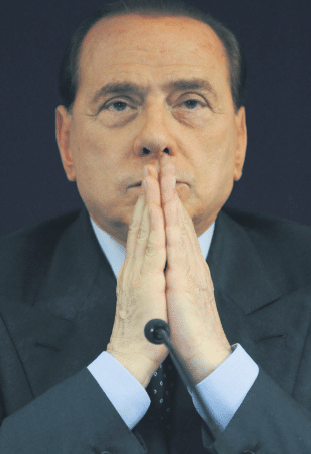
    With the collapse of hands-off capitalism in the Western World, it’s nice to live in a country where the leader has his hands on everything. That, at least, seems to be the mood in Italy, where Berlusconi’s approval rating has soared to seventy per cent as the markets have plunged. The key to understanding the phenomenon that is Silvio Berlusconi, three-time Prime Minister of Italy, is to appreciate that he is driven by a sense of self-interest offset by a powerfully paternalistic impulse. He sees himself as a magnanimous baron, or, to use his own phrase, “the Anointed One”. If anyone – magistrates, students, journalists, other political parties, unions, local governments – challenges his good intentions, he feels as might a father towards an ingrate child. Against the sound of crashing world markets, Berlusconi has skillfully synthesised his paternalistic and selfish impulses to achieve a harmonic style all his own. The falling markets may well constitute exceptional circumstances for the rest of the world, but the way Berlusconi has handled them here epitomises his style of leadership. The old saw that in Italy things are always in crisis but never serious seems to hold true even when the crisis is global. How has Berlusconi arrived at an approval rating of seventy percent? Rather than return to the well-worn theme of his domination of the media, let us consider another sector in which he has considerable interests: banking. Berlusconi is the majority shareholder of Mediolanum SpA, a banking and financial services company (the current England manager, Fabio Capello, used to work in its insurance division). Capello, used to work in its insurance division). On 22 October, it was reported that Berlusconi and Ennio Doris – the bank’s two main shareholders – had decided personally to reimburse Mediolanum SpA’s customers in full for losses incurred by the collapse of Lehman Brothers – to the tune of €120 million. That’s called putting your money where your mouth is. But whatever Berlusconi does, he usually manages to manoeuvre himself into a position where he cannot lose. If he uses his own funds, he seems generous. If he declares a state of emergency and uses public funds, he saves himself some money but, far more important, he extends his political power deeper into the world of finance. The two largest retail banks in Italy are Unicredit and Intesa Sanpaolo. Both of them have seen their stocks take a real hammering during the banking crisis. Neither appears to have serious liquidity or solvency problems, but they are vulnerable. Even so, neither is asking for public funds. Unicredit announced a capital increase on October 5, effectively passing on the risk to its own shareholders rather than running to the taxpayer. Although Intesa Sanpaolo continues to look wobbly, it is valiantly resisting state intervention. Alessandro Profumo, the CEO of Unicredit, and Corrado Passera, of Intesa-San Paolo, are aligned with the centre-left – which goes some way to explaining their heroism. The last thing they want is a government bail-out and the arrival of Berlusconi appointees on their board. They know that no real difference exists between the institution of government and the person of Berlusconi. Italians easily accept the idea that a bank is also a centre of political power. It may well be true of banks everywhere, but in Italy a bank’s political function is overt. Mediobanca is a case in point. It was founded in 1946 as a central pillar of the “Italian miracle” of post-War reconstruction. It enforced its own industrial and financial policy, which remained fixed as various governments formed and fell. In Italian, the word for policy – politica – is the same as the word for politics. Mediobanca’s role has been not just to allocate funds to major industries, but to build networks of cross-holdings among Italian industries. In the old days (until 1993), when the Christian Democrats reigned supreme, Berlusconi was kept out of this salotto buono (posh club) of Mediobanca shareholders. Nowadays, he is at the very heart of it. His Mediolanum bank and insurance group holds a stake of around 3.3% in Mediobanca, while Fininvest, his personal holding company, holds around 2%. With two spokes stuck into this hub of power, he is more influential than Gianni Agnelli ever was. But he is still outgunned by the major shareholder Unicredit (9%); the bank that is resisting the idea of state assistance. The foreign press universally disapproves not just of Berlusconi, but of the Italian people for having elected him. More interesting than the censure itself is the difficulty that many foreign commentators seem to have in explaining why the Italians should have elected Berlusconi to office so many times. Underlying these declarations of disappointment at how Italy has been behaving itself lately is the notion – spearheaded by publications such as The Economist – that Berlusconi’s blatant self-interest is his primary vice. Wilfully blind, Italians have got the government they deserve. All this may very well be true, but what if we consider Berlusconi’s primary vice as also his greatest, perhaps his only, saving grace? To the question of what Berlusconi represents, the answer is simple: Berlusconi. There is no such political creed as Berlusconism. Quite the contrary: he has always presented himself as all things to all people, and was elected thanks mainly to his essential disinterest in ideology. True, he is opportunistically anti-Communist, but that only means he is opposed to any ideology that would take away his companies. He does not have one of his own to put in its place. When his political mentor Bettino Craxi (in theory a Socialist) was hounded from the country, Berlusconi simply assumed direct control of his political as well as business interests. It is this directness that so annoys the Pearson Group and Murdoch press. Berlusconi makes the plutocracy that they defend too explicit. Clowning about on the international stage, while openly catering to his own interests through legislation, Berlusconi has cast off the cloak of invisibility beneath

    Loading

    Read more

  • Posted in:

    The end of Ireland’s low-tax model?

    As lobby groups have organised to try to reverse some of the cutbacks in Brian Lenihan’s first budget, little attention has been paid to the fact that the cutbacks and their impact are the direct consequence of policies that gave us 15 years of unprecedented economic boom. For Ireland’s successful model, which was eyed with envy by small countries around the world, was based essentially on keeping taxes low. It is the consequences of this that we are now facing, in the decision to cut back social services already woefully inadequate for a country with Ireland’s level of wealth, instead of reforming an unjust and inadequate taxation system. Even if protests succeed in reversing some of these cutbacks, this does nothing to change the fundamental realities now facing the population. If citizens want well resourced, efficient and equitable health, education and social protection systems, adequate to protecting the vulnerable in their time of need, there is no way to do this other than through higher levels of taxation. Yet, as Budget 2009 showed yet again, our government remains committed to trying to keep taxes low, thereby ensuring that the most vulnerable among us will continue to pay a high cost. The addition of so-called stealth taxes, including PAYE income tax levies, shows the gyrations this government is prepared to go through to be seen not to raise basic tax rates, in particular corporation tax and income tax. Yet, as former Taoiseach Garret FitzGerald has pointed out, the growing dependence in recent years on asset-based taxes such as stamp duty, capital gains tax and capital acquisitions tax has made the Exchequer extremely vulnerable to the sudden reduction in such taxes that inevitably accompanies an economic downturn. But this was the means through which a steady reduction in income tax was funded. As he has written: “The idea that when the boom ended, our public and social services could be maintained with such a miniscule level of income tax payments was patently absurd, although clearly many people fell for it – including our economically unsophisticated business community” 1. This gets us to the heart of the issue that public debate needs to centre around if we are to chart a way forward out of the mess in which we now find ourselves. For the benefits of the boom went disproportionately to a small, wealthy elite, while successive governments failed to invest sufficiently in public infrastructure and services. There is plenty of evidence for this. For example, the ESRI points out the “substantial increase” in the share of national income that went to the top one percent of income earners at the height of the Celtic Tiger boom. As they put it, “By the end of the 1990s, the share of the top one percent was more than twice the level prevailing through the 1970s and 1980s”2. Similarly, if we examine EU figures on the share of national income going to profits as against wages, we see just how dramatic has been the change in Ireland over the course of the economic boom. In the 1980s workers gained 71.3% of the national income, slightly more than the EU average of 69.6%. However, by the 2000s, this had fallen to 55.1%, while the EU average stood at 64.4%. Even allowing for the growing presence of multinationals in the Irish economy, these figures show a huge increase in the amount of Ireland’s national income going to profit rather than people3. As Ireland’s wealthy elites increased their income spectacularly, state spending on social protection fell as a proportion of our national wealth over the course of the boom. The Central Statistics Office tells us that social expenditure in Ireland as a proportion of GDP fell from 17.6% in 1996 to 14.1% in 2000, but that it subsequently rose to 18.2% in 2005. Over the same period the EU average hovered at around 27%4. To quote Garret FitzGerald again, “Our chaotic health service and our grossly understaffed education system, together with the many serious inadequacies of our social services, reflect very badly upon a political system that has massively maldistributed the huge resources we have created. The harsh truth is we have allowed far too much of our new wealth to be creamed off by a few influential people, at the expense of the public services our people are entitled to”5. It is not surprising, therefore, that Ireland turns out to be one of the most unequal countries in the developed world. But what may surprise many is that the government has no policy to try to reduce the wide gap between rich and poor. In other words, it does not seem to believe that it is worth worrying about. This is dangerous. International research shows that the more unequal a society, the higher its levels of poverty and crime, and the lower its standards of health and public services6. It is an issue we neglect at our peril. In 2005, the Economist magazine published a global quality of life index for 111 countries in which Ireland came out top. This ranking got a lot of publicity at the time, but what received less attention was the fact that Ireland’s highest scores were for family and community life, factors that owed more to the legacies of the past than to the Celtic Tiger; what the Economist called “the interplay of modernity and tradition in determining life satisfaction”. This is consistent with the fact that life satisfaction levels in Ireland in the late 1990s were no higher than they were in the 1970s. Meanwhile, other surveys have shown that Irish people report a deterioration in their quality of life during the Celtic Tiger7. This points to the importance of examining more critically where Ireland’s low-tax model has got us if we are to learn the lessons of the past and plan for a better future. A system of low taxation may attract a lot of investment for a period, but its weakness as a development strategy is

    Loading

    Read more

  • Posted in:

    Reward for information about Libertas funding

    Village Magazine offers a €10,000 reward for comprehensive, verifiable information about the funding of the Libertas campaign on the Lisbon Treaty communicated exclusively and before 31 Dec 2008 to Village Magazine (editor@villagemagazine.ie) for possible publication. All contact and information will be treated in strictest confidence. No imputation of illegality is asserted or intended.

    Loading

    Read more

  • Posted in:

    Live the Language

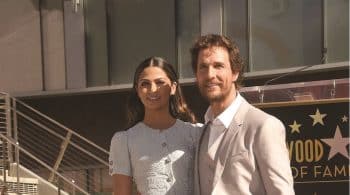
    I recently discovered that the famous Hollywood heart-throb, Matthew McConaughey, and myself, have something in common. We would both like our children to learn Irish in a Gaeltacht. I am already ahead of him slightly as I am raising my toddler here in the Connemara Gaeltacht, the same one that I was raised in for the first seven years of my life that rendered me fluent in Irish, and that propelled me around the world learning half a dozen other languages. However, before Matthew takes the plunge, I must counsel that he move quickly so that he won’t find that Irish has been abandoned as the vernacular here by the time his kids are teens. The embarrassment for us and the disappointment for him would be just too much. As odd as it may sound, we desperately need someone with a silver tongue to come here and tell a large majority of the population that their native tongue is in fact dying. This fundamental but tragic news must have somehow not reached these parts because otherwise the attitude about speaking the language would surely not be so lackadaisical, Visitors would feel encouraged to use Irish instead of English. All greetings in shops and pubs would be as Gaeilge. Most importantly, native speakers would be speaking Irish with their children. If they knew? Surely? The key but elusive message is simple: Irish needs to be spoken more than English, to survive. In my mind, McConaughey would then explain to the locals, who need reminding, that the Irish they speak is unique, a gift from their forefathers and practically impossible to learn from sterile textbooks. That their pronunciation, turn of phrase, rhythm, musicality, use and command of the language is theirs alone. That it changes from Gaeltacht to Gaeltacht, from Parish to Parish, from boreen to boreen, from family to family, from individual to individual. That it is spoken in no other country. That this is it: the living, breathing petri dish of Irish. That by fecklessly speaking English they are silently killing their culture. He would then explain to the parents that speaking their native tongue to their children would make them happier, more confident and more connected to their environment in the long run. In some cases he might express intrigue at parents’ reasons, if any, for not passing their heritage on. And then he could heap praise on the parents who are carrying the mantel successfully – raising bilingual children in a challenging linguistic and cultural environment. Just tell them that the effort is worth it. He would also let the teenagers know that they are not to blame, that they have been poorly led and are contending with a globalised world dominated by English. That all languages are suffering a haemorrhage due to English. Can he let them know that trying to emulate an English language community in a Gaeltacht makes them weaker? That they can draw from their own strengths and speak two languages fluently, enrich themselves with two cultures instead of one diluted one? Can he ask them not to be shy about speaking Irish even if they are now making a lot of mistakes in it? Encourage them that gradually they will improve, with practice. He would tell the 17 –year-old girl I met that I was sad when she told me no other family that she knows in the area speaks Irish at home. Ask her to speak Irish to her mum (who goes back generations here) when she goes home. She might even respond in Irish. He would persuade her to continue that with her brother, 10, who has a lovely grasp of the language and should be encouraged, not thwarted. Tell him his Irish is lovely, even though riddled with mistakes. After that, he would let her know that when she goes to her friends’ houses she should try to speak Irish to them even when everyone is answering in English. Just let her know she’s to ignore the awkwardness, the shame, the embarrassment, the famine that never left us. That it’s not hers. That it’s the environment she grew up in. No leadership, no courage, no confidence: environmental, cultural or historical. But, tell her, that that’s all gone now and everyone can have 3G. Or 4G. And emojis. As Gaeilge. The new rule is not to feel less in Irish. That was her parents’ rule and that time is over. Of all the things we have to save in the world – the whales, the donkeys, the trees – this must be one of the easiest. All we have to do in the Gaeltacht is go to our local shop, pub, school , open our mouths, and speak as Gaeilge. Live it. If only Greenpeace had their task so easy.   Kate Fennell

    Loading

    Read more

  • Posted in:

    There are systemic risks of errors

    You may not be sick of the election yet, but give it time. One of the more depressing aspects of elections is how little coverage is given to discussions of the merits of different policy options or the plausibility of the teams on offer, and how much is given to treating the election as a horse race. The 2011 election was somewhat different, but that’s because Ireland was in peculiar straits and people suddenly cared about Ireland’s bond yields and such stuff. Now that people aren’t so concerned the media is also reverting to type. The big feature of election-as-horse race is the opinion poll. They are useful for voters who can use them to consider which potential coalitions are likely. They are useful for parties which can better understand the concerns of voters and failings in their campaigns. They are especially useful for newspapers which can make an opinion poll fill a few pages, even when nothing at all has happened. Though there are concerns as to the accuracy of polls in recent elections across Europe, they remain the best barometer of public opinion we are likely to have. But because papers are in the business of making the ephemeral seem note- worthy there is a temptation to read too much into polls. To avoid falling into this trap, here are some pointers to keep in mind: 1.  Polls draw samples, and the size of the sample matters. Samples only work because of the probability that they are representative of the population (which is what we really care about) though comprising a relatively small number of respondents. A poll with 1,500 respondents will typically be a more accurate representation than one with 900. With a sample of about 1,000 we are pretty certain that the parties’ real support is in a range around what is reported. This is often about +/-3%. Movements within this Margin of Error (MoE) really might be random, not based on any movement in support for the parties in the population. So: look at the sample size. Many constituency polls have small samples, which increases the margin of error to rates that make the poll wholly questionable. 2.  Sometimes we see interesting results and the media gets very excited. One poll in the 2014 Scottish referendum showed the Yes side in the lead, though all other polls showed a narrow but consistent lead for the No side. There was a frenzy. The likelihood was that this was a ‘rogue poll’, which isn’t to say it was a dishonest poll. When we are pretty certain that a party’s support is in a range (say +/-3%), we mean we’re confident that it is in this range 95% of the time. About one in 20 polls will be wrong. Unfortunately we don’t know which ones they are. But if a poll is very interesting, then it’s likely to be wrong. To avoid getting excited about potentially rogue polls, look at the trends. If a number of polls show a party going up in support, and it’s sustained over time, then we can conclude they’re capturing real movement. 3.  Just because many opinion polls agree about a level of support doesn’t mean that they are right. Polls in the UK election had the Tories and Labour neck and neck for much of the campaign. The MoE assumes perfect random sampling. In practice opinion polls rarely use pure random sampling. Different companies identify and approach respondents in different ways, but all have some selection bias. That is certain groups are more likely to respond than others. This would be fine if these groups all had similar opinions. But they don’t. Older, middle-class men are harder to get to respond than younger, politi- cally active people. This is what caused the failure of polls in the UK to detect the Tory lead. Tory voters weren’t ‘shy’ – embarrassed to admit they voted Tory; they were just less likely to say Yes when asked to respond to a survey. Unfortunately there’s not a lot the lay person can do about this, except retain scepticism. Even when we get accurate poll numbers Ireland offers other challenges. The nature of the electoral system means that converting percentage support into seats is difficult. It is even harder now because the fragmentation of the party system means looking at past trends isn’t all that useful. Also, partly because of the gender quota legislation, many parties have more can- didates than they would like. This splitting of the vote means that while we can be reasonably confident of the first two or three seats in most constituencies, after that the large number of competitive candidates makes predicting the final seats little more than a coin toss. Predictions: Dr Eoin O’Malley is senior lecturer in the School of Law and Government, Dublin City University. If we assume polls in Ireland have the same problem as those in the UK and under sample people who are “content”, and if we assume that larger parties get a seat bonus, and Sinn Féin struggles to attract transfers, then on the basis of recent polling numbers, here are my predicted seat ranges for the parties. Fine Gael  59 ±5 seats Fianna Fáil  34 ±4 seats Sinn Féin   25 ±4 seats Labour   14 ±3 seats We can be even less certain for smaller par- ties, especially for the Greens and Renua, who may return no TDs. Green 1 seat, Renua 2 seats,  Social Democrats 3 seats, AAA/PBP 5 seats, Independents 15 seats

    Loading

    Read more