
Culture

Random entry RSS

  • Posted in:

    Transcendent industrial relations

    When probed by critics to contextualise their vast collection of photographs of industrial architecture, Hilla and Bernd Becher stated that, “just as the medieval thought is manifest in a Gothic cathedral”, then “so too is the industrial age captured in the machinery once scattered across our lands”. For more than 40 years the Bechers, husband and wife, documented a world made up of water towers, gas tanks, blast furnaces, grain elevators, collieries, and mine heads: a world of machinery that was no longer used, obsolete; a world that was being swiftly and ruthlessly dismantled. The epoch of the Industrial Revolution was vanishing without trace, so the Bechers decided to watch, camera at hand, capturing the death throes of a once robust epoch. Hilla and Bernd met in 1957 while working at an advertising agency in Dusseldorf and discovered they had a mutual love of industrial architecture, especially that of the Ruhr region. Bernd had grown up in the area and initially planned to draw and paint these huge structures. But he soon realised that they were being demolished before he was finished with either pen or brush. Hilla, who was an experienced photographer by then, thought it more effective to use this medium instead, and instructed Bernd in technique and printing. A beautiful relationship was formed, and they married in 1961. During this decade the Bechers, with their son Max in tow, travelled around in a VW camper pulling an old caravan customised as a darkroom. Their itinerary included Germany, Holland and France, while in 1966 they embarked on a six-month journey through England and Wales taking pictures of the coal industry. A love of collieries also took them to North America in 1974, Pennsylvania, where they recorded the coal mine tipples. The objects of their affection might seem cursory upon first impression, but the Bechers’ working methods were anything but. Hilla described their style as “direct, descriptive photography”. This usually meant using ladders and scaffolding to shoot on their large-format plate cameras, with overcast conditions to minimise shadows and allow a neutral backdrop. The same standard was applied to each photograph to give complete objectivity. Photos were published in gelatin silver prints, and no monolith was considered too humdrum to be reverently and painstakingly recorded by them as one of their “anonymous sculptures”. What transformed the Bechers’ work from documentary to art (although critics remain divided on this categorisation) was their use of typologies, which saw structures being exhibited in grid formations made up of six to fifteen photographs. “By placing several cooling towers side by side something happened, something like tonal music”, Hilla said: “You don’t see what makes the objects different until you bring them together, so subtle are their differences”. Individually the pictures are impressive, but collectively they take on a rippling power that pulses right out across the grids: a series of gas tanks that morph into displaced industrialised glitter balls; framework houses that variegate across the page like real-time mosaics; winding towers that could be desolate fun parks. “When you look at something”, they explained, “you look at first one detail and then another until your memory builds up a complete picture. You never see anything in detail at once but the camera can”. Contemporary critics found the Bechers’ exhibitions workaday, detached and indifferent: sets of stark black-and-white pictures of water towers and gas tanks will not engage everyone’s sensibility, understandably. But this did not deter them or their vision. The Bechers were awed by the ambition of design invested in objects that were functional tools of the industrial landscape; they were enraptured by the imagination and effort invested in composing the perfunctory. Hilla and Bernd Becher also sensed the cultural value of the likes of the collieries in Wales, while other watched them fall. They understood how these structures were markers on the maps of our age, soon to be erased. “Someone who concerns himself with scorpions must love them to a certain extent. And photography is there precisely to portray what is, not to sort and reproduce only the good and the beautiful”, stated Hilla. I often wonder what the Bechers would document of our digital age if they were alive: sadly Hilla passed away near the end of last year, Bern in 2007, aged 81 and 75 respectively. An empty office space, sprinkled with sleek computers slumbering atop linear desks at the break of dawn maybe; scrubby Chinese warehouses stacked with smart devices, just off the production line and freshly boxed for shipping; or perhaps the tools fuelling our vast electrical appetites now: static wind turbines, enervated energy grids, or thundering power plants. All of them fixed, purposely static. Who knows? What is for certain though is that the Bechers marvelled where others might only have overlooked as mundane. With clarity and objectivity, they rendered beauty in places where it should have few expectations. And in the end, criticism of their work did not concern either of them – they were as detached in their reactions to commentary, as they were in their working methods. Their legacy is assured, and their influence lives on in the work of Andreas Gursky, Thomas Struth, and Candida Hoffer. “The question if this is a work of art or not is not very important for us”, they said. “Probably it is situated in between the established categories. Anyway the audience which is interested in art would be the most open-minded and willing to think about it”. By NJ McGarrigle

    Loading

    Read more

  • Posted in:

    James Joyce, ordered Aristotelian

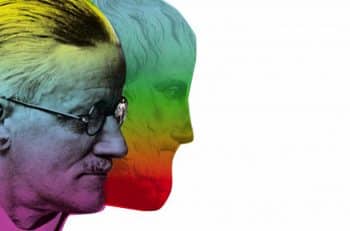
    It is arguable that Aristotle – next to Homer – was James Joyce’s greatest master. Without the ‘Odyssey’, Joyce could never have conceived ‘Ulysses’; had he not written the book celebrating his first rendezvous with a beautiful girl from Galway, whatever he wrote would, however, have been profoundly marked by Aristotle. There is, I suggest, a profound affinity of mind between Joyce and Aristotle; perhaps part of this kinship may be explained by its Homeric parentage. Aristotle too was profoundly influenced by Homer; he cites him over one hundred times, second in frequency only to Plato. One of the most moving documents which we possess from the entire corpus of ancient philosophy is the fragment of a letter written by Aristotle toward the end of his life: “The more solitary and isolated I am, the more I have come to love myths. One recalls Rembrandt’s famous painting of Aristotle contemplating the bust of Homer. That Joyce set out to emulate Homer and his success is beyond dispute. He was also a true and sympathetic follower of Aristotle. He regarded Aristotle as the greatest thinker of all times, declaring: “In the last two hundred years we have had no great thinker. My assertion is bold, since Kant is included. All the great thinkers of recent centuries from Kant to Benedetto Croce have only recultivated the garden. The greatest thinker of all times, in my opinion, is Aristotle. He defines everything with wonderful clarity and simplicity. Later, volumes were written to define the same things”. How did Joyce came to know Aristotle? Why such great esteem? For generations in Ireland, the name of Aristotle has been associated in the popular tradition with wisdom and erudition. The German travel writer Johann Georg Kohl, visiting Ireland in September 1842, reported that he twice heard Irish people “speak of Aristotle as a wise and mighty king of Greece, as if they had the same conception of him as of King Solomon”. Aristotle’s renown was alive i mbéal an phobail. My own greatgrandmother from West Cork, born a generation later, spoke reverently of “Harry Stakle” [ie Aristotle]. The Irish, however, by no means regarded Aristotle as omniscient; Joyce copied in ‘Scribbledehobble’, his workbook for FW, the widespread traditional Irish triad, “3 things Aristotle didn’t know: labour of bees, flow of tide, mind of women”. Joyce was unwittingly exposed to the categories of Aristotle throughout his Catholic education. Catholic theology has for centuries made use of Aristotelian concepts and terminology. Consider the traditional vocabulary of the catechism. The sacraments are explained in terms of Aristotelian principles: each has its matter and form. The Eucharist is described in the vocabulary of substance and accident. Joyce, like many Irish youngsters before and since, imbibed the practicality of Aristotle’s metaphysics. There is less sympathy, it may be noted, in the Protestant tradition of Luther, who did not disguise his contempt for “that cursed heathen”: “What will they not believe who have credited that ridiculous and injurious blasphemer Aristotle? His propositions are so absurd that an ass or a stone would cry out at them… My soul longs for nothing so ardently as to expose and publicly shame that Greek buffoon, who like a spectre has befooled the Church”. It may be fairly presumed that under the Jesuits Joyce was likewise exposed to the scholastic mode of deliberation, which owed much to the logic of Aristotle. Joyce rejected much of his Jesuit education, but was in many ways grateful. Buck Mulligan remarks to Stephen: “[Y]ou have the cursed jesuit strain in you, only it’s injected the wrong way”. Asked by the sculptor August Suter what he retained from his Jesuit education, he replied: “I have learnt to arrange things in such a way that they become easy to survey and to judge”. Commenting on Aristotle, Aquinas defines wisdom as the discovery of order: Sapientis est ordinare. The opening words of a translation of Aquinas which Joyce himself later owned, and which could not have failed to attract his attention on publication in 1905, read: “According to established popular usage, which the Philosopher [Aristotle] considers should be our guide in the naming of things, they are called ‘wise’ who put things in their right order and control them well”. Curiously, AE remarked to the young Joyce: “I do not see in your beginnings enough chaos to make a world”. It was precisely this confrontation with chaos that spurred him on. In ‘Stephen Hero’ we read: “And over all the chaos of history and legend, of fact and supposition, he strove to draw out a line of order, to reduce the abysses of the past to order by diagram”. Order was the hallmark of Aristotle’s mind; his investigations were a comprehensive attempt not only to analyse and differentiate the full entirety of given reality, but more importantly to integrate and unify. This fixity upon order is formulated in the mind of Bloom: “The necessity of order, a place for everything and everything in its place”. This is repeated in the essay title associated with Aristotle in ‘Night Lessons’ in ‘Finnegans Wake’: ‘A Place for Everything and Everything in its Place’. Joyce had occasionally, in Wallace Stevens’ phrase, a “blessed rage for order”. When Frank Budgen inquired of the progress of ‘Ulysses’, Joyce replied: “I have been working hard on it all day”. “Does that mean that you have written a great deal?”, Budgen asked. “Two sentences”, said Joyce, in all seriousness. “You have been seeking the mot juste?”. “No. I have the words already. What I am seeking is the perfect order of words in the sentence. There is an order in every way appropriate. I think I have it”. The words in question referred to the seductive effect of women’s silk petticoats hanging in a shop window: “Perfume of embraces all him assailed. With hungered flesh obscurely, he mutely craved to adore”. “You can see for yourself”, said Joyce, “in how many different ways they might be arranged”. This is echoed

    Loading

    Read more

  • Posted in:

    Cars: bad for getting crushed

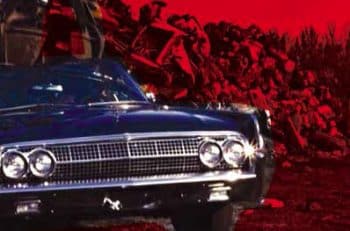
    Who remembers the car-crusher in Goldfinger? The Ford Motor Company supplied a range of its cars to this smash hit of the James Bond franchise, which came out in 1964. Quite near the end of the movie, the henchman Oddjob, a kind of cross between Jeeves the butler, Kim Jong-un and Cian Healy, drives a Lincoln Continental (a Ford marque) into a wrecking yard. With a lurch, a cranedriven grabbing claw swings into view and picks up the suddenly small-seeming car. Inside, we know, is a dead man. If the resulting block of crushed metal seems unfeasibly small, it is because they did indeed need to trim it down so that it could then be dumped into the back of Oddjob’s pickup, a Ford Ranchero. Two CIA men who had been tracking the Lincoln, watching a radar-style display-screen inside their Ford Thunderbird, are last seen going the wrong way, passing a Ford dealership by the side of the road. If the block of metal seems unfeasibly free of blood, it is because even gruesome deaths in mainstream cinema of the 1960s were sanitized affairs. And it is because you don’t need to see blood to know that a body has been drained of life. Car-crushing machines were so common in film and TV from the 1960s to the 1980s, especially in cops-and-robbers stories, because they instantaneously transformed the car into what it metaphorically already was – a coffin. The society that found itself newly car-bound found narratives about cars for itself: ‘Bullitt’, ‘The Dukes of Hazzard’, ‘The Italian Job’, ‘The Streets of San Francisco’, ‘Hill Street Blues’, ‘The French Connection’, ‘The A-Team’, ‘Knight Rider’, ‘Starsky and Hutch’, ‘Vanishing Point’, ‘The Blues Brothers’, ‘Smokey and the Bandit’, ‘The Cannonball Run’, ‘Herbie’. The dream-place of the car story was the scrapyard, an ecstatic transubstantiation of the body of the car, an ashes-to-ashes, dust-todust moment of death and rebirth. What is a chunk of metal but a car that was, and a car that will be? Another moment we have seen countless times: a car shoots off the top of a cliff, plunging into a ravine. It sheds parts as it tumbles down, though human body parts are strangely invisible. To make sure we know the plunge has been fatal, we need to see the car self-combust a half-second after coming to a halt. Outside of specific genres, such as horror and the exploitation movies imitated quite recently by Quentin Tarantino in ‘Death Proof’, it is a rare film that spatters the inside of the windshield with blood to let us know that the occupants are dead. More notoriously, Tarantino built a whole subplot around the clean up of an exploded head inside a car in ‘Pulp Fiction’. The gunk is cleaned up and concealed in the trunk and the car is dumped, yes, at a scrapyard. The mangling of cars is such a commonplace that it barely registers anymore. Cars get stuck on railway crossings, they tip off piers, they take flight off previously invisible ramps, and they ram each other at intersections. They shoulder each other off the road and teeter off precipices, their tyres blow out and their brakes fail, their windows get shot out and flames rush towards their petrol tanks. Franchises such as ‘Die Hard’, ‘Transformers’, ‘Bourne’, ‘Mad Max’, and ‘The Fast and the Furious’ are sort of about the destruction of cars. Ditto motorsport programmes and ‘Top Gear’. And then there are the dashcam videos of road violence, notably from Russia, plus the tragictoned coverage of car wrecks on the regular news. How dangerous are cars, really? Around 1.25 million people die in traffic-related events every year. That’s a lot of people, but there are a lot of people on Earth. In truth, in wealthy countries, the prospects of dying on the road are quite remote. In Ireland, you can get away with driving 250 million kilometres before the statistical average comes looking for you. In Brazil, that number is closer to 17 million. If cars really were as dangerous as they seem to be on screen, most people would never drive. And yet, as viewers, we have a prolific appetite for watching these metal hulks killing us, and watching ourselves killing them back. But appetites are not rational, critical or policy-focussed. Our appetite for car death on screen can perhaps tell us something about our unspoken, non-rational feelings about cars and what they do to us. The car has sped up our lives, contorted our cities, our bodies, our commons, it has privatised whole swathes of space, and polluted the air, ground and water, as well as the plant and animal kingdoms, including us. A secondary list of black marks against automobile culture might include archaeological destruction, fracking, oil sands, Exxon Valdez, Deepwater Horizon, the Keystone pipeline and the execution of Ken Saro Wiwa. Not to mention the menace of oil-rich states, such as Iran, Saudi Arabia and the United States. Not to mention oil wars. Not to mention climate change. It is very difficult to grapple with these issues, indeed it is very difficult even to mention them in most contexts, political or social. And even a person in full denial about, say, human-caused climate change, cannot ignore the other effects of cars. The truth is that cars are just too convenient, comfortable and affordable to do without, and we have generated far too much infrastructure around the petrol engine to cast it aside now. They have become thoroughly entwined into our consumerist existence – when was the last time you used your car without spending money at some point on the trip? Possibly the most difficult task is breaking through the tough layer of desirability as status and design objects that many billion promotions, advertisements and product placements have created in the car’s short existence alongside us on this planet. Cars are inside us as much as we are inside them. The gradual introduction of ‘autonomous driving’ features in new cars makes some

    Loading

    Read more

  • Posted in:

    Irish goes West

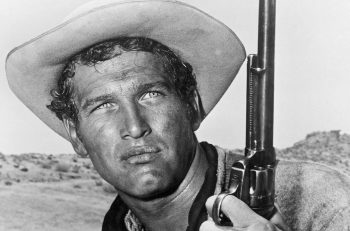
    ‘The Left-Handed Gun’ is not a film that many people will have heard of, let alone seen. It’s a 1958 Western, starring Paul Newman and directed by Arthur Penn. And it was on TG4 a couple of Friday nights back. TG4’s weekly ‘An Western’ has been a quiet staple of Irish television for some years now. As happens frequently on TG4, the films are screened in their original language, without subtitles. Presumably the thinking is that during the adverts and continuity announcements that intersperse this English-language film, viewers will passively absorb the Irish language, and so the station fulfill its remit. The wry phrase ‘An Western’ suggests that the Western occupies a regular landmark in a weekly or monthly calendar, as in ‘the Sunday papers’. We understand that the ‘An’ is not making a large categorical claim, as in ‘the novel’ or ‘the youth of today’. We get this, because nearly all of us understand a little Irish, even if it is only the equivalent of the workaday word “The”. It’s a good example of how cleverly TG4 pitches Irish at a population whose feelings towards the language range through hostility, indifference and shame (about the perceived parochialism of the Gaeilgoirism, and about our communal failure to speak the language). ‘The Left-Handed Gun’ is a telling of the story, or rather myth, of Pat Garrett and Billy the Kid. Hollywood has gone over this material dozens of times over the years, and in other versions, Billy the Kid has been played by Emilio Estevez, Kris Kristofferson, Roy Rogers, the famous WWII veteran Audie Murphy and Val Kilmer, to name just a few. Newman’s version of Billy the Kid as a tortured and inarticulate soul is of its time, the late 1950s, and it is reminiscent of James Dean (who was initially slated for the role) or the young Marlon Brando. Did they speak Irish under those huge American skies? It is difficult to get a clear historical perspective on the Western because it seems now to be such a cultural relic. It goes through periodic revivals — successful titles from 2015 include ‘The Revenant’, ‘The Hateful Eight’ and TG4’s ‘An Klondike’ (there’s that ‘An’ again). But if anything these revivals reinforce the sense of something in need of revival. Of course, the same might be said of that other cultural relic, the Irish language. The 19th century seems like an awfully long time ago, but trans-Atlantic migrants of the time were highly mobile, flexible and internationalised providers of labour. In the words of historian Sidney Pollard, they were the “shock troops of the Industrial Revolution”.   The homesteaders, cowboys and bounty hunters of the Western were at the vanguard of industrialised globalisation, long-distance mass transport, users of the innovations of standardised gunsmithing, telegraphy and international postal systems, installing industrialised agriculture to feed thrusting megacities, mining the land and bringing genocidal carnage to its native populations. Westerns, viewed in this way, are stories of modernity, colonisation, dispossession and language death. Who watches Westerns now? And why? At least part of the pleasure to be got from them is in their status as relics. An older segment of the viewing public will take comfort in that weekly treat of ‘The’ Western. The films that are broadcast by TG4 are predominantly from the 1950s and the 1960s, and it is not hard to imagine these Irish viewers experiencing a thrill of cinematic nostalgia, and yearning for mid-century American optimism, as they watch these long-forgotten and long-remembered stories. These films are from the tail end of the relatively naive period of the Western, before a wave of revisionist Westerns (for example, ‘Little Big Man’, ‘The Outlaw Josey Wales’, ‘McCabe and Mrs Miller’, ‘The Wild Bunch’, all the way up to the excellent HBO series ‘Deadwood’) that finally began to acknowledge that the wide open spaces of the frontier were wide and open because they had just been forcibly emptied of millions of natives. There is a strong sense of a premodern innocence in the dirty-faced boyish violence and strongheadedness that we see in the whiskeydrinking and saloon-fighting, the standing up to magnates and crooked sheriffs, the cattlewrangling, the gunslinging, the awkward kissing of schoolmistresses and farmgirls, and the optimistic setting up ranches and mines. The darkness of smallpox and influenza, landgrabs and broken treaties, massacres and slavery, is exactly the kind of detail that foundation myths of simple heroism and melodrama are intended to blot out of the historical consciousness. In ‘The Left-Handed Gun’, Billy the Kid is a crazed outsider whose origins are murky. He lies that he is from Kansas City, before innocently revealing that he is a fluent Spanish speaker. This locates him much further to the south, and it makes an outsider of him among the English-speaking white cattlemen, who are led by the gentle, religious-minded ‘Englishman’, who gifts the illiterate Billy a book. When the Englishman is killed, Billy’s chance to enter civilised, book-reading society is taken from him, and the trail of revenge that he embarks on is the entire plot of the movie. Hunted by the law, Billy takes refuge with a Mexican smith, whom we first see crafting a rifle by hand. The fantasy that the eminently modern, industrial object of a rifle could be made by hand encapsulates the Western’s double task of telling the story of the extermination of non-industrial civilisations by industrialised civilisations, while indulging in the fantasy that the whole thing was a moral encounter that happened in a technological historical vacuum. But the Western is often a tragedy, and ‘The Left-Handed Gun’ complies in this respect. The Western hero is typically a man of violence who is a social misfit, unable to settle down with the woman who patiently waits for him, and incapable of putting down roots. In the end, he rides off into the sunset or is killed because the fast encroaching modern world does not have a place for him. Billy the Kid cannot conform, and being

    Loading

    Read more

  • Posted in:

    IMAGINE

    The spark of any human venture is imagination. The Romantic poet Percy Bysshe Shelley (1792-1822) in his ‘In Defence of Poetry’ distinguishes this from reason, the “enumeration of qualities already known”; whereas “imagination is the perception of the values of those qualities, both separately and as a whole… Reason is to imagination as the instrument to the agent, as the body to the spirit, as the shadow to the substance”. Too often governments, corporations and individuals lack that ignition. Reason in abundance is evident, yes, but imagination is rarely nurtured and often frowned on. We strive to proceed from point A to B, failing to recognise the possibilities in the remainder of the alphabet. Ireland in particular stands accused. Scientific reasoning, for all its astounding capacity, is founded on imagining a possibility beyond contemporary restraints. So it was that Portuguese navigators of the fifteenth century first envisioned a route to India and then produced a vessel, the caravel, allowing them to sail windward. It is said that necessity is the mother of invention but really imagination charts the course. The Portuguese voyages represented the triumph of the Renaissance mind over the mediaeval. In his autobiography, Laurens van der Post relates a story told to him by CG Jung “that if one wanted to fix a precise moment at which the Renaissance began, it would be the day when the Italian poet Petrarch decided to defy superstition and climb a mountain in the Alps, just for the sake of reaching its summit”. A poetic imagination can guide Irish people to the heights of their capabilities, removing what is left of the Catholic-industrial-complex. But there will be obstacles and dead-ends. For example, I believe as a start we must move beyond the wisdom of the likes of Ireland’s leading public intellectual, Fintan O’Toole. His insights can only take us so far: like Virgil in Dante’s ‘Divine Comedy’ who guides Dante the pilgrim through Hell and Purgatory as far as the border of Paradise. The genius of imagination is not restricted to mechanical invention or improvements to organisations but also underpins the empathy that makes us identify with others and extend compassion. Shelley writes that for a man to be ‘greatly good’ he “must imagine intensely and comprehensively; he must put himself in the place of another and many others; the pains and pleasure of his species must be his own”. Throughout the twentieth century we saw a failure of what the philosopher Jonathan Glover calls “moral imagination”; we still see individuals sheltering in the comfort of command centres from which they unleash death and destruction. From this vantage war became like a computer game that obscures the real horror, and yet bewilderment greets the ferocity and depravity in response. Through their faculty of imagination Shelley identifies poets as the unacknowledged legislators of the world who forge social sympathies. In agreement the legal scholar Edward J Erbile writes: “Ancient law often took the form of poetry. Laws were expressed in incantatory rhythms. The oldest Greek and Latin words were also the eldest words for law. For example carmen or carminis in Latin means ‘song’ or ‘statute’”. Shelley also hails the intuitive capacity of the poet who, “not only beholds intensely the present as it is, and discovers those laws according to which present thing ought to be ordered, but beholds the future in the present (not that they can foresee the future)”. He claims that “all the great historians were poets” and that “poetry is ever to be found to co-exist with whatever other arts contribute to the happiness and perfection of man”. Seen in this light, poetry is a vital commodity in any culture, foregrounding and guiding other artistic endeavours, channelling empathy, and forging justice. Poetry is not restricted to composition of metrical verse: any writer or artist should aspire to it. Shelley embodied a revolutionary altruism, visiting Ireland where he wrote a pamphlet in 1812, ‘An Address to the Irish People’, urging non-violent resistance to colonialism: “In no case employ violence, the way to liberty and happiness is never to transgress the rules of virtue and justice. Liberty and happiness are founded upon virtue and justice. If you destroy the one you destroy the other”. He would have deplored the Easter Rising and anticipated the loss of liberty that emerged after the independent state’s violent birth pangs. But Shelley was perhaps too idealistic in assuming that poetry conflates with justice in the objective sense handed down in the Western tradition. Poetry has its dark uses. Audiences were mesmerised by the flow of Hitler’s speeches. Stalin and Radovan Karadzic both composed verse. Another published poet Enoch Powell summoned the vivid if crass metaphor of ‘rivers of blood’ in his opposition to multicultural Britain. Nonetheless, the best poetry articulates the highest human ideals. This generates practical and immediate imperatives, considering the weight of Nietzsche’s erosion of Enlightenment values and the huge challenges in this, the Anthropocene, age. We must learn how to live in the natural world and avert runaway Climate Change, as well as address hideous human inequalities. We demand new poetic legislators. That Irish people assume our country is of little relevance to the wider world is a failure of imagination. Since the arrival of literacy (alongside Christianity) this small, remote island has nourished visionary poets in a wide variety of disciplines from the monks who animated the Book of Kells, to the satire of Swift to the iconoclasm of Joyce and the asceticism of Beckett that have, as Shelley suggested in his Address to the Irish People, been a beacon to the world. Even the Easter Rising, for all its flaws, was among other things the realisation of the poetry of Pearse, Plunkett and McDonagh. James Joyce playfully mused: “Is this country destined some day to resume its ancient position as the Hellas of the north? Is the Celtic spirit, like the Slavic one (which it resembles in many respects), destined in the future to enrich the consciousness of

    Loading

    Read more

  • Posted in:

    Take Stock!

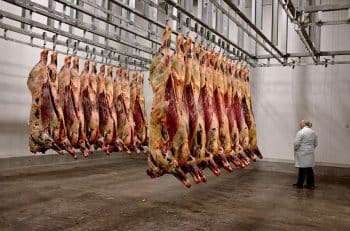
    Ireland is awakening to the environmental impact of its livestock industry. Village has been to the fore in focusing on this unpalatable subject while the newspapers ignored it. RTE has been more craven still in its favouritism towards a livestock industry, often lovingly referred to as ‘our farmers’. He who pays the piper calls the tune. It is likely that editors and producers fear offending advertisers. I submitted numerous articles to the Irish Times on the subject. Ironically the Murdoch-owned Sunday Times proved more receptive. Belatedly the Irish Times has covered the issue and ran a series by Conor Purcell, a climate scientist in UCD earlier this year focusing on livestock emissions. More recently on April 2nd they ran a forensic article by some-time Village- writer John Gibbons entitled: ‘Meat is Madness: why it leads to global warming and obesity’ which joined the dots between the environmental and public-health impacts of meat production. Nonetheless the public is still largely in the dark as to the manifest unfairness of ‘meatonomics’ in Ireland – where landowners receive endowments as rural communities flounder. One positive that could flow from the Brexit debate is that focus will be drawn to the perversion of the Common Agricultural Policy (CAP), which was designed to protect farmers but now leads to concentrations of wealth in the hands of a few, and continued rural depopulation. The Irish media still avert their gaze from the meat-‘processing’ industry, a sinister euphemism that confounds the reality of millions of animals being slaughtered each year. This bears out Ruth Harrison’s observation that: “If one person is unkind to an animal it is considered to be cruelty, but where a lot of people are unkind to animals, especially in the name of commerce, the cruelty is condoned and, once large sums of money are at stake, will be defended to the last by otherwise intelligent people”. As far as I am aware no Irish newspaper has ever sent a reporter in to explore what happens in an abattoir or concentrated animal feeding operation (CAFO). It is only when a case reaches the courts that it will enter the public domain. One such was reported in the Irish Times in February 2015 in which pig farmer Rory O’Brien was given a jail sentence of 18 months. Judge Sean O Donnabháin said: “This is cruelty on an industrial scale by one of the biggest pig farmers in the country. On a continuous basis he knowingly and without regard acted in this way”. Inside the rat-infested piggery, animals were left to starve causing them to to eat one another the court was told. O’Brien’s farm, which closed in 2011, held over 2000 pigs. That implicates a lot of breakfast rolls. Millions of animals are slaughtered in Ireland each year but no journalist to my knowledge has braved the killing floor. The excellent indigenous documentary film ‘Foul’ (2006) by Andrew Legge explored the poultry industry but it is usually left to the Guardian to investigate what is happening in our, Irish, killing industries. Without journalistic coverage here we must draw on accounts of industrial slaughter elsewhere. Eric Schlosser’s 2001 book ‘Fast Food Nation’ paints a lurid picture that is unlikely to be different in Ireland: “On the kill floor, what I see no longer unfolds in a logical manner. It’s one strange image after another. A worker with a power saw slices cattle into halves as though they were two-by-fours, and then the halves as though they were twoby- fours, and then the halves swing by me into the cooler … Dozens of cattle, stripped of their skins, dangle on chains from their hind legs. My host stops and asks how I feel, if I want to go any further. This is where some people get sick”. He continues: “The kill floor is hot and humid. It stinks of manure. Cattle have a body temperature of about 101 degrees, and there are a lot of them in the room. Carcasses swing so far along the rail that you have to keep an eye on them constantly, dodge them, watch your step, or one will slam you onto the bloody concrete. It happens to workers all the time”.               Yet more scenes that recall Dante’s hell are revealed as he presses further inside: “I see: a man reach inside cattle and pull out their kidneys with his bare hands, then drop the kidneys down a metal chute, over and over again, as each animal passes by him; a stainless steel rack of tongues; Whizard-brand knives peeling meat off decapitated heads, picking them almost as clean as the white skulls painted by Georgia O’Keeffe. We wade through blood that’s ankle deep and that pours down drains into huge vats below us. As we approach the start of the line, for the first time I hear the pop, pop, pop of live animals being stunned”. Schlosser also encounters bestial working conditions usually undertaken by immigrant, unionised labour. “For eight and a half hours, a worker called a ‘sticker’ does nothing but stand in a river of blood, being drenched in blood, slitting the neck of a steer every ten seconds or so, severing its carotid artery. He uses a long knife and he must hit exactly the right spot to kill the animal humanely”. In the last circle of this inferno he meets the ‘knocker’, the man who welcomes cattle to the building: “Cattle walk down a narrow chute and pause in front of him, blocked by a gate, and then he shoots them in the head with a captive bolt stunner – a compressed-air gun attached to the ceiling by a long hose – which fires a steel bolt that knocks the cattle unconscious. The animals keep strolling up, oblivious to what comes next, and he stand over them and shoots. For eight and a half hours, he just shoots. As I stand there, he misses a few times and he shoots

    Loading

    Read more

  • Posted in:

    Irish poets learn your trade

    Poets are banished from Plato’s ‘Republic’ where the philosopher king is the sole guardian of Truth. Their lyrical distortion is identified as a revolutionary threat to the singular established idea. This was recognised by James Joyce who wrote: “Poetry, even when apparently most fantastic, is always a revolt against artifice, a revolt, in a sense, against actuality”. Joseph Stalin was unnervingly conscious of the capacity of poets to undermine Communist ideology, describing them as “engineers of the soul”. He treated some such as Mikhail Bulgakov as a cat would a trapped mouse, to be disposed of when he felt bored. Others including Anna Akhmatova were harassed and not allowed to work. Nevertheless as a determined witness she wrote: “Terror fingers all things in the dark, / Leads moonlight to the axe. / There’s an ominous knock behind the wall: / A ghost a thief or a rat”. Eventually she was compelled by the imprisonment of her son to produce patriotic verse, but she was freed from constraints after the death of Stalin in 1953. Another Soviet poet Osip Mandelstam argued that a civilisation should be measured by the number who read poetry. He died in a gulag in 1940. Poetry eschews convention and draws vitality from rebellion. Yet paradoxically adherence to form seems essential for the mystery to be effectively conveyed. Where an ideology, whether Nazism, Communism or Irish Catholicism, becomes ascendant poets are usually censored and persecuted. But in this capitalistic age, the poet is often corrupted by market conditions, and imagination is not given free rein in a Zeitgeist of high rationality where authenticity and irony are prized above form and transcendence. Poetry is located beyond poems and is the source of literature. It is also vital to the evolution of language. Walter Benjamin provides a broad definition of language, arguing that: “all communication of mental meanings is language, communication in words being only a particular case of human language and of the justice, poetry or whatever underlying it or founded on it”. Poetry is found in film and, notably, music. Indeed the Austrian composer Hanns Eisler observed: “One must beware of overestimating orchestral music and considering it the only high art. Music without words gained its great importance and its full extent only under capitalism”. In this respect it is revealing that the same word in Old English was used for song and poem: leoð; another word was giedd, which means “riddle, poem, tale, song”. It appears that poetry and music evolved together and it is only in the early modern period that we see a significant rupture. But it is often to the detriment of classical varieties of both, which are increasingly marginalised and growing inaccessible to a general audience. We find in WB Yeats a strict adherence to a form that give his words a musical ring. Although it is believed he was actually tone deaf, he used a metronome to measure metre and usually adhered strictly to rhyming sequences. His method, allied with intense sensitivity, brought great popularity, and he revolted against an empire to sing his nation into existence. In his parting poem ‘Under Ben Bulben’ he urges:”Irish poets learn your trade / Sing whatever is well made”. Contrary to the stereotype, the poet is no dilettante, far from it. As Yeats asserts in ‘Adam’s Curse’: “A line will take us hours maybe; / Yet if it does not seem a moment’s thought, / Our stitching and unstitching has been naught”. It is the trick of great poetry to sound as if it has rolled off the tongue, but the apparent simplicity is the product of hard application. We might recall Pascal’s apology for not having the time to write a shorter letter. The initial inspiration, or donné, for a poem gives way to the slow labour of moulding coherence, like a potter shaping clay on a wheel into a recognisable object. Slightly melodramatically Yeats says: “Better go down on the marrow bones / And scrub a kitchen pavement, or break stones / Like an old pauper, in all kinds of weather; / For to articulate sweet sounds together / Is to work harder than all these”. And the reward is only to “be thought an idler by the noisy set”. That is not to say that poetry simplifies, quite the contrary, as the poet and critic Kathleen Raine asserts: “With the greatest poetry the mystery only increases with our knowledge”. Unfortunately in Ireland, as elsewhere, poetry is today largely removed from a popular audience. Seamus Heaney received widespread acclaim and a Nobel Prize in 1995 but his verse while rich in metaphor and word play does not flow like the greatest poetry: hardly a line of his has entered popular speech. There is also a suspicion that as Oxford Professor of Poetry (1989-94) he was not at heart a rebel, and grew comfortable with his accolades. Recall that Yeats thrived on the tension of being an outsider: a Protestant, (usually) liberal in a conservative Catholic Ireland; an Irishman pining for Sligo in London; a Fenian when the Irish Parliamentary Party dominated Irish politics. A rousing anger is rarely heard in Heaney; though the collection ‘North’ (1975) is an exception, written at the height of the Troubles. In Ocean’s Love to Ireland he writes: “Speaking broad Devonshire / Raleigh has backed the maid to a tree / As Ireland is backed to England / And drives inland”. The words have a frisson often missing from his oeuvre; perhaps he recoiled from a capacity to foment violence contenting himself with often obscure metaphor and personal recollection. But by generally removing himself from workaday politics did he also hold back from challenging Ireland’s conservatism to the extent that Yeats had? Led by TS Eliot, the second half of the twentieth century witnessed the retreat of poetry from a popular audience. A morass of formless post-modern experimentation has followed, that usually alienates the listener. However, poetry reasserted itself in a different form with the advent

    Loading

    Read more