
Culture

Random entry RSS

  • Posted in:

    Nice Guys finish last

    ‘The Nice Guys’ is a charmingly funny, buddy-comedy detective-thriller, written by Shane Black, of ‘Lethal Weapon’ fame. It stars Ryan Gosling, Russell Crowe and Kim Basinger. The narrative is purposefully familiar: in 1977, Los Angeles, down-on-his-luck PI (Gosling’s pretty Holland March) and an enforcer for hire (Crowe’s grizzly Jackson Healy) find themselves working on opposing sides of an investigation involving a missing girl until, as the case goes on, they discover that they will need to work together, if it is to be solved. ‘The Nice Guys’ is Shane Black’s return to comedy after a short foray into the superhero genre (‘Iron Man 3’, 2013). ‘The Nice Guys’ is a bubbling admixture of styles, pulling, and balancing, influences from the likes of ‘Boogie Nights’ (PT Anderson, 1997), ‘Chinatown’ (Roman Polanski, 1974) and ‘Lethal Weapon’ (Richard Donner, 1987). Withal, it contrives to be both diverse and tonally consistent from beginning to end, despite its unconventional embrace of scenes involving a large talking bee and a ghostly former American president. Black’s blackish humour dominates, though perhaps he has attenuated the acerbity lately. Gosling reaches for, and finds, the comic timing and acting range that drove Academy Award winner ‘The Big Short’. The homespun chemistry between the main characters is at times electrifying. The film’s dialogue is realist and punchy – as where our heroes in an effort to coax information from a hotel-bar witness debate everything from contacting the police to eunuch existentialism, reminiscent of Tarantino’s earlier work (‘Reservoir Dogs’ and ‘Jackie Brown’). The script indeed more Tarantino than Tarantino himself, these days. Sadly, ‘The Nice Guys’ won’t necessarily make money. The movie is floundering at the box office despite scoring a 91% critics’ rating on online review aggregate site Rotten Tomatoes, no trivial arbiter. So how can such a critical success fail so badly financially? Because critics don’t really matter. Budget is the biggest predictor. For a start an extra 10 percentage points on Rotten Tomatoes critics’ score is worth only $1m in extra box-office takings. Between 2006 and 2016 it averaged four times that. Admittedly a ten percentage point improvement in audience – not critics’ – reviews now generates $11.5m but it’s still not that significant as a force for profitability. ‘The Nice Guys’ merited 82% in audience review ratings but it hasn’t been enough, or much. A good point of comparison with ‘The Nice Guys’ is the egregious ‘Neighbors 2 (Sorority Rising)’, a Seth Rogen comedy film released on the same day (Rotten Tomatoes scores: 52% Critics; 62% Audience). One scathing review castigated: “we have seen all the jokes before and there’s nothing really that shocks or makes you laugh out loud”: but remember it doesn’t really matter. ‘The Nice Guys’ has struggled to barely pull a profit, but in contrast ‘Neighbors 2’ (called ‘Bad Neighbours’ in Europe) has almost tripled its budget in box-office revenue. Both movies were released at the same time – summer releases earn an average $15m more than others – and draw from the same broad comedy genre. So what is the major difference between the two films? One is a stand-alone film, not based on a popular pre-established franchise and the other a sequel to a recently released, commercially successful film. This of course echoes what Hollywood industry analysts have been pointing out for years, that – against a background where one in three movies is making less than half its production cost back – low-quality, cash-cow sequels and superhero movies, are killing off new, and in many cases, more creative, films. Studios are less inclined to produce a widerelease film based on an original idea, says Lynda Obst, author of ‘Sleepless in Hollywood’, a book which explores the industry’s sequel mania. Although in 1983 screenwriter William Goldman declared that in Hollywood “nobody knows anything”, a little is clear: the pulling power of Hollywood star actors is on the wane (except apparently in the burgeoning Chinese market), the $20m lead is rare and the voguish sureshot for Hollywood in 2016 is the franchise movie: the likes of ‘Captain America’, ‘Jurassic Park’, ‘James Bond’, ‘Star Wars’ or ‘Fast and Furious’. These films now account for one in five of the major studios’ outputs, up from one in twelve 20 years ago. 14 of them earned more than $500m last year, up from five in 2006. Their average production cost in 2014 was $150-200m. According to the Economist magazine: “All other things being equal, sequels earn $35m more than non-sequels at the box office. Franchise films increasingly depend on superhero characters. Hollywood made just eight superhero films between 1996 and 2000, but 19 in the last five years. A $200m-budget superhero film will earn $58m more at the box office than a non-superhero film of the same budget. Superhero films tend to be child-friendly, for good reason: films that receive an “R” (restricted) certificate typically earn $16m less in cinemas”. An interesting point of speculation is whether this phenomenon is an inevitable stage of a capitalist industry (little input, large output), which must be accepted, or if it is a fad which will pass. ‘Neighbors 2’ is an easily marketed sequel, which by all accounts, reprises the same formula as the original. Avoid By Brian Lenihan and Michael Smith

    Loading

    Read more

  • Posted in:

    Culture bids can be about change, not money

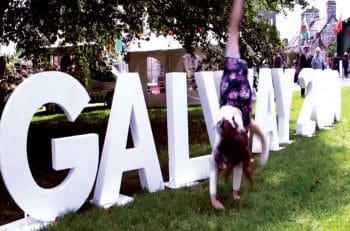
    When Andrius Mockus became mayor of Bogotá with its communities destroyed by drugs, crime and corruption he coined the phrase ‘citizen culture’, and called his strategy ‘subart’. The city’s cultural strategy was to encourage people to trust themselves, to take their lives into their own hands and to feel responsible as makers of the city – to live better together. The United Nations has argued that culture is about people and human flourishing, not as isolated citizens but in “communities and groups”. This locates culture in a politics of transformative change. What is the role of culture? Is it a goal in itself, an independent element of development? Is it a mediator between the social, economic and environmental elements of development?Should it be the overarching goal of development? Development is about sustainability of what can be produced in the present to imagine a process of social solidarity in the future. Cultural policy too-focused on market or state goals and without direct involvement of civil society and citizens can’t support people-centred transformative change. It can’t be the creative innovator of the public good that we regard as comprising human development: social, economic and environmental. These issues of cultural purpose provide the frame for assessing the current battle for the prize of European Capital of Culture in 2020 between the Three Sisters (Wexford, Waterford and Kilkenny), Limerick, and Galway city and county. Galway’s bid is called Making Waves, Limerick’s is called Embracing Multiplicity – Creating Belonging and the Three Sisters’ is called Reimaging The Region. Each contestant has now published its cultural strategy. The focus must be not so much on who wins, but on whether whoever wins can place culture as the overarching goal of development and assure the necessary cultural participation for this. It is not a good start that the priority in all strategies is to increase the agency of institutions and the efficacy of delivery. The lack of guidance from the EU on where to locate culture and the absence of an Irish cultural policy is not helpful. On the other hand rigidity would be problematic. Limerick’s strategy is top-down and primarily sees culture as an independent element in development. Its idea is to emphasise culture and link it to education, research, environment, and to physical, social and economic development. With a proposed budget of €37m, the strategy seeks to grow the infrastructure and support for culture. It integrates culture at the heart of economic growth and regeneration. The Three Sisters’ strategy, with a budget of €31m sees culture mediating between the social, economic and environmental. Implementation would be based on new governance structures and action focused on the excellence of the delivery of services. It is not clear whether the strategy envisages a New York like ‘Commissioner for Culture’ employed in the Council or an agreement with the private sector to deliver services. What is clear in governance is that there is no vision for co-governance with local politicians or the local community. Galway, with a budget of €45.75m, seeks to build a model of cultural excellence across various domains: safeguarding cultural heritage, supporting training initiatives, enabling access to learning partnerships for the artistic and creative communities; and improving ways for new media channels to transmit cultural communication, presentation and production. Governance is to include the development of a Charter of Cultural Rights and a management agency, like a Cultural Council. Galway sees culture as an independent element of development and as a mediator between the social, economic and environmental. The three strategies do articulate various engagement strategies for the public. However, the language of top-down engagement prevails, and participation is not a core value. No effort is made to find new forms of participation. This is an impoverished vision of culture based on local cultural policies that do not provide for community mobilisation, capacity building, and empowerment. The cultural rights of excluded groups thrive best when freed from institutions. Culture without community cannot weave a new social fabric. No effort is made to address the precariousness of artists who often work voluntarily, moving from project to festival, spending a lot of time unemployed. If we value the contribution of these citizen-artists, if we value culture’s overarching role in development, surely we should make their contributions more secure? If we believe in this role of culture as an overarching goal of development, local authorities need to demonstrate it, especially when in competition with others for excellence against a background where funds are scandalously scarce. It’s not about economics or tourism, the concerns that currently dominate. It is about building an ecology where culture can deliver transformative change for human good. Ed Carroll is the convenor of Blue Drum

    Loading

    Read more

  • Posted in:

    Culture is ethics not just aesthetics

    We need to address the future through a new lens, that of citizenship, if arts and culture are to play their necessary role in improving the quality of life for all. In looking forward we have, firstly, to understand that we are not just dealing with a recession and its aftershocks. There is a resetting of expectations. There has been a dismantling of a consensus based on principles, that: poverty should be attacked and not just managed; full employment is a legitimate goal of Government; access to health care should be free at point of use; access to third level education is a right; and the arts should be resourced and provided for at arm’s length from government. The retreat from these principles is because they are rooted in a vision that demands a role for the State and civil society in modifying capitalism. It is this role, for the State in particular, which is now under attack. These principles were understood as the means of creating a ‘whole’ society. But it is clear now that neither our model of party politics, nor the model of globalised economics, can be relied upon to create a ‘whole’ society. In fact, the opposite is true. My working definition of culture is “what we make and do to add value to the quality of our lives”. It involves the arts but also education and health and well-being. If our party-political and economic models are not fit for purpose, then arts and culture must consciously pick up this challenge. This is an ethical and not merely aesthetic issue. Culture has a necessary role to play in the creation and validation of another narrative. This requires the arts, education, and health and well-being to be understood as forms of emancipation, for individuals and for communities. This other narrative, articulated and developed around a re-purposed culture and re-prioritised education, must then be transferred to the political space. Political discourse must be engaged because change has to be effective in driving policy. The argument in which the arts sector regularly gets trapped, and therefore ignored, is the argument about funding the forms of delivery. This is easily sidestepped as an argument for and about ‘us’, the producers and providers. What should be happening is an argument for purpose, out of which new necessary forms of delivery and practice for the arts will inevitably emerge. This would take us to questions of what for and who for? What for? I would argue that the role of art in the history of human society has always been to create empathy. Empathy is about seeing the self in others. Without empathy, there is no society. Who for? I would argue that it is for ‘them’, not ‘us’, for the citizens or people, whoever and wherever they are. This proposition represents as much a challenge for the arts and cultural sector as for the State. This change starts with a shift in thinking and understanding. This must take us from a model based on exchange value to a model based on use value. It must take us from a model of value based on the idea of the solo genius producer and the signature model, to the participatory model. This is needed if we are to bridge to a civil culture, a culture belonging to citizens and centred on and driven by citizenship. Citizenship means full participation in the economy, in society as well as in culture. This ambition amounts to a civil society, an ecology, based on the interdependence and interaction of economic, social and cultural capital. This is a civil society set to act as a counterbalance to the narrowing consumerist model that serves as the basis of social relations. Momentum towards this understanding is already underway in the most dynamic areas of arts practice. Artists or practitioners and providers are seeking to reconnect to lived experience. This search is based on reciprocal communication, negotiation, shared agency, and situated practice. It is not just about individualised rhetorical self-expression and production. This model of artist or practitioner as negotiator, as much as producer, has much to offer the economic and social domains of knowledge. The core idea is the shift to participation from consumption as the basis of our social relations. Without a re-purposed participatory culture, we cannot have a full participatory democracy and we will not have a civil society either. The stakes could not be higher. Declan McGonagle is former director of the National College of Art and Design. This article is drawn from a presentation to Claiming Our Future’s Broken Politics event.

    Loading

    Read more

  • Posted in:

    Claire as Hillary

    Season 4 of ‘House of Cards’ came out on Netflix earlier this year and was gobbled up in a matter of weeks by its fans. The opening sequence will be familiar to them, a series of shimmering images of Washington DC, first in morning light and ending with the channels of motor traffic pulsing through the darkness of the city, like arteries through a body. The technique is called time-lapse, where a long period of time is replayed in a few seconds, creating effects such as clouds scudding across the sky as if borne on a speedy stream of water. Beneath the clouds and inside the portentous buildings across whose facades the shadows eat away at the sunlight, the dirty business of politics takes place. The city of impassive classical architecture is sinister, devoid of real life, like an enormous timepiece that obeys its own rhythms with no regard for the humans trapped inside. In a show that front-and-centres its soliloquies and its parallels with ‘Othello’, ‘Julius Caesar’ and ‘Macbeth’, the title sequence also evokes Shakespearean tragedy. The cosmic scale dwarfs the vain efforts of the mere mortals who strut the stage and whose merely human perception of things means they cannot escape what fate has in store for them. Chief among the mortals, puffed up with pride about their ability to control the future, are the charismatically likeable villain-hero, Frank Underwood, and his icily remote wife and running mate, Claire. Who actually likes Claire Underwood? While a man wielding power seems to be fully a man, a woman with power is often judged unfeminine, tough and unlikeable. The Underwoods clearly conform to this paradigm. But ‘House of Cards’ dealt itself a challenging hand to play in the last season by making Claire the main character in naked pursuit of political power. A nuanced and prominent female is a rare thing on screen, but, as in the real world, the price a woman pays is in the currency of likeability. The screenwriters seem to be aware of the problem. In Season 4, Claire’s estranged and difficult mother slowly dies in front of her eyes, but the payoff is not so much sympathy for her as much as astonishment at how she (Claire) seems not to suffer. In May this year, the actress who plays Claire, Robin Wright, revealed in an interview that she was forced to insist that she and the leading man, Kevin Spacey, receive equal pay for their work. She told an interviewer, “I was looking at statistics and Claire Underwood’s character was more popular than [Frank’s] for a period of time. So I capitalised on that moment. I was like, ‘You better pay me or I’m going to go public.’ … And they did”. The Hollywood rumour mill pegs their pay at somewhere between $500,000 and $1m dollars each per episode. So perhaps after all there are people who like Claire Underwood, if we take being ‘more popular’ as meaning the same thing. (Though, for example, Darth Vader is arguably more popular than Luke Skywalker, but not more likeable). At any rate, this is clearly good news because Wright is breaking the kind of glass ceiling that stymies women in politics, women like Claire Underwood. Wright’s argument for equal pay displays the sure touch of a poll-sensitive politician. It also displays a politician’s knack for simultaneously controlling her own narrative and cornering her opponent – she threatened to go public with the studio’s unwillingness to pay her equally, and then went public with it anyway when they had coughed up. They won’t try that again. The parallel between acting and politicking is notable too, and not only because public life is a kind of stage play. It is also notable because of the way that women politicians are obliged to act in public life. The norm is that a political leader is a man, and so a woman who occupies this position is perceived to be playing a man’s role. No matter how good a woman is at being a politician (Thatcher, Merkel, Albright, Harney, Indira Gandhi), she is nearly always judged to be performing the role, whereas men are simply being themselves. An effect of this is the tendency to focus on female politicians as actors, performers, and on what they look like (their facial expressions, clothing and hair). Their appearances are scrutinised as usually failed efforts to pass as something else or to conceal some real aspect of themselves. In short, the merciless attention devoted to the appearance of female politicians is due to the fact that they are not considered to be authentic – not authentically women, and not authentically politicians either. All of this is expressed in terms of likeability. When a male politician is unlikeable, it is connected to other, attractive qualities; for example, many Irish people do not like Donald Trump, Nigel Farage or Vladimir Putin, but they probably would credit these men as being strong-willed, independent and impervious to criticism. But when a woman is unlikeable, it is because she is perceived to be mannish, cold and hard. The person most consistently hounded by the problem of unlikeability is Hillary Clinton, who does not compel the charisma and warmth dividends of the three men who have stood alongside her in different ways down the years: Bill Clinton, Barack Obama, and most recently, Bernie Sanders. More than ever, the Democrats have put a lot of effort into controlling her appearance in the current electoral cycle. So for the last two years at least, she has consistently worn a tunic-plus-trousers combination that varies only slightly in its colour, and this has taken some of the attention off her appearance. In other words, her clothes have become as invisible as a male politician’s standard dark suit. It is difficult not to draw parallels between the Underwoods and the Clintons, the supreme real-life power-couple. Few people have walked the corridors of power longer than Hillary Clinton, as she now reaches for the presidency.

    Loading

    Read more

  • Posted in:

    Collaborating but not listening

    The Arts Council and the County and City Management Association (CCMA), the local government management network, have just agreed ‘A Framework for Collaboration’. The Framework culminates thirty years of collaboration between the Arts Council and the local authorities. It is promoted as a new way for these partners to work together, maximise the impact of their collective efforts, and reflect their shared belief in the contribution of the arts to cohesive and sustainable communities. Could this new partnership agreement be the Irish hub to lead-out a strong, democratic voice for culture? Could it reflect the ambition of The Agenda 21 for Culture, with its concern for the interdependent relationship between citizenship, culture and sustainable development? These are the expectations which should underpin the Framework. Local authorities spend €37.5 million annually through their arts services. They are the most significant supplier of the arts – appropriately since they are the elected bodies with the closest relationship to person and place. However, local government is poor at community-led participation. This raises questions as to the very starting point of the Framework and its capacity to live up to any expectations of a strong democratic voice for culture. The state and its executive will lead out the Framework Agreement with no sign of engagement by elected representatives or citizens. In 2016 the first in a cycle of three-year plans will be developed by a Management Liaison Group that will establish strategic priorities. A Working Group will develop and implement strategic actions to reflect these priorities. Both structures are limited to Arts Council, CCMA, and local authority executive representatives. This is more of the discredited top-down management approach to the arts. There is a notable absence of the obvious linkage to the community-development responsibilities of local authorities. The Framework puts too much emphasis on its own role and infrastructure and not enough on its potential to integrate the arts into a community development agenda and to ‘work with’ rather than ‘on’ or ‘for’ communities. It ignores the role of civil society, artists, and communities. It gives no consideration to their pioneering work of re-rooting the bonds between people and place across people of diverse backgrounds and orienations, and of empowering these diverse communities. The four shared commitments identified in the Framework do suggest an intention to foster some interdependence between citizenship, culture and sustainable development. There is a commitment to “access to and engagement with the arts for all people”. However, this is posed in economistic terms: ensuring public investment in the arts “benefits as many as possible”. There is a more promising if nebulous commitment to ensuring “a diversity of contexts and types of participation that constitute public engagement, most particularly social and cultural diversity”. After that there are the workaday commitments to value the work of artists and to achieve quality and the best possible artistic outcomes. Sadly, with our closed-in artocracy focused on who gets funded and on mechanisms of control, our arts institutions and services continue to be more interested in the objects rather than the subjects of culture. The Framework reflects this situation in leaning more towards being a service agreement. Five of its eight goals are internal to its own modus operandi, focused on issues of delivery rather than content or vision. We get a delivery mechanism for arts services to citizens, when we need improved capacity and resources for local authority arts officers to deliver as agents for a local arts ecology sustained in tandem with citizens. The Framework fails to open up fresh thinking and remains trapped between binaries: the right to art and its intrinsic value versus the cultural tourism and economic arguments for the arts. It is silent when it comes to the stark reality of cultural inequality; issues of gender inequality and discrimination in the arts; and opportunities presented in the diversity of local communities. The Framework should have paid more attention to the way people experience their engagement with arts and culture. It should place more emphasis on the cultural value and public value of the arts. Local sustainable development is about people and place. It belongs to all citizens and is only given to local authorities to administer. The Agenda 21 for Culture highlighted “Cultural goods and services are different from other goods and services, because they are bearers of meaning and identity”. It set out a challenge in noting “Artists, cultural organisations and cultural institutions play a central role in developing sustainable urban and rural space”. The Framework remains far from any such aspiration. By Ed Carroll

    Loading

    Read more