
Culture

Random entry RSS

  • Posted in:

    Man Booker Prize 2016: A demi-hypocrisy

    The 2016 Man Booker Prize, arguably the biggest literary prize of the English language, was awarded this year to American author, Paul Beatty. ‘The Sellout’ saw off a shortlist containing ‘Hot Milk’ by Deborah Levy, ‘His Bloody Project’ by Graeme Macrae Burnet, ‘Eilleen’ by Ottessa Moshfegh, ‘All That Man Is’ by David Szalay and ‘Do Not Say We have Nothing’ by Madeleine Thien. Beatty is the first American winner of the prize following a change to the rules merely three years ago. Previously, only writers from the UK and Commonwealth, Republic of Ireland and Zimbabwe were eligible. Raised in LA before moving to New York in his 20s, Beatty, has published three other novels and two collections of poetry. Amanda Foreman, Chair of the five judge panel, stated that ‘The Sellout’ was a “unanimous” choice. She went on to elaborate that the novel, “plunges into the heart of contemporary American society with absolutely savage wit of the kind I haven’t seen since Swift or Twain”. Narrated by African-American ‘Bonbon’, a resident of the town of Dickens situated in Los Angeles County, the novel explores America’s racial history. The narrative is told in retrospective as the opening of the novel unfolds in searing prose. Bonbon, is to be tried in the Supreme Court for attempting to reinstitute slavery and segregation in the local high school as a means of bringing about civic order. The satire on contemporary American society is offset by the novel’s depiction of the County’s decision to remove Dickens from the map due to embarrassments over its history and the unjust shooting of Bonbon’s father. These two events conjure contemporary issues: the ‘Right to be Forgotten’ and the Black Lives Matter movement. One desires the respect for absence of self and history while the other desires the respect for presence of self and history. Beatty’s book meets at the intersection of these opposing concepts, and unravels the satirical complications of developing an ideological direction for a nation which has ongoing civil rights campaigns yet has an African-American President. However, we perhaps wonder if post-Brexit Britain has swept for a moral licence for its own fractious increasingly migrant-ambivalent society. The Man Booker Prize rules stipulate that: “Any novel in print or electronic format, written originally in English and published in the UK by an imprint formally established in the UK (see 1b. below) is eligible”. As it stands only books published through a UK publisher are eligible to compete. These have included Oneworld Publications, publishers of the last two winning titles. It means, however, that the Man Booker Prize is enforcing a border patrol on those titles published in English outside of the UK. This is a major issue for independent publishers such as Sarah Davis-Goff and Lisa Coen of Tramp Press who, writing in The Irish Times 01/08/2016, elaborate: “…it empowers the world’s largest and most powerful publishers to engage, while sidelining independent publishers that don’t happen to be based in the UK. Every big publisher (Hachette, Harper Collins, MacMillan, publishers that have headquarters in France, Germany and the US) has acquired Britain-based imprints. For them, submitting work for one of the most important literary prizes in the world isn’t a problem”. The Man Booker Prize is attempting to have its cake and eat it too. On one hand it is able to comment on global geopolitical affairs as it raises the banner for liberty and tolerance internationally, yet on the other it discriminates against those who can not apply. ‘The Sellout’, according to Foreman, is “really a novel for our times”. It is timely to recognise racism and discrimination. But the Man Booker’s exclusivist demi-hypocrisy underpins, as yet unwritten, satire. By Matthew Farrelly

    Loading

    Read more

  • Posted in:

    Dublin Fringe Festival 2016

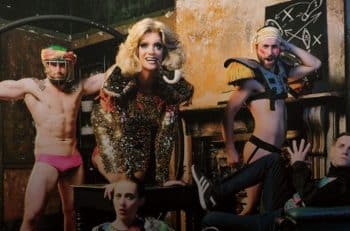
    More or less pulsating since its quiet birth in 1994, the Dublin ‘Tiger’ Fringe Festival has an unusually well-defined theatrical remit, stated in its Memorandum of Association as: “the encouragement and promotion of the development of new theatre companies, younger actors and directors and to encourage more innovative theatre and performance”. While the Gate is just a little bourgeois and the Abbey statist and under pressure for its quality and its perceived overhang of gender bias, the Fringe exists to “challenge, subvert and invigorate”, and has been consistently lauded by the likes of the Irish Times for its fashionable diversity and indeed its quality. This September over 70 Fringe productions erupted across Dublin, desperate to address the difficulties of complex contemporary Ireland. Fringe 2015 focused on celebrating its 21 years of existence in exuberant style, drunk on musical acts and the return of the Spiegeltent. In contrast Fringe 2016 had to sober up after the hangover the Abbey forced on the world of Irish theatre. The passage of the Marriage Equality Referendum and the stirring of Waking the Feminists, both representing formidable political movements with strong theatrical panache, escalated the iconoclasm expected of Fringe in Dublin. Kris Nelson, Artistic Director of the Festival, pronounced on International Women’s Day 2016 on the New Politics: “even an indirect, implicit kind of equality is not enough. It’s important, now, to be explicit”. This explains much of the ambit of this Festival whichs styles itself a “riproaring festival” of the avant-garde. “We’re hosting experiences”, says Nelson, a Canadian, who took over the Fringe in 2013: “We want big nights out, we want to be taken to places we’ve never been before, we want stories that are bigger than ourselves”. Inevitably, Village only got to a sample of productions. ‘Megalomania’, making real for its audience the slaughter in Syria and provocatively staged at the Coombe Women and Infants Hospital, and ‘Hostel 16’ starkly playing out the servile and monotonous daily routine of asylum-seekers in Direct provision, stuck it to the Irish State’s treatment of refugees and were tone-setting while ‘Eggsistentialism’ attacked judgementalism on female fertility. ‘RIOT’ which won the award for Production of the Festival featured a savage riff from Emmet Kirwan on the state of the nation and imagination. Panti Bliss, who technically starred, preached a message of “Activate, Articulate, and Farrah Fawcett”, vaunting her political and thespian cojones. Whether the message will be enough for a new Millennium is one question but Panti’s message is powerful and her reflections on the power she has now accreted – like Daniel O’Connell did – are surprisingly subtle. ‘The Aeneid’ by Collapsing Horse concertinaed the story of Aeneas’ journey to establish Rome and filtered it through the lives of a group of storytellers called Rhapsodes. Maeve O’Mahony as the actor Aenen assumed Aeneas’ identity and performed his story, tragically not her own. Her single moment of individuality was eclipsed as books stacked ever higher and higher in her arms, their pages falling around the stage, a visual representation of the burden of history. ‘Monday: Watch out for the Right’ gave a European context to political correctness, demonstrating (in distracting, subtitled Portuguese) how boxing poses the question of whether we should stay ring-side, or fight. Of course even in 2016 Dublin Fringe not every production had a right-on message; some were not even overtly political. Aoife McAtamney’s ‘Age of Transition’ evoked an Elysian dream-pop slumber yard filled with the silent choreography of Berlin dance troupe Sweetie Sit Down. The conjoining of music and dance was sumptuous. Dancing automata to McAtamney’s vocals on a recycled stage, attempting to harmonise the contemporary world with the ethereal and challenging notions of individuality, when the music stopped. ‘BlackCatfishMusketeer’ probed the modern dating scene, dressing the embodied internet as a mid-twentieth century secretary and web pages, gifs and links as filing cabinets. Ultimately showing that the promise of love still relies on the exchange of letters. ‘To Hell in a Handbag’, written and performed by Helen Norton and Jonathan White, breathed new life into Miss Prism and Reverend Canon Chasuble of ‘Wilde’s The Importance of Being Earnest’ through the humorous exploration of corruptible authority. Humorously positing Miss Prism and the Rev. Canon Chasuble as liars, blackmailers and thieves. There was comedy too: Deirdre O’Kane, Jason Byrne, Alison Spittle, Al Porter, Joanne McNally, Lords of Strut and Foil, Arms and Hog. These productions are a snapshot of the Fringe Festival 2016, a staggering body of 72 works by hundreds of artists, organisers and volunteers. In the year of steady but none too imaginative 1916 commemorations, the Fringe has cascaded, avalanched an ocean of new work, most of it overtly political – no doubt a reaction against the past, indeed against much of the present. It is a phenomenonal success in the encouragement of more innovative theatre and performance. Fringe 2016 energetically sobered up from last year’s celebrations, rolled up its sleeves and dug amongst the empty cans and streamers to raise up a big filthy mirror.   By Matthew Farrelly

    Loading

    Read more

  • Posted in:

    Ideology Debate

    Good or bad not right or left What does “left” mean today now that socialism is no longer on offer? By Desmond Fennell My exasperation with the use of language in current political commentary has culminated with a word that is now much-favoured by the commentators, namely, “populist”. The Oxford English Dictionary says that populist means: 1. “A member or adherent of a political party seeking to represent the interests of ordinary people. 2. A person who supports or seeks to appeal to the interests of ordinary people. Origin Latin populus ‘people’”. Political commentary (call it PC) always couples populism with “far right” as in “a populist far-right party”. “Right”, as we all know, means in PC language wrong; “farright” very wrong; an illegitimate intrusion into the democratic process no matter how many citizens it comprises. Clearly this view that politics “representing the interests of ordinary people” is by that very fact wrong is an elitist, anti-democratic view But it does raise the question: why is there is no mention of a left or far-left populism? Is it that simply there is no such thing? True, the Irish Labour Party could not qualify. When Eamon Gilmore, Ruairi Quinn and Pat Rabbitte were ministers they pursued in their respective spheres neo-liberal policies calculated to appeal to Dublin 4. But what of the water politics of Paul Murphy and associated Independents which drew many thousands of “ordinary people” onto the streets? Whatever the explanation, the fact is that – outside perhaps of Village Magazine – PC makes no mention of left-wing populism. I said at the start that my exasperation with PC has culminated with its use of “populist”. That means that other things about it had been building up to that exasperation. Basically, why doesn’t current PC use ordinary contemporary language, with its dictionary meanings, to express what the writer believes about individual politicians or groups or parties: words like ‘good’ or ‘bad’ with explanations of why good or bad, rather than a jargon which does not express in plain words what the writer means to say? Surely such hoary members of the political cast as “left”, “right”, “progressive” and “conservative” have more than had their day? At least in the French National Assembly of more than 200 years ago from which “left” and “right” derive, one knew that they referred to the Assembly’s seating arrangements and to those who sat accordingly. But what does “left” mean today now that socialism is no longer on offer? As for “right” the PC jargon equates it with “authoritarian”; but what is more authoritarian than Communist Russia which PC gave out to be “left”, or Communist China and North Korea today similarly? And take “progressive” meaning “moving forward”, but forward towards what? Is a state moving forward towards war “progressive” and if not why not?As for “conservative”, that is, “preserving something existing”, must such preservation always be objectionable as current PC implies? In short, I look forward to the day when some political commentator takes the present mess of the profession in hand and writes about politics in language that plainly and unmistakably means what it says. Left – egalitarian Good and bad won’t predict how politicians exercise the mandate voters give them By Michael Smith Desmond Fennell is exasperated. In a typically erudite piece (left) it is nevertheless not clear just what his analysis and vision are. The suspicion is that the piece is grounded in an unarticulated conservative right-wing populism, ill at ease with the reality that that is the prevailing international ideology. To start with the beginning of his piece, political commentary doesn’t always – or even predominantly – couple populism with “farright”. It really doesn’t. Venezuela, Brazil, Cuba and much of South America historically represent far-left populism writ large and have been defined as such. Podemos in Spain and Syriza in Greece have dominated political commentary for the last few years and are far-left populists. People Before Profit and the Anti Austerity Alliance in Ireland are far-left populists, pursuing that agenda through “issues-based” campaigns especially on charges for water and waste and the property tax – campaigns that are chosen for their popularity, not their leftistness. Sinn Féin also pursues the same campaigns from an apparently left base. Right doesn’t mean wrong for political commentators. Right is right for most of the US and British Press, for the emanations of IMN and Denis O’Brien, for the Sunday Business Post, the Sunday Times and, in incarnations like Stephen Collins and Cliff Taylor, for much of the Irish Times.   PC – and there’s sleight of hand here because PC has a very well-established voguish meaning of political correctness even though that’s being glossed over here – uses little but ordinary language with its dictionary meanings. Left, right, progressive and conservative will never have had their terminological day because they describe the basic stances that drive particular politicians in ways that enable voters to predict what stance they’ll take on issues that haven’t arisen yet but on which their vote is delegating the politician to take stances. Most analysts consider politics can be expeditiously considered on lef t-to-right, equality-to-freedom, progressive-toregressive, liberal-to-authoritarian, conservative- to-radical spectra. Wanting commentators to break everything down into what is good and what is bad – as Wilde claimed books are written only well or badly – would be a terrible bind for political scientists and politicians. You need to have pointers. The lesson from Fianna Fáil, from Fine Gael, from the entire history of post-Independence Irish politics, is that without ideology Irish parties fall back on parochialism, on nepotism, on short-termism, on confusion. You need to know what you’re voting for. If you’re seeking votes there is a moral obligation to indicate how you intend to ventilate your mandate. You can’t just say, like De Valera, you’ll simply look into your heart. Because people won’t trust you to. The seating positions afforded left and right in the French National Assembly, like Latin and all its emanations, are

    Loading

    Read more

  • Posted in:

    The 1916 Rhizome

    It seems significant that the documentary film ‘Bobby Sands: 66 Days’ has come out this year, the centenary of the 1916 Rising. Brendan J Byrne’s impressive account of the H-Block hunger strike of 1981 claims, through its interviewees and in its own narration, that nothing was quite the same in this country after those traumatic 66 days during which Bobby Sands starved himself to death. The same of course is frequently said of the Rising – Ireland before and Ireland after the seven days of the rebellion in Dublin were two very different places. There are merits to both claims. In one of the many interview contributions by Fintan O’Toole in ‘Bobby Sands: 66 Days’, he suggests that we can view Sands’ hunger strike as marking the beginning of the end of the physical-force tradition in Irish republicanism. The argument goes like this: the enormous propaganda success of the strike demonstrated to everyone, most particularly to the IRA themselves, that you ‘get into people’s minds’ more effectively by demonstrating your readiness to suffer than by demonstrating your capacity to kill and maim; the moment you admit your fascination for Sands, republicanism has won. When the half-dead Sands won the Fermanagh- South Tyrone by-election, he broke the longstanding boycott of the Westminster parliamentary system that had for decades been a defining feature of republican strategy. Granted, when Gerry Adams was elected MP two years later, he abstained from taking his seat, a policy observed to this day by Sinn Féin’s four (non-)sitting MPs. But the fact remains that from 1981 until the present, mainstream republicanism has demonstrated a readiness to engage with the British political system. It would be a strange documentary that did not talk up the centrality of the event that is its subject. But the film does succumb to the temptation to position the Sands strike as the event that shaped all that followed, and it even suggests by its shifting back and forth along the timeline of the strike and the Troubles that the hunger strike was the culmination of all that had come before. 1916 is often thought of in the same way. There is no doubt that what happened in Easter Week was crucial, but we say this because of the many events that cascaded in its wake: the surge of support for Sinn Féin in the 1918 election, the mobilisation of the IRA across the country in the years following, the readiness of the British government to withdraw, and so on. If none of these other events had taken place, then 1916 would be as relatively non-pivotal as the also unsuccessful uprisings of 1867, 1848, 1803 and 1798. This is not to say that these other events were inconsequential, but it is to point out that only one of these rebellions is generally known about and the centenary and bicentenary celebrations for those earlier events are small fry compared to the full-scale, countrywide commemorations of 2016. The broader point here is: when we hear a historical event described as pivotal, a watershed, a key moment, a revolution, a turning point, a tipping point, we are being exposed to what the social historian Richard Sennett has called “a view of human history based on the life cycle of the moth”. Abrupt transformations simply do not happen. The Ireland that existed before the 1981 hunger strikes did not stop and was not replaced by a different Ireland. The same goes for 1916. A useful metaphor for an alternative way of viewing historical causes and effects is the rhizome, which is a botanical term for a part of certain plants that send out roots and shoots in a non-symmetrical, apparently higgledy-piggledy way. Rhizomes have been contrasted, most notably by the philosophers Félix Guattari and Gilles Deleuze, with plants that observe a more regular pattern of a central stem or trunk that grows side shoots in a predictable way. A rhizomatic view of history does not search for a before/after logic, or even necessarily a cause/effect logic to historical events, instead viewing them as being connected in a non-linear and networked way, producing feedback effects and disruptive interpretations of past and future events. 1916 and 1981 are indeed important years in the history of this island, but the rebellion of 1916 becomes the canonical Easter Rising only when viewed backwards in time from the vantage of events that followed. And among the events that have followed 1916 are the commemorations of 2016. The fact that these events are being celebrated so effusively this year casts new, retrospective significance upon them. 1916 had occupied a venerated position in the emotional history of nationalism for many decades, but had slipped into disrepute in the south in particular as the revisionist account of Irish political violence became standard. But the 1916 that is celebrated now is rather different from how it was remembered in 1966. With the distance of time and the commodification of our own historical experience, the new 1916 has receded sufficiently from our current political dispensation to become a quaint, sepia-toned, costume-wearing, heritage event festooned with interactive, touristic, multimedia, virtual experiences. The 1916 rhizome, in other words, continues to send out new shoots.   ‘Bobby Sands: 66 Days’ does a good job of connecting previous events of the Troubles to the day-by-day experience of the Sands hunger strike. As such, it is a decent history of the period. But its major assertion that things changed pivotally with Sands means that it fairly rushes past the events that followed 1981. The over-emphasis on Sands and his strike means that the other nine people who starved themselves to death in prison that year are not all named. The film gives the impression that the conflict was effectively brought to an end by a combination of Sands’ political coup plus the peace-process nous of Adams, aided by the briefly seen Albert Reynolds, Bertie Ahern and Tony Blair.   Fair enough, these are indeed the events that followed, in some shape

    Loading

    Read more