
Posted in:
Transcendent industrial relations
After Hilla Becher’s recent death it’s time to look again at the Bechers oeuvre
Posted in:
by admin
After Hilla Becher’s recent death it’s time to look again at the Bechers oeuvre
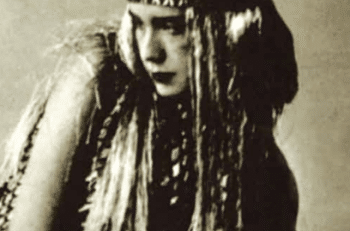
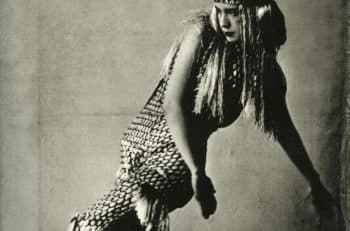
Way back in 2004, I wrote an article for The Sunday Business Post, entitled ‘Play Boys, but few Play Women’ highlighting chronic gender imbalance in Irish Theatre, on the occasion of ‘Abbey One Hundred’, a virtually all-male programme celebrating the centenary the Abbey Theatre, (apart from one children’s play by Paula Meehan, and a shared run for Marina Carr’s ‘Portia Coughlan’ at the Peacock Theatre). That was before the dawn of social media, and my article, a lone voice in a sea of unquestioned misogyny, was received with resounding silence. Unfortunately, ‘his’ story has a habit of repeating itself, and more than a decade later, on October 28th, 2015 the Abbey Theatre proudly announced ‘Waking the Nation’, its – surprise, surprise – virtually all-male 1916 commemoration programme (apart from a lone monologue by Ali White entitled “Me, Mollser”, jutting out of the programme like Elizabeth O’Farrell’s incongruous little feet behind Patrick Pearse’s iconic 1916 surrender photograph). Nearly as bad was the playing of O’Farrell in both Jordan’s ‘Michael Collins’ and the recent ‘Rebellion’ series on RTE by men. This time, however, Twitter and Facebook ignited with rage at the outrageous gender imbalance, bringing an exciting counter-movement into being, with its own hashtag #WakingtheFeminists, abbreviated, wonderfully, to #WTF. Wasting no time on this occasion, Mná na hEireann, had a “storming of the Bastille” moment at the Abbey Theatre on November 12th, 2015, when over 30 female theatre professionals took to our national theatre’s stage, and the 450-seater auditorium over-owed with women demanding an end to this unacceptable gender imbalance, for ever. A contrite Fiach Mac Conaghail, director of the Abbey Theatre, sat in the auditorium and listened. After each of the 30+ women on stage had had their say, he stood up, looked up, and admitted: “I wasn’t thinking about gender balance. I did not look up. I failed to check my privilege. And I regret that”. If theatre holds up a mirror to society, this recurring gender imbalance at the Abbey Theatre is indeed a perfect reflection of Irish society, and the nature of Irish cultural ‘His’story – so far. We need look no further than to the iconic 1916 surrender photograph of Patrick Pearse for confirmation of this, with its dodgy silhouette of self-effacing inner city nurse Elizabeth O’Farrell who braved snipers to deliver the surrender order throughout Dublin’s rebel garrisons, only to be airbrushed out of the official surrender picture as published by The Daily Sketch. I was delighted to hear artist Jaki Irvine speak of Elizabeth O’Farrell and her 2013 book about the fearless nurse, ‘Days of Surrender’ (as yet unreviewed in Ireland), from the Abbey stage in its Theatre of Change symposium in January. Irvine is going on to set Elizabeth O’Farrell to music, along with her other female 1916 colleagues in her installation “If the Ground Should Open”, at the Irish Museum of Modern Art in September. Like Elizabeth O’Farrell who may indeed, as some claim, have deliberately taken a self-effacing step back when that 1916 Patrick Pearse surrender photograph was taken, making it easy for her little feet and large coat skirts to be airbrushed out of our Cúchulain- style national mythology, Lady Gregory (co-founder of the Abbey Theatre) did not actively seek recognition for co-authoring her iconic 1902 play ‘Cathleen Ni Houlihan’ with WB Yeats either. Similarly, a few decades later the self-effacing but fascinating George Yeats chan-nelled a myriad of voices to – yes – CO-AUTHOR ‘A Vision’ (1937), with her husband WB Yeats, but is rarely acknowledged as having done so. Like Elizabeth O’Farrell, the formidable George Yeats (about whom I am making the rst ever radio documentary, entitled ‘Georgie’s Vision’, funded by BAI Sound and Vision, for broadcast on RTE Lyric FM in Autumn 2016), took a step back, and went so far as to say “thank-you for leaving me out”. But – #WTF – is this shyness reason enough for the rest of us to facilitate, and hence perpetuate, the inaccurate masculinisation of, and erasure of women from Irish cultural history? Another important figure eclipsed by men is Lucia Joyce who could be Ireland’s answer to Camille Claudel, the well-regarded French sculptor who spent 30 years in an asylum (also Rodin’s lover and elder sister to poet, Claude Caudel). Lucia could not have been more different from her mother, Nora, whose entire raison d’être was her man, James Joyce. As well as his lover, cook, maid, and mother to his children, Nora was also James Joyce’s muse, most obviously inspiring Molly Bloom. Even in the Joyces’ modernist milieu, it was alright for a woman to be a muse, but not an artist herself, and certainly not an artist of the body (though in his masterpiece, ‘Ulysses’, James Joyce wrote the epic of the body). A modern young woman in 1920s Paris, Lucia expected her own career and identity, though she had grown up in weirdly close quarters with her unconventional family, and very much in the shadow of her father. When she protested “c’est moi qui est l’artiste”, alas, nobody listened to her. Tragically, Lucia Joyce (1907 – 1982), was never allowed to ful l her dream of being a professional modern dancer, despite her training with greats Emile Jacques-Dalcroze (founder of Eurhythmics); Raymond Duncan (brother of Isadora, who himself lived like a modern-day Ulysses in his Paris commune “Akademia Raymond Duncan”); Margaret Morris (grand-daughter of William Morris and founder of www.margaretmorrismovement.com); despite her seasons dancing with “Les Six de Rythme et Couleur”, and despite reviews like this one in the Paris Times: “Lucia Joyce is her father’s daughter. She has James Joyce’s enthusiasm, energy, and a not-yet-determined amount of his genius… When she reaches her full capacity for rhythmic dancing, James Joyce may yet be known as his daughter’s father”. Instead of being given the space to realise her ‘full capacity’, Lucia, who grew up immersed in iconoclastic counter culture and the avant-garde, found herself consigned to mental institutions – for life. Interestingly, after her father’s death in
Less than 30% of the writers in Village are women. And only 30% of the articles submitted for publication come from women. What’s going on? Village is politically correct and right-on. Uniquely it never, to take an example, markets magazines by putting attractive women on the cover. Village takes progressive social theory seriously. It consistently takes the most ‘liberal’ stance on abortion and reproductive rights. Most of all, and this is what determines so much of its stance, Village believes in inconvenient and prickly equality of outcome, not shiny and friendly equality of opportunity. In other words not just opening up for all, but giving the worse-off an actual leg up or a quota to compensate for the iniquities of history. This applies to women as much to any group. The new Dáil will have only 35 women out of 158. This is a more-than-50% improvement since 2011 and the number of female candidates was up to 163 from 86 in 2011 when it yielded 22 women out of 166 (up from 3 in 1973 and 22 in 2002 and 2007). Nationally, the average number of first-preference votes per man was 4,205. For women, it was 3,260. Village has given a good bit of of space to women who want to change this, to move towards fty percent female representation in parliament. The Electoral Act 2012, amusingly promoted by Phil Hogan and opposed by Fianna Fáil, applied a gender-quota rule that parties had to have at least 30% candidates of each sex or they lose half of their state funding. All parties except Direct Democracy Ireland applied their quota. Village supports this. I support this. That’s politics. We should push for immediate progress, everywhere. History and culture are different. The Abbey Theatre got into trouble recently because only one of the ten authors chosen for its 1916 commemorative programme, Waking the Nation, was a women. Other theatres and film bodies have taken similar flak. A recent rather unconvincing evocation of the Rising, Rebellion, made efforts to portray the events of that era with women to the fore. I disagree with these approaches. As to the Abbey’s Programme, what if the women took bog-standard anti-feminist positions, would they still merit advancement in the programme? Is it that a third of the writers should usually write pro-feminist pieces or is it that the third should have written pro-feminist pieces in this instance? Should there also be a certain number of works produced that have been written authors from racial minorities, from the young and the old, from LGBT and straight? Should it be the same with the actors? What about the audience? The answer to much of this is No. And as regards history, you’re trying to record the way things were: history. You shouldn’t, and you don’t need for any political reason to, distort it. All you can do with history is acknowledge and let it inform, though never determine, your politics. For the same reason that you don’t make the ruling classes working classes or younger than they were in the interests of some perceived correctness, you don’t pretend that women were the protagonists in the Rising. Unfortunately they were not. I also disagree more generally with distorting the facts to suit the ideology. The idea underpinning politics is to resolve the facts objectively and then apply the ideology. Not the other way around unless you thing your ideology is so weak that it won’t fit certain facts. In which case change your ideology, it was wrong. When the facts don‘t suit your ideology it is time to find a new ideology, or stay quiet; and more precisely to realise you should have had a better ideology in the first place The debate on women’s rights has become unintellectualised, entrenched and sometimes underinformed. For example a recent only partly-corrected Una Mullally article in the Irish Times misreported that Fianna Fáil’s policy was to have “up to a third of its candidates women”. She ridiculed the policy even though the policy did not, and legally and logically could not have, said this. It would certainly have been nice for those of us who believe that the point of that party is only ever to adopt progressive agendas, at the very last minute, if Fianna Fáil had got it so skewed, but they had not. Between Una Mullally and her employer they could not bring themselves to correct the article properly. The reason for the politics of women’s equality is that it has been an unequal world. It was an unequal world when they (men) made God a Man, it was unequal in 1916 and it’s still unequal because women earn less, are politically less powerful and have less autonomy than men. Only a fool would deny it. Because of the legacy of thousands of years of suppression women have not written as good, or indeed nearly as many, plays as men. Women also write differently from men, largely for socio-cultural reasons but also sometimes for reasons based in their physiological natures. The point is to change that by counterbalancing. Women of today who want it and show talent should get more training in playwrighting paid for by the state and its institutions, than that available to similar men, particularly training that helps them break down prejudices and that facilitates overcoming sexist obstacles to success. An admirable recently announced initiative from the Irish Film Board is doing roughly this. Such initiatives tend to generate equality of outcome. Regrettably in the arts it will be some generations before the volume of brilliant works by women rivals the volume of brilliant works by men, created over the aeons, even controlling for the heightened relevance of contemporariness. It is different with politics which, unlike history, does not or should not, trade in the past. It is possible, indeed imperative, to push for progressive change. It is, because of the nature of the discipline, and the period in which it trades – the past, not possible to push for change of
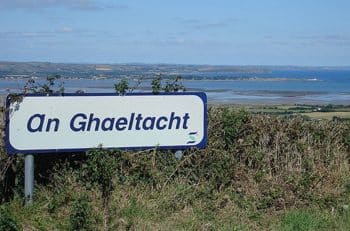
Latin, a dead language, is taught in thousands of schools. A Latin online news bulletin gives the world’s news and carries ads. A radio station broadcasts the news weekly in Latin. Latin enthusiasts organise social gatherings. But despite all this, Latin remains a dead language. Is Irish on the way to becoming that? Most of us don’t want to speak Irish, but we like to have Irish in our lives. We cherish it, the surveys show, as a precious part of our national heritage. We are glad there are Gaelscoileanna, a Radio na Gaeltachta and a TG4; that the destinations of buses are shown in Irish as well as English, and to hear that there is a news-and-comment magazine in Irish on the internet. We would not like everything in Ireland to be in English only. However, it is one thing for a minority language under pressure by a dominant language to give pleasure to those who speak and write it and to comfort others by its presence in their lives. It is quite another for that language to live into the future as many of us hope it will. To do that it must at least be the spoken language of a sizeable self-renewing community as Latin, for example, is not. With the former Gaeltacht districts now completing Ireland’s shift from Irish to English, the Irish language has no such community. This fact constitutes an emergency for lovers of the Irish language; an emergency that needs to be countered by dramatic new action – not by the State which has lost interest in Irish but by the lovers of the language themselves. The most valuable achievement of the Irish language movement is that there are now several thousand men and women throughout Ireland who speak and write Irish well; that is, as correctly, and with as wide a vocabulary, as the average educated user of any other European language. Collectively, these people in their speech and writing are a national treasure because they embody the Irish language alive today. Indeed, because of their wide diversity of circumstance and occupation, they embody it more fully than any Gaeltacht ever did. The initiative that is called for is to convert this national human treasure, which embodies the Irish language as it is today, into a living ‘language bank’ that yields high interest—is self-renewing— through adding new people to its number each year. For a start, it would be a matter of establishing – insofar as now possible and with the personnel now available—the kind of community that is necessary for ensuring the continuance of Irish as a living language. The personnel available for that are those several thousand men and women who speak and write Irish well. Identify a thousand of them and obtain their consent to be jointly responsible – together with others whom they would admit to their number through an annual examination – for the survival of Irish as a spoken and written language. Have them agree on a collective name for the language community they would form; undertake to hold general and regional conventions; and choose a discreet badge that they would wear on their clothing to identify themselves to each other and to people generally. That badge would become a mark of positive distinction. The annual entrance examination for new members, which would become a big national occasion, would provide a prestigious goal for Gaelcholáistí and for the university courses in Irish. Apart from the holding of its conventions, this body of Irish-language perpetuators would carry out its remit simply by living, speaking and writing, and growing annually towards an initial complement of, say, 8000 members. The present Irish-language activities and occasions would continue undisturbed. Because the members of the language community would not be living next door to each other, they would not be a self-renewing community of the ideal kind. But it would be the best that can be done under present circumstances. The annual entry exam would give the secondary Gaelscoileanna and the university courses in Irish a concrete and prestigious goal to aim at. In time the initial goal of 8000 members might well need to be extended. It must be clear that unless this scheme or something like it is implemented, the spoken and written Irish language will enter in the coming years a period of gradual, ragged, ignominious, death, with very minority-interest programmes on radio and television recalling the real thing. Desmond Fennell Dr Desmond Fennell’s last book was ‘Third Stroke Did It: The Staggered End of European Civilisation’. www.desmondfennell.com
by Kevin Kiely
There is something quaint about Conor Lenihan assessing the life of Charlie Haughey, the man who stole money from the fund for his father’s liver transplant and then fired his father as Tánaiste and Minister for Defence. Lenihan has pieced together a mixture of his own memories of the former Taoiseach and anecdotes that his father, Brian Lenihan senior, passed on to him. Because of this, the reader inevitably looks for evidence of personal bias on the part of this author and it is certainly a particular, personal work. This is a distraction because these characteristics import a significant source of new material, and new perspectives on old material. Nevertheless the media do not seem to have embraced Lenihan’s approach and strangely this book has not been reviewed in the mainstream press. The book is easy reading if patchy. Lenihan of course has a pedigree of grandson, son, brother and niece of TDs and, as a famously boisterous quidnunc he exploits it – all. Lenihan opens by admitting, nay boasting, that it is rare that an adult life is heavily influenced by an historical figure, but that his was, by Haughey. The moral compass of the book spins unpredictably. It often lionises Haughey but also assiduously maintains another Lenihan-centred narrative which actually surfaces only sporadically and peaks in intensity with the sacking of Lenihan senior and with the loss of his bid for Áras an Uachtaráin weeks later. The most poignant page in the book is the last one, the sole appendix, which reproduces the letter from Haughey requesting the resignation of Lenihan’s father. It begins “A Thánaiste, a Aire” and proceeds to threaten that if he does not resign that Haughey will request the President to terminate the appointment. An underpinning of authorial disdain is surely being implied. Lenihan reprises a lacklustre recitation of the Small Man’s biography: son of a Free Stater, Lieutenant in the FCA, North Dublin ward boss, marriage to Lemass’s daughter, reforming minister, arbiter of taste (here Lenihan is too kind). But consistent hypocrite supporting Archbishop McQuaid’s banning of Edna O’Brien’s ‘The Country Girls’. The man from TACA, the 1960s Christian Brothers’ Boy in mohair suits doing the social rounds in The Shelbourne, The Hibernian, Jammet’s, The Russell and Groome’s. So far, so well-known. Lenihan explains the realpolitik forcing Lemass to offer Haughey the Finance Ministry and Blaney the Agriculture Ministry leaving Lynch to see off Colley (59 votes to 19) and become Taoiseach. A brisk narrative on the Arms Crisis foreshadows Haughey’s first fall. Lenihan believes Lynch “knew much earlier than he insisted that weapons were to be purchased” but “backed off and decided to blame the entire fiasco on those ministers, and Captain Kelly”. Haughey, Blaney and Gibbons were “briefed at every step of the way, if not by Captain Kelly, then by the Army’s Head of Intelligence Colonel Michael Hefferon”. Still Lenihan is perplexed as to why “Lynch opted to put those involved on trial in the courts” and adds ‘my father always said that the main person pushing for a prosecution was George Colley”. Haughey’s return is well done. He enlisted Reynolds and his country and western caucus and was back as a Minister in Lynch’s government by 1975. Haughey’s pretensions rose ever greater: “Some preferred the Mercedes but Haughey felt the Jaguar cut a greater dash, with its leather seats and inlay”. Meanwhile back in the city Haughey’s constituency machinery cranked out cheques and Christmas turkeys. In summer there was a charity gymkhana (in aid of the Central Remedial Clinic!) with marquee and CJH in riding gear with Lady Valerie Goulding, silver trays and matching teapots on the lawns of Kinsealy. By 1979 he was leader of Fianna Fáil and Taoiseach. Lenihan notes (in a sentence that in fairness he appropriates from Haughey’s Wikipedia entry, that: “Within days of his becoming Taoiseach, Allied Irish Banks forgave Haughey £400,000 of a £1,000,000 debt. No reason was given for this. The Economist obituary on Haughey (24 June 2006) asserted that he had warned the bank ‘I can be a very troublesome adversary’”. Haughey’s 1980 Ard Fheis was “like a Baptist revival meeting rather than a political conference”. Then GUBU set in in 1982. Lenihan surely veers towards the unedifyingly bizarre as he reveals that a contact of his in the Tory party told him that Haughey was “the first person to compliment Mrs Thatcher on her legs” at the Anglo-Irish summit which spawned Lenihan senior typically ponderous invocation of “the totality of relationships”. Haughey’s interventionism over the liver transplant for Lenihan senior in the Mayo Clinic is narrated scrupulously with Haughey ordering Paul Kavanagh who fundraised €270,000, though “no more than €70,000 was spent”, to divert the balance to Haughey and his Charvet shirts (though Lenihan, being a Lenihan, is much too practical to care, or even mention, the fetish for haute couture). Lenihan recounts with palpable pleasure how Haughey survived the 1991 challenge from Reynolds (55 votes to 22). Haughey lived through his dissection by the Moriarty Tribunal and died of prostate cancer in 2006 before he could be prosecuted. Homely depictions of Lenihan’s mother and her friends debating the ethics and sexiness of early Haughey mingle with Lenihan’s recollection of how Brian Lenihan senior’s hopes that Fianna Fáil might not campaign against divorce were dashed by Haughey. Other anecdotal references sometimes, though not always, seem tailored to elevate the perspicacity of the author’s dad but also give the book a beguiling sense of Lenihanesque intimate authority – as when he reveals that he acted as an informal intermediary for Albert Reynolds in the early 1990s, though he was a working journalist. There is charming colour too as when for example he captures the private sides of De Valera and Lemass, or remembers a bottle of whiskey placed at Jack Lynch’s setting at a dinner in the late 1960s being consumed in the course of an evening. He reveals that his father and Ray Burke, of all people, agreed to fill out their ballot papers the same