Culture

Random entry RSS

  • Posted in:

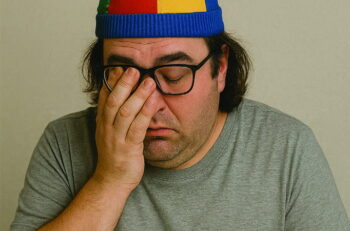
    Obesity obeisance obtuse obscenity

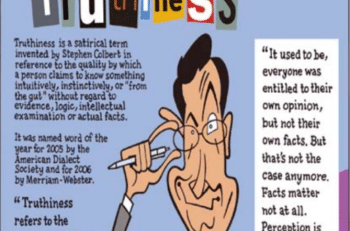
    By Michael Smith A recent article in Village, ‘Obesity obeisance’ (June 2015) suggested Ireland was in the manipulated throes of a spurious fatness ‘epidemic’ contrived by industry machination, junk science and twenty-first-century angst. The article was an example of truthiness, a righteous gloss on truthfulness – minus the core ‘truth’ element; and thankfully a number of Village readers were enraged. Normally Village publishes nothing nutritional except articles that vilify obesity and its purveyors. One of the points of journalism is, where relevant, to draw attention to the science; and not to succumb to crackpot minority opinions ungrounded in the scientific method. Journalism can with ease distinguish peer-reviewed science from junk science; and denying an obesity epidemic has little academic substance. It is not journalism to publish the disproved views of cancer/smoking link-deniers, of creationists or of climate-change deniers. Obesity deniers should draw our opprobrium no less. Interestingly a representative of the ambassador of one of the great culinary civilisations wrote to the magazine letting it be known his excellency would like to talk to the piece’s author; and arrangements were made. Why ambassadors do not make more focused contact about real issues is unclear. The stakes are high. 23 per cent of Irish people are obese (ie with a body mass index in excess of 30), but Ireland is actually set to become Europe’s most obese country by 2030, rivalled only by Uzbekistan, according to figures presented by the World Health Organisation as part of their 2015 Modelling Obesity Project. The proportion of obese Irish men is expected to increase from 26% to 48%, with the number of men classified as either overweight or obese rising from 74% to 89%. Obesity in women will jump from 23% to 57% with the number of women classified as either overweight or obese rising from 57% to 85% by 2030. In the US for reference currently two thirds of women and three quarters of men are overweight or obese, and the figures there are rising. Professor Donal O’Shea, co-chair of the Royal College of Physicians of Ireland, sees all this as “a much bigger health crisis than what cholera was back in the 1800s and HIV/AIDS was back in the 80s and 90s”. Minister for Health Leo Varadkar admits that obesity has become a “major personal and public-health problem”, and has called for the issue to be treated “as seriously as we treated tobacco in the past”. The Village article questioned whether being fat was really that detrimental to our health and suggested there were moral, social and economic influences (no less) rendering our understanding of obesity (wait for it) “inaccurate at best, or worse still, enormously harmful to many people’s lives”. No such fear. The article started by looking at the baseline unit of measurement for obesity that the World Health Organization uses: the Body Mass Index or “BMI”, a simple mathematical formula that places people of different heights and weights on a single integrated scale, but one which, the piece notes, “was never intended to be a measure of individual health yet despite this it has formed the basis for almost every public policy and study on issues of weight and obesity written in the modern era”. It is alleged a body called the International Obesity Task Force (IOTF) – scandalously funded by big drug companies looking to sell weight-loss drugs – drafted a report for the WHO using data provided by US health insurance giant Met Life. The report led to the “ideal”, “healthy” weight for an individual dropping by 15-20 pounds. The BMI formula itself does not account for things like muscle mass and bone density. Rugby-player, Cian Healy, according to the index (and the article), registers as obese. Certainly BMI is an unreliable indicator for individuals but the point the author missed is that it is not unreliable for populations: there is no reason to think that, if a population’s BMI rises, weight will fail to rise under any of the other established indexes, such as ‘the Body Shape Index’. The author seems to miss the entire point. Public policy is addressed to populations not individuals. BMI remains a useful gauge of how society is progressing over time and of how it is faring relative to other countries that use the same measure. “Where BMI is really useful is for measuring trends in large populations”, according to Dr David Haslam, chairman of Britain’s National Obesity Forum. The author’s mistake is basic. In America, the author goes on, the country thought of as leading the way in weight gain and rising obesity levels, the majority of people, according to a study from the International Journal of Obesity, have only experienced a moderate weight gain of approximately 3-5Kg. That’s only an extra 10 calories a day in their diet, a Big Mac every two months, he declares. It’s not quite clear what he means. He notably fails to say what time period he is considering. No matter. His topic is obesity. As already stated, in the US currently two thirds of women and three quarters of men are overweight or obese. According to the Trust for America’s Health, in 1990, the US obesity rate was 12 percent. By 2005 it almost doubled, with 23 percent of Americans considered obese. Five years later, it was 35.7 percent. Worse, a report by CDC in 2012 estimated 42 percent of Americans would be obese by 2030. America, the science and the figures show, is obese and getting obeser. It therefore matters not, in proving the scale of the obesity problem, that a particular Journal over an unspecified period noted the majority of people only gained 3-5kg, even if – presumably unbeknown to the author – it is probable they will put on even more weight over a further (perhaps even specified) period. The author proceeds to look at a 2013 study published by The Journal of the American Medical Association which reviewed nearly three million subjects from more than a dozen countries

    Loading

    Read more

  • Posted in:

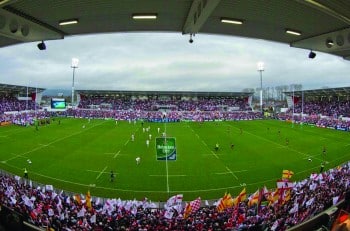
    Rugby all and end all.

    By Brian John Spencer George Orwell wrote that sport is war minus the shooting. Like a ritualised clash between two tribes sport allows men and women to spill their primal energies, growing and bonding as human beings in the process. I played rugby every weekend from the age of seven with Instonians at Shane Park, just off the motorway as you reach Belfast from Dublin. It was the defining aspect of my childhood: instilling discipline and notions of fair play and friendship. Without rugby there is no me. Rugby was not what I did, it was who I was. I watched Ireland with bursting passion. Being a northerner in divided Ulster and Ireland, and with Presbyterian forebears, rugby gave me identity as well as purpose. I was inextricably Irish, united behind Keith Woods, Paddy Johns and Costello, ‘the Claw’ and every man in the green cotton jersey. Fellow Royal Belfast Academical Institution (RBAI)-alumnus and essayist Robert Lynd long ago captured my match day emotions: “Every time Bleddyn Williams got the ball I felt as apprehensive as if the frame of civilisation had been threatened. And when Daly scored the second try I experienced such ecstasy as I had known in youth at the news of the relief of Ladysmith”. I was “excessively interested” and “obsessed”, as Michael Longley described himself and fellow poet Louis MacNeice, with rugby. It carried me through primary and into grammar school, to the great rugby fortress in Belfast city centre, RBAI. That year 1999, I watched David Humphreys lift the European Cup; my primary school team went on to win the Ulster league. My dad used to captivate me with visions of playing for the school First XV and travelling to warm weather training in Barcelona. I was determined if not convinced I would play for Ulster and Ireland. I established myself centrally within the RBAI rugby system, captaining the A-team in my first three years. By 2004 I was playing senior rugby. Training three days a week after school, most lunch times, one morning, and playing every Saturday. We travelled to Dublin to play the big southern teams like Blackrock and Belvedere. In 2005 I got a gash to the back of the head courtesy of Cian Healy. We won the Ulster Schools Cup on March 17, 2005. I missed out through injury: a dislocated shoulder in late February, missing Ulster schools selection that summer. I wasn’t the outstanding athlete in the school or province, but modelling myself on Neil Back and George Smith I still felt I was in the race to play at Ravenhill and Lansdowne Road. In 2006 we reached the semi-final, losing against Methodist College Belfast. It still hurts, like an open wound. This was the occasion my dad had spoken of since I was eight years old. I went to university in Belfast and chose to play for Ballynahinch Rugby Club under the gifted coach Derek Suffern. No Academy contract, but I still felt I was in the race. I was playing 1st and 2nd XV rugby with fringe Ulster players, after all. Spring 2007 was interesting as Belfast was to host the under-19 Rugby World Cup. This afforded me the chance to compete against the best of my coevals in Ireland. I was born September 1987, so I missed the cut-off by 4 months. One of the coaches thought I should be considered for selection, until he knew my month of birth. I still thought I was in the race. I was now going into year two to study Law and French at Queen’s University Belfast. Then in October 2007 I dislocated my shoulder for the second time, surgery followed. That season was lost. The next season was caught up in the confusion and challenge of living abroad in France. The season after that was engulfed by final-year exams; and by then of course I had become partial to free time, a week-wide social life and those sedentary habits that come with an absence of rugby. By this stage, 2010 aged 22, I was coming to terms with the fact I would never receive an Emerald Cap. I wanted to return to the sport and regain some sort glory, form and recognition. Even if it wasn’t for Ulster I could still be a big name in Ulster club rugby. I gave it a crack in the 2010-2011 season, but lost interest as I was so off the pace. I came to the mindset, if I was going to play rugby it would have to be to the best standard, all or nothing. No Cap, no play. That (a fear of mediocrity as much as hunger for excellence), burnout and the lack of sporting diversification steered me to boxing. I then spent a J1 summer in New York in 2011. I ended up at a training session with the New York Athletic Club, coming together with lads from all over Ireland, and former Ulster player Neil McMillan. I had a sudden dawning that rugby was a unique skill that granted its exponents special dispensation, especially in the English-speaking world. Walk into a town, if you play rugby you suddenly have friends, maybe even a job. It’s not just just about excellence and achievement, but the physical and social act. I rushed back striving to attain the high pace of a few seasons back. Out of condition I over-stretched myself and did some serious damage to my hip. I have an ache in it that prevents normal exertion to this day. That was a huge and awful lesson on so many levels. I have never played properly since. The rugby-playing limb isn’t there but I can feel and miss it intensely. I won’t play for Ulster or Ireland, but the dream hasn’t dissolved, it still hurts on game day. Interviewed recently, Peter Stringer and Denis Leamy both spoke of the emotion and challenge to being a passive observer when the Irish XV play. That’s me, and I have a

    Loading

    Read more

  • Posted in:

    My first sculpture.

    By Kenneth Ruxton The passion for art had been there since I was a child though I hadn’t created any works of art since I was fifteen years old, thirty-three years ago. In early 2012 I was sitting on my mother’s couch, unemployed for over a year and I decided to start creating some art work. I began to create colour pencil drawings, three a day, A3 in size, and did so for the entire year. At the end of the year I had created one thousand drawings. On seeing this collection, a family member decided to get my art appraised to see if the drawings were worth anything and if so, to get an estimated price range. I was pleasantly surprised with the outcome, the appraiser priced the A3 drawings at between 175 and 185 each. The feedback I received about my work was a great confidence boost. Around that time I began reading a book on ancient Egyptian tomb discoveries and eventually completely lost myself in it. I even went as far as using a magnifying glass to look deep into the artwork sculptures illustrated in the book. The inspiration took hold and I started to design and execute sculptures. My first project was to mould a block of plaster of Paris into a hand. I prepared the lump of gypsum but had to wait about three months for it to dry. While I waited, I honed a horse out of a rump of teak hardwood – my first wood carving. This item turned out surprisingly well for a first attempt. I decided on regular wood chisels for the wood, and sandpaper to achieve a smooth finish. I then coated it with a varnish called “itch”. When the plaster block was completely dry I began to carve it and it took about three weeks to finish. I again used wood chisels to fashion the hand and then glazed the finished limb with fibreglass resin to strengthen it, giving it a bone colour. It is called “Archaeology Dig”. At that point I decided to create a sculpture of Tutankhamun’s mask. I chose a “terracotta das air dry” modelling clay, which I mounted on a glass plate standing on a teak base. The stand of the sculpture is key to the entire design of this project. From previous experience in construction work and time spent doing architectural drawings, I was able to design and build the stand. I wanted the stand to be a strong structural feature of the sculpture piece. which is called “Sleeping Tut”. My next project was the horse’s head, also made from “das air dry” modelling clay. When this item was finished and dried I painted it with a white paint. It is called “Sleeping Beauty”. All these sculptures are my own designs and I did not use drawings or images to copy from. My technique is: prepare the plaster and then recreate the design in my head on to the plaster. I found it compelling to work on projects without a plan or drawing and to await the outcome of each creation. As a novice sculptor I did reach a point where my experience let me down, and cheap modelling clay resulted in various problems. For example – I made a base structure out of foam, copper and sculpture flexible metal. I used a metal bracket which I covered with the cheap clay, not knowing that the clay would shrink 15%. The metal and foam prevented the clay from sinking so the clay simply cracked everywhere. This was the start of the girl with the water jug sculpture. I did not give up, at this point I decided to change clay (I had an idea what the problem was due to my construction work experience).  I bought the expensive clay and it was worth every penny. I covered the entire frame and began to shape and form the piece, the water pot on her head was made separately and placed on top when she was complete. The original sculpture design was just the head and the jug on top. After it was finished I decided to give her arms to hold the pot, she was than painted white. It is called “Water Girl”. Not knowing what to do with the leftover cheap modelling clay, I had to think of something that I could sculpt without needing a wire frame, that was when I chose to create the abstract Pharaoh piece. This has no inner frame and it was created on a flat surface. It was much bigger in size when it was first shaped but duly shrank the 15%. It is called “Abstract Akanaton”. The hand with the ball is a sculpture that I created when issues of global warming were being heavily discussed. I created the ball first and sometime later added the hand. It was made using a metal bracket I got in B&Q that was angled perfectly for the hand to hold out the ball, like a snowball in a hand. It is called “Ice Age”. The final piece was created while Britain was deciding whether to change the law about altering human DNA. This subject is interesting to me since, for deep-space exploration, it would be impossible for humans to endure long flight, but it would be possible with the use of changed human DNA. Anyway… this subject inspired the creation of this last piece: an angel hugging an egg. The ball was created first and the angel was then added later, it was originally painted white. After all the individual items were created and finished I decided to paint the collection a gold colour. This turned them into an art installation piece, an abstract tomb discovery collection from ancient Egypt. It’s an artist’s abstract impressionism of “ Tuts Tomb”. • www.kennethruxton.eu This Art Sculpture installation is on public display at “The Oar House Restaurant” on the west pier Howth harbour

    Loading

    Read more

  • Posted in:

    Workers of the world.

    Frank Armstrong reviews Thedore Zeldin’s ‘The Hidden Pleasures of Mankind: a New Way of Remembering the Past and Imagining the Future’. Contemporary job insecurity is more than a byproduct of prevailing neo-Liberalism. Technological change often reduces the need for labour inputs. A serious mismatch has emerged between skills and the requirements of our economies. Only a revolution in work will allow for greater fulfilment and individual autonomy in this changed environment. Theodore Zeldin’s latest work: ‘The Hidden Pleasures of Mankind: A New Way of Remembering the Past and Imagining the Future’ offers a profound examination of the failings of contemporary corporations to offer dignified employment to their workers. He mines history for alternative responses to contemporary challenges. The book is an extension of the work of Zeldin´s non-profit Oxford Muse foundation that provides an online platform “to stimulate courage and invention in personal, professional and cultural life”. It is a forum where ideas are flashed before participants, offering a kind of intellectual Tinder. Proceeds from the book go to that project. In terms of originality and variety, Zeldin – born to Jewish-Russian parents in 1933 – is arguably the pre-eminent historian of his generation in Britain. His lack of a deserved public profile derives perhaps from his concentration on the history of France, although his ‘Intimate History of Humanity’ (1994), like this work, provided a staggering, global range of sources in his exploration of the human condition. But as well as providing a collection of portraits that yield insights into historical processes, in his latest work he looks explicitly at how contemporary societies might offer greater satisfaction for beleaguered citizens. He is a trenchant critic of large corporations and trends towards privatisation. In spite of this, Ikea allowed him to conduct research into its modus operandi which he criticises as ruthless expansionism and an inability to nurture the hidden talents of many of its workers. Zeldin yearns for an economy composed primarily of micro businesses operating at all levels of society facilitating greater communication, and a personal relationship with money as opposed to one mediated by impersonal banking institutions. Zeldin argues that individuals must overcome an inability and unwillingness to share deep thoughts, attributing this to how: “Many are schooled to believe that they need to be hypocrites. The hidden thoughts in people´s heads are the great darkness that surround us”. The utility of the historical knowledge he has accumulated over a long and impressive career is apparent: “I juxtapose people and ideas from different centuries and backgrounds so as to find new answers to the questions that perplex the Earth’s present inhabitants”. Hidden pleasures of life lie in the exchange of creative ideas that has brought satisfaction throughout history. He is also a restless soul himself. He says: “I do not wish to spend my time on earth as a bewildered tourist surrounded by strangers, on holidays from nothingness, in the dark as to when the holiday will end, stuck in the queue waiting for another dollop of ice-cream happiness”. It appears that a life of climbing the greasy academic pole accumulating honours has proved insufficiently rewarding for the author. He wonders what the great adventure of our time should be, recalling (Eurocentrically) that in the sixteenth century it was the discovery of new continents; in the seventeenth, questions of science challenged great minds; while in the eighteenth, equality was the great idea that gripped intellectually energetic individuals. Echoing from history hears a widespread contemporary concern to live less self-centred existences; or in harmony with all the earth’s creatures; or “a quest for beauty, and its appreciation in many forms”. Although good Village readers will feel equality of outcome and sustainability or even transparency are big contemporary imperatives Zeldin feels that the great idea of our time remains elusive during an epoch when more people than ever seek a purpose to their lives, and where dominant corporations offer scant reward for skill and artistry, preferring instead a form of ‘teamwork’ where orders are taken from on high. Later in the book Zeldin considers that giving new meaning to work could be the great adventure of our time: “so that it is more than the exercise of a valued skill, more than the enjoyment of collaboration with others, more than a price that has to be paid in search of security and status”. He sees work as a way to redefine freedom”. Zeldin is calling for a subtle but far-reaching evolution. Quite what this “freedom” connotes is not explicit but he favours the more haphazard arrangements that once obtained, to the formality of most work environments today, a formality that sees individuals carry masks into their daily lives. He traces the origins of the companies that now dominate the world’s resources, recalling how for over a century between 1720 and 1825, in England, during an era of seismic development, it was a criminal offence to start a company. He draws attention to how in the United States until the nineteenth century there were two competing ideas regarding the purpose of companies: the first were those with charters restricted to the pursuit of objectives in the public interest such as canal building; the other was charters of a general character allowing companies to engage in whatever business proved profitable. The latter category remains the dominant form: divorced from responsibility for fellow-citizens, it has carried all before it. Zeldin quotes Adam Smith, the founding father of modern economics, who predicted that the tedium of performing monotonous tasks would render workers: “stupid and narrow-minded. The torpor of his mind renders him not only incapable of relishing or bearing a part in rational conversation, but of conceiving generous, noble or tender sentiment; and consequently of forming any just judgment concerning even the ordinary duties of private life”. History certainly shows how many individuals have risen above their lot as unskilled workers; nonetheless a life of unceasing monotony can have disastrous effects. But was there ever, or could there ever be, his fabled ‘New

    Loading

    Read more

  • Posted in:

    Rugby all and end all

    Professionalism sidelines the near-brilliant who won’t do second best. Brian John Spencer replies to Jim O’Callaghan’s article in July’s Village which said that rugby had become a spectator not a participant sport

    Loading

    Read more