
Culture

Random entry RSS

  • Posted in:

    The limits of Aestheticism

    Robert O’Byrne is an aesthete – possibly Ireland’s only one, a writer specialising in the fine and decorative arts. He is the author of more than a dozen books, among them ‘Luggala Days: the Story of a Guinness House’; a biography of Sir Hugh Lane; ‘A History of the Irish Georgian Society’; a ‘Dictionary of Living Irish Artists’ and ‘the Last Knight: A tribute to Desmond FitzGerald, 29th Knight of Glin’. In addition to really loving things that relate to the Guinness and FitzGerald Families and the Irish Georgian Society (IGS) which they have led, he writes a monthly column for Apollo magazine and also contributes to the quarterly Irish Arts Review. He publishes a blog called “The Irish Aesthete. This is not an oxymoron”. Tragically for O’Byrne, of course, it is. But this is the least of the issues currently challenging his sensibility. The ascent to pure aestheticism inevitably took some time. After an international childhood and schooling in Gonzaga, during its own aesthetic epoch, he served in a Jesuit novitiate in the early 1980s. In 1986 O’Byrne became the first director of a pilot project in music promotion, Music Network, which some years ago scooped a U2 funding jackpot. In the 1990s he worked as a staff journalist for the Irish Times, often writing about fashion: “Robert O’Byrne’s three-part series on major trends for the season ahead: think long, think luxuriant, think languorous”. He scraped an extended niche for himself arbitrating style more generally: “the most shocking feature of the cluster of Carrickmines houses sold in Dublin last month for some £1 million each was not the price paid nor the speed with which the properties were reserved, but the unrelieved banality of their design”. At the height of the debate on one-off housing debate in the early 2000s he wrote – reflecting his peculiar if consistent focus – ignoring considerations of good planning or sustainability that: “the debate needs to be not about whether development should take place, but about the design and character of that development”. And sometimes he took his taste out of the stuffy walls of journalism onto the streets. In September 1998 he could be found launching ‘Dublin Style: An Insider’s Guide to Shopping’. In the mid to late 1990s he impurely served as the Times’ gossip columnist, hosting a horrible page at the back of the Weekend supplement that mirthlessly celebrated the country’s nouveaux glitterati. He also covered antique and art sales for the Irish Times, with some style. The Irish Times still indeed allows him the occasional essay such as a recent erudite sashaying review of a book on the history of Irish wallpaper, for which all proceeds go to the IGS, though neither O’Byrne nor the Irish Times felt the need to declare his connection to the IGS. O’Byrne’s prose is often original and the judgement sharp, in his columns and on his blog. The blog has a cohort of fans, often genuinely double-barrelled, who outdo one another in obsequiousness. Not unrepresentatively, during 2015 the Irish Aesthete will be visiting one Irish town every month – to berate its architectural neglect. O’Byrne has lots of considered opinions. In a recent collection of essays concerning the FitzGeralds of Carton House, he was hammered by Dr Terry Dooley of Maynooth for criticising its late housing-estate strewn incarnation as one of those “ill considered conversions into spa hotels and golf resorts”. However, his usual percipience can let him down as when he equivocated in the controversy over the recent removal of sculptural busts from the entrance hall at Bellamont Forest House in Cavan, despite the evidence proving them to be integral to the design of this internationally important house by Sir Edward Lovett Pearce. Crucially, O’Byrne himself moved to the rarefied setting of Palladian Ardbraccan House near Navan where he lodges in one of the wings. As befits an aesthete whose oeuvre so often touched on its members, and its causes, O’Byrne is Vice President of the Irish Georgian Society (IGS), a membership organisation whose purpose is to promote awareness and the protection of Ireland’s architectural heritage and decorative arts. A fully illustrated book by Robert O’Byrne on the society’s first 50 years was published in 2008 and he has comprehensively ingratiated himself. If anything all had been looking well for his further elevation. O’Byrne was until recently the IGS’s representative on the board of the Alfred Beit Foundation which owns the Palladian Russborough House in Co Wicklow. Sir Alfred Lane Beit, honorary Irish citizen, was a British Conservative Party politician, art collector and philanthropist – nephew of Alfred Beit, a South African mining millionaire from whom he inherited a vast fortune including a large number of Old Master paintings. In 1952, he and his wife, Clementine Mitford, moved the art collection to Ireland. It comprises many of the paintings assembled by the Beit family from the late nineteenth century. While he eventually presented the major works to the National Gallery of Ireland, the remaining collection, along with Russborough itself, was bequeathed to the Alfred Beit Foundation (ABF) which was established in 1976 with a board of trustees. The sale of 350 acres of land at Russborough in 1978 afforded an endowment of almost £400,000 or around €4m in current values. It is not known what has become of this original endowment, but the ABF is known to have been struggling for some time, despite receiving regular handouts from the Apollo Foundation, a London-based trust associated with the Beits, and substantial grants from the Heritage Council and Fáilte Ireland. The ABF has been operating at an annual loss of €300,000 (2013). Certainly this is a problem but there is no sense the costs are being reviewed or that dynamic fund-raising is in place. A substantial salary is paid to a chief executive who oversees an uninspiring, if rising, 24,000 annual visitors to the house. In 2006 a collection of 62 early Italian bronzes was sold for €3.8m and fourteen oriental ceramics were sold

    Loading

    Read more

  • Posted in:

    Obesity obeisance

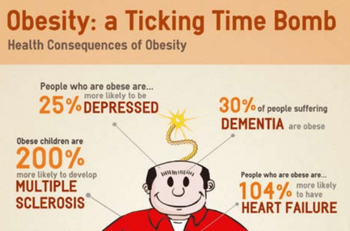
    By Greg McInerney. Ireland is set to become Europe’s most obese country by 2030 according to figures presented last month by the World Health Organisation as part of their yet to be published Modelling Obesity Project. The proportion of obese Irish men is expected to increase from 26% to 48%, with the number of men classified as either overweight or obese rising from 74% to 89%. Obesity in women will jump from 23 percent to 57% while 85% of women will be classified as either overweight or obese by 2030. Dr Joao Bredo of the WHO described the figures as painting a “bleak picture” for the continent. Professor Donal O’Shea, co-chair of the Royal College of Physicians of Ireland envisioned the scenario as “a much bigger health crisis than what cholera was back in the 1800s and HIV/AIDS was back in the 80s and 90s”. Minister for Health Leo Varadkar admitted that obesity has become a “major personal and public-health problem” and called for the issue to be treated “as seriously as we treated tobacco in the past.” The consensus would appear certain. We are getting fatter, our ever-expanding waistlines are toxic to our health and, according to most scientists, politicians, medical practitioners, teachers and journalists, we are on the verge of a seismic, generation-defining medical epidemic caused primarily by our individual eating and exercise habits. Is this consensus, however, firmly supported by the available scientific and medical evidence as its proponents claim it to be? Is being fat really that detrimental to our health or are their moral, social and economic influences pushing us towards this consensus, rendering our understanding of obesity inaccurate at best, or worse still, enormously harmful to many people’s lives? To begin to answer this question it is useful to consider the baseline unit of measurement for obesity that the World Health Organization and most medical researchers use: the Body Mass Index or “BMI”. Dating back to the early 19th century, the BMI is a simple mathematical formula that places people of different heights and weights on a single integrated scale. The index was never intended to be a measure of individual health yet despite this; it has formed the basis for almost every public policy and study on issues of weight and obesity written in the modern era. The BMI index defines obesity in a completely arbitrary and unscientific fashion.  In the late 1990’s one of the world’s leading obesity experts, Professor Philip James, set up a body called the International Obesity Task Force (IOTF). The IOTF drafted the WHO report in the late 1990’s which would define rising obesity levels for the first time as a health “epidemic”. The evidence underpinning this report was comprised largely of data provided by US health insurance giant Met Life. Joel Guerin, an American author who reviewed Met Life’s data told the Guardian newspaper that ‘’it wasn’t based on any kind of scientific evidence at all.” The funding for the IOTF report came from large multi-national drug companies, hoping to broaden the market for potentially lucrative weight loss drugs. The report led to the “ideal”, “healthy” weight for an individual to drop by 15-20 pounds. Millions of people across the globe were now considered, overnight, newly overweight or obese, despite having never gained a single pound. Not only has the BMI index been skewed to entirely unrealistic weight standards, the formula itself does not account for things like muscle mass and bone density. To put this into perspective, Chris Hemsworth, the actor who plays Thor in the popular ‘Avengers’ movie franchise and who was also voted the world’s sexiest man in 2014, is, according to the BMI index, overweight, bordering on obese. Irish rugby star Cian Healy fares worse, definitely obese according to his BMI. An influential study published in Science magazine, it was estimated a reduction in calorie consumption, or an increase in energy use, of just 100 calories per day would prevent weight gain for most people, hardly the basis for an “epidemic”. Similarly, after reviewing data from around the world, Dr Michael Gard concludes in his recent book ‘End of the Obesity Epidemic’ that in fact obesity levels for both adults and children have levelled off or declined over the past 10-15 years. Even if we were to accept the notion of an “epidemic” based on fundamentally-flawed statistics, surely the quotidian idea that being fat is bad for one’s health is beyond doubt? Not quite. A 2013 study published by The Journal of the American Medical Association, reviewed nearly three million subjects from more than a dozen countries in an attempt to determine the correlation between body mass and mortality risk. The study found that adults categorized as overweight, and most of those declared obese, actually had a lower risk of mortality than so-called thin or normal weight individuals. Average-height women, 5 feet 4 inches, who weigh between 108 and 145 pounds have a higher mortality risk than average-height women who weigh between 146 and 203 pounds. For average-height men, 5 feet 10 inches, those who weigh between 129 and 174 pounds have a higher mortality risk than those who weigh between 175 and 243 pounds. Throughout the terrors of our recent obesity “epidemic”, life expectancy in western countries has risen, not fallen, despite the many life-threatening health conditions supposedly caused by obesity. The correlations between higher weight and greater health risk are thread-bare, only significant at the extremes, severely underweight or morbidly obese. Improvements in health as a result of increased aerobic exercise have been documented in people who actually gained weight during the process. Exercise and nutrition can also effectively reduce blood pressure entirely independent of weight loss. Among overweight and obese men and women, with and without type 2 diabetes, those who reported trying to lose weight (but failed) experienced a reduction in mortality rate that was the same as, or greater than, those who reported that they were successful at weight loss. In other words weight loss itself did

    Loading

    Read more

  • Posted in:

    Failing again to find Caravaggio

    The RHA’s 185th annual Exhibition. Review by Kevin Kiely The current Royal Hibernian Academy president, Mick O’Dea, highlights the Academy as “exhibiting work that is innovative and representative of the broad spectrum of best practice from here and abroad”. The aspiration is admirable but should you bother to inspect the present show you will reveal it as a fiction. Hyper-inflated self-praise is a hallmark of RHA communication, artless as it may be . Perhaps more artful are the catchy titles for the artworks, a claim no doubt, to postmodernity. Art markets are created for finance not excellence. O’Dea notes that 2014 saw a “28% increase in sales” and gravely proclaims that “Ireland’s art investment has clearly turned a corner”. He sees the gallery as “the perfect spotting ground for the aspiring and discerning collector”. Amongst the sponsors are the gullible buyers or dealers. Better-known sponsors include AXA Insurance, the ESB, and galleries such as Adams, De Veres and Whytes, with their attendant vested interests, as well as the Ireland-US Council and the Irish Arts Review, edited and presided over by the elsewhere discerning  John Mulcahy. The Academy niftily gleans a six-figure annual grant from the Arts Council and dispenses in-house prize money of €45,000 donated by the sponsors. The prizes in the main go to members in a comforting rotation scheme. Many RHA members are coincidentally also members of Aosdána. The Aosdána ethos of collectivisation and cosy caucus prevails at the RHA. Members mixed up in Aosdána include James Hanley, Veronica Bolay, Diana Copperwhite, Gary Coyle, Michael Cullen, Imogen Stuart (recently made a Saoi by the Aosdána gang), Martin Gale, Richard Gorman, Charles Harper, Gene Lambert, Alice Maher, Stephen McKenna, Carolyn Mulholland, Patrick Pye, and Barbara Warren. Most of its members receive the Arts Council annual cnuas of €17,180 to top up their takings. Underpass II by Eithne Jordan RHA, sister of the movie-making genius, is probably the best of a bad lot in the show, with its Orson Wellesian bleak modernity though the catalogue does not record how she weathers the compromises of collectivisation  among the self-raised cream. RHA members can, and do, exhibit up to seven works without any pre-selection process. As to the rest, O’Dea is sanctimonious about open submission for non-members. They are permitted to present a maximum of three works and try their luck for inclusion at the annual exhibition. These artists totalled over 1,000 in 2015. Director, Patrick T Murphy bestows laureates at the eight Academy members giving five full days of their time to inspect the open submissions “not once but twice to select about 10% of the artworks that have been submitted”. As if emphasising the effort of that second look, Murphy added “it is a rigorous and concentrated exercise”. The high point according to the press release, the exhibition catalogue, and the newsletter comes from a third category: invited artists. Tracey Emin’s Wanting You – a neon fluorescent light: basically a snow-white heart and the text in pink. Limited edition at €110,000 per unit. Emin, except for those afraid to admit it, is a joke on the art scene, a loud Fury purveying kitsch. But her offering to the distinctly provincial RHA is taken seriously as some sort of coup. Aidan Dunne stated that her work “seems quite at home” in Dublin. Does he not know you can get neon lights to order in better condition and a lot cheaper at any hardware supplier? Behind Dunne’s tired praise in the Irish Times is hyperbole upon hyperbole (“probably one of the best ever”) which does not reflect the realities of the Royal Hibernian Academy or its dinosaurs, its council, board, benefactors and staff. Dunne’s lazy approach often amounts to no more than blurb, with his praise for Martin Gale’s Talking at Doonfeeny a nadir: putting “people in the picture…struggling in some way with the reality of living in the country”. For the rest of us what we see is actually Gale’s usual oiled-up photorealism – a pier wall, high tide, two windswept figures and a collie dog. Gale’s daughter is a staffer at the RHA. The novelty act besides Emin’s neon is Martin & Henri Gibbins’ ‘recycled’ Filthy Robot, looking like a Dr Who cast-off found in a junk shop, or the Tin Man gone wrong. Dunne believes that in the academy: “portrait painting has survived the advent of the selfie”. He could not be more wrong. Under the pervasive influence of Robert Ballagh, incidentally a staunch Aosdána merchant himself, the RHA purveys the ubiquitous school of photorealism in oils. The group includes Thomas Ryan who offers High Mass, St Kevin’s in his perennial ‘out of focus’ oil-style. Carey Clarke is another dinosaur following the standard selfie-digital-portrait model. Clarke presents Professor Lonergan of TCD in this mode. O’Dea’s Christina and Michael, a variation,  is typical of the crinkly-portrait school of photorealism. The doyenne of this mode is Anita Shelbourne, up with a morbid collage and acrylic of Maud Gonne. My fantasy is that RHA members who do portraits adopt the fraudulent Giclée method. In other words: photographing the subject, then resorting to the use of inkjet printing directly onto a roll of canvas and making reproductions of the original two-dimensional artwork, photographs or computer-generated art. After a little moral wrestling the result might end up on the gallery wall as a canvas, framed or unframed. Whether most of the members can actually draw, paint or sculpt to any high standard is the great ne plus ultra of questions for the Academy. Landscapes predominate under the influence of Sean McSweeney, “innate colourist”, who is also present in the show. His itchy and scratchy school of art has been adopted by those who constantly cruise rural Ireland for predictable artsy stop-offs such as Roundstone in Galway and Ballinglen in   Mayo. This explains Pat Harris’s presence with From Stonefield: a sea with a sliver of blurred green landscape and a big sky. Veronica Bolay, Joe Dunne, Charles Harper, and Donald Teskey aim the

    Loading

    Read more

  • Posted in:

    Obesity obeisance

    Spurious ‘epidemic’ contrived by industry manipulation, junk science and twentieth-first-century angst. By Greg McInerney

    Loading

    Read more