Posted in:
My first sculpture
The passion for art had been there since I was a child
Posted in:
by admin
The passion for art had been there since I was a child
Posted in:
by admin
A polyglot, over-broad path to revolutionFrank Armstrong reviews Theodore Zeldin’s ‘The Hidden Pleasures of Mankind: A New Way of Remembering the Past and Imagining the Future’
by admin
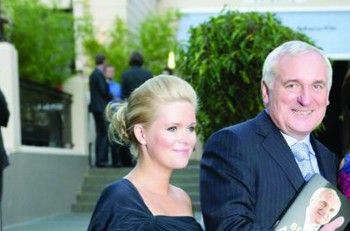
By John Horgan Is the writers’ and artists’ tax exemption scheme now on life support? Suspicions that this might be the case were first aroused when it was disclosed last year that a review of this scheme instituted by Finance Minister Michael Noonan last year had “abolition on the table”. It has now emerged that this is to be a “desk-based” review (i.e. with apparently no possibility for any input by arts organisations or the public). This will strengthen the hands of those (not least the Revenue Commissioners and the 2009 Commission on Taxation) who believe that is that it now well past its sell-by date. The scheme was first introduced in 1969 by the then Minister for Finance, Charles J. Haughey, who may or may not have hoped that it would have positively influenced a small but high-profile section of the electorate in the lead-up to the following general election. It didn’t, as the outcome of the 1973 election was to make clear. It has since then been subjected to numerous changes, and its effects have been whittled down – often for good, commonsense reasons – while it has also been of modest assistance to at least some of the less spectacularly successful writers and artists The first substantial amendment was in the 1989 Finance Act. This was the creation of an appeals system against refusals to grant exemption. There were more significant changes in the 1994 Finance Act, in which both the Arts Council and the Minister for Arts made their first appearance, exercising co-responsibility for authorship of new Guidelines which were then drawn up to help the Revenue Commissioners and which have remained in force, with some modifications, until the present day. The1994 Guidelines, introduced when Michael D Higgins was the relevant minister, notably increased the number of categories under which exemption could be changed, and included references to both the Heritage Council and the National Archives. A later set of Guidelines introduced in 1997, however, included another innovation: a list of the type of work that would NOT be considered as original and creative (emphasis added). This represented, perhaps, a fight-back by interests that felt that the guidelines were too loose or too liberal. The present set of guidelines dates from 2013. The amount of income for which tax exemption could be claimed, however, has also been subject to the slings and arrows of fortune. It was effectively unlimited until 2006, when a limit of €250,000 was introduced following a review by the Revenue Commissioners a year earlier. At that time almost 1,000 of the beneficiaries were earning less than €6,000 a year, and fewer than a dozen were earning more than €500,000, the latter category largely responsible for a revenue loss to the exchequer of almost €13 million. In 2010 the late Brian Lenihan cut the maximum income allowable for the deduction to €40,000. By 2012 the numbers applying had fallen, and the numbers refused exemption had increased. The number of claimants has also fallen by more than 30% since 2010. However, contrary to expectations that the scheme will be further limited, there are also some straws blowing in the wind in the opposite direction. The scheme was actually relaxed somewhat in the 2014 Finance Act, when the threshold was increased from €40,000 to €50,000. In addition, while the possibility of exemption had previously been extended to artists living in any EU or EEA State, this was further changed so that even writers and artists living outside the EU/EEA could now apply to the Revenue Commissioners for an advance opinion on whether their works would come under the scheme if they become resident in the EU/EEA. There have been rumours that in recent years the Arts Council has been concerned that the guidelines have been interpreted by the Revenue Commissioners too loosely by including celebrity biographies and the like. The latest list available on the web-site of the Commissioners is indeed a fascinating pot-pourri of names, including – along with those of well-established artists and writers of fiction – the present writer (whose biography of Mary Robinson benefited), Bertie and Cecelia Ahern, Charlie Bird, Harry Browne, George Hook, Terry Prone, and Louis Walsh. It repays a browse. If it is to be abolished in the forthcoming 2015 Budget, as seems possible, will the additional tax revenue be spent elsewhere in the arts area, devoted to a different worthy cause, or simply pocketed by the exchequer? One way or the other, change is probably imminent. • Professor John Horgan is a former Press Ombudsman
Posted in:
by Village
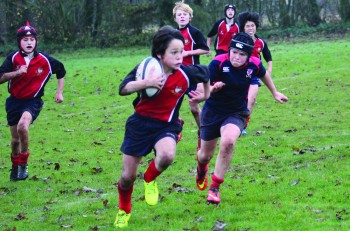
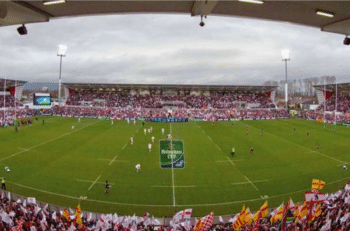
By Jim O’ Callaghan. One of the many social changes that sociologists and social historians of the future will examine is the change associated with participation in competitive sport in Ireland over the past twenty years. Throughout the twentieth century rugby in Ireland was a participation sport centred on clubs throughout the 32 counties, with many clubs fielding at least 8 teams on a weekly basis. It has now become a spectator sport, with most clubs having difficulty fielding more than three teams. Although most public attention in the past centred on the performance of the first teams in those clubs, the purpose of the clubs was to facilitate men – young and not so young – who wished to play rugby for enjoyment and social interaction. In fact, the reason men played rugby was not because they wished to achieve sporting excellence but because they enjoyed the game and the associated social life. That purpose has now vanished from Irish rugby clubs. Rugby clubs in Ireland can now be more accurately assessed when viewed in a pyramid structure. Where clubs are very strong and socially active is at underage, mini-rugby level. Rugby clubs throughout the country are now extremely busy every Sunday morning with young boys and girls learning the game, coached by volunteering parents who enjoy the social engagement generated by their children’s involvement in underage rugby. Once these children reach the age of 12, the attraction and availability of the sport becomes narrower. There are very few options for girls between the ages of 12 and 18 who wish to continue playing rugby. For boys, those who go on to attend rugby-playing schools are set on a path that involves them playing for their schools, while those who don’t attend rugby playing schools and who wish to continue with the game will find it difficult to find a club where they can play rugby at a competitive level between the ages of 12 and 18. At school the level of training and commitment required of young rugby players has become enormous; in some ways suffocating. The objective in schools, unfortunately, is no longer about participation but about winning and the attainment of excellence. By 16 years of age coaches can tell whether a player may achieve excellence. They can also identify for certain those who will never achieve excellence. This marks the first stage of a filtering process that has the effect of discouraging many young players from playing the game. Traditionally, players who left rugby-playing schools continued to play in a club or university. Those clubs also attracted players who didn’t play at school but who wished to pick up the game for the first time at 18. Neither of these circumstances occurs anymore. Those who leave school and who are not destined to play rugby at a high level – even within a club – retire from the game. Those who at 18 have never played will only be treated seriously by coaches if they display unusual ability or physique. The change that has occurred is that no longer do young men want to join a club to play social rugby. The reason for this change appears to be twofold. First, participation in rugby is now achieved, or purportedly achieved, by watching a provincial team. The significant increase in attendances watching professional rugby matches is, in part, explained by the opening up of rugby to a new spectatorship. It is also explained by the fact that people who previously played club rugby at weekends now prefer to watch rather than play. Second, our society now confers much greater respect on, and emphasises, achievement and excellence rather than participation and enjoyment. It is also true to say that parts of our society denigrate participation in a senior sport that does not attain excellence. This also explains the increased interest and participation in tag rugby during summer months. People play this because it is primarily about fun. It does not expose people to the perception of mediocrity that may be associated with a 24-year-old playing junior rugby for a club. The net effect is that the number of men playing rugby after the age of 18 has now decreased considerably. The majority of those who continue playing after the age of 18 are extremely committed and believe that they can attain sporting excellence. However, the avenues are so precarious for talented players in this age group that many of them stop playing in their early and mid-20s. A talented rugby player leaving school who is offered a provincial contract has little opportunity to develop any other career to see him through most of his working life. If contracted to a province and therefore employed to lift weights, watch videos and play matches (which many do not enjoy), it is virtually impossible to train for another career. The effect is that by 23-24, a player will know whether he is destined to make it in professional rugby. Many of those who are not so destined decide at that stage not to revert to club rugby but instead to retire from the game completely. Although they may have attained excellence without recognition, many do not wish to ‘regress’ to playing club rugby. The effect of these changes upon Irish club rugby is that a very small number of men between the ages of 20 and 30 now play rugby in the clubs. Most of them are playing still in the pursuit of excellence and professional recognition. Very few now play club rugby for social interaction or enjoyment. The involvement of parents in mini rugby has grown MEMBERSHIP in many clubs but the absence of players in the 20-30 age group reveals the decreased involvement that rugby clubs have in Irish social life. The decline of adult participation in club rugby is in marked contrast to the high levels of adult participation in the GAA. Unlike the IRFU, the GAA recognises the important social role it played and continues
Posted in:
by Kevin Kiely
The Abbey, Ireland’s National Theatre was established in 1904 and became the first State-subsidised theatre in the world, and ultimately one of the best brands in world theatre. Worthy, certainly; old, yes: the question is more whether it is any good, or any good bearing in mind the resources that go into it. The Abbey suffers from structural problems – physical, artistic and organisational. Director/CEO Senator Fiach MacConghail is a consummate arts-administrator-politician with uniquely strong links to Labour, Fine Gael and Fianna Fáil. He has streamlined the board, steadied the finances and avoided the once-vaunted Dermot-Desmond-driven mistake of moving from its historic home to Docklands. In 2012 it cleverly purchased buildings adjacent to its current home at 15-17 Eden Quay, for €1,500,000 involving a mortgage of €1,125,000. In creating the position of director, and giving it to MacConghail, a producer not a director, the Abbey board decided to establish a new senior management structure with clear lines of decision-making, authority and accountability. He runs the show with a cast of uncelebrated subordinated directors and managers and a Board headed by former High Court judge Bryan MacMahon which includes former Docklands Authority board member Domhnall Curtin and some in-house actors and directors such as Jane Brennan and playwrights such as Tom Kilroy. It is a registered charity that banks with AIB, receives legal advice from Arthur Cox and receives sponsorship from the corporate blue chips. When he took up the job MacConghail negotiated ‘bailout funding’ of €4m from the government, and, before the downturn, managed to bring the Abbey to all-time high levels of grant aid from the Arts Council. Unfortunately the accounts are not without hazard. The income and expenditure account showed an operating deficit of €1,403,554 for 2012. The Arts Council Revenue Grant provides financial life support by way of a 3-year funding agreement. €21,300,000 for the period 2011 to 2013 at €7,100,000 per annum. Out of the €7.1m: gross staff costs are €6m annually, and that without the repertory company whose loss is so bemoaned at least by the likes of former Director Ulick O’Connor. In 2012 staff numbers were 142. Box Office receipts for the Abbey and Peacock Theatres totalled €2,319,528 in 2012. The box-office takings were roughly matched by losses for the period, at €2,378,272. Fundraising is a tradition dating back to original patron Annie Horniman who bought the first Abbey building. The Abbey’s US tour in 2010 presented ‘The Plough and the Stars’ for the MacConghailean purposes of establishing The Abbey Theatre Foundation to raise funds. A tour of England in 2013 pursued a similar strategy. In 2014 there were 615 donating members whose collective contributions reached a bearish €120,636. Fundraising activities have unedifyingly diversified to offer wedding packages. A couple can even hire the Abbey’s ‘dedicated wedding co-ordinator’ to plan that big day, and guests enjoy ‘the wonderful atmosphere of the Yeats Lounge’. MacConghail started with a solid and appropriate vision, A 2006 article in the New York Times claimed MacConghail “has commissioned new work that tackles life in contemporary Ireland, and departing from previous practices, he handed those plays over to young directors who previously only dreamed of working on the Abbey’s main stage. He appointed Conor McPherson, who had said he felt snubbed by the Abbey, as the theater’s 2006 playwright in residence. And directly thumbing his nose at tradition, he declared at least a temporary ban on revivals of classic plays by Sean O’Casey and John Millington Synge, which have long been the theater’s staple fare”. It quoted then US-Ireland Alliance President Trina Vargo to the effect that MacConghail was actually returning the Abbey to its traditional role of breaking boundaries and defying the status quo, part of the theatre’s original mission as set forth by the Abbey’s founder, William Butler Yeats. But early aspiration was confounded and the big problem now is the Abbey’s directionless artistic policy, bereft of imagination and adventure. Its artistic output is once again patchy and unimaginative with exceptional crescendos – like ‘The Late Late Show’ really, a victim of its success or reputation – but more hushed and in Town. Most audiences appear merely to endure the night of theatre it serves up, with its middle-brow, middle-aged, only-half-dressed-up Southside-yielded cultural conservatives downing Carlsbergs during the interval. The Abbey rarely constitutes a big night out. Ireland’s National Theatre still purveys the shame-faced revivals alongside self-consciously ‘new plays’ that led to motions of no confidence in then artistic director, Ben Barnes in 2004 just before MacConghail took over. It still commissions plays of no impact, including a thespian-free David McWilliams one-man-show – a pity since MacConghail’s artistic obsession is relevance and he comes via the Project Arts Centre. Regular stand-offs with the Arts Council have depressingly been money rather than quality oriented, though this might be expected of a body run by arts administrators. The Abbey’s artistic weaknesses can be blamed on a series of uninspired and unwieldy boards and in-house failure to find plays that set the theatrical scene on fire. The Abbey plods on swamped by its glorious past – no golden dawn of course but two famous plays of long ago and a national canon that beat into the sensibilities of three generations of dutiful schoolchildren but never matched the literary genius, or literary impact, resistering elswehere over the century. By now the legacy, the National Theatre thing, is noteworthy for the confines it erects around the Abbey – its theatrical museum status. Certainly the theatre’s first phase was credible: it made history. When the Abbey opened for business on 27 December 1904, Yeats’s ‘On Baile’s Strand’ and Lady Gregory’s ‘Spreading the News’ proved lesser artistic fare than ‘The Well of the Saints’ whose author JM Synge would achieve international controversy with ‘The Playboy of the Western World’ in 1907. However, it was O’Casey’s ‘The Plough and the Stars’ which became the ultimate Abbey Theatre party piece with its closing scene of Dublin in flames during the Rising, British ‘Tommies’, IRA snipers and
by Village
One of the many social changes that sociologists and social historians of the future will examine is the change associated with participation in competitive sport in Ireland over the past twenty years. Throughout the twentieth century rugby in Ireland was a participation sport centred on clubs throughout the 32 counties, with many clubs fielding at least 8 teams on a weekly basis. It has now become a spectator sport, with most clubs having difficulty fielding more than three teams. Although most public attention in the past centred on the performance of the first teams in those clubs, the purpose of the clubs was to facilitate men – young and not so young – who wished to play rugby for enjoyment and social interaction. In fact, the reason men played rugby was not because they wished to achieve sporting excellence but because they enjoyed the game and the associated social life. That purpose has now vanished from Irish rugby clubs. Rugby clubs in Ireland can now be more accurately assessed when viewed in a pyramid structure. Where clubs are very strong and socially active is at underage, mini-rugby level. Rugby clubs throughout the country are now extremely busy every Sunday morning with young boys and girls learning the game, coached by volunteering parents who enjoy the social engagement generated by their children’s involvement in underage rugby. Once these children reach the age of 12, the attraction and availability of the sport becomes narrower. There are very few options for girls between the ages of 12 and 18 who wish to continue playing rugby. For boys, those who go on to attend rugby-playing schools are set on a path that involves them playing for their schools, while those who don’t attend rugby playing schools and who wish to continue with the game will find it difficult to find a club where they can play rugby at a competitive level between the ages of 12 and 18. At school the level of training and commitment required of young rugby players has become enormous; in some ways suffocating. The objective in schools, unfortunately, is no longer about participation but about winning and the attainment of excellence. By 16 years of age coaches can tell whether a player may achieve excellence. They can also identify for certain those who will never achieve excellence. This marks the first stage of a filtering process that has the effect of discouraging many young players from playing the game. Traditionally, players who left rugby-playing schools continued to play in a club or university. Those clubs also attracted players who didn’t play at school but who wished to pick up the game for the first time at 18. Neither of these circumstances occurs anymore. Those who leave school and who are not destined to play rugby at a high level – even within a club – retire from the game. Those who at 18 have never played will only be treated seriously by coaches if they display unusual ability or physique. The change that has occurred is that no longer do young men want to join a club to play social rugby. The reason for this change appears to be twofold. First, participation in rugby is now achieved, or purportedly achieved, by watching a provincial team. The significant increase in attendances watching professional rugby matches is, in part, explained by the opening up of rugby to a new spectatorship. It is also explained by the fact that people who previously played club rugby at weekends now prefer to watch rather than play. ocallaghan1 Second, our society now confers much greater respect on, and emphasises, achievement and excellence rather than participation and enjoyment. It is also true to say that parts of our society denigrate participation in a senior sport that does not attain excellence. This also explains the increased interest and participation in tag rugby during summer months. People play this because it is primarily about fun. It does not expose people to the perception of mediocrity that may be associated with a 24-year-old playing junior rugby for a club. The net effect is that the number of men playing rugby after the age of 18 has now decreased considerably. The majority of those who continue playing after the age of 18 are extremely committed and believe that they can attain sporting excellence. However, the avenues are so precarious for talented players in this age group that many of them stop playing in their early and mid-20s. A talented rugby player leaving school who is offered a provincial contract has little opportunity to develop any other career to see him through most of his working life. If contracted to a province and therefore employed to lift weights, watch videos and play matches (which many do not enjoy), it is virtually impossible to train for another career. The effect is that by 23-24, a player will know whether he is destined to make it in professional rugby. Many of those who are not so destined decide at that stage not to revert to club rugby but instead to retire from the game completely. Although they may have attained excellence without recognition, many do not wish to ‘regress’ to playing club rugby. The effect of these changes upon Irish club rugby is that a very small number of men between the ages of 20 and 30 now play rugby in the clubs. Most of them are playing still in the pursuit of excellence and professional recognition. Very few now play club rugby for social interaction or enjoyment. The involvement of parents in mini rugby has grown MEMBERSHIP in many clubs but the absence of players in the 20-30 age group reveals the decreased involvement that rugby clubs have in Irish social life. The decline of adult participation in club rugby is in marked contrast to the high levels of adult participation in the GAA. Unlike the IRFU, the GAA recognises the important social role it played and continues to play
In Ireland philosophy rarely features in mainstream discourses. We seem more comfortable in either the narrow empiricism inherited from our former colonial overlords or the lyrical engagement found in poetry. The unflinching analysis of concepts found in philosophical enquiry is not part of secondary educations: it still does not figure as a Leaving Certificate subject. It remains a specialist course in university. Philosophy of education is a subject in the education of teachers but again is treated in a rather desultory fashion by institutions and students alike. Those who pursue scientific study at third level are given no philosophical grounding which might explain a lack of nuance among cheerleaders of science. It only figures in the study of law as jurisprudence – rather than being seen as the foundation for all positive as it ought. Arguably the general lacuna tilts society towards a conservatism born of failure to interrogate widely held assumptions. In a cogently argued and accessible work, TCD philosopher Luna Dolezal discusses the concept of body shame through a number of lenses. She arrives from a phenomenological perspective especially identified with Maurice Merleau-Ponty who emphasised that we encounter the world through the lived experience of our bodies and not simply our conscious minds. He rejected the dualist view which dominated European thought from Plato right through to Descartes and beyond. Dolezal engages with the writings of Jean-Paul Sartre who conceived of an “Other” that generates a self-reflection intimately connected to a feeling of shame. According to Sartre: “By the mere appearance of the Other, I am put in the position of passing judgement on myself as an object, for it is an object that I appear to the Other”. This can lead the alienation or estrangement from what Dolezal refers to as “the possibilities of the self”, This recurring evaluation of how we are perceived has become a more pressing concern in a world of intrusive social media. Dolezal argues that other thinkers have advanced on Sartre’s ideas to show that objectification is experienced to a greater extent among marginalised groups. In The Second Sex Simone de Beauvoir argued that in our patriarchal societies women experienced this feeling far more than men. Another layer was added by Frantz Fanon who observed the alienation caused by perceived racial hierarchies. Fanon argued: “This is because the white man is not only the Other but also the master, whether real or imaginary”. It is probably a fair generalisation that women, racial minorities, as well as gays and people with disabilities, are more subject to shame than straight white men with full physical capabilities. Dolezal also explores the socio-cultural and political framework in which power relations are embedded, drawing on the insights of Michel Foucault and Norbert Elias. Perhaps Foucault’s most useful idea was his revival of Jeremy Bentham’s Panopticon as a metaphor for the constant surveillance of modern life. The Panopticon was a prison made of glass allowing every action to be observed, in theory leading to the observance of all rules. The inmate would be shamed into conformity. It is reflected in today’s latent perception that our every move is subject to the unrelenting gaze of cameras leading to sense, especially among women, that her physical appearance is constantly being assessed. In his seminal work ‘The Civilising Process’ Elias traces the evolution of manners and other forms of personal comportment. The story of the fork is particularly informative. It arrived in Europe with the Byzantine bride to a Dodge of Venice and its use was initially dismissed as a prissy affectation. But soon courtiers succumbed to its utility and it became such a fixture across Europe that by the nineteenth century one writer described people who ate with their hands as cannibalistic. Elias shows that such quotidian habits are socially constructed. Shame has been used immemorially to enforce conformity. But Dolezal is emphatic that shame plays a critical role in how we learn and socialise among our peers. She argues that it plays a key role: “in skill acquisition, self-presentation, bodily management and the formation of the body shame”. Put simply, without experience of shame there would be a little inducement for self-improvement in a range of spheres. This feeling may however lapse into a chronic condition where we feel ourselves, especially our physical bodies, to be the source of that shame. Chronic body shame: “can lead to a diminished bodily experience where a constant preoccupation with the body affects one’s self esteem and self-worth”, This seems to be the plight of many women today: look at the weight of column inches and advertising devoted to beauty ‘treatments’, an interesting choice of words ascribing pathology to deviations from conventional notions of beauty. Thus, according to Dolezal: “Women; compared with men, spend more time, energy and material resources in trying to achieve a socially pleasing body that conforms to prevailing normative standards”. Further, “Women far outnumber men in incidents of eating disorders, chronic dieting and cases of cosmetic surgery industry which preys on these insecurities, inducing women to alter bodies to conform to societal expectations. Yet, as she points out, this is increasingly impossible as the body ideal found in the innumerable forms that flash before us are often digitally-enhanced or surgically-altered. Unfortunately according to Dolezal: “Beauty regimes are becoming more punishing, more painful, more expensive, more intrusive, more extreme and, as a result, more disempowering”. In the United States alone over eleven million cosmetic procedures included injectables such as Botox, laser skin resurfacing and chemical peels are deployed daily. Americans spent almost $12bn on cosmetic procedures in 2013 alone. Our own Celtic Tiger spawned a cosmetic surgery boom. The next generation faces ever more sophisticated marketing techniques that position these illusory forms in increasingly ineluctable ways. The Internet is increasingly used for this marketing, and beleaguered parents cannot possibly keep track of their children’s engagements. The changes that are made to bodies through cosmetic surgery have profound philosophical implications, for as Dolezal points out it “presupposes some sort of