Editorial
-
-
Posted in:
Privateprosecutions,again
by admin
The failure to jail white-collar criminals remains egregious
-
Posted in:
Publish or … (Editorial December)
by admin
In the following pages Village publishes the Ansbacher dossier which ‘Authorised Officer’ Gerard Ryan has been attempting to submit to the Public Accounts Committee. We print it because it seems to us there has been a whitewash to prevent investigation of its mostly tightly documented allegations of widespread offshore untaxed bank accounts being held by the political ascendancy. It’s time the role of lawyers, toffs, prosecutory authorities and a range of political parties – and their grandees – in the debasement of Irish society, was recognised. It’s been all too convenient to load all the blame on the buccaneers in Fianna Fáil, but they were supported by the professional establishment and the local gombeens of international finance. The Ryan dossier paints a picture which its compiler clearly feels extends to the contemporary. Most of the substance is printed in Village, though it has been necessary to redact a lot. A few tracts have been edited out, and the appendices omitted, for reasons of space. In publishing, we are confident that we have avoided defaming anyone and have attempted to be fair to all, alive or dead. In this context we note that Mary Harney has claimed that she closed down Ryan’s investigation only after it got bogged down and only to ensure that it was not waylaid after she left office. “I made it clear, regardless of who might have been involved, it had to be investigated correctly and thoroughly”, she has said, adding that departmental records would prove this, that the bonuses offered were entirely bona fide and that she did not direct that letters drafted by Ryan not be sent to Des O’Malley, Ray Burke and Liam Lawlor. Des O’Malley has said he opened a Guinness and Mahon account only as a blind trust to ensure his business affairs were handled at arm’s length while he was a Minister. The family of Declan Costello has asserted that he opened his (onshore) account because the main banks were on strike at the time (1976), and he needed to bank a recent inheritance. The transactions appendixed to the dossier are certainly compellingly consistent with this. The Moriarty and Mahon Tribunals are no doubt unimpeachable. Village is well aware that it is illegal under s21 of the 1990 Companies Act to publish or disclose any information, book or document relating to a body obtained by an authorised officer under the Act. We have therefore removed ‘information’ relating to it. Happily moreover, Mr Ryan and other media have beaten us to Ansbacher. There is no difference in law between publishing the dossier and publishing extracts or summaries of it, if they relate to Ansbacher. So the Irish Times has reported that Ryan “had discovered in 2003 records of a deposit account in Guinness and Mahon in the name of Declan Costello…Mr Ryan suggested in the dossier that Mr Costello had had “a major undisclosed conflict of interest” while he led the High Court investigation into the company”. The Irish Independent reported that the Ryan dossier claims: • “Declan Costello held an account with Guinness & Mahon bank, which was at the centre of the offshore tax evasion scandal. • Former Fianna Fáil and Fine Gael ministers held Ansbacher accounts, which were not revealed by an investigation into the offshore tax evasion scheme. • The Moriarty Tribunal did not properly investigate Ansbacher – a state of affairs that undermines the integrity of the tribunal and the reliability of its findings. • Des Traynor was the accountant who set up offshore Ansbacher accounts, allowing hundreds of well-heeled individuals to evade tax. “Mr Declan Costello had a major conflict of interest”. And the Sunday Times has printed allegations of a “cover up”; and named Helen Downes as being in charge of updating the ‘black briefcase files’ where “the names of the Cayman account holders were kept in a separate safe from the lists of their ‘very substantial’ account balances, to avoid any chance of the senior politicians being identified”. Some of the dossier appears unfair and we have eliminated it. Unlike many media we have not unfairly reiterated the names of alleged Cayman account holders that have entered the public domain – as they were received by the Authorised Officer as mere hearsay from a junior employee in Ansbacher. Not, in any event, that all Cayman account holders failed to pay tax. Furthermore we believe the Authorised Officer makes some inferences about Costello and O’Malley that are not justified by the evidence adduced in the rest of the dossier. Nor does he prove his allegations that the Moriarty and perhaps Mahon tribunals were compromised in their lack of zeal in pursuit of Ansbacher, though Village has always questioned the extent to which the tribunal reports managed to probe and explicate all the allegations presented to them, even if in the end the tribunal reports were afforded a blind imprimatur by a gormless press. The tribunals were inert in the absence of investigatory powers, with Mahon in particular relying too much on unreliably dysfunctional whistleblowers, and ultimately toppling too few among the still powerful. It is necessary also to be fair to the prosecutors: one of the problems for authorities is that the investigations came too late and were hampered by the blanket immunities conferred by a cynical tax amnesty in 1993, though Revenue still expects to extract €250m from recalcitrants. The gardai did in fact investigate ‘Ansbacher’ but not the secret ‘black briefcase’ with its dozens of allegedly dodgy accounts. The fraud squad was advised such an investigation would be barred under the terms of Bertie Ahern’s 1997 Taxes Consolidation Act which prohibits them or the Revenue prosecuting offences more than ten-years old; and the DPP decided not to prosecute the more general claims of Ryan, following submission of a Garda file. The Ryan dossier is creditable but it remains unresolved. Uniquely we have published it – in the hope this might help this process. We have published but we have been careful and
-
by admin
Re-instate the voting-age referendum, with less vilification and stereotyping
-
Posted in:
OLIVER MOORE A cause to freeze for
by admin
Germans care enough about food and the environment to march
-
by admin
TWENTY years ago Colm MacEochaidh and I offered a reward of £10,000 for information leading to the conviction of persons on indictment for rezoning corruption
-
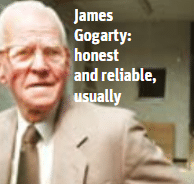
Twenty years ago Colm MacEochaidh and I offered a reward of £10,000 for information leading to the conviction of persons on indictment for rezoning corruption. I had spent a year campaigning against a controversial rezoning of attractive fields in Cherrywood, Co Dublin, pushed through in murky circumstances by Monarch Properties which was subsequently found to have acted corruptly. I wanted to get to the bottom of it. We needed to do something dramatic as a) tribunals had been discredited following the weak Beef Tribunal report and b) there was a perception – following an Irish Times investigation by Frank McDonald and Mark Brennock (George Redmond’s son-in-law), billed as ‘Fields of Gold” which had managed to name one, but only one, dead (and therefore defenceless), councillor as corrupt – that planning corruption was a ball of smoke. Our anonymous stratagem was fronted by Newry Solicitor, Kevin Neary. He eventually received 55 separate sources of information. We threatenedthat, unless immunity was granted from prosecution to whistle-blowers and ultimately a tribunal – which we said should be cost-effective and streamlined like the British Scott Inquiry – instigated, we would start naming the people about whom we were receiving serious and verifiable information. We also introduced our informants to journalists who, once they verified the information, printed it. Our best informant was James Gogarty. We visited him in his house in Sutton. He was pleasant but a little cranky, determined to nail his employer for, as he saw it, shafting him on his pension. Gogarty had been persuaded to go back to work for Joseph Murphy Structural Engineering – a building company, after his initial retirement. He was particularly venomous about Joe Murphy Junior who he saw as an upstart. He was bitter that the then Minister for Justice, Nora Owen, was not taking his claims seriously enough and he ventilated about Seamus Henchy, a Supreme Court judge.What he said to us about Owen, Murphy Jr and Henchy had to be taken witha pinch of salt. But what impressed us was the information he had about a bribe he had paid one-time Environment Minister, Ray Burke. For us it was morally certain that the information about Burke was true, since it was backed by documentation and had to be extracted from him, while he really only wanted to moan on about his pension. He was disillusioned with the failure of the Irish Times to take his story seriously and it took some persuasion to get him to talk to any other newspaper but in the end he spoke to the Sunday Times on the eccentric basis it was not Irish. In the end this did not work out and he only really became confident when we linked him to Frank Connolly, then of the Sunday Business Post. A lot of the information we received was rubbish – one man said he knew the burial place of racehorse Shergar but several of the allegations resulted in criminal prosecutions or appearances before the planning tribunal. The pressure built up through Neary’s appearances on the media, Connolly’s articles in the Business Post, some pieces by Matt Cooper in the Sunday Tribune and an article by John Ryan in Magill, ultimately made a tribunal unavoidable, and it was duly established in 1997. In the end it established corruption against Ray Burke and Padraig Flynn and resulted in the resignation of Taoiseach, Bertie Ahern, who made up a cock and bull story about a digout in order to avoid questions about unexplained sums of around €200,000 that passed through his accounts. We never paid the reward as no-one claimed it. The £10,000 went in legal fees. Ultimately, the tribunal found systemic and endemic planning corruption in County Dublin. So far so good. But it had relied too much on two whistle-blowers, Gogarty and Dunlop one of whom was sporadically unreliable and the other of whom was serially mendacious. The judges and lawyers who cost so much and took so long simply didn’t have the nous to investigate the allegations presented to them, forensically. Particularly when Judge Mahon took over from Judge Flood the tribunal found both too much and too little. It found mostly against those whose reputations were already destroyed. It did not make some of the findings that it could have made not just against Bertie Ahern but also against many other senior serving politicians. It also perhaps made too many findings based predominantly on the evidence of the serially dishonest Dunlop. It did not find a street-wise way of analysing evidence where there was not a whistle-blower and much of its proceedings were ill-focused. In the Cherrywood rezoning, for example, a number of councillors had changed their minds and voted for rezoning, after they’d been paid money by the corrupt developer or corrupt Frank Dunlop. They weren’t even asked to explain their changes of mind though, even before we knew that there was any corruption, campaigners had (in 1993) hammered the mysteriously-changed minds as suspicious. Where the tribunal had failed to ask the right questions in several cases the report simply omits the issue, including the failed line of questioning, completely. Someone should research how much money and time was wasted pursuing issues that were never resolved. The judges and their legal teams fell short and were laid bare by an admittedly over-zealous Supreme Court. That is not surprising when you consider the same minds allowed the tribunals to go over budget and over time. The mentality is captured by the attitude of the judges when John Gormley, as Environment Minister, arranged for Mahon to be aided by two other judges. When he asked the judges how much time the extra judicial repower would save, on the assumption they’d divide up the material to be investigated in three, he was told that if anything it would take longer than with one judge only, as they were going to sit together in every case. In the end court decisions have resulted in the unravelling of all adverse