Environment

Random entry RSS

  • Posted in:

    Nature-based solutions for our cities

    The growth of Dublin at the expense of rural Ireland is a familiar refrain, amplified in post-crash Ireland. While it is true that Ireland has a particularly unbalanced economic and population growth pattern focused on its capital city, increased urbanisation is a global trend. Along with pressure on housing, this urbanisation poses a range of environmental challenges for cities that directly affects the health and wellbeing of inhabitants, as well as biodiversity. These environmental pressures are exacerbated by climate change, with more frequent flooding events and (possibly less obviously in this country) urban heat island effects. Increasingly policy-makers and communities are looking to what are termed ‘nature-based solutions’, actions copied or inspired by nature, to address these challenges and to help citizens re-connect with the natural world. Depending on calculations, about 60% of Irish people live in urban areas and this is only projected to increase. It is still relatively low relative to the European average of 73% which is projected to increase to 82% by 2050. Globally, over 3.5 billion people live in urban areas. This accounts for over 75% of global energy consumption and 80% of global CO2 emissions. The environmental impacts of urban development are linked to the population and wealth of a city and hence consumption levels and consequent demands on natural resources. The ecological footprint or impact of a community on natural resources and ecosystems is therefore greater with larger and wealthier populations. However, while cities concentrate negative environmental impacts, their very densities of population and consumption offer opportunities for sustainable development through innovations in land-use planning, transport and building design. The ‘greening’ of cities, or more specifically the (re)introduction of nature into towns and cities is one such opportunity to reduce environmental impacts and to promote more sustainable development. Having a greener city as a means of improving the environment through parks, street trees, green roofs and walls – even window boxes, seems obvious to most in some vague appreciation of its amenity value. Over the past twenty years an extensive body of research reveals the connection between public health, wellbeing and nature. Increased contact with nature is proven to have positive physical and mental effects, through mitigation of air pollution, increased physical activity and social interaction, and reduction in stress.     However, research also reflects concerns that urbanisation is quantitatively and qualitatively diminishing possibilities for human contact with nature. This may be particularly acute within often impoverished, inner-city neighbourhoods raising the issue of environmental justice. A 2016 study by UCD mapped greenery in Dublin city and highlighted stark disparities between areas, with the North East Inner City particularly lacking in greenery. There is good reason that the term ‘leafy suburbs’ tends to denote both a pleasant environment and wealth. The idea of enhanced urban greening is not wholly new. The earliest interest in land conservation was a reaction to urban environmental conditions in the nineteenth-century Industrial Revolution and the destruction of the natural environment. Nineteenth-century nature conservation came in the form of national parks and the protection of forests, rivers and wilderness, championed in the US by people like George Perkins Marsh who, in 1864, published ‘Man and Nature’ which castigated the destructive effects of human activity. Around this time, nature also began to be considered as a vehicle for urban planning and landscape development. The American author, poet, and naturalist Henry David Thoreau wrote that every town should have a park or primitive forest and Frederick Law Olmsted designed New York City’s Central Park and Prospect Park in the 1860s. In the UK, the Garden City movement developed as a reaction to the squalor and degradations of Victorian, urban, industrialised Britain. Pioneered by Ebenezer Howard with the new town of Letchworth, it incorporated housing, a connection and balance with nature, and economic viability. Garden City design principles were incorporated in Dublin in the newly developed suburbs of Marino and Drimnagh. Come the 1960s, Scottish landscape architect Ian McHarg promoted the concept of ecological planning for human settlement with his book ‘Design with Nature’. In this he divided the world into what was ‘fit’ and what wasn’t. Nature was deemed fit, whereas cities were seen as unfit or “scabrous entities”. In ‘The Granite Garden, Urban Nature and Human’ published in 1984, Anne Whiston Spirn explored how urban ecology can address environmental and social problems – such as water and air quality, the urban heat island, storm-water drainage, flooding, urban vegetation and wildlife – within the city itself. The contemporary concept of Sustainable Urbanism and its offshoot Green Urbanism have evolved from these earlier movements and writings. It brings together the strands of environmentalism, New Urbanism, Smart Growth and innovations in building and infrastructural design and technologies. Sustainable urbanism seeks to connect people with nature and natural systems and in contradiction to McHarg’s beliefs, this can be achieved even in dense urban environments.     Local authorities in cities around the world are slowly beginning to embrace green urbanism, with a particular focus on green infrastructure. Comhar, the defunct National Sustainabilty Forum, described green infrastructure as an interconnected network of green space that conserves natural ecosystem values and functions and provides associated benefits to human populations. Multi-functionality is at the core of the concept. ‘Ecosystem services’ that green infrastructure can deliver include clean air, temperature control and mitigation of the local ‘heat island effect’, recreation areas, flood protection, rainwater retention and flood prevention, maintenance of groundwater levels, and restoration or halt the loss of biodiversity. These are in addition to improving the health and quality of life of citizens through the provision of accessible and affordable areas for physical activity.       The multifunctional nature of green infrastructure means that the benefits accruing to it are not measured as just the sum of its constituent elements. Green infrastructure can be viewed as an approach rather than just a single entity. Its elements weave together synergistically, enabling the delivery of both ecosystem and human benefits in a way that enhances the environmental,

    Loading

    Read more

  • Posted in:

    Corruption in Wicklow: Eddie Sheehy is exonerated

    The Minister for Housing, and recent FG leadership contender, Simon Coveney, appointed a former senior Council official to investigate an allegation of financial malpractice at Cavan County Council (CCC), even though the former official had been accused in the High Court of being “up to his neck in corruption”. In March, Coveney and his department officials asked former County Manager of Wicklow County Council (WCC), Eddie Sheehy, to examine an allegation that fake invoices were issued by a senior official at the Cavan local authority for work that was not done.     At the time his investigation commenced, Sheehy was a key witness in an ongoing legal case brought by waste operator, Brownfield Restoration Ltd., against Wicklow County Council about illegal dumping at a major site in west Wicklow. In the case, Brownfield alleged that WCC had itself dumped over 100,000 tonnes of illegal, including medical and toxic, waste at the biggest illegal dump in the country, at Whitestown. An allegation was made by a former Authorised Officer of the Council that he was involved in a corrupt enterprise to set up a private company to remediate the site and to make up to €30m and that the plan had been endorsed by Sheehy and another senior official at WCC, Michael Nicholson. Donal O’Laoire, Authorised Officer of the Council and an environmental consultant, told the High Court during his evidence earlier this year that Sheehy knew about and supported his plans to establish the private operation and “was up to his neck in corruption”. In turn, Sheehy described O’Laoire as a ‘liar and a perjurer’ when he subsequently gave evidence. During this time, Sheehy was working on the allegation that a senior official at Cavan County Council (CCC) had approved payment invoices for a least one private service-provider for work that was never carried out. In early April, Sheehy met senior CCC officials and interviewed Council staff at a Cavan hotel during his inquiries into the allegation concerning the issuance of false invoices.     A month later, Judge Richard Humphreys rejected the claims made by O’Laoire in relation to Sheehy’s involvement in his ‘corrupt’ remediation operation and described the former county manager as “an intelligent witness with a clear understanding of the legal and ethical framework within which he operated”. “His evidence was broadly internally consistent, was broadly consistent with other known facts on the issues on which he conflicted with Mr Ó Laoire… and was broadly consistent with his previous testimony. In the few points where he had to correct previous testimony, I find that inadvertence is a much more probable explanation than design for any errors or omissions in his previous evidence”, Judge Humphreys said, in his partial judgement in the case on 11th May last. Among the inadvertent errors Sheehy had made was to wrongly inform the High Court that the first time he had heard of O’Laoire’s plan to set up a private company to remediate the site was in 2009. The court heard that Sheehy had informed the Garda in 2007 of his knowledge of the proposals. The judge described O’Laoire  as “an amiable individual” who was also “suggestible” and “appeared to have little understanding of the legal and ethical constraints of his position as an authorised officer”. His ‘exoneration’ of Sheehy came as a huge relief to Council and Department officials even though the judge also ruled that WCC was in breach of EU law for its illegal dumping at Whitestown and the case continues. It was a setback for Brownfield which is suing the Council for failing to remediate the site as it promised the High Court it would do in 2009. The judgment also averted a potential embarrassment to Coveney in the middle of this campaign for the party leadership as it would have been difficult for him to defend Sheehy’s appointment to the Cavan inquiry if the former Wicklow County Manager had an adverse High court ruling made against him. Asked about his appointment of Sheehy to investigate corruption while the former county manager was himself the subject of serious allegations in the High Court, Coveney said during a visit to Wicklow days after the judgment that Sheehy had been “exonerated” in the court, Asked by local journalist and editor of the Wicklow Times, Shay Fitzmaurice, why he appointed Sheehy given the litany of complaints and allegations surrounding illegal dumping, planning and rezoning irregularities in the county over many years. Coveney said he planned to appoint a senior counsel to review the huge files he had seen on the matter. Meanwhile, judgment is awaited in the appeal by Wicklow Councillor, Tommy Cullen and former Councillor Barry Nevin, against a Circuit Court decision that also exonerated Sheehy and WCC. They have alleged that they were defamed in a press statement issued by the former County Manager in 2013 in regard to a planning matter relating to a major residential development near Greystones. The hearings before Justice Marie Baker started over a year ago. 

    Loading

    Read more

  • Posted in:

    Needed: Compassion for all nature

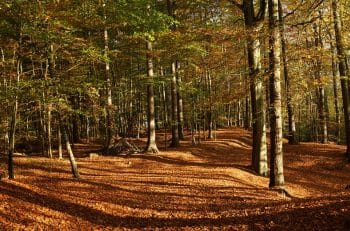
    Dante Alighieri opens ‘The Divine Comedy’ with the immortal lines: Nel mezzo del cammin di nostra vita mi ritrovai per una selva oscura, ché la diritta via era smarrita. (In the middle of the journey of our life I found myself within a dark wood where the straight path was lost) To the medieval mind of Dante, the great forests of Europe were a fearsome spectre of numinous presences, but by entering the wood of doubt he gained a deepened awareness. We retain these competing instincts: a wariness of wilderness that incites conquest, beside reverence for the sylvan mysteries. It is this latter instinct that requires nurturing. On a recent visit to Italy I embarked with a friend on a ramble towards Mount Sole near Bologna. This park had been the scene of a final battle in April 1945 between the Allies and Germans, along with their Italian fascist allies. Unfortunately our time was short, and as we ascended the narrow path, wending steeply through dense woodland towards the summit, a lengthy walk seemed imminent. In order to return for an appointment we had a decision to make. We had three alternatives: follow the path in the hope it would soon loop backwards; return the way we came; or take a short cut by descending directly through the thick deciduous forest flanking us. Contrary to good sense, we chose the latter course. Initially we divined a trail through the thickets of hornbeams and Turkey oaks – laid perhaps by the native cinghiale (wild boar) – but these soon lapsed as the descent became more precipitous. By then we were using trees, many tilted at curious angles, to lever ourselves like firemen down an increasingly sheer slope. This is when it became slightly dangerous as a surprising number seemed dead, giving way at the slightest pressure. The humous around the trees was also amazingly loose, and over some stretches we slid down soil that felt like snow. We had arrived in a natural sanctuary, and were cutting a swathe through it like a pair of conquistadores rampaging through an Indian village with steel. The acute angle of the hillside made this a route only the most foolhardy of large fauna would descend. In remote areas such as these we find fragile remains of unmolested old-growth European forests, although in these conditions only hardier species are in evidence, rather than the great beeches that once dominated the continent. This was, nonetheless, an impressive ecosystem that concentrates great wealth in the soil, and where old trees are allowed to live out their days in peace. Until we arrived that is. Then my friend’s foot came in contact with a hard metal object in the brittle soil, which on inspection proved to be a gun cartridge. Wiping away the earth revealed the inscription: “RH 1943 20mm”. A subsequent Internet trawl showed that it was a Spitfire Cartridge manufactured by the Raleigh Corporation in 1943. Bob’s Your Uncle! By happenstance I was then reading the German forester Peter Wohlleben’s remarkable little book: ‘The Hidden Life of Trees: What they feel, How they communicate; Discoveries from a secret world’. It seems we had made another, less explosive, discovery. “On hillsides”, he writes, “it is sometimes the ground itself that is sliding extremely slowly down to the valley over the course of many years, often at the rate of no more than an inch or two a year”. He continues: “Trees are losing their footing and being thrown completely off balance in the mushy subsoil. And because every individual tree is tipped in a different direction, the forest looks like a group of drunks staggering around. Accordingly, scientists call these ‘drunken trees’”. Coincidentally, on returning home to Ireland stories were emerging of one of the worst fires in living memory on thousands of acres of Coilte land in Cloosh Valley, east Galway. I knew this had to be coniferous cash crop as Wohlleben points out that a deciduous forest is not susceptible to fire: it lacks resins or essential oils, and must be seasoned for two years before it can serve as fuel. Conversely, the destruction of non-native evergreens offers a rare opportunity to use the site to reduce Ireland’s contribution to Climate Change. The great deciduous varieties are vast carbon storehouses, and incredible photosynthesisers (releasing oxygen in the process): just to grow its trunk, a mature beech requires as much sugar and cellulose as that yielded from a 2.5 acre field of wheat. This demands over 150 years, so our descendants are sure to be very grateful for measures taken today. If we assume (conservatively) 500 such beech trees grow on one acre, this offers space for 1250 trees on a 2.5 acre site. Its (stored) energy value can be calculated as follows: over one hundred and fifty years a wheat fields gathers an energy value of 150x (where ‘x’ is one year’s sugar and cellulose from a 2.5 acre site); whereas an acre of undisturbed beech trees offers 1250x for that period. This is both a potential energy source (that would eventually yield a fossil fuel) with over eight times more capacity than a wheat field, unsurprisingly considering heights of 150 feet. This leaves aside potential food (assuming we learn to process trees nuts better) and medicinal sources. Moreover, the expanding humous around trees contains vast carbon reserves, and trees, unlike wheat and most other crops, fix their own nitrogen. Suffice to say, old-growth forests are the leading weapon in the battle against Climate Change. According to Wohlleben the best thing to do in order to generate growth on a site is absolutely nothing, leaving Nature (relying on birds to carry seeds) to find a balance. In Ireland this will give us a summit vegetation of oak and hazel, which given the opportunity would colonize the whole country, and offer only marginally less bulk than beech. As it is, old-growth forests are virtually absent in the least-wooded substantial European country, which, paradoxically, has some

    Loading

    Read more