Environment

Random entry RSS

  • Posted in:

    Geese to the Rescue

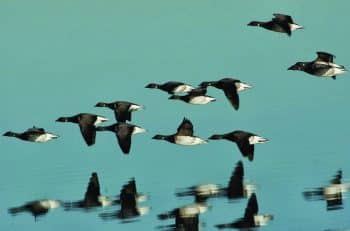
    Clontarf/Raheny faces the loss of a big tranche of green space as a large residential development on lands currently used as sports facilities goes before An Bord Pleanála. What has been missed, in the turmoil of local antagonism, is that the development is illegal under Irish and European law as it threatens a famous, cherished and protected species, Brent Geese. The geese are afforded strict legal protection under the Special Protection Area designation for North Bull Island, arising out of the Habitats Directive. There are currently two planning applications under consideration on a site adjacent to St Anne’s Park and St Paul’s school in Clontarf/Raheny in Dublin. One is a proposed sports facility with permission sought from Dublin City Council. The other is a proposed large-scale (536 units: 104 houses and 432 apartments) residential development under a strategic housing development application to An Bord Pleanála. The two applications are interlinked; the sports facilities are being proposed to compensate for the loss to the residential development of the existing heavily-used sports pitches.   Land Ownership and Planning History of the Site The site was originally part of the St Anne’s estate, the home of the Guinness brewing family on which Lord Ardilaun forged a magnificent Palazzo out of the original seventeenth-century house. In the 1930s Dublin City Council CPO’d lands (which included this site) and used some of the lands for social housing, the rest became St Anne’s park. The great house burnt down in 1943. In the 1940s the Vincentian Fathers bought property nearby and developed a school; St. Paul’s. At the same time Dublin City Council wished to extend Vernon Avenue north to the Howth Road via Sybil Hill. A land swap occurred – the Vincentians got 15 acres of the park for a nominal sum and Dublin City Council were able to connect Vernon Avenue with the Howth Road via Sybil Hill. As to ownership of these lands, a post on the ‘I Love St Anne’s’ Facebook page dated 4 June 2016 (attached to the video clip of Councillor Ciaran O’Moore) states “Interestingly, the last time we checked, the 15 acres were still registered with the Land Registry as belonging to DCC. The legal dept of DCC carried out a title search on the lands last year, concluded that they belonged to DCC & registered them as such. We have been told that this is an irrelevant clerical error, presumably it’s a clerical error that would need to be resolved before Title on the land can pass to Crekav Developments who are rumoured to have paid in excess of €15 million to the Vincentians for it”. The lands have been used as sports pitches by St Paul’s school and up until very recently (i.e. the last few weeks) by local GAA, soccer and rugby clubs – many hundreds of children have been using these pitches at the weekends. The local sports clubs have now been told they may no longer use the lands. Up until 2001 the lands were open to, and contiguous with, St Anne’s park. In 2001 the Vincentians, citing insurance reasons, applied for and were granted permission to erect a fence around these lands, creating a barrier/ distinction between them and the park. Despite this separation, local people have always viewed these lands as an integral part of the amenity and facilities of St Anne’s park. In 2012 the Sisters of Charity won a court case against Dublin City Council about Z15 (i.e. Community and Institutional Resource Lands: Education, Recreation, Community, Green Infrastructure and Health – To protect and provide for institutional and community uses) zoning for lands of theirs in Sandymount, Dublin 4. The Sisters of Charity objected to a condition of the Z15 zoning which precluded development on their lands. All of the order’s 108 acres of lands in 18 separate parcels had been zoned Z15 in the city development plan. They said the Council had given no reasons for the restrictiveness of the zoning compared with other open space lands. The Commercial Court ruled that all Z15 zonings in the Dublin City Development Plan should be quashed, and the city Council did not have the nous to simply give reasons to Z15 landowners. A good one would have been that the citizenry had built up a dependence on the institutional lands for open space; and that many religious lands had been purchased by monies subscribed by the citizenry for purposes that might now be described as the common good. Accordingly, in May 2013 Dublin City Council amended its Development Plan and Z15 zonings including for the St Paul’s lands. The result was that the revised zoning allowed residential development as “open for consideration”. In 2015 the Vincentian Fathers sold the lands to a developer, Arklow-born Greg Kavanagh and Pat Crean from Kerry, through their New Generation Homes, for a reported €25,000,000. It appears that subsequently Greg Kavanagh and Pat Crean split, with Pat Crean now pushing the application at St Paul’s under Marlet Property Group, with financial backing from M&G, an investment-manager arm of the UK’s Prudential. In 2015 two planning application were lodged, but not pursued, by Crekav Landbank Developments Limited for sports facilities and a residential development (381 units). In Sept 2017 a planning application was lodged by Orsigny, a Company Limited by Guarantee, for sports facilities. This application is still live. Bizarrely, the Clontarf GAA (which until a few weeks ago had hundreds of children using the site at weekends and have now been told they cannot use the pitches) put in a letter of “full support” for the sports-facilities development. The sports facilities proposed are for two all-weather pitches and a sports hall – which will be a substantially inferior facility to the existing six or seven pitches which will be lost. However, it appears that the GAA club has now put in an objection to the residential application. It really must account for its approach which may say a lot about the approach of sporting bodies

    Loading

    Read more

  • Posted in:

    Democracy Works

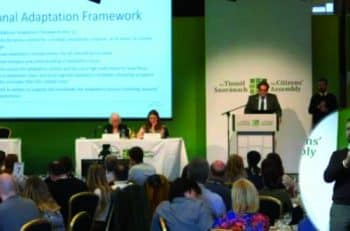
    It’s been a bad couple of years for democracy. The Brexit fiasco was the most humiliating British retreat from Europe since Dunkirk, but this time, entirely self-inflicted. Yet, rather than an alarm, Brexit instead turned out to be a blueprint for the bloodless US coup that followed, where right-wing extremism seized the world’s most powerful political office. Some 95 million Americans didn’t vote in November 2016. “One of the penalties for refusing to participate in politics is that you end up being governed by your inferiors”, is how Greek philosopher, Plato presciently put it. And while not riven by such gaping wounds of xenophobia and extremism, Irish democracy is also profoundly dysfunctional, and nowhere is this clearer than in its record of abject failure on climate policy. A decade ago, it looked like Ireland was beginning to get its act together, yet by the time Enda Kenny led Fine Gael into power in 2011, the environmental agenda hadn’t so much been scrapped as bleached. Fast forward to 2017. Ireland is now the third worst per-capita greenhouse-gas emitter in the EU and one of only four countries certain to miss its 2020 targets. Massive EU compliance fines are looming, and our only plan is to try to weasel out of paying, rather than tackling our underlying carbon-pollution crisis. It didn’t have to be like this. Professor Andy Keen of Edinburgh University told the Citizens’ Assembly earlier this month how Scotland, with cross-party political support, in 2009 set the highly ambitious target of cutting its national emissions by 42% by 2020. This is more than twice Ireland’s 20% target for the same period. While we will struggle to achieve a maximum 4-5% cut, Scotland actually hit its 42% target in 2015, five years ahead of schedule. It is now pushing hard to achieve 100% renewable electrical production by 2025, and will probably succeed. Scotland has no natural advantages over Ireland. That’s the difference between politics that works and politics that is broken. Any notions that Irish people are innately unconcerned and indifferent to climate change were well and truly scotched by the outcome of the Citizens’ Assembly, which sat again over two weekends in October and November, under the gimlet legal eye of Justice Mary Laffoy. Instead of the usual circus of lobbyists and their client politicians, the Assembly instead only heard from disinterested experts, and its round-table format allowed the 99 citizens to discuss what they had heard among themselves, and then ask searching questions of the experts. I sat through almost eight hours of presentations and discussions on a Saturday in November, and watched these volunteer citizens, young and old, from all walks of life, as they engaged with the process for hour after hour. No fiddling with phones, dozing or absent-mindedly gazing into the distance. This is what direct democracy looks like up close. In a word: inspiring. Even more impressive was that the citizens agreed and then voted in a secret ballot on 13 recommendations and, incredibly, all were carried – in most cases, by thumping majorities. Everyone knows Irish people won’t accept paying new carbon taxes. Wrong. This idea was carried by an 80% majority. Everyone knows that agri-emissions are a special case. Wrong again. Some 89% of Assembly voted in favour of taxing carbon-intensive agriculture, and rewarding farming methods that cut carbon. On industrial peat burning, a whopping 97% of citizens voted to end all State subsidies supporting this madness. And despite our supposedly unbreakable love affair with the private car, 92% of citizens voted for the State to favour developing public transport ahead of new road infrastructure at the rate of no less than 2:1. A recommendation allowing micro-producers of clean (solar) electricity to be allowed sell their surplus back to the grid was backed by 99% of citizens. Meanwhile, ‘Climate Action’ Minister Denis Naughten, has once again excluded small-scale rooftop solar from even being considered in the national consultation on renewable energy. The Citizens’ Assembly may have been set up by the government in the hope it would become another dull talking shop. If so, its radical recommendations, first on abortion rights and now on climate change, have shown that, given half a chance, we Irish are entirely capable of sober civic engagement with complex issues. Who would have guessed?   John Gibbons is an environmental commentator and tweets @think_or_swim

    Loading

    Read more

  • Posted in:

    Eschatological ruminations

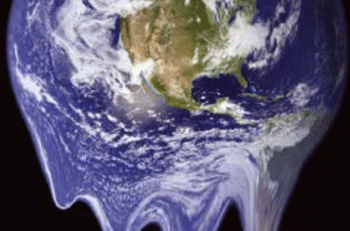
    Eschatology, or the study of the end of times, is at least as old as the written word. The concept spans many of the world’s major religions, usually referring to some future day of judgement or reckoning. Beyond the realms of theology, eschatology as a concept is currently undergoing something of a renaissance, especially after the tempestuous and chaotic first twelve months of the Trump regime. In this time, almost everything we once took for granted about inherent stability, even inevitability, of western democracies and the robustness of our institutions has been shaken profoundly. As if to add to the sense of impending calamity, the Bulletin of the Atomic Scientists moved their famous Doomsday Clock for 2018 forward in late January– to two minutes to midnight. This is the closest it has ever been to the witching hour. The authors of the Bulletin excoriated the US government’s reckless nuclear brinksmanship, but poured special scorn on its efforts to derail international climate diplomacy. “Avowed climate denialists have been installed in top positions at the EPA and other agencies, and the administration has announced its plan to withdraw from the Paris Agreement. In its rush to dismantle rational climate and energy policy, it has ignored scientific fact and well-founded economic analyses”. The Bulletin was particularly scathing of the role played by climate deniers in stymieing action. “Despite the sophisticated disinformation campaign run by climate denialists, the unfolding consequences of an altered climate are a harrowing testament to an undeniable reality: The science linking climate change to human activity is sound. The world continues to warm as costly impacts mount, and there is evidence that overall rates of sea level-rise are accelerating – regardless of protestations to the contrary”. The toxic wave of US science denialism has swept right across the Atlantic. As previously reported in Village, last May saw the first meeting in Dublin of the self-styled Irish Climate Science Forum (ICSF) a denialist group with opaque membership and funding sources. February sees it host its fifth meeting in just 10 months, featuring a fringe Italian academic with strong ties to US neoliberal think tanks, the latest in a procession of climate contrarians to present new (thoroughly debunked) ‘findings’ to an eager audience mostly of Irish contrarians and deniers. Their agenda appears to be to hobble effective Irish government response to the existential threats posed by climate change. Their standard operating method is to cherry-pick data, float red herrings and exaggerate uncertainties in the scientific consensus often as political cover on behalf of special-interest groups, for continued inaction. Above all, groups like the ICSF are engaging in ‘post-truth’ assaults on reason itself. A recent edition of New Scientist magazine stated baldly: “There are disturbing hints that western civilization is starting to crumble”. The article quotes intriguing research from Yale university, which examined the two broad modes of human thought: 1) fast, automatic and inflexible, and 2) slower, more analytical and flexible thinking. As flexible thinkers within society solve our various problems, from transport to energy, with complex technologies, this relieves the great bulk of the population from even being aware of these problems, and so inflexible, automatic thinking ensues as the population, in a sense, dumbs down, since technologies can create the beguiling illusion that life is magically simple. One of the psychologists who developed this theory, Jonathan Cohen, suggests this may help solve one of the great puzzles regarding societies heading for catastrophe: why do they persist with their self-destructive behaviour, in the face of overwhelming evidence of future harms? “The train had left the station”, according to Cohen, and the forward-thinking, analytical types were no longer at the controls. Separately, computer modelling carried out at the University of Maryland in 2014 examining the mechanisms that can lead to local or even global system collapse, identified two key elements. The first, unsurprisingly, is ecological strain. The panoply of chronic environmental stressors, including resource depletion, widespread pollution, ocean acidification and sea-level rise are generally well understood, at least in expert circles. What was less widely known was the systemic risk posed by economic stratification or, in plain language, the rich getting richer at everyone else’s expense. In the scenario modelled, “elites push society toward instability and eventual collapse by hoarding huge quantities of wealth and resources, and leaving little or none for commoners who vastly outnumber them yet support them with labour”, according to author Rachel Nuwer. Eventually, she argues, “the working population crashes because the portion of wealth allocated to them is not enough, followed by collapse of the elites due to the absence of labour. The inequalities we see today both within and between countries already point to such disparities”. She notes that the top 10% of global income earners are responsible for almost as much total greenhouse gas emissions as the bottom 90% combined. Here, extreme inequality and ecological stresses converge to form a toxic cocktail capable of crashing our civilisation into the dust. US academic Thomas Homer-Dixon published the influential book: ‘The Upside of Down’ in 2005. It presciently anticipated the global economic crash that occurred some three years later. The financial crisis was, he wrote, one of “five tectonic stresses which are accumulating deep beneath the surfaces of our societies”. Others include population, energy, pollution and resource exhaustion; and climate system stress. The 2008 economic crisis, along with more recent shocks, such as Brexit and the Trump election in 2016 can, according to Homer-Dixon, be seen as a series of non-linearities, or sudden and unexpected jolts to the assumed world order. These may be viewed as a random pattern of tremors presaging a truly global catastrophe, a word that derives from the Greek, meaning ‘to overturn’. To view catastrophe as imminent rather than already occurring requires a deeply anthropocentric perspective. The sequestration, plunder and simplification of the entire biosphere by a single species is without parallel in a billion years of Earth, let alone human, history. Irrespective of our own narrow fate, the human stain will be etched

    Loading

    Read more

  • Posted in:

    Food Insecurity

    Like most people in Ireland, I grow almost none of my own food. Unfortunately living in the city, and not having a garden I am somewhat restricted. Every now and again I get a pang of anxiety when I see supermarket shelves empty on a Sunday night, before the delivery lorries have arrived. This is a reminder that our plentiful food supply is not a given, and is dependent on many factors, such as the supply of fossil fuels to transport the food, the viability of food producers, processors and supermarkets, as well as the availability of money to afford a nutritious and balanced diet. Without one or some of these factors, I, and many others, would struggle to eat properly. In 2000, a major truck-driver strike in the UK brought the country to the brink, with severe fuel shortages and dwindling of food on supermarket shelves. It is said that modern civilisation is three meals deep. If the delivery lorries suddenly stopped, if the fridges couldn’t be powered, or if the value of currency collapsed, food shortages would be a very real prospect. While something quite as dramatic as this suddenly happening is unlikely, the fact that it could happen at all should be enough to make us consider the security of our food supply. Food security isn’t something that many of us think about very often. According to the Global Food Security Index of 2017, Ireland is the most food-secure nation on the planet, so why would we worry ourselves unnecessarily? In 2008, food security became a prominent global issue again. The rising price of oil, coupled with pressure on food supplies from extreme weather events and the increased use of land for biofuels, led to the doubling of food prices in many countries, as well as the disruption of the food chain as many small food businesses couldn’t cope with the extra prices. Shelves emptied in several developing nations, leading to food riots and civil unrest. Closer to home, Ireland and the UK saw a dramatic rise in the number of people relying on food banks during the worst of the recession. Obesity and diabetes rates are on the rise. Ireland will become the most obese country in Europe, with the UK, within a decade, according to a study published in The Lancet. Irish men already have the highest body mass index (BMI) – a key measure of overweight – in Europe, while Irish women rank third, the study shows. Unfortunately, due to the nature of the profit-driven agri-business sector, it is often the unhealthiest food which is the most heavily marketed and affordable. Sadly, our profit-driven food system is not fit for social or environmental purposes. In what is often a race to the bottom, supermarket price wars ensure many fruit and vegetables are sold at below cost. Consumers vote with their purses and it is the cheapest food, usually imported from large commercial farms, with economies of scale, which win out over smaller producers, many of whom have been producing food for generations. As a result many of our smaller farmers, especially crop producers are struggling to stay in business. The production of crops generally in Ireland has declined, as has the overall number of farms and farmers. Overall production of the three main cereals (wheat, oats and barley) decreased by 12.3% in 2016. The total area under cereals decreased by 11,200 hectares (-3.8%) and overall cereal yield decreased by 8.7% to 8.2 tonnes per hectare. The yield of potatoes decreased by 7.9% from 42.3 tonnes per hectare in 2015 to 38.9 tonnes per hectare in 2016 while the area under potatoes increased by 6.1%. In 1915 there were 359,700 farms over one acre in Ireland and by 2010 this had declined to 139,860 farms over one hectare. Sadly we are becoming an agricultural one-trick pony, with beef and dairy being the hot-ticket items. This reduces the diversity of food we produce in Ireland and is leaving us more dependent on food imports. It is a bizarre reality of a neoliberal food economy that the most food-secure nation on the planet is a net importer of food. According to the Food and Agriculture Organisation (FAO) of the United Nations, data from 1960 to 2011 (the most recently available data) reveal that while Ireland was a net importer of calories until the mid-1970s, it then became a net exporter until 2000. Since then, however, the value of this country’s foodenergy net imports in calories has at times exceeded the equivalent of the calorie intake of 2.5 million people. This leaves Ireland very vulnerable to disruptions in the food supply-chain. We received a taste of this earlier in the year when supermarket shelves became short of vegetables such as broccoli and lettuce. Being so heavily dependent on imported food is taking a major gamble with our long term ability to feed ourselves, as we head into a future of huge uncertainty regarding the supply of fossil fuels.   De-carbonising our food system From artificial fertilisers, to pesticides, farm machinery, processing, packaging, shipping and refrigeration, fossil fuels play a major role in getting food from farm to fork. On average, up to 10 calories of fossil fuel input is required to produce just one calorie of food. Richard Heinberg, a fellow of the Post-Carbon Institute believes that we need to decarbonise our agricultural system by making a number of changes to how we produce food. First, we need to become less dependent on fossil-fuel-derived artificial fertilisers. Second, we need to shorten our food supply chains and once again produce more food close to where it is consumed. This will mean more people involved in producing food. Third, along with shortening the supply chain, we will need to become less dependent on heavily-oil-dependent machinery, which, again, will mean more people working the land on smaller plots of land. This isn’t as pie in the sky as it might sound. Already in Ireland, there is a growing interest in

    Loading

    Read more

  • Posted in:

    Marine life: out of sight, so nihilistically destroyed

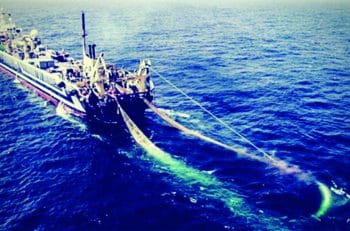
    Fish don’t vote. When Ireland’s Marine Minister Michael Creed said: “I am satisfied that I have managed to turn an extremely worrying set of proposals from the Commission into a much improved outcome for the Irish fishing industry”, there was little doubt as to whose interests the minister represented. While he added that he was “especially pleased that the quotas agreed respects the scientific advice ensuring that the fish stocks in our waters will be managed sustainably”, this may have been tongue in cheek. In 2016, Ireland came out as number one in the league table of worst offenders for the promotion of overfishing in the North East Atlantic, according to a report published by the New Economics Foundation (NEF) an independent think tank. The report – ‘Landing the Blame’ set out to name-and-shame the EU member states most responsible for setting fishing quotas above the level recommended in scientific advice – the very advice in fact that Creed said he “respected”. At the time the NEF report was being compiled, Simon Coveney was our minister with responsibility for marine affairs. Coveney negotiated the largest proportional increase in fishing quotas for Ireland above scientifically advised levels in December 2015, with Ireland’s quotas exceeding scientific advice by 25%. Fish, don’t lobby, so their interests, including the fundamental right to exist at all, were not considered. According to the NEF there is a total lack of transparency about the fisheries negotiations, leading to wheeler-dealing where Irish fishermen, politicians and processors ‘celebrate’ beating the system and catching far more fish than the marine system can bear. What stands out about overfishing isn’t so much the destructive greed involved, it’s the sheer nihilistic stupidity. Research published by NEF calculated that the EU could actually increase its fish catch by two million tonnes a year, raise an extra €1.6bn in income from the marine sector, and create an additional 20,000 jobs in the industry. How? Simply by sticking rigidly to the scientific advice, which means allowing fish stocks to recover, avoiding targeting of breeding grounds for juvenile fish and, critically, eliminating trawling. By its very nature, much of what happens at sea is out of sight, and therefore largely out of mind. This is the only possible reason to explain how the industrial-scale vandalism involved in trawling isn’t regarded as a criminal offence. If you saw a plane flying over a pristine forest and carpet-bombing it, you would be rightly outraged. Yet, this extreme level of wanton wreckage of the sensitive marine habitats on the sea floor is carried out daily by trawlers right around our coasts. According to the Irish Wildlife Trust: “trawling destroys seabed habitats and catches huge numbers of other marine organisms (known as bycatch) including juvenile cod, whiting etc. Successive cod management plans have failed and we believe the only solution is to prohibit trawling in large areas of the Irish Sea.” A trawling ban within 12 miles of shore would, according to the IWT, “repair habitats, restore biodiversity, be a boon for coastal tourism (angling, diving) and ultimately provide more and bigger fish for fishermen”. Much of the seas around Ireland is already critically overfished; and bottom-trawling in particular is uniquely destructive as well as extraordinarily wasteful. When weighted nets and trawl doors are dragged along the seafloor, everything in their path is disturbed or destroyed, including seagrasses, coral reefs and rock gardens where fish hide from predators. In one study, bottom trawling for prawns threw away nine times as much bycatch as more selective fishing gear. A 2007 study on shrimp trawlers in Belize found that landing less than 20 tons of shrimp involved destroying and discarding about 76 to 190 metric tons of other marine life. Globally, marine systems are under greater stress than at any time for tens of millions of years. A lethal cocktail of pollution, overfishing, rising water temperatures and ocean acidification is pushing many systems into irreversible collapse. Any one of these threats in isolation would be serious; in combination, they risk tipping us into a world where the oceans are essentially dead, with little besides jellyfish capable of surviving and adapting to the unprecedented rate of change. Other than the occasional dolphin or clown fish, we as humans have little personal empathy with most forms of marine life. We tend to view them as cold and slimy; hardly worth bothering about at all. David Attenborough’s latest marvel, ‘Blue Planet II’, has just finished broadcasting. Hitting weekly audiences of over 17 million, it was in fact the most watched TV programme of 2017. Great storytelling, combined with breath-taking photography has brought the exotic and bizarre wonders of the seas to amazed audiences. Blue Planet II is expected to be sold to over 100 TV stations all over the world, showing this interest, even compassion, is not just a flash in the pan. Viewers watching resolute puffins engaging in perilous and exhausting three-hour roundtrips to catch fish for their young, while being harried on the return journey by raiding skuas will have a better grasp of just how tough life is, and how survival itself is balanced on a daily knifeedge for most species. Skellig Michael, off the coast of Kerry, is a rare sanctuary for puffins, among others, yet this delicate ecosystem is being constantly threatened by human intrusions, especially since the island first featured in the ‘Star Wars’ film franchise, with Heather Humphries, the unfortunately named then Heritage minister signing off on the film crew’s right to move 180 staff, plus heavy equipment, including lighting rigs, onto the island. It doesn’t take a trained ecologist to work out the impacts of having helicopters and drones swirling around this tiny island. By the time ‘Star Wars’ has finished with it, it’s likely the already endangered sea birds will have long abandoned their ancient sanctuary. Still, puffins don’t vote, so who cares? While Humphries has made a ministerial career out of selling out the natural environment to special-interest groups, ‘Blue Planet II’ lingered long

    Loading

    Read more

  • Posted in:

    Buildings At Risk

    Heritage and the Irish Psyche The cynic who knows the price of everything and the value of nothing drives the perception of properties in Ireland. There is a belief within the Irish psyche that new is best, even when it comes to our historic properties. We flock to perambulate around our country houses and their gardens once they have been restored, often to the point of sanitisation. However, we wince at the sight of a crumbling beauty, and the mere thought of the cost and effort it takes to bring it back to glory. There are thousands of derelict historic properties strewn across the country. Our planning laws are toothless and we seem unable to incentivise maintenance, most particularly of accommodation over shops. Shifts in our economic and political landscape also frame how we perceive this cultural legacy, often alien in design but built, beautifully, by Irish artesans. It is only a generation ago that one of the major factors leading to the demise of the country house was de-roofing as owners struggled to find ways to avoid paying oppressive rates. The National Attitude towards these buildings has evolved from hostility to indifference without anyone noticing. Hostility only resurfaces when there’s any sort of economic (or social) imperative. The Regime for Protection Who protects it? So whose job is it to look after significant buildings? Legislation enables Local Authorities to protect buildings and to take action if they are vulnerable. However, lack of funding, resources, manpower and wit; the cost of litigation; and inertia militate against, and there is – at bottom – no legal obligation for local authorities to do anything, so mostly they don’t. One way to protect a historic property is to list it on the Record of Protected Structures, and especially if built before 1700, the Record of National Monuments. Each Local Authority puts together a Protected Structures list for each Development Plan taking suggestions from the National Inventory of Architectural Heritage, a unit of the Department of Culture, Heritage and the Gaeltacht. As valuable as this database is, it is only a representative sample of the architectural heritage of each county and not updated regularly. For example Limerick Cty’s was last conducted in 2005. Volunteers For such a small country numerous charities have been set up to raise awareness of and restore our historic properties. An Taisce, established in 1948 owns many properties including Booterstown Marsh, the Boyne Canal and Crocnafarragh blanket bog, Glenveagh, in Donegal. The Irish Georgian Society has restored many properties and provides strategic funding for particular conservation projects such as some on Henrietta Street in Dublin. The Buildings of Ireland Charitable Trust set up in 2005, the Irish Heritage Trust was established in 2006 as a joint initiative between the voluntary sector and the government, receiving approximately one third of its financial support from the State. So far its projects have been Fota House and Gardens, Strokestown Park, and the Irish National Famine Museum in Roscommon – with Johnstown Castle, Estate and Gardens (Wexford) proposed for the coming years. The Irish Landmark Trust for Ireland, a non-profit organisation set up in 1992 has restored 30 properties. Public and private owners typically agree to let it take properties on 50-year leases that allow them to make them suitable for holiday accommodation. Once a lease expires, the property reverts to the owner. Dublin Civic Trust provides pro-active advice on Dublin and completed an audit ‘Dublin’s Wasting Assets’ in 1997 which was revisited in 2001 and 2010. Irish Buildings at Risk Buildings at Risk are heritage assets, such as protected structures or scheduled monuments that are at risk as a result of neglect, decay or inappropriate development, or are vulnerable to becoming so. A major part of this is a lack of property maintenance. We don’t give servicing our cars a second thought but yet we question the upkeep of these hard-working living machines. As to buildings that become dilapidated a national buildings at risk register would raise awareness of problems and act as a catalyst in marrying up potential resources with suitable available properties. Robert O’Byrne, Vice-President of the Irish Georgian Society, who writes on vanishing period homes in The Irish Aesthete blog, advocates such a register. “By having a list you raise its profile: you raise the security level. Otherwise buildings at risk can be invisible. A long-term ideal would be an annual buildings list like the World Monuments Fund Top Ten”. Not everyone shares this enthusiasm: one retired senior advisor to the Department told me that a register would be “a shopping list for thieves”. He believes it would leave the Department open to legal action from property owners citing the public list for the robbery of their original fireplaces or the lead from their roofs. Geraldine Walsh, CEO of Dublin Civic Trust notes: “Yes, An Taisce have compiled an excellent Buildings at Risk document, but an annual review of it should be funded by the State in order to independently maintain the process and to keep the list of the buildings identified updated. It should be co-ordinated with the local authorities’ Derelict Sites database. The UK NGOs, including English Heritage, Historic Environment Scotland, Ulster Heritage Society and SPAB all publish their list of buildings at risk annually. A particularly useful aspect of their work is publicising those properties that are available for sale to prospective purchasers”. Lists of vulnerable buildings are not enough, as Will Derham, author of ‘Lost Ireland, 1860- 1960’ points out: “As we have seen recently in the renting sector, building standards require enforcement. A statutory buildings-at-risk register would be a small, but welcome step in the direction of fully protecting and preserving the nation’s built heritage”. But a State that lacks a culture of enforcement, from banking to spatial planning to police accountability, needs to think hard about how it is going to handle the more ethereal imperative of historic-building conservation and restoration. International Experience of Buildings at Risk In England an annual Heritage at

    Loading

    Read more

  • Posted in:

    Bat and Man

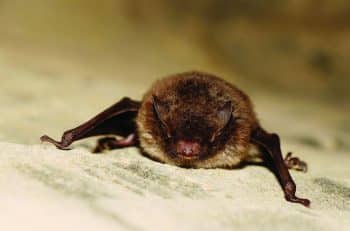
    Did bats figure in your Hallowe’en? They neither relate much to the Bat Man super-paradigm nor to the spooky, ghoulish, symbols of death that Hallowe’en stories would have you believe. Instead they may hold the key to eternal youth. This was one of the topics discussed at the ninth Irish Bat Conference held in October. The trend for many mammals is to ‘Live fast and die young’. Small animals with a high metabolic rate (e.g. mice) tend to have short (and exciting) lives. Larger animals with a slower metabolism tend to live longer. However, bats seem to turn this rule upside down. Bats have an extremely high metabolic rate when flying, but are very long-lived – and don’t seem to suffer from age-related illnesses such as arthritis. Professor Emma Teeling and her team in UCD have been working on bats, and trying to unravel the secrets of healthy old age. One theory is that something weird is happening with bats’ telomeres. Telomeres are caps at the ends of our chromosomes, which prevent the chromosome deteriorating, or fusing with other chromosomes. They act like the bits of plastic on the ends of your shoelaces – stopping the shoelaces, or genes – from fraying. In humans, these telomeres get shorter with age. However with bats the length of the telomeres seems to shorten and lengthen – and it is not age related. Is this the bats’ secret – for eternal youth? Or perhaps it’s autophagy – where our bodies break down and clear out dysfunctional cells. Our ability to do this decreases as we age. But this doesn’t seem to happen with bats – perhaps because flight puts an oxidative stress on a bat, and they have developed a better system for clearing cellular damage. Or is it their gut micro fauna? Emma Teeling and her team have captured bats to study these processes .And the studied bats are well loved; every captured bat also gets a feed of a mealworm to make up for the temporary inconvenience of being handled by a human. And how do humans interact with bats? A presentation by Christian Voigt from Berlin spoke about the effects of human activity on bats. He looked at three types of human activity – farming, wind power generation, and lighting. Using bat detectors, he studied farmland in Germany, and found that bats prefer complex landscapes to monocultures. Small ponds and lakes were very important, as are edge structures – basically, the more types of habitat you have on your farm, the more species you will attract. Studies by Dr Danilo Russo looked at the economic value of bats to farmers. He tracked bats and found their highest feeding activity was where cows were resting. They appear to eat midges and mosquitoes which prey on the cattle, causing loss of weight to the cows and decreased milk production. As herd size increases, so does bat activity – until the herd size reaches 60. He proposed that cattle are kept near large maternity roosts, and that farmers should do all they can to encourage bats (natural pest controllers) on their lands. Russol also suggested using DNA analysis of bat droppings to look for pests before they actually turn up on the farm – the bats may be keeping the pests at bay, and looking at the droppings could provide an exciting warning system which would alert us to the presence of specific pests before they have a chance to multiply uncontrollably. The intrepid Christian Voigt tagged some Noctule bats and we watched in horror some footage of bats flying through wind turbines. In Germany 10-12 bats are killed annually per turbine, in the absence of mitigation. So, officially 250,000 German bats are killed every year – but Voigt is not persuaded. He claimed it is an underestimate, as it is based on the numbers of carcasses found per turbine. His own studies show that the problem is not just direct collision, where you find the dead bat on the ground. Rather the most common cause of death is fractures. Indirect collisions, turbulence and changes in pressure causes barotrauma, where blood fills the abdomen, thorax, or lungs and ruptures ears and eyes. The bat may survive a few days, but will ultimately die, away from the turbine. Its carcass is rarely detected by those who monitor these things. Sadly, while at least the tagged male bats seemed to avoid turbines, female bats seemed to be attracted to them, perhaps sweetly thinking they were trees. Christian Voigt flew drones at wind turbines to monitor the turbulence caused by them, and detected wind turbulence both in front of, and behind, turbines, stretching as far as 600 metres from the turbine. Given the suspiciously low level of post-construction monitoring of windfarms in Ireland, our windfarm developments could have a serious effect on our bat population. And bats are slow to reproduce. Most bats, even fit ones, have one young every one-to-two years. Light pollution – light – can have a seriously detrimental effect on wildlife. Dark Skies projects are being set up throughout the world to encourage black ways (as opposed to green ways or blue ways) – dark areas, for nature. However, light pollution can also have serious health impacts for people. High light levels in cities affect our Circadian rhythm, causing sleep disturbance, which can lead to depression. Astronomers also campaign for dark skies. Predictably, bats are particularly sensitive to light. One consequence of too much light is loss of roost. If a roost is illuminated, some species of bats may be unable to use it. Bats such as Daubenton’s, Natterer’s and Whiskered are very sensitive to light pollution. A study by Alison Fure (2006) found Daubenton’s bats sensitive to light levels as low as 1 lux. Another downside is delayed emergence from roost. Bats sample the light at their roost before coming out. If the light levels are high, they will not emerge. However, most insects are found shortly after dusk, so

    Loading

    Read more