Environment

Random entry RSS

  • Posted in:

    IFA: from pipsqueaks to bullies

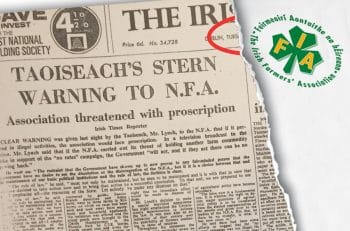
    Long ago, in a galaxy far, far away, Ireland’s National Farmers’ Association (NFA) was a political pariah, with then Taoiseach, Fianna Fáil’s Jack Lynch threatening to have the organisation proscribed, a move that would have placed every farmer in the NFA on the same legal footing as an IRA member. That was almost exactly 50 years ago, in April 1967, when tempers flared and relations between the NFA – forerunner to today’s politically powerful Irish Farmers Association (IFA) – and the state hit an all-time low. Just before dawn on April 24th, 1967, a series of co-ordinated Garda raids, led by Special Branch detectives and backed up by armed soldiers, descended in darkness on the homes of selected farm leaders. Later that evening, Jack Lynch was solemnly to address the nation on television and warn that if the NFA’s campaign of refusing to pay agricultural rates was not stood down, the consequences would be dire: “The restraint that the Government have shown up to now proves to any fair-minded person that the Government have no desire to see the dissolution or the disintegration of the NFA, but if it is a choice between that and the maintenance of our basic political institutions and the rule of law, the decision is clear”, he intoned. This was serious stuff. “By their speeches and actions, the NFA leaders have shown they are prepared to challenge the basic political institutions of this country. Questions of agricultural policy have become secondary”, said Lynch. Coming to the nub of the matter, he asked rhetorically if: “the right to decide major questions of agricultural policy is to be transferred from the elected representatives of the people and given over to the leaders of the NFA? For that, let there be no mistake, is what it has now come to”. The events of April 1967 had been brewing for over a year. The previous October, thousands of farmers marched from every corner of Ireland and converged on Dublin in an effort to meet Agriculture Minister, Charles J Haughey. The minister was unimpressed, famously describing the NFA as “pipsqueaks” so the main group dispersed, but a selected delegation of nine men chose to sit and protest on the steps of the Department of Agriculture. Gardaí lifted them from the steps onto the street, and there they remained, for 21 days and nights, into a chilly early November. During this period, Haughey left Agriculture, and was replaced by Neil Blaney. The deadlock was eventually broken and the nine men entered the Department of Agriculture to finally meet the new minister. The farmers’ Winter of Discontent continued, eventually boiling over with the Garda raids on April 24, 1967, during which 19 farmers were arrested and imprisoned for refusing to pay fines arising from an illegal road blockade. That morning, three farms in county Kilkenny, all owned by prominent NFA men, were targeted for simultaneous raids, including that of my father, the late Michael Gibbons, who had been one of the nine NFA men involved in the extended sit-down street protest (later nicknamed the Nine Frozen Arses). When my father refused to pay his rates bill, anything that could be physically lifted was seized by gardaí from the house and yard, including a radio set, clothes-dryer, horse-box, lawn-mower and tractor. I was three and a half at the time, but remember the morning vividly. Looking out my bedroom window at first light and seeing our front lawn and driveway swarming with what to me looked like hundreds of men in uniforms (I believe the actual number was closer to 40-50) was a sight I would never forget.         Ultimately, compromises were hammered out. We eventually got our property back and life returned to normal. In a quirk of history, my father’s only brother, Jim Gibbons was, at this time, a junior minister appointed by Lynch. He would go on to serve as defence minister and end up testifying against Haughey in the bitter Arms Trial in May 1970. He would also have the distinction of being the Agriculture minister who oversaw Ireland’s accession to the EEC in June, 1973. Over the decades since this tumultuous period, as political fortunes and reputations ebbed and flowed, the one clear winner was the NFA/IFA. Instead of being proscribed, it used its own political and negotiating savvy to oversee real improvements in the lot of ordinary farmers. It is no exaggeration to say that before implementation in Ireland of the EEC’s Common Agriculture Policy, many Irish farm families lived on or below the poverty line. This background of real struggle against both hardship and political exclusion forged the mettle of what would become the most formidable lobbying organisation this country has ever produced. Like many other organisations, continuous success in its own curious way would prove to be highly corrosive over time, leading to arrogance, intolerance of other positions and overconfidence in abundance. Sure enough, this hubris led, inevitably, to nemesis when the IFA was rocked to its foundations in 2015 with the revelations that its then general secretary, Pat Smith, had received pay and perks worth some €1m for 2013 and 2014. For good measure, his golden parachute on exiting his post was valued at a cool €2m. To put these numbers into context, the typical IFA farm family gets by with an on-farm income of around €24,000 a year. Every bit as jaw-dropping for ordinary farmers was how the then IFA president, Eddie Downey was receiving the guts of €200,000 annually, or some eight times the average farmer’s income, for what is a demanding but essentially part-time job. The Downey and Smith revelations were not isolated. Predecessors in both posts had also been drawing stupendous levels of compensation, and despite their howls of innocence, the nod-and-wink network within this most political of organisations meant a wide circle of people knew exactly what was going on, but chose to say nothing, hoping perhaps for their turn to clamber aboard the IFA

    Loading

    Read more

  • Posted in:

    Climate change is not your fault

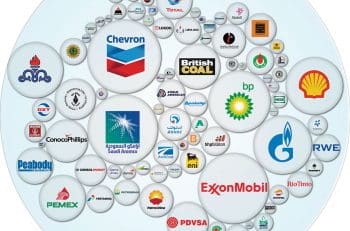
    Often we hear of how terrible climate change is, how it will cause the death of millions, mass extinctions, desertification and the end of life as we know it. But what are the roots of our common crisis, on our common home? Is it really all our fault, or, as environmental historian Stefania Barca asks, was all that progress “a free lunch, stolen from someone else’s table”? The Anthropocene? Over 97% of climate scientists have shown that climate change is man-made. Indeed, many 21st century scientists and ecologists say we have entered a new, man-made geological epoch that irreversibly changes the face of our planet – ‘the Anthropocene’. In this narrative, mankind’s Industrial Revolution was an ‘unbound Prometheus’. We – note the collective we – stole fire from the Gods to create a new progressive world for all. But such arrogant self-worship drew upon us their vengeful wrath. Humans – naturally greedy, exploitative, and born of original sin – created the climate crisis. However, as historians enter conversations about climate change and integrate social and environmental stories into the Industrial Revolution narrative, a more complex picture arises. If you listen, the dominant climate change narrative sounds not only Abrahamic, but suspiciously similar to the words of our own Brian Lenihan after the 2008 crash. The then finance Minister infamously told the country, “we all partied”: therefore we all must pay. Climate change is similarly presented as universal unavoidable human folly, obscuring the role of an exploitative, capitalist economic system built to see social and environmental harm as “unforeseen negative externalities”. From the enclosure movement, to the slave trade, to colonisation and the subjugation of the poor into dangerous and underpaid work, the Industrial Revolution was built on unaccounted for human and environmental cost. That Revolution depended on fossil fuels. ‘We All Partied’ Today, renewable energy is presented as unreliable, inefficient and heavily reliant on Government subsidies. Yet climate-change historian Andreas Malm shows that throughout the 1700s, the Industrial Revolution was driven by the water-run mill house which peppered the English countryside, running off its plentiful rivers and streams. Fossil fuels were an erratic, expensive fuel, rejected for causing serious respiratory and environmental damage to workforces and communities. In the 1830s, however, something strange happened. Steam power gained supremacy in spite of water meeting all economic concerns – being cheap, abundant, powerful, efficient and technologically potent. What could have happened? First, because water moves, for millennia it has been enshrined in legal systems as subject to res communas, or communal law. The same communal law applies to all mobile renewable resources granted to us by a generous earth – sea, wind, tide, sunlight. Water is a property that belongs to no person, its use bestowed to all. To use water, mill-owners had to cooperate with one another for the profitable use of plentiful reservoirs. In an economic system that centred on the self-interested individual, water knew no boundaries, respected no deeds, no private-property rights. In contrast, fossil fuels for steam power could be sequestered for exclusive use, cut up, carted away, stored and kept. The resulting excess did not affect profits, only the lungs and land of workers. Mill-owners were unwilling to embrace co-operative, profit-sharing business, even if it was in their own interests. Second, to complement divisible, piecemeal fossil fuels you need a workforce that can similarly be cut up, carted and stored away. Before fossil fuels, workers in remote country areas where rivers and streams were plentiful were loath to work in dark and dangerous mills without good remuneration. Millowners, unwilling to lose profit, sought unpaid labour in the form of orphan apprentices. Because mills were often located in remote, local areas, however, it was easier for workers to collectivise. Apprentice girls were soon “breathing defiance” despite beatings and solitary confinement. Unionised workers meant less profit for those at the top of the pyramid. Millowners therefore promoted cartable, storable fossil fuels and helped industry move to cities where there was already an “industrious”, docile and fluid workforce; broken-in bodies resigned to the discipline of the master of the mill. In his history of the Anthropocene narrative, Andreas Malm shows fossil fuels are a “power device”, a political choice naturalised through the barrel of a gun. Once, mills had to be made fireproof because workers burnt them. Nature, and the class forced to mould and exploit it, were violently cut from the progressive narrative of the Industrial Revolution. From Anthropocene to Capitalistocene Our alienation from Nature is not the natural result of anything, not the result of inherent human greed and cruelty. Our alienation is deliberate and tied to an existing system where the culpability for harm, whether the banking crisis or deaths in Rana Plaza, is dissipated through complex legal networks. Culpability is sucked away from its source and spread out to fix upon the bodies of front-line workers who bear the brunt of the blame and the brunt of the damage – environmentally, physically, financially. Classic environmentalism has a flavour of Malthusian misanthropy. It implies that individualistic moralistic acts alone are necessary to solve what is actually the result of an economic framework that deliberately obscures blame and traps the most vulnerable. Climate change only exists because there are places and people that we allow to decay in order to preserve the current exploitative economic framework. These people and places are what Naomi Klein calls “sacrifice zones”. In fact, we are living in a ‘Capitalistocene’, argues sociologist Jason W Moore, built on sacrificing the majority of human and environmental life for the wants of the few: “The Anthropocene makes for an easy story. Easy, because it does not challenge the naturalized inequalities, alienation and violence inscribed in modernity’s strategic relations of power and production”. In a recent study by Richard Heede, just 90 entities, including ExxonMobile, Norway’s Statoil and BP, are responsible for the purported ‘Anthropocene’ change of the last 200 years. The extreme volatility of our earth’s climate is no accident. As 350.org campaigner Bill McKibben says, “It

    Loading

    Read more

  • Posted in:

    Government Policy the main barrier to housing supply

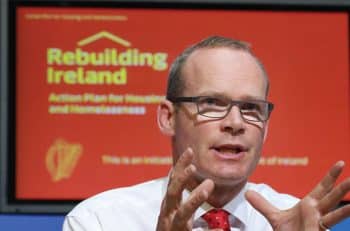
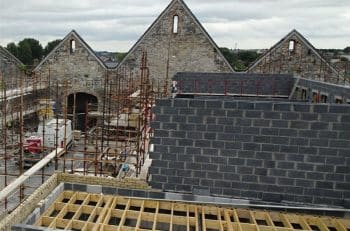
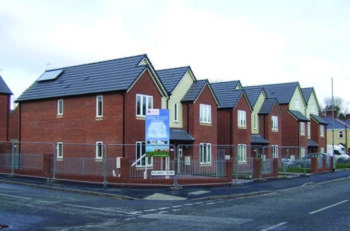
    Mandatory standards, regulations and policy introduced since 2014 have negatively affected the feasibility of many residential projects, increased costs and contributed to the skills shortage in the construction sector. This has led to continued sluggish residential output and increasing rents. Despite Ireland’s vacancy rate of twice the ‘normal’ – with 200,000 vacant homes, Government policies have focused on new-build homes. Residential land values have increased dramatically as a result of policy interventions. There are three main areas of concern: (1) Building Control, (2) Planning Regulations and (3) Housing Policy. 1: Building Control Following introduction by the Department of Housing of S.I.9 of the Building Control (Amendment) Regulations (BCAR), in 2014, a 60% fall-off in one-off housing commencements was observed in the first year of operation. No estimated Impact Assessment of the Regulations (Regulatory Impact Assessment) was undertaken in advance of their implementation. BCAR direct and indirect costs of up to €50,000 per house for self-builders and up to €25,000 per apartment were confirmed by industry commentators Karl Deeter and Dr Ronan Lyons (Trinity College, Dublin). A Ministerial review (April-September 2015) resulted in an ‘opt-out”, SI.369, which permitted one-off houses and extensions to be exempted from BCAR. ‘One-off’ house commencements have recovered as a result. However, no Government review of BCAR is planned for the multi-unit residential sector. As an example from my own practice, a modest change-of-use project in suburban Dublin with a construction budget of €25,000 required three separate statutory appointments which cost over €10,000, and permissions which took six months to obtain. Of this, Building Control procedures cost €7,600 and took one hundred days to complete. In contrast, in the UK similar Building Control permits cost £695 and take ten days. Planning is not the problem. Reliance by Government on privatised Building Control ‘self-certification’ compliance procedures rather than simplified inspections is placing unnecessary cost burdens on the sector, and increasing skills shortages – with little improvement in either consumer protection or quality. 2: Planning Standards The Department’s proposed ‘fast-track’ Bord Pleanála process for schemes of one hundred dwellings or more will not address timescales; rather it allows developers to bypass development plan ‘inconsistencies’ e.g. the requirement for passive house standards in Dun Laoghaire Rathdown, or ‘leave the door open’ for suburban housing applications in ‘green belts’, e.g. around Cork City. The Department’s Minimum Apartment Standards were issued in December 2015. The stated intention was that reduced space standards would yield considerable cost savings, and improve feasibility and supply. The purported savings are not seen in the weak accompanying Department research which underpins it and which suggested a profit margin of just 0.7% would result from application of the standards in its own worked example. No Regulatory Impact Assessment was undertaken in advance. The assumed saving from lower standards is not borne out by detailed analysis, and mandatory standards have little effect on feasibility. Three out of five Local Authorities have seen costs increase as a result. The current availability for sale of affordable Passive Standard homes contradicts the Department’s assumption that increased performance comes at a premium. In 2006 the Society of Chartered Surveyors estimated that a typical County Dublin house cost €330,000. When a Local Authority assumes the developer’s role, significant savings can be passed on to end-users. Last November, Minister Coveney confirmed on the Dáil record that Local Authority housing costs ranging from €141,445 (two-bed outside Dublin) to €205,250 (three-bed in Dublin) including vat. 3: Housing Policy The Government’s recent ‘Rebuilding Ireland’ plan relies heavily on the private sector for the provision of ‘affordable rentals’ and for social housing. The majority of the plan’s 47,000 new social homes are rented or leased units. The balance of 15,000 units will be a mixture of Public Private Partnerships, ‘Rapid’ builds, Approved Housing Body projects and Local Authority housing. The Department of Housing uses new ESB connections as a proxy for new-build ‘completions’. This flawed methodology effectively means that the plan’s actual new-build five-year social-housing target is just over 8,000. Recent analysis by Dr Rory Hearne (Maynooth University) concludes that at current rates it will take at least thirty years to house those on current housing waiting lists. To put ‘Rebuilding Ireland’ in context, there were 8,794 Local Authority homes completed in 1975. Dr Declan Redmond (UCD) has confirmed out of 567,585 new dwellings completed in a ten-year period, the equivalent of 19,539 Part V homes (2.6%) were delivered. Part V (under which local authorities can now obtain up to 10% of land zoned for housing development at “existing use value” rather than “development value” for the delivery of social and affordable housing) was revised down last year to less than half the previous requirement and units can be leased instead of purchased. Over a thirty-year period a typical rental house costs €270,000 more than a Local Authority-built passive house (PH) standard home. A simple cost-benefit analysis suggests the ‘Rebuilding Ireland’ private rental model will cost €291m more per annum than state-built PH homes – that is €8.74bn more expensive over thirty years. Conclusion There is little evidence to support the Government’s reliance on the private sector for delivery of social and affordable housing, or affordable rentals. Ambitious five-year plans have come and gone – Housing 2020 was launched in May 2014 with a budget of €3.8bn and promised 25,000 new social homes in five years. However in fact, in 2015 and 2016 less than 300 local authority homes were built. Building Control Procedures introduced in 2014 continue to negatively affect the residential sector. Reform of our ‘reinforced self-certification’ system along the lines of Northern Ireland’s self-funded version could reduce costs, improve standards and safety, increase consumer protection, ease the industry skills shortage and significantly improve supply. Local Authority directly-procured housing can deliver affordable rentals and social and affordable housing at significant discounts. The private sector will wait for asset prices to rise to a level where a reasonable profit margin can be achieved, and it is naive to expect new homes to be provided at or below

    Loading

    Read more